
News
Nigeria Reopening States to Foreign Investors as Regions Regain Economic Powers, Says Ajomale-McWord

Nigeria Reopening States to Foreign Investors as Regions Regain Economic Powers, Says Ajomale-McWord
…Customs backs subnational trade diplomacy, says reforms will position country as regional commerce hub
By: Michael Mike
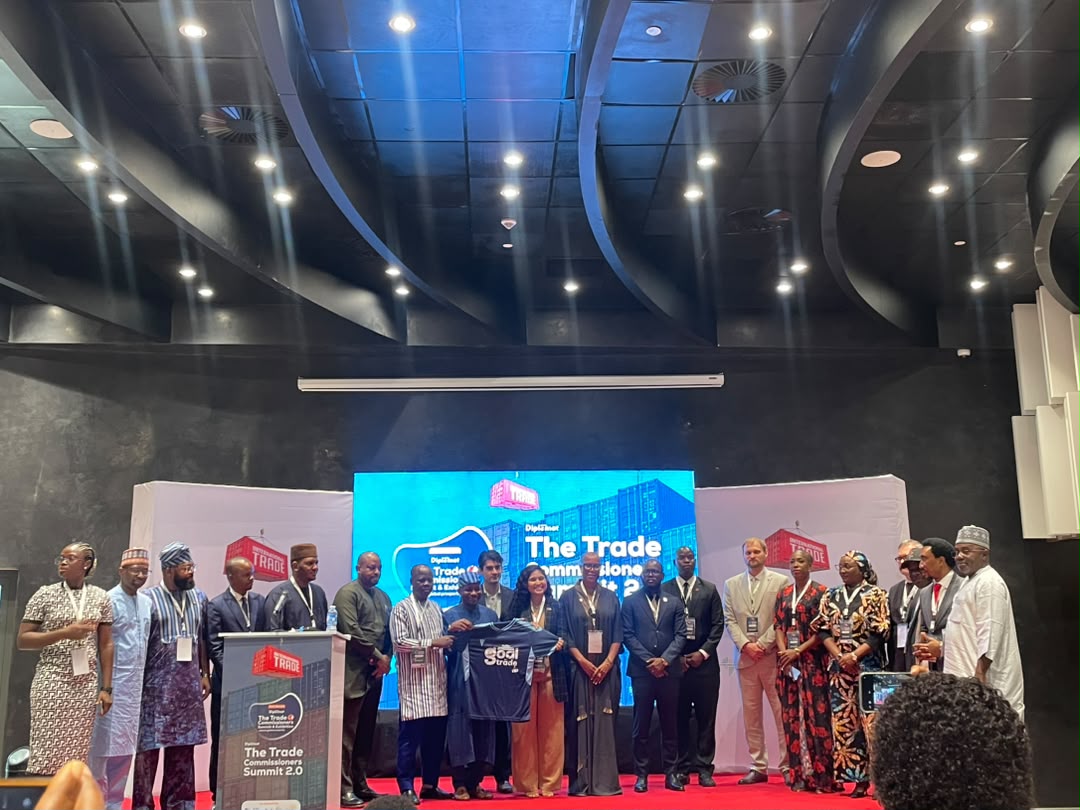
Nigeria is gradually returning to an era of stronger regional economies and greater state autonomy, creating unprecedented opportunities for direct foreign investment and economic partnerships with subnational governments, Founder of Global AfriDiplomats, Deji Ajomale-McWord, declared on Friday.
He said recent reforms in electricity, taxation and local government finances are reversing decades of over-centralisation and empowering states to emerge as independent engines of economic growth, industrialisation and international commerce.
Speaking at the Trade Commissioners’ Summit attended by diplomats, development partners, state officials and business leaders, Ajomale-McWord urged foreign governments, diplomatic missions and international investors to broaden their engagement beyond Abuja and establish direct partnerships with Nigerian states and regions.
According to him, Nigeria’s highly centralised governance structure was rooted in the Unification Decree, Decree No. 34 of May 24, 1966, which abolished the country’s regional system and concentrated legislative powers at the federal level.
Although the military administration that enacted the decree was short-lived, he noted that its legacy still dominates governance structures, with the Constitution assigning 68 items to the Exclusive Legislative List and only 12 to the Concurrent Legislative List, thereby limiting the capacity of states to legislate on strategic sectors such as security, electricity and regional integration.
He argued that the arrangement also fostered a culture in which many Nigerians looked almost exclusively to the Federal Government for solutions, even in areas where state governments have constitutional responsibilities.
Ajomale-McWord recalled how the former Western Region’s cocoa industry, popularly known as “Brown Gold”, and the Northern Region’s famous groundnut pyramids once made the regions powerful centres of economic production and prosperity.
He, however, maintained that recent policy and legal reforms indicate that Nigeria is steadily returning to a development model in which states and regions become stronger economic drivers.
Among the reforms he highlighted were the National Regional Development Policy (2026-2030), the establishment of additional regional development commissions, the Electricity Act 2023, the proposed Electricity Amendment Bill 2025, tax reforms that improve state revenues and the Supreme Court’s landmark judgment granting financial autonomy to the country’s 774 local government councils.
Describing reliable electricity as indispensable to industrialisation, he said new legal provisions empowering states to generate, transmit and distribute electricity would significantly improve their ability to attract industries and investments.
“Our states are open. Our regions are open,” he declared, adding that commissioners from different states were presenting investment opportunities and development priorities in their jurisdictions to the international community.
He described the initiative as the beginning of sustained engagement between Nigeria’s subnational governments and global partners.
“This is a marathon, not a sprint. We will continue this dialogue and strengthen collaboration in advancing development across Nigerian states,” he said.
Meanwhile, the Nigeria Customs Service threw its weight behind the push for subnational trade diplomacy, saying stronger collaboration among customs administrations, state governments, trade commissioners and development partners was essential to unlocking Nigeria’s economic potential.
Delivering a goodwill message on behalf of the Comptroller-General of Customs, Bashir Adewale Adeniyi, represented by Nuhu Mustapha, the Service described trade as a critical driver of national development, industrialisation, job creation and regional integration.
The Service reaffirmed its commitment to facilitating legitimate trade while safeguarding national interests through reforms aimed at simplifying customs procedures, reducing transaction costs and improving the ease of doing business.
It also highlighted its digital transformation initiatives, including the deployment of the Unified Customs Management System, known as B’Odogwu, implementation of Advance Rulings, the Authorised Economic Operator Programme and the National Single Window initiative.
The Customs Service said it would continue to align its operations with international best practices and the objectives of the African Continental Free Trade Area (AfCFTA), positioning Nigeria to become a leading hub for regional and global commerce.
It further urged stakeholders to forge stronger partnerships that would enhance export competitiveness, facilitate cross-border trade and promote inclusive economic development across Nigeria’s states and regions.
Nigeria Reopening States to Foreign Investors as Regions Regain Economic Powers, Says Ajomale-McWord


EFCC Uncovers NIS Visa Overstay Racket, Grills Visa Officers
N700m found in one suspect’s accounts as investigators trace multi-billion-naira estates, proxy accounts
By: Michael Mike
The Economic and Financial Crimes Commission has uncovered an alleged multi-billion-naira visa overstay racketeering network within the Nigerian Immigration Service, with at least five serving officers, including a Deputy Comptroller, grilled by investigators.
The investigation, which cuts across the administrations of several former Comptrollers-General of Immigration, has reportedly uncovered about N700 million in the bank accounts of one of the suspects and several multi-billion-naira estates allegedly acquired by another suspect through proxies.
The alleged racket centres on the extortion of foreigners who overstayed their visas, with investigators probing how immigration officials allegedly diverted or illegally collected huge sums from affected foreigners.
The development comes against the backdrop of the Nigeria Visa Policy 2025, which introduced a penalty regime requiring foreigners who overstay their visas to pay $15 for every day spent in the country after the expiration of their visas.
The EFCC investigation is reportedly focused on officers operating at the Murtala Muhammed International Airport, Lagos; Nnamdi Azikiwe International Airport, Abuja; and the NIS headquarters in Abuja.
Among those said to have been questioned are Assistant Superintendent of Immigration, Bashar Suleiman, serving at the Lagos airport; Deputy Superintendent of Immigration, Musa Abubakar, of the Abuja airport; the Principal Staff Officer to the Comptroller-General of Immigration, Chief Superintendent of Immigration Dotun Aridegbe; and two personal assistants to the Comptroller-General, Assistant Comptroller of Immigration Emmanuel Imaekhai and Assistant Superintendent of Immigration O. Babatunde.
The investigation was reportedly triggered by information supplied by a female immigration officer who allegedly blew the whistle on the scheme.
A source familiar with the probe said the whistleblower’s allegations led investigators to examine the financial activities of several NIS officers and their associates.
“We opened an investigation into the visa overstay racket after a female immigration officer blew the lid on the racketeering,” the source said.
The source alleged that investigators had found links between the alleged racket and several aides of the current Comptroller-General of Immigration, Kemi Nandap.
“Several of her aides have indicted her directly and indirectly. Investigators are looking into whether she was a beneficiary of the multi-billion-naira extortion racket,” the source said.
The allegations against the Comptroller-General remain subject to investigation, and no formal charge has been announced against her.
The source said the investigation had revealed that the alleged extortion network may have operated for years, possibly under successive Comptrollers-General of Immigration.
“It is an interesting but damaging case because we found out that the extortion of overstayers has been going on for several years under past CGs, some of whom appeared to have benefitted from the scheme,” the source said.
Investigators have reportedly identified a Deputy Superintendent of Immigration who has served at the Nnamdi Azikiwe International Airport for more than 10 years, a posting described by investigators as unusual.
A search of the officer’s apartment allegedly uncovered immigration stamps associated with various international airports across Nigeria.
The officer is also said to have maintained close relationships with successive Comptrollers-General, a development now being examined as investigators attempt to unravel the alleged structure and longevity of the racket.
“He is known to relate directly with all serving CGs. His admissions have been illuminating as he is the linchpin of the operation,” the source said.
The EFCC is also investigating the alleged use of proxies to conceal the proceeds of the racket.
Some individuals whose names were allegedly used to operate multiple bank accounts and acquire landed properties have reportedly told investigators that they acted as fronts for the suspects.
The commission is expected to scrutinise the assets, bank accounts and financial transactions linked to the suspects as it traces the alleged proceeds of the racket.
The investigation may also be widened to include some former Comptrollers-General of Immigration, who could be invited to clarify findings and authenticate admissions allegedly contained in written statements obtained from the suspects.
The EFCC has yet to publicly announce charges against the officers, while the investigation is ongoing.
However, one of the NIS officers, CSI O. Babatunde, said to be linked to the alleged visa overstay racket has denied any involvement in the scheme.
The officer, in a brief response to the allegations, said he had no connection with visa fraud or any related racketeering.
“I am not involved in a scam and do not have any visa scam issue, please. I was never invited for visa scam,” the officer said.
Others who were asked of their involvement, Dotun Aridegbe, Emmanuel Imaekhai, Bashar Suleiman did not respond to messages sent to their mobile line.
The denial by Babatunde, comes as the EFCC continues its investigation into the alleged visa overstay extortion network. The commission has not publicly disclosed the identities of all the officers being investigated, nor has it announced any charges in connection with the matter.
All allegations remain subject to investigation, and the suspects are presumed innocent unless proven guilty by a court of law.
EFCC Uncovers NIS Visa Overstay Racket, Grills Visa Officers
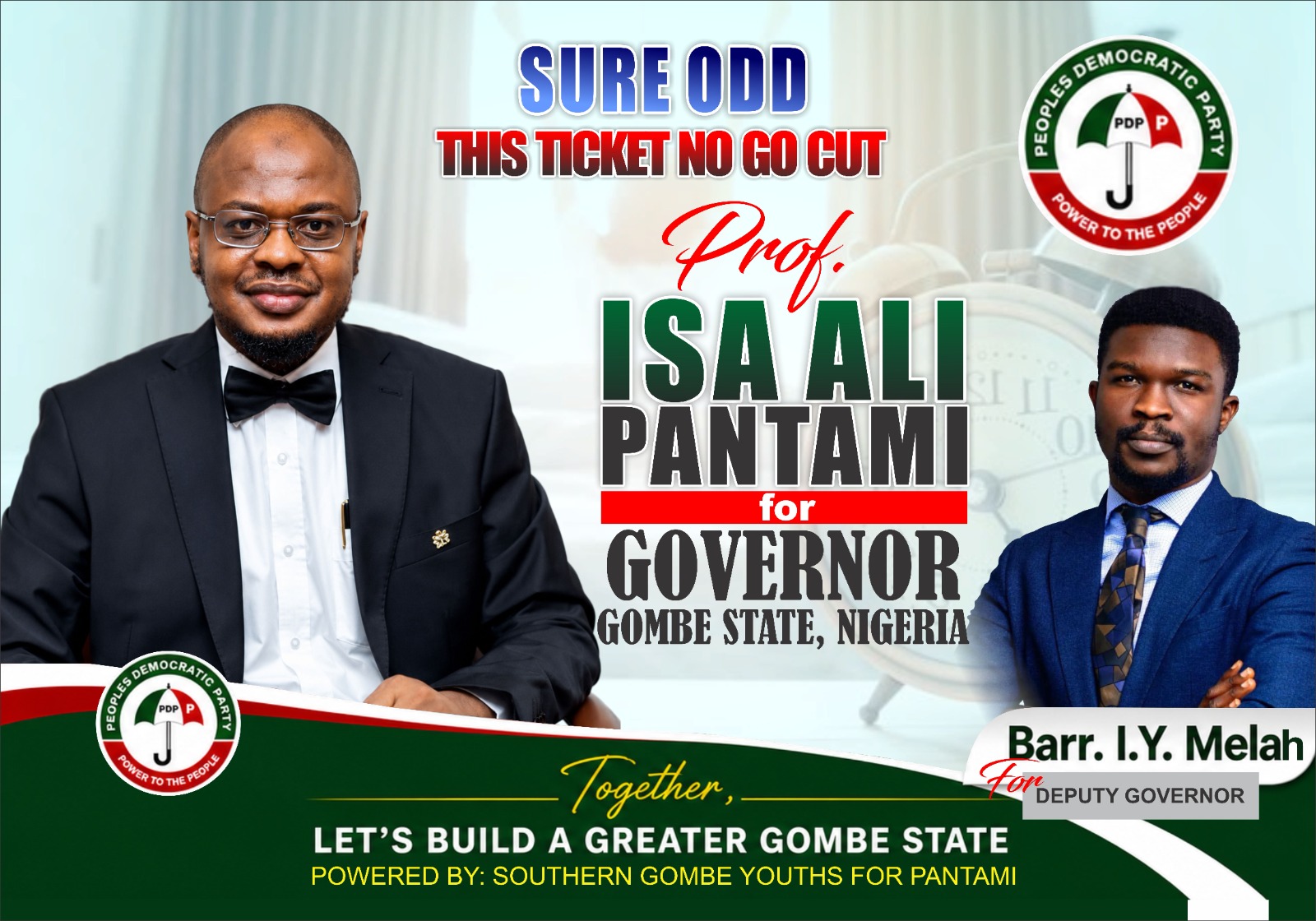
WHY BARR. I.Y. MELAH SHOULD BE PROF ISA PANTAMI’S RUNNING MATE IN 2027
A Cry from the Heart of Gombe South
Your Excellency, Prof. Ali Isa Pantami,
We salute you not because you carry a title, but because for a moment, you made us believe again. In a land weary of recycled promises and exhausted by leaders who speak only to be heard, not to heal, your emergence has landed like rain after drought.
We felt it in the marketplace, in the classrooms, in the quiet prayers of mothers who still hope their children will see a Gombe that works.
But now, Your Excellency, you stand at a crossroads that will define not just your ticket, but your soul as a leader. The question is no longer who will stand beside you it is what your choice will say about the man you truly are.
A running mate is not a footnote. He is a mirror.
The Deputy Governor is not a ceremonial ornament. He is the second heartbeat of an administration. He is the first hint of your judgment, the first proof of your courage, the first measure of whether your leadership will be transactional or transformational.
Choose a man who merely balances a ticket, and you send a message: I am playing politics. Choose a man who balances your vision, and you send a message: I am building a legacy.
Barr. I.Y. Melah is not a name to fill a space. He is a force to fill a gap. He is not loud. He is deep.
In a generation addicted to noise, Barr. Melah chose substance. He did not climb on the backs of the powerful; he lifted those who had no back to climb. For years, he has moved through Gombe South not as a politician seeking applause, but as a lawyer seeking justice, a mentor seeking minds, and a servant seeking no reward but the quiet dignity of a job well done.
His reputation is not written in press releases. It is etched in the gratitude of young men he guided, in the faith of widows he defended, in the trust of communities he never betrayed. When every other voice was shouting, his was building.
When others chased titles, he chased truth.
This is not a man who will outshine you he is a man who will complement you. Not a rival, but a reinforcement. Not a shadow, but a second light. He is the bridge your vision needs.
Your Excellency, you carry the weight of experience. He carries the pulse of a generation. You bring the wisdom of years; he brings the urgency of now. Together, you would not just govern you would connect. Between the elder and the youth. Between the north and south of our state. Between the institution and the individual. Between the dream and the delivery.
In a Gombe fractured by suspicion and hungry for unity, Barr. Melah has proven again and again that he is not a divider of men but a mender of broken fences. He speaks not in the language of tribe or creed, but in the dialect of dignity. And that, Your Excellency, is the language the people are starving to hear.
This is not about arithmetic. This is about anointing.
Political strategists will give you numbers. Pollsters will give you percentages. But the people the tired, the hopeful, the forgotten they are asking for something the spreadsheets cannot calculate: Does this man feel like us? Does he carry our ache in his chest? Does he see our children as his own? Barr. Melah does.
He is not a career politician. He is a career public servant. He has bled quietly for Gombe South when it cost him more than it paid him. He has stayed when others switched. He has served when others strutted. And in doing so, he has become not just a lawyer, not just a leader but a symbol that integrity still exists where we had stopped looking for it.
Choose him, and you choose more than a running mate.
You choose to tell every young person in Gombe that their dreams are not foolish.
You choose to tell every woman that her voice matters.
You choose to tell every community that they will not be left behind.
You choose to tell history that you were not afraid to surround yourself with greatness.
The Pantami-Melah ticket would not just be a political alliance it would be a covenant with the future. It would be a declaration that Gombe is ready to move from survival to significance. From enduring leaders to enjoying leadership.
Your Excellency, history does not remember those who played it safe. It remembers those who, when the moment came, had the audacity to choose better over easier. This is that moment.
Do not choose a running mate. Choose a partner. Choose a conscience. Choose a reflection of the Gombe you promised us. Choose Barr. I.Y. Melah.And let this state know finally that leadership is not a throne, but a trust. That power is not a prize, but a promise. That you, Prof. Ali Isa Pantami, are not just a candidate you are a turning point.
With trembling hope and stubborn faith,
The Concerned Youth of Gombe South
WHY BARR. I.Y. MELAH SHOULD BE PROF ISA PANTAMI’S RUNNING MATE IN 2027
Yobe Executive Council Approves N73.3bn for Agriculture, Roads, Housing, Markets, Empowerment
By: Michael Mike
The Yobe State Executive Council has approved and ratified projects and services worth N73.32 billion as part of efforts to accelerate socio-economic development and improve living conditions across the state.
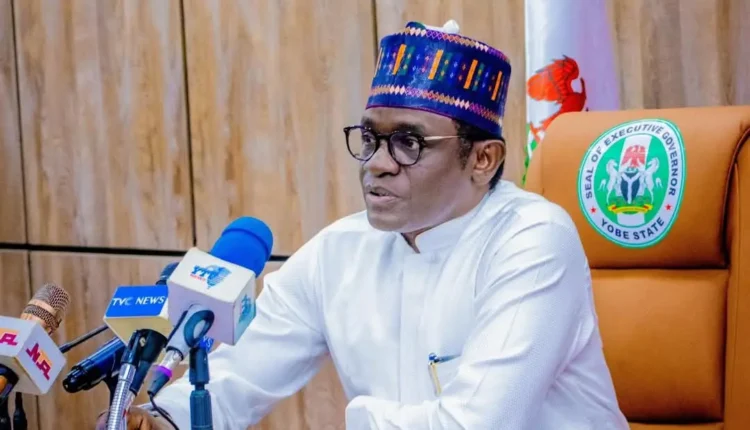
The decisions were reached at the Council’s meeting held on Thursday, July 16, 2026, at the Council Chamber of the Government House, Damaturu, under the chairmanship of Governor Mai Mala Buni.
Briefing journalists after the meeting, the Commissioner for Home Affairs, Information and Culture, Abdullahi Bego, said the approvals were in line with the administration’s commitment to service delivery and the socio-economic development agenda of the state.
The largest allocation, N28.53 billion, was approved for the procurement of agricultural tools and implements for the 2026 Mega Agricultural Empowerment Programme. The programme builds on similar interventions implemented by the state government in 2024 and 2025.
The Council also ratified N23.97 billion for two major road projects, comprising N21.90 billion for the rehabilitation and asphalt overlay of the 45-kilometre Kalallawa-Kaliyari Road linking Damaturu and Tarmuwa Local Government Areas, and N2.07 billion for the construction of the seven-kilometre Damagum-Gubana Road.
The construction of the Damagum-Gubana road, the commissioner said, would complete a 17-kilometre road connection to Gubana town from Damagum.
In the area of urban infrastructure and commerce, the Council approved N4.94 billion for the construction of the Buni-Yadi Modern Motor Park and Grains Market, while N5.69 billion was approved for external facilities and augmentation of the perimeter fence at the Damaturu Modern Motor Park, which is nearing completion.
Another N3.95 billion was approved for the construction of a new shopping mall and mini-market in Buni-Gari, Gujba Local Government Area, while N726.09 million was approved for upgrades to the ongoing Damaturu Mega Shopping Mall project.
The Council also approved N616.61 million for the upgrading, remodelling, landscaping and installation of safety barriers at four major roundabouts in Damaturu metropolis.
In the housing sector, the Council ratified N2.25 billion for the purchase of 208 housing units from the Federal Ministry of Housing and Urban Development, alongside N1.18 billion for the construction of an office complex and headquarters for the Ministry of Housing.
It also approved N652.63 million for the acquisition of Fanzar Mixed Farms Ltd.
As part of efforts to support women and small businesses, the Council approved N460.83 million for the procurement of beans for distribution to female small business owners across the state.
The beans will be distributed alongside cooking oil, smokeless stoves, cooking utensils and kitchenware already procured and stored by the Ministry of Wealth Creation, Empowerment and Employment Generation. A total of 1,780 bags of 50kg beans are expected to be distributed to beneficiaries.
The Council further approved N364.48 million for the procurement of 1,000 Yamaha GX 390 grinding machines for empowerment beneficiaries across the state.
In another major decision, the Council approved a Public-Private Partnership arrangement for the redevelopment of the Yobe Liaison Office in Kaduna into a modern hotel under a Build, Operate and Transfer (BOT) model.
Under the arrangement, the property will revert to the ownership of the Yobe State Government after 10 years, while the state’s liaison services will continue to operate from the property.
The approvals underscore the Buni administration’s emphasis on agricultural empowerment, infrastructure development, road connectivity, urban renewal, housing, women’s economic empowerment and the strategic utilisation of government assets.
Yobe Executive Council Approves N73.3bn for Agriculture, Roads, Housing, Markets, Empowerment

EFCC Uncovers NIS Visa Overstay Racket, Grills Visa Officers

WHY BARR. I.Y. MELAH SHOULD BE PROF ISA PANTAMI’S RUNNING MATE IN 2027

DSS, Security Operatives Rescue Two Abducted Children in Kwara, Kill Two Kidnappers

Roger Federer’s Shock as DNA Results Reveal Myla and Charlene Are Not His Biological Children

THE PLIGHT OF FARIDA

FAILED COUP IN BURKINA FASO: HOW TRAORÉ NARROWLY ESCAPED ASSASSINATION PLOT AMID FOREIGN INTERFERENCE CLAIMS
-
 News2 years ago
Roger Federer’s Shock as DNA Results Reveal Myla and Charlene Are Not His Biological Children
-
Opinions4 years ago
THE PLIGHT OF FARIDA
-
 News1 year ago
FAILED COUP IN BURKINA FASO: HOW TRAORÉ NARROWLY ESCAPED ASSASSINATION PLOT AMID FOREIGN INTERFERENCE CLAIMS
-

 News2 years ago
EYN: Rev. Billi, Distortion of History, and The Living Tamarind Tree
-
 Opinions5 years ago
POLICE CHARGE ROOMS, A MINTING PRESS
-

 ACADEMICS2 years ago
A History of Biu” (2015) and The Lingering Bura-Pabir Question (1)
-

 Columns2 years ago
Army University Biu: There is certain interest, but certainly not from Borno.
-

 Politics1 year ago
2027: Why Hon. Midala Balami Must Go, as Youths in Hawul and Asikira/Uba Federal Constituency Reject ₦500,000 as Sallah Gift
