
News
Shock, Anger as Video Showing Savage Killing of Policeman by Maiduguri Criminal MARLIAN GANGS


Shock, Anger as Video Showing Savage Killing of Policeman by Maiduguri Criminal MARLIAN GANGS
By: Zagazola Makama
Palpable air of anger and indignation pervade the air as harrowing video showing notorious Maiduguri criminal gang, Marlians, savagely clubbing, stabbing and eventually killing a Police Constable, Babagana Mala, attached to the CRACK squad in Maiduguri, surfaced.
The daring criminal group is known and feared for their brazen attacks on innocent citizens in Maiduguri metropolis and the environ. They specialize in snatching of mobile phones and other personal belongings from unsuspecting folks who are viciously attacked, killed or severely injured if resisted. The impunity, brazen nature and the in-your-face criminality of the gangsters often confounds residents and victims.
Zagazola Makama, a Counter-Insurgency Expert and Security Analyst in the Lake Chad region gathered that the latest incident occurred on July 23, near the 33 Artillery Military Brigade in Maiduguri.
A video obtained by Zagazola depicted Babagana being brutally assaulted by more than ten youths who repeatedly punched, stomped, clubbed, dragged and kicked him in the face while he struggled helplessly.
“Some of the youths were chanting, “kill him, don’t leave him, you think you can come here and try us, don’t leave him, don’t leave him, take his gun”. The youths kept chanting as they continued beating him to the ground.
In the process, one of the youths brought out a poisonous knife and stabbed him in the back and took his gun. Another youth was heard saying “Ka Manna mai” (shoot him). At that point, he struggled to run away but fell down due to the injuries. Again, the youths came back, slapping and kicking him in the face.
Three persons later appeared on the scene to disperse the youths after seizing the gun from them. The victim was later rushed to the hospital but passed away shortly due to loss of blood.
Zagazola understands that the Borno State Police Command has arrests five suspects including a lady who appeared in the video associated with the murder while the main suspected culprits were currently on the run.
Background
The emergence of the Malians and other gangster groups in Maiduguri and Jere LGAs of Borno State, poses significant security threats to the state. The groups made up of young men predominantly of ages between 14 and 25, have become increasingly active in recent months engaging in various criminal activities and destabilizing the already fragile security situation in the state.
The security threats posed by these gangster groups are multifaceted. The gangs primarily engage in armed robbery, theft, drug trafficking, and other illicit activities. They target vulnerable communities and individuals, extort money, and recruit young individuals into their ranks. Their criminal activities not only cause significant financial losses but also create an atmosphere of fear and insecurity among residents.
The gangster groups also engage in intra-gang violence, often clashing with rival criminal groups for territorial control and supremacy. These clashes result in casualties including deaths.
Disturbed by the spate of urban gangsterism perpetrated by the criminal gangs, residents of Maiduguri have been demanding aggressive action from the security agencies against the group but anytime they are arrested, the police release them in controversial circumstances without charging them to the court.
Way forward
These young boys, sometimes seeking economic opportunities, often found themselves marginalized and excluded from mainstream society. Lacking education and job prospects, some of these individuals turned to criminal activities as a means of survival and empowerment. Over time, the group expanded its operations and established a strong presence within the Borno State capital specifically Gwange, Zannari, Old Maiduguri, Bayan Quarters, Bulabulin, and other areas within Maiduguri.
Putting a stop to the emergence and activities of these gang groups in Maiduguri and environs requires a comprehensive and multi-faceted approach that addresses the underlying causes of their formation. Here are some of my take; that can be implemented:
- Enhance security and law enforcement: Strengthen security measures and increase the presence of law enforcement agencies in gang-infested areas. This includes improving intelligence gathering, surveillance, and patrols to identify and dismantle gang operations.
- Community engagement and empowerment: Engage local communities by establishing dialogue and building trust. Encourage residents to report suspicious activities and provide information on gang members. Empower communities by providing education, skill training, and economic opportunities to help individuals escape the cycle of poverty and prevent them from joining gangs.
- Target youth at risk: Implement youth development programs that focus on education, vocational training, and recreational activities. Engage young people through mentorship programs, sports clubs, and cultural activities as positive alternatives to gang involvement.
- Strengthen social services: Provide access to essential social services such as healthcare, clean water, and sanitation. Improve infrastructure and create job opportunities to enhance socio-economic development in marginalized areas, reducing the appeal of criminal activities.
- Rehabilitation and reintegration: Develop comprehensive rehabilitation and reintegration programs for gang members who want to leave their criminal activities. Support them in acquiring education, vocational skills, and psychological assistance to facilitate their reintegration into society.
- Mobilize religious and community leaders; Engage our religious and community leaders as influential figures who can advocate against gang activities and promote peaceful coexistence. Utilize their positions to reinforce positive values, discourage criminal behavior, and create awareness about the consequences of gang involvement.
- Public awareness and education: Conduct public awareness campaigns to educate the population about the dangers and consequences of gang involvement. Raise awareness about the government’s commitment to tackling gangs and the available support services for individuals who want to leave their criminal activities.
- Long-term socio-economic development: Prioritize long-term socio-economic development initiatives that address unemployment, poverty, and social inequalities. This will help create a sustainable environment where individuals have access to opportunities, reducing the appeal of turning to gangs for a source of income or empowerment.
Combining these strategies and continuously evaluating their effectiveness is crucial for putting a stop to the emergence and growth of gang groups in Maiduguri. It requires a sustained and collaborative effort involving the government, law enforcement agencies, community leaders, and civil society to create a safer and more prosperous environment for all residents.
Shock, Anger as Video Showing Savage Killing of Policeman by Maiduguri Criminal MARLIAN GANGS



Kashim Shettima: Of Betrayal, Power, and Survival.
By: Inuwa Bwala.
“March has returned, and with it the Ides. Beware the men who call you brother.”
Julius Caesar was perhaps Rome’s most trusted general. He crossed the Rubicon for Rome, conquered Gaul for Rome, and pardoned enemies for Rome.
Yet it was neither Gaul nor Pompey: his avowed rivals, that killed him. It was Brutus: his friend, and confidant yet his protégé, who was described as “the noblest Roman of them all.”
Julius Caesar did not slump and died because the daggers were too many, rather, bacause he noticed the person he least expected could betray him amongst those stabbing him: Brutus. In utter shock and disbelief, Caesar slumped, but not before he uttered the word,”And you too Brutus?”.
There is no doubt that, Kashim Shettima was Borno’s most tested governor. He walked into boiling areas, when others fled the state. He rebuilt schools bombed by Boko Haram. He chose to stay in Maiduguri when Abuja offered comfort.
As Vice President, he has carried himself as a true statesman abs the face of the Tinubu administration at national and international meets.
He always speaks of “the sanctity of human life” and calked for swifter and total mobilisationagainst terror.
Yet today, whispers from Borno and Abuja suggest the daggers are not in the bush like that of Boko Haram, they are in the hands of his kinsmen, those he hold family meetings and political meetings with.
Those who could read between the line, may be able to tell, when Shettima gave an anecdote at a recent public function, about the visit by his kinsmen to his boss, Bola Ahmed Tinubu, just three months into the life of the administration.
Like Brutus and the conspirators of the Shakespearean fame, who claimed they did not hate Caesar, but loved Rome more, those who visited Tinubu claimed to love Nigeria more and her President, abd not brcause thry hated Shettima.
Brutus in particular played on a so-called republican pride and his fear of tyranny, which he used in convincing himself that betrayal was patriotism. He struck to “save” Rome.
Shettima’s own “Brutuses” use a different script, relying on Shetyima’s perceived ambition and the attendant battle to keep himself in the balance of power as an alibi.
And in the face of contending forces, they recruited people to plsy out the cards, while remaining in the shadows. The charges may appear different with that if Caesar, but the intents are same. And while still smarting from the Muslim-Muslim debacle, Shettima had hradly setyled in office when they began to spread rumours of him, being too Borno, not enough to be a northerner. Too ambitious, fetish, independent minded and growing too popular. One thing they could not take away from him though us the fact that Shettima is intelligent, shrewd and a master schemer, which his boss knows too well.
I had cause to warn of this years ago seeing Shettima’s passive refusal to pick between kinsmen in place of statesmen to work with him.
I could see through the plots to denigrate a fine emergent nationalist by linking him with Boko Haram, painting him as fetish, portraying him as a religious and ethinic checkbox, all in a bud to undo him. The weapon when he was govetnor was insurgency, but the weapon now is political naivity and stereotyping . The tactic includes convincing his Kanuri kinsmen to fight him, so that “when Kanuri fights Kanuri, others will win. But beyond that, even his Kanuri brothers seem to have an axe to grind with him.
The painful truth remains, that, Caesar’s killers were senators in the Capitol, but Shettima’s challengers may be his own kinsmen: some of whom, he nentored snd no one can ever convince him that, they could ever work against him. In both cases, the dagger is dipped in familiarity.
It cuts deeper because the hands holding it, are either those he mentored or once broke bread with him.
Caesar died because he ignored omens. Not even Calpurnia, his wife’s dream could deter him. He ignored the soothsayer, and shunned the Senate’s mood, thinking goodwill was a good sheild and armor.
Shettima’s March 2027 is loaded with omens too, arising from fresh attacks by vested interests, intrigues amongst political players, betrayal by kinsmen, espionage by aides and attachees, dissertion by hitherto close allies, manipulations in the media, ethnic or religious profiling, clandestine meetings that without communiqués, but with lethal intents, contending forces in the party who whisper that 2027 needs a “new pairing.” indeed, the ides are here, because a second term is near, and second terms birth daggers.
As governor, perhaps Shettima survived by moving rather faster than conspiracy. He outrun, those who want to either even scores or shake off his dominace, and those people have remained at daggers drawn with him
How Shettima Survives, will definitely be a refrence point in power struggles in Nigeria.
But unlike Caesar who never learnt, Shettima is a good student of Robert Greens 48 Laws of Power, and must have drawn lessons from the falls of others before him.
To survive, Shettima must learn to trust, but audit the Praetorians. Caesar trusted Brutus with his life. Shettima cannot afford blind trust. The INEC database compromise and probe shows how insider access kills. Shettima must do what he did as governor: forensic audits, no sacred cows. As I earlier said, he must have his own policy, which must not be changed simply because some people want to determine its content.
He must learnt to keep the people, his own trusted people, and must not loose, as Caesar lost Rome due to his belief in his personal prowess and capacity. Shettima still owns Borno’s streets and still conttols the larger and more lethal political forces in the North.
He should be able to name the Brutus, but should not become an Antony, whom at Caesar’s funeral sparked civil unrest. Shettima cannot afford chaos. He should have a machinery on ground that will expose the plot, without burning the Forum. He should expedite action in uniting the North, and rally the support of kinsmen, even as a counterforce, or risks allowing the real enemies to win.
Importantly, he should bear in mind, that, the parabolical March is not the end, the ides pass. For Caesar, it ended at Pompey’s statue, but for Shettima, March can end with a stronger alliance. He must do what he told the nation: “We choose light over shadow, and hope over despair”.
The Verdict of History, had
Brutus dying on his own sword, muttering, “Caesar, now be still.” Betrayal did not save the Republic, rather it buried it.
Shettima’s kinsmen face the same choice. They can strike and wait for the verdict of history, or they can sheathe the dagger and remember: the real enemy still sleeps someehere else.
Twelve years ago, I wrote that Shettima’s ides would test Borno. In 2026, I state without fear of contradiction, that, they will test Nigeria.
Caesar ignored the soothsayer because he was in so much hurry. Shettima, as always, may not be in a hurry, but should he decide to, that hurry may yet save him.
Kashim Shettima: Of Betrayal, Power, and Survival.
News
FACT CHECK: No School Attack, No Student Abduction in Kautikari — What Really Happened During the ISWAP Raid
FACT CHECK: No School Attack, No Student Abduction in Kautikari — What Really Happened During the ISWAP Raid
By Zagazola Makama
A wave of alarming reports circulating across social media and some online platforms has claimed that Boko Haram insurgents attacked a school and abducted students in Kautikari community of Chibok Local Government Area, Borno State.
The claims, predictably amplified by emotionally charged references to the 2014 Chibok schoolgirls’ abduction, have generated anxiety among Nigerians following developments in the troubled region.
However, a detailed fact-check by Zagazola Makama, based on assessment from field sources, and video evidence from the scene, has found the claims to be entirely FALSE.
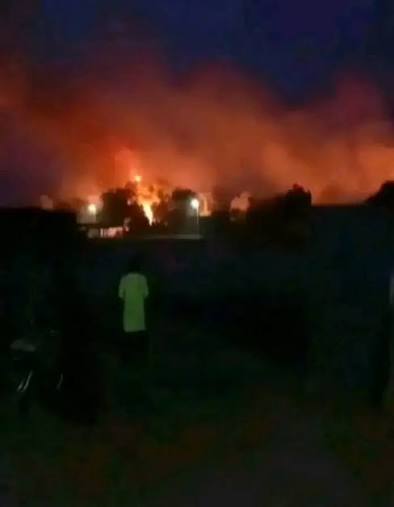
According to sources, the incident occurred at about 7:30 p.m. on June 13 when ISWAP terrorists launched an attack on a hunters’ patrol base located within the premises of a disused primary school in Kautikari.
The facility being used by the hunters was not functioning as a school at the time of the attack, nor were students present at the location. Rather, local hunters had established a patrol outpost within the structure, using some of the classrooms as temporary accommodation and operational shelters while supporting troops of Operation HADIN KAI’s efforts in the area.
The terrorists specifically targeted the hunters’ base and not a school populated by students as widely claimed. Initial resistance by the hunters successfully repelled the first assault.
However, the terrorists later regrouped in larger numbers and launched a second attack, forcing the hunters to temporarily withdraw after running low on ammunition.
Military sources disclosed that reinforcement teams comprising troops of the 117 Task Force Battalion from Kwada, supported by a Quick Response Force, local hunters and vigilante personnel, rapidly mobilized to the scene and engaged the terrorists. The coordinated response eventually overwhelmed the attackers and forced them to retreat.
No Student Was Abducted
Contrary to viral claims, there is no evidence that any student was abducted during the attack. Operational reports from the scene recorded no missing students, no reports of schoolchildren being taken away, and no indication that the terrorists targeted an educational institution in session.
Security sources confirmed that accountability checks conducted after the attack found no cases of student abduction.
In fact, the only confirmed casualties were one civilian who was reportedly struck by a stray bullet fired by the terrorists and one member of the Civilian Joint Task Force (CJTF) who sustained a gunshot wound to the arm.
Sources said also that the terrorists set fire to clothing and personal belongings belonging to the hunters stationed at the outpost. No troops were killed or injured during the engagement.
Further undermining the false reports is video footage obtained by Zagazola Makama from the aftermath of the attack. In the footage, one of the affected hunters is seen showing the damaged facility and burnt belongings while lamenting the destruction caused by the terrorists.
The hunter can be heard explaining that the location served as their place of accommodation and operational base.
“This is where we sleep,” he says while pointing to the affected section of the building.
The footage clearly supports military accounts that the target was a hunters’ outpost and not an occupied school hosting students.
The confusion likely arose because the hunters’ base was situated within the premises of a primary school building.
Photographs and videos showing damaged classrooms were subsequently circulated online without context, leading some platforms to incorrectly conclude that a school had been attacked and students abducted.
The result was the rapid spread of misinformation that failed basic verification standards.
Given Chibok’s painful history, any report involving schools and abductions naturally attracts national and international attention. This makes accurate reporting even more important.
FACT CHECK: No School Attack, No Student Abduction in Kautikari — What Really Happened During the ISWAP Raid
Police Foil IED Attack, Destroy Explosive Device in Zamfara
By: Zagazola Makama
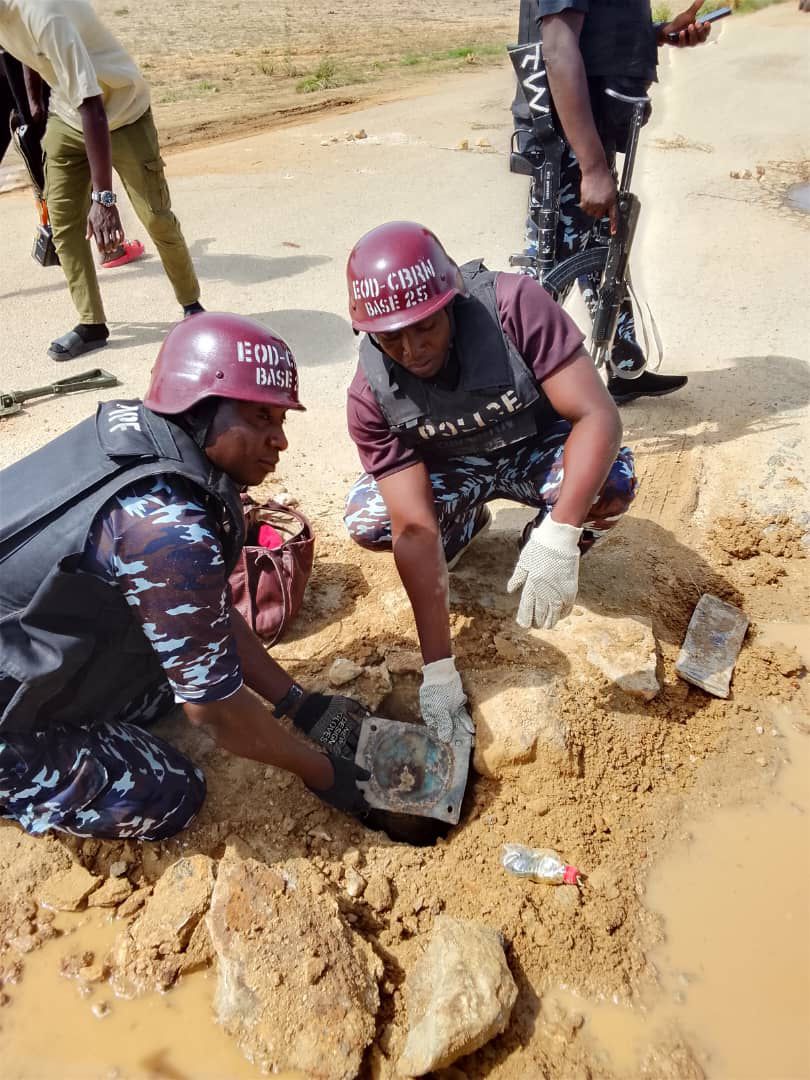
The Zamfara State Police Command says it has successfully foiled a planned attack after its Explosive Ordnance Disposal (EOD) unit discovered and safely destroyed an Improvised Explosive Device (IED) in Tsafe Local Government Area of the state.
The Command said the operation was carried out on Friday at about 4:15 p.m. along the Kunchin Kalgo axis following credible intelligence received through community engagement efforts.
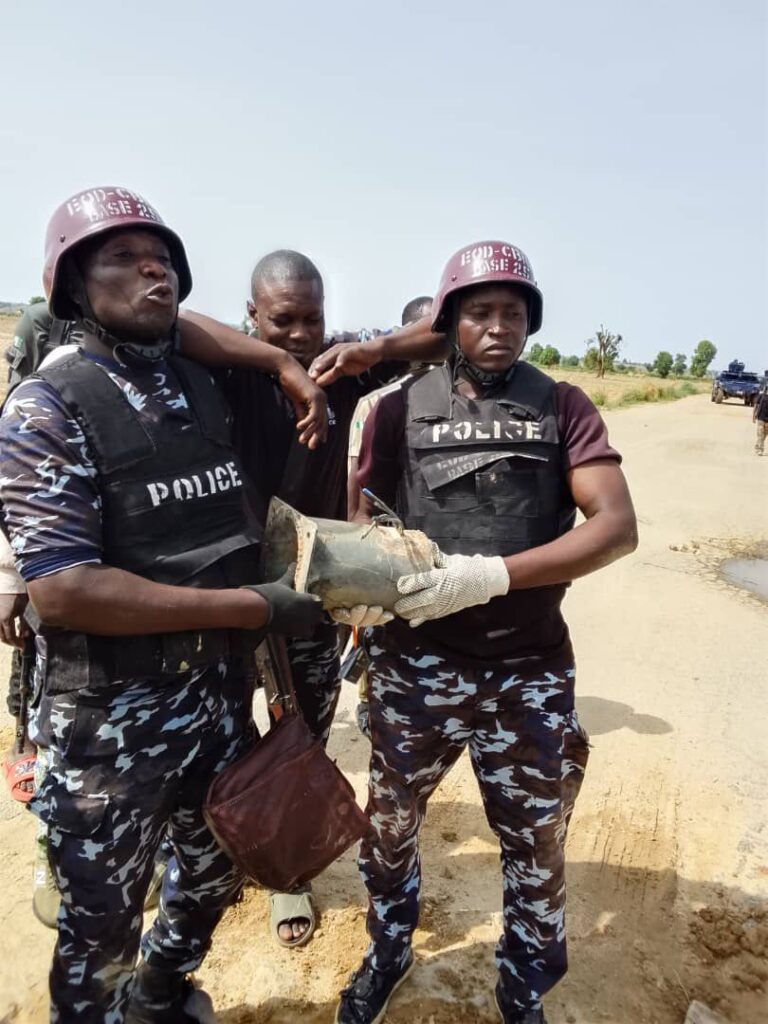
According to a statement issued by the Command, operatives of the Violence Crime Response Unit (VCRU), in collaboration with the EOD team, swiftly mobilised to the area after receiving information about a suspected explosive device planted by bandits.
Preliminary findings indicated that the device was strategically planted along the road with the intent of causing mass casualties among commuters and other road users.
The statement added that the timely response of the operatives led to the safe detection, evacuation and controlled destruction of the explosive device before it could cause any harm.
The Command commended the vigilance and cooperation of local residents, describing community support as critical to ongoing security operations in the state.
It further assured residents that efforts were ongoing to identify, arrest and prosecute those responsible for planting the device.
The police also disclosed that patrols had been intensified across vulnerable areas to prevent similar incidents and ensure the safety of road users.
The Commissioner of Police, A.M. Bello, reiterated the Command’s commitment to sustained operations against banditry and other violent crimes in Zamfara State.
Police Foil IED Attack, Destroy Explosive Device in Zamfara

Troops Neutralise Suspected Kidnapper While Attempting Escape in Plateau

Kashim Shettima: Of Betrayal, Power, and Survival.

ELECTIONS CAN WAIT: SAVING NIGERIA FROM COLLAPSE MUST COME FIRST

Roger Federer’s Shock as DNA Results Reveal Myla and Charlene Are Not His Biological Children

THE PLIGHT OF FARIDA

FAILED COUP IN BURKINA FASO: HOW TRAORÉ NARROWLY ESCAPED ASSASSINATION PLOT AMID FOREIGN INTERFERENCE CLAIMS
-
 News2 years ago
Roger Federer’s Shock as DNA Results Reveal Myla and Charlene Are Not His Biological Children
-
Opinions4 years ago
THE PLIGHT OF FARIDA
-
 News1 year ago
FAILED COUP IN BURKINA FASO: HOW TRAORÉ NARROWLY ESCAPED ASSASSINATION PLOT AMID FOREIGN INTERFERENCE CLAIMS
-

 News2 years ago
EYN: Rev. Billi, Distortion of History, and The Living Tamarind Tree
-
 Opinions4 years ago
POLICE CHARGE ROOMS, A MINTING PRESS
-

 ACADEMICS2 years ago
A History of Biu” (2015) and The Lingering Bura-Pabir Question (1)
-

 Columns2 years ago
Army University Biu: There is certain interest, but certainly not from Borno.
-

 Politics1 year ago
2027: Why Hon. Midala Balami Must Go, as Youths in Hawul and Asikira/Uba Federal Constituency Reject ₦500,000 as Sallah Gift
