
News
New scandal rocks Yobe NSCDC as herder alleges multi-million naira extortion by Agro Rangers Commander

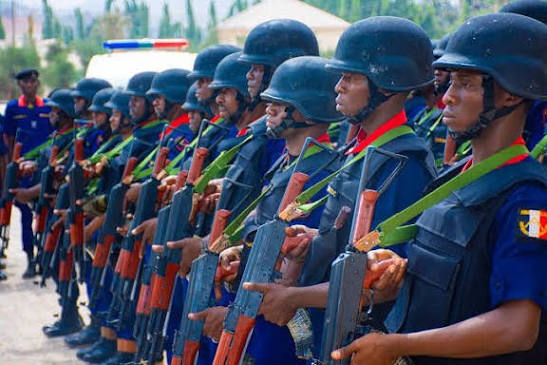
New scandal rocks Yobe NSCDC as herder alleges multi-million naira extortion by Agro Rangers Commander
By: Zagazola Makama
A fresh storm is sweeping through the Yobe State Command of the Nigeria Security and Civil Defence Corps (NSCDC), following explosive allegations by a livestock owner who says senior Agro Ranger officers unlawfully detained, extorted, and converted his animals for personal use.
The victim, Alhaji Ardo Dan Karami, a respected pastoralist from Kumari Village in Damaturu LGA, is accusing Assistant Commandant Ahmed Isa Michika, head of the NSCDC Agro Rangers Unit in Yobe, and his team of perpetrating what he describes as “daylight robbery under the cover of uniform”.
This latest scandal comes barely months after the NSCDC Command in Yobe was mired in a major corruption case involving the escort of vandalised and stolen railway materials, a development that led to the removal of the then State Commandant.
According to a petition filed by Dan Karami through his lawyer, the ordeal began on Oct. 18, 2025, when Agro Rangers personnel stormed his home in his absence and arrested 340 cows and 18 sheep, accusing them of destroying a farm. The animals were transported to Damaturu, but what followed, according to the victim, “was nothing short of criminality”.
The officers allegedly slaughtered one of the sheep claiming it had a fracture but refused to hand over the carcass to its owner. Even more troubling, three cows were reportedly loaded into their official Hilux vehicle, never to be seen again.
Later, one of the missing cows, which was heavily pregnant at the time of arrest, was discovered to have delivered and died in custody at the Damaturu Pilgrims Camp under the NSCDC’s watch. The remaining two cows are still missing. The petition states that before the officers agreed to even “open the case”, they demanded ₦250,000 from the victim.
After admitting to holding the livestock, the officers then compelled the herdsman to pay ₦2,000,000 as “compensation” for alleged farm damage, despite no court process, no assessment, and no verification of the claim.
But the extortion allegedly did not end there.
The officers reportedly charged ₦3,000 per cow as “bail money” for 300 cows, amounting to close to another ₦900,000. In essence, the victim was allegedly forced to pay: 250,000 “case opening fee”,2,000,000 “compensation” and 900,000 “bail fees” for the cows, bringing total alleged extortion to ₦3,150,000.
After these payments, only 340 cows and two sheep were released. However, 15 sheep, one ram, one slaughtered sheep, and two cows remain unaccounted for, animals the victim values at ₦6.25 million.
When senior authorities from Yobe Sate Government confronted Assistant Commandant Michika and his deputy over the matter, they were forced to refund ₦900,000.
But rather than admit the full amount collected, they allegedly claimed they took only ₦800,000, and said they had already spent ₦50,000 from it. Despite being caught in this contradiction, no known disciplinary action has yet been taken.
This is not the first time that the NSCDC Yobe Command has found itself entangled in accusations of corruption and criminal collusion.
On July 8, 2025, troops of Operation Hadin Kai intercepted a truck loaded with vandalised railway iron sleepers along with a shiny NSCDC-marked Hilux van escorting the stolen materials. Inside the vehicle were five NSCDC officers, They were escorting the loot.
A total of ₦128,500 in bribe money was found stuffed inside the inner clothing of one of the officers. The scandal was so damning that it triggered the removal of the State Commandant.
In community pushed to the brink and region still plagued by insecurity, such actions by security personnel could worsen tensions.
Beyond the financial loss and personal trauma, the victim’s lawyer warns that the actions of the NSCDC officers carry serious security implications for Yobe State and the entire North-East.
In the petition, the counsel stressed that incidents of extortion, illegal seizure of livestock, and abuse of pastoral communities are not isolated misdemeanours — they are triggers of insecurity.
“Acts of injustice like this, if not swiftly addressed, are capable of escalating into full-blown security crises,” the petition warned.
The lawyer cited examples from Zamfara, Katsina, Sokoto, and parts of Niger and Kaduna States, where years of unchecked harassment, extortion, illegal arrests, and exploitation of Fulani pastoralists by certain security operatives and local vigilantes eventually contributed to the rise of banditry.
New scandal rocks Yobe NSCDC as herder alleges multi-million naira extortion by Agro Rangers Commander


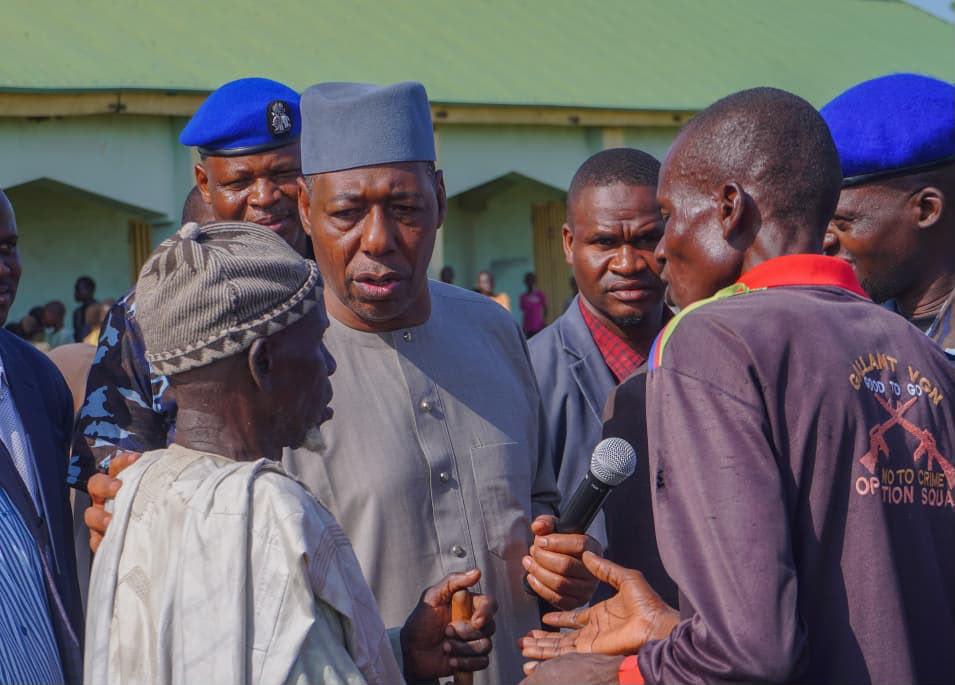
Zulum moves to resettle Konduga IDPs in four months
By: Bodunrin Kayode
Borno State Governor, Professor Babagana Zulum, has announced the planned closure of Konduga internally displaced persons (IDP) camp within the next four months.
This follows the successful closure of Bama IDP camp, the largest displacement facility outside the state capital and the planned shutdown of Gwoza camp.
Speaking to newsmen during a recent visit to the camp, Zulum, however, stressed that the relocation is entirely voluntary and no one will be forced to resettle where they are not willing to go.
The Governor has consistently maintained that returning to ancestral homes or other areas of choice must be based on the displaced persons’ expressed willingness.
He said, “We are not carrying out the resettlement process immediately; we are here to discuss with the IDPs so that in the next four months they will be resettled in a dignified manner. I believe you heard from the IDPs that they are willing to return home. Return shall be voluntary, not by force”.
During his visit to Konduga, Governor Zulum inspected resettlement houses currently under construction in Amarwa and later proceeded to Maiwa in Mafa LGA. The Amarwa resettlement city, for which the governor had earlier laid the foundation, is being built to shelter displaced persons living in camps.
In Maiwa, the state government is constructing massive housing units as part of the ongoing resettlement programme. The resettlement houses are equipped with public facilities like a primary healthcare centre, a water facility, and other basic amenities.
Zulum was accompanied by the member of the House of Representatives, Engr Bukar Talba; the Member of the House of Assembly for Konduga, Hon. Bukar Modu; the Commissioner for Local Government and Emirate Affairs, Sugun Mai Mele; and other senior government officials.
Zulum moves to resettle Konduga IDPs in four months
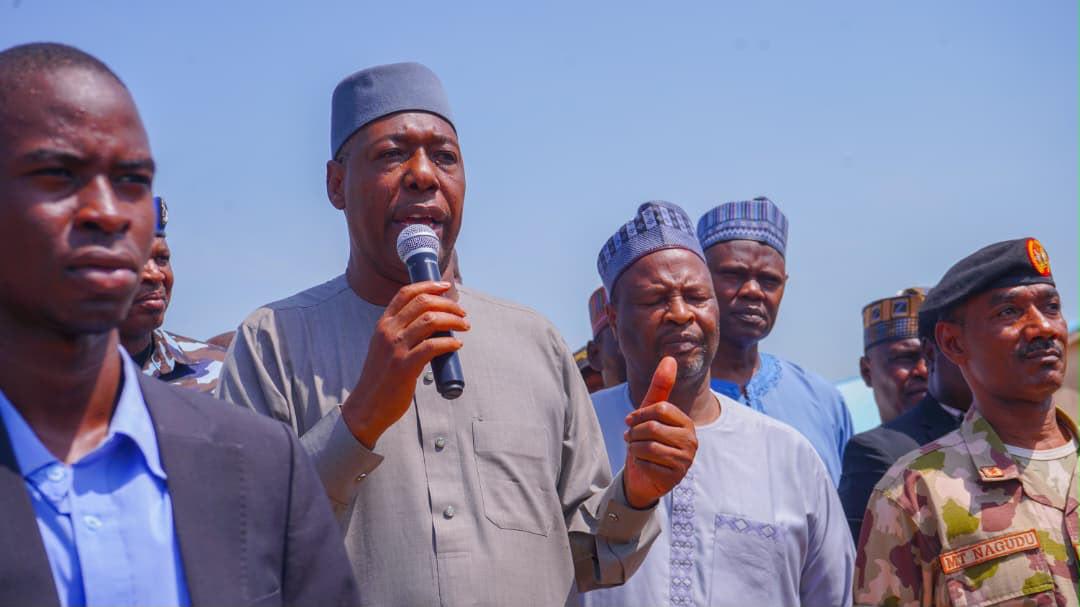
Zulum Announces Closure of Konduga IDP Camp as Borno Accelerates Resettlement Drive
…Inspects ongoing housing projects in Amarwa, Maiwa
By: Michael Mike
Borno State Governor, Professor Babagana Zulum, has announced plans to close the Internally Displaced Persons (IDP) camp in Konduga Local Government Area as part of efforts to accelerate the state’s ongoing resettlement programme.
The move comes shortly after the successful closure of the Bama IDP camp, which was the largest displacement camp outside Maiduguri, as well as preparations for the shutdown of the Gwoza IDP camp.
Governor Zulum, who disclosed the plan during a visit to Konduga, said the resettlement of displaced persons would be carried out in a dignified and voluntary manner, stressing that no resident would be forced to return to any location against their will.
The governor said the government would engage with the displaced communities before the process begins, noting that the return of IDPs must be based on their readiness and willingness.
“We are not carrying out the resettlement process immediately; we are here to discuss with the IDPs so that in the next four months they will be resettled in a dignified manner. I believe you heard from the IDPs that they are willing to return home. Return shall be voluntary, not by force,” Zulum said.
During the visit, the governor inspected ongoing construction work at the Amarwa resettlement city, where housing units are being developed for displaced families. The project, which was earlier inaugurated by the governor, is designed to provide a permanent settlement option for residents currently living in camps.
Governor Zulum also visited Maiwa in Mafa Local Government Area, where the state government is constructing additional housing units under its resettlement initiative.
The housing projects include essential social infrastructure such as primary healthcare centres, water facilities and other basic amenities aimed at ensuring sustainable living conditions for returnees.
The Borno State Government has continued to prioritise the rebuilding of communities affected by years of insurgency, with the closure of IDP camps forming part of a broader strategy to restore normalcy, rebuild livelihoods and support the safe return of displaced residents.
Governor Zulum was accompanied on the inspection tour by the member representing Bama/Ngala/Kala-Balge Federal Constituency in the House of Representatives, Engr. Bukar Talba; the Konduga State House of Assembly member, Hon. Bukar Modu; Commissioner for Local Government and Emirate Affairs, Sugun Mai Mele; and other senior government officials.
Zulum Announces Closure of Konduga IDP Camp as Borno Accelerates Resettlement Drive

Troops Arrest Two Suspected Terrorist Informants, Cattle Rustlers in Yobe Market
By Zagazola Makama
Troops of Operation HADIN KAI have arrested two suspected terrorist informants and cattle rustlers during a joint operation with local hunters at the Buni Yadi Friday Market in Gujba Local Government Area of Yobe State.
Military sources told Zagazola Makama that the operation was carried out at about 2:00 p.m. on July 24 by troops of 27 Task Force Brigade in conjunction with members of a hunters’ group acting on intelligence.
The suspects were identified as Muhammadu Sani, 32, from Mainahari in Biu Local Government Area of Borno State, and Buba Umaru, 40, from Garin Jauro in Fune Local Government Area of Yobe State.
According to the sources, the operation turned violent when one of the suspects attacked a member of the hunters’ group with a cutlass while resisting arrest.
The hunter sustained severe head injuries during the attack and was immediately attended to, while the troops overpowered and apprehended the suspects.
Preliminary investigations revealed that Muhammadu Sani confessed to serving as a logistics supplier and informant for Boko Haram terrorists for nearly seven years.
He also admitted to leading terrorists to the residences of two local residents, where the insurgents successfully rustled cattle during separate attacks.
Military sources said the confession is expected to assist ongoing intelligence efforts aimed at dismantling terrorist support networks operating within communities across the North-East.
The two suspects are currently in the custody of 27 Task Force Brigade and are undergoing further investigation to determine the extent of their involvement in terrorist logistics, intelligence gathering and cattle rustling activities.
Security officials said the arrest underscores the critical role played by local intelligence and collaboration between troops and community-based security groups in identifying individuals who provide logistical support and operational information to terrorist elements.
They added that troops of Operation HADIN KAI will continue to target terrorist collaborators, informants and logistics networks as part of ongoing efforts to deny insurgents the local support structures that sustain their operations across the North-East.
Troops Arrest Two Suspected Terrorist Informants, Cattle Rustlers in Yobe Market

Zulum moves to resettle Konduga IDPs in four months

My Binoculars: What has Remi Tinubu got to do with Akara, Kulikuli, Boli, Dodo and Ekpa

Zulum Announces Closure of Konduga IDP Camp as Borno Accelerates Resettlement Drive

Roger Federer’s Shock as DNA Results Reveal Myla and Charlene Are Not His Biological Children

THE PLIGHT OF FARIDA

FAILED COUP IN BURKINA FASO: HOW TRAORÉ NARROWLY ESCAPED ASSASSINATION PLOT AMID FOREIGN INTERFERENCE CLAIMS
-
 News2 years ago
Roger Federer’s Shock as DNA Results Reveal Myla and Charlene Are Not His Biological Children
-
Opinions4 years ago
THE PLIGHT OF FARIDA
-
 News1 year ago
FAILED COUP IN BURKINA FASO: HOW TRAORÉ NARROWLY ESCAPED ASSASSINATION PLOT AMID FOREIGN INTERFERENCE CLAIMS
-

 News2 years ago
EYN: Rev. Billi, Distortion of History, and The Living Tamarind Tree
-
 Opinions5 years ago
POLICE CHARGE ROOMS, A MINTING PRESS
-

 ACADEMICS2 years ago
A History of Biu” (2015) and The Lingering Bura-Pabir Question (1)
-

 Columns2 years ago
Army University Biu: There is certain interest, but certainly not from Borno.
-

 Politics1 year ago
2027: Why Hon. Midala Balami Must Go, as Youths in Hawul and Asikira/Uba Federal Constituency Reject ₦500,000 as Sallah Gift
