
News
Nigeria Unveils Net Zero Investment Plan to Unlock Climate Finance, Drive Green Growth

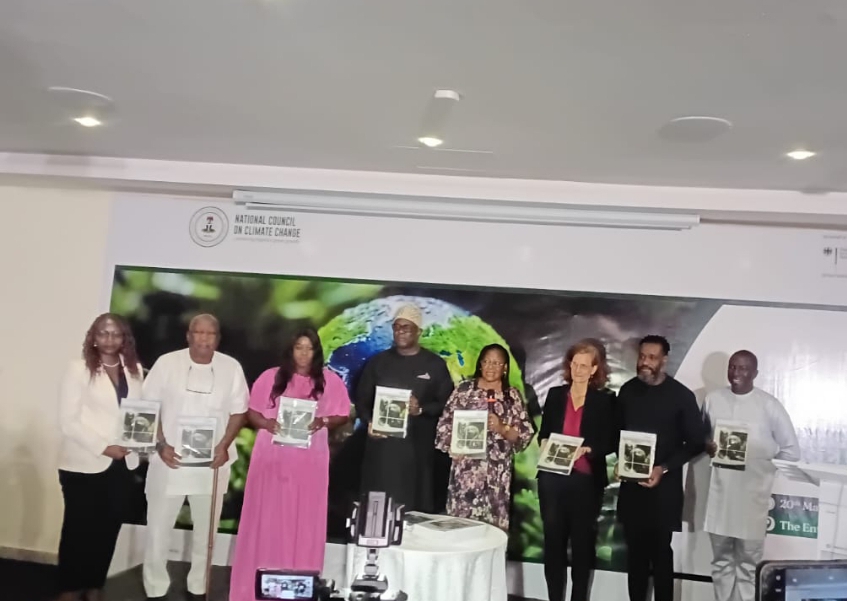
Nigeria Unveils Net Zero Investment Plan to Unlock Climate Finance, Drive Green Growth
By: Michael Mike
The Federal Government of Nigeria has launched an ambitious Net Zero Investment Plan (NZIP), a major policy framework designed to mobilise climate finance, accelerate sustainable economic growth, and strengthen the country’s pathway to net zero emissions by 2060.
The plan, unveiled in Abuja by the National Council on Climate Change, represents a significant step in Nigeria’s efforts to translate its climate commitments into concrete investment opportunities capable of attracting both domestic and international financing.
Developed under the NDC Partnership’s “Global Call for NDCs 3.0 and LT-LEDS,” the framework received technical support from Deutsche Gesellschaft für Internationale Zusammenarbeit (GIZ) GmbH and funding from the German Federal Ministry for the Environment, Climate Action, Nature Conservation and Nuclear Safety through the International Climate Initiative.
The NZIP is expected to serve as a strategic roadmap for implementing Nigeria’s long-term climate agenda by identifying priority sectors for investment, outlining financing needs, and proposing mechanisms to bridge existing climate finance gaps.
Government officials said the initiative aligns with Nigeria’s broader economic transformation agenda and reinforces the country’s aspiration to emerge as a leading climate-responsive economy in Africa in line with the African Union Agenda 2063.
The investment framework builds on key national policies, including the Nigeria Agenda 2050, the Nationally Determined Contributions (NDCs), and the Long-Term Low-Emission Development Strategy (LT-LEDS), all of which provide the policy backbone for Nigeria’s transition toward sustainable and climate-resilient growth.
Under the LT-LEDS framework, Nigeria targets net zero greenhouse gas emissions by 2060, while the NDCs outline short- and medium-term actions under the Paris Agreement.
Speaking at the launch, Country Director of GIZ, Markus Wagner, described the NZIP as a critical instrument for transforming climate goals into bankable projects capable of attracting large-scale investment.
According to him, the framework goes beyond policy declarations by providing a structured mechanism for mobilising public and private capital toward climate resilience, low-carbon industrialisation, and sustainable economic development.
Wagner noted that achieving net zero emissions would require strong collaboration among government institutions, development partners, financial organisations, and the private sector.
He said the plan demonstrates Nigeria’s determination to align climate action with economic development priorities while creating opportunities for innovation, green jobs, and long-term sustainable growth across strategic sectors of the economy.
Analysts say the launch of the NZIP could improve investor confidence in Nigeria’s green economy ambitions and position the country to access increasing pools of global climate finance targeted at low-carbon and climate-resilient development initiatives.
Nigeria Unveils Net Zero Investment Plan to Unlock Climate Finance, Drive Green Growth



Kidnapped Plateau resident regains freedom after security pressure
By: Zagazola Makama
A resident of Rafiki Village in Bassa Local Government Area of Plateau State, Mr Patrick Gazu, has regained his freedom after being abducted by suspected kidnappers.
Gazu was released by his abductors following sustained pressure from troops of Sector 3, Operation Enduring Peace and other security agencies involved in the rescue operation.
He was reportedly kidnapped at about 11:57 p.m. on Sept. 30, 2025, at his residence in Rafiki Village.
Security sources said the victim has since been reunited with his family and is currently safe.
The sources added that security agencies have commenced a manhunt for the perpetrators, with efforts ongoing to track down and apprehend the criminals.
The successful release underscores the continued efforts by security forces and other agencies to rescue victims of kidnapping and disrupt criminal activities across Plateau State.
Kidnapped Plateau resident regains freedom after security pressure

Troops repel terrorist activity along Kwanar Isa–Shinkafi road in Sokoto
By: Zagazola Makama
Troops of the Nigerian Army have repelled terrorist activity along the Kwanar Isa–Shinkafi road in Isa Local Government Area of Sokoto State.
The incident occurred at about 10:35 a.m. on Sept. 29, when troops of 26 Battalion, Forward Operating Base Isa, responded to reports of terrorist activity along the road.
The troops engaged the terrorists, forcing them to withdraw from the area.
Following the encounter, the troops maintained patrols and dominated the area to prevent the terrorists from regrouping and threatening motorists and communities along the route.
Security operations remain ongoing in the area as troops continue efforts to deny criminal elements freedom of movement and strengthen security across the axis.
Troops repel terrorist activity along Kwanar Isa–Shinkafi road in Sokoto

OPWS troops repel terrorist attack, recover rustled cows in Taraba
By: Zagazola Makama
Troops of Operation WHIRL STROKE (OPWS) have repelled a suspected terrorist attack on Gwamagira settlement in Karim Lamido Local Government Area of Taraba State, recovering rustled cattle abandoned by the attackers.
The incident occurred at about 7:30 a.m. on Sept. 30, when troops of 114 Battalion (Rangers) at Andami responded to reports of suspected terrorists riding motorcycles attacking the community.
The troops engaged the attackers, forcing them to retreat and abandon the rustled cattle.
However, the troops discovered that the terrorists had killed one civilian and abducted three others during the attack.
The recovered cattle were subsequently returned to their owners, while troops launched efforts to rescue the abducted victims and apprehend the perpetrators.
Security operations are ongoing in the area as troops continue to search for the victims and pursue the fleeing attackers.
OPWS troops repel terrorist attack, recover rustled cows in Taraba

Troops storm suspected IPOB-linked camp across treacherous waters in Anambra, recover arms, explosives materials

Kidnapped Plateau resident regains freedom after security pressure

Troops arrest suspected ISWAP member, recover ₦396,200 in Yobe

Roger Federer’s Shock as DNA Results Reveal Myla and Charlene Are Not His Biological Children

THE PLIGHT OF FARIDA

FAILED COUP IN BURKINA FASO: HOW TRAORÉ NARROWLY ESCAPED ASSASSINATION PLOT AMID FOREIGN INTERFERENCE CLAIMS
-
 News3 years ago
Roger Federer’s Shock as DNA Results Reveal Myla and Charlene Are Not His Biological Children
-
Opinions5 years ago
THE PLIGHT OF FARIDA
-
 News1 year ago
FAILED COUP IN BURKINA FASO: HOW TRAORÉ NARROWLY ESCAPED ASSASSINATION PLOT AMID FOREIGN INTERFERENCE CLAIMS
-

 News3 years ago
EYN: Rev. Billi, Distortion of History, and The Living Tamarind Tree
-
 Opinions5 years ago
POLICE CHARGE ROOMS, A MINTING PRESS
-

 ACADEMICS3 years ago
A History of Biu” (2015) and The Lingering Bura-Pabir Question (1)
-

 Columns3 years ago
Army University Biu: There is certain interest, but certainly not from Borno.
-

 Politics1 year ago
2027: Why Hon. Midala Balami Must Go, as Youths in Hawul and Asikira/Uba Federal Constituency Reject ₦500,000 as Sallah Gift
