
National News
Jos Killings: Nigerians, Wake Government From Sleep And Stop Poking Religious Fingers On Each Other

Jos Killings: Nigerians, Wake Government From Sleep And Stop Poking Religious Fingers On Each Other
By: James Bwala, Maiduguri
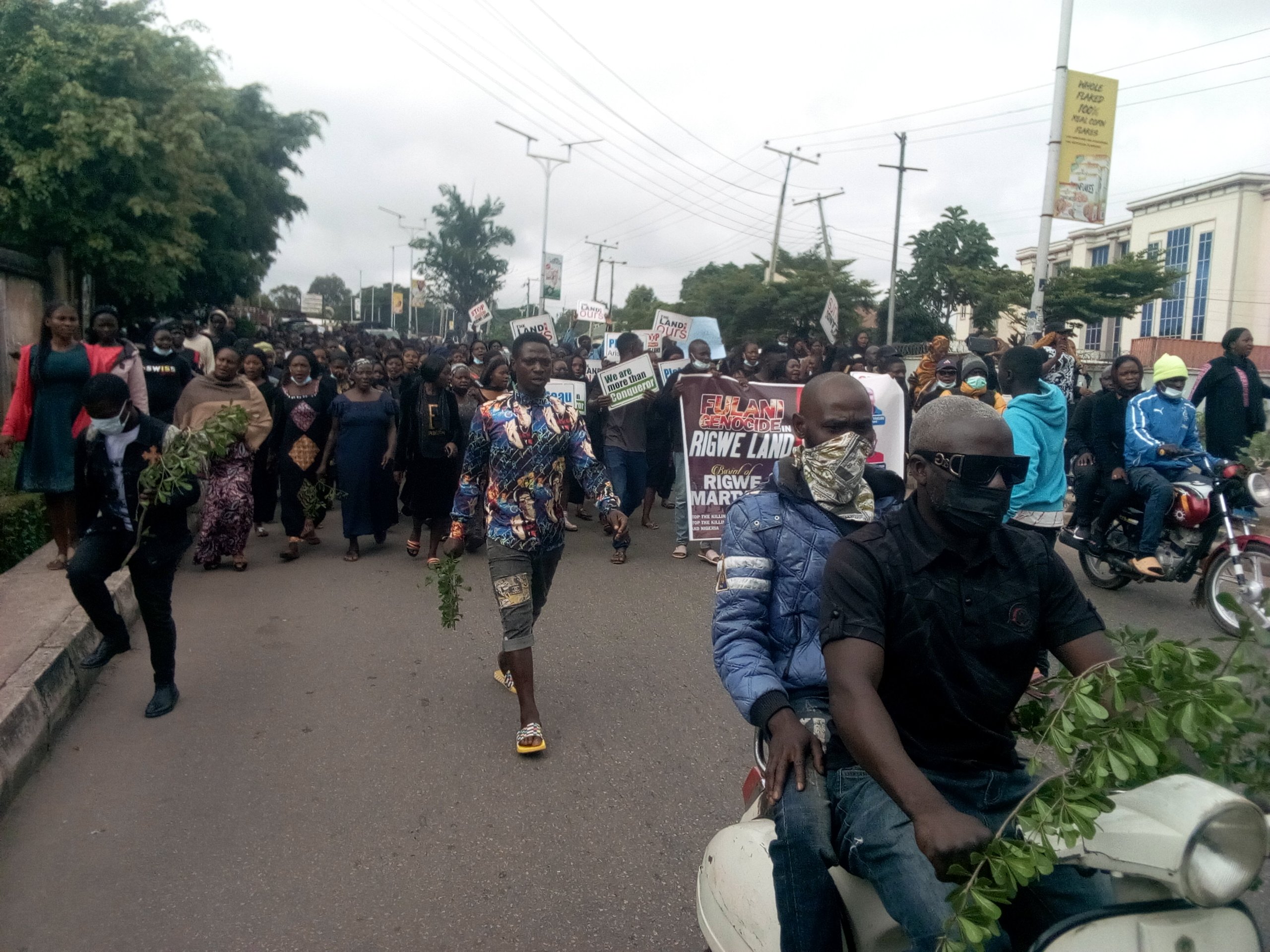
Nigerians of conscience have been asking questions over the recent killings in Jos. Not only about the killings of 25 Muslim travellers but also about killings of some innocent Christians – farmers and travellers, whose blood the earth sucks in want for the killers but never satisfied for the ten, for one hundred and for the thousands killed. Wailing in the mosque and wailing in Church has not stopped the wailing on our streets and the poking of fingers continued. But what has the government done and what is the government doing now?
An audio record has been on circulation since Sunday the 15th of August 2021 and barely a day after the sad Saturday incident 14th of August, 2021 when a convoy of five buses, conveying Fulani Muslim travellers, who were travelling from Bauchi to Ondo state in Southwest Nigeria were stopped along Rukuba road and hacked to death. Some had asked what is the connection between going to Ondo with Rukuba road? But that is left for investigation another day.
Read Also: Nigeria: Constitution should back Emir to carry out issues of mediation amongst people…
Muslims and Christians with long voices have been calling for the heads of those who perpetrated this ugly act of damnation. But the audio being circulated did not portray the presumed innocent Muslims killed as innocent as we have been echoing since the dastatible and unfortunate blood spilling along the Rukuba road if that audio was the true genesis of the attack in Jos, the Plateau State Capital.
The audio in which two indigenes of Plateau state and Christians were caught discussing or rather one asking the other the truth about the resultant attack on the Hausa-Fulani travellers was never captured in all the statements, Press Conferences and Police as well as Government explanations to the current situation. This brings a lot of probes about the sincerity of those clamouring for the heads of those arrested if that audio was the fact that is being hidden to the public.
Like I said in my previous writings. I still condemn in totality whatever situation that warrants whatever action that informed many unfortunate situations in Nigeria today. I believe it is time for both Christians and Muslims to stop blaming each other over the circumstances that are bringing rage in the hearts of people. Nigeria is not a lawless country thus it is time for the people to begin to demand from the government about the bloodletting in the country.
The reaction of the Nigerian Police and both the Federal and State government in swiftly acting on the attack on Muslim travellers raises a lot of questions looking at their actions on similar attacks prior to the current matters on the ground. One may be tempted to ask if this government is sincere about allegations of lopsidedness on the part of the administration of the Nigerian states.
You May Also Read {Nigeria: Buhari approves review of 368 grazing sites in 25…}
The monumental failure of this government has further expanded trust amongst Nigerians especially Christians and Muslims of the far wings. Liberal Christians and Muslims still enjoy good relationships but it would be an honour if they begin to talk to those far wing believers who are willing at all times to go for the punch.
I have reported incidents boiling and heart failing in the Bassa local government area of Plateau state. And I have also reported about those travellers who were said to be returning from a religious programme in Bauchi organised by the Sheikh Dahiru Bauchi Foundation to mark the Islamic new year.
According to the audio in circulation, there was an ambulance in front of the travelling buses. The audio, as well as sources in Jos, claimed that when the buses were asked to stop for checks following suspicion of their movement, the said ambulance moved ahead disengaging from the rest of the convoy but the youths barricade the road ahead forcing the ambulance carrying a casket to stop.
One of the speakers in the audio said when that casket has opened the youths discovered that it was not carrying a corpse after all but guns, a situation which resulted in the youths pounding on those travellers resulting in the ugly events on that fateful Saturday 14 of August 2021, to say the least. This is from lowly voices not heard on the matters arising from the attack that once again if not treated with caution may result in a clash between the two religions in Nigeria who is claiming to be the champions of peace.
It is rather unfortunate that 25 travellers were killed. No one can bring them back no matter the blood for blood suggestions making the round. Whether they are innocent and victims of religious intolerance that is brewing in the country or some mercenaries employed to carry out another unforgiven act in the name of religion is left for whoever wants to take the side he or she deems it fit. But the truth is that taking sides and not standing by the truth has been the problem of Nigeria and its people from time immemorial and nothing was achieved in the game but bloody hands on each other’s neck. This has bred more and more hatred as we see among the people fashion to live in an indivisible nation as we always claimed.
The lopsided approach in dealing with matters of the religion concerned by our government and security operatives is fast dragging Nigeria into another civil war. And like the late General Odumegwu Ojukwu would say, ‘ There is no pride in war!’ Therefore, it is time for the like of the Northern groups and people like Nasirudin Sheriff as well as others whose media addresses was basically speaking from one side of their lips to know that on that fateful day ahead of the 25 travellers killed in Plateau state, there were corpses of Christians heading for the burial who was also killed in cold blood by blood-seeking far wing Muslims down the road.
While Nigeria and Nigerians mourn their death, the President will indeed go into history as a failure, a situation which he told the security chiefs he wouldn’t want to happen. If his words were coming from a bleeding heart as the nation was at rage with emotions running high and voices of condemnation renting the atmosphere with people running to the press to air their voices over the sad incidences then and only then would President Buhari leave in peace with himself after leaving office and not be tagged as a failure.
It was believed that the actions and inactions of the Nigerian Security especially the police in Plateau state
has continued to fuel ethnic and religious crises since the killing of 70 Christians in Yelwa, 2001. Tension amongst both the Christians and Muslims in Jos grow dangerously and informing attacks and counter-attacks between the indigenes and settlers.
In Bassa local government recently a school headmaster loved by all villagers was killed near a military checkpoint and his corpse was buried and the government was quiet about it. Within the same week, so many people were killed in a snake attack and their villages were burnt. This the government did not react to calm nerves around and amongst villages and villagers boiling over the inaction of our security agencies. This is a failure of the state and its government because non of these attacks brought the kind of stereotyping acts being put on display over the killing that happened along the Rukuba Road in Jos. The government must be held responsible by both the Christians and Muslims in Plateau state over this unfortunate and barbaric blood spilling.
The Saturday attack was not the first time travellers would be so attacked and hacked to death. Many attacks had happened not only in the Jos axis with blood on the hands of both Muslims and Christian youths who carried out such attacks and killed innocent travellers. From the time of Obasanjo a so-called Christians to this time under Buhari a so-called Muslim, Nigerians have died in thousands but the people instead of waking the government from sleep they are shouting and reminding each other how deceitful they have been contrary to the teachings of their religious beliefs.


National News
ECOWAS, World Bank Intensify Drive to Bridge West Africa’s Electricity Gap, Target 1,800 Communities

ECOWAS, World Bank Intensify Drive to Bridge West Africa’s Electricity Gap, Target 1,800 Communities
By: Michael Mike
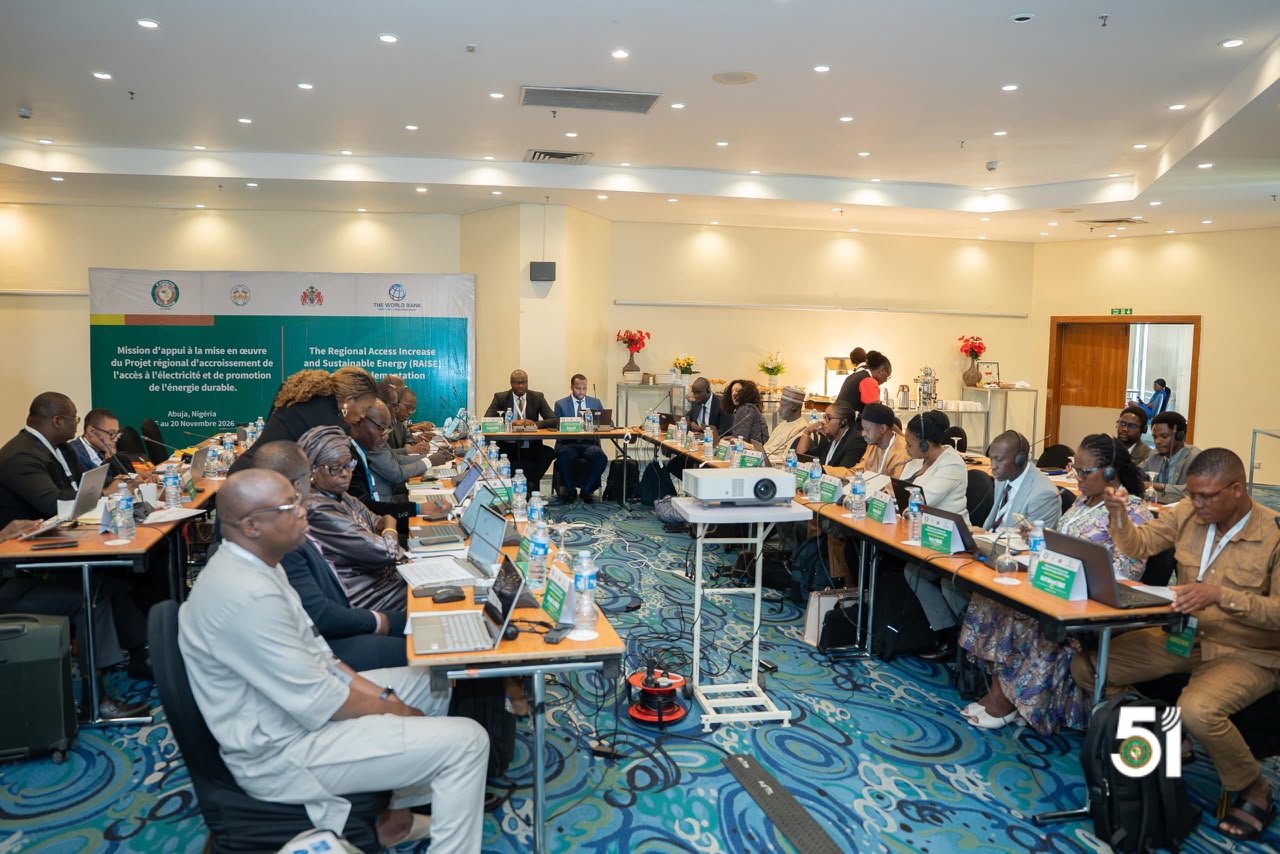
The Economic Community of West African States (ECOWAS) Commission and the World Bank have intensified efforts to address persistent electricity access deficits in West Africa, launching a five-day implementation support mission for a US$160 million regional energy project targeting underserved communities in Togo and The Gambia.
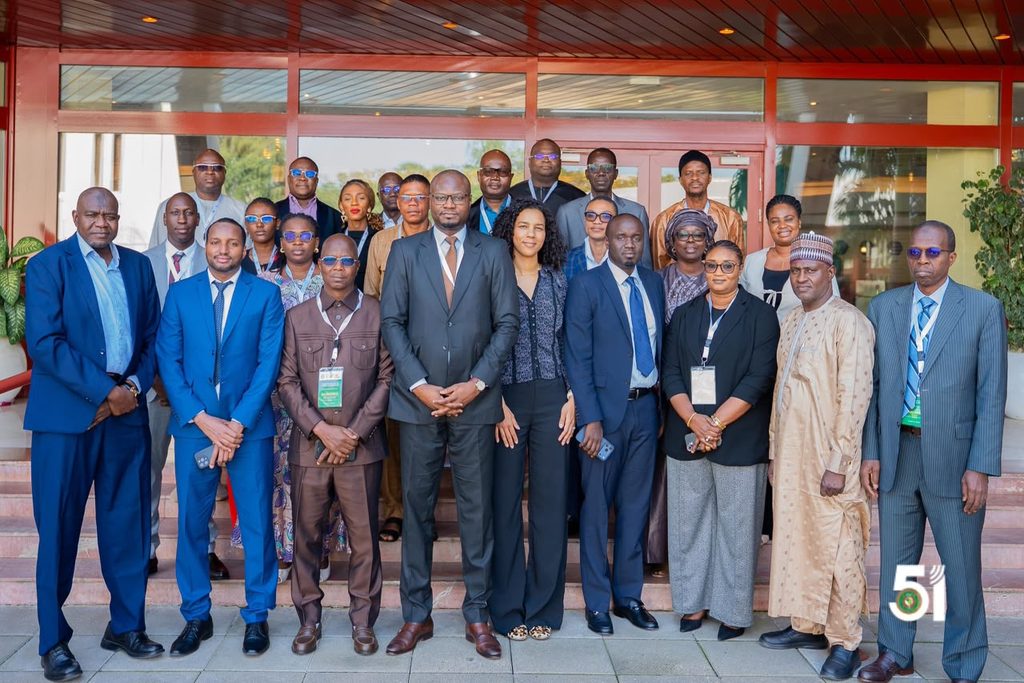
The mission, which commenced on 16 November and will run until 20 November 2026 in Abuja, Nigeria, is designed to assess implementation progress, address operational challenges and strengthen coordination among institutions responsible for delivering the Regional Access Increase and Sustainable Energy (RAISE) Project.
The initiative targets the electrification of 1,800 localities, the provision of 202,000 household electricity connections and the facilitation of 242 megawatts (MW) of renewable energy generation capacity.
The project is expected to expand access to reliable and sustainable electricity, particularly in rural and underserved communities where inadequate power infrastructure continues to constrain economic activities, education, healthcare delivery and other essential services.
During the five-day engagement, the ECOWAS Commission and World Bank teams will review implementation arrangements, examine progress against project objectives, identify operational bottlenecks and agree on measures to accelerate delivery.
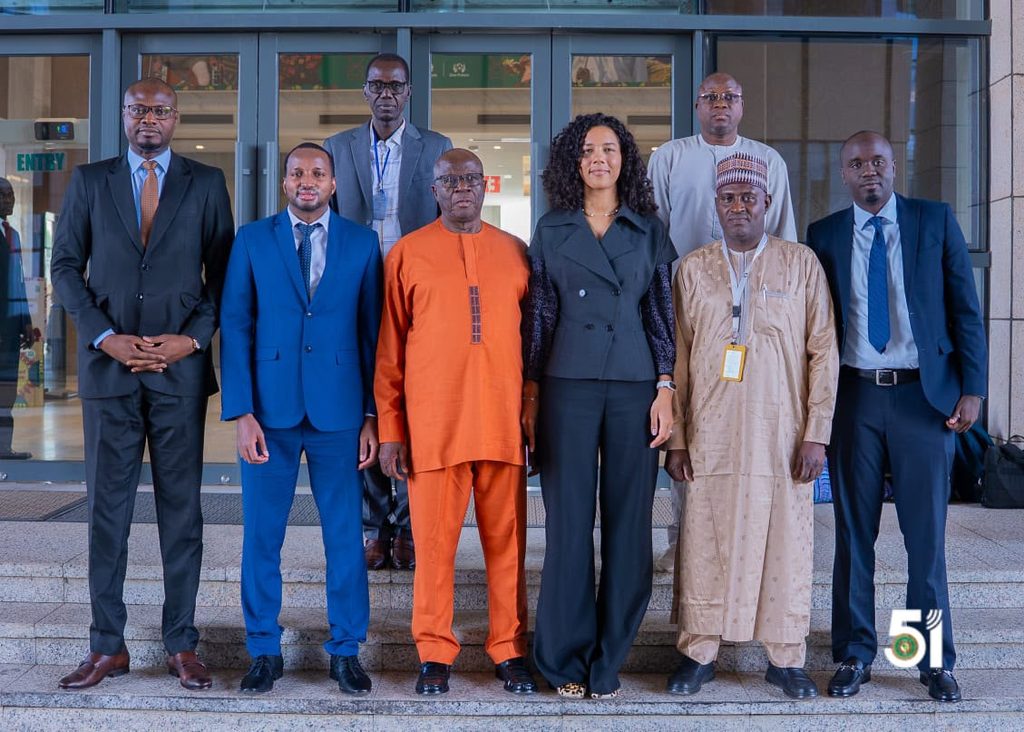
The mission commenced with a meeting between the World Bank delegation and the ECOWAS Commissioner for Infrastructure, Energy and Digitalisation, Amin Amidu, during which the Directorate of Energy and Mines briefed the Commissioner on the project’s objectives, implementation arrangements and ongoing collaboration with the World Bank.
Amidu, who assumed office on 1 September 2026, reaffirmed his commitment to monitoring the Directorate’s activities, acknowledging that inadequate electricity access remains one of the major development challenges confronting West Africa.
He noted that limited financial resources continue to constrain efforts to close the regional electricity gap, stressing the importance of sustained partnerships and strategic investments in the energy sector.
The Director of the ECOWAS Directorate of Energy and Mines, Arkadius Koumoin, underscored the importance of electricity as a fundamental driver of socioeconomic development.
He observed that the continued absence of electricity in many rural communities across West Africa remains a significant obstacle to improved livelihoods, economic opportunities and inclusive growth.
Koumoin reaffirmed ECOWAS’s commitment to coordinated regional interventions, noting that access to reliable and sustainable energy remains central to the organisation’s Vision 2050 aspiration of building a more integrated, prosperous and people-centred West Africa.
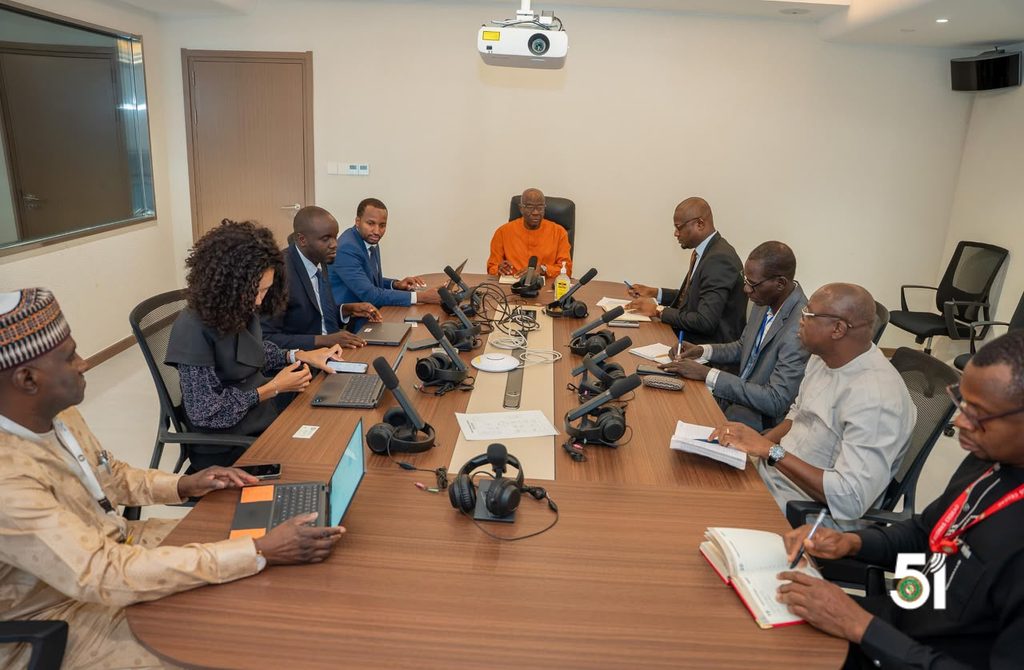
The World Bank’s Task Team Leader for the RAISE Project, Ebrima Bah, described the initiative as an important regional development intervention and commended the progress recorded so far.
He noted that the project had benefited from lessons and experiences gained from previous initiatives, providing a favourable foundation for implementation. He expressed optimism that the project could be completed within three to four years.
The mission will also examine critical implementation components, including the preparation of the 2027 Annual Work Plan and Budget, environmental and social safeguards, regional procurement activities, financial management arrangements and national procurement processes in Togo and The Gambia.
The RAISE Project became effective on 29 October 2026, following a US$10 million grant agreement signed between ECOWAS and the World Bank in July 2026 to facilitate regional coordination and implementation.
The RAISE Project comes against the backdrop of persistent electricity access challenges across West Africa, where inadequate infrastructure, high generation costs, unreliable supply and affordability constraints continue to undermine economic development.
Despite progress in expanding electricity infrastructure, significant disparities remain between urban and rural communities, with many households and businesses still lacking access to reliable power.
The electricity deficit has particularly affected rural economies, limiting opportunities for small businesses, agricultural processing, digital services and other productive activities that depend on dependable electricity.
The World Bank has identified infrastructure constraints, high electricity generation costs, affordability challenges and weaknesses in power sector institutions as major obstacles to expanding electricity access across the region.
In Togo and The Gambia, the RAISE Project is designed to address these challenges through expanded electricity distribution networks, household connections and renewable energy development.
The World Bank estimates that the initiative could generate labour income gains equivalent to approximately 11,700 jobs annually through direct and indirect economic effects, including about 9,200 in Togo and 2,500 in The Gambia.
Beyond its immediate targets in Togo and The Gambia, RAISE forms part of broader efforts to strengthen regional electricity infrastructure, improve cross-border power trade and accelerate access to affordable and sustainable energy across West Africa.
The initiative complements the West Africa Regional Electricity Market Programme (WA-REMP), a regional framework supported by the World Bank to strengthen electricity trade, improve energy security and expand access to power across the sub-region.
The programme, approved by the World Bank in January 2025 with an initial financing framework of US$1.6 billion, builds on the work of the West African Power Pool (WAPP), which is developing an interconnected electricity market to enable countries to exchange power and make more efficient use of available generation resources.
The regional integration programme builds on more than 4,000 kilometres of high-voltage transmission lines constructed to connect electricity networks across 15 West African countries, facilitating cross-border electricity trade.
The wider regional electricity agenda has also contributed to improved electricity services for more than three million people across six West African countries between 2019 and 2025.
RAISE complements these interventions by focusing on the last-mile challenge of connecting underserved communities and households to electricity while encouraging renewable energy development.
The project also aligns with the World Bank’s Mission 300 ambition to provide electricity access to 300 million people across sub-Saharan Africa by 2030.
Through these complementary initiatives, ECOWAS and the World Bank are pursuing a coordinated approach that combines regional electricity integration with investments in local distribution networks, renewable energy and household connections.
The successful implementation of RAISE is therefore expected to contribute not only to improved electricity access in Togo and The Gambia but also to ECOWAS’s broader objectives of regional integration, economic transformation and sustainable development.
ECOWAS, World Bank Intensify Drive to Bridge West Africa’s Electricity Gap, Target 1,800 Communities
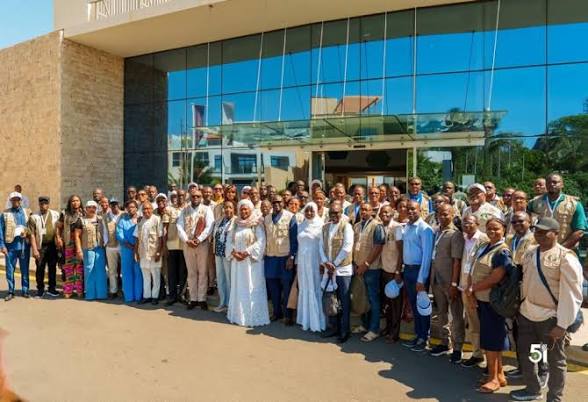
ECOWAS deploys observers across nine islands for Cabo Verde presidential election
…Says no major threat to peaceful polls as UN, AU, other international missions coordinate monitoring
By: Michael Mike
The Economic Community of West African States (ECOWAS) has deployed election observers across all nine inhabited islands of Cabo Verde to monitor the country’s presidential election held on Saturday, expressing confidence in the peaceful conduct of the electoral process.
The regional bloc said its pre-election assessment had identified no significant threat to the peaceful conduct of the poll, describing the island nation as a strong democratic example in a West African region grappling with political instability and unconstitutional changes of government.
The ECOWAS Election Observation Mission, led by former Gambian Vice-President, H.E. Fatoumatta Jallow-Tambajang, completed its pre-election engagements in Praia, the country’s capital, with activities including the deployment of observers, consultations with international partners and meetings with presidential candidates.
The deployment on November 13 was accompanied by an engagement with the United Nations Special Representative for West Africa and the Sahel, Leonardo Santos Simão, who underscored ECOWAS’s leadership in addressing political and security challenges in the region.
“No one is more important than ECOWAS in this region,” Simão said, reaffirming the importance of regional cooperation in safeguarding democratic processes and political stability.
On November 14, Jallow-Tambajang met with presidential candidate José Maria Neves and convened a meeting of heads of international election observation missions at the ECOWAS Situation Room in Praia.
The meeting brought together representatives of the African Union (AU), the Community of Portuguese Language Countries (CPLP), the ECOWAS Network of Electoral Commissions (ECONEC), the Network of Jurisdictional and Electoral Administration Bodies of the CPLP (ROJAE-CPLP) and the International Organisation of La Francophonie (OIF).
The ECOWAS Head of Mission was supported by the Commissioner for Political Affairs, Peace and Security, Francess Piagie Alghali, who is leading the technical team of the observation mission.
Presenting the mission’s pre-election assessment, Alghali said the organisation had not identified any major security concern that could undermine the peaceful conduct of the election.
“At this stage, ECOWAS sees no significant threat to the peaceful conduct of the presidential election. Cabo Verde remains a strong democratic example within the West African region,” she said.
The coordinated engagement among the international observation missions was aimed at strengthening cooperation, information-sharing and a common understanding of developments surrounding the electoral process.
During Saturday’s election, Jallow-Tambajang was scheduled to observe the opening of polls in Palmarejo, Praia, visit polling stations in Tira Chapéu, Várzea and Achadinha, and return to Palmarejo to observe the closing and counting of votes, while other ECOWAS observers monitored proceedings across the country’s nine inhabited islands.
The mission is expected to issue its preliminary statement on the electoral process on November 17.
The election is significant against the background of Cabo Verde’s reputation for political stability and peaceful democratic transitions in a region that has experienced military coups, political instability and contested transfers of power.
Cabo Verde transitioned from a one-party system to multiparty democracy in 1991, when the opposition Movement for Democracy (MpD) defeated the long-ruling African Party for the Independence of Cabo Verde (PAICV) in the country’s first multiparty elections. Since then, the two major political parties have alternated in power through elections.
The November 15 presidential election is the country’s sixth presidential contest since the introduction of multiparty democracy and features six candidates, including incumbent Neves, who is seeking a second five-year term, and former Justice Minister Joana Rosa, the country’s first female presidential candidate.
Neves won the October 2021 presidential election with approximately 51.7 per cent of the votes, defeating his main challenger, Carlos Veiga, who secured about 42.4 per cent.
Under Cabo Verde’s semi-presidential system, the president is directly elected and exercises constitutional responsibilities that include signing or vetoing legislation, while the prime minister exercises most executive powers. The presidential contest therefore also has implications for the country’s institutional balance and political relations between the presidency and government.
The ECOWAS deployment forms part of the organisation’s broader mandate to promote democratic governance, credible elections and political stability among its member states.
Through its nationwide observation, engagement with political stakeholders and coordination with other international missions, ECOWAS is supporting efforts to ensure a transparent and peaceful electoral process, with its preliminary assessment expected to provide further insights into the conduct of the vote.
ECOWAS deploys observers across nine islands for Cabo Verde presidential election
NSCDC Raises Alarm Over Fake Promotion Notice, Warns Personnel Against Scammers
…Disowns WhatsApp message seeking officers’ names, service numbers and ranks
By: Michael Mike
The Nigeria Security and Civil Defence Corps (NSCDC) has alerted its personnel to a fraudulent notice circulating on WhatsApp, warning that scammers are attempting to harvest officers’ personal and service details under the guise of the 2026 senior promotion exercise.
The Corps, in an official disclaimer on Monday, disowned the notice, which directs personnel to submit their full names, service numbers and present ranks to a designated WhatsApp number, 08031306693.
It described the purported directive as fake, stressing that neither the NSCDC management nor its National Public Relations Office issued the instruction.
The warning comes amid concerns over the growing use of unofficial communication channels by fraudsters to exploit personnel seeking career advancement, particularly during promotion exercises.
In the disclaimer, signed by the National Public Relations Officer, Assistant Commandant of Corps Babawale Afolabi, the Corps urged officers and men to disregard the message and avoid disclosing sensitive service information to unverified individuals or platforms.
It cautioned that the fraudulent request could expose personnel to identity theft, impersonation and other forms of financial or administrative fraud.
The NSCDC clarified that all official matters relating to promotions fall within the jurisdiction of the Secretary to the Civil Defence, Correctional, Fire and Immigration Services Board (CDCFIB).
It added that legitimate promotion-related information is communicated through established administrative channels of the Ministry of Interior and the Corps, rather than through unsolicited WhatsApp messages or personal telephone numbers.
The Corps, therefore, advised personnel to verify all promotion-related information through their appropriate command structures and official administrative channels before acting on any purported directive.
The disclaimer urged officers and men to remain vigilant and ensure that the warning receives wide publicity to prevent unsuspecting personnel from falling victim to the scheme.
The development highlights the vulnerability of internal administrative processes to impersonation and fraud, particularly where career progression and promotion opportunities are involved.
For security personnel, the Corps stressed, the safest approach is to treat unsolicited requests for service records and personal information with suspicion and rely exclusively on officially authorised communication channels.
NSCDC Raises Alarm Over Fake Promotion Notice, Warns Personnel Against Scammers

African Speakers Move to Break Trade Barriers, Harmonise Laws at Liberia Summit

Nigeria Begins $70m Passport Factory, Targets May 2027 for Local Production

Suspected Boko Haram Terrorists Bomb Two High-Tension Electricity Poles Linking Kainji Dam to Jebba in Niger

Roger Federer’s Shock as DNA Results Reveal Myla and Charlene Are Not His Biological Children

THE PLIGHT OF FARIDA

FAILED COUP IN BURKINA FASO: HOW TRAORÉ NARROWLY ESCAPED ASSASSINATION PLOT AMID FOREIGN INTERFERENCE CLAIMS
-
 News3 years ago
Roger Federer’s Shock as DNA Results Reveal Myla and Charlene Are Not His Biological Children
-
Opinions5 years ago
THE PLIGHT OF FARIDA
-
 News2 years ago
FAILED COUP IN BURKINA FASO: HOW TRAORÉ NARROWLY ESCAPED ASSASSINATION PLOT AMID FOREIGN INTERFERENCE CLAIMS
-
 Opinions5 years ago
POLICE CHARGE ROOMS, A MINTING PRESS
-

 News3 years ago
EYN: Rev. Billi, Distortion of History, and The Living Tamarind Tree
-

 ACADEMICS3 years ago
A History of Biu” (2015) and The Lingering Bura-Pabir Question (1)
-

 Columns3 years ago
Army University Biu: There is certain interest, but certainly not from Borno.
-

 Politics1 year ago
2027: Why Hon. Midala Balami Must Go, as Youths in Hawul and Asikira/Uba Federal Constituency Reject ₦500,000 as Sallah Gift
