
News
Tinubu Committed To Improving Lives Of Vulnerable Nigerians, Says Shettima

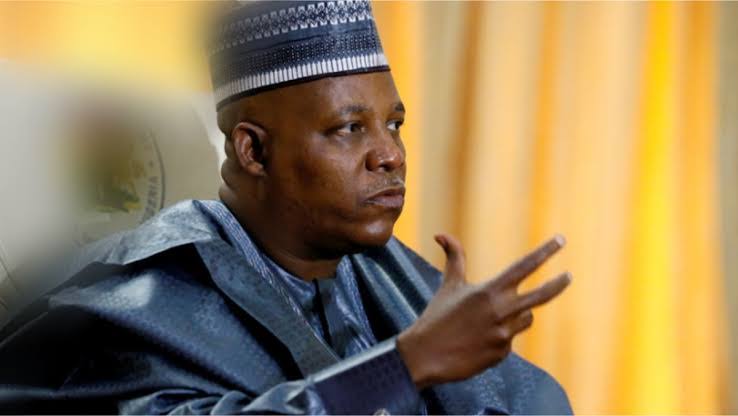
Tinubu Committed To Improving Lives Of Vulnerable Nigerians, Says Shettima
By: Our Reporter
Vice President Kashim Shettima has restated President Asiwaju Bola Ahmed Tinubu’s commitment to the Renewed Hope Agenda and his administration’s focus on improving the socio-economic conditions of Nigerians living in the most vulnerable communities in the country.
He spoke on Tuesday when the Presidential Committee on Flood Mitigation, Adaptation, Preparedness and Response submitted a comprehensive report to him at the Presidential Villa in Abuja.
The committee’s report outlines a roadmap for improving the country’s flood response and preparedness.
The report is based on the findings of three previous and ongoing assignments, including the National Economic Council Ad hoc Committee Report on Flood (ongoing), the National Flood Emergency, Preparedness and Response Plan (2022), and the Report of the Presidential Committee on Development of Comprehensive Plan of Action for Preventing Flood Disasters in Nigeria (2022).
At the formal presentation of the committee’s report, the Vice President gave a definite position to speculations about the reality or otherwise of the impact of climate change in Nigeria.
He said, “Climate change is real and the existential threat it poses is glaring at us every day, from the extreme events being witnessed across the globe to the devastating climate facing Africa. Africa is disproportionately impacted and bringing it home to Nigeria, we have been witnessing drought, flood, etc. The saying on the climate crisis is that it is either too much (floods), too little (drought) or too polluted.
“We are all gathered to find a solution for the “too much” scenario that is flooding. Flood events have, in the past, affected communities with devastating impacts on livelihoods, people and the environment with loss of lives witnessed in some cases such as the last flood witnessed in 2022″.
Describing the report as a testament to President Tinubu’s commitment to the Renewed Hope Agenda, VP Shettima stated categorically that the Tinubu administration is focused on improving the socio-economic conditions of Nigeria’s most vulnerable communities.
The Vice President noted that in drafting the report, the committee was guided by science and forecasts from agencies such as the Nigerian Meteorological Agency (NiMet), the National Space Research and Development Agency (NASRDA) and the Nigeria Hydrological Services Agency (NIHSA).
The report, according to him, identifies vulnerable communities prone to flooding and presents a roadmap with recommendations to address the issue.
Commending the committee for its hard work and dedication, Sen. Shettima said, “I would like to start by thanking this Committee for the hard work, commitment and dedication put in to develop the report.
“I particularly thank everyone for the time put in to deliver this assignment within the 7 days that I directed when we first met at this very chamber, which meant you all had to work through the weekend. The mandate was clear and it was delivered.”
The VP also directed the committee to present the report to the National Economic Council (NEC) for further deliberations and possible ascension by the council.
Earlier in his presentation, Prof. Emmanuel Adanu, the Director General of the National Water Resources Institute, a member of the Presidential Committee and Chairman of the Technical Working Group spoke about the major causes of flooding in Nigeria and the strategies for mitigating its impact.
He said the ultimate objective of the work of the committee is “to protect the nation from the devastating impacts of floods, safeguarding human lives and property while promoting the sustainable conservation and enhancement of water-related ecosystems.”
Prof. Adanu, however, noted that beyond the efforts of stakeholders in the public and private sectors, individuals and communities are required to pay attention to issues relating to drainage maintenance and healthy environmental practices.
Tinubu Committed To Improving Lives Of Vulnerable Nigerians, Says Shettima


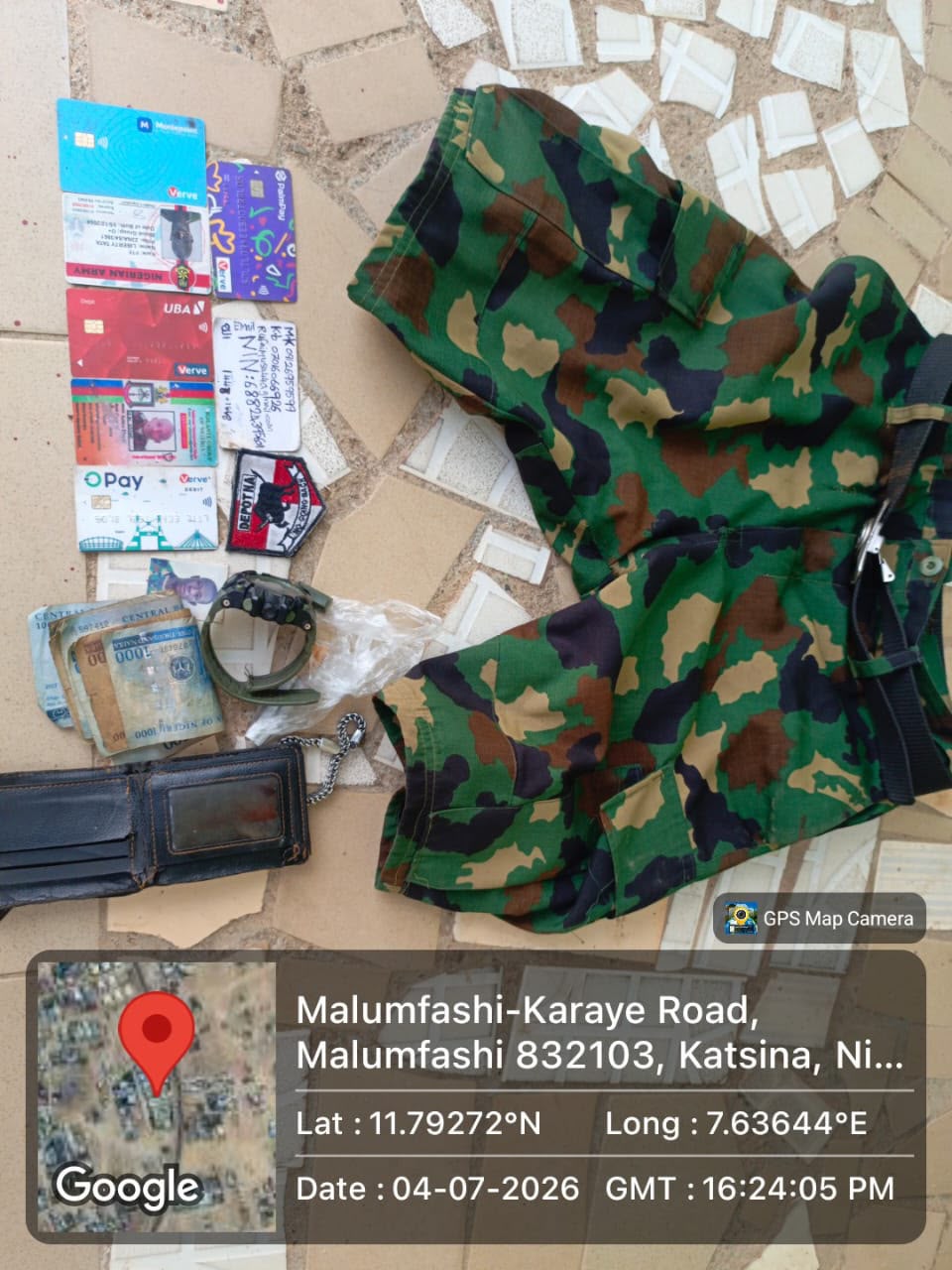
Troops Arrest Suspected Military Impostor in Katsina
By Zagazola Makama
Troops of 17 Brigade have arrested a suspected military impostor during a fighting patrol in Malumfashi Local Government Area.
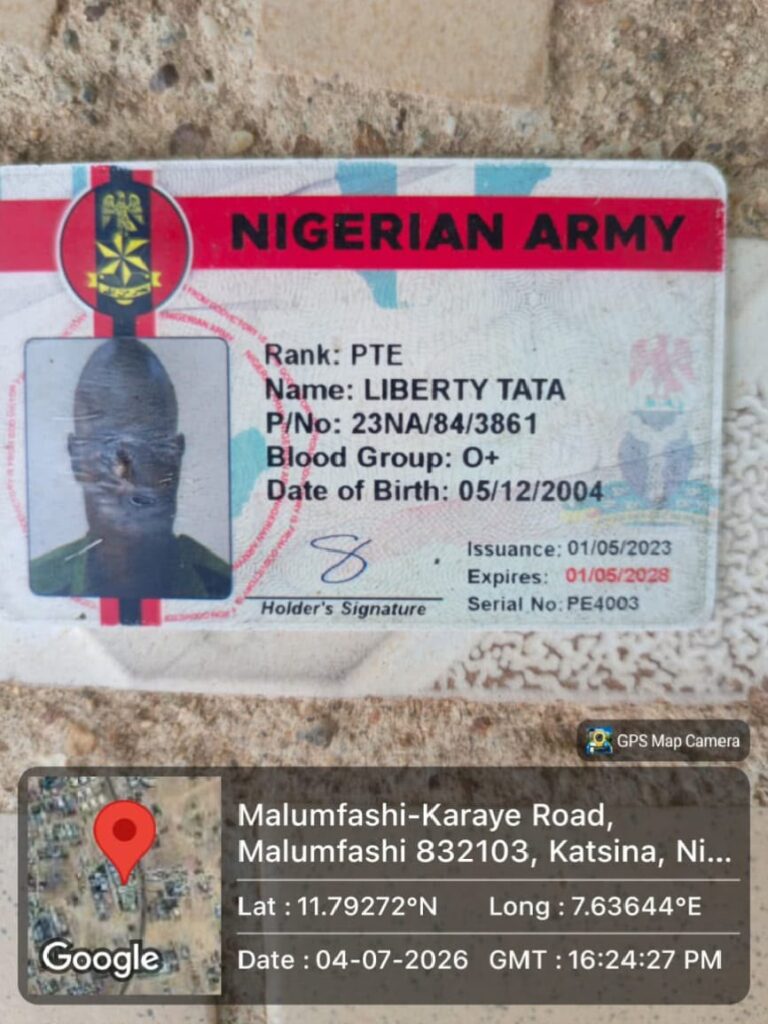
Security sources told Zagazola Makama that the suspect was apprehended at about 1:30 p.m. on July 4 by troops deployed at the Forward Operating Base (FOB) Malumfashi while conducting routine patrols within Malumfashi town.
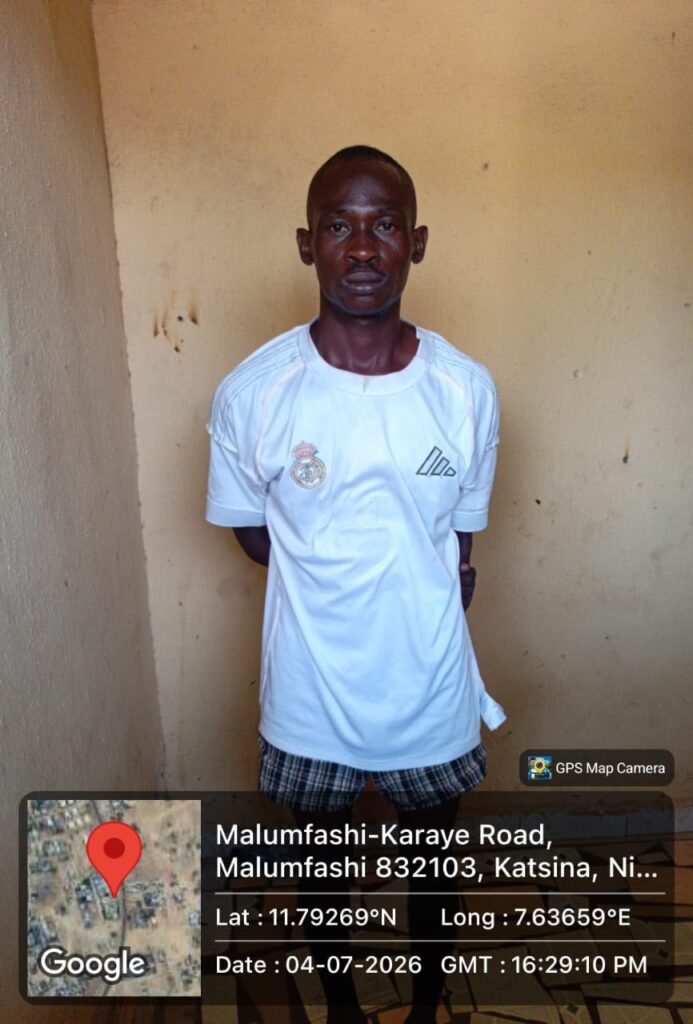
According to the sources, the suspect was intercepted while wearing a woodland camouflage three-quarter short, raising suspicion among the troops.
A search conducted on the suspect led to the recovery of a fake Nigerian Army identity card, four Automated Teller Machine (ATM) cards, one woodland camouflage three-quarter short, a wristwatch and the sum of ₦17,000.
The suspect and the recovered exhibits are currently in military custody pending further investigation.
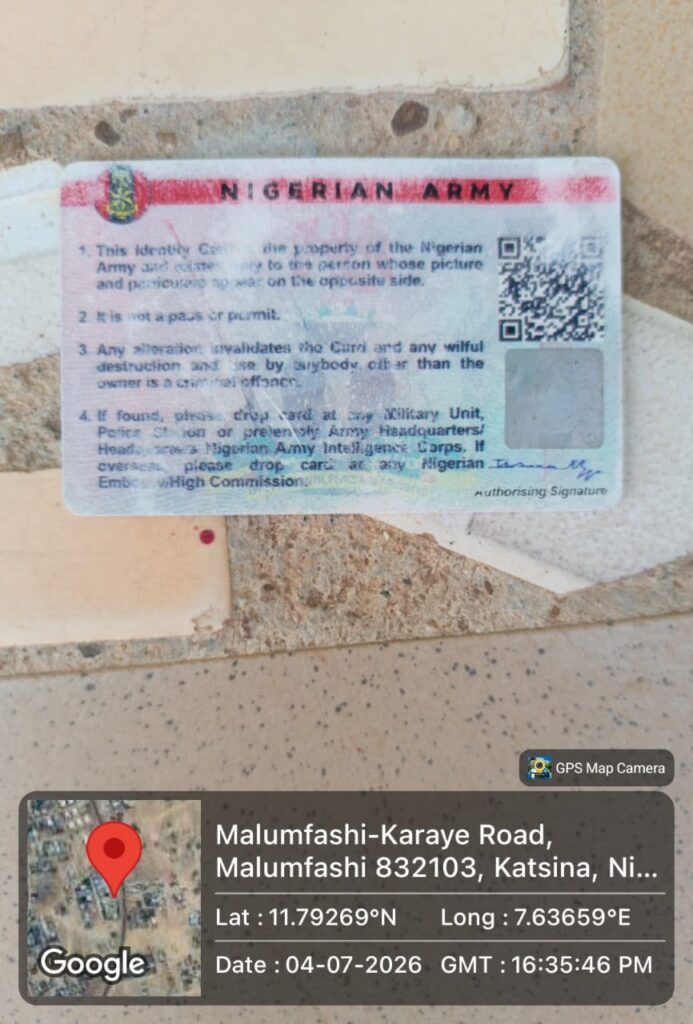
Military sources said the arrest forms part of ongoing efforts to curb impersonation of security personnel and other criminal activities within the area.
Troops Arrest Suspected Military Impostor in Katsina
Troops Recover 50 Rustled Cattle, Repel Suspected Rustlers in Kaduna
By Zagazola Makama
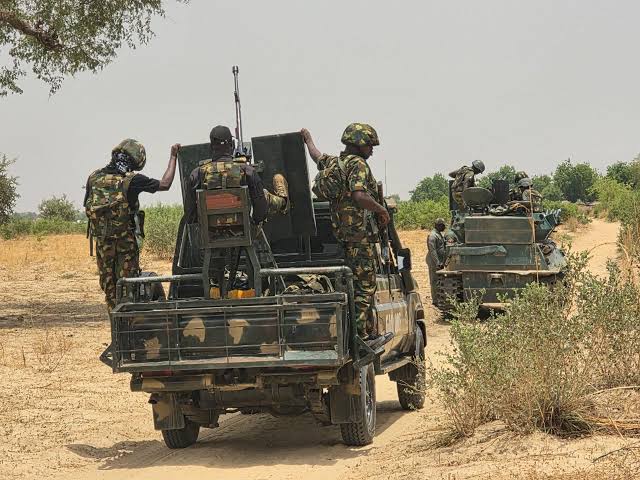
Troops deployed at the Forward Operating Base (FOB) Kankomi have recovered 50 rustled cattle after repelling suspected cattle rustlers during an ambush operation in Chikun Local Government Area.
Security sources told Zagazola Makama that the troops responded to a distress call at about 9:55 a.m. on July 4 over the activities of suspected rustlers at Ungwan Gontu community.
According to the sources, the troops swiftly laid an ambush and made contact with the fleeing suspects, forcing them to abandon the stolen livestock and escape into the surrounding area.
During the operation, the troops recovered 50 rustled cattle, which were subsequently identified and handed over to their rightful owner.
Military sources said efforts are ongoing to track down the fleeing suspects as security operations continue to combat cattle rustling and other criminal activities across Kaduna State.
Troops Recover 50 Rustled Cattle, Repel Suspected Rustlers in Kaduna
Troops Arrest Suspected Terrorist in Kogi, Suspect Confesses to Group Membership
By Zagazola Makama
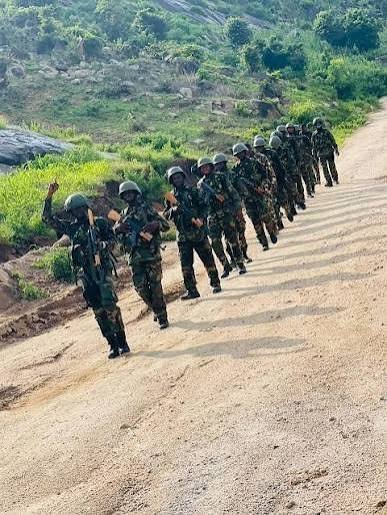
Troops of 12 Brigade, in collaboration with Office of the National Security Adviser (ONSA) Hybrid Forces, have arrested a suspected terrorist during an operation in Lokoja Local Government Area.
Security sources told Zagazola Makama that the troops responded at about 1:00 p.m. on July 4 to reports of a confrontation between local residents and a suspected terrorist at a Ruga settlement behind Obajana community.
According to the sources, the troops swiftly intervened and arrested one suspect at the scene.
During preliminary interrogation, the suspect reportedly confessed to being a member of a terrorist group led by an individual identified as Haruna, which allegedly operates within the Okene general area.
The suspect is currently in military custody and is undergoing further investigation to establish the extent of his involvement and identify other members of the group.
Military sources said the arrest forms part of ongoing security operations aimed at dismantling terrorist and criminal networks across Kogi State.
Troops Arrest Suspected Terrorist in Kogi, Suspect Confesses to Group Membership

Troops Arrest Suspected Military Impostor in Katsina

Troops Recover 50 Rustled Cattle, Repel Suspected Rustlers in Kaduna

Troops Arrest Suspected Terrorist in Kogi, Suspect Confesses to Group Membership

Roger Federer’s Shock as DNA Results Reveal Myla and Charlene Are Not His Biological Children

THE PLIGHT OF FARIDA

FAILED COUP IN BURKINA FASO: HOW TRAORÉ NARROWLY ESCAPED ASSASSINATION PLOT AMID FOREIGN INTERFERENCE CLAIMS
-
 News2 years ago
Roger Federer’s Shock as DNA Results Reveal Myla and Charlene Are Not His Biological Children
-
Opinions4 years ago
THE PLIGHT OF FARIDA
-
 News1 year ago
FAILED COUP IN BURKINA FASO: HOW TRAORÉ NARROWLY ESCAPED ASSASSINATION PLOT AMID FOREIGN INTERFERENCE CLAIMS
-

 News2 years ago
EYN: Rev. Billi, Distortion of History, and The Living Tamarind Tree
-
 Opinions5 years ago
POLICE CHARGE ROOMS, A MINTING PRESS
-

 ACADEMICS2 years ago
A History of Biu” (2015) and The Lingering Bura-Pabir Question (1)
-

 Columns2 years ago
Army University Biu: There is certain interest, but certainly not from Borno.
-

 Politics1 year ago
2027: Why Hon. Midala Balami Must Go, as Youths in Hawul and Asikira/Uba Federal Constituency Reject ₦500,000 as Sallah Gift
