
News
Residents of Bokkos, Barkin Ladi blames Government over Christmas Eve attacks

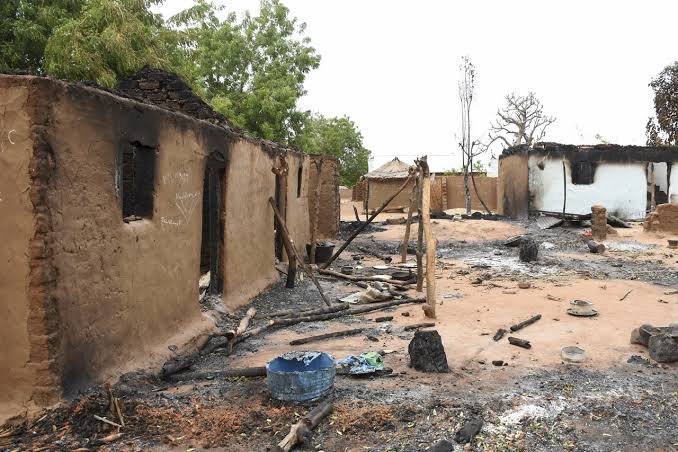
Residents of Bokkos, Barkin Ladi blames Government over Christmas Eve attacks
By: Our Reporter
Arising from a meeting on New Year’s Day, Leaders and Youths in Bokkos and Barkin Ladi of Plateau State, North Central Nigeria, have concluded that the attacks on their communities, which resulted in the killings of over 100 people, were the result of the laxity of the government’s security operatives, especially soldiers and police, who should be proactive in their operations to save lives and property of the people.
According to reports filtered from the meeting alledgedly held by the community leaders and some representatives of the youths as well as some important personalities from the area, the situation in their area calls for reflection on their existence if they are to continue to leave in their ancestral homes, a place they can call their own.
“We have welcomed other tribes, particularly the Fulanis, for ages. We gave them a place to stay, and today they are turning against us with weapons and killing our people. We cried out several times to the government, but each time we did, the next blood shed worsened. This calls for us to look inward and redefine our position with our visitors. We should not wait for another slaughter before we sit down to talk again. The government has come, and they all state the usual, but that is politics. We should not allow them to continue to gain from our blood while the perpetrators are out there.” Elder Elijah Dangana alledgedly said.
It was gathered that so many residents who came from far and near for Christmas and the new year in Jos only to meet with the ugly situation described the government as weak and unable to defend its citizens.
Mrs. Esther Bulus said she lost her aunt and her two sons to the unfortunate attack in Bokkos. “We came to bury our aunty and her two sons, not to celebrate Christmas. These evil people have continued to attack our villages, and the Nigerian government is watching and doing nothing. We have asked our leaders to speak out unless they want us to be wiped out completely. My uncle, the Reverend, was able to escape, but I lost three people dear to me. This is unforgivable.”
While the people count their losses and the period of mourning continues with stories vexing the heart and the community meetings revealing the position of the people and the next steps they hope to take in self-defense, the Chief of Defence Staff of Nigeria, General Christopher Musa, revealed that the purpose of the attack in Plateau State is to embarrass and make the government look stupid.
General Christopher Musa said this while speaking in an interview with Channels TV, where he stressed that the area where the attack occurred was large and that the military couldn’t react as quickly as some might have expected.
He said, “There was no good reason for the attack. It was done with impunity. The purpose is to embarrass everybody and to make the government look stupid. And whoever did it was up on their heels. We are making some arrests already, and we can assure Nigerians that we are on top of the game.
“One thing I want us to understand is that the general area where this incident occurred is not small. A lot of people just think it’s just a small area, and they ask, Why couldn’t the military react as quickly as possible?”.
However, some residents of the area told newsmen in Jos that the CDS was also trying to protect the government position, as those people reacting to the inaction of the security operatives are mostly inhabitants and know what they are saying.
“The statement of the CDS on Channels TV is only political. If the government is truly working, what are all the intelligence agencies doing? We have been shortchanged by political voices that make us look stupid.. Alexander Moses said:.
Residents of Bokkos, Barkin Ladi blames Government over Christmas Eve attacks



Beyond the Frontline: Ashlee Momoh Foundation Restores Hope to Widows of Fallen Heroes
By Comrade Philip Ikodor
KADUNA – When a soldier falls in the line of duty, the echoes of the final salute eventually fade, but for the families left behind, a silent and grueling battle begins. While these brave men defended the nation’s sovereignty with courage, their widows are often left to navigate a minefield of poverty, trauma, and social isolation.
In a decisive move to address these challenges, the Ashlee Momoh Foundation (AMF) held a special outreach event at the Golden Orange Gate Hotel in Kaduna State on Thursday, May 21, 2026. The initiative sought to provide a lifeline to the families of departed heroes, framed not as charity, but as a profound national debt of gratitude.
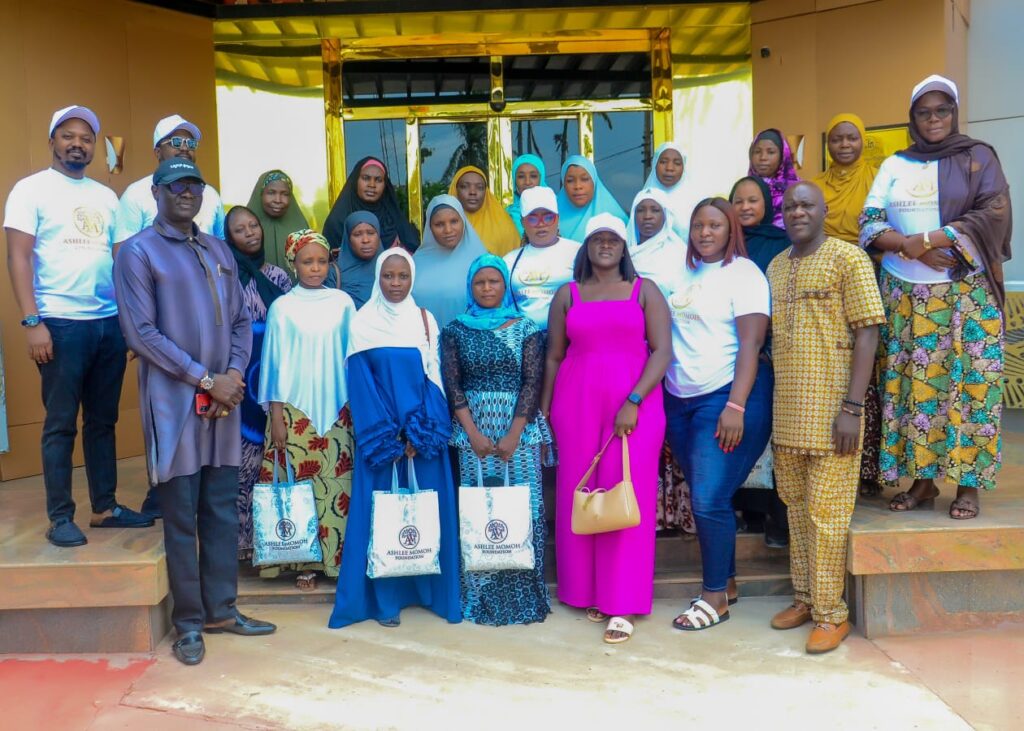
The Chairperson and CEO of the Foundation, Princess Ashlee Momoh, emphasized that the AMF remains committed to ensuring no widow walks alone. She noted that the sacrifice of a soldier continues in the quiet hallways of homes where wives suddenly become sole providers.
“Many military widows face a daunting reality: sudden loss of income, housing insecurity, and a lack of access to specialized mental health support,” Princess Momoh stated. “Unless intentional interventions are made, these families remain trapped in a cycle of hardship that dishonors the legacy of the departed. Your story does not end in sorrow; it continues in purpose.”

Princess Momoh outlined the Foundation’s three strategic pillars designed to bridge the gap between loss and self-sufficiency:
Economic Independence: Providing small business grants, financial literacy, and vocational skills to restore dignity and autonomy.
Securing the Future: Offering scholarships and tuition assistance so that children do not pay for their fathers’ patriotism with their education. Emotional Fortitude: Establishing counseling and wellness groups to ensure widows are seen, heard, and sustained.

The Chairperson called for a “whole-of-society” approach, urging the government, private sector, and philanthropic organizations to join in collective action. While government intervention is pivotal, she noted that partnerships are essential to scaling the impact of these programs.
The event featured the distribution of empowerment gift items and the announcement of new scholarship awards. Prominent guests, partners and volunteers in attendance included Special Guests of Honor, Air Commodore Chris Dola (Rtd), PhD, and General Brown Yakubu (Rtd), CEO of Golden Orange Gate Hotel, both of whom delivered goodwill messages and also contributed immensely in support of the Foundation’s mission.
Beyond the Frontline: Ashlee Momoh Foundation Restores Hope to Widows of Fallen Heroes
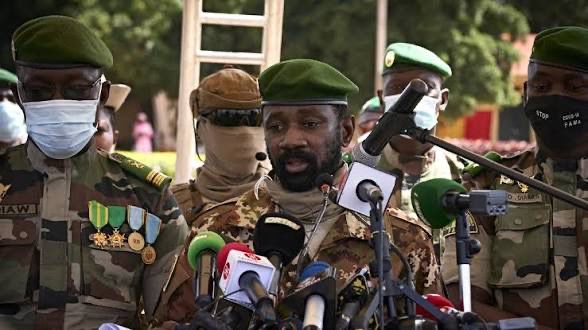
Mali Protests Saudi Media Reports, Accuses Journalists of Sowing Disinformation
By: Zagazola Makama
The Government of Mali has lodged a formal diplomatic protest with the Kingdom of Saudi Arabia over recent media reports concerning the security situation in northern Mali, particularly around the Kidal region.
The protest follows broadcasts by Saudi-based media outlets Al Arabiya and Al Hadath, which Bamako described as misleading and damaging to the image of the Malian Armed Forces (FAMa).
In a statement issued by the Ministry of Foreign Affairs on May 17, 2026, the Malian authorities accused journalist Ibrahim Moustapha, correspondent for the two networks, of entering the country “illegally” and operating in “flagrant violation of Mali’s sovereignty.”
The government further alleged that the journalist may have had links with armed groups operating in the region, an accusation the authorities extended to the content of the reports aired by the networks, which Bamako described as “false, unfounded and aimed at undermining national institutions.”
The reports in question reportedly focused on security developments in northern Mali, including the Kidal axis, an area where state authority has faced persistent challenges from armed groups.
The diplomatic note also warned that such reporting could strain relations between Mali and Saudi Arabia, a country Bamako described as a “long-standing friend and partner.”
The development comes amid ongoing debate over press freedom and media access in Mali, where international organisations have repeatedly raised concerns about restrictions on journalists and shrinking civic space under the transitional authorities.
Observers note that Mali has in recent years tightened oversight of media operations through regulatory bodies, including suspensions of outlets and prosecutions linked to alleged dissemination of false information.
Bamako’s action has renewed discussion on the role of journalists in conflict zones, with media rights advocates maintaining that independent reporting remains a core element of international humanitarian law, provided journalists do not take part in hostilities.
Tensions reportedly escalated further after Al Arabiya broadcast footage showing Malian soldiers allegedly held captive in the north, a development the government also condemned as an infringement on national sovereignty.
While the Malian authorities maintain that media coverage must respect territorial integrity and security sensitivities, press freedom advocates argue that conflict reporting does not necessarily require prior authorisation from parties to a conflict.
The situation has raised concerns over possible diplomatic friction between Bamako and Riyadh, although no official response has yet been issued by the Saudi authorities or the media organisations involved.
Any prolonged disagreement could carry broader diplomatic and economic implications for Mali, which continues to navigate complex security and international relations challenges in the Sahel region.
Mali Protests Saudi Media Reports, Accuses Journalists of Sowing Disinformation
News
Chief Imam of Ogbomoso calls for stiff punishment for kidnappers, urges FG to enforce maximum penalties
Chief Imam of Ogbomoso calls for stiff punishment for kidnappers, urges FG to enforce maximum penalties
By: Zagazola Makama
The Chief Imam of Ogbomoso has called on the Federal Government to adopt stricter measures against kidnappers and armed criminals involved in attacks on schools and abduction of children, urging that offenders be made to face the full weight of the law.
The religious leader made the call while reacting to recent cases of school attacks, killings of teachers, and abduction of pupils in parts of the country, describing such acts as grave crimes against humanity and unacceptable under any moral or legal standard.
He stressed that individuals who engage in kidnapping, killing of innocent civilians and terrorising communities should not be granted leniency, amnesty or reintegration, but should instead be prosecuted and subjected to the maximum penalties prescribed under Nigerian law.
The Chief Imam said religious teachings emphasise justice, protection of innocent lives and accountability for those who commit serious crimes, adding that insecurity affecting schools and rural communities must be confronted decisively by the state.
He called on security agencies and judicial authorities to ensure that arrested suspects are properly prosecuted in accordance with due process, while urging government to strengthen protective measures around vulnerable communities, especially schools and rural settlements.
According to him, sustained attacks on teachers, children and civilians undermine national stability and require a firm and coordinated response from both security and justice institutions.
The Imam further urged policymakers to prioritise the safety of citizens over considerations that may weaken deterrence, insisting that justice must be seen to be served in order to restore public confidence in the security system.
He, however, maintained that all actions must remain within the framework of the law, stressing that the rule of law remains central to any sustainable response to insecurity.
Chief Imam of Ogbomoso calls for stiff punishment for kidnappers, urges FG to enforce maximum penalties

Beyond the Frontline: Ashlee Momoh Foundation Restores Hope to Widows of Fallen Heroes

Mali Protests Saudi Media Reports, Accuses Journalists of Sowing Disinformation

Chief Imam of Ogbomoso calls for stiff punishment for kidnappers, urges FG to enforce maximum penalties

Roger Federer’s Shock as DNA Results Reveal Myla and Charlene Are Not His Biological Children

THE PLIGHT OF FARIDA

FAILED COUP IN BURKINA FASO: HOW TRAORÉ NARROWLY ESCAPED ASSASSINATION PLOT AMID FOREIGN INTERFERENCE CLAIMS
-
 News2 years ago
Roger Federer’s Shock as DNA Results Reveal Myla and Charlene Are Not His Biological Children
-
Opinions4 years ago
THE PLIGHT OF FARIDA
-
 News1 year ago
FAILED COUP IN BURKINA FASO: HOW TRAORÉ NARROWLY ESCAPED ASSASSINATION PLOT AMID FOREIGN INTERFERENCE CLAIMS
-

 News2 years ago
EYN: Rev. Billi, Distortion of History, and The Living Tamarind Tree
-
 Opinions4 years ago
POLICE CHARGE ROOMS, A MINTING PRESS
-

 ACADEMICS2 years ago
A History of Biu” (2015) and The Lingering Bura-Pabir Question (1)
-

 Columns2 years ago
Army University Biu: There is certain interest, but certainly not from Borno.
-

 Politics12 months ago
2027: Why Hon. Midala Balami Must Go, as Youths in Hawul and Asikira/Uba Federal Constituency Reject ₦500,000 as Sallah Gift
