
News
It is time for Nigerians to drag the IMF and World Bank

It is time for Nigerians to drag the IMF and World Bank
By Augustine Osayande
The recent directives issued by the Executive Board of the International Monetary Fund (IMF), emerging from its thorough Post Financing Assessment (PFA), have ignited robust debate within Nigeria’s economic circles. Particularly contentious is the Board’s insistence on the Federal Government, led by President Bola Ahmed Tinubu, to fully eliminate all subsidies, including those pertaining to electricity. This call has elicited a spectrum of reactions ranging from commendations for the President’s economic policies to sharp criticisms. Amidst this discourse, the IMF’s recommendations serve as a focal point illuminating the intricate dynamics between external financial pressures and domestic economic imperatives.
Against the backdrop of Nigeria’s formidable economic challenges, the timing of these recommendations couldn’t be more critical. With inflation skyrocketing to an alarming 28.92 percent and food inflation hovering around 30 percent over the past year, coupled with an unprecedented depreciation of the Naira to an all-time low of N1,540 to a dollar, the nation stands at a crossroads in its economic trajectory.
The IMF’s historical involvement in Nigeria’s economic landscape draws scrutiny, notably regarding the implementation of Structural Adjustment Programs (SAPs) during the 1980s and 1990s. While ostensibly aimed at addressing economic crises, these programs often resulted in stringent austerity measures, currency devaluation, and deep cuts to public spending. Critics contend that these policies exacerbated poverty and inequality, perpetuating Nigeria’s economic challenges instead of fostering sustainable development.
A focal point of criticism towards IMF and World Bank interventions is Nigeria’s substantial external debt burden, a significant portion of which is owed to these international financial institutions. This debt overhang severely restricts the country’s fiscal space, diverting resources away from vital sectors like healthcare, education, and infrastructure. Detractors argue that the terms of debt repayment imposed by these institutions exacerbate Nigeria’s economic woes, underscoring the urgent need for more equitable arrangements.
Furthermore, IMF and World Bank loans often come attached with stringent conditions, including fiscal austerity measures and mandates for privatization. While ostensibly aimed at promoting economic stability and growth, these conditions have faced vehement criticism for their adverse impacts on national sovereignty and socio-economic equality. Critics argue that such conditions fail to account for the unique circumstances of countries like Nigeria, advocating instead for a more nuanced and tailored approach to development.
The IMF and World Bank have been accused of espousing neoliberal economic policies that prioritize market liberalization and privatization, often at the expense of domestic industries and vulnerable populations. This critique underscores broader concerns regarding the effectiveness and fairness of these institutions in addressing the needs of developing countries like Nigeria.
In response to these challenges, there is a growing chorus calling for reforms that prioritize the interests and well-being of the Nigerian people. Advocates stress the importance of empowering local communities, fostering sustainable growth, and ensuring equitable resource distribution. This necessitates bolstering domestic institutions, promoting inclusive policies, and fostering partnerships grounded in mutual respect and cooperation.
Ultimately, the ongoing discourse surrounding IMF recommendations in Nigeria reflects broader calls for reform within international financial institutions. By asserting agency and advocating for alternative approaches to development, Nigerians aspire to tackle entrenched economic disparities and pave the way for a more just and prosperous future.
■ Augustine Osayande, PhD, contributed this piece through austinelande@yahoo.com
It is time for Nigerians to drag the IMF and World Bank



Suspected militia kill motorcyclist along Nyong-Bodel road in Plateau
By Zagazola Makama
An unidentified person was killed by suspected militias along the Nyong-Bodel road in Bokkos Local Government Area of Plateau State.
Security sources told Zagazola Makama that the incident occurred at about 3:50 p.m. on Sept. 4, 2026.
According to the sources, troops of Sector 5, Operation Enduring Peace, deployed at Bodel, responded to a report of an attack and killing of the victim along the road.
The troops arrived at the scene and discovered the victim’s corpse alongside his motorcycle, while the suspected attackers fled after sighting the troops.
The corpse was evacuated to a mortuary, while efforts are ongoing to establish the identity of the victim and apprehend the assailants.
Security agencies are also intensifying patrols and surveillance along the route to prevent further attacks and restore confidence among residents and road users.
Suspected militia kill motorcyclist along Nyong-Bodel road in Plateau

Troops launch rescue operation after hospital matron kidnapped in Plateau
By Zagazola Makama
Troops of Sector 5, Operation Enduring Peace, have launched a rescue operation following the abduction of Mrs Sarah Dalang, a matron at Cottage Hospital, Bokkos, Plateau State.
Security sources told Zagazola Makama that the incident occurred at about 2:20 p.m. on Sept. 4, 2026.
According to the sources, the troops responded to a report of the kidnapping and mobilised alongside other security agencies to commence search and rescue operations.
The security personnel conducted operations around suspected hideouts of the kidnappers but no contact was established with the criminals.
Efforts are ongoing to track the kidnappers, locate the victim and secure her safe release.
Security agencies have continued to intensify operations across Bokkos and adjoining areas to disrupt criminal activities and protect residents.
Troops launch rescue operation after hospital matron kidnapped in Plateau
Troops neutralise terrorist, recover four motorcycles in Katsina
By Zagazola Makama
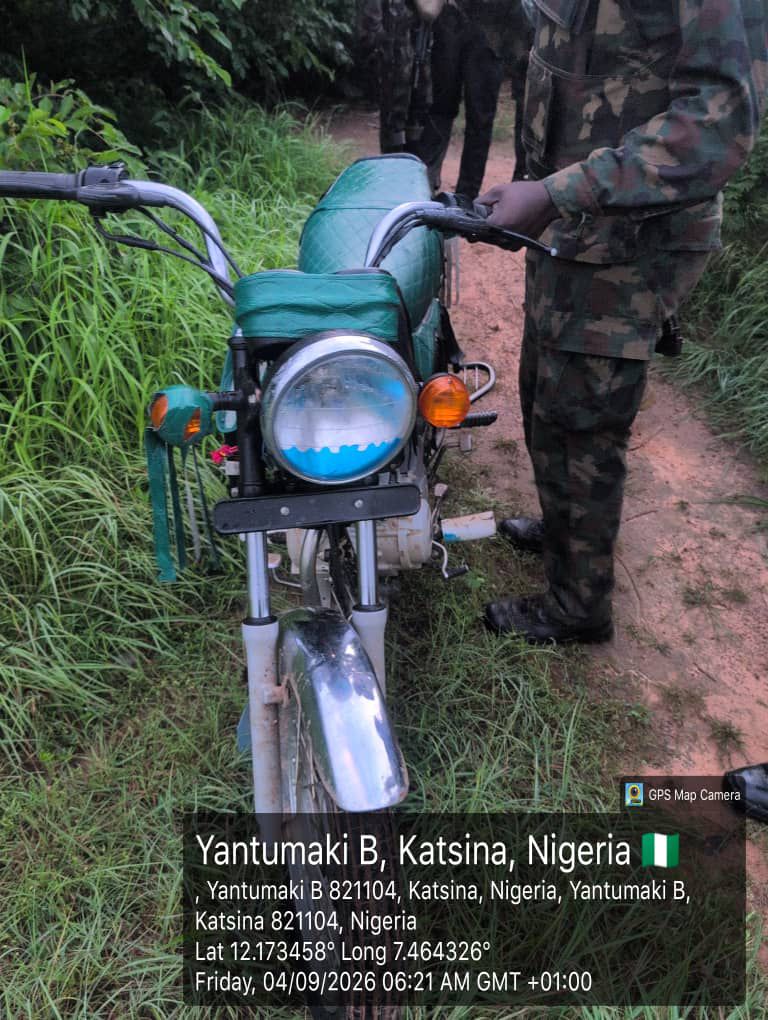
Troops of Sector 1, Joint Task Force North West, Operation Fansan Yamma, have neutralised a terrorist and recovered four motorcycles and other items during a dawn offensive operation in Dan Musa Local Government Area of Katsina State.
The operation was conducted on Sept. 4, 2026, following credible intelligence on the presence of terrorists around the Yantumaki Forest area.
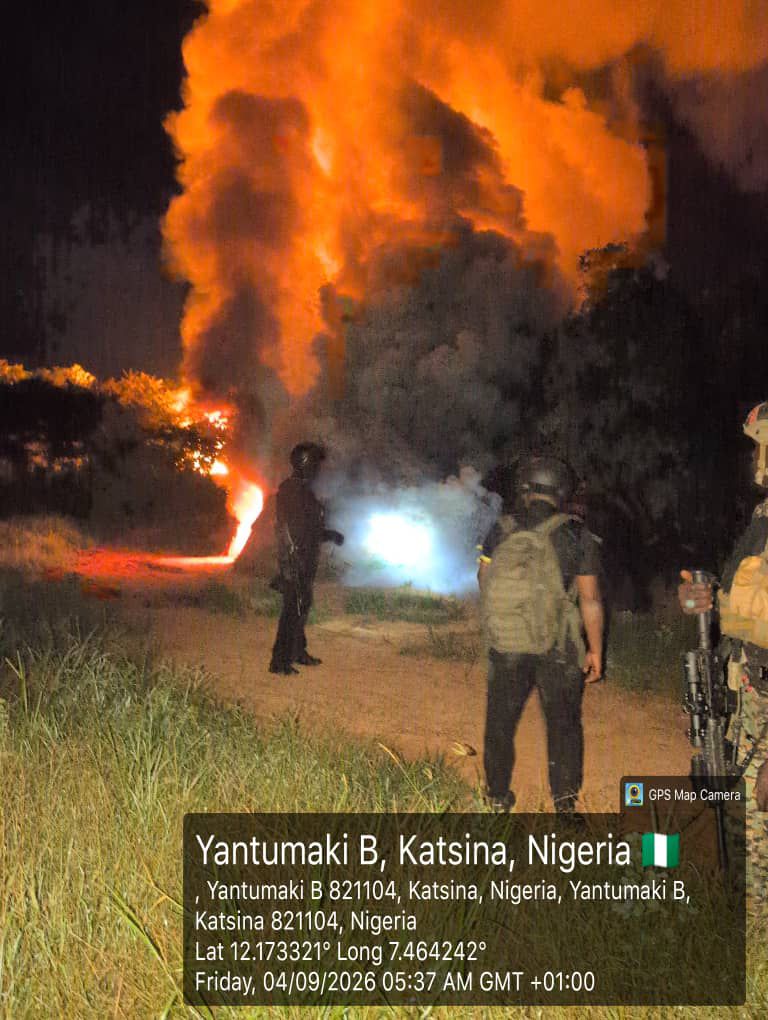
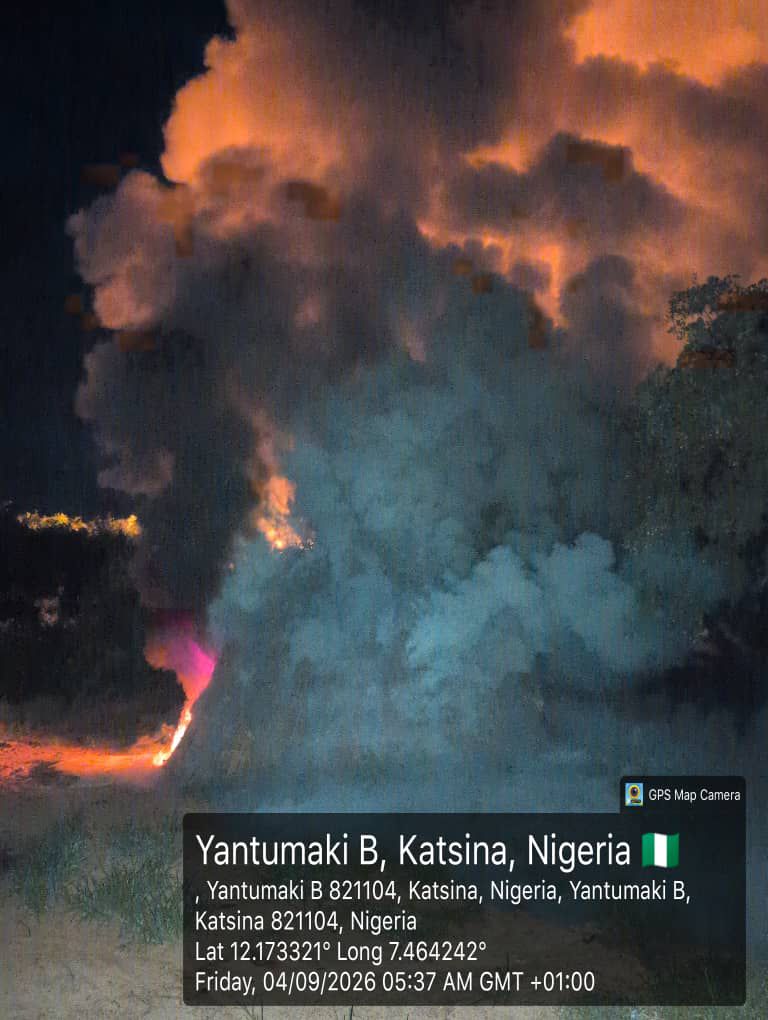
According to security sources, the troops launched a coordinated offensive against the terrorists and engaged them with superior firepower, forcing the surviving elements to flee into the surrounding bushes.
During the subsequent exploitation of the area, the troops confirmed the neutralisation of one terrorist and recovered four motorcycles, one mobile phone and five empty intravenous drip containers.
The recovered medical containers were suspected to have been used in treating wounded terrorists operating in the area.
The operation is part of ongoing efforts by Operation Fansan Yamma to sustain pressure on terrorist networks, degrade their operational capabilities and deny them freedom of movement within the Joint Operations Area.
The theatre has also urged members of the public to continue providing credible and timely information to security agencies to support ongoing operations and facilitate the eradication of terrorist elements across the Joint Operations Area.
Troops neutralise terrorist, recover four motorcycles in Katsina

Suspected militia kill motorcyclist along Nyong-Bodel road in Plateau

Troops launch rescue operation after hospital matron kidnapped in Plateau

Troops neutralise terrorist, recover four motorcycles in Katsina

Roger Federer’s Shock as DNA Results Reveal Myla and Charlene Are Not His Biological Children

THE PLIGHT OF FARIDA

FAILED COUP IN BURKINA FASO: HOW TRAORÉ NARROWLY ESCAPED ASSASSINATION PLOT AMID FOREIGN INTERFERENCE CLAIMS
-
 News2 years ago
Roger Federer’s Shock as DNA Results Reveal Myla and Charlene Are Not His Biological Children
-
Opinions5 years ago
THE PLIGHT OF FARIDA
-
 News1 year ago
FAILED COUP IN BURKINA FASO: HOW TRAORÉ NARROWLY ESCAPED ASSASSINATION PLOT AMID FOREIGN INTERFERENCE CLAIMS
-

 News2 years ago
EYN: Rev. Billi, Distortion of History, and The Living Tamarind Tree
-
 Opinions5 years ago
POLICE CHARGE ROOMS, A MINTING PRESS
-

 ACADEMICS3 years ago
A History of Biu” (2015) and The Lingering Bura-Pabir Question (1)
-

 Columns3 years ago
Army University Biu: There is certain interest, but certainly not from Borno.
-

 Politics1 year ago
2027: Why Hon. Midala Balami Must Go, as Youths in Hawul and Asikira/Uba Federal Constituency Reject ₦500,000 as Sallah Gift
