
News
FG Begins Plan on COP29, Reviews Outcomes of Last Session


FG Begins Plan on COP29, Reviews Outcomes of Last Session
By: Michael Mike
As the nation begins to plan for the the 29th session of the Conference of Parties to the United Nations Framework Convention on Climate Change (COP29) holding in Azerbaijan, the Federal Government has emphasised the need to review the outcomes of the 28th session (COP28) held in Dubai.
The government said the outcomes of the negotiations at COP28 have implications for Nigeria’s development aspirations and climate action across all sectors and as such should be reviewed and the outcomes achieved appraised.
COP of the United Nations Framework Convention on Climate Change (UNFCCC) is the supreme governing body that convenes annually to assess progress in dealing with climate change and make plans for climate action within the UNFCCC guidelines.
COP28 held in Dubai last year sets out the actions needed to keep 1.5°C within reach in line with the goal of the Paris Agreement.
At COP28, Nigeria stressed the request for its inclusion in the G7’s climate partnership list for the Just Energy Transition Partnership towards an effective and sustainable framework in addressing the socio-economic effects of energy transition.
Nigeria also called for urgent scaling up of adaptation finance, expansion of adaptation acceleration programmes, and a substantive global goal on adaptation.
On Tuesday in Abuja, stakeholders gathered to review the outcomes of COP28. The meeting was organised by the National Council on Climate Change and the Delegation of the European Union in Nigeria.
Speaking at the one-day workshop, the Minister of Environment, Balarabe Lawal said the 28th session of the Conference of Parties to the UNFCCC serves as a stark reminder of the urgent need for resolute action in the face of escalating climate crises and environmental challenges.
He said: “With negotiations focused on crucial issues such as mitigation, adaptation, finance, and transparency, the outcomes of COP28 have far-reaching implications for the future of our planet.”
The Minister added that: “As we gear up for COP29, it is imperative that we foster a spirit of collaboration, unity, and shared responsibility, harnessing the collective wisdom, expertise, resources of all stakeholders and firm commitments to advance Nigeria’s environmental goals.
“Nigeria, like many other countries, is already feeling the impacts of climate change. From extreme weather events to rising sea levels, the effects of climate change are evident in our daily lives.”
He noted that stakeholders need to take action and work towards a more sustainable and resilient future for the people and the environment.
On his part, the Director General of the NCCC, Dr Salisu Dahiru noted that as an oil-producing and developing nation, the agreements forged during COP28 pose the need for a strategic review of our national actions and climate goals.
“Hence, this workshop presents a pivotal opportunity for us to reflect on these outcomes and chart a path forward towards sustainable solutions as we speed our transition to a climate-resilient future.
“We seek to facilitate the inclusive participatory process to motivate actions towards seeking higher ambitious goals for our transition to a low carbon economy and to create a forum for government, businesses, states, and other stakeholders to continue to shape and strengthen the climate action processes in Nigeria,” Dr Dahiru stated.
The Head of Cooperation of the Delegation of the EU to Nigeria and ECOWAS, Massimo De Luca urged stakeholders to walk the talk on climate actions.
FG Begins Plan on COP29, Reviews Outcomes of Last Session


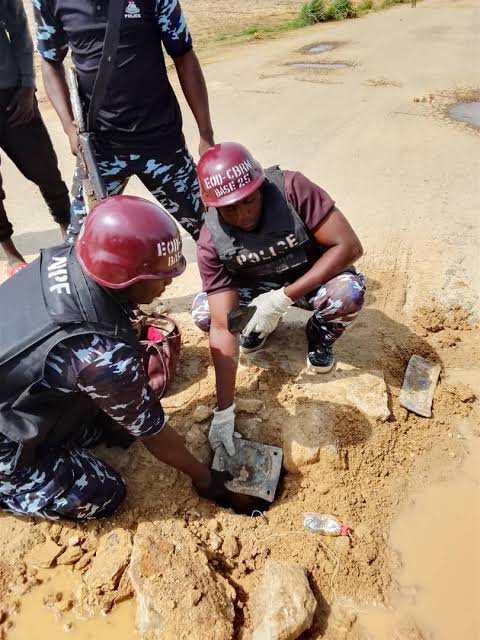
Three Police Officers Killed as IED Explodes in Zamfara State
By: Zagazola Makama
Three police officers have been killed following the explosion of an improvised explosive device (IED) along the Anka–Bagega road in Anka Local Government Area of Zamfara State.
Security sources said the incident occurred on June 15 at about 5:05 p.m. when the Officer-in-Charge of the Explosive Ordnance Disposal (EOD) unit, SP Abdulrazak Musa Hassan, led a team to the area to detonate a suspected explosive device believed to have been planted by armed bandits.
The team, which included personnel of the Violent Crime Response Unit (VCRU), was reportedly conducting a controlled clearance operation using an armoured personnel carrier when the vehicle accidentally triggered the explosive device.
The explosion resulted in the immediate death of SP Abdulrazak Musa Hassan, Inspector Murtala Musa of the VCRU, and Inspector Auwal Ahmad attached to the EOD unit.
Their bodies were evacuated to the Federal Medical Centre (FMC), Gusau, for post-mortem examination.
Authorities said the remains of the officers have been deposited at the hospital morgue, while investigations are ongoing to determine the circumstances surrounding the incident.
Security operations in the area have since been reinforced as efforts continue to clear the road and prevent further attacks.
Three Police Officers Killed as IED Explodes in Zamfara State
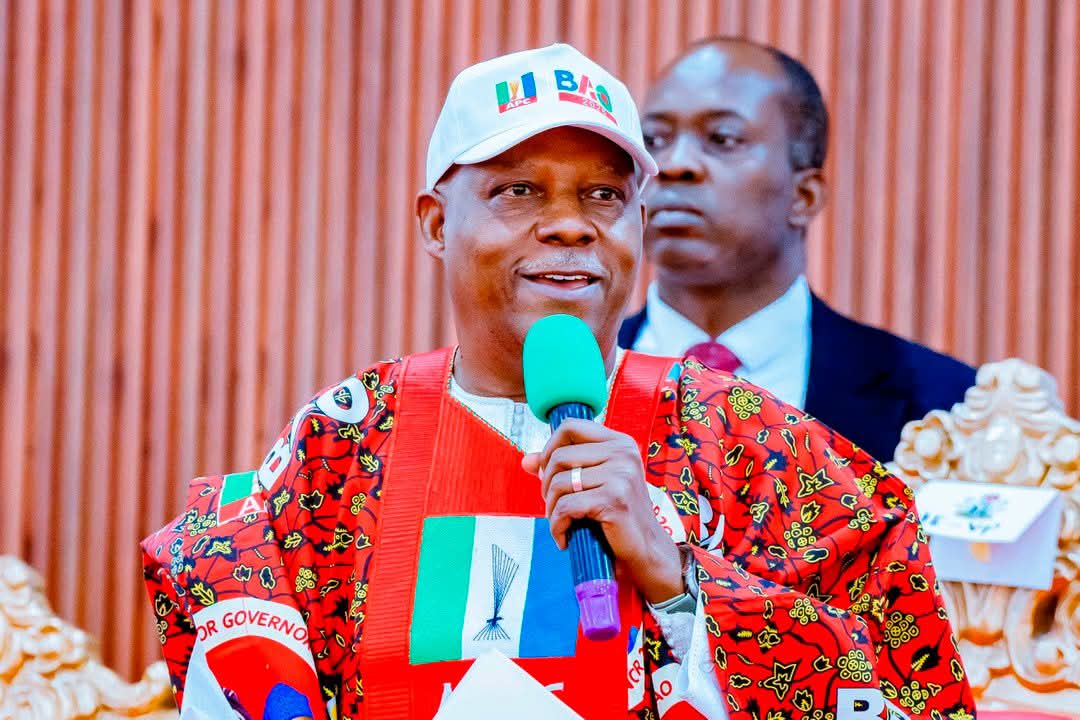
Ekiti 2026: VP Shettima Drums Support For Oyebanji’s Reelection At APC Mega Rally
Says governor’s 2nd term bid is a ticket that deserves renewal, an investment in state’s progress, peace, future
By: Our Reporter
Reiterates FG’s resolve to work with state in deepening development, expanding opportunity, strengthening security
The Vice President, Senator Kashim Shettima , Monday, embarked on a last-minute campaign for the reelection of the All Progressives Congress (APC) governorship candidate, Governor Biodun Oyebanji, for a second term in office ahead of Saturday’s gubernatorial election in Ekiti State.
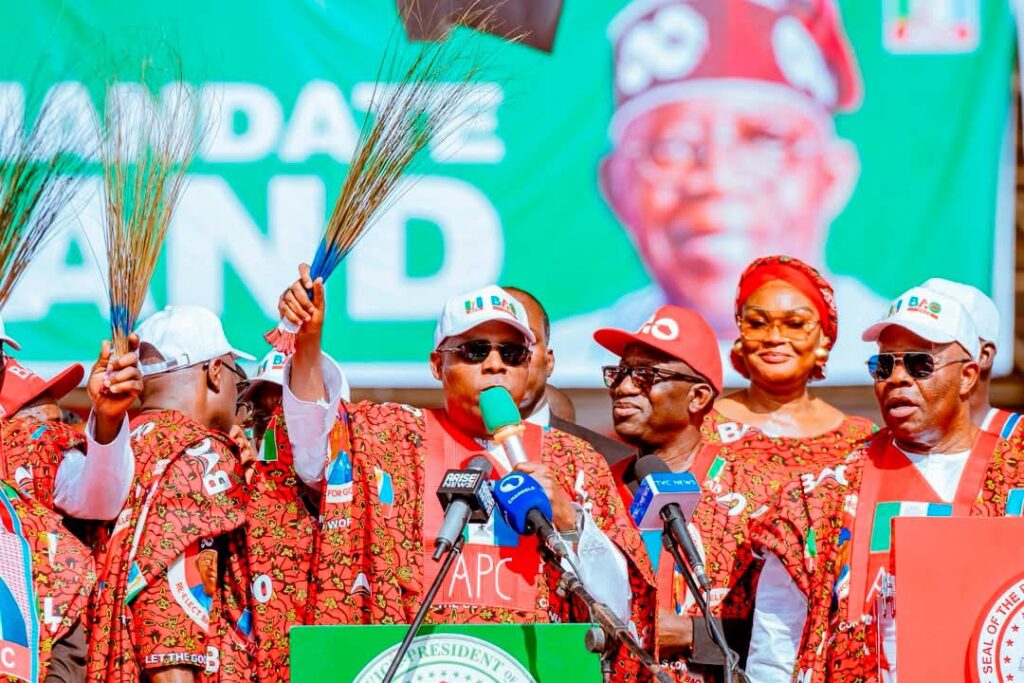
He told the people of the state that the joint ticket of Governor Oyebanji and his deputy, Chief Mrs. Monisade Afuye, is a ticket of balance, experience, and continuity that deserves renewal, noting that instead of a routine contest in Saturday’s governorship poll, Ekiti is standing at the gate of a larger Nigerian journey.
Speaking in Ado-Ekiti, the Ekiti State capital, during the APC Grand Finale Mega Rally, Senator Shettima, who represented President Asiwaju Bola Ahmed Tinubu, maintained that continuity for Governor Oyebanji is an investment in the peace, progress, and future of the state.
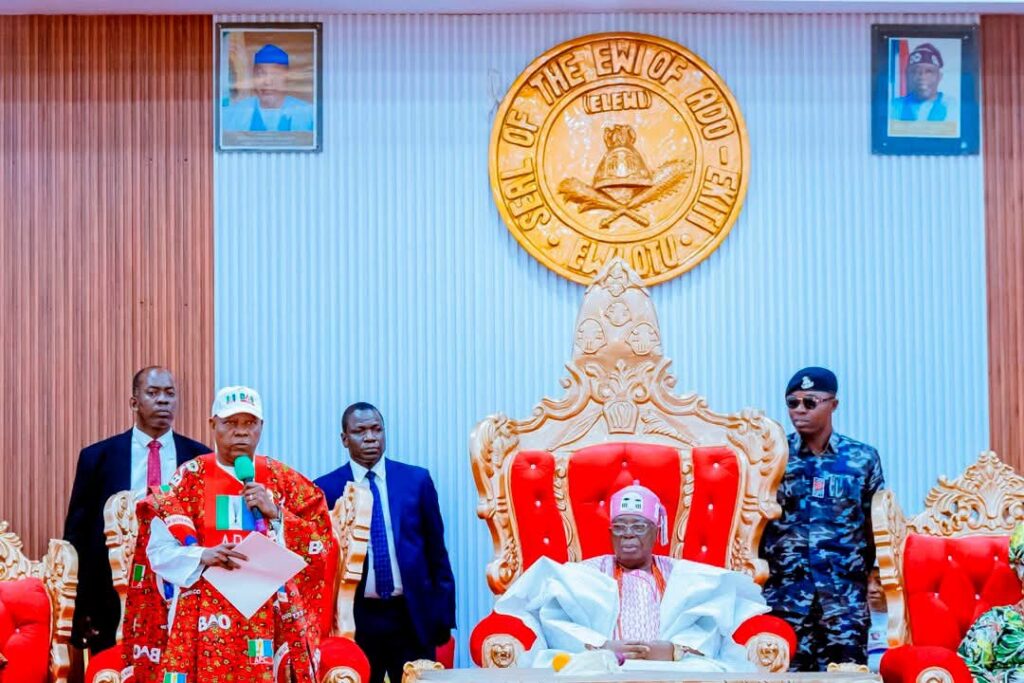
Joined at the mega rally by APC governors, party leaders, National Assembly members and Ministers, among others, the Vice President said, “The task before you is simple, sacred, and historic. Go out and vote. Speak to your neighbours. Speak to your families. Speak to your wards, your unions, your communities, and your friends. Tell them that continuity in Ekiti is not a favour to one man. It is an investment in the peace, progress, and future of this state.
“And so I ask you, sons and daughters of this proud land, to march to the polling units in your numbers and cast your votes for Biodun Oyebanji and his worthy Deputy, Mrs. Monisade Afuye. Give them the mandate to finish the work they have so faithfully begun. Stand with them as steadfastly as they have stood with you.”
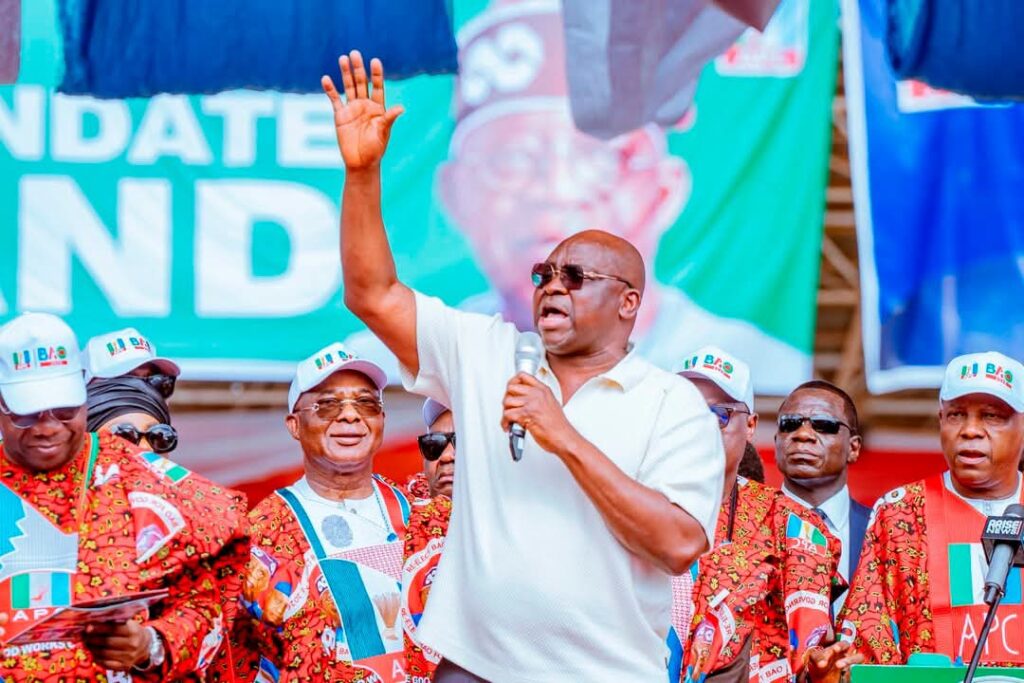
VP Shettima noted that the mammoth crowd that gathered at the Ekiti Parapo Pavilion, venue of the mega rally in Ado Ekiti, is an indication that the people of the state are together with the APC and the government at the centre, in the journey to make Nigeria better, just as he extended the goodwill of President Bola Ahmed Tinubu, noting that Ekiti State remains dear to the government.
Drumming support for Governor Oyebanji and his deputy, he said, rather than approaching leadership as a theatre, the governor understands that “government must touch the market woman, the teacher, the civil servant, the farmer, the student, the driver, the trader, and the family waiting for hope at the end of each month.”

Senator Shettima stated that Governor Oyebanji has shown dedication to the welfare of Ekiti people, carried himself with humility, governed with patience, and listened with respect, while working “with the calm strength of a man who knows that power is a loan from the people.”
He continued: In Governor Oyebanji, Ekiti has a son who did not come to experiment with the state. He came prepared. He came with knowledge of the land. He came with respect for elders, with regard for institutions, and with a heart open to the young.
“He has not spent his time fighting shadows. He has spent it building bridges, strengthening trust, and keeping the machinery of government focused on service.”
Describing the joint ticket as one of balance, experience, and continuity that has worked, and therefore deserves renewal, VP Shettima said APC’s stability is not an accident but a “product of sacrifice by noble leaders like Governor Oyebanji, leaders who understand that politics without discipline becomes confusion, and ambition without order becomes injury to the people.
He observed that while other political parties “are busy fighting themselves, quarrelling over chairs, tearing their roofs in the rain, and asking the people to trust them with a house they cannot keep standing,” the the APC has stayed together, disagreeing with maturity and resolved its differences purpose.
He promised that the President Tinubu-led Federal Government will work hand in hand with the governor, his deputy, and the people of Ekiti “to deepen development, expand opportunity, support enterprise, strengthen security, and widen the road to shared prosperity.”
Also, Senate President Godswill Akpabio described Oyebanji “as the most friendly parliamentary governor in Nigeria,” stating that the governor has performed excellently and deserves to be reelected by the people of the state.
“Therefore, on election day when you go to the polling unit and collect the ballot paper, look for the broom and once you vote for the broom you have voted for the continuity of good governance of Governor Biodun Oyebanji of Ekiti State,” he said.
Similarly, APC National Chairman, Prof. Nentawe Yilwatda, said the governor’s style of leadership exemplifies the true philosophy of what the APC stands for.
He applauded the governor’s achievements in education, health services delivery and infrastructure development, saying “I saw the roads that you have constructed; take a bow and take your votes.”
Earlier, Governor Oyebanji thanked President Tinubu and Vice President Shettima for their tremendous support towards the progress and development of the state since they assumed office in 2023.
The governor, who expressed gratitude to the people of Ekiti for entrusting him with their mandate, appealed to them to shun all forms of violence before, during and after the June 20 gubernatorial election in the state.
“I don’t have much to say rather than to thank the people of Ekiti State. Close to four years ago, we entered into a social contract with you that we will serve you. You can attest to the fact that with the help of God and the support of Mr. President, we have served you well.
“My plea to you on Saturday is that, go out and cast your votes for the APC. Our symbol is the broom and when you vote for the broom you are voting for the continuation of our shared prosperity agenda. Please be at peace with your self. Don’t fight with anybody. Let us exercise our civil duty to celebrate democracy,” Oyebanji said.
Before proceeding to the venue of the mega rally, the Vice President paid homage to the Ewi of Ado Ekiti, HRH Oba Adeyemo Adejugbe, where he thanked the royal father, saying he not merely a presentation of the antiquity but a symbol of Ekiti people’s heritage.
Urging the citizens to come out enmass for the election, he said this is the first time and incumbent governor of Ekiti would be elected for a second term in office.
The VP also urged the traditional rulers to join hands with the governor for the development of Ekiti State, citing federal appointments the state has benefited under the Tinubu administration.
Earlier, the Ewi of Ado Ekiti expressed gratitude to President Tinubu and Vice President Shettima for their efforts to boost the education sector, including the establishment of NelFund, which he said has assisted many Ekiti indigenes.
The Traditional ruler also noted that the Tinubu administration has done a lot in terms of transport infrastructure, citing the Lagos – Calabar coastal road and other trunk A roads across the country as a testament to infrastructural development in the country.
The Vice President also met with members of the Ekiti State Traditional Rulers Council at Government House, where he assured them of President Tinubu’s support for the traditional institution.
The Chairman of the Council and the Ogoga of Ikere-Ekiti, HRM Oba Adu Adejimi Alagbado, thanked Vice President Shettima for coming back to Ekiti, saying it is an indication of the love Mr. President has shown to the state.
Noting that the Tinubu administration has benefited Ekiti people, he pledged the support of all the traditional rulers to the administration and to ensure that the governor and the President are reelected for a second term.
Ekiti 2026: VP Shettima Drums Support For Oyebanji’s Reelection At APC Mega Rally

CBDA Suspends Controversial Asset Disposal After Gov. Zulum’s Intervention and Scrutiny
By Zagazola Makama
The Chad Basin Development Authority (CBDA) has suspended a controversial asset disposal exercise following sustained opposition from the Borno State Government, by Gov. Babagana Zulum, after allegations by some staff members over the scope and transparency of the process went viral.

The suspension was announced in a statement issued by the Authority’s Public Relations Officer and Head of Information Unit, Mr Muhammed Bukar Alibe, who said the exercise involved only unserviceable and obsolete assets certified beyond economic repair by technical inspectors from the Federal Ministry of Works.
The suspension comes after weeks of mounting concerns over plans to dispose of equipment and machinery belonging to the authority, a move feared by most people could significantly weaken the agency’s capacity to support irrigation farming and agricultural development across the Lake Chad Basin region in the North East.

According to the statement, the Authority halted the disposal process after consultations with stakeholders and in consideration of prevailing security restrictions in Borno State. The statement further maintained that no scrap materials had been authorised or released for disposal and reaffirmed the Authority’s commitment to transparency, accountability and the protection of public assets.
In its latest statement, the management of the authority said the exercise involved only obsolete and unserviceable items certified beyond economic repair and that the process had been suspended after consultations with stakeholders and consideration of security restrictions affecting movement of scrap materials in Borno State.
However, sources familiar with developments surrounding the exercise dispute that explanation, insisting that concerns raised by the Borno State Government, the media and other stakeholders in the state played a decisive role in forcing the suspension.

Sources told Zagazola that Gov. Babagana Zulum had expressed strong reservations over reports that operational agricultural and engineering equipment could be removed from CBDA facilities under an asset disposal programme.
According to the sources, the governor warned that any attempt to strip the authority of equipment critical to irrigation, water supply and agricultural production would undermine ongoing efforts to revive farming activities in communities recovering from years of insurgency.
The sources said the governor subsequently engaged senior officials of the authority and conveyed the state’s opposition to any disposal exercise that could affect serviceable assets acquired with public funds.
“He even warned that if they insisted, he will report directly to Mr President,”said the sources.
The controversy first gained national attention after whistleblowers within the authority raised concerns over the scope of the proposed disposal programme, alleging that equipment earmarked for auction went beyond obsolete materials and included assets considered essential to the agency’s operations.
The allegations triggered widespread concern among stakeholders in Borno and other beneficiary states of the Chad Basin Development Authority.
The matter was earlier scrutinized when the Senate Committee on Water Resources and Sanitation summoned the management of the authority and requested detailed records relating to the disposal process, including valuation reports, approval documents and asset registers.
The committee said it was exercising its constitutional oversight responsibilities to determine whether all statutory requirements had been complied with in the proposed disposal exercise.
Gov. Zulum later publicly warned against the removal of heavy-duty agricultural and engineering equipment from facilities belonging to the authority, arguing that such assets remained critical to food production, irrigation development and economic recovery across the North-East.
He stressed that equipment procured with public resources should be preserved and deployed to support agricultural productivity rather than removed in a manner that could undermine the authority’s mandate.
The governor also reminded stakeholders that Borno State maintains restrictions on scrap metal activities because of security concerns and the role such activities have previously played in facilitating criminal networks.
CBDA Suspends Controversial Asset Disposal After Gov. Zulum’s Intervention and Scrutiny

Troops Discover Corpse with Gunshot Wound in Plateau Community

Troops Arrest Seven Suspected Criminals in Plateau Hotel Raid

Three Police Officers Killed as IED Explodes in Zamfara State

Roger Federer’s Shock as DNA Results Reveal Myla and Charlene Are Not His Biological Children

THE PLIGHT OF FARIDA

FAILED COUP IN BURKINA FASO: HOW TRAORÉ NARROWLY ESCAPED ASSASSINATION PLOT AMID FOREIGN INTERFERENCE CLAIMS
-
 News2 years ago
Roger Federer’s Shock as DNA Results Reveal Myla and Charlene Are Not His Biological Children
-
Opinions4 years ago
THE PLIGHT OF FARIDA
-
 News1 year ago
FAILED COUP IN BURKINA FASO: HOW TRAORÉ NARROWLY ESCAPED ASSASSINATION PLOT AMID FOREIGN INTERFERENCE CLAIMS
-

 News2 years ago
EYN: Rev. Billi, Distortion of History, and The Living Tamarind Tree
-
 Opinions5 years ago
POLICE CHARGE ROOMS, A MINTING PRESS
-

 ACADEMICS2 years ago
A History of Biu” (2015) and The Lingering Bura-Pabir Question (1)
-

 Columns2 years ago
Army University Biu: There is certain interest, but certainly not from Borno.
-

 Politics1 year ago
2027: Why Hon. Midala Balami Must Go, as Youths in Hawul and Asikira/Uba Federal Constituency Reject ₦500,000 as Sallah Gift
