
News
Obasanjo Unveils Bold Blueprint for Africa’s Security Overhaul, Warns Against New Scramble

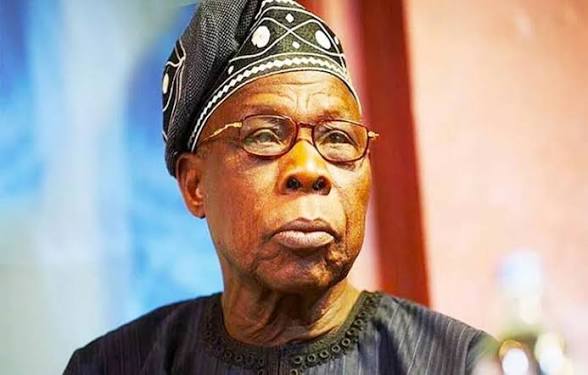
Obasanjo Unveils Bold Blueprint for Africa’s Security Overhaul, Warns Against New Scramble
By: Michael Mike
Former Nigerian President Olusegun Obasanjo has issued a sweeping and urgent call for a radical overhaul of Africa’s security architecture, warning that the continent risks deeper instability and renewed external domination unless it urgently redefines its approach to security, governance, and intelligence.
Speaking at the third Mashariki Cooperation Conference III (MCC III), Obasanjo challenged Africa’s intelligence chiefs and security leaders to abandon outdated frameworks and embrace a people-focused, technologically independent, and accountable system capable of confronting modern threats.
Delivering a hard-hitting address on “Emerging Geopolitical Dynamics and Africa’s Security Architecture,” the elder statesman argued that Africa’s persistent conflicts are not accidental but stem from “specific, identifiable failures of leadership,” compounded by what he described as intensifying external manipulation.
“We are witnessing the fracturing of the post-1945 multilateral order,” Obasanjo said, pointing to the global fallout from the Russian invasion of Ukraine and contrasting international responses to crises in regions such as Gaza and the Sahel. According to him, these inconsistencies expose a global system that applies its rules selectively—often at Africa’s expense.
A Continent Under Pressure
Obasanjo painted a stark picture of a continent caught in a renewed geopolitical contest, warning of a “new scramble for Africa.” He cited expanding foreign influence through initiatives like China’s Belt and Road Initiative, the growing footprint of Russian-linked security actors across the Sahel and the Horn of Africa, and the vacuum left by the withdrawal of Western forces from key conflict zones.
These developments, he said, have coincided with a surge in terrorism, violent extremism, and an alarming wave of military takeovers across the continent since 2020—what he described as a “coup epidemic.”
Five Pillars for a New Security Order
In response, Obasanjo outlined five concrete propositions aimed at reshaping Africa’s security framework:
• Human-centred security: Prioritising the safety and welfare of citizens over elite interests.
• Continental solidarity: Strengthening joint mechanisms such as the African Standby Force and early warning systems.
• Disrupting illicit financing: Empowering intelligence agencies to tackle financial flows that sustain insecurity.
• Technological sovereignty: Building African capacity in artificial intelligence, cyber defence, and drone warfare.
• Accountable governance: Establishing transparent leadership as the foundation of lasting security.
He stressed that without credible governance, no military or intelligence strategy can succeed.
Intelligence at the Core
Central to Obasanjo’s message was a forceful critique of Africa’s use of intelligence. He described intelligence as “indispensable to conflict prevention” but “woefully underused,” citing missed warning signs in past crises across Liberia, Sierra Leone, Burundi, the Democratic Republic of Congo, and Sudan.
He urged the creation of a truly integrated continental intelligence network, beginning with stronger regional cooperation, and insisted that effectiveness must be anchored in professionalism and civilian oversight.
“Intelligence services that operate with integrity… and are subordinate to civilian authority are not weaker—they are stronger,” he declared.
Leadership Under Scrutiny
In a rare moment of reflection, Obasanjo drew from his own involvement in major African peace efforts, including Nigeria-led interventions under ECOMOG in Liberia and Sierra Leone, and mediation roles in Burundi and Zimbabwe. He argued that successful conflict resolution has always depended on “accurate intelligence, courageous honesty, and selfless leadership.”
He also introduced his “Obasanjo 55+20 Leadership Framework,” a structured model outlining 55 measurable leadership attributes and 20 core values. At its heart, he said, lies “courageous honesty”—the willingness of leaders to confront uncomfortable truths.
A Final Warning
Addressing an audience that included Noordin Mohamed Haji and intelligence heads from across Africa, Obasanjo closed with a stark warning and a challenge.
At nearly 90, he said his decades of experience have shown both Africa’s promise and its recurring failures.
“Africa’s conflicts are not inevitable,” he said. “They are the product of leadership choices. What is required now is the will—and the courage and audacity—to choose differently.”
His message was unmistakable: without decisive reforms, Africa risks remaining a battleground for external powers; with them, it has a chance to secure its future on its own terms.
Obasanjo Unveils Bold Blueprint for Africa’s Security Overhaul, Warns Against New Scramble


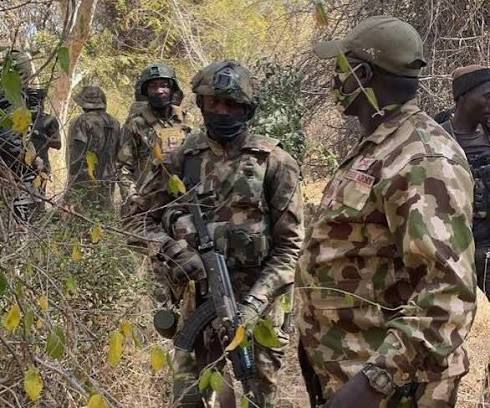
Troops Foil ISWAP/JAS Attack on Military Position in Borno, Recover UXOs
By: Zagazola Makama
Troops of 3 Battalion (Mechanised)/24 Task Force Brigade have successfully repelled an attack by suspected Islamic State West Africa Province (ISWAP) terrorists in Ngala Local Government Area of Borno State.
Security sources said the attack occurred at about 2:44 a.m. on June 12 when terrorists launched coordinated assaults on the troops’ location from Wurge, Manawaji and Kinuba.
According to the sources, the troops engaged the attackers with superior firepower, supported by reinforcements from battalion headquarters, as well as mortar and artillery fire support, forcing the insurgents to withdraw.
Following the encounter, the fleeing terrorists retreating and scampered into the bushes.
At about 5:45 a.m., troops and auxiliary forces conducted a follow-up exploitation along the withdrawal route towards Wurge, during which three RPG-7 high-explosive unexploded ordnances (UXOs) and two torchlights were recovered.
The sources further disclosed that a main battle tank developed technical faults during the aftermath of the engagement, while one soldier sustained injuries from fragments of an RPG blast.
The wounded personnel was evacuated to the 3 Battalion Regimental Aid Post (RAP) for medical treatment.
Military authorities said clearance and follow-up operations were ongoing in the area to consolidate gains and prevent further terrorist regrouping.
They reaffirmed commitment to sustaining aggressive counter-terrorism operations across the North-East theatre.
Troops Foil ISWAP/JAS Attack on Military Position in Borno, Recover UXOs
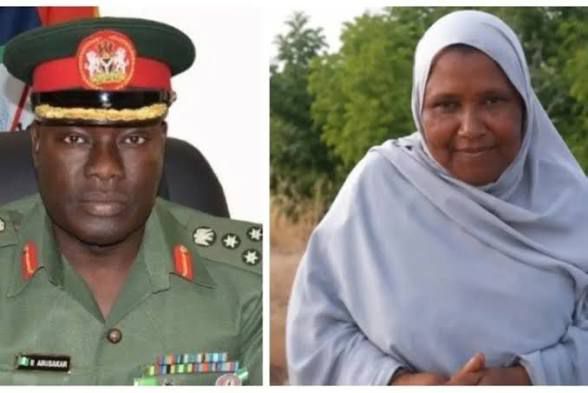
Katsina Govt Confirms Death of Retired Major General Rabe in Bandits’ Captivity
By: Zagazola Makama
The Katsina State Government has announced the death of retired Major General Rabe Abubakar while in the captivity of bandits.
The government, in a statement issued on Friday by the Commissioner for Internal Security and Home Affairs, Dr Nasiru Mu’azu, described the development as tragic and a major loss to the state and the nation.
According to the statement, the retired senior military officer died from complications arising from diabetes and hypertension while in captivity.
The government said that despite sustained efforts by the state government and security agencies to secure his release, the situation ended in tragedy.
“The deceased retired general died a natural death from complications of diabetes and hypertension,” the statement said.
It noted that the late officer’s abduction and subsequent death represented not only a loss to his immediate family and Katsina State but also a monumental loss to the country.
Governor Dikko Umaru Radda expressed deep condolences to the family of the deceased, describing the incident as a dark moment and a reminder of the need for intensified efforts against criminal elements threatening peace and security.
The governor reaffirmed the state government’s commitment to working closely with the Federal Government and security agencies to ensure that those responsible for the abduction are brought to justice.
He also assured residents that the government remained resolute in its determination to eliminate banditry and safeguard lives and property across the state.
The government prayed for the repose of the soul of the late retired Major General and urged citizens to continue supporting security agencies in the fight against insecurity.
Katsina Govt Confirms Death of Retired Major General Rabe in Bandits’ Captivity
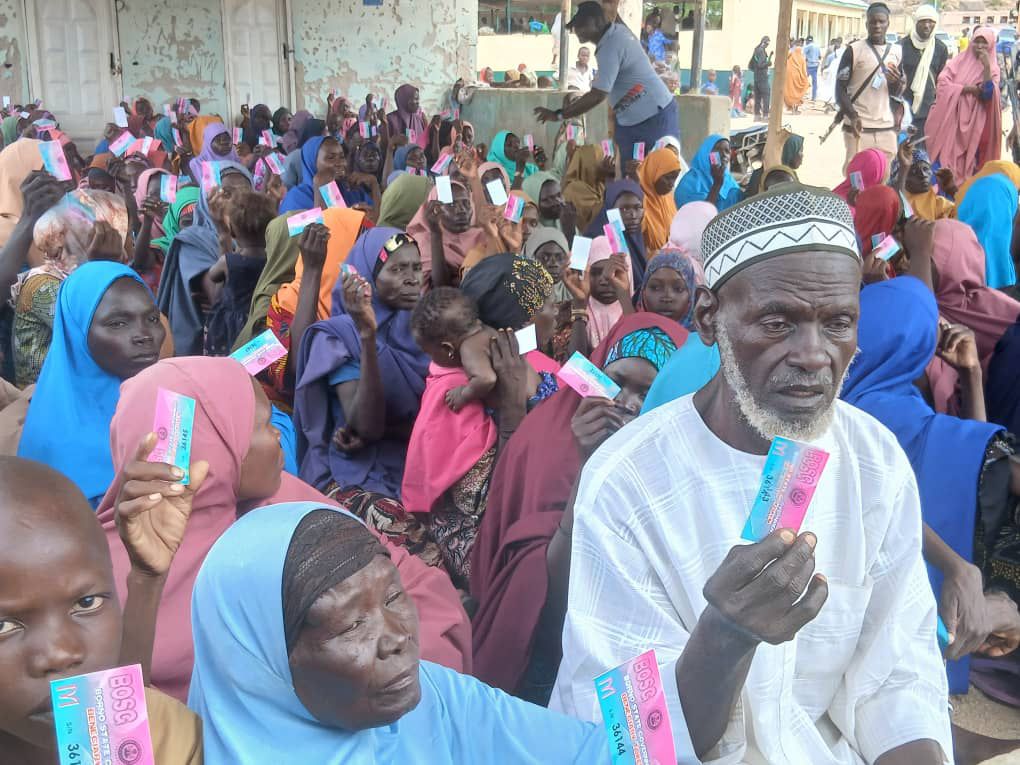
Zulum Delivers Relief, Cash Support to 434 Ngoshe Residents Rescued from Boko Haram
By: Our Reporter
Borno State Government has distributed relief materials to 434 indigenes of Ngoshe community in Gwoza Local Government Area who were recently rescued by security agencies after spending three months in Boko Haram captivity.
Governor Babagana Umara Zulum visited the victims in Pulka on Monday and directed the immediate distribution of food and non-food items to support their recovery and reintegration.
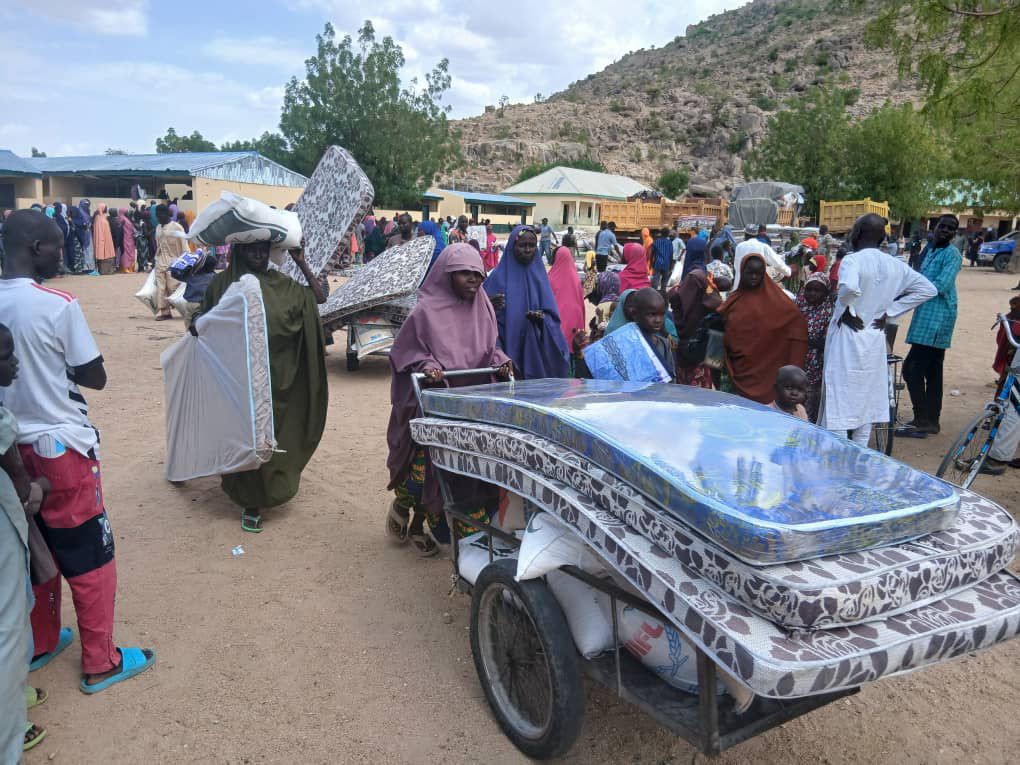
In compliance with the Governor’s directive, the Director General of the Borno State Emergency Management Agency (SEMA), Alhaji Ali Abdullahi Isa, promptly supervised the distribution exercise.
Each rescued person received a bag of rice, a bag of maize grits, a mattress, a wrapper, and a shadda, while children received two pairs of clothing.
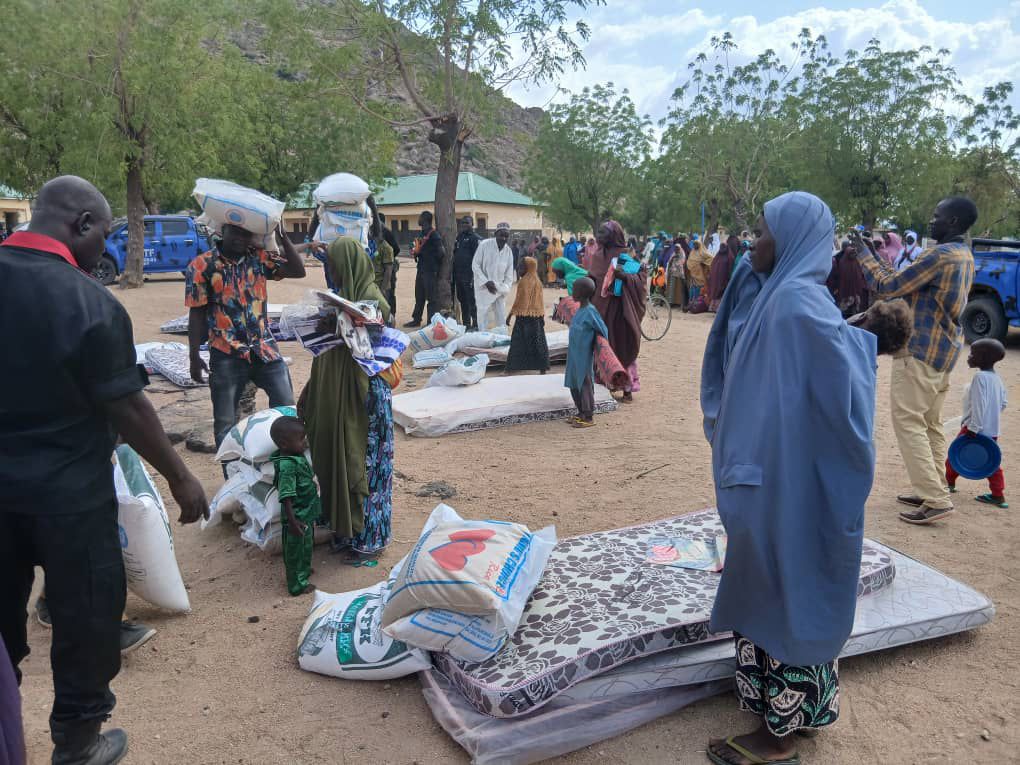
In addition, 208 heads of households received N50,000 each, fulfilling Governor Zulum’s earlier pledge of financial assistance.
Speaking during the distribution, the SEMA Director General said the intervention was part of the government’s immediate response to ease the hardship faced by the rescued victims.
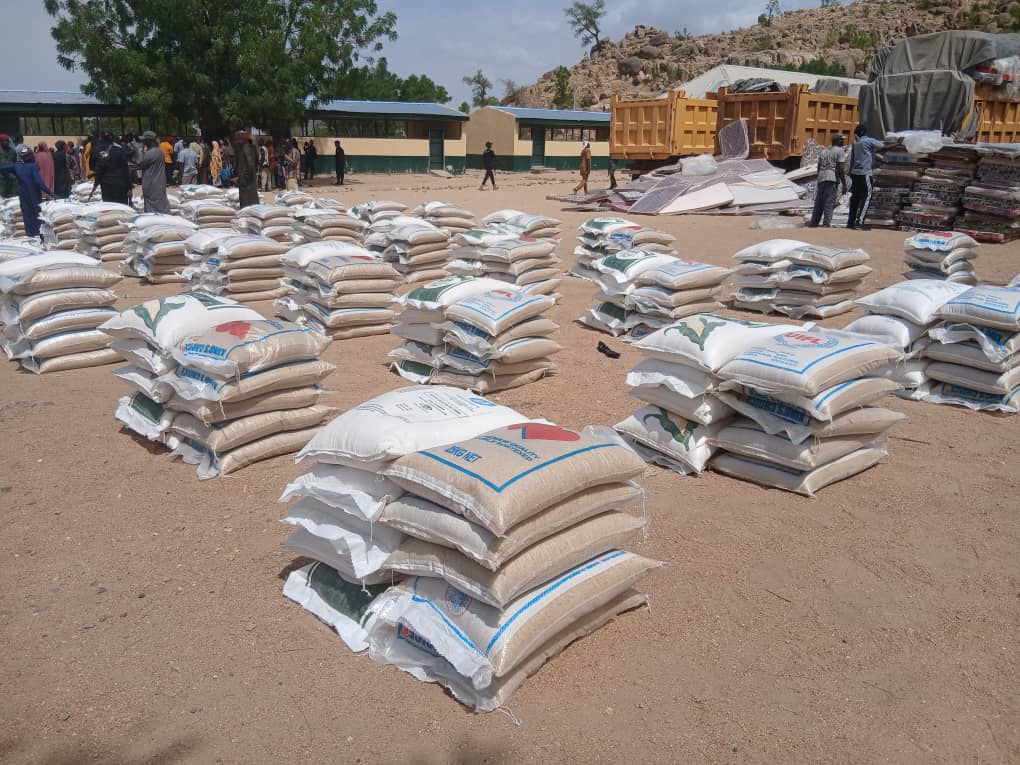
“I am here at the instance of His Excellency, Governor Babagana Umara Zulum, who was here some few days ago, and to deliver the items he directed that it should be given to you as emergency relief,” Ali stated.
The rescued individuals are currently receiving medical care and psychosocial support at a government facility. Upon completion of the rehabilitation process, they will be reintegrated into their respective communities.
The exercise was carried out alongside the Chairman of Gwoza local government, representatives of the Ngoshe community, and other officials.
Zulum Delivers Relief, Cash Support to 434 Ngoshe Residents Rescued from Boko Haram

Troops Recover AK-47 Rifle, Ammunition in Failed ISWAP Reconnaissance Operation in Borno

Troops Foil ISWAP/JAS Attack on Military Position in Borno, Recover UXOs

Katsina Govt Confirms Death of Retired Major General Rabe in Bandits’ Captivity

Roger Federer’s Shock as DNA Results Reveal Myla and Charlene Are Not His Biological Children

THE PLIGHT OF FARIDA

FAILED COUP IN BURKINA FASO: HOW TRAORÉ NARROWLY ESCAPED ASSASSINATION PLOT AMID FOREIGN INTERFERENCE CLAIMS
-
 News2 years ago
Roger Federer’s Shock as DNA Results Reveal Myla and Charlene Are Not His Biological Children
-
Opinions4 years ago
THE PLIGHT OF FARIDA
-
 News1 year ago
FAILED COUP IN BURKINA FASO: HOW TRAORÉ NARROWLY ESCAPED ASSASSINATION PLOT AMID FOREIGN INTERFERENCE CLAIMS
-

 News2 years ago
EYN: Rev. Billi, Distortion of History, and The Living Tamarind Tree
-
 Opinions4 years ago
POLICE CHARGE ROOMS, A MINTING PRESS
-

 ACADEMICS2 years ago
A History of Biu” (2015) and The Lingering Bura-Pabir Question (1)
-

 Columns2 years ago
Army University Biu: There is certain interest, but certainly not from Borno.
-

 Politics1 year ago
2027: Why Hon. Midala Balami Must Go, as Youths in Hawul and Asikira/Uba Federal Constituency Reject ₦500,000 as Sallah Gift
