
News
ECOWAS COURT CONFIRMS THE VIOLATION OF THE RIGHTS TO WORK OF 53 TOGOLESE BY THEIR STATE

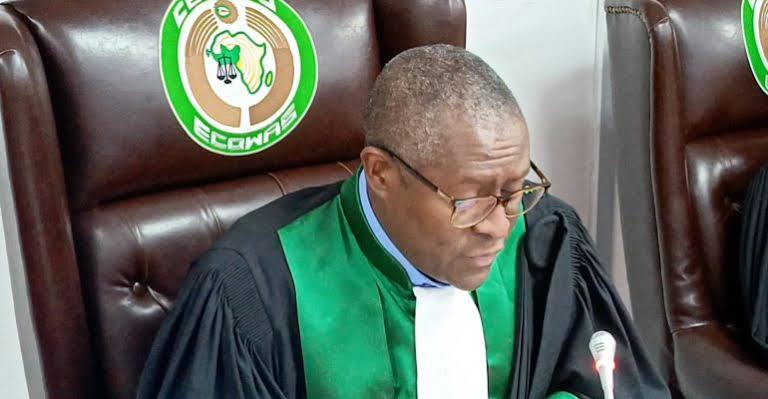
ECOWAS COURT CONFIRMS THE VIOLATION OF THE RIGHTS TO WORK OF 53 TOGOLESE BY THEIR STATE
By: Michael Mike
The Economic Community of West African States (ECOWAS) Court of Justice, has affirmed that the Togolese Republic violated the right to work of Abiguime Maguiliwè and 52 Others.
The Applicants have claimed that the Republic of Togo violated their right to work, freedom of association, and right not to be subject to arbitrary detention.
Justice Ricardo Claúdio Monteiro Gonçalves, the judge Rapporteur who delivered the judgment, said that the Court dismissed the allegations regarding the right to freedom of association.
The Court also declared no violation of the right to strike and the right not to be arbitrarily detained. However, it ordered the Republic of Togo to compensate each of the 53 Applicants with 10,000,000 CFA francs for violating their right to work while rejecting the other claims for compensation.
The Applicants, a group of Togolese teachers, alleged that after forming the Togolese Teachers’ Union (SET) on May 22, 2021, and submitting the required documents on June 18, 2021, the Togolese authorities refused to recognise the union.
They said that despite sending a “Platform of Demands” on February 3, 2022, and issuing a strike notice for March 24 – 25, 2022, SET received no response and faced threats and intimidation from authorities.
They further explained that 150 teachers were transferred as disciplinary action between March and April 2022, and on April 8, 2022, three union leaders were arrested on charges of inciting uprising, which they deny.
They said that on April 25, 2022, some teachers were dismissed or suspended for participating in the strike. Additionally, the Court of Lomé prohibited the use of the acronym “SET,” which the Applicants contested, arguing that protection should focus on the name or domain, not the acronym.
The Respondent, despite being duly summoned, did not contest it.
In its judgment, the Court found that the Republic of Togo violated the Applicants’ right to work. The Togolese authorities had dismissed and temporarily suspended several teachers, including the Applicants, due to their participation in the strike.
The Court determined that these actions did not follow a fair process and violated their rights to work. Consequently, the Republic of Togo was ordered to pay each Applicant 10,000,000 CFA francs as compensation for this violation.
The Court also concluded that the Applicants’ right to freedom of association was not violated. The Togolese Teachers’ Union (SET) was not recognized due to the Applicants’ failure to comply with the updated procedures required by the new Labour Code, which came into force on the day of SET’s creation.
Additionally, the Court found no violation of the right to strike. Since the SET was not legally recognized, the suspension and dismissal of its members for participating in a strike were deemed lawful under Togolese legislation.
Furthermore, the Court ruled that the detention of three SET members, accused of inciting revolt, did not constitute a violation of their rights. The detentions followed due legal process, and the detainees were released within the legal time frame.
Also, on the three-member panel were Hon. Justice Edward Amoako Asante – Presiding, and Hon. Justice Sengu Mohamad Koroma – Member.
ECOWAS COURT CONFIRMS THE VIOLATION OF THE RIGHTS TO WORK OF 53 TOGOLESE BY THEIR STATE


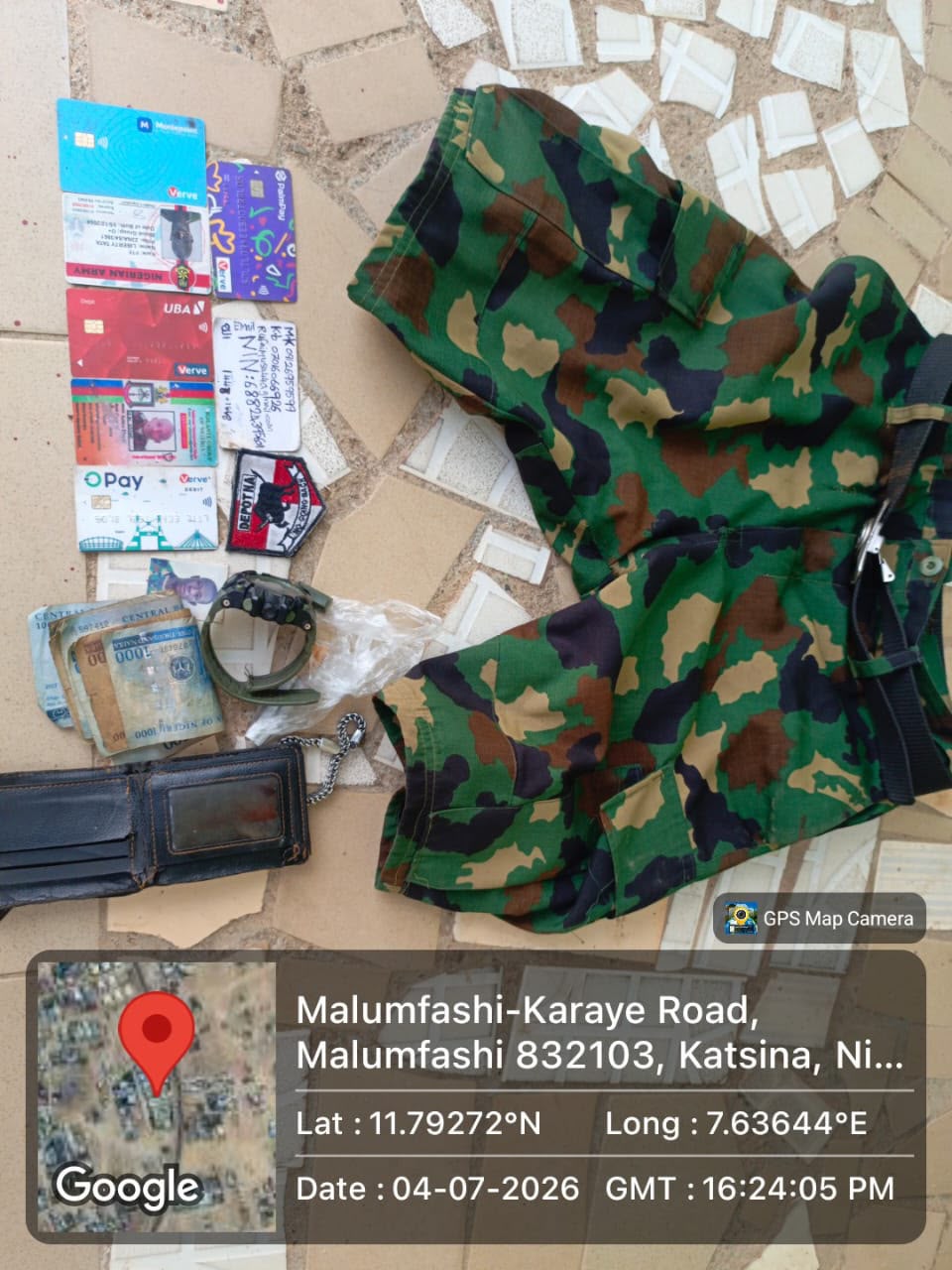
Troops Arrest Suspected Military Impostor in Katsina
By Zagazola Makama
Troops of 17 Brigade have arrested a suspected military impostor during a fighting patrol in Malumfashi Local Government Area.
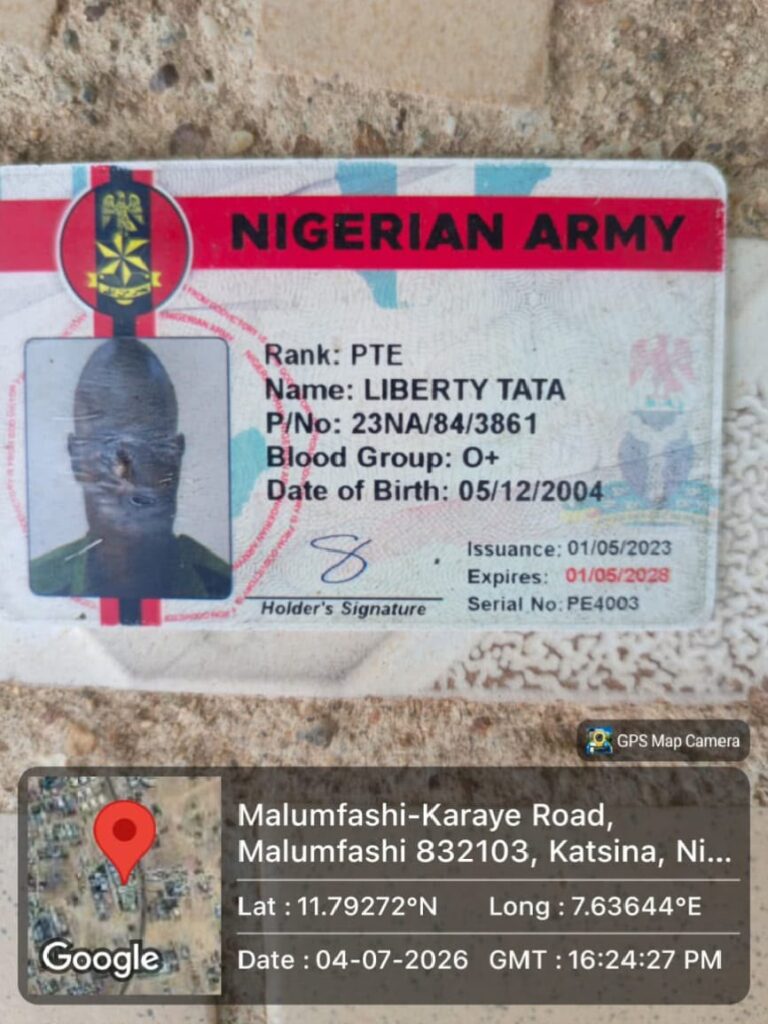
Security sources told Zagazola Makama that the suspect was apprehended at about 1:30 p.m. on July 4 by troops deployed at the Forward Operating Base (FOB) Malumfashi while conducting routine patrols within Malumfashi town.

According to the sources, the suspect was intercepted while wearing a woodland camouflage three-quarter short, raising suspicion among the troops.
A search conducted on the suspect led to the recovery of a fake Nigerian Army identity card, four Automated Teller Machine (ATM) cards, one woodland camouflage three-quarter short, a wristwatch and the sum of ₦17,000.
The suspect and the recovered exhibits are currently in military custody pending further investigation.
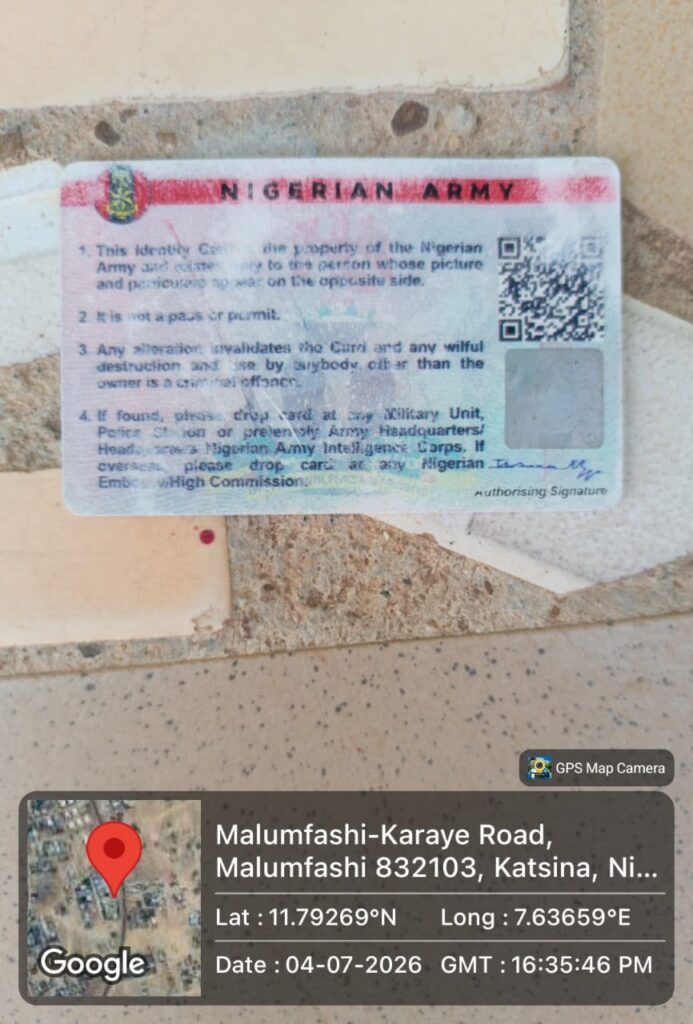
Military sources said the arrest forms part of ongoing efforts to curb impersonation of security personnel and other criminal activities within the area.
Troops Arrest Suspected Military Impostor in Katsina
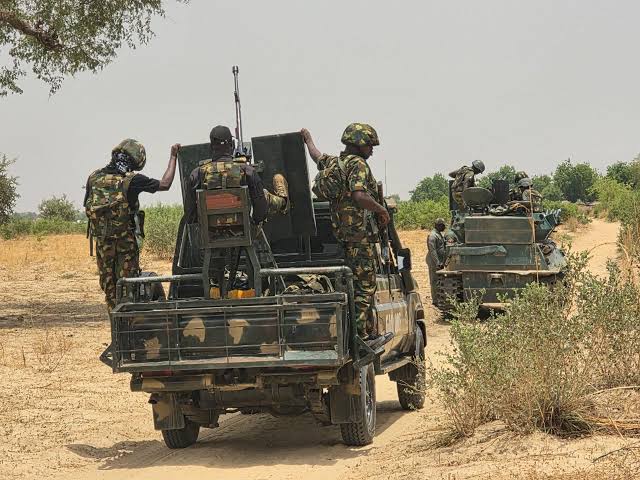
Troops Recover 50 Rustled Cattle, Repel Suspected Rustlers in Kaduna
By Zagazola Makama
Troops deployed at the Forward Operating Base (FOB) Kankomi have recovered 50 rustled cattle after repelling suspected cattle rustlers during an ambush operation in Chikun Local Government Area.
Security sources told Zagazola Makama that the troops responded to a distress call at about 9:55 a.m. on July 4 over the activities of suspected rustlers at Ungwan Gontu community.
According to the sources, the troops swiftly laid an ambush and made contact with the fleeing suspects, forcing them to abandon the stolen livestock and escape into the surrounding area.
During the operation, the troops recovered 50 rustled cattle, which were subsequently identified and handed over to their rightful owner.
Military sources said efforts are ongoing to track down the fleeing suspects as security operations continue to combat cattle rustling and other criminal activities across Kaduna State.
Troops Recover 50 Rustled Cattle, Repel Suspected Rustlers in Kaduna
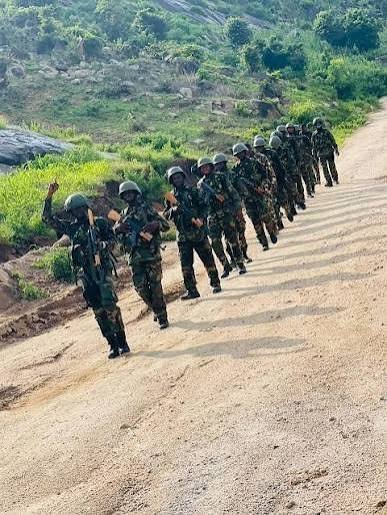
Troops Arrest Suspected Terrorist in Kogi, Suspect Confesses to Group Membership
By Zagazola Makama
Troops of 12 Brigade, in collaboration with Office of the National Security Adviser (ONSA) Hybrid Forces, have arrested a suspected terrorist during an operation in Lokoja Local Government Area.
Security sources told Zagazola Makama that the troops responded at about 1:00 p.m. on July 4 to reports of a confrontation between local residents and a suspected terrorist at a Ruga settlement behind Obajana community.
According to the sources, the troops swiftly intervened and arrested one suspect at the scene.
During preliminary interrogation, the suspect reportedly confessed to being a member of a terrorist group led by an individual identified as Haruna, which allegedly operates within the Okene general area.
The suspect is currently in military custody and is undergoing further investigation to establish the extent of his involvement and identify other members of the group.
Military sources said the arrest forms part of ongoing security operations aimed at dismantling terrorist and criminal networks across Kogi State.
Troops Arrest Suspected Terrorist in Kogi, Suspect Confesses to Group Membership

Troops Arrest Suspected Military Impostor in Katsina

Troops Recover 50 Rustled Cattle, Repel Suspected Rustlers in Kaduna

Troops Arrest Suspected Terrorist in Kogi, Suspect Confesses to Group Membership

Roger Federer’s Shock as DNA Results Reveal Myla and Charlene Are Not His Biological Children

THE PLIGHT OF FARIDA

FAILED COUP IN BURKINA FASO: HOW TRAORÉ NARROWLY ESCAPED ASSASSINATION PLOT AMID FOREIGN INTERFERENCE CLAIMS
-
 News2 years ago
Roger Federer’s Shock as DNA Results Reveal Myla and Charlene Are Not His Biological Children
-
Opinions4 years ago
THE PLIGHT OF FARIDA
-
 News1 year ago
FAILED COUP IN BURKINA FASO: HOW TRAORÉ NARROWLY ESCAPED ASSASSINATION PLOT AMID FOREIGN INTERFERENCE CLAIMS
-

 News2 years ago
EYN: Rev. Billi, Distortion of History, and The Living Tamarind Tree
-
 Opinions5 years ago
POLICE CHARGE ROOMS, A MINTING PRESS
-

 ACADEMICS2 years ago
A History of Biu” (2015) and The Lingering Bura-Pabir Question (1)
-

 Columns2 years ago
Army University Biu: There is certain interest, but certainly not from Borno.
-

 Politics1 year ago
2027: Why Hon. Midala Balami Must Go, as Youths in Hawul and Asikira/Uba Federal Constituency Reject ₦500,000 as Sallah Gift
