
News
Daurama Foundation Restores Access to Clean Water at Kuchingoro IDP Camp

Daurama Foundation Restores Access to Clean Water at Kuchingoro IDP Camp
By: Michael Mike
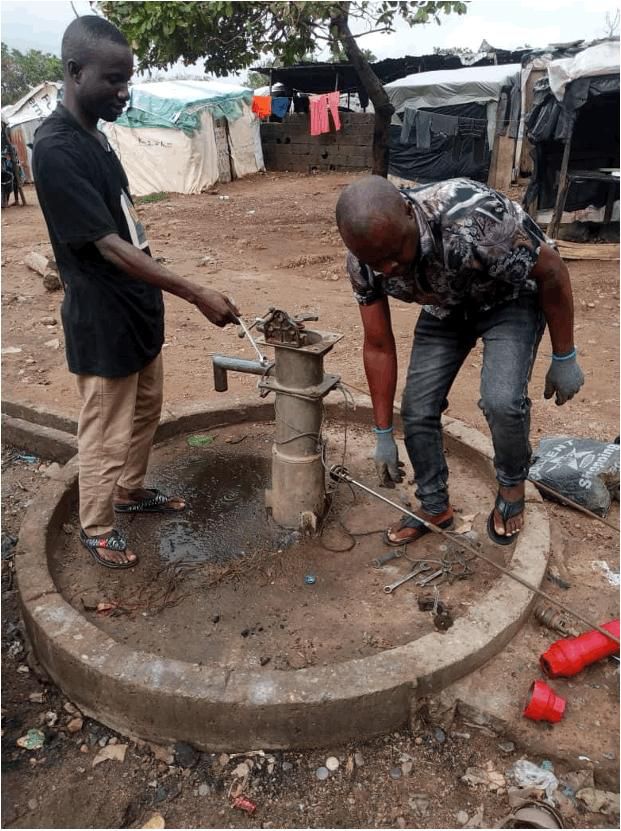
Daurama Foundation has assisted in the successful restoration of access to clean water at the Kuchingoro Internally Displaced Persons (IDP) camp.
This transformative project has addressed one of the most pressing issues faced by the camp residents, significantly improving their quality of life.
During a recent visit to the Kuchingoro IDP camp, Daurama Foundation’s founder, Dr. Samira Buhari, was deeply moved by the dire conditions. “Seeing the absence of clean water was heart-wrenching. It’s a basic necessity that no one should be deprived of, and the impact on the community, especially the women and children, who are already displaced from their original homes, was profound,” she shared.
One resident, Aisha Babuna, poignantly highlighted the struggle. “Without clean water, our daily lives were filled with hardship. We couldn’t cook, clean, or even drink safely. Our children were constantly at risk of diseases,” Aisha explained to our team when they visited.
In response to this urgent need, the Daurama Foundation’s Water, Sanitation, and Hygiene (WASH) team immediately engaged with key stakeholders, including the camp’s chairman and secretary, to devise a sustainable solution. After thorough consultations, it was decided that repairing the existing boreholes would be the most effective approach.
“Our team collaborated with local experts to ensure the repairs were done swiftly and effectively,” said Dr. Samira Buhari. “Today, it’s a delight to say that the residents of Kuchingoro IDP camp have access to clean and safe water once again.”
The impact of this project has been profound. The Chairman of the IDP camp expressed immense gratitude: “The restoration of clean water has rejuvenated our community. It has brought hope and relief, allowing us to focus on rebuilding our lives.”
Women in the camp, who are primarily responsible for fetching water, have felt a significant burden lifted. “Having clean water means our children are healthier, and we can take better care of our families,” said one of the mothers in the camp. “It’s more than just water; it’s a lifeline.”
He said the Foundation remains steadfast in its commitment to supporting communities in need. This project exemplifies our dedication to enhancing health and well-being through practical and impactful initiatives. By addressing the basic needs of vulnerable populations, we strive to create sustainable change and improve lives.
The Daurama Foundation was established by Dr. Samira Buhari and is committed to improving health outcomes and championing the rights of women and girls across Nigeria through advocacy, comprehensive education, and active community engagement.
It works to tackle pressing issues that affect the well-being and rights of girls and women in the communities it serves with programmes aim at addressing domestic violence, improve neonatal health, and advocate for menstrual health and hygiene; empowering women and girls, fostering sustainable development, and attaining equality heavily rely on these pivotal focus areas.
Daurama Foundation Restores Access to Clean Water at Kuchingoro IDP Camp


Troops Arrest Suspected Military Impostor in Katsina
By Zagazola Makama
Troops of 17 Brigade have arrested a suspected military impostor during a fighting patrol in Malumfashi Local Government Area.
Security sources told Zagazola Makama that the suspect was apprehended at about 1:30 p.m. on July 4 by troops deployed at the Forward Operating Base (FOB) Malumfashi while conducting routine patrols within Malumfashi town.
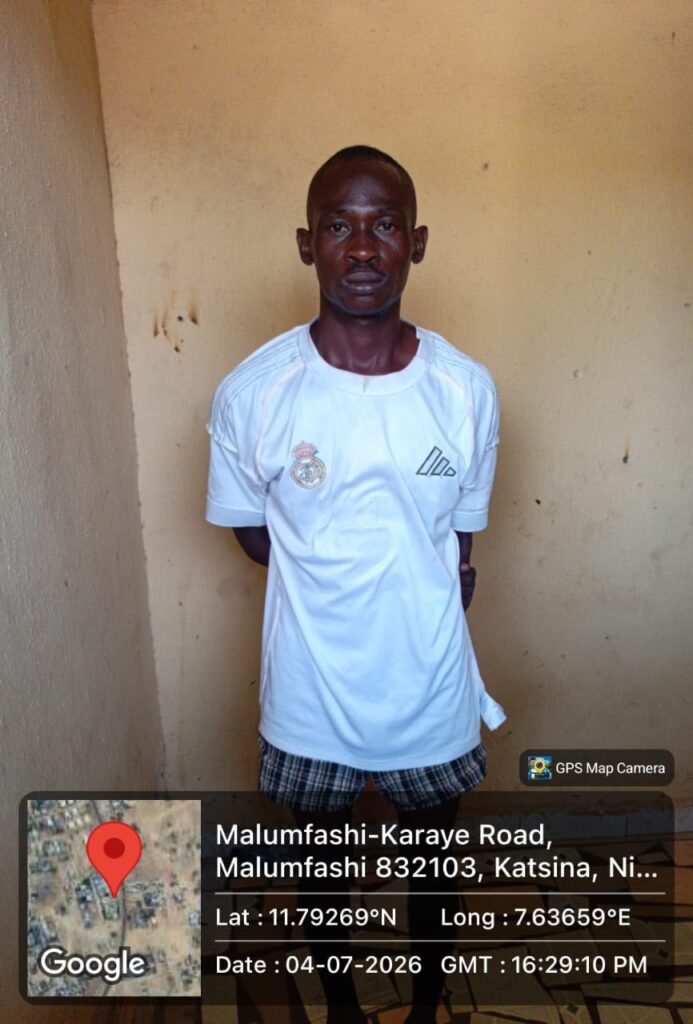
According to the sources, the suspect was intercepted while wearing a woodland camouflage three-quarter short, raising suspicion among the troops.
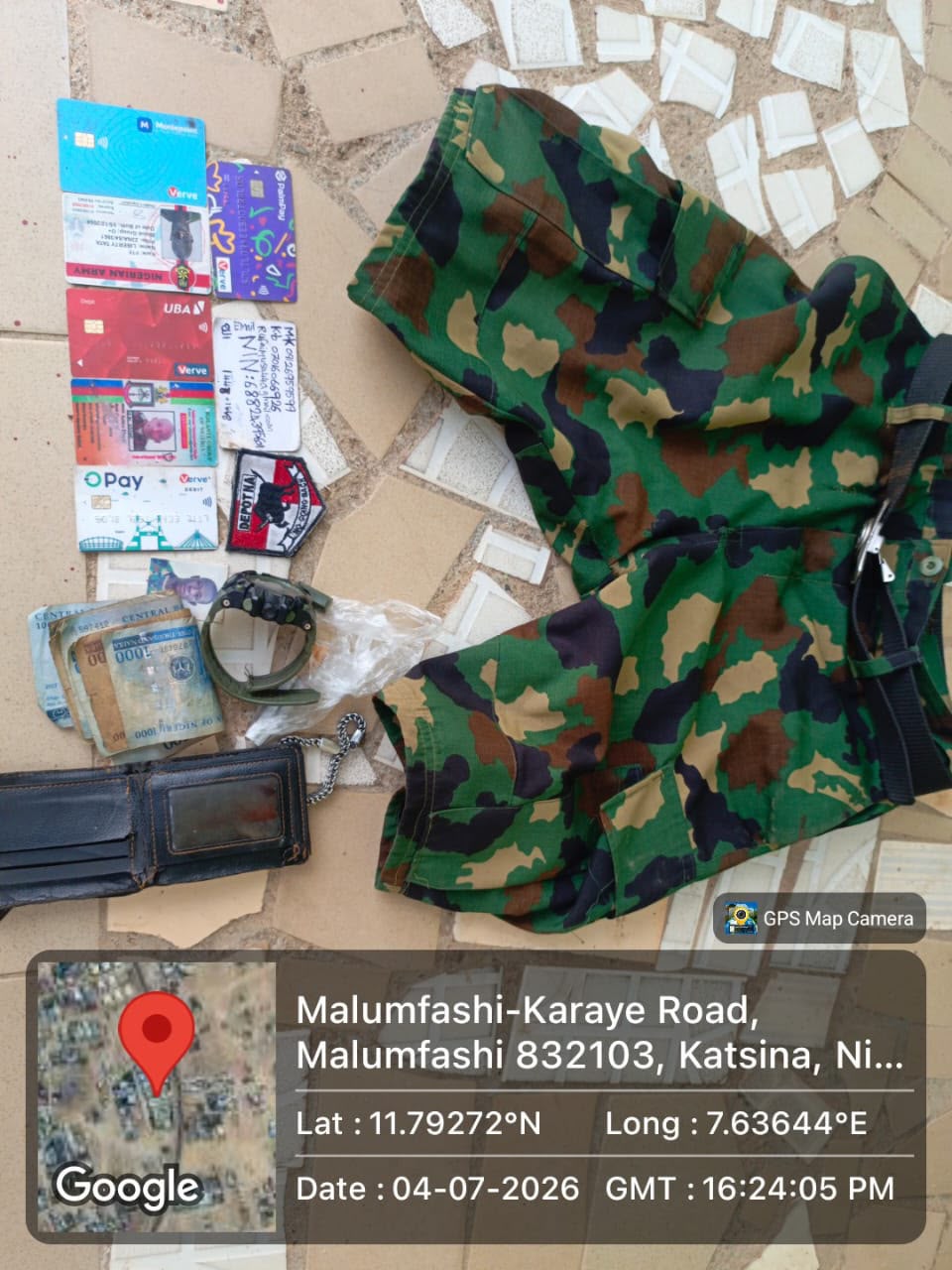
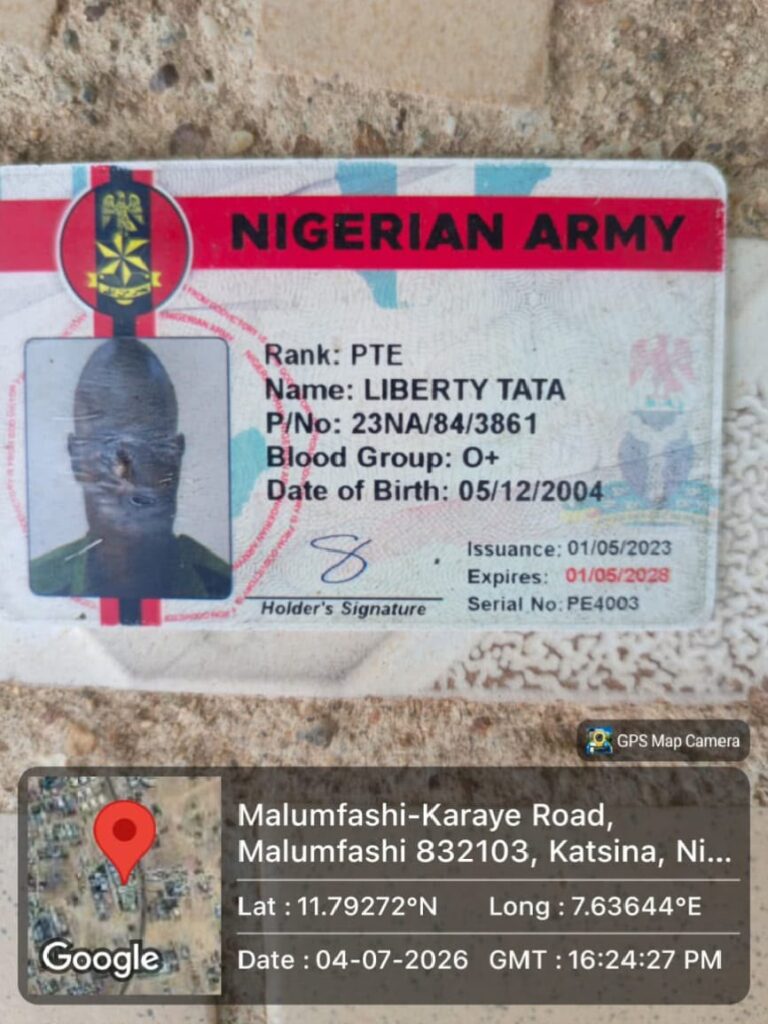
A search conducted on the suspect led to the recovery of a fake Nigerian Army identity card, four Automated Teller Machine (ATM) cards, one woodland camouflage three-quarter short, a wristwatch and the sum of ₦17,000.
The suspect and the recovered exhibits are currently in military custody pending further investigation.
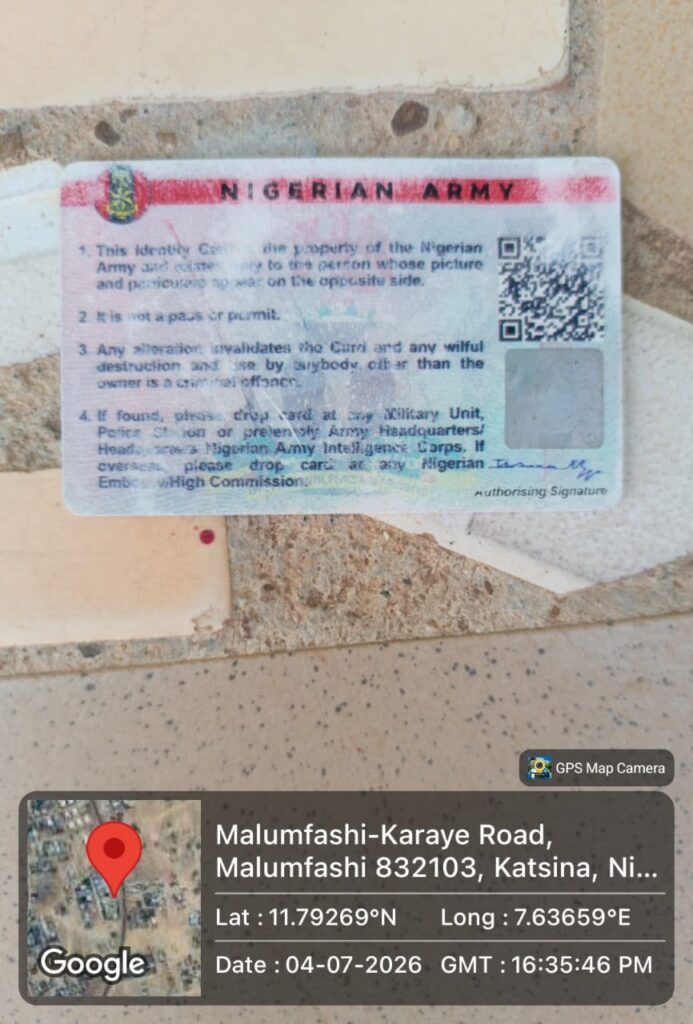
Military sources said the arrest forms part of ongoing efforts to curb impersonation of security personnel and other criminal activities within the area.
Troops Arrest Suspected Military Impostor in Katsina
Troops Recover 50 Rustled Cattle, Repel Suspected Rustlers in Kaduna
By Zagazola Makama
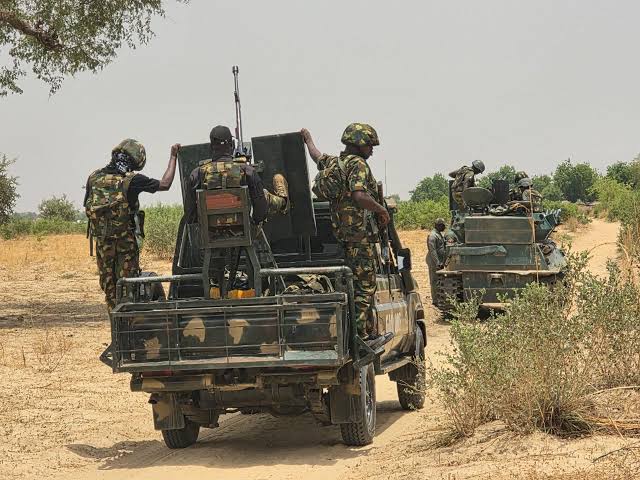
Troops deployed at the Forward Operating Base (FOB) Kankomi have recovered 50 rustled cattle after repelling suspected cattle rustlers during an ambush operation in Chikun Local Government Area.
Security sources told Zagazola Makama that the troops responded to a distress call at about 9:55 a.m. on July 4 over the activities of suspected rustlers at Ungwan Gontu community.
According to the sources, the troops swiftly laid an ambush and made contact with the fleeing suspects, forcing them to abandon the stolen livestock and escape into the surrounding area.
During the operation, the troops recovered 50 rustled cattle, which were subsequently identified and handed over to their rightful owner.
Military sources said efforts are ongoing to track down the fleeing suspects as security operations continue to combat cattle rustling and other criminal activities across Kaduna State.
Troops Recover 50 Rustled Cattle, Repel Suspected Rustlers in Kaduna
Troops Arrest Suspected Terrorist in Kogi, Suspect Confesses to Group Membership
By Zagazola Makama
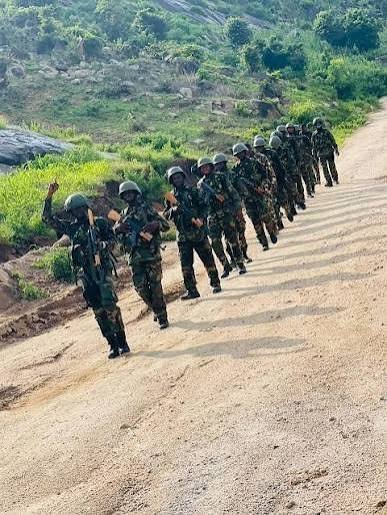
Troops of 12 Brigade, in collaboration with Office of the National Security Adviser (ONSA) Hybrid Forces, have arrested a suspected terrorist during an operation in Lokoja Local Government Area.
Security sources told Zagazola Makama that the troops responded at about 1:00 p.m. on July 4 to reports of a confrontation between local residents and a suspected terrorist at a Ruga settlement behind Obajana community.
According to the sources, the troops swiftly intervened and arrested one suspect at the scene.
During preliminary interrogation, the suspect reportedly confessed to being a member of a terrorist group led by an individual identified as Haruna, which allegedly operates within the Okene general area.
The suspect is currently in military custody and is undergoing further investigation to establish the extent of his involvement and identify other members of the group.
Military sources said the arrest forms part of ongoing security operations aimed at dismantling terrorist and criminal networks across Kogi State.
Troops Arrest Suspected Terrorist in Kogi, Suspect Confesses to Group Membership

Troops Arrest Suspected Military Impostor in Katsina

Troops Recover 50 Rustled Cattle, Repel Suspected Rustlers in Kaduna

Troops Arrest Suspected Terrorist in Kogi, Suspect Confesses to Group Membership

Roger Federer’s Shock as DNA Results Reveal Myla and Charlene Are Not His Biological Children

THE PLIGHT OF FARIDA

FAILED COUP IN BURKINA FASO: HOW TRAORÉ NARROWLY ESCAPED ASSASSINATION PLOT AMID FOREIGN INTERFERENCE CLAIMS
-
 News2 years ago
Roger Federer’s Shock as DNA Results Reveal Myla and Charlene Are Not His Biological Children
-
Opinions4 years ago
THE PLIGHT OF FARIDA
-
 News1 year ago
FAILED COUP IN BURKINA FASO: HOW TRAORÉ NARROWLY ESCAPED ASSASSINATION PLOT AMID FOREIGN INTERFERENCE CLAIMS
-

 News2 years ago
EYN: Rev. Billi, Distortion of History, and The Living Tamarind Tree
-
 Opinions5 years ago
POLICE CHARGE ROOMS, A MINTING PRESS
-

 ACADEMICS2 years ago
A History of Biu” (2015) and The Lingering Bura-Pabir Question (1)
-

 Columns2 years ago
Army University Biu: There is certain interest, but certainly not from Borno.
-

 Politics1 year ago
2027: Why Hon. Midala Balami Must Go, as Youths in Hawul and Asikira/Uba Federal Constituency Reject ₦500,000 as Sallah Gift
