
News
Daurama Foundation Restores Access to Clean Water at Kuchingoro IDP Camp

Daurama Foundation Restores Access to Clean Water at Kuchingoro IDP Camp
By: Michael Mike
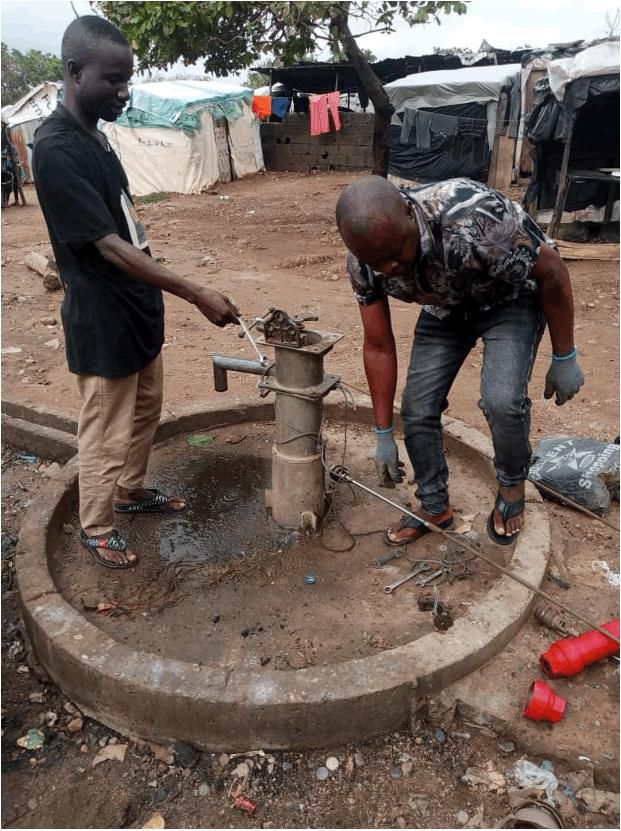
Daurama Foundation has assisted in the successful restoration of access to clean water at the Kuchingoro Internally Displaced Persons (IDP) camp.
This transformative project has addressed one of the most pressing issues faced by the camp residents, significantly improving their quality of life.
During a recent visit to the Kuchingoro IDP camp, Daurama Foundation’s founder, Dr. Samira Buhari, was deeply moved by the dire conditions. “Seeing the absence of clean water was heart-wrenching. It’s a basic necessity that no one should be deprived of, and the impact on the community, especially the women and children, who are already displaced from their original homes, was profound,” she shared.
One resident, Aisha Babuna, poignantly highlighted the struggle. “Without clean water, our daily lives were filled with hardship. We couldn’t cook, clean, or even drink safely. Our children were constantly at risk of diseases,” Aisha explained to our team when they visited.
In response to this urgent need, the Daurama Foundation’s Water, Sanitation, and Hygiene (WASH) team immediately engaged with key stakeholders, including the camp’s chairman and secretary, to devise a sustainable solution. After thorough consultations, it was decided that repairing the existing boreholes would be the most effective approach.
“Our team collaborated with local experts to ensure the repairs were done swiftly and effectively,” said Dr. Samira Buhari. “Today, it’s a delight to say that the residents of Kuchingoro IDP camp have access to clean and safe water once again.”
The impact of this project has been profound. The Chairman of the IDP camp expressed immense gratitude: “The restoration of clean water has rejuvenated our community. It has brought hope and relief, allowing us to focus on rebuilding our lives.”
Women in the camp, who are primarily responsible for fetching water, have felt a significant burden lifted. “Having clean water means our children are healthier, and we can take better care of our families,” said one of the mothers in the camp. “It’s more than just water; it’s a lifeline.”
He said the Foundation remains steadfast in its commitment to supporting communities in need. This project exemplifies our dedication to enhancing health and well-being through practical and impactful initiatives. By addressing the basic needs of vulnerable populations, we strive to create sustainable change and improve lives.
The Daurama Foundation was established by Dr. Samira Buhari and is committed to improving health outcomes and championing the rights of women and girls across Nigeria through advocacy, comprehensive education, and active community engagement.
It works to tackle pressing issues that affect the well-being and rights of girls and women in the communities it serves with programmes aim at addressing domestic violence, improve neonatal health, and advocate for menstrual health and hygiene; empowering women and girls, fostering sustainable development, and attaining equality heavily rely on these pivotal focus areas.
Daurama Foundation Restores Access to Clean Water at Kuchingoro IDP Camp


The Engine of the Ticket: How Kashim Shettima Redefined Mobilisation Strategy
By Abubakar M. Kareto
Kashim Shettima has injected rare force into the Tinubu re-election campaign from the opening flag-off to the ongoing state rallies. His presence is constant, his pace relentless, and his message consistent. Where others might conserve energy for selected stops, he has treated every venue as decisive ground. The result is a campaign that feels driven rather than managed, and that difference is visible to supporters and opponents alike.
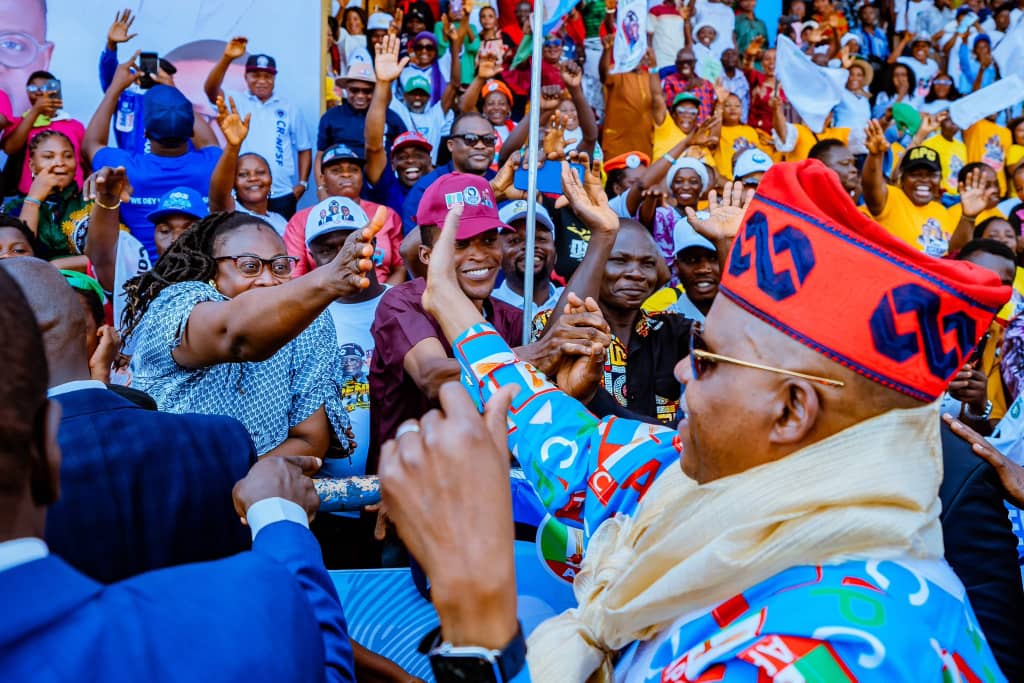
Physical commitment marks his approach. At the Cross River rally he and the party chairman sprinted toward the podium before breaking into his familiar dance steps, turning arrival into performance. In Port Harcourt he again took the stage with lively moves that lifted the crowd. These moments are not accidents. They signal fitness, confidence, and readiness to match the intensity expected of a national ticket in a competitive cycle. Supporters respond because they see a principal who refuses to stand still.
His speeches carry equal weight. In Rivers he framed the state as the centre of political arithmetic, urging voters to renew the trust given four years earlier. He defended the difficult reforms of the administration, rejected the language of collapse, and projected a path toward a one-trillion-dollar economy. He has also drawn clear lines against rivals, describing their records and arguments without soft edges. The combination of defence and attack keeps the campaign on the front foot.
Strategy sits behind the energy. Shettima understands that loyalty must be visible and repeated. By appearing in multiple South-South states in rapid succession, dancing with local leaders, and naming precise vote targets, he converts abstract party strength into concrete local expectation. The mathematics he speaks of is practical: registered voters, collected cards, and the percentage required to secure the mandate. That clarity turns rallies into mobilisation rather than spectacle alone.
The cumulative effect is a campaign that projects continuity and appetite. Party workers see a vice president willing to run, dance, argue, and stay on message across long days. Opponents are forced to respond to a ticket that looks energetic rather than defensive. In a political culture that often rewards caution, Shettima has chosen visible effort, and that choice has defined the early phase of the 2027 contest.
No other figure on the ticket has matched this sustained intensity. The energy, desire, support, and commitment he has brought cannot be manufactured by schedule or speechwriter. They come from a principal who treats the campaign as personal work. That quality is the strongest evidence that the effort is genuine and the standard set by him remains the measure for the rest of the field.
Author Bio:
Abubakar M. Kareto is a Public Affairs Analyst and Communications Strategist focusing on governance, policies, economy, and institutional reforms across Nigeria and Africa. He can be reached on X @amkareto and via email at amkareto@gmail.com.
The Engine of the Ticket: How Kashim Shettima Redefined Mobilisation Strategy
IPCR Dialogue: Zulu Blames Governance Failures, Hatred for Nigeria’s Deepening Insecurity
…SAN urges local government autonomy, stronger community leadership, international cooperation to tackle extremism
By: Michael Mike
Professor Shehu Abdullahi Zuru, SAN, has blamed weak governance, widespread poverty, social injustice and the erosion of community leadership for worsening insecurity and divisions in Nigeria, urging government and non-state actors to confront the underlying causes of the country’s challenges.
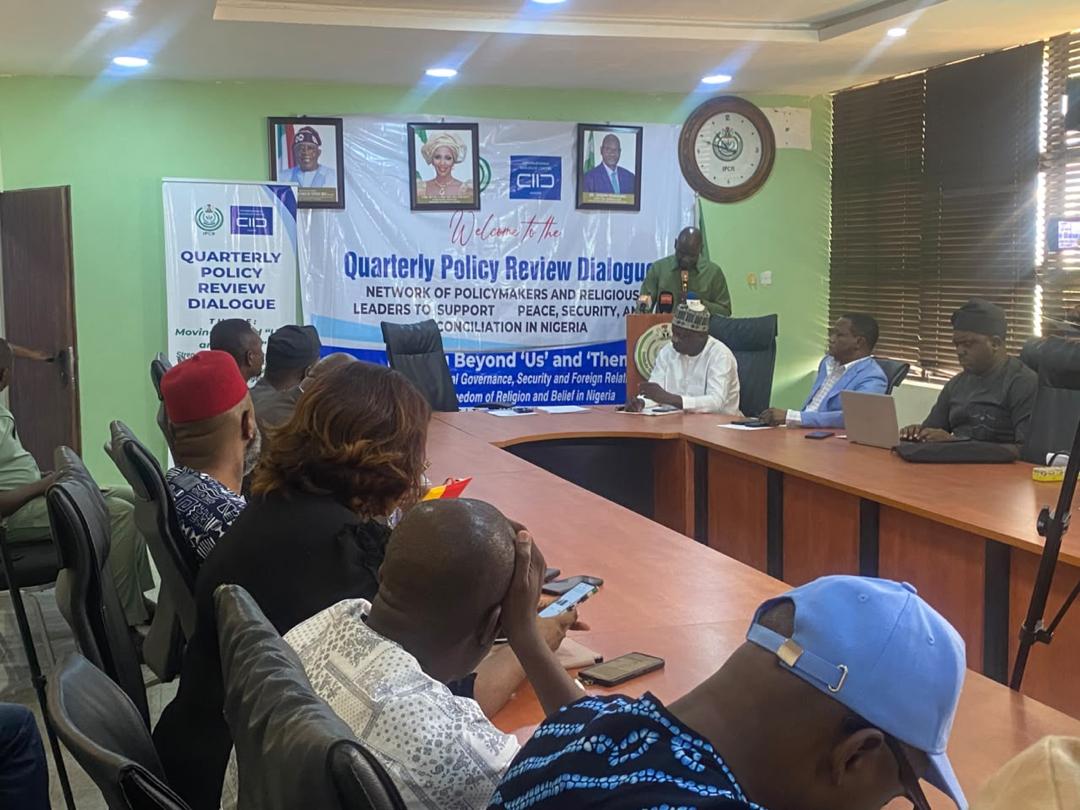
Zuru, who delivered the lead paper at a policy dialogue organised by the Institute for Peace and Conflict Resolution (IPCR) in Abuja, said the “Us versus Them” mentality thrived in societies where hatred, intolerance and social divisions had overwhelmed shared values and a sense of common humanity.
He warned that unless Nigeria addressed the governance failures and grievances fuelling social discontent, efforts to promote religious freedom, national cohesion and security would remain inadequate.
The dialogue, organised by the Network of Policymakers and Religious Leaders to Support Peace, Security and Reconciliation in Nigeria (NPMRL), was held on Friday under the theme, “Moving Beyond ‘Us versus Them’: Strengthening Local Governance, Security and Foreign Relations to Protect Freedom of Religion or Belief in Nigeria.”
Zuru traced the consequences of identity-based hatred to historical atrocities, including Nazi racial supremacy, the 1994 Rwandan genocide and the 1992 Bosnian conflict, arguing that intolerance undermined social cohesion and the moral foundations of society.
He said Nigeria’s worsening situation was linked to poor policy choices, persistent poverty, declining confidence in the justice system and the inability of political leadership to build consensus around national priorities.
According to him, weakened leadership among religious institutions, traditional rulers, community figures and other influential non-state actors has further contributed to the country’s governance and security challenges.
“The compromised and receding local leadership by both state and non-state actors … as well as moribund formal institutions of public policy and public authority and accountability are only responsible for the current state of hopelessness in our dear country today,” he said.
Zuru identified local government autonomy as a critical requirement for effective governance, particularly at the grassroots, urging the Federal Government to address the issue decisively.
He argued that stronger local government institutions would improve public policy delivery and enable communities to respond more effectively to their development and security needs.
He also challenged religious and community leaders to take greater responsibility for addressing intolerance, rebuilding trust and influencing young people positively.
With killings and displacement continuing in different parts of the country, he said community leaders must be prepared to speak truthfully to political authorities and help shape policies that respond to the country’s security and development challenges.
On national security, Zuru argued that terrorism, banditry and other forms of organised criminality had transnational dimensions, involving cross-border networks of recruitment, financing and other forms of support.
He said Nigeria could not effectively confront such threats in isolation and called for stronger bilateral and multilateral partnerships, particularly in intelligence gathering, military capacity and counter-insurgency operations.
“Therefore, clandestine and proactive diplomacy is mandatory for the success of every counter initiative meant to subdue these threats,” he said, adding that Nigeria needed genuine international partners willing to support its efforts against insecurity.
Zuru maintained that foreign relations should be treated as an important component of national security policy, given the cross-border character of extremist and criminal networks.
Earlier, the Director-General of IPCR, Dr Joseph Ochogwu, warned that divisive narratives presenting complex security challenges exclusively through religious identities could deepen mistrust and undermine national cohesion.
Ochogwu, said legitimate concerns about violations of freedom of religion or belief must be addressed without allowing public discourse to reinforce religious divisions.
He called for impartial security responses, inclusive governance, accountability for human rights violations and constructive engagement among religious leaders, policymakers and community institutions.
He said protecting religious freedom required more than constitutional guarantees, stressing the importance of effective institutions, consistent application of the law and mechanisms for preventing conflicts before they escalated.
Ochogwu also identified local governance, security governance and foreign relations as critical areas requiring stronger policy attention, urging stakeholders to translate dialogue into practical recommendations and measurable interventions.
He noted that Nigeria’s Constitution guaranteed freedom of thought, conscience and religion, prohibited the adoption of a state religion and protected citizens against discrimination on religious grounds.
The dialogue also featured Reverend John Joseph Hayab as discussant and brought together policymakers, religious leaders and other stakeholders to examine ways of strengthening religious freedom, security and peaceful coexistence.
The IPCR said the engagement was part of efforts to strengthen collaboration between religious leadership and public institutions in addressing conflict and promoting national reconciliation.
IPCR Dialogue: Zulu Blames Governance Failures, Hatred for Nigeria’s Deepening Insecurity
NDLEA Arraigns Two Mexicans, Four Nigerians over Oyo Methamphetamine Laboratory
…Court remands six defendants in correctional centre, fixes trial for January 2027
By: Michael Mike
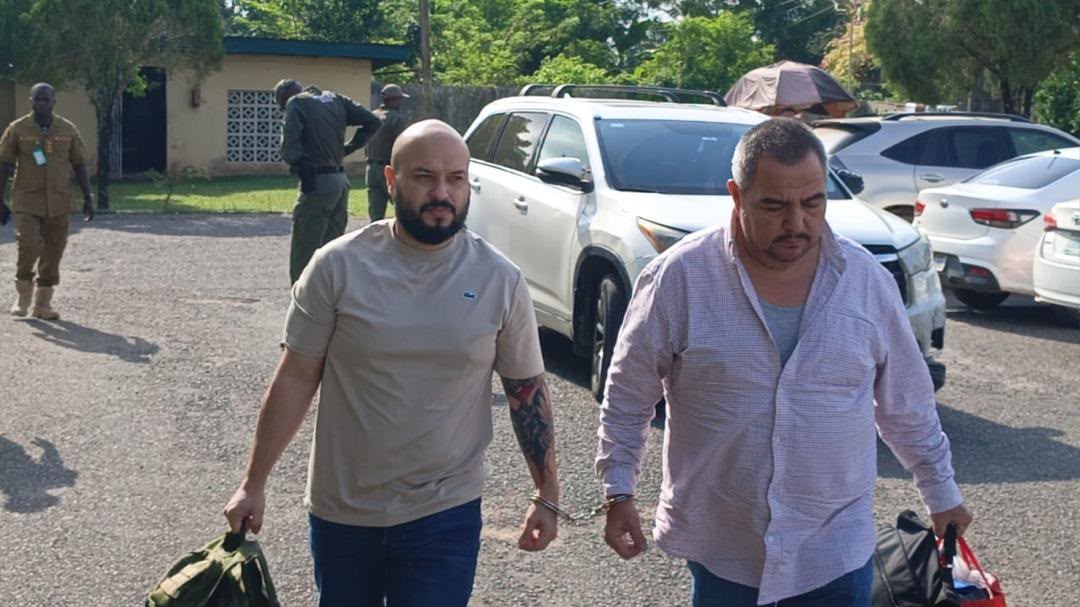
The National Drug Law Enforcement Agency (NDLEA) has arraigned two Mexican nationals and four Nigerians over their alleged involvement in the establishment and operation of a clandestine methamphetamine laboratory in a forest in Tapa village, Ibarapa North Local Government Area of Oyo State.
The six defendants were arraigned before Justice Nkeonye Evelyn Maha of the Federal High Court, Ibadan, on a four-count charge bordering on conspiracy, establishment of an illicit drug laboratory and the unlawful handling of chemicals for the production of methamphetamine.
The defendants are Mexican nationals Jose Villa Ochoa, 56, and Carrera Loaiza Arturo, 40, alongside four Nigerians identified as Maxwell Uche Nevoh, 30; Olatunji Yusuf, 37; Bankole Akeem Owolabi, 45; and Ganiu Monsiu, 43.
According to a statement by NDLEA’s Director of Media and Advocacy, Mr Femi Babafemi, on Friday, Villa Ochoa and the four Nigerians were arrested on June 17, 2026, by operatives of the agency in a forested area of Tapa village.
Arturo was subsequently tracked and arrested on August 19 while allegedly attempting to flee the country through the Lagos airport.
The charge alleged that the defendants conspired to operate a drug trafficking organisation and established a clandestine laboratory for the production of methamphetamine between December 2025 and June 2026 at different locations in Lagos and Oyo States.
They were also accused of unlawfully transporting and distributing chemical substances intended for the manufacture of the psychotropic drug, contrary to Section 20(1)(f) and punishable under Section 20(2)(a) of the NDLEA Act.
All six defendants pleaded not guilty after the charges were read to them in a language they understood.
Following their pleas, Justice Maha ordered their remand at the Correctional Centre in Ibadan and adjourned the case until January 26, 27, 28 and 29, 2027, for trial.
The Oyo operation is coming months after NDLEA operatives arrested three other Mexican nationals and seven Nigerian collaborators over the alleged establishment of a similar methamphetamine laboratory in a forest hideout in Ogun State.
The 10 defendants in the Ogun case were also arraigned before a Federal High Court in Lagos, where their bail application was rejected and the court ordered an accelerated hearing.
The agency said the two operations involved foreign nationals and Nigerian collaborators allegedly linked to clandestine methamphetamine production facilities in forest locations in the South-West.
NDLEA Arraigns Two Mexicans, Four Nigerians over Oyo Methamphetamine Laboratory

The Engine of the Ticket: How Kashim Shettima Redefined Mobilisation Strategy

IPCR Dialogue: Zulu Blames Governance Failures, Hatred for Nigeria’s Deepening Insecurity

NDLEA Arraigns Two Mexicans, Four Nigerians over Oyo Methamphetamine Laboratory

Roger Federer’s Shock as DNA Results Reveal Myla and Charlene Are Not His Biological Children

THE PLIGHT OF FARIDA

FAILED COUP IN BURKINA FASO: HOW TRAORÉ NARROWLY ESCAPED ASSASSINATION PLOT AMID FOREIGN INTERFERENCE CLAIMS
-
 News3 years ago
Roger Federer’s Shock as DNA Results Reveal Myla and Charlene Are Not His Biological Children
-
Opinions5 years ago
THE PLIGHT OF FARIDA
-
 News2 years ago
FAILED COUP IN BURKINA FASO: HOW TRAORÉ NARROWLY ESCAPED ASSASSINATION PLOT AMID FOREIGN INTERFERENCE CLAIMS
-
 Opinions5 years ago
POLICE CHARGE ROOMS, A MINTING PRESS
-

 News3 years ago
EYN: Rev. Billi, Distortion of History, and The Living Tamarind Tree
-

 ACADEMICS3 years ago
A History of Biu” (2015) and The Lingering Bura-Pabir Question (1)
-

 Columns3 years ago
Army University Biu: There is certain interest, but certainly not from Borno.
-

 Politics1 year ago
2027: Why Hon. Midala Balami Must Go, as Youths in Hawul and Asikira/Uba Federal Constituency Reject ₦500,000 as Sallah Gift
