
News
HOMEF: GMO Introduction into Nigeria’s Food Security Plan, A Big Mistake

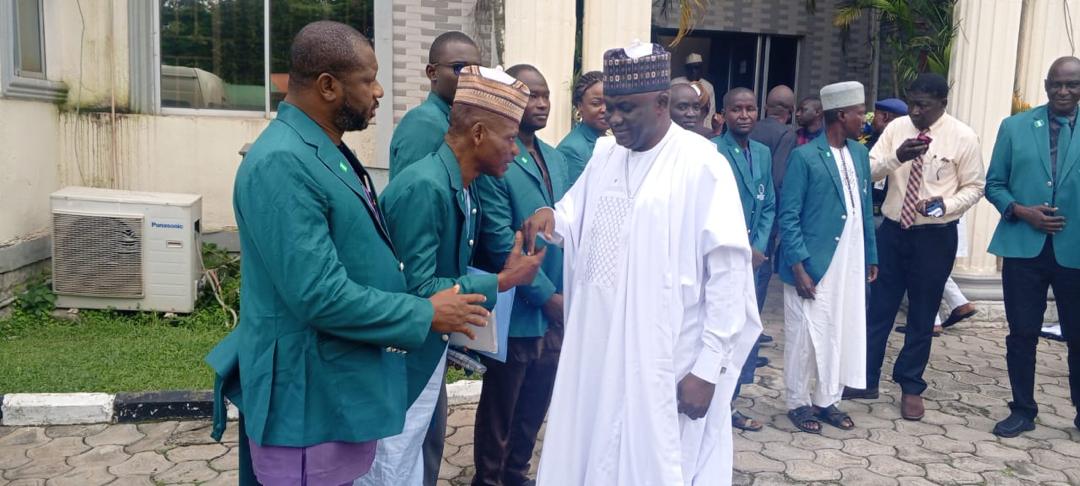
HOMEF: GMO Introduction into Nigeria’s Food Security Plan, A Big Mistake
By: Michael Mike
Health of Mother Foundation has described the introduction of genetically modified organism (GMO) into Nigeria’s food security plan as a big mistake as it jeopardizes the potential of any country especially in Africa to reach their full potential in food production.
The Executive Director of HOMEF, Dr Nnimmo Bassey, In his opening remarks at a workshop organised for Judiciary Officials on GMOs and Biosafety in Nigeria, said GMO narrow down the varieties available and its becomes dominant threats to the local varieties available.
He said: “Introducing GMO’s for reason of food security is a big mistake, because GMO’s jeopardize the potential of any country especially in Africa to reach their full potential to achieve food security because GMO’s reduce biodiversity, its narrow down the varieties available and it becomes dominant threats to the local varieties available.”
He noted that the introduction of GMOs in Nigeria has raised serious concerns about safety, regulatory oversight, and their potential impacts on the country’s biosafety.
The subject of the dangers of GMO foods was front burner at the training organised by HOMEF in Abuja on Monday with discussion centered on the role the judiciary arms of government need to play and it’s also involved creating awareness for those who are interpreting the nation’s laws as it’s border on the guide of the agency of government that are saddle with the responsibility of regulating, such as biosafety agency.
Bassey added that “to provide alternative in place of GMOs, we should first realize that it is food sovereignty that secure food security. What that means is that we should be depending on our indigenous species, ensuring that food we produce conforms to our culture, the government should also ensure that there is proper infrastructure because today many of the food produce are wasting because there is no storage facility.
“However, we realize that government can make mistakes and that’s why we need strict liability in the law. So, when the citizens found out that what you said was safe it’s not really safe, you should be held accountable. So, that the government we not continue to use us as guinea pigs.”
In his reaction, one of the participants at the workshop, Barrister Inibehe Effiong said: “I think the training is very necessary. It is intended to equip members of the judiciary, both lawyers, and My Lord on the bench with the requisite technical knowledge about GMOs in Nigeria, genetically modified organisms. For many people in our country, it is a novel concept. They are not quite familiar with what GMOs was all about. And because, we are seeing many food products being introduced in the market. And then there are regulatory issues regarding that and the manner in which authorizations and permits are issued under the law.
“For example, under the part seven of the national biosafety management agency act, there have been questions over time, about the manner in which those permits are issued. Would they have been causes or instances where HOMEF has tried to activate the judicial process to test the regulatory framework for issuing authorization.”
He said: “What we found from those court cases, is that there was a need to keep our judges and even lawyers with the legal framework governing GMOs in Nigeria. So that when such cases come before them, they can understand what exactly the issues are about and that was why, HOMEF deemed it fit to organize this training and bring to focus the seriousness of the matter, because as I stated, most Nigerians don’t really know what GMO was about. But lately we have seen conversations on social media, people are becoming more increasingly aware of it.”
He urged all Nigerians to reject all GMOs and also engage in various levels of personal and community education, sensitisation, and advocacy to demand the withdrawal/repeal of policies and legislation that allow licensing and indeed permit the cultivation, distribution and public consumption of GMOs.
HOMEF: GMO Introduction into Nigeria’s Food Security Plan, A Big Mistake


Troops Arrest Suspected Military Impostor in Katsina
By Zagazola Makama
Troops of 17 Brigade have arrested a suspected military impostor during a fighting patrol in Malumfashi Local Government Area.
Security sources told Zagazola Makama that the suspect was apprehended at about 1:30 p.m. on July 4 by troops deployed at the Forward Operating Base (FOB) Malumfashi while conducting routine patrols within Malumfashi town.

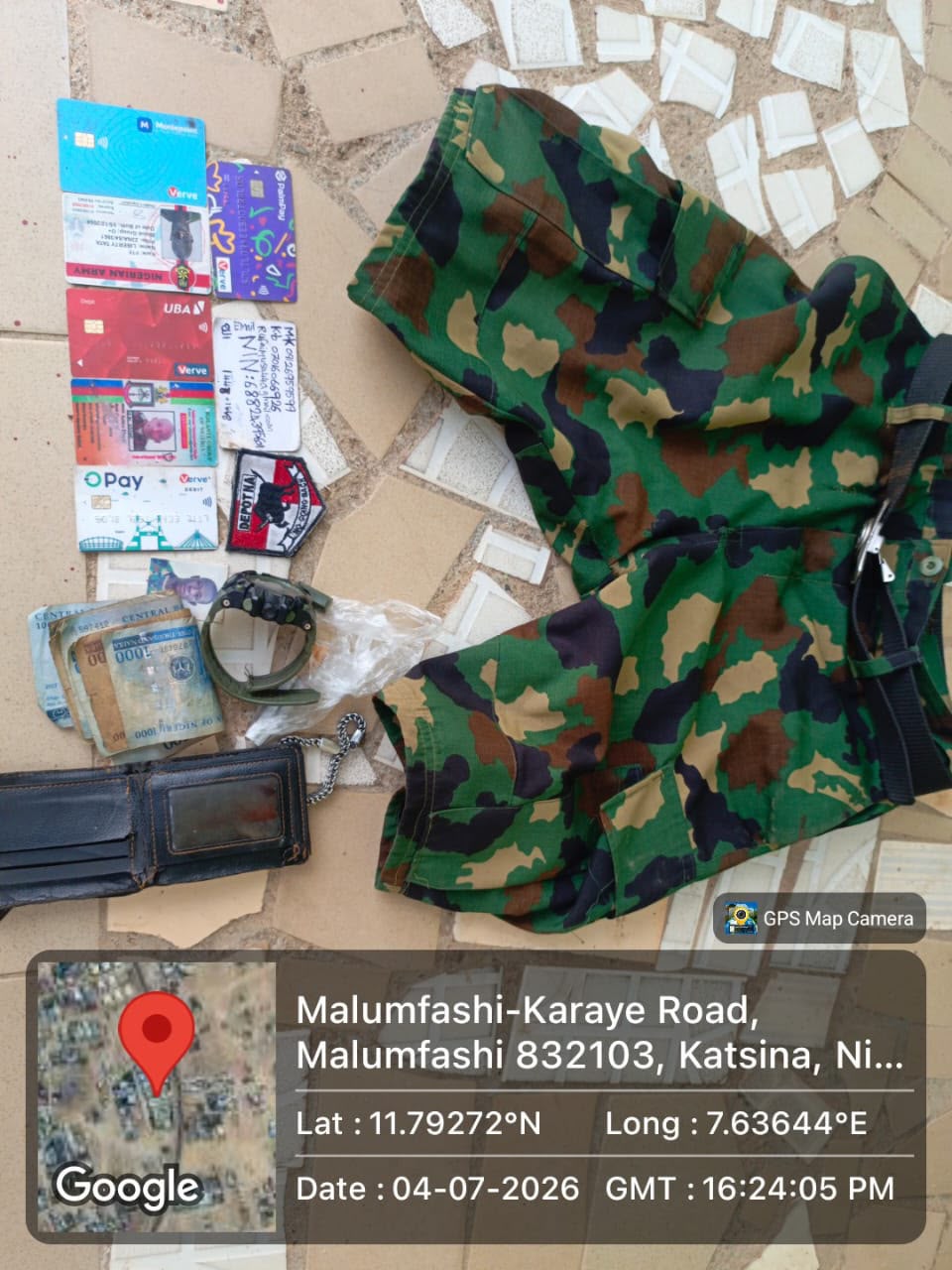
According to the sources, the suspect was intercepted while wearing a woodland camouflage three-quarter short, raising suspicion among the troops.
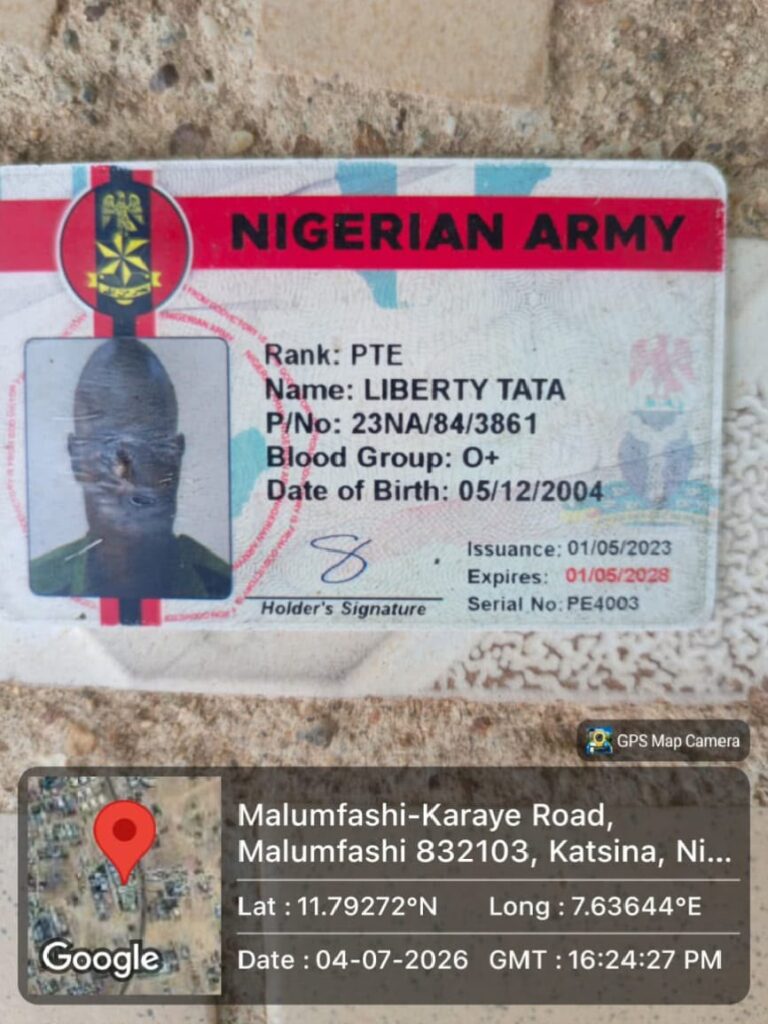
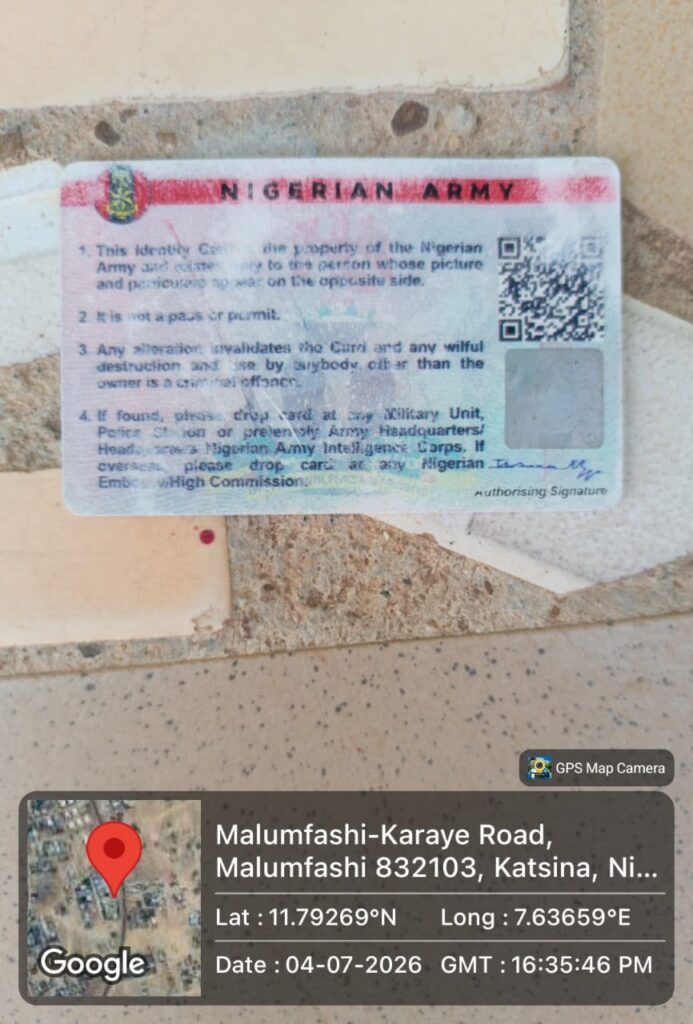
A search conducted on the suspect led to the recovery of a fake Nigerian Army identity card, four Automated Teller Machine (ATM) cards, one woodland camouflage three-quarter short, a wristwatch and the sum of ₦17,000.
The suspect and the recovered exhibits are currently in military custody pending further investigation.
Military sources said the arrest forms part of ongoing efforts to curb impersonation of security personnel and other criminal activities within the area.
Troops Arrest Suspected Military Impostor in Katsina
Troops Recover 50 Rustled Cattle, Repel Suspected Rustlers in Kaduna
By Zagazola Makama
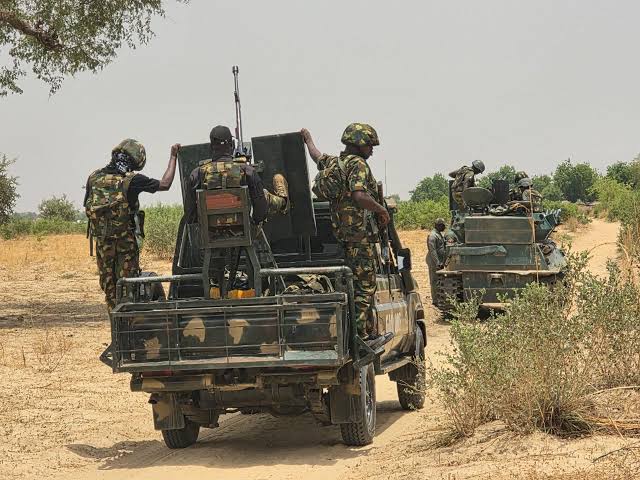
Troops deployed at the Forward Operating Base (FOB) Kankomi have recovered 50 rustled cattle after repelling suspected cattle rustlers during an ambush operation in Chikun Local Government Area.
Security sources told Zagazola Makama that the troops responded to a distress call at about 9:55 a.m. on July 4 over the activities of suspected rustlers at Ungwan Gontu community.
According to the sources, the troops swiftly laid an ambush and made contact with the fleeing suspects, forcing them to abandon the stolen livestock and escape into the surrounding area.
During the operation, the troops recovered 50 rustled cattle, which were subsequently identified and handed over to their rightful owner.
Military sources said efforts are ongoing to track down the fleeing suspects as security operations continue to combat cattle rustling and other criminal activities across Kaduna State.
Troops Recover 50 Rustled Cattle, Repel Suspected Rustlers in Kaduna
Troops Arrest Suspected Terrorist in Kogi, Suspect Confesses to Group Membership
By Zagazola Makama
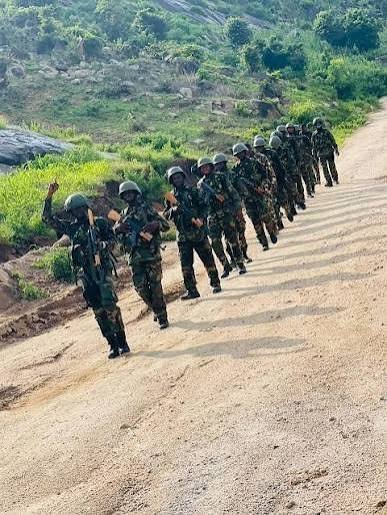
Troops of 12 Brigade, in collaboration with Office of the National Security Adviser (ONSA) Hybrid Forces, have arrested a suspected terrorist during an operation in Lokoja Local Government Area.
Security sources told Zagazola Makama that the troops responded at about 1:00 p.m. on July 4 to reports of a confrontation between local residents and a suspected terrorist at a Ruga settlement behind Obajana community.
According to the sources, the troops swiftly intervened and arrested one suspect at the scene.
During preliminary interrogation, the suspect reportedly confessed to being a member of a terrorist group led by an individual identified as Haruna, which allegedly operates within the Okene general area.
The suspect is currently in military custody and is undergoing further investigation to establish the extent of his involvement and identify other members of the group.
Military sources said the arrest forms part of ongoing security operations aimed at dismantling terrorist and criminal networks across Kogi State.
Troops Arrest Suspected Terrorist in Kogi, Suspect Confesses to Group Membership

Troops Arrest Suspected Military Impostor in Katsina

Troops Recover 50 Rustled Cattle, Repel Suspected Rustlers in Kaduna

Troops Arrest Suspected Terrorist in Kogi, Suspect Confesses to Group Membership

Roger Federer’s Shock as DNA Results Reveal Myla and Charlene Are Not His Biological Children

THE PLIGHT OF FARIDA

FAILED COUP IN BURKINA FASO: HOW TRAORÉ NARROWLY ESCAPED ASSASSINATION PLOT AMID FOREIGN INTERFERENCE CLAIMS
-
 News2 years ago
Roger Federer’s Shock as DNA Results Reveal Myla and Charlene Are Not His Biological Children
-
Opinions4 years ago
THE PLIGHT OF FARIDA
-
 News1 year ago
FAILED COUP IN BURKINA FASO: HOW TRAORÉ NARROWLY ESCAPED ASSASSINATION PLOT AMID FOREIGN INTERFERENCE CLAIMS
-

 News2 years ago
EYN: Rev. Billi, Distortion of History, and The Living Tamarind Tree
-
 Opinions5 years ago
POLICE CHARGE ROOMS, A MINTING PRESS
-

 ACADEMICS2 years ago
A History of Biu” (2015) and The Lingering Bura-Pabir Question (1)
-

 Columns2 years ago
Army University Biu: There is certain interest, but certainly not from Borno.
-

 Politics1 year ago
2027: Why Hon. Midala Balami Must Go, as Youths in Hawul and Asikira/Uba Federal Constituency Reject ₦500,000 as Sallah Gift
