
Politics
2027: The rise of a megaparty and potential internal strife leading to Tinubu and Kashim Shettima’s triumph

2027: The rise of a megaparty and potential internal strife leading to Tinubu and Kashim Shettima’s triumph
By Dr. James Bwala
The oppositions are still at odds in their meetings about what the year 2027 will hold for them; therefore, the entire narrative revolves around the storms they are coming face to face with in the buildup for 2027. We understand where they are coming from, and the questions in their brains have already shown the worries in their eyes. In actuality, they are attempting to insert flimsy concrete into the pillars that are supposed to support the structure they are assembling to construct. We know that they are simply exposing their fears if they keep pushing the narrative that there is a schism in the presidency. These are the characteristics of both President Bola Ahmed Tinubu and his vice president, Kashim Shettima: people with tranquil hearts don’t talk louder.
I have been keeping a close eye on our political landscape lately, particularly with regard to the emergence of a megaparty and the growing momentum to unseat Tinubu and Kashim Shettima in 2027. I recalled those days when I used to sneak into our neighbors’ house as a kid to watch cowboy movies. It was fascinating to watch a group of criminals band together specifically to rob a bank, but in the end, a certain interest stemming from personal ambition exposes the groups into intoxicating situations, which causes the earlier agreements to give the Sheriffs an advantage when the group falls apart.

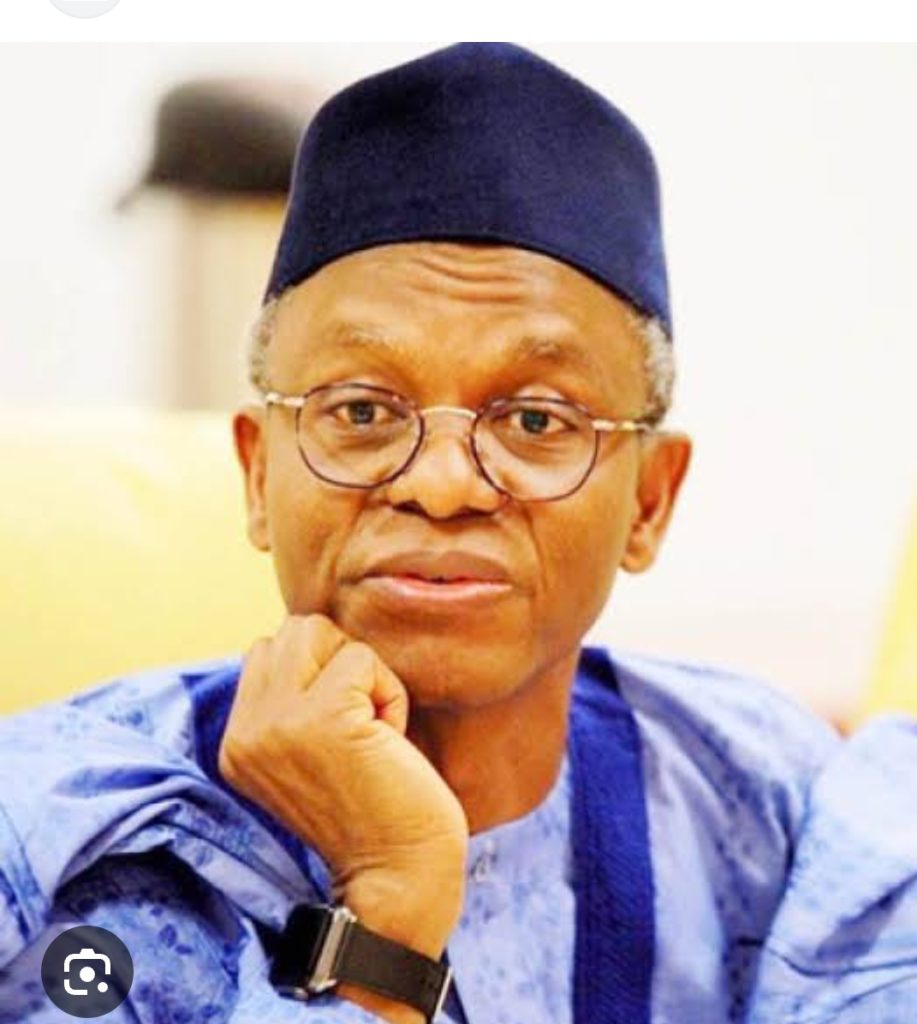
I’m not sure if the earlier report about Ahmed El-rufai, the former governor of Kaduna State, joining the megaparty is accurate. Politics is interesting, of course, but I believe that given the recent smokescreen surrounding him, he should have proceeded with greater caution when pursuing his political goals. They used to say that hasty decisions are made in the devil’s way. If that is the case, based on his remarks prior to the general election on February 25, 2022, and his subsequent boasting about his love for Mr. President and the APC, I believe he may be playing politics to suit himself.
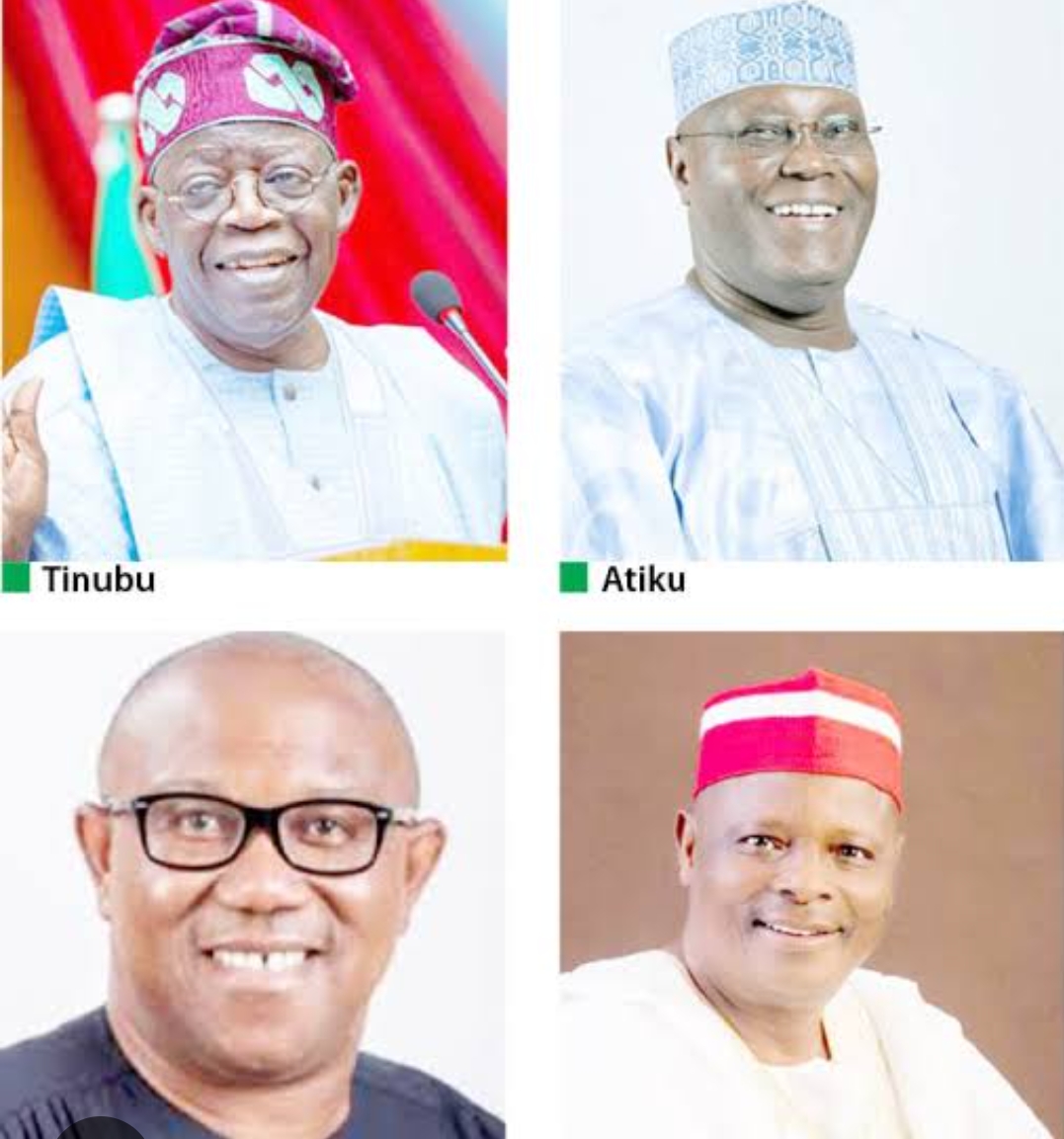
I also followed the lines on some pages and discussions ongoing between the former Vice President and PDP presidential candidate, Atiku Abubakar, the Madugu of the NNPP and its presidential candidate, Dr. Rabiu Musa Kwankwaso, and the almighty Peter Obi in drawing yet another mathematical formula for trunketting the APC administration come 2027. And I hope the figures to be brought by Peter Obi in these new arrangements will be looked at carefully and not through the magnifying lenses of the Labour Party presidential candidate, so that no madman can bring any advice to the table again.
In this rhetoric, who may drop their ambition for the common good? Who would be willing to sacrifice his interest in the race so that Obi, Atiku, or Kwankwaso may lead the team? Peter Obi may be very comfortable in the ongoing meetings, hoping that the table may turn for him and he may never settle for a VP position. We have seen this ambition in the past. Atiku has said he would run again and may need the support of Obi. Kwankwaso is no pushover, having established himself on many fronts as a spoiler in the past. And Atiku may never support the Obi-Kwankwaso ticket because he loves to run and runs himself out.
READ ALSO:https://newsng.ng/police-witness-tells-iip-sars-how-peter-ekwealor-slumped-after-allegedly-confessing-to-killing-asp-akoh-ude/
As the clock ticks, only the fastest hand can pull the trigger first in this cowboy-like arrangement from the buildup. Amongst these gladiators, who is El-rufai’s interested in? That is to say that if he is not also ambitious of becoming an aspirant for the presidential race. Other gladiators with such ambition to go into the race may be aligning their cards to see the possibility of displaying their talents in the political murky water, as it is already ahead of the serious calculations at the table where the hearts are beating and only the eyes could explain the true state of the mind for a choice of coffee or wine.
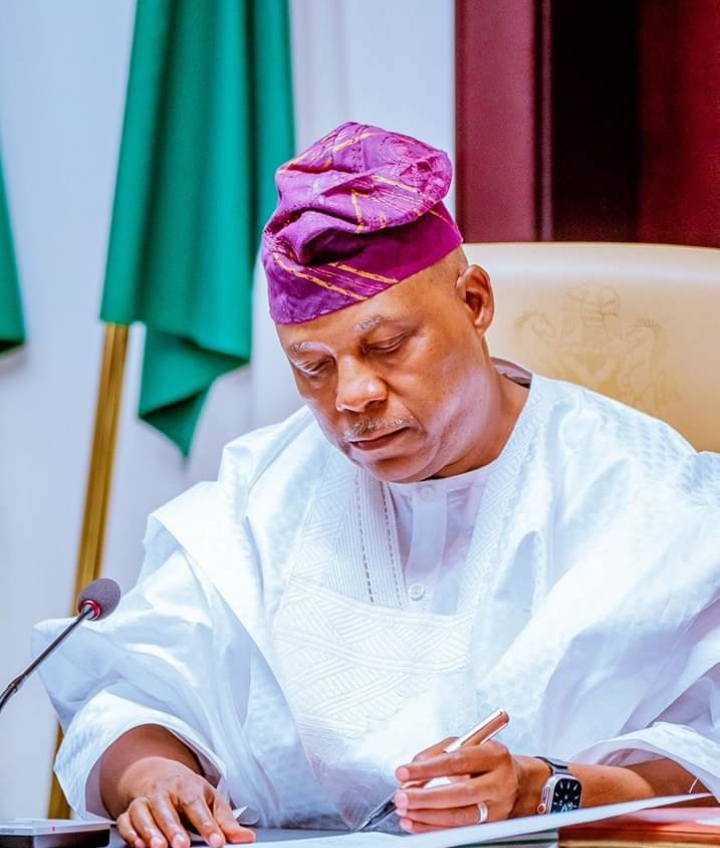
Ambition knows no friend or brother of the same cross when it comes to choice. Therefore, the possibility for these ongoing arrangements to fail is rather louder for the things I know for now. I could go into debate over and again along the path of former governor of Jigawa state, Alhaji Sule Lamido, on his statement over what President Tinubu stands and on matters of the 2027 presidential race. I stand with Alhaji Sule Lamido on this ground to say it is Tinubu and Kashim Shettima again that will decide the race in 2027. But that is not to say that the race will be easy.
I believe the trio of Atiku, Obi, and Kwankwaso knows very well the position of the race, as stated by Alhaji Sule Lamido. They know who Tinubu and his partner stand for. They know that the two lion hearts are living not only by their past achievements but also on their daily experiences in dealing with situations as confrontational as they come. El-rufai is a wounded tiger. His mistake would be to fight Tinubu and Kashim Shettima with a drafted heart. I will not speak about the Wike angles—that may be too early to say. However, those in the opposition who think Wike is done may yet be walking on hot coal.
Dr. James Bwala, PhD, writes from Abuja.
2027: The rise of a megaparty and potential internal strife leading to Tinubu and Kashim Shettima’s triumph



Ekiti 2026: VP Shettima Drums Support For Oyebanji’s Reelection At APC Mega Rally
Says governor’s 2nd term bid is a ticket that deserves renewal, an investment in state’s progress, peace, future
By: Our Reporter
Reiterates FG’s resolve to work with state in deepening development, expanding opportunity, strengthening security
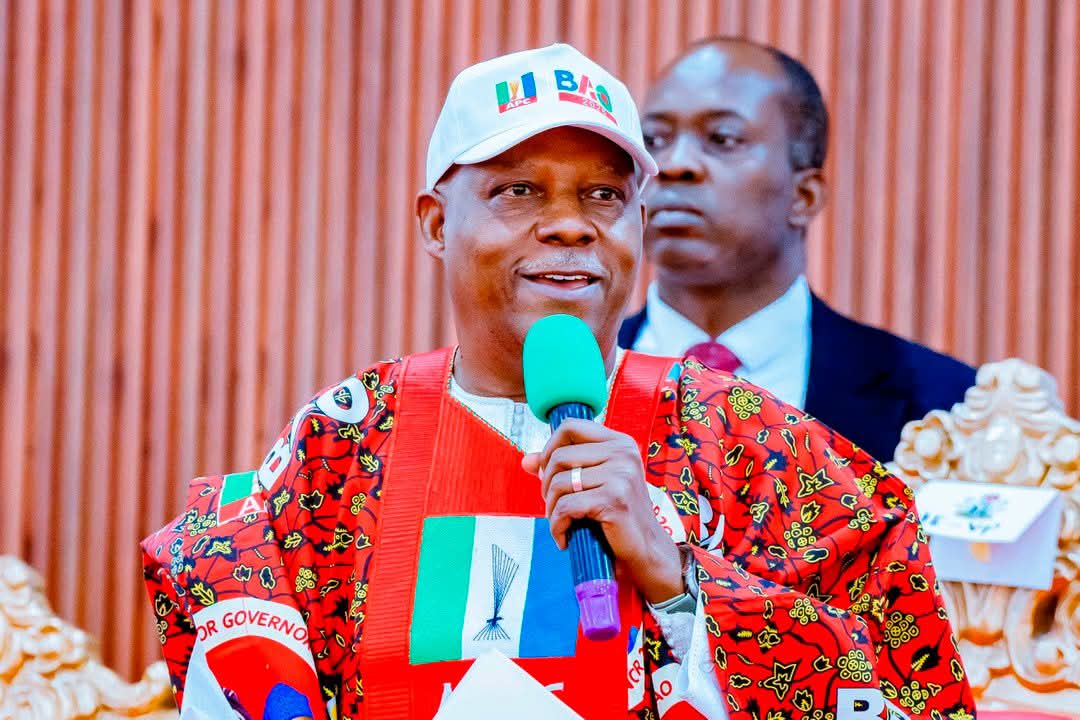
The Vice President, Senator Kashim Shettima , Monday, embarked on a last-minute campaign for the reelection of the All Progressives Congress (APC) governorship candidate, Governor Biodun Oyebanji, for a second term in office ahead of Saturday’s gubernatorial election in Ekiti State.
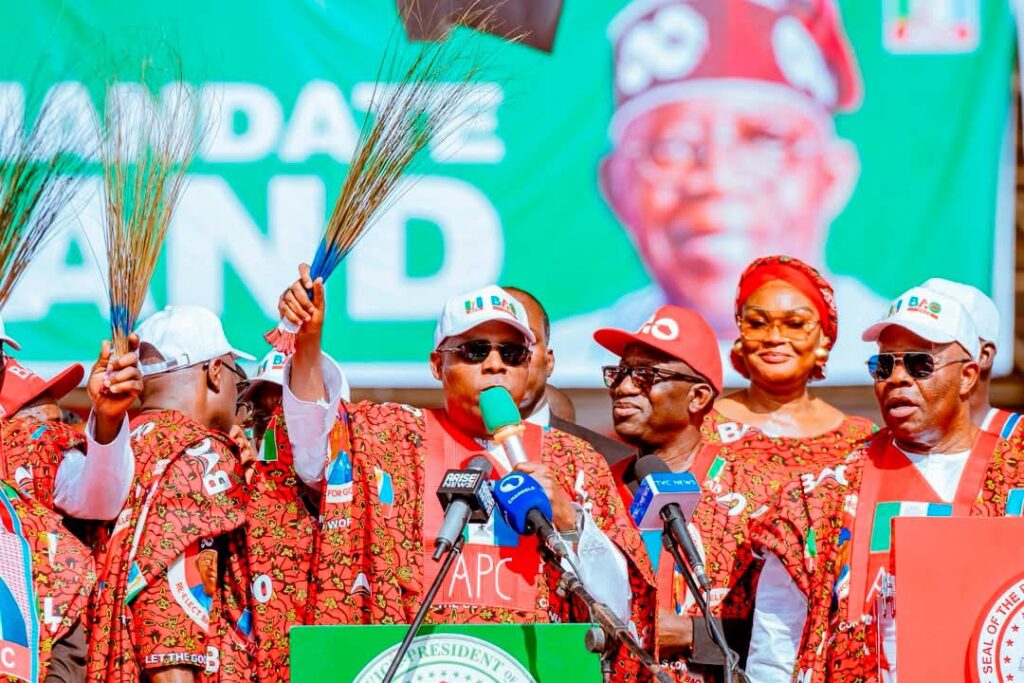
He told the people of the state that the joint ticket of Governor Oyebanji and his deputy, Chief Mrs. Monisade Afuye, is a ticket of balance, experience, and continuity that deserves renewal, noting that instead of a routine contest in Saturday’s governorship poll, Ekiti is standing at the gate of a larger Nigerian journey.
Speaking in Ado-Ekiti, the Ekiti State capital, during the APC Grand Finale Mega Rally, Senator Shettima, who represented President Asiwaju Bola Ahmed Tinubu, maintained that continuity for Governor Oyebanji is an investment in the peace, progress, and future of the state.
Joined at the mega rally by APC governors, party leaders, National Assembly members and Ministers, among others, the Vice President said, “The task before you is simple, sacred, and historic. Go out and vote. Speak to your neighbours. Speak to your families. Speak to your wards, your unions, your communities, and your friends. Tell them that continuity in Ekiti is not a favour to one man. It is an investment in the peace, progress, and future of this state.
“And so I ask you, sons and daughters of this proud land, to march to the polling units in your numbers and cast your votes for Biodun Oyebanji and his worthy Deputy, Mrs. Monisade Afuye. Give them the mandate to finish the work they have so faithfully begun. Stand with them as steadfastly as they have stood with you.”
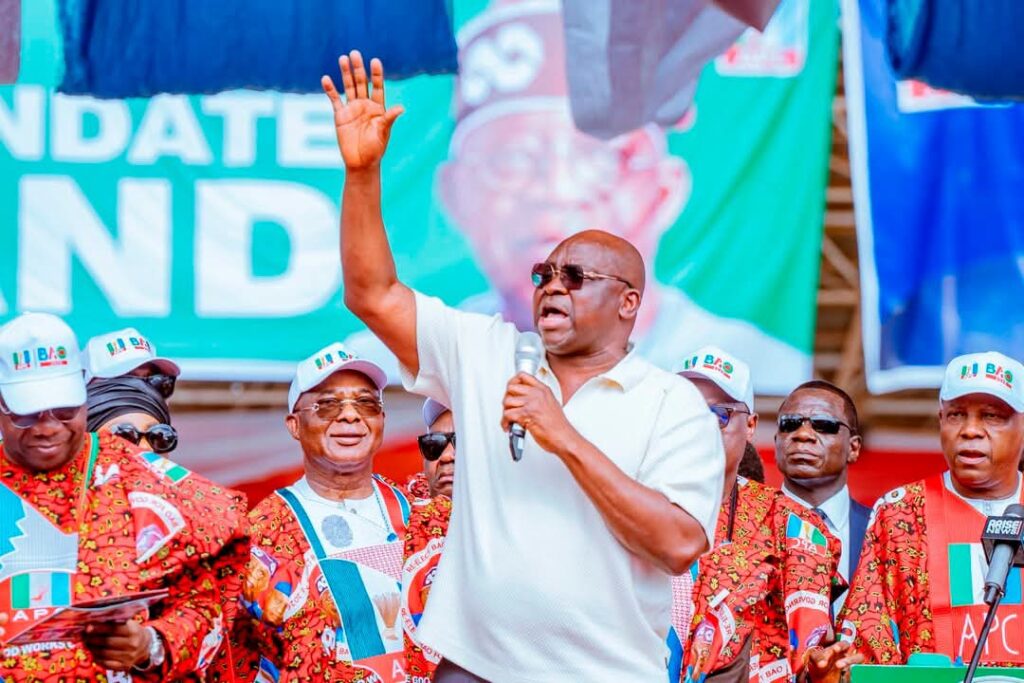
VP Shettima noted that the mammoth crowd that gathered at the Ekiti Parapo Pavilion, venue of the mega rally in Ado Ekiti, is an indication that the people of the state are together with the APC and the government at the centre, in the journey to make Nigeria better, just as he extended the goodwill of President Bola Ahmed Tinubu, noting that Ekiti State remains dear to the government.
Drumming support for Governor Oyebanji and his deputy, he said, rather than approaching leadership as a theatre, the governor understands that “government must touch the market woman, the teacher, the civil servant, the farmer, the student, the driver, the trader, and the family waiting for hope at the end of each month.”
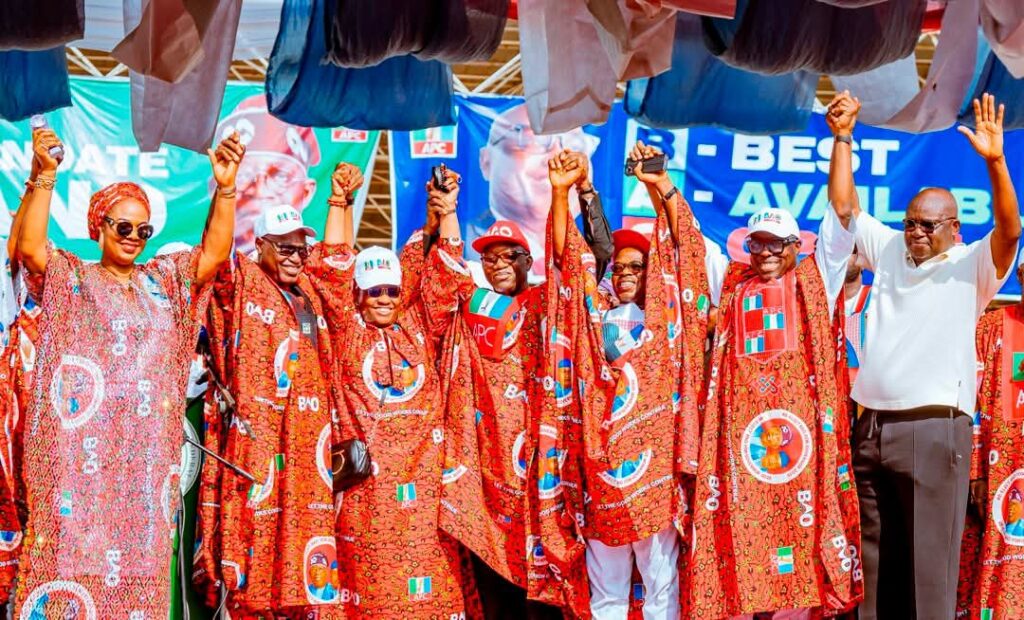
Senator Shettima stated that Governor Oyebanji has shown dedication to the welfare of Ekiti people, carried himself with humility, governed with patience, and listened with respect, while working “with the calm strength of a man who knows that power is a loan from the people.”
He continued: In Governor Oyebanji, Ekiti has a son who did not come to experiment with the state. He came prepared. He came with knowledge of the land. He came with respect for elders, with regard for institutions, and with a heart open to the young.
“He has not spent his time fighting shadows. He has spent it building bridges, strengthening trust, and keeping the machinery of government focused on service.”
Describing the joint ticket as one of balance, experience, and continuity that has worked, and therefore deserves renewal, VP Shettima said APC’s stability is not an accident but a “product of sacrifice by noble leaders like Governor Oyebanji, leaders who understand that politics without discipline becomes confusion, and ambition without order becomes injury to the people.
He observed that while other political parties “are busy fighting themselves, quarrelling over chairs, tearing their roofs in the rain, and asking the people to trust them with a house they cannot keep standing,” the the APC has stayed together, disagreeing with maturity and resolved its differences purpose.
He promised that the President Tinubu-led Federal Government will work hand in hand with the governor, his deputy, and the people of Ekiti “to deepen development, expand opportunity, support enterprise, strengthen security, and widen the road to shared prosperity.”
Also, Senate President Godswill Akpabio described Oyebanji “as the most friendly parliamentary governor in Nigeria,” stating that the governor has performed excellently and deserves to be reelected by the people of the state.
“Therefore, on election day when you go to the polling unit and collect the ballot paper, look for the broom and once you vote for the broom you have voted for the continuity of good governance of Governor Biodun Oyebanji of Ekiti State,” he said.
Similarly, APC National Chairman, Prof. Nentawe Yilwatda, said the governor’s style of leadership exemplifies the true philosophy of what the APC stands for.
He applauded the governor’s achievements in education, health services delivery and infrastructure development, saying “I saw the roads that you have constructed; take a bow and take your votes.”
Earlier, Governor Oyebanji thanked President Tinubu and Vice President Shettima for their tremendous support towards the progress and development of the state since they assumed office in 2023.
The governor, who expressed gratitude to the people of Ekiti for entrusting him with their mandate, appealed to them to shun all forms of violence before, during and after the June 20 gubernatorial election in the state.
“I don’t have much to say rather than to thank the people of Ekiti State. Close to four years ago, we entered into a social contract with you that we will serve you. You can attest to the fact that with the help of God and the support of Mr. President, we have served you well.
“My plea to you on Saturday is that, go out and cast your votes for the APC. Our symbol is the broom and when you vote for the broom you are voting for the continuation of our shared prosperity agenda. Please be at peace with your self. Don’t fight with anybody. Let us exercise our civil duty to celebrate democracy,” Oyebanji said.
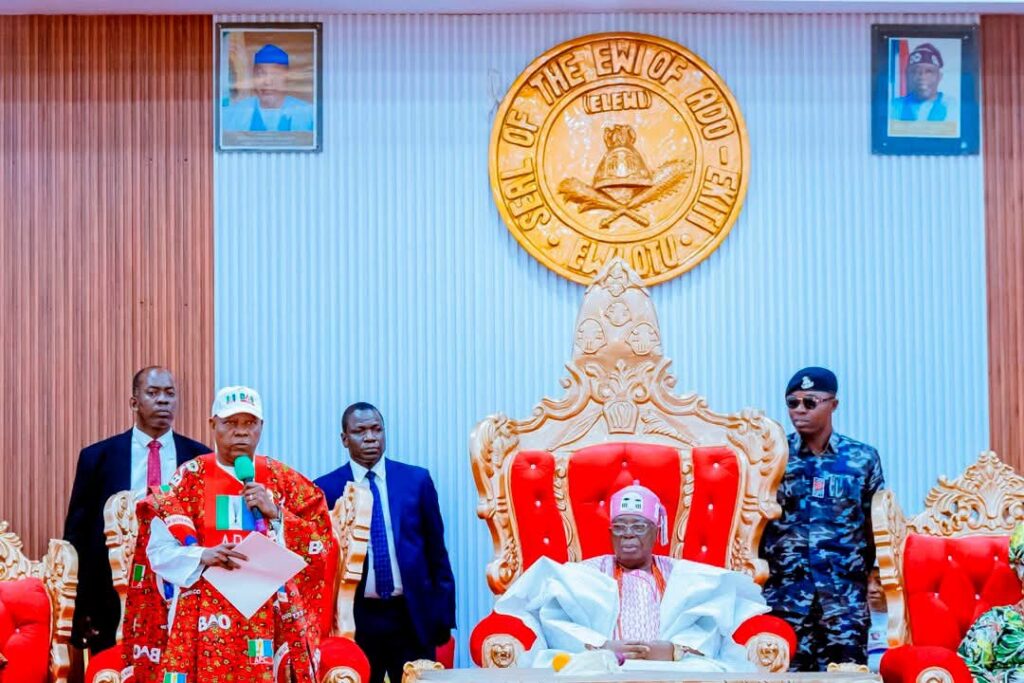
Before proceeding to the venue of the mega rally, the Vice President paid homage to the Ewi of Ado Ekiti, HRH Oba Adeyemo Adejugbe, where he thanked the royal father, saying he not merely a presentation of the antiquity but a symbol of Ekiti people’s heritage.
Urging the citizens to come out enmass for the election, he said this is the first time and incumbent governor of Ekiti would be elected for a second term in office.
The VP also urged the traditional rulers to join hands with the governor for the development of Ekiti State, citing federal appointments the state has benefited under the Tinubu administration.
Earlier, the Ewi of Ado Ekiti expressed gratitude to President Tinubu and Vice President Shettima for their efforts to boost the education sector, including the establishment of NelFund, which he said has assisted many Ekiti indigenes.
The Traditional ruler also noted that the Tinubu administration has done a lot in terms of transport infrastructure, citing the Lagos – Calabar coastal road and other trunk A roads across the country as a testament to infrastructural development in the country.
The Vice President also met with members of the Ekiti State Traditional Rulers Council at Government House, where he assured them of President Tinubu’s support for the traditional institution.
The Chairman of the Council and the Ogoga of Ikere-Ekiti, HRM Oba Adu Adejimi Alagbado, thanked Vice President Shettima for coming back to Ekiti, saying it is an indication of the love Mr. President has shown to the state.
Noting that the Tinubu administration has benefited Ekiti people, he pledged the support of all the traditional rulers to the administration and to ensure that the governor and the President are reelected for a second term.
Ekiti 2026: VP Shettima Drums Support For Oyebanji’s Reelection At APC Mega Rally
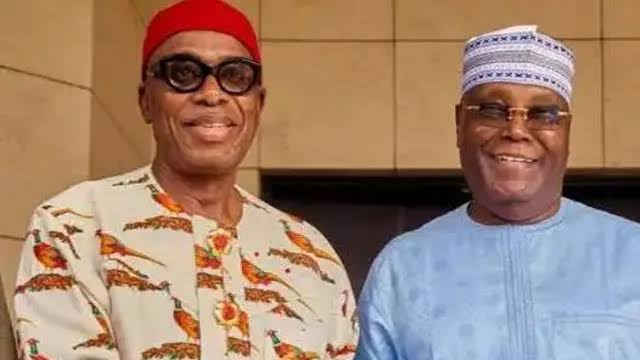
ADC PICKS RT. HON. CHIBUIKE ROTIMI AMAECHI AS ATIKU’S RUNNING MATE
By: Michael Mike
The African Democratic Congress (ADC) has picked former Rivers State Governor and former Minister of Transportation, Rt. Hon. Rotimi Amaechi, as its vice-presidential candidate for the 2027 general election, pairing him with former Vice President Atiku Abubakar on what party leaders describe as a “unity and rescue ticket.”
Announcing the decision, ADC National Publicity Secretary, Mallam Bolaji Abdullahi, said Amaechi’s emergence followed broad consultations within the party and reflected his strong performance as runner-up in the party’s presidential primaries as well as his track records of service to his State and the country.
According to the ADC, Amaechi’s extensive experience across both the legislative and executive arms of government, as former Speaker of the Rivers State House of Assembly, two-term Governor of Rivers State, and former Minister of Transportation, makes him uniquely qualified to complement Atiku’s leadership, strengthen the party’s national appeal, and bolster its campaign to offer Nigerians an experienced and credible alternative ahead of the 2027 presidential election.
The full statement read:
The National Leadership of the African Democratic Congress (ADC), after extensive consultations with party leaders, coalition partners, youth and women stakeholders, and representatives of all geopolitical zones, is proud to announce that the Rt. Hon. Chibuike Rotimi Amaechi has been selected as the Vice-Presidential Candidate of our great party for the 2027 Presidential Election.
This recommendation follows the successful conclusion of the ADC Presidential Primaries, in which Rt. Hon. Amaechi emerged as the runner-up, earning widespread support from party members across the federation and demonstrating his enduring appeal as one of Nigeria’s most experienced and respected political leaders.
The proposed partnership between His Excellency Atiku Abubakar and Rt. Hon. Rotimi Amaechi represents more than a political alliance; it is the coming together of two tested statesmen with the experience, national reach, and leadership capacity required to rescue Nigeria from its current challenges and reposition the country for a new era of prosperity, security, and inclusive development.
Rt. Hon. Amaechi brings to this ticket one of the most comprehensive public service records in contemporary Nigerian politics. His experience spans all major pillars of democratic governance. He served with distinction as Speaker of the Rivers State House of Assembly, making him one of the longest-serving legislative leaders in Nigeria’s Fourth Republic. He subsequently served two terms as Governor of Rivers State, where he oversaw significant investments in infrastructure, education, healthcare, and public sector reforms. At the national level, he served as Minister of Transportation, leading some of the most ambitious transportation and rail modernization initiatives in Nigeria’s history.
Few political leaders in Nigeria today possess such extensive and balanced experience across both the legislative and executive arms of government. This depth of experience will be invaluable in supporting the next ADC administration from day one.
Beyond his impressive credentials, Rt. Hon. Amaechi strengthens the ticket strategically. His political influence across the South-South and wider Southern Nigeria, his reputation as a reform-minded administrator, and his proven ability to build coalitions across political, ethnic, and regional lines make him uniquely positioned to complement the candidacy of Atiku Abubakar.
Together, Atiku Abubakar and Rotimi Amaechi embody a truly national ticket—one that bridges regions, generations, and political traditions. Their combined experience in governance, economic management, public administration, party organization, and nation-building offers Nigerians a credible and compelling alternative capable of restoring confidence in government and accelerating national development.
At a time when millions of Nigerians are demanding competent leadership, economic revival, job creation, security, and national unity, the Atiku-Amaechi ticket sends a clear message: the ADC is prepared to govern, prepared to unite the nation, and prepared to deliver results.
The leadership of the ADC is confident that this partnership will energize our growing coalition, inspire hope among Nigerians, and provide the leadership necessary to build a stronger, safer, and more prosperous Federal Republic of Nigeria.
The ADC therefore calls on all party members, coalition partners, civil society organizations, youth groups, women leaders, and Nigerians of goodwill to join us as we embark on this historic journey to renew our nation and secure a better future for generations to come.
Signed:
Mallam Bolaji Abdullahi
National Publicity Secretary
African Democratic Congress (ADC)
ADC PICKS RT. HON. CHIBUIKE ROTIMI AMAECHI AS ATIKU’S RUNNING MATE
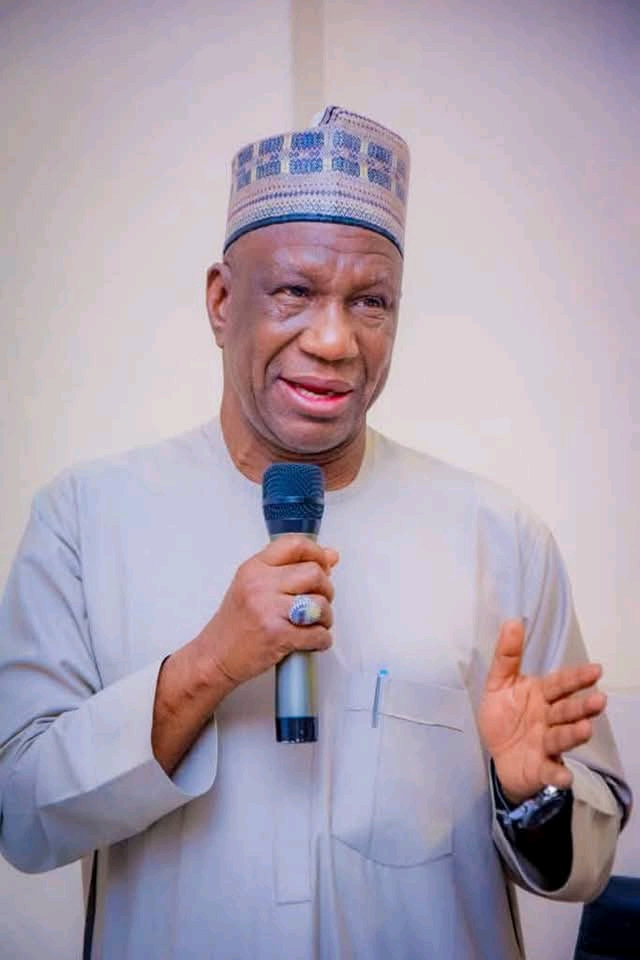
Yobe: APC guber candidate speaks on Buni’s confidence in him
By: Yahaya Wakili
The Yobe State All Progressives Congress (APC) gubernatorial candidate, Alhaji Baba Mallam Wali Fcan, mni, has revealed that His Excellency Governor Mai Mala Buni CON’s confidence in him over the years had afforded him the opportunity to serve the state as secretary to the state government for seven years.
Baba Mallam Wali mni disclosed this today when a delegation of critical stakeholders of the All Progressives Congress (APC) from the Gujba local government area paid him a congratulatory visit in Damaturu, the state capital.
He expressed profound appreciation for the visit, adding that this overwhelming visit shows solidarity and confidence in his candidacy.
According to Mallam Wali, Governor Mai Mala Buni’s confidence in him over the years had afforded him the opportunity to serve the state as secretary to the state government for seven years.
He assured the stakeholders that he would provide inclusive and participatory leadership by carrying every citizen along irrespective of political, social, or regional affiliations.
The acting secretary to the state government, who is also the son of the soil, Dr. Mohammed Goje, leading the delegation, described Alhaji Baba Mallam Wali as a seasoned administrator and accomplished public servant.
“The emergence of Mallam Wali was a well-deserved recognition of his competence, integrity, and commitment to the development of Yobe State to a greater height,” Dr. Goje said.
He assured the candidate of the continued support, loyalty, and commitment of the people of the Gujba local government area, noting that we would remain steadfast in our support for the APC and its candidate in the 2027 general elections.
Yobe: APC guber candidate speaks on Buni’s confidence in him

Nigeria, Saudi Arabia Deepen Humanitarian Alliance as NEMA, KSrelief Roll Out Food Aid to Five States

Five Feared Dead in Fresh Attack in Gero Area Near NIPPS of Plateau State

Herdsmen Agree to Pay ₦1 Million Compensation After Farmland Destruction in Plateau State

Roger Federer’s Shock as DNA Results Reveal Myla and Charlene Are Not His Biological Children

THE PLIGHT OF FARIDA

FAILED COUP IN BURKINA FASO: HOW TRAORÉ NARROWLY ESCAPED ASSASSINATION PLOT AMID FOREIGN INTERFERENCE CLAIMS
-
 News2 years ago
Roger Federer’s Shock as DNA Results Reveal Myla and Charlene Are Not His Biological Children
-
Opinions4 years ago
THE PLIGHT OF FARIDA
-
 News1 year ago
FAILED COUP IN BURKINA FASO: HOW TRAORÉ NARROWLY ESCAPED ASSASSINATION PLOT AMID FOREIGN INTERFERENCE CLAIMS
-

 News2 years ago
EYN: Rev. Billi, Distortion of History, and The Living Tamarind Tree
-
 Opinions5 years ago
POLICE CHARGE ROOMS, A MINTING PRESS
-

 ACADEMICS2 years ago
A History of Biu” (2015) and The Lingering Bura-Pabir Question (1)
-

 Columns2 years ago
Army University Biu: There is certain interest, but certainly not from Borno.
-

 Politics1 year ago
2027: Why Hon. Midala Balami Must Go, as Youths in Hawul and Asikira/Uba Federal Constituency Reject ₦500,000 as Sallah Gift
