
News
It is Imperative for Nigeria to Move to Circular Economy- NESREA


It is Imperative for Nigeria to Move to Circular Economy- NESREA
By: Michael Mike
The National Environmental Standards and Regulations Enforcement Agency (NESREA) has said it is imperative for Nigeria to move from linear economy to circular economy in order to join the ranks of developed countries.
Speaking at a media dialogue on circular economy, the Director General of NESREA Dr. Innocent Barikor while noting that the dialogue is intended to further deepen media knowledge and understanding of the concept of circular economy, said it has become obvious that Nigeria can not solely depends on linear economy to sustain the high economy demands and development set out to transform Nigeria from underdeveloped to developed country.
He explained that it was on this perimeter that the NESREA organised a media dialogue to acquaint the media with the concept of circular economy and its implementation in the country, highlighting key initiatives and strategies to enhance sustainability, reduce waste, mitigate environmental impacts and promote green growth in Nigeria.
He said: “This has become very essential as we continue to work together to promote sustainable development of our dear country. Circular Economy is a model which transforms the way we produce , consume and dispose of resources. It is a sustainable economy model that aims to reduce waste and the consumption of resources by promoting the reuse, recycling, and refurbishment of products. It seeks to keep products, materials, and resources in use for as long as possible, minimizing waste and pollution.”
He further explained that: “Nigeria has since embraced the circular economy model, with the National Environmental Standards and Regulations Enforcement Agency (NESREA) spearheading the initiative. Through its Extended Producer Responsibility (EPR) Programme, the Agency has launched the implementation of circular economy principles nationwide. The Programme places an emphasis on shared responsibility, sustainability and environmental stewardship. It effectively extends the responsibility of manufacturers, producers and importers beyond production and sales, and makes them responsible for the total life cycle of their products. Under the take-back mechanism, the EPR ensures that these products do not end up in the dump sites but rather become secondary raw materials for some other products”.
The Director, Partnership and Education, NESREA, Mrs Bintu Kolo Mohammed in her welcome address said: “Circular Economy represents more than just a shift in how we manage resources; it’s a fundamental change in how we think about our relationship with the environment. It is a departure from the linear model “take-make-use-dispose” to a model which allows us to re-design our products so that they can be reused, recycled, refurbished and repurposed in a way that helps to regenerate our natural resources in a closed loop.
“Thus, media parley is necessary to drive home the idea, the dissemination of information which make the media critical stakeholders in the environment sector, and as such, it becomes very necessary to constantly update journalist with information on recent happenings in the sector.”
She said: “There is no doubt that there is a lot of advantages in embracing this idea, One of the main benefits of the circular economy is also the fact that it helps protect both humans and planets.It also reduce the impacts (greenhouse gas emissions, pollution, waste) on natural systems and biodiversity while promoting sustainable development and producing wealth and jobs.
“This approach helps reduce the strain on natural resources, minimize waste generation, and lower the environmental impact of production and consumption. Adopting circular economy principles can lead to a more sustainable and prosperous future by generating economic, social, and environmental benefits for both businesses and society as a whole.”



HOW PLATEAU PASTOR ALLEGEDLY MASTERMINDED PLOT TO KIDNAP BISHOPS’ WIVES IN JOS
By Zagazola Makama
What began as an alleged plan to abduct the wives of two Anglican bishops in Jos was reportedly uncovered by one of the very men recruited to execute the crime.
The case has sparked serious debate about the vulnerability of trusted individuals, the growing threat of insider involvement, and how criminal networks can exploit people with access to communities, institutions and security structures.
The alleged plot reportedly revolved around
Rev. Hassan Yunisim Mijah, 42, of Tudun Wada, Jos North, a clergyman described as a Rev. Canon under the Anglican Diocese of Jos.
Mijah was arrested alongside Sgt. Ezra Sunday, a Nigerian Air Force personnel, and OS Usman Khalid, a Nigerian Navy personnel. Both security personnel were reportedly attached to Sector 1, Operation Enduring Peace (OPEP), in Jos.
The Plateau State Police Command said the arrests followed credible intelligence concerning an alleged criminal conspiracy and a plot to kidnap the wives of Bishop Ephraim Gongden, the current Anglican Bishop of Jos, and retired Bishop Benjamin Kwashi. The intended victims were identified as Mrs Esther G. Gongden and Mrs Gloria Kwashi.
The whistleblower
According to accounts surrounding the investigation, the alleged conspiracy began to unravel when a naval officer approached by the suspected mastermind reportedly refused to participate.
The officer, described as a devout Muslim, allegedly told Bishop Ephraim Gongden about the plot after being approached to take part in the planned abduction. The officer reportedly visited the bishop at his residence in the Rantya area of Jos South Local Government Area and disclosed that he had been contacted by the syndicate.
Rather than participate in the alleged crime, he reportedly cited his religious convictions and moral upbringing as reasons for rejecting the assignment. The information immediately changed the direction of the case.
Instead of confronting the alleged mastermind directly, police operatives attached to the Plateau State Police Command’s Vigilance and Criminal Response Unit (VCRU) reportedly instructed the naval officer to continue playing along with the suspects while detectives monitored the operation. It was a classic attempt to allow the alleged conspiracy to reveal itself from within.
The safehouse trap
While the police were monitoring developments, Rev. Mijah allegedly contacted the naval officer and demanded an update on the arrangements.
According to information surrounding the investigation, one of the critical requirements was a safe location where the intended victims could allegedly be held after their abduction.
Working under police direction, the naval officer reportedly supplied an address that had been placed under police control on the outskirts of Jos. The alleged mastermind apparently believed the safehouse arrangement was genuine.
On August 7, 2026, at about 2:10 p.m., Mijah reportedly travelled to the designated location alongside Sgt. Ezra Sunday and OS Usman Khalid. The trio allegedly arrived to collect the keys to the supposed safehouse. Instead of receiving access to a hideout, they reportedly walked into a police operation.
Operatives of the VCRU who had been positioned at the location moved in and arrested the suspects. The Plateau State Police Command subsequently confirmed the arrest of the three men. The command said the suspects were interrogated and “confessed to the crime.”
The arrests also prompted the police to formally notify Operation Enduring Peace about the involvement of the two military personnel attached to the operation.
The alleged ransom plan
Investigators subsequently uncovered further details about the alleged plot. According to the information provided by the police, Mijah allegedly instructed his co-conspirators to demand a ransom of ₦100 million from the diocese following the abduction.
The alleged instruction reportedly came with a minimum acceptable amount of ₦50 million, suggesting that the kidnapping was allegedly planned as a financially motivated operation rather than an impulsive crime.
If established through the ongoing investigation and subsequent legal proceedings, the alleged ransom structure would indicate that the suspects had moved beyond merely discussing an abduction and had allegedly begun planning the financial demands that would follow.
An earlier attempt to recruit a militia gang
Investigators also reportedly uncovered another disturbing dimension to the alleged plan. According to the information provided, Mijah had initially attempted to contract Fulani Fulani Bandits to carry out the abduction.
That arrangement allegedly collapsed after the militia leader insisted that his men would sexually assault the two women during captivity.
Mijah reportedly rejected the condition.
The alleged failure of that arrangement subsequently led him to seek another group capable of carrying out the operation, eventually turning to military personnel.
The allegation, if established, presents a particularly disturbing picture of how criminal conspiracies can move between different networks in search of people with the required access and capability.
The alleged involvement of two personnel attached to a military security operation adds another layer of concern to the case. Security personnel routinely possess knowledge of movement patterns, locations, routines and vulnerabilities that ordinary criminals may struggle to obtain.
This is why insider threats are considered particularly dangerous in asymmetric security environments. An outsider may need to break through several layers of security. An insider may already know where the door is.
The case therefore goes beyond the alleged targeting of two bishops’ wives. It pointed out to how criminal elements can exploit relationships, access and institutional familiarity to facilitate crimes.
A familiar face in security circles
There is also an element of irony surrounding the allegations against Mijah.
Zagazola Media further learnt that the clergyman was reportedly regarded as being close to security personnel and had, on several occasions, provided information concerning suspected attackers planning to attack communities. That history reportedly made his alleged involvement in a kidnapping conspiracy particularly difficult to reconcile.
A person who is trusted enough to provide intelligence about attackers can potentially acquire knowledge about how security forces operate, what information they consider important and how their response mechanisms function.
This is precisely why intelligence services place emphasis on corroborating information, assessing sources and continuously reviewing the credibility of human intelligence.
The person providing information about the enemy must not automatically be assumed to be incapable of becoming part of the threat.
The alleged dispute with the church
Investigation has also reportedly uncovered a background of administrative friction between Mijah and the leadership of the Anglican Diocese of Jos. According to the information provided, Mijah had previously been dismissed by retired Bishop Benjamin Kwashi. He was later reinstated by the current Bishop of Jos, Rt. Rev. Ephraim Gongden.
Following his reinstatement, Mijah reportedly demanded payment of outstanding allowances or back-pay from the diocese. The diocese allegedly declined to settle the claimed arrears.
Another aspect emerging from the background information is Mijah’s reported political ambition.
The clergyman, described as an indigene of Adamawa State, is reportedly contesting for the House of Representatives seat representing Numan/Lamurde/Demsa Federal Constituency under the platform of the African Democratic Congress (ADC).
That political background has added another layer of public interest to the case, although his political activities, by themselves, do not establish any connection to the alleged kidnapping plot. The central issue remains the criminal allegation currently being investigated by the police.
Why the case matters
The alleged conspiracy illustrates one of the most difficult challenges confronting security agencies in an environment where criminal networks increasingly depend on access, information and personal relationships. Kidnapping operations do not always begin in the bush.
They can begin in conversations, through trusted contacts, inside communities, within institutions or among people who appear to have legitimate reasons for being close to potential victims. That is what makes insider threats particularly dangerous. In asymmetric warfare, the enemy does not always announce himself. He may not wear a uniform. He may not carry a weapon openly. He may even present himself as someone helping security agencies identify the threat.
That is why intelligence must be independently verified, regardless of whether it comes from a civilian, a community leader, a religious figure or even someone with access to security personnel.
Investigation continues
The Plateau State Police Command has confirmed that the suspects remain in custody while investigation continues. Operation Enduring Peace has also reportedly been formally informed of the arrest of the two military personnel.
Investigators are expected to establish the full circumstances surrounding the alleged conspiracy, determine whether additional persons were involved and examine the financial, logistical and communication links connecting the suspects.
For now, the case remains an allegation under investigation, and the suspects are entitled to due process and the presumption of innocence until proven guilty by a competent court.
But if the allegations are ultimately established, the case would represent a disturbing example of how criminal conspiracies can allegedly penetrate circles of trust and how one unexpected whistleblower can sometimes expose an entire network before the first victim is taken.
HOW PLATEAU PASTOR ALLEGEDLY MASTERMINDED PLOT TO KIDNAP BISHOPS’ WIVES IN JOS
Seven Killed in Tragic Mine Collapse in Gassa Community
By Zagazola Makama
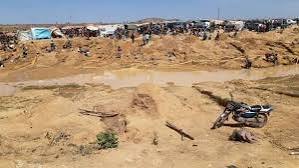
Seven people have reportedly died following a tragic mine collapse in Gassa Community on Wednesday evening, August 12, 2026.
The incident has raised fresh concerns over safety standards and regulatory compliance in mining operations, particularly in communities where mining activities are carried out.
The deaths have left families and residents of Gassa mourning the loss of their loved ones, with the incident described as a painful setback for the community.
Mining-related accidents continue to pose serious risks to workers and residents, particularly where safety procedures, monitoring and responsible mining practices are not adequately enforced.
The Commissioner for Environment, Climate Change and Mineral Development, Hon. Peter Kanang Gwom, expressed condolences to the families of those who lost their lives and the entire Gassa community over the tragedy.
He described the incident as a painful loss and extended heartfelt sympathies to all those affected, praying that God would grant the bereaved families the strength and fortitude to bear the loss and grant eternal rest to the deceased.
The Commissioner also stressed the need for stronger safety standards, regulatory compliance and effective monitoring of mining activities to prevent similar tragedies.
He called for greater adherence to responsible mining practices to safeguard the lives and livelihoods of people living in mining communities.
The incident has renewed concerns over mining-related accidents and the need for sustained regulatory oversight, safety enforcement and monitoring of mining sites across Plateau State.
Authorities and relevant stakeholders are expected to intensify efforts to ensure compliance with mining safety regulations and promote responsible mining practices capable of protecting both lives and livelihoods.
Seven Killed in Tragic Mine Collapse in Gassa Community
News
Zulum’s Communication Aide Bundi Wins National Digital Communication Award…15 individuals, agencies honoured at 6th National Spokespersons Awards in Abuja
Zulum’s Communication Aide Bundi Wins National Digital Communication Award
…15 individuals, agencies honoured at 6th National Spokespersons Awards in Abuja
By: Michael Mike
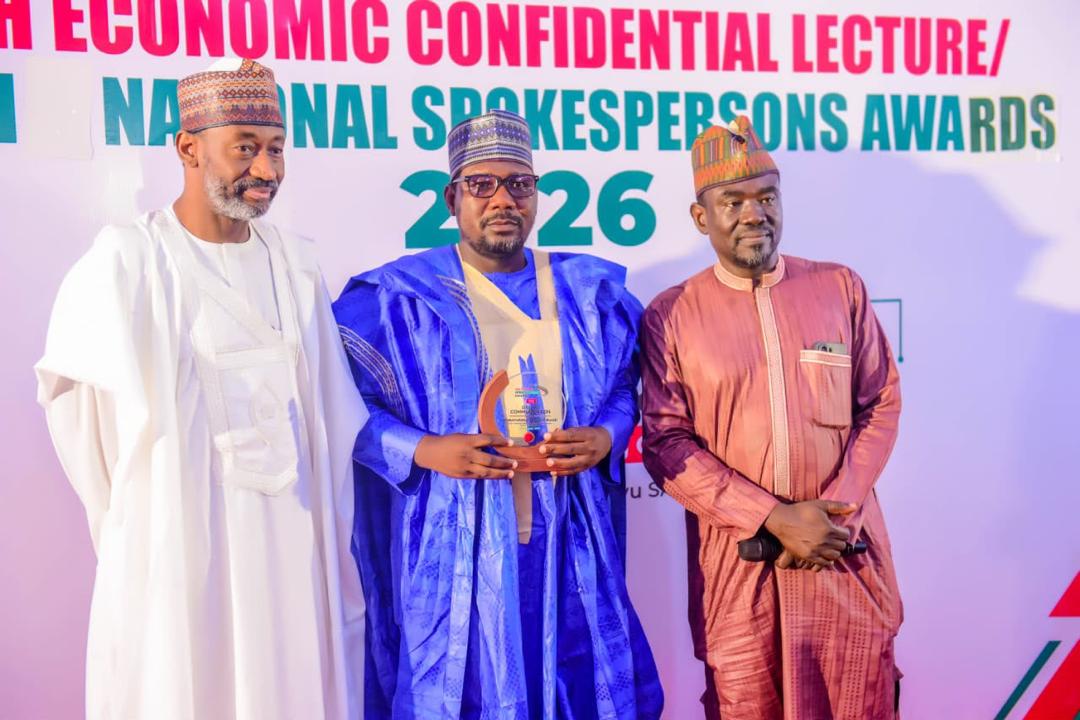
The Senior Technical Assistant to Borno State Governor, Babagana Zulum, on Print and Digital Communications, Abdurrahman Bundi, has emerged winner of the Digital Communication category at the 2026 National Spokespersons Awards, joining 14 other individuals and institutions honoured for excellence in public communication.
Bundi received the award at the sixth edition of the National Spokespersons Awards, held alongside the fourth Economic Confidential Lecture at the Nicon Luxury Hotel, Abuja, on Wednesday.

The recognition places the Borno governor’s communications aide among a select group of professionals and institutions acknowledged for demonstrating impact, innovation and effective engagement in an increasingly digital public-information environment.
Other major recipients included the Kano State Commissioner for Information and Internal Affairs, Ibrahim Waiya; Director of Corporate Communications at the Central Bank of Nigeria, Hakama Sidi-Ali; Nigerian Customs Service; and Federal Road Safety Corps.
The awards ceremony, chaired by the President of the Nigerian Institute of Public Relations (NIPR), Dr Ike Neliaku, brought together senior government officials, communication professionals and media practitioners.
Chairman of the awards jury, Professor Saudat Abdulbaqi, disclosed that the 2026 edition attracted 171 nominations, reflecting what she described as the growing interest in professional public communication and strategic reputation management.
She said 99 entries successfully passed the initial eligibility screening before undergoing a second stage of intensive evaluation.
The process eventually produced 42 candidates, from whom 30 finalists emerged across 15 award categories.
Abdulbaqi said a seven-member jury assessed the shortlisted entries against four principal benchmarks: impact, innovation and originality, reach, and quality of evidence.
The rigorous selection process, she said, was designed to ensure that recognition was based on demonstrable professional performance rather than popularity or institutional influence.
The National Spokespersons Awards were organised by Image Merchants Promotion Limited (IMPR), publishers of PRNigeria, Economic Confidential and Spokespersons Digest.
In his address, IMPR Chief Executive Officer, Alhaji Yusha’u Shuaib, said the awards and the Annual Economic Confidential Lecture were established to encourage informed national discourse, reward excellence and raise the standard of professional communication in Nigeria.
He stressed the importance of effective communication in public administration, particularly at a time when governments and institutions must increasingly communicate policies and respond to citizens across rapidly evolving traditional and digital platforms.

The recognition of Bundi in the Digital Communication category highlights the growing importance of digital platforms in government communication and public engagement.
The ceremony attracted prominent figures from Nigeria’s information, public relations, government and security communication sectors.
Among those present was the Director-General of Voice of Nigeria, Jibrin Baba Ndace, who represented the Minister of Information and National Orientation, Mohammed Idris.
Also in attendance were former Director of Defence Information, Major General Chris Olukolade (rtd.), Professor Sule Ya’u Sule, and other senior communication and public relations professionals.
The organisers said the awards were intended not merely to celebrate individual achievements but also to encourage a culture of evidence-based, innovative and responsible communication across Nigeria’s public and private sectors.
Bundi’s award therefore adds to the growing recognition of strategic communication as an essential component of modern governance, particularly in an era where the speed, reach and influence of digital information can significantly shape public understanding of government policies and programmes.
Zulum’s Communication Aide Bundi Wins National Digital Communication Award
…15 individuals, agencies honoured at 6th National Spokespersons Awards in Abuja

HOW PLATEAU PASTOR ALLEGEDLY MASTERMINDED PLOT TO KIDNAP BISHOPS’ WIVES IN JOS

Seven Killed in Tragic Mine Collapse in Gassa Community

IPCR Warns: Let Ballot, Not Violence, Decide Osun Election

Roger Federer’s Shock as DNA Results Reveal Myla and Charlene Are Not His Biological Children

THE PLIGHT OF FARIDA

FAILED COUP IN BURKINA FASO: HOW TRAORÉ NARROWLY ESCAPED ASSASSINATION PLOT AMID FOREIGN INTERFERENCE CLAIMS
-
 News2 years ago
Roger Federer’s Shock as DNA Results Reveal Myla and Charlene Are Not His Biological Children
-
Opinions4 years ago
THE PLIGHT OF FARIDA
-
 News1 year ago
FAILED COUP IN BURKINA FASO: HOW TRAORÉ NARROWLY ESCAPED ASSASSINATION PLOT AMID FOREIGN INTERFERENCE CLAIMS
-

 News2 years ago
EYN: Rev. Billi, Distortion of History, and The Living Tamarind Tree
-
 Opinions5 years ago
POLICE CHARGE ROOMS, A MINTING PRESS
-

 ACADEMICS2 years ago
A History of Biu” (2015) and The Lingering Bura-Pabir Question (1)
-

 Columns2 years ago
Army University Biu: There is certain interest, but certainly not from Borno.
-

 Politics1 year ago
2027: Why Hon. Midala Balami Must Go, as Youths in Hawul and Asikira/Uba Federal Constituency Reject ₦500,000 as Sallah Gift
