
News
It is Imperative for Nigeria to Move to Circular Economy- NESREA


It is Imperative for Nigeria to Move to Circular Economy- NESREA
By: Michael Mike
The National Environmental Standards and Regulations Enforcement Agency (NESREA) has said it is imperative for Nigeria to move from linear economy to circular economy in order to join the ranks of developed countries.
Speaking at a media dialogue on circular economy, the Director General of NESREA Dr. Innocent Barikor while noting that the dialogue is intended to further deepen media knowledge and understanding of the concept of circular economy, said it has become obvious that Nigeria can not solely depends on linear economy to sustain the high economy demands and development set out to transform Nigeria from underdeveloped to developed country.
He explained that it was on this perimeter that the NESREA organised a media dialogue to acquaint the media with the concept of circular economy and its implementation in the country, highlighting key initiatives and strategies to enhance sustainability, reduce waste, mitigate environmental impacts and promote green growth in Nigeria.
He said: “This has become very essential as we continue to work together to promote sustainable development of our dear country. Circular Economy is a model which transforms the way we produce , consume and dispose of resources. It is a sustainable economy model that aims to reduce waste and the consumption of resources by promoting the reuse, recycling, and refurbishment of products. It seeks to keep products, materials, and resources in use for as long as possible, minimizing waste and pollution.”
He further explained that: “Nigeria has since embraced the circular economy model, with the National Environmental Standards and Regulations Enforcement Agency (NESREA) spearheading the initiative. Through its Extended Producer Responsibility (EPR) Programme, the Agency has launched the implementation of circular economy principles nationwide. The Programme places an emphasis on shared responsibility, sustainability and environmental stewardship. It effectively extends the responsibility of manufacturers, producers and importers beyond production and sales, and makes them responsible for the total life cycle of their products. Under the take-back mechanism, the EPR ensures that these products do not end up in the dump sites but rather become secondary raw materials for some other products”.
The Director, Partnership and Education, NESREA, Mrs Bintu Kolo Mohammed in her welcome address said: “Circular Economy represents more than just a shift in how we manage resources; it’s a fundamental change in how we think about our relationship with the environment. It is a departure from the linear model “take-make-use-dispose” to a model which allows us to re-design our products so that they can be reused, recycled, refurbished and repurposed in a way that helps to regenerate our natural resources in a closed loop.
“Thus, media parley is necessary to drive home the idea, the dissemination of information which make the media critical stakeholders in the environment sector, and as such, it becomes very necessary to constantly update journalist with information on recent happenings in the sector.”
She said: “There is no doubt that there is a lot of advantages in embracing this idea, One of the main benefits of the circular economy is also the fact that it helps protect both humans and planets.It also reduce the impacts (greenhouse gas emissions, pollution, waste) on natural systems and biodiversity while promoting sustainable development and producing wealth and jobs.
“This approach helps reduce the strain on natural resources, minimize waste generation, and lower the environmental impact of production and consumption. Adopting circular economy principles can lead to a more sustainable and prosperous future by generating economic, social, and environmental benefits for both businesses and society as a whole.”



Plateau in Crisis: Drone Allegations, Operation Rainbow and the Struggle for Peace
Dr. Salim Musa Umar, FCIDA
The renewed violence in Mangu, Bokkos and Barkin Ladi, makes the need to reject inherited historical grievances more urgent than ever.
Killings, reprisals and counter-reprisals have brought grief, fear and mutual suspicion. Plateau crisis cannot be resolved by force alone. It needs security intervention, impartial investigations, accountability and reconciliation.
Two issues are especially dangerous: allegations that spy drones were used to monitor Fulani settlements to gather intelligence for attacks and concerns about the conduct and perceived neutrality of some Operation Rainbow operatives.

These must be confronted honestly, without ethnic prejudice, political manipulation or selective justice. Government’s first duty is to protect every innocent life, regardless of ethnicity or religion.
Spy drones
Reports that spy drones were used to monitor Fulani settlements, to identify locations, observe movements and gather intelligence that could facilitate attacks—warrant urgent independent investigation. If verified, using surveillance technology to target civilian settlements would be a deeply disturbing escalation.
Technology meant for agriculture, development, emergency response and lawful security, must never become a tool for targeting people because of ethnicity.
Authorities must establish whether such surveillance occurred, who was responsible, what information was gathered and whether it aided criminal activity.
Anyone found to have deployed technology to facilitate unlawful attacks must face the law. But allegations must not be treated as established facts before independent verification. Rumours can inflame tensions. Investigations must be evidence-based, transparent and free from ethnic or political interference.
Fulani lives matter. Berom lives matter. Mwaghavul lives matter. Every community on Plateau matters equally. No settlement should be a legitimate target because of its inhabitants’ ethnicity. Every community has a right to security, dignity and legal protection.
Operation Rainbow
Concerns about the conduct and perceived neutrality of some Operation Rainbow operatives must also be taken seriously. Operation Rainbow was established to protect lives and property, but its effectiveness depends on public confidence in its impartiality. If residents believe security interventions are uneven, or that one community’s suffering receives less attention, that perception can be as damaging as proven misconduct. It can discourage reporting threats and deepen the belief that some lives matter more than others.

Operation Rainbow must demonstrate that it is not an instrument of ethnic mobilisation or a partisan actor in communal disputes. It must protect all law-abiding residents, investigate threats impartially and respond without fear or favour. Allegations that individual operatives participated in unlawful killings, intimidation, selective enforcement or facilitation of attacks especially on the Fulanis, must be independently investigated. Where wrongdoing is established, disciplinary and criminal proceedings must follow.
The Plateau State Government should consider an independent review of complaints about Operation Rainbow in affected communities. It should examine operational records, residents’ complaints, video evidence, handling of distress calls and treatment of civilians. Fulani representatives, alongside Berom, Mwaghavul and other affected communities, should have safe opportunities to present evidence.
Operation Rainbow cannot protect one community against another. Its legitimacy must rest on protecting every law-abiding resident. A Fulani herder deserves the same protection as a Berom farmer or Mwaghavul villager.
Those responsible for murder, destruction, cattle rustling and other crimes must be held accountable.
DANGEROUS RHETORIC MUST NOT BE IGNORED
Another serious dimension of the security crisis is the growing normalisation of rhetoric that appears to encourage violence, destruction of property or the forced displacement of people.
A screenshot circulating on social media, contains comments attributed to Chris Nandi and Binkam Solomon. One of the comments appears to advocate targeting cattle as a means of compelling their owners to either “live in peace or leave the state,” while another response appears to suggest that some matters are better left unsaid on social media.
If the material is authentic, correctly attributed and presented in its proper context, it deserves the attention of the relevant security authorities.
This is not a call for retaliation, collective punishment or ethnic profiling. It is a call for a professional investigation.
The authorities should verify the accounts and establish the full context which amounts to unlawful incitement and threats to public peace.
THE BURNING OF PASTORALIST SETTLEMENTS MUST ALSO BE CONDEMNED
Equally disturbing are reports of pastoralist hamlets and settlements being set ablaze the crisis. The destruction of homes, shelters, livestock and livelihoods is not merely an act of property damage; it can force vulnerable families to flee and deepen the cycle of displacement, fear and retaliation. Where such burnings have occurred, authorities must establish who was responsible, the circumstances surrounding each incident and whether the attacks were deliberate or coordinated. No community should be collectively punished for the actions of individuals and no person should lose their home or livelihood simply because of their ethnic or occupational identity.
Drone allegations and concerns about security operatives must receive the same serious attention .
Security agencies must move beyond reactive deployments to intelligence gathering, early warning, rapid response and protection of vulnerable communities. No community should conclude it must organise its own retaliation because authorities cannot or will not protect it. The rule of law must apply equally to all.
Traditional rulers, religious leaders, elders, women, youths, civil society and government must pursue broad reconciliation that reaches villages, markets and places of worship. Leaders must condemn attacks regardless of perpetrators’ or victims’ identities. Political and public commentators must avoid statements that stigmatise whole communities.
Conclusion
Plateau needs a renewed social contract: its diverse communities share one home and one future. No community can prosper while its neighbours live in fear.
Government must strengthen preventive intelligence, protect vulnerable settlements, respond rapidly to threats and prosecute perpetrators without discrimination.
The task is not to decide which community deserves more protection. It is to ensure no community is denied protection. If drone allegations are substantiated, those responsible must face the law. If misconduct or bias by Operation Rainbow operatives is established, it must be addressed.
There must be no protected perpetrators, no abandoned victims and no ethnic exceptions to the rule of law.
Plateau stands at a crossroads: continuing suspicion, revenge and displacement or justice, mutual respect and reconciliation.
The choice must be shown in action. The time to stop the killings, investigate the abuse of surveillance technology, address concerns about security neutrality and rebuild trust is now .
Dr. Salim Musa Umar*, FCIDA, Plateau State Secretary, Jama’atu Nasril Islam (JNI) and Chairman Farmers and Herders Initiative for Peace and Development fhipd.
Plateau in Crisis: Drone Allegations, Operation Rainbow and the Struggle for Peace
Troops arrest four suspects over potato theft, raid criminal hideout in Jos South
By: Zagazola Makama
Troops of Sector 1, Sub-Sector 12, Operation Enduring Peace, have arrested four suspects in separate operations conducted in Jos South Local Government Area of Plateau State.
Security sources told Zagazola Makama that three suspects were arrested at about 9:30 a.m. on Sept. 28, 2026, at Latya checkpoint for allegedly stealing Irish potatoes in Doi community.
The suspects were identified as Zion Danjuma, 20; Looji Augustine, 18; and Isah Mohammed, 23.
The sources said the suspects were subsequently handed over to Keystone B Division, Bukuru, for further investigation and appropriate action.
In a separate operation at about 10:20 a.m. the same day, troops of Sector 1, Sub-Sector 12, raided a suspected criminal hideout in Shen village, also in Jos South LGA.
During the operation, the troops arrested a 42-year-old suspect identified as Abdullahi Abdullahi.
The suspect has been profiled by the security forces for further action as investigations continue.
The operations are part of ongoing efforts by security agencies to disrupt criminal activities and strengthen security across communities in the Jos South axis.
Troops arrest four suspects over potato theft, raid criminal hideout in Jos South
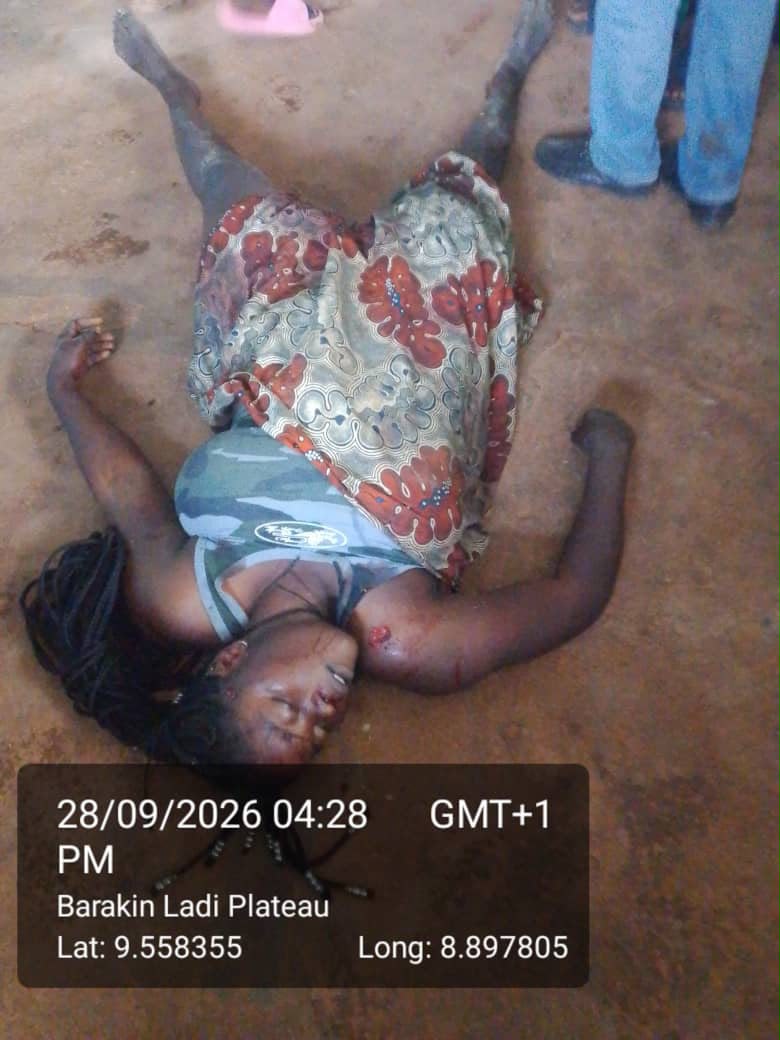
Two women killed, another injured in suspected armed Fulani attack in Barkin Ladi
By: Zagazola Makama
Two women were reportedly killed while another sustained gunshot wounds in an isolated attack allegedly carried out by suspected Fulani bandits along a road in Rakung village, Barkin Ladi Local Government Area of Plateau State.
Security sources told Zagazola Makama that the incident occurred at about 3:50 p.m. on Sept. 28, 2026, when troops of Sector 4, Operation Enduring Peace, responded to a report of an attack on three local women.
The sources said troops deployed to the location and discovered that two of the victims had been shot dead, while the third victim, identified as Mrs. Umbulet Philip, sustained gunshot wounds.
The bodies of the two deceased victims and the injured woman were evacuated to the General Hospital, Barkin Ladi, for medical attention and further procedures.
Following the attack, the troops activated a manhunt for the assailants and commenced efforts to track down those responsible.
The latest incident adds to the growing security concerns in parts of Barkin Ladi, where attacks on civilians and retaliatory violence have continued to heighten tensions between communities.
Two women killed, another injured in suspected armed Fulani attack in Barkin Ladi

2027: President Tinubu, Health Rumours, Politics And Response of Confidence and Responsibility

Tinubu’s Diplomatic Hat-trick: Dignity In Luanda, Destiny In Delhi, Justice In New York

Plateau in Crisis: Drone Allegations, Operation Rainbow and the Struggle for Peace

Roger Federer’s Shock as DNA Results Reveal Myla and Charlene Are Not His Biological Children

THE PLIGHT OF FARIDA

FAILED COUP IN BURKINA FASO: HOW TRAORÉ NARROWLY ESCAPED ASSASSINATION PLOT AMID FOREIGN INTERFERENCE CLAIMS
-
 News3 years ago
Roger Federer’s Shock as DNA Results Reveal Myla and Charlene Are Not His Biological Children
-
Opinions5 years ago
THE PLIGHT OF FARIDA
-
 News1 year ago
FAILED COUP IN BURKINA FASO: HOW TRAORÉ NARROWLY ESCAPED ASSASSINATION PLOT AMID FOREIGN INTERFERENCE CLAIMS
-

 News3 years ago
EYN: Rev. Billi, Distortion of History, and The Living Tamarind Tree
-
 Opinions5 years ago
POLICE CHARGE ROOMS, A MINTING PRESS
-

 ACADEMICS3 years ago
A History of Biu” (2015) and The Lingering Bura-Pabir Question (1)
-

 Columns3 years ago
Army University Biu: There is certain interest, but certainly not from Borno.
-

 Politics1 year ago
2027: Why Hon. Midala Balami Must Go, as Youths in Hawul and Asikira/Uba Federal Constituency Reject ₦500,000 as Sallah Gift
