
Uncategorized
Ministry of Interior generated over N6.2 bn revenue last year, says Minister


Ministry of Interior generated over N6.2 bn revenue last year, says Minister
…1,836,533 Passports Issued, 828 foreigners repatriated, 137 victims of trafficking intercepted
By: Michael Mike
Minister of Interior, Hon. Olubunmi Tunji-Ojo has revealed that his ministry was able to contribute over N6 billion into the nation’s revenue during the 2024 fiscal year.
The minister made this disclosure during a media chat on the achievements of his minister during last year.
Tunji-Ojo who specifically gave N6,034,457,000 as the total revenue made with expatriate quota alone accruing about N3,220,035,000, marriages contributed N2,409,282,000 billion; citizenship and places of worship had N392,790,000 billion and N12,350,000 million respectively.
He noted that the increase was over 150 per cent from the previous year.
He acknowledged that the blockage and stoppage of revenue leakages through automation of processes was responsible for the lift, adding that now foreign applicants who applied for Nigerian citizenship are genuinely scrutinised before being granted their application.
He said: “The ministry inaugurated Presidential Enabling Business Environment Council (PEBEC) Champions/Reform Team who have successfully worked with Ease of Doing Business Secretariat (EBES) to harmonise and update records on the National Action Plan (NAP 7.0) reform initiatives which include: enforce service level agreement (SLA) for business permit application; enforce timeline for business permit application; enforce SLA timeline for expatriate quota (EQ) applications; enforce timeline for EQ applications.”
He added that the ministry has
commenced full operations in the newly-established Federal Marriage Registries in the following states: Jalingo, Taraba State; Akure, Ondo State; Ibadan, Oyo State; Makurdi, Benue State; Asaba, Delta State and Uyo, Akwa Ibom State.
The minister said the ministry is currently implementing the Performance Management System (PMS) which is one of the six pillars of the Federal Civil Service Strategy and Implementation Plan (FCSSIP2021-2025)—–a strategy that drives the first medium term plan, 2021-2025 of the Nigeria Agenda 2050 holistic reforms of the civil service.
“The PMS is a framework used to evaluate, manage and improve the employee performance in alignment with the National Service and mandate while innovating means and measures to achieving ministry’s mandate also” he explained.
The agencies under the Ministry of interior include, Nigeria Security and Civil Defence Corps (NSCDC), Nigeria Fire Service (NFS), Nigeria Immigration Service and National Identification Management Commission (NIMC) were involved in restructuring with
about 8,283 men and officers recruited into the NIS and the NSCDC in 2023, while 2,500 officers were recruited into the FFS in 2024.
The Minister said: “A key part of the ministry that has to do with the public is the department we call C and B. That is, Citizenship and Business. One of the first things we realised about the department is that the revenue generated wasn’t up to what is expected. So, the first thing we have to do is to create a process of optimising and automising it.”
The minister revealed that the Nigeria Immigration Service (NIS) has issued 1,836,533 passports and repatriated 828 foreigners between January and December 2024.
Tunji-Ojo nited that other achievements recorded in the same period included the clearance of a backlog of over 200,000 passport application within three weeks in year 2024
“Then, of course, combating irregular migration is a major issue. In the last one year, 137 victims of trafficking were intercepted in 2024 and 42 objects of struggling, of migrants were also intercepted.
“828 foreigners were repatriated in 2024 by the Nigerian Immigration Service.
“Of course, when we came on board, we met a backlog of over 200,000 passports, you know, and in record time, in less than three weeks, we were able to clear that.
“In 2024, the Nigeria Immigration Service also issued 1,836,533,”he said.
In the realm of border security, the minister announced the completion of the first phase of the e-border solution, covering 40 per cent of the nation’s borders.
Tunji-Ojo said that secured borders ensure a safe nation adding that newly acquired vehicles and e-gates have been deployed to improve border management.
He also spoke about innovations in visa processing, including the establishment of a Visa Approval Center in Abuja and the integration of Interpol’s database for profiling applicants.
“This ensures only eligible individuals gain entry into Nigeria while strengthening national security,” he said.
The minister also spoke about reforms in granting Nigerian citizenship, which now involved a rigorous verification process in collaboration with security agencies.
“Becoming a Nigerian citizen today is a more transparent and technology-driven process. This ensures integrity without creating unnecessary bureaucracy,” he maintained..
Looking ahead, Tunji-Ojo pledged continued reforms, including improving operational efficiency and leveraging technology to meet national security and administrative goals.
“We are not yet where we want to be, but progress has been made, and we remain committed to delivering better services to Nigerians.
Tunji-Ojo said that the President, Bola Tinubu’s vision of a secure, innovative, and efficient system was being realised through these reforms. Nigerians deserve a system that works for them.
The interior minister at the parley provided a detailed account of accomplishments across the ministry and all its six agencies.
Ministry of Interior generated over N6.2 bn revenue last year, says Minister


Uncategorized
Plateau local militiamen Kill another 18-Year-Old Herder, Rustle Cattle in Plateau Community
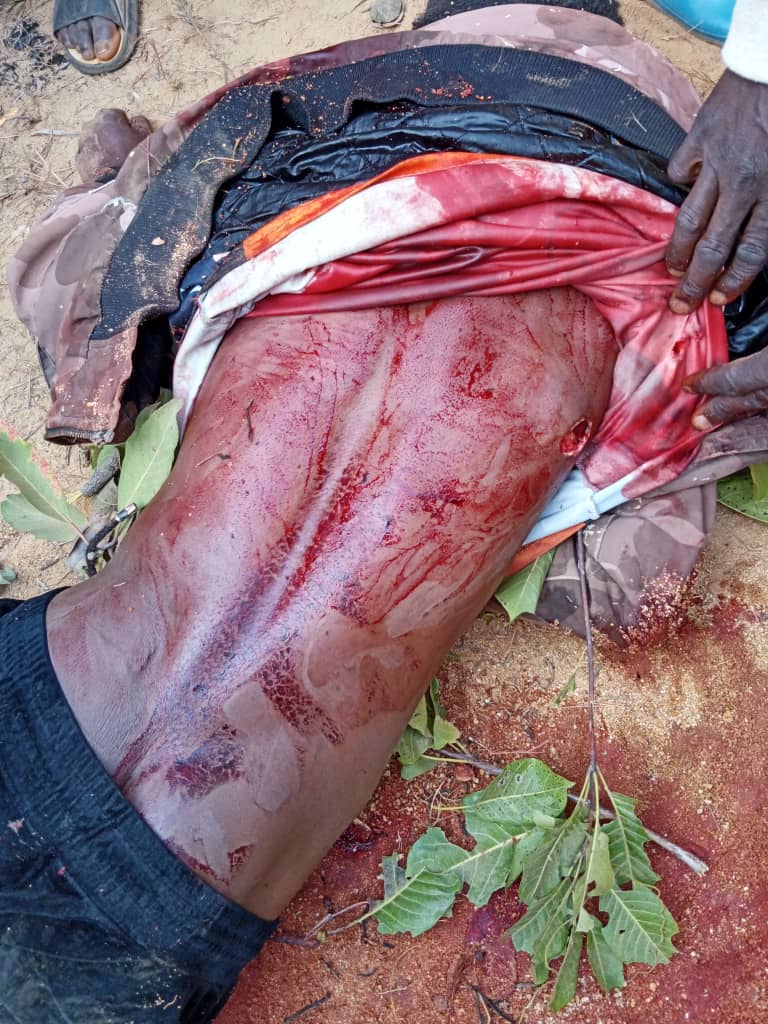
Plateau local militiamen Kill another 18-Year-Old Herder, Rustle Cattle in Plateau Community
By: Zagazola Makama
Gunmen suspected to be armed local militia elements have killed an 18-year-old herder, identified as Musa Bappa, and rustled an unspecified number of cattle in Fulani Ruga, Fusa Fursum District of Jos East Local Government Area of Plateau State.
Security sources said the incident occurred at about 1:30 a.m. on November 23, 2026, when troops of Sector 1, Sub-Sector 12, Operation Enduring Peace (OPEP), responded to a report of an attack on the community.
On arrival at the scene, the troops discovered that the assailants had killed the herder and escaped with an unconfirmed number of cattle.
Following the incident, troops, in collaboration with local hunters and the Vigilante Group of Nigeria (VGN), launched search-and-rescue operations in nearby bushes around Kio and Ribung villages in Barkin Ladi Local Government Area.
Plateau local militiamen Kill another 18-Year-Old Herder, Rustle Cattle in Plateau Community
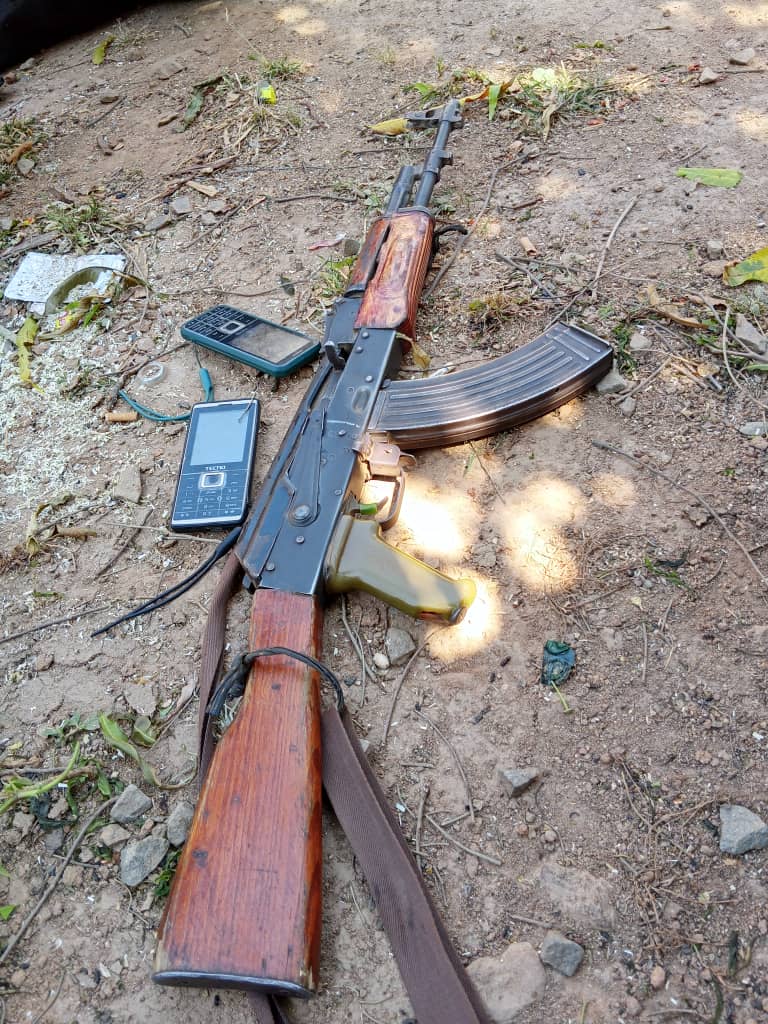
Hunters Repel Bandits’ Attack on Zamfara Community, Two Gunmen Killed, Personnel Dies
By: Zagazola Makama
Personnel of the Hunters Group have repelled an attack by armed bandits on Dansadau community in Maru Local Government Area of Zamfara State, killing two of the attackers.
The incident occurred at about 10:30 a.m. on November 22, 2026, when a large group of armed bandits launched an attack on the community.
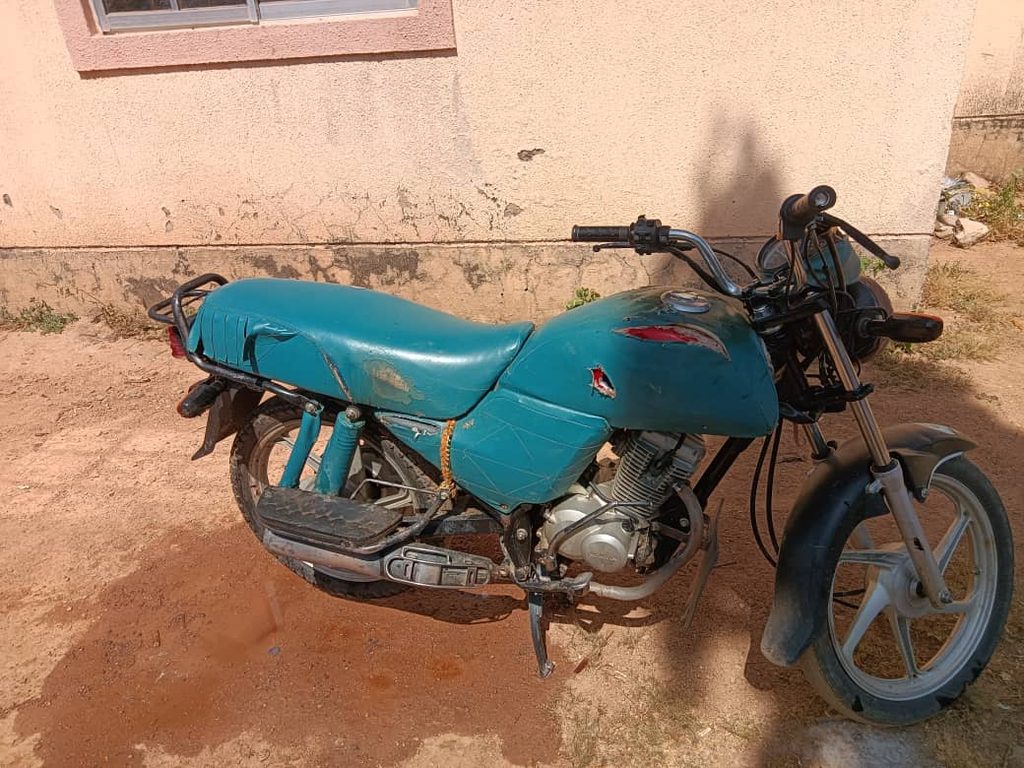
Hunters Group personnel stationed in Dansadau engaged the attackers in a gun battle and successfully repelled the assault.

Two bandits were reportedly neutralised during the encounter, while the personnel recovered one AK-47 rifle, a motorcycle and a mobile phone.
However, the encounter claimed the life of one Hunters Group personnel, who was killed in action.

The successful defence of the community prevented the attackers from overrunning the area, while security personnel continued efforts to maintain security in the general area.
Hunters Repel Bandits’ Attack on Zamfara Community, Two Gunmen Killed, Personnel Dies
Uncategorized
SOJA Demands Release of Journalist Daniel Ojukwu, Seeks Review of Cybercrimes Act, Criminal Defamation Laws
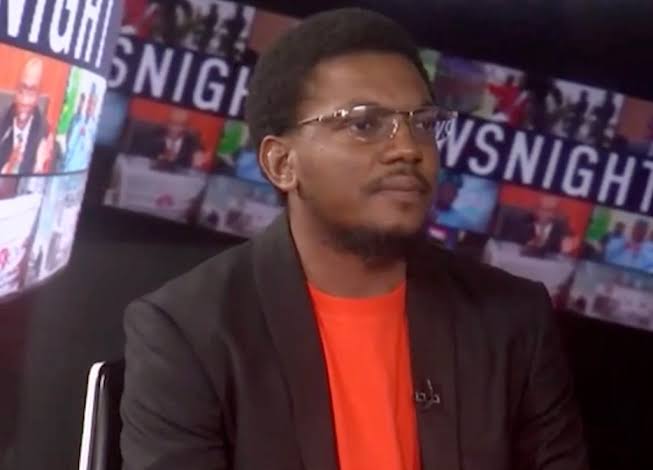
SOJA Demands Release of Journalist Daniel Ojukwu, Seeks Review of Cybercrimes Act, Criminal Defamation Laws
By: Michael Mike
Speak Out for Justice Advocacy Ltd/Gte (SOJA) has demanded the immediate and unconditional release of investigative journalist Daniel Ojukwu, urging the Federal Government to review the Cybercrimes Act and other criminal laws allegedly being used to suppress freedom of expression and public-interest journalism.
Ojukwu, a journalist with the Foundation for Investigative Journalism (FIJ), was remanded at the Kuje Correctional Centre, Abuja, following his arraignment on November 10, 2026, over allegations of cyberstalking and criminal defamation arising from his journalistic work.
In a press statement on Thursday, SOJA’s Founder and Executive Director, Hameed Ajibola Jimoh, described Ojukwu’s detention as a troubling development for press freedom and called for the discontinuation of criminal proceedings arising from legitimate investigative journalism.
The organisation aligned itself with Avocats Sans Frontières France (ASF France) and other press-freedom groups advocating Ojukwu’s unconditional release, warning against the use of criminal laws to intimidate journalists investigating public expenditure, government activities and alleged wrongdoing.
“A journalist’s investigation into public resources is not, without more, a criminal enterprise. It is an essential component of democratic accountability,” SOJA said.
While acknowledging the judiciary’s independence, the presumption of innocence and the legitimate responsibility of government to protect reputation, privacy and security, the organisation argued that such interests should not be used to justify indiscriminate criminal prosecution of journalists for publications that question public officials or expose alleged misconduct.
SOJA said Nigeria’s constitutional guarantees of freedom of expression under Section 39 and the responsibility of the media to hold government accountable under Section 22 of the 1999 Constitution were reinforced by international human-rights instruments, including the International Covenant on Civil and Political Rights (ICCPR), the African Charter on Human and Peoples’ Rights and the Universal Declaration of Human Rights.
It maintained that restrictions on freedom of expression must satisfy the established three-part test of legality, legitimate purpose, and necessity and proportionality in a democratic society.
The group further outlined a five-step framework for assessing restrictions, requiring that they be clearly prescribed by law, pursue a legitimate objective, respond to a pressing social need, constitute the least restrictive measure available and be reasonably suited to achieving the intended purpose.
According to SOJA, criminal provisions that are vague, overly broad or disproportionately enforced against investigative journalism risk undermining constitutional freedoms and creating a chilling effect on journalists and citizens seeking to expose wrongdoing.
Citing the United Nations Human Rights Committee’s General Comment No. 34, the organisation said international standards encouraged the decriminalisation of defamation and rejected imprisonment as an appropriate punishment for defamation.
It also referenced the African Commission on Human and Peoples’ Rights’ 2019 Declaration of Principles on Freedom of Expression and Access to Information in Africa, which requires restrictions on expression to be clear, precise, accessible and foreseeable, with safeguards against abuse.
On the Cybercrimes Act, SOJA recalled the 2022 judgment of the ECOWAS Court of Justice in Registered Trustees of SERAP v. Federal Republic of Nigeria, which found the former Section 24 inconsistent with human-rights protections and directed Nigeria to amend the provision.
Although Section 24 was subsequently amended in 2024, the organisation said concerns over its interpretation and enforcement remained, warning that the amended provision could still be abused to target public-interest journalism, criticism and civic participation.
SOJA also called for a broader review of criminal defamation provisions under the Criminal and Penal Codes, as well as other laws relating to false publication, sedition, insult, public mischief and disclosure of official information, which it said could be deployed to intimidate journalists and suppress legitimate expression.
It cited the experiences of several journalists, including Agba Jalingo, Gidado Yushau, Alfred Olufemi, Luke Binniyat, Mienpamo Onitsha, Chinonso Uba, Haruna Mohammed Salisu, Ahmed Isah Sakpe and Blessing Edet, as well as journalists of The Informant247, as examples underscoring the need for a comprehensive review of Nigeria’s legal framework on freedom of expression.
The organisation also expressed concern over the proceedings involving Ojukwu and FIJ founder, Fisayo Soyombo, insisting that the cases reflected broader challenges facing investigative journalism and digital rights in the country.
SOJA urged the Federal Government, National Assembly, Nigeria Police Force, Office of the Attorney-General of the Federation and other relevant institutions to ensure Ojukwu’s release, discontinue criminal proceedings linked to legitimate journalism and protect journalists from intimidation, arbitrary arrest and detention.
It also demanded a comprehensive and participatory review of the Cybercrimes Act, particularly Section 24, alongside the decriminalisation of defamation and the adoption of civil remedies for reputational disputes.
The group called for safeguards against the misuse of police powers to settle private disputes or silence criticism, as well as continuous training for judges, prosecutors and law-enforcement officers on freedom of expression, digital rights and the protection of journalists.
SOJA said freedom of expression was not a privilege granted by government but a fundamental right, warning that the protection of reputation and public order should not become justification for suppressing legitimate criticism.
“The Cybercrimes Act must combat cybercrime, not criminalise journalism. Criminal laws must protect citizens, not silence them,” it said, adding that the public’s right to know must not be sacrificed to intolerance of scrutiny.
SOJA Demands Release of Journalist Daniel Ojukwu, Seeks Review of Cybercrimes Act, Criminal Defamation Laws

Gunmen Abduct Driver, Female Passenger in SUV Attack Along Barkin Ladi-Jos Road

Troops Arrests Two Suspects Over Machete Attack on Man in Plateau

Plateau local militiamen Kill another 18-Year-Old Herder, Rustle Cattle in Plateau Community

Roger Federer’s Shock as DNA Results Reveal Myla and Charlene Are Not His Biological Children

THE PLIGHT OF FARIDA

FAILED COUP IN BURKINA FASO: HOW TRAORÉ NARROWLY ESCAPED ASSASSINATION PLOT AMID FOREIGN INTERFERENCE CLAIMS
-
 News3 years ago
Roger Federer’s Shock as DNA Results Reveal Myla and Charlene Are Not His Biological Children
-
Opinions5 years ago
THE PLIGHT OF FARIDA
-
 News2 years ago
FAILED COUP IN BURKINA FASO: HOW TRAORÉ NARROWLY ESCAPED ASSASSINATION PLOT AMID FOREIGN INTERFERENCE CLAIMS
-
 Opinions5 years ago
POLICE CHARGE ROOMS, A MINTING PRESS
-

 News3 years ago
EYN: Rev. Billi, Distortion of History, and The Living Tamarind Tree
-

 ACADEMICS3 years ago
A History of Biu” (2015) and The Lingering Bura-Pabir Question (1)
-

 Columns3 years ago
Army University Biu: There is certain interest, but certainly not from Borno.
-

 Politics1 year ago
2027: Why Hon. Midala Balami Must Go, as Youths in Hawul and Asikira/Uba Federal Constituency Reject ₦500,000 as Sallah Gift
