
Uncategorized
Ministry of Interior generated over N6.2 bn revenue last year, says Minister


Ministry of Interior generated over N6.2 bn revenue last year, says Minister
…1,836,533 Passports Issued, 828 foreigners repatriated, 137 victims of trafficking intercepted
By: Michael Mike
Minister of Interior, Hon. Olubunmi Tunji-Ojo has revealed that his ministry was able to contribute over N6 billion into the nation’s revenue during the 2024 fiscal year.
The minister made this disclosure during a media chat on the achievements of his minister during last year.
Tunji-Ojo who specifically gave N6,034,457,000 as the total revenue made with expatriate quota alone accruing about N3,220,035,000, marriages contributed N2,409,282,000 billion; citizenship and places of worship had N392,790,000 billion and N12,350,000 million respectively.
He noted that the increase was over 150 per cent from the previous year.
He acknowledged that the blockage and stoppage of revenue leakages through automation of processes was responsible for the lift, adding that now foreign applicants who applied for Nigerian citizenship are genuinely scrutinised before being granted their application.
He said: “The ministry inaugurated Presidential Enabling Business Environment Council (PEBEC) Champions/Reform Team who have successfully worked with Ease of Doing Business Secretariat (EBES) to harmonise and update records on the National Action Plan (NAP 7.0) reform initiatives which include: enforce service level agreement (SLA) for business permit application; enforce timeline for business permit application; enforce SLA timeline for expatriate quota (EQ) applications; enforce timeline for EQ applications.”
He added that the ministry has
commenced full operations in the newly-established Federal Marriage Registries in the following states: Jalingo, Taraba State; Akure, Ondo State; Ibadan, Oyo State; Makurdi, Benue State; Asaba, Delta State and Uyo, Akwa Ibom State.
The minister said the ministry is currently implementing the Performance Management System (PMS) which is one of the six pillars of the Federal Civil Service Strategy and Implementation Plan (FCSSIP2021-2025)—–a strategy that drives the first medium term plan, 2021-2025 of the Nigeria Agenda 2050 holistic reforms of the civil service.
“The PMS is a framework used to evaluate, manage and improve the employee performance in alignment with the National Service and mandate while innovating means and measures to achieving ministry’s mandate also” he explained.
The agencies under the Ministry of interior include, Nigeria Security and Civil Defence Corps (NSCDC), Nigeria Fire Service (NFS), Nigeria Immigration Service and National Identification Management Commission (NIMC) were involved in restructuring with
about 8,283 men and officers recruited into the NIS and the NSCDC in 2023, while 2,500 officers were recruited into the FFS in 2024.
The Minister said: “A key part of the ministry that has to do with the public is the department we call C and B. That is, Citizenship and Business. One of the first things we realised about the department is that the revenue generated wasn’t up to what is expected. So, the first thing we have to do is to create a process of optimising and automising it.”
The minister revealed that the Nigeria Immigration Service (NIS) has issued 1,836,533 passports and repatriated 828 foreigners between January and December 2024.
Tunji-Ojo nited that other achievements recorded in the same period included the clearance of a backlog of over 200,000 passport application within three weeks in year 2024
“Then, of course, combating irregular migration is a major issue. In the last one year, 137 victims of trafficking were intercepted in 2024 and 42 objects of struggling, of migrants were also intercepted.
“828 foreigners were repatriated in 2024 by the Nigerian Immigration Service.
“Of course, when we came on board, we met a backlog of over 200,000 passports, you know, and in record time, in less than three weeks, we were able to clear that.
“In 2024, the Nigeria Immigration Service also issued 1,836,533,”he said.
In the realm of border security, the minister announced the completion of the first phase of the e-border solution, covering 40 per cent of the nation’s borders.
Tunji-Ojo said that secured borders ensure a safe nation adding that newly acquired vehicles and e-gates have been deployed to improve border management.
He also spoke about innovations in visa processing, including the establishment of a Visa Approval Center in Abuja and the integration of Interpol’s database for profiling applicants.
“This ensures only eligible individuals gain entry into Nigeria while strengthening national security,” he said.
The minister also spoke about reforms in granting Nigerian citizenship, which now involved a rigorous verification process in collaboration with security agencies.
“Becoming a Nigerian citizen today is a more transparent and technology-driven process. This ensures integrity without creating unnecessary bureaucracy,” he maintained..
Looking ahead, Tunji-Ojo pledged continued reforms, including improving operational efficiency and leveraging technology to meet national security and administrative goals.
“We are not yet where we want to be, but progress has been made, and we remain committed to delivering better services to Nigerians.
Tunji-Ojo said that the President, Bola Tinubu’s vision of a secure, innovative, and efficient system was being realised through these reforms. Nigerians deserve a system that works for them.
The interior minister at the parley provided a detailed account of accomplishments across the ministry and all its six agencies.
Ministry of Interior generated over N6.2 bn revenue last year, says Minister


Uncategorized
2027: Tinubu Deserves Second Term, Says First Lady Oluremi unveils APC women campaign council, orders nationwide mobilisation for ‘total victory
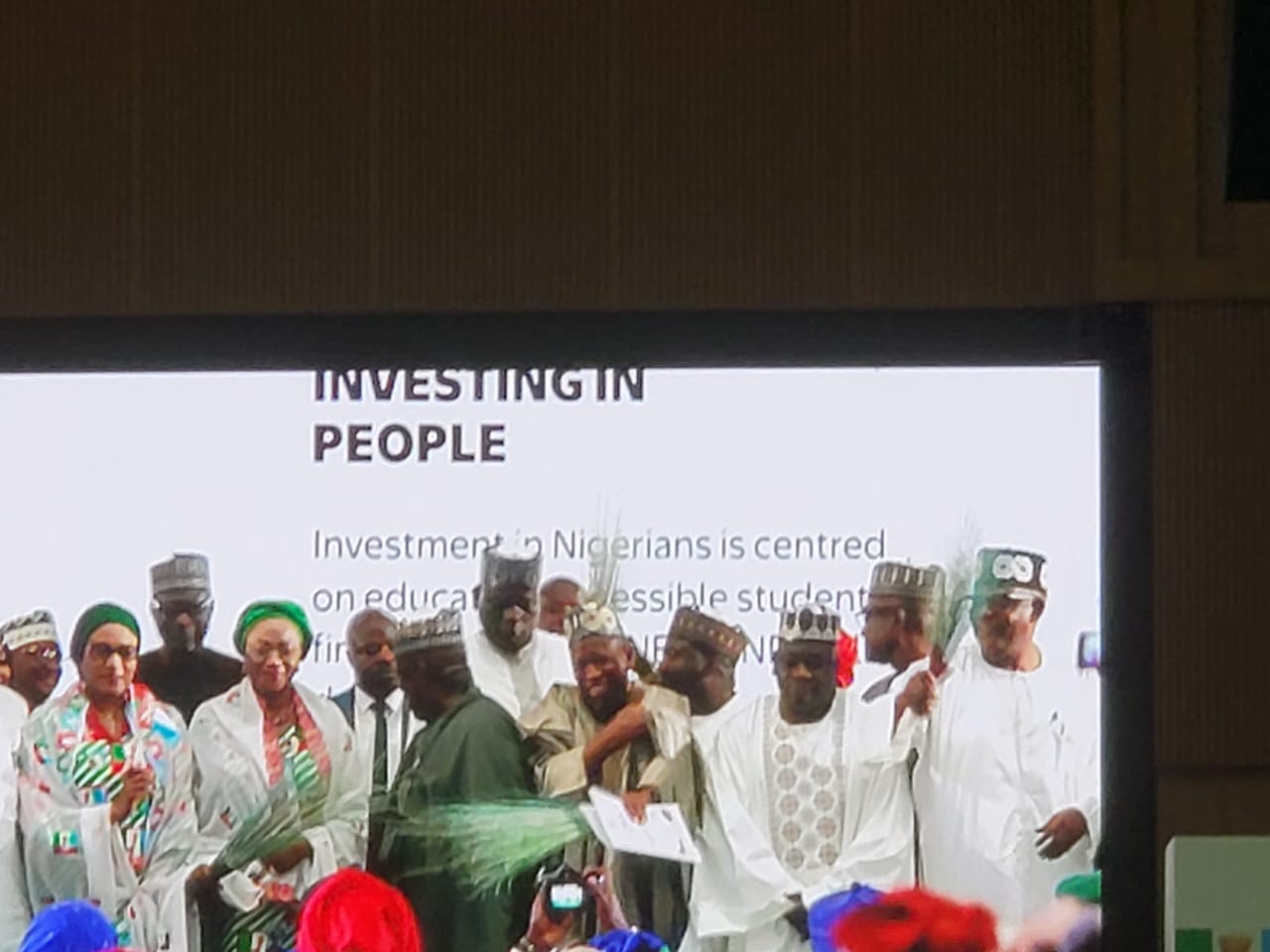
2027: Tinubu Deserves Second Term, Says First Lady Oluremi unveils APC women campaign council, orders nationwide mobilisation for ‘total victory’
By: Michael Mike
The First Lady, Senator Oluremi Tinubu, has described her husband as deserving a second term, claiming that President Bola Tinubu administration’s economic reforms are beginning to produce tangible results and deserve the continued support of Nigerians.
Speaking on Monday in Abuja at the inauguration of the All Progressives Congress (APC) Presidential Women Campaign Council for the 2027 general elections, the First Lady said the government’s economic interventions had moved beyond policy pronouncements to measurable signs of national stabilisation.

She urged APC women across the country to take the message of the administration’s achievements to the grassroots and mobilise Nigerians for what she described as a decisive electoral victory for President Tinubu and all APC candidates in 2027.
The campaign council, inaugurated under the banner “Renewed Hope Agenda 2.0: From Reforms to Prosperity,” is expected to spearhead a nationwide women-led mobilisation drive covering the presidency, governorships, the National Assembly and State Houses of Assembly.

Mrs. Tinubu said the administration’s economic reforms were beginning to reshape the country’s economic outlook, pointing to declining inflation, growing foreign reserves, increased investor confidence and greater support for farmers.
“Our economy is stabilizing, inflation is coming down, foreign reserves are growing, and investors are returning to Nigeria,” she said.
She also cited the Nigeria Education Loan Fund (NELFUND) initiative, noting that university students could now access interest-free loans to support their education.
According to her, the progress recorded by the administration was not merely political rhetoric but evidence that the country was moving towards economic recovery and prosperity.
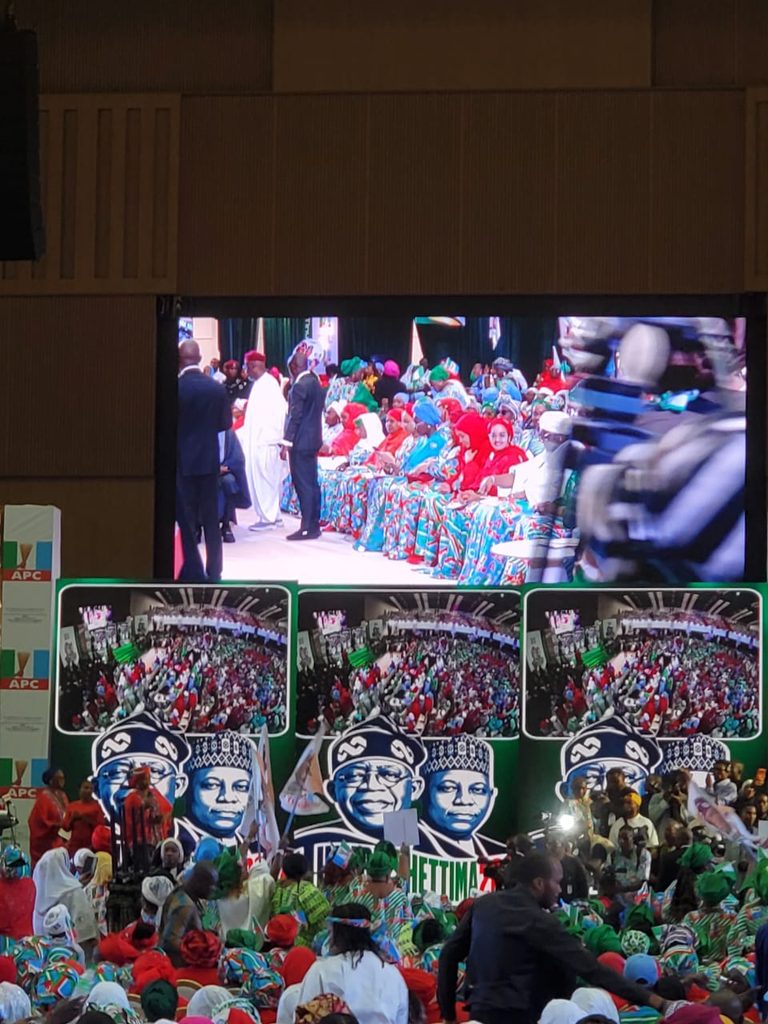
“The theme of this year’s rally is not just a slogan; it is our reality,” the First Lady declared.
Describing President Tinubu as a courageous leader prepared to take difficult decisions in the national interest, she appealed to APC women to become the administration’s strongest grassroots communicators ahead of the elections.
She charged members of the newly inaugurated council to move across the country, engage communities and convince voters to support the APC at every level of government.
Mrs. Tinubu also announced a major restructuring of the various women support groups campaigning for the President, saying they had been brought under a single APC campaign structure to ensure unity and discipline.
“We have collapsed every other women support group into one—from Tinubu Again to Torch Bearers and others,” she said.
“What you will see on the ballot box is APC. We are here to promote APC, nothing less.”
The First Lady said the campaign structure would organise six geopolitical zonal mega-rallies, state-level rallies and a grand finale in Abuja as part of an aggressive mobilisation strategy ahead of the 2027 polls.
She disclosed that she would participate in the zonal campaigns alongside the wife of the Vice President, Hajia Nana Shettima, and other senior party leaders.
At the state level, she said the mobilisation would be driven by the wife of the Senate President, the wife of the Speaker of the House of Representatives and the Chairperson of the Nigeria Governors’ Spouses Forum.
Earlier, the APC National Women Leader, Dr. Mary Alile Idele, charged the newly inaugurated campaign council to translate the administration’s reform message into direct grassroots engagement.
She said the “Renewed Hope Agenda 2.0: From Reforms to Prosperity” was not simply a campaign slogan but a call for women leaders to take ownership of the administration’s message and communicate its opportunities and achievements to Nigerians.
Alile urged the women to take the campaign into homes, markets, communities and wards, insisting that grassroots mobilisation would be critical to the party’s success in 2027.
She outlined a four-point strategy for the council, beginning with the creation of stronger women-to-women networks across wards, local government areas and communities.
The second, she said, was to identify women in need, link them with available empowerment opportunities and ensure that beneficiaries subsequently became agents of development within their communities.
She also tasked the council with taking the message of reform, opportunity and prosperity to every community while listening to citizens’ concerns and transmitting constructive feedback to the leadership.
The final plank of the strategy, she said, was to move beyond mobilisation to measurable results through clearly defined responsibilities, functional grassroots structures, regular engagement and accountability.
The inauguration signals the beginning of what the APC hopes will be a formidable women-driven campaign machinery ahead of the 2027 elections, with the party positioning its female leadership structures as a critical force in its quest for victory across the country.
2027: Tinubu Deserves Second Term, Says First Lady Oluremi unveils APC women campaign council, orders nationwide mobilisation for ‘total victory
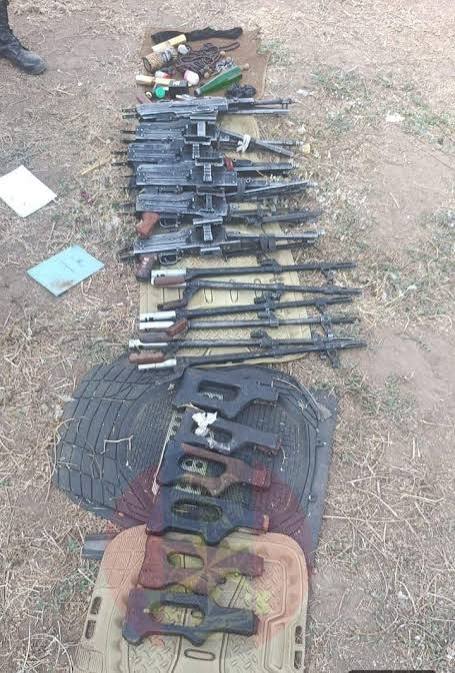
Troops, DIA Team Recover SMG Rifle, Ammunition in Taraba Raid
By: Zagazola Makama
Troops of the 114 Battalion (Reinforcement), in collaboration with a Defence Intelligence Agency (DIA) composite team, have recovered a submachine gun rifle and assorted ammunition during a raid on a suspected criminal hideout in Taraba State.
Security sources told Zagazola Makama that the operation was conducted at about 3:00 p.m. on Oct. 3, 2026, at Abbare in Lau Local Government Area.
The sources said the joint team recovered one submachine gun rifle, one magazine, 12 rounds of 7.62mm NATO ammunition, one round of 7.62mm special ammunition and five rounds of 9mm ammunition.
No contact was made with the suspected criminals, and no arrest was recorded during the operation.
The recovered weapon and ammunition remain in military custody for further investigation and necessary action.
The raid forms part of ongoing security efforts to dismantle criminal hideouts, recover illegal weapons and prevent armed groups from using such facilities to perpetrate violence in the region.
Troops, DIA Team Recover SMG Rifle, Ammunition in Taraba Raid
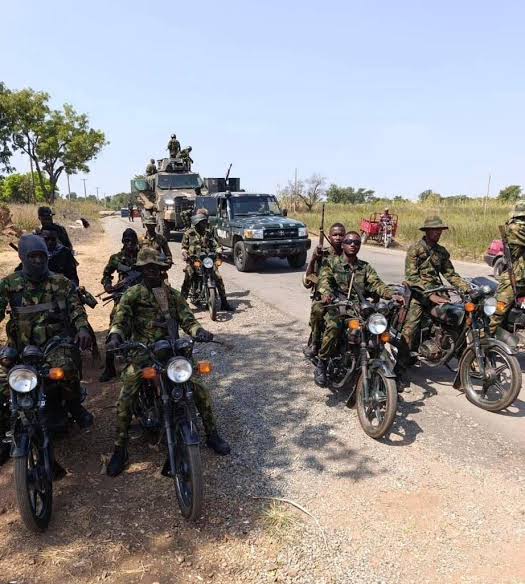
Troops Recover Two Rustled Cattle After Foiling Attack in Plateau
By: Zagazola Makama
Troops of Sector 2, Operation Enduring Peace (OPEP), have recovered two rustled cattle following an encounter with suspected terrorists in Gululu village, Wase Local Government Area of Plateau State.
Security sources told Zagazola Makama that the incident occurred at about 6:30 p.m. on Oct. 2, 2026, when troops responded to reports of cattle rustling by suspected terrorists in the community.
The sources said the troops engaged the suspected assailants, forcing them to retreat in disarray.
A subsequent search of the general area led to the recovery of two cattle allegedly rustled by the fleeing suspects.
The recovered cattle were subsequently handed over to their owner.
The operation highlights ongoing efforts by security forces to curb cattle rustling, protect rural communities and safeguard livelihoods in Plateau State.
Troops Recover Two Rustled Cattle After Foiling Attack in Plateau

Suspected cattle rustlers injure youth in isolated attack in Plateau

Troops arrest three suspected kidnappers in Kaduna

NCYP Backs Tinubu’s 2027 Bid, Says Economic Reforms Must Translate Into Jobs

Roger Federer’s Shock as DNA Results Reveal Myla and Charlene Are Not His Biological Children

THE PLIGHT OF FARIDA

FAILED COUP IN BURKINA FASO: HOW TRAORÉ NARROWLY ESCAPED ASSASSINATION PLOT AMID FOREIGN INTERFERENCE CLAIMS
-
 News3 years ago
Roger Federer’s Shock as DNA Results Reveal Myla and Charlene Are Not His Biological Children
-
Opinions5 years ago
THE PLIGHT OF FARIDA
-
 News1 year ago
FAILED COUP IN BURKINA FASO: HOW TRAORÉ NARROWLY ESCAPED ASSASSINATION PLOT AMID FOREIGN INTERFERENCE CLAIMS
-

 News3 years ago
EYN: Rev. Billi, Distortion of History, and The Living Tamarind Tree
-
 Opinions5 years ago
POLICE CHARGE ROOMS, A MINTING PRESS
-

 ACADEMICS3 years ago
A History of Biu” (2015) and The Lingering Bura-Pabir Question (1)
-

 Columns3 years ago
Army University Biu: There is certain interest, but certainly not from Borno.
-

 Politics1 year ago
2027: Why Hon. Midala Balami Must Go, as Youths in Hawul and Asikira/Uba Federal Constituency Reject ₦500,000 as Sallah Gift
