
Uncategorized
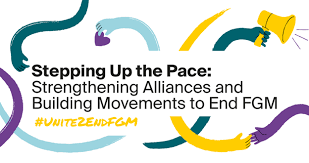
International Day of Zero Tolerance on Female Genital Mutilation: CHRICED Calls for a Concerted Efforts to Fight Against FGM

International Day of Zero Tolerance on Female Genital Mutilation: CHRICED Calls for a Concerted Efforts to Fight Against FGM
By: Michael Mike
The Resource Centre for Human Rights and Civic Education (CHRICED) has reaffirmed its unwavering commitment to the eradication of the harmful practice of female genital mutilation which is still prevalence across Nigeria and the broader African continent.
The commitment was contained in a statement issued on Wednesday to mark the International Day of Zero Tolerance for Female Genital Mutilation (FGM),
According to the statement, FGM is not merely a cultural issue; it is a profound violation of human rights that inflicts severe physical and psychological harm on countless women and girls. The repercussions of FGM extend far beyond the immediate physical injuries, leading to long-term health complications, emotional trauma, and social stigmatization that can hinder the affected individuals’ ability to lead fulfilling lives.
The statement read that: “In Nigeria, the fight against FGM is bolstered by the nation’s commitment to international standards, particularly the United Nations Resolution aimed at the elimination of this practice. The Nigerian government has taken significant steps to address this issue through the enactment of progressive legislation.
“One notable piece of legislation is the Violence Against Persons Prohibition Act of 2015, which explicitly criminalizes all forms of violence, including the practice of FGM on minors. This law represents a critical step forward in protecting the rights and well-being of vulnerable populations.
“Additionally, the National Gender Policy serves as a framework for promoting gender equality and safeguarding the rights of women and girls. It explicitly prohibits FGM and other harmful traditional practices that target women and girls, reflecting a broader commitment to fostering an environment where all individuals can thrive free from violence and discrimination.”
The statement added that: “However, recent reports from the Nigeria Demographic and Health Survey reveals that about 20% of women aged 15 to 49 have experienced FGM. According to UNICEF, Nigeria accounts for the third highest number of women and girls who have undergone FGM worldwide. In certain regions, the practice remains deeply entrenched in community traditions, leaving many young girls vulnerable.
“Across Africa, the scale of the problem is even larger, with over 200 million women and girls affected by FGM and nearly 3 million girls at risk each year. These figures remind us that behind every statistic lies a story of pain and lost potential.
“CHRICED is deeply concerned about the health consequences of FGM as outlined in several policy documentations which are not limited to immediate complications such as severe bleeding, pain, shock, tetanus and other infections and complications during childbirth (affecting both the mother and the child). In the long-term, sexual and reproductive health may be adversely affected including gynaecological problems such Introduction as fistula, increased need for subsequent surgeries, emotional suffering, and lack of sexual enjoyment.
“Sexual and reproductive health challenges also include “complications during childbirth, anaemia, the formation of cysts and abscesses, keloid scar formation, damage to the urethra resulting in urinary incontinence, dyspareunia (painful sexual intercourse), sexual dysfunction, hypersensitivity of the genital area and increased risk of HIV transmission.
“CHRICED recognizes that the eradication of FGM requires a multifaceted approach that includes education, community engagement, and the empowerment of women and girls. It is essential to raise awareness about the dangers of FGM and to challenge the cultural norms that perpetuate this practice. By working collaboratively with communities, stakeholders, and policymakers, we can create a future where women and girls are protected from harm and can enjoy their rights fully.”
The statement disclosed that: “At CHRICED, our mission is to empower communities and safeguard the rights, health, and dignity of every woman and girl. By collaborating with government agencies, non-governmental organizations, and local influencers, we are steadily building a future where FGM is no longer tolerated. The progress we have witnessed, from communities rejecting the practice to traditional leaders embracing alternative rites of passage, demonstrates that change is indeed possible when we work together.”
It added that: “As we observe this important day, CHRICED calls on all stakeholders, policymakers, community leaders, healthcare professionals, and every concerned citizen, to join us in the fight against FGM. This should form priority in every conversation, every community meeting, and every act of advocacy, until our efforts bring us closer to a Nigeria and Africa where every girl can grow up free from the threat of FGM, confident in her right to a healthy, dignified life.
“We call on both the National and State Houses of Assembly to promote the implementation/ enforcement of existing laws and the adoption of legal frameworks in states where such do not currently exist, towards the elimination of FGM, this is in line with the National Action Plan Against Female Genital Mutilation 2021-2025.
“We remain determined to work with other CSOs and health medical practitioners to expand our outreach, deepen our community engagement, and strengthen our support systems for survivors. Together, we can create a future where every woman and girl have the opportunity to thrive without the shadow of FGM looming over her life. Let us stand united on this International Day of Zero Tolerance on FGM as we work towards a world where every woman and girl is safe, respected, and empowered.”
International Day of Zero Tolerance on Female Genital Mutilation: CHRICED Calls for a Concerted Efforts to Fight Against FGM



Troops arrest three Fulani men in Plateau after farmer’s killing
By: Zagazola Makama
Troops of Sector 6, Operation ENDURING PEACE (OPEP), have arrested three persons during a raid on two Fulani settlements in Bachi community, Riyom Local Government Area of Plateau State.
The operation, conducted on Sept. 13, 2026, followed a manhunt for criminal elements responsible for the killing of a farmer at Fang community in Riyom LGA on Sept. 12.
During the raid at Baggat and Shong 2 Fulani hamlets, troops arrested three residents identified as Anas Usman, Nuhu Mohammad and Haruna Ahmed.
Security sources said the three suspects are not necessarily the perpetrators of the killing, but their arrest is part of efforts to mount pressure on local Fulani leaders to assist security agencies in identifying and producing those responsible for the crime.
The suspects are currently in custody for further investigation and intelligence exploitation.
Troops arrest three Fulani men in Plateau after farmer’s killing
Uncategorized
Talata Mafara Attack: ISN Demands Intelligence Overhaul, Special Courts to Crush Banditry
Talata Mafara Attack: ISN Demands Intelligence Overhaul, Special Courts to Crush Banditry
The Institute of Security, Nigeria (ISN) has called for a fundamental overhaul of Nigeria’s approach to terrorism, banditry and kidnapping, warning that criminal groups are becoming increasingly organised and capable of challenging the authority of the state.
The institute made the call while reacting to the reported invasion of Talata Mafara market in Zamfara State, where non-state actors allegedly imposed a ₦50 million levy and demanded 100 livestock, giving residents a seven-day ultimatum.
The ISN said the development exposed the need for security agencies to move beyond reactive operations and adopt stronger intelligence-led strategies capable of identifying and dismantling criminal networks before they launch attacks.
In a statement signed by its Deputy President and Chief Executive Officer, Barr. Adebayo Akinade, the institute said the activities of terrorists and bandits were no longer limited to isolated attacks but increasingly involved the control of economic activities, collection of illegal levies and disruption of legitimate livelihoods.
It warned that such activities could gradually establish a parallel system of criminal authority in affected communities if left unchecked.
The institute consequently urged the Federal and state governments to establish a coordinated security framework bringing together federal security agencies, state security outfits and vetted community guards.
It also called for the creation of a National Security Fusion Centre, supported by state-level fusion desks, to facilitate real-time intelligence sharing and faster responses to emerging threats.
According to the ISN, security agencies should penetrate criminal networks operating around markets, cattle-rustling routes and illicit livestock value chains while targeting the logistics and financial structures sustaining banditry.
It recommended regulated livestock markets and improved tracking systems to prevent stolen cattle from being absorbed into legitimate commercial channels.
The institute further proposed special courts for terrorism, kidnapping and banditry cases, arguing that a faster judicial process would strengthen the fight against organised criminal groups.
It urged the government to deploy modern technologies, including forest geo-fencing, livestock tracking, drones and citizen-reporting platforms, alongside improved tactical mobility and air surveillance.
The ISN also called for a two-hour rapid-response mechanism in vulnerable areas and increased investment in night-vision equipment and other specialised capabilities.
Beyond security operations, the institute advocated stronger community-based early-warning systems and local peace and security forums involving traditional rulers, farmers, market unions, faith organisations and civil society groups.
It urged citizens to report threats rather than surrendering to ransom and illegal levy demands, while encouraging communities to document attacks and preserve evidence for investigations and prosecution.
The institute said professional training in terrorism studies, intelligence management and counter-banditry operations should be strengthened as part of efforts to build a more effective national security architecture.
The ISN reaffirmed its readiness to support government and security agencies through research, training, policy advisory services and professional certification, saying a coordinated response was essential to restoring public confidence and protecting national development.
Talata Mafara Attack: ISN Demands Intelligence Overhaul, Special Courts to Crush Banditry
Uncategorized
2026 Peace and Dialogue Awards: IPCR, Ufuk Foundation Call for Collective Investment in Peace

2026 Peace and Dialogue Awards: IPCR, Ufuk Foundation Call for Collective Investment in Peace
By: Michael Mike

The Director-General of the Institute for Peace and Conflict Resolution (IPCR), Dr. Joseph Ochogwu, has called on governments, businesses, civil society organisations, religious and traditional institutions, communities and individuals to invest deliberately in peacebuilding, warning that the cost of conflict far exceeds the resources required to prevent it.
Ochogwu made the call on Thursday, September 10, 2026, while delivering a lecture titled “Investing in Peace: A Collective Responsibility for Everyone” at the 2026 Peace and Dialogue Awards organised by the Ufuk Dialogue Foundation Nigeria in collaboration with the IPCR in Abuja.

He said the awards should go beyond recognising individuals and organisations contributing to peacebuilding, stressing that Nigeria must begin to treat peace as an investment requiring consistent resources, planning and accountability.
According to Ochogwu, global military expenditure exceeded $2.4 trillion in 2024, while peacebuilding expenditure remained below $60 billion, representing about 2.5 per cent of military spending.

He questioned why trillions of dollars could be mobilised for conflict and military expenditure while significantly smaller amounts remained difficult to commit to conflict prevention and peaceful societies.
Ochogwu said the message was consistent with the 2026 International Day of Peace and International Day of UN Peacekeepers, but noted that the IPCR had further domesticated it as “Invest in Peace for Everyone, Everywhere, Everyday.”
“Peace cannot be a seasonal product for September 21st; it must be deliberate, daily, and for all,” he said.

He identified early-warning systems, peace education, youth employment, interfaith literacy, justice reform, community mediation, psychosocial healing, and greater participation of women and young people as key areas requiring investment.
The IPCR Director-General noted that the benefits of peacebuilding were often measured by conflicts that never occurred, making its returns less visible than conventional security spending.
He stressed that peacebuilding interventions must reflect the specific causes of conflicts in different parts of Nigeria. He identified extremism in the North-East, banditry in the North-West and North-Central, resource-related conflicts across the Middle Belt, separatist agitation in the South-East and urban fragility as major security and conflict challenges.
He also said West Africa and the Sahel were facing a convergence of violent extremism, unconstitutional political transitions, farmer-herder tensions and climate-induced displacement.
“A blanket approach will fail,” he warned, urging policymakers to develop interventions based on the specific drivers of conflict in each community and region.

Ochogwu also linked economic development to sustainable peace, saying the Federal Government’s economic reforms under the Renewed Hope Agenda could contribute directly and indirectly to peacebuilding.
He said job creation, poverty reduction and addressing economic vulnerabilities could help prevent communities and young people from becoming susceptible to conflict and violent mobilisation.
“Economic renewal is not a separate track; it is the bedrock on which peace is sustained,” he said.
He identified a perception gap, fragmentation of interventions, funding misalignment and the absence of effective mechanisms for tracking peace expenditure and its impact as major obstacles to peace investment.
According to him, less than 0.5 per cent of the budgets of Ministries, Departments and Agencies (MDAs) were coded for peacebuilding, while corporate social responsibility (CSR) spending rarely reached peacebuilding initiatives.
He therefore called for a system to track who invests in peace, how much is invested, where resources are deployed and the results achieved.
Ochogwu warned that failure to invest in peace carries significant economic and humanitarian consequences. He cited an estimated $19.1 trillion global economic cost of violence in 2024, equivalent to about 13.5 per cent of global GDP.
He added that every dollar not invested in conflict prevention could ultimately cost significantly more in humanitarian response and reconstruction.
According to him, farmer-herder conflicts had resulted in losses estimated at more than $14 billion over five years, while infrastructure damage in the North-East had exceeded $9 billion, with about 2.2 million people displaced.
“The cost of not investing in peace far exceeds the cost of investing in it,” he said.
To address the challenges, Ochogwu proposed a five-point compact aimed at making peacebuilding a shared responsibility across Nigerian society.
He called for the speedy implementation of the National Peace Policy, the establishment of a National Peace Investment Fund, legislation for a minimum three per cent peacebuilding allocation across relevant MDAs, and stronger coordination and early-warning responsibilities for the IPCR.
He also proposed committing at least one per cent of CSR expenditure to peacebuilding initiatives, including mediation centres, school peace clubs, early-warning technology and youth employment programmes in vulnerable communities.
The IPCR boss urged faith, traditional and community leaders to institutionalise interfaith dialogue and community-level dispute-resolution mechanisms in every ward, saying vulnerable communities often need trusted local mediators more than externally organised workshops.
He further called for stronger action against hate speech and disinformation, the generation of locally relevant evidence and the development of a Peace Investment Tracker Dashboard at the IPCR.
Ochogwu urged individuals and communities to make peace part of their daily conduct by avoiding escalation, accommodating neighbours, reporting early-warning signs and mentoring vulnerable young people.
“Peace must become everyone’s business,” he said.
The Chairperson of the 2026 Peace and Dialogue Awards, Inspector-General of Police Olatunji Rilwan Disu, NPM, also said peace and democracy were mutually reinforcing, stressing the importance of peaceful engagement in strengthening Nigeria’s democratic development.
2026 Peace and Dialogue Awards: IPCR, Ufuk Foundation Call for Collective Investment in Peace

NDLEA Arrests Another Mexican Drug Kingpin, Dismantles Ebonyi Meth Lab

MACBAN condemns killing of travellers in Plateau, warns against unverified allegations

COAS charges Plateau troops to sustain security gains, strengthen peace efforts

Roger Federer’s Shock as DNA Results Reveal Myla and Charlene Are Not His Biological Children

THE PLIGHT OF FARIDA

FAILED COUP IN BURKINA FASO: HOW TRAORÉ NARROWLY ESCAPED ASSASSINATION PLOT AMID FOREIGN INTERFERENCE CLAIMS
-
 News3 years ago
Roger Federer’s Shock as DNA Results Reveal Myla and Charlene Are Not His Biological Children
-
Opinions5 years ago
THE PLIGHT OF FARIDA
-
 News1 year ago
FAILED COUP IN BURKINA FASO: HOW TRAORÉ NARROWLY ESCAPED ASSASSINATION PLOT AMID FOREIGN INTERFERENCE CLAIMS
-

 News2 years ago
EYN: Rev. Billi, Distortion of History, and The Living Tamarind Tree
-
 Opinions5 years ago
POLICE CHARGE ROOMS, A MINTING PRESS
-

 ACADEMICS3 years ago
A History of Biu” (2015) and The Lingering Bura-Pabir Question (1)
-

 Columns3 years ago
Army University Biu: There is certain interest, but certainly not from Borno.
-

 Politics1 year ago
2027: Why Hon. Midala Balami Must Go, as Youths in Hawul and Asikira/Uba Federal Constituency Reject ₦500,000 as Sallah Gift
