
News
IWD 2026: UN Women Warns Nigeria’s Democracy at Risk as Women Hold Just 3.9% of Parliamentary Seats

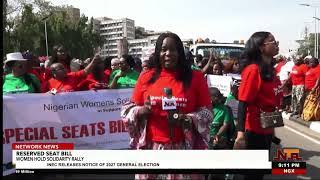
IWD 2026: UN Women Warns Nigeria’s Democracy at Risk as Women¹ Hold Just 3.9% of Parliamentary Seats
By: Michael Michael
The Country Representative of UN Women to Nigeria and the Economic Community of West African States (ECOWAS), Beatrice Eyong, has warned that Nigeria’s democratic progress and development could remain stunted unless urgent action is taken to close the country’s widening gender inequality gap.
Speaking in Abuja during a media parley ahead of the 2026 commemoration of International Women’s Day, Eyong said Nigeria continues to face troubling disparities in women’s representation, safety and access to justice despite years of advocacy and policy commitments.
The global observance this year is themed “Rights. Justice. Action.”
Eyong said the theme reflects a growing international concern that although women’s rights are widely recognised in law and policy, millions of women still struggle to experience those rights in their daily lives.
She particularly raised alarm over Nigeria’s extremely low level of female political representation, revealing that women currently occupy just 3.9 per cent of parliamentary seats, one of the lowest rates anywhere in the world.
According to her, the imbalance not only undermines democratic inclusion but also weakens the country’s ability to make policies that reflect the needs of half of its population.
“Gender equality is fundamentally a question of power, and the power gap in Nigeria remains stark,” Eyong said.
“When women are missing from decision-making tables, the consequences are visible in the policies we adopt, the priorities we fund, and the voices that remain unheard.”
Beyond politics, she said Nigeria continues to grapple with persistently high levels of gender-based violence, noting that many survivors still face enormous barriers in seeking justice.
She warned that violence against women is increasingly spreading into digital spaces, where technology-facilitated abuse has become a growing threat.
“Rights mean little without justice,” she said. “Justice must be experienced in women’s safety, in their freedom from fear, and in their ability to seek protection and accountability wherever abuse occurs.”
To confront these challenges, Eyong said UN Women is intensifying advocacy for the Special Seats for Women Bill, a constitutional reform proposal aimed at guaranteeing women stronger representation in Nigeria’s legislative institutions.
She explained that the organisation is also working with the Federal Ministry of Women Affairs to strengthen the National Sexual Offender Database, a critical accountability tool designed to prevent convicted offenders from evading detection by moving between states.
In addition, she said UN Women has expanded its engagement with traditional and religious leaders across Nigeria to challenge cultural norms and social practices that perpetuate discrimination and violence against women.
The agency is also supporting efforts to institutionalise Gender-Responsive Budgeting at federal and state levels to ensure government spending prioritises issues affecting women and girls, including maternal health, girl-child education, economic empowerment and community safety.
Eyong noted that beyond policy reforms, UN Women is building partnerships with financial institutions and the private sector to increase access to funding for women-led businesses and community initiatives.
She also highlighted ongoing efforts to strengthen women’s participation in peacebuilding and conflict prevention through Nigeria’s Third National Action Plan on Women, Peace and Security.
However, Eyong stressed that meaningful progress will require more than policy declarations.
According to her, Nigeria does not suffer from a shortage of gender policies but from weak implementation, insufficient financing and inconsistent enforcement.
“We must move from commitments to implementation and from plans to measurable impact,” she said.
She called on the media to intensify its role in exposing injustice, amplifying the voices of survivors of violence and promoting women’s leadership across sectors.
Eyong said journalists remain critical partners in shaping national conversations that can influence policy reforms and public attitudes toward gender equality.
“When we secure justice and rights for women, we secure Nigeria’s stability, prosperity and future,” she said.
She added that UN Women remains committed to working with government, civil society, development partners and communities to ensure that the ideals of Rights, Justice and Action translate into tangible change for women and girls across Nigeria.
IWD 2026: UN Women Warns Nigeria’s Democracy at Risk as Women Hold Just 3.9% of Parliamentary Seats



DSS Trails, Nabs Man Impersonating Personnel in Abuja
By: Zagazola Makama
*Arrested in tactical uniform, with fake pistol, allegedly extorting motorists
The Department of State Services (DSS) late on Wednesday in Abuja arrested a man identified as Moferewa Maiye, discovered to be impersonating a personnel of the Service.
Maiye, who claimed to hail from Agbajojun Village, Mopamuro Local Government Area of Kogi State, was trailed and arrested by DSS officers in his hideout around the NITEL Junction, along Adetokunbo Ademola Way, Wuse II, Abuja.
At the time of his arrest, Maiye was in DSS tactical uniform and armed with a fake pistol.
According to a security source, the Secret police acted on credible intelligence that Maiye was using the uniform and the fake weapon to intimidate commuters and motorists, extorting money from them.
During interrogation, added the source, the suspect reportedly claimed that his brother was a DSS personnel who died years ago.
He identified the brother as Monday Maiye, stressing that the DSS kit in his possession was his late brother’s.
The suspect is currently being interrogated as security operatives, the source stated, adding that the Service was investigating how he came about the DSS uniform and kit.
“Investigators are also trying to establish how long the suspect has been involved in similar acts of impersonation and extortion.
“The arrest underscores growing concerns by the Service over the activities of individuals who impersonate security personnel to intimidate members of the public and commit criminality,” the source declared.
DSS Trails, Nabs Man Impersonating Personnel in Abuja
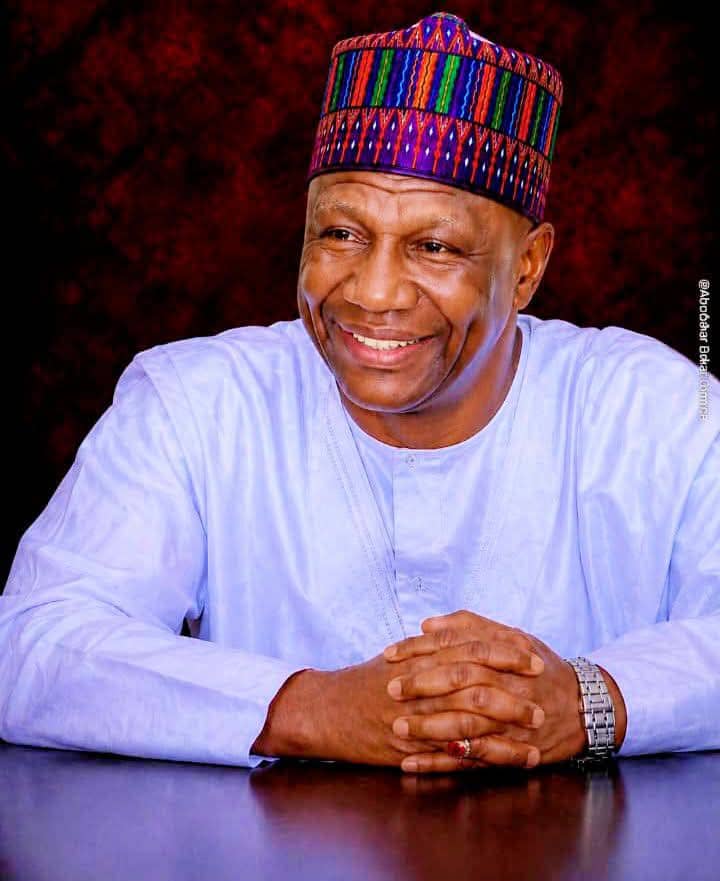
Yobe: Wali visits Emir of Damaturu
By: Yahaya Wakili
Yobe State All Progressives Congress (APC), 2027 gubernatorial candidate Alhaji Baba Malam Wali MNI, FCAN, has paid a courtesy visit to His Royal Highness, the Emir of Damaturu, Alhaji Shehu Hashimi II Ibn Umar Al-Amin El-Kanemi, at his palace in Damaturu.
During the visit, the APC governorship candidate, Alhaji Baba Malam Wali MNI, said they were at the emir’s palace to solicit the prayers and blessings of the emir.
According to Baba Wali, “We are in the race; therefore, the visit was very significant. We need the prayers of the royal fathers and leaders because they were very vital and important at this crucial time.
Responding, His Royal Highness, the emir of Damaturu, Alhaji Shehu Hashimi II Ibn Al-Amin El-Kanemi, thanked the governorship candidate for the visit and prayed Almighty Allah (SWT) would guide and protect him throughout his struggle in his life.
Those accompanying the incoming governor, Inshallah, in 2027 during the visit are his deputy, Barrister Saleh Samanja; APC State chairman, Alhaji Mohammed Gadaka; and Madakin Gudi.
Others are Alhaji Aji Yarima Bularafa, Hon. Commissioner of the Ministry of Wealth Creation, Empowerment, and Employment Generation; Hon. Nasiru Hassan Yusuf, candidate for the Federal House of Representatives, representing Damaturu, Gujba, Gulani, and Tarmuwa local government areas; and others.
The emir conferred the traditional title of Mukaddam of the Damaturu emirate council on Alhaji Baba Malam Wali, mni, and fcan, respectively.
Yobe: Wali visits Emir of Damaturu
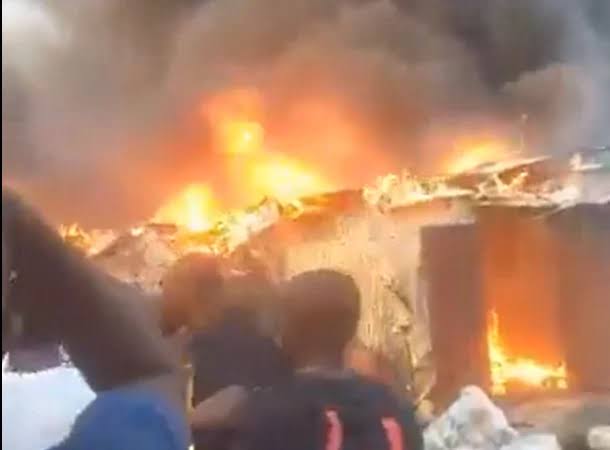
Fire Razes Building Material Shops in Satellite Town, Lagos
By Zagazola Makama
LAGOS — A fire outbreak has destroyed several building material shops along Fin-Niger, Satellite Town, Lagos State.
The incident occurred at about 6:10 a.m. on Aug. 18, when a distress call was received reporting a fire outbreak in the area.
Following the alert, a team of policemen and firefighters was swiftly mobilised to the scene.
The fire affected building material shops located at 58/196 Old Ojo Road, along Fin-Niger, Satellite Town.
The emergency responders successfully contained and extinguished the fire, preventing it from spreading further.
No casualty or loss of life was recorded in the incident.
The cause of the fire and the estimated value of property destroyed have not yet been established.
The police said investigation into the incident is ongoing to determine the circumstances surrounding the outbreak.
Fire Razes Building Material Shops in Satellite Town, Lagos

When Official Directives Become More Powerful Than the Law

DSS Trails, Nabs Man Impersonating Personnel in Abuja

Ogwashi-Uku Palace: Izediunor Faction Has Lost At Every Court Level, Including Supreme Court

Roger Federer’s Shock as DNA Results Reveal Myla and Charlene Are Not His Biological Children

THE PLIGHT OF FARIDA

FAILED COUP IN BURKINA FASO: HOW TRAORÉ NARROWLY ESCAPED ASSASSINATION PLOT AMID FOREIGN INTERFERENCE CLAIMS
-
 News2 years ago
Roger Federer’s Shock as DNA Results Reveal Myla and Charlene Are Not His Biological Children
-
Opinions5 years ago
THE PLIGHT OF FARIDA
-
 News1 year ago
FAILED COUP IN BURKINA FASO: HOW TRAORÉ NARROWLY ESCAPED ASSASSINATION PLOT AMID FOREIGN INTERFERENCE CLAIMS
-

 News2 years ago
EYN: Rev. Billi, Distortion of History, and The Living Tamarind Tree
-
 Opinions5 years ago
POLICE CHARGE ROOMS, A MINTING PRESS
-

 ACADEMICS2 years ago
A History of Biu” (2015) and The Lingering Bura-Pabir Question (1)
-

 Columns2 years ago
Army University Biu: There is certain interest, but certainly not from Borno.
-

 Politics1 year ago
2027: Why Hon. Midala Balami Must Go, as Youths in Hawul and Asikira/Uba Federal Constituency Reject ₦500,000 as Sallah Gift
