
International
OP-ED: “A RESCUE PLAN FOR SUSTAINABLE DEVELOPMENT”

OP-ED: “A RESCUE PLAN FOR SUSTAINABLE DEVELOPMENT”
By: Michael Mike
This month, leaders will gather in Sevilla, Spain, on a rescue mission: to help fix how the world invests in sustainable development.
The stakes could not be higher. A decade after the adoption of the Sustainable Development Goals and many global commitments to finance them, two-thirds of the targets are lagging. And the world is falling short by over $4 trillion annually in the resources developing countries need to deliver on these promises by 2030.
Meanwhile, the global economy is slowing, trade tensions are rising, aid budgets are being slashed while military spending soars, and international cooperation is under unprecedented strain.
The global development crisis is not abstract. It is measured in families going to bed hungry, children going unvaccinated, girls being forced to drop out of school and entire communities deprived of basic services.
We must correct course. That begins at the Fourth International Conference on Financing for Development in Sevilla, where an ambitious, globally supported plan to invest in the Sustainable Development Goals must be adopted.
That plan should include three essential elements.
First, Sevilla must help accelerate the flow of resources to the countries who need it most. Fast.
Countries must be in the driver’s seat, mobilizing domestic resources by strengthening revenue collection and addressing tax evasion, money laundering and illicit financial flows through international cooperation. This would provide much-needed resources to prioritize spending on areas with the greatest impact such as education, healthcare, jobs, social protection, food security, and renewable energy.
At the same time, national development banks, regional and Multilateral Development Banks need to come together to finance major investments.
To support this, the lending capacity of these banks needs to triple so developing countries can better access capital on affordable terms with longer timelines.
This increased access should include re-channeling of unconditional reserve assets — or Special Drawing Rights — to developing countries, preferably through Multilateral Development Banks to multiply their impact.
Private investment is also essential. Resources can be unlocked by making it easier for private finance to support bankable development projects and by promoting solutions that mitigate currency risks and combine public and private finance more effectively.
Throughout, donors must keep their development promises.
Second, we must fix the global debt system. It is unfair and broken.
The current borrowing system is unsustainable, and developing countries have little confidence in it. It’s easy to see why. Debt service is a steamroller crushing development gains, to the tune of more than $1.4 trillion a year. Many governments are forced to spend more on debt payments than on essentials like health and education combined.
Sevilla must result in concrete steps to reduce borrowing costs, facilitate timely debt restructuring for countries burdened by unsustainable debt, and prevent debt crises from unfolding in the first place.
In advance of the conference, a number of countries put forward proposals to ease the debt burden on developing countries. This includes making it easier to pause debt service in times of emergency; establishing a single debt registry to strengthen transparency; and improving how the IMF, World Bank and credit-ratings agencies assess risks in developing countries.
Finally, Sevilla must raise the voice and influence of developing countries in the international financial system so it better serves their needs.
International financial institutions must reform their governance structures to enable greater voice and participation of developing countries in the management of the institutions they depend on.
The world also needs a fairer global tax system, one shaped by all governments — not just the wealthiest and most powerful.
The creation of a “borrowers club” for countries to coordinate their approaches and learn from one another is another promising step toward addressing power imbalances.
The meeting in Sevilla is not about charity. It’s about justice, and building a future in which countries can thrive, build, trade, and prosper together. In our increasingly interconnected world, a future of haves and have-nots is a recipe for even greater global insecurity that will keep weighing down progress for all.
With renewed global commitment and action, Sevilla can spark new momentum to restore a measure of faith in international cooperation and deliver on sustainable development for people and planet.
In Sevilla, leaders must act together to make this rescue mission a success.
OP-ED: “A RESCUE PLAN FOR SUSTAINABLE DEVELOPMENT”


Venezuela Solidarity Campaign Demands Release of Maduro, Flores
By: Michael Mike
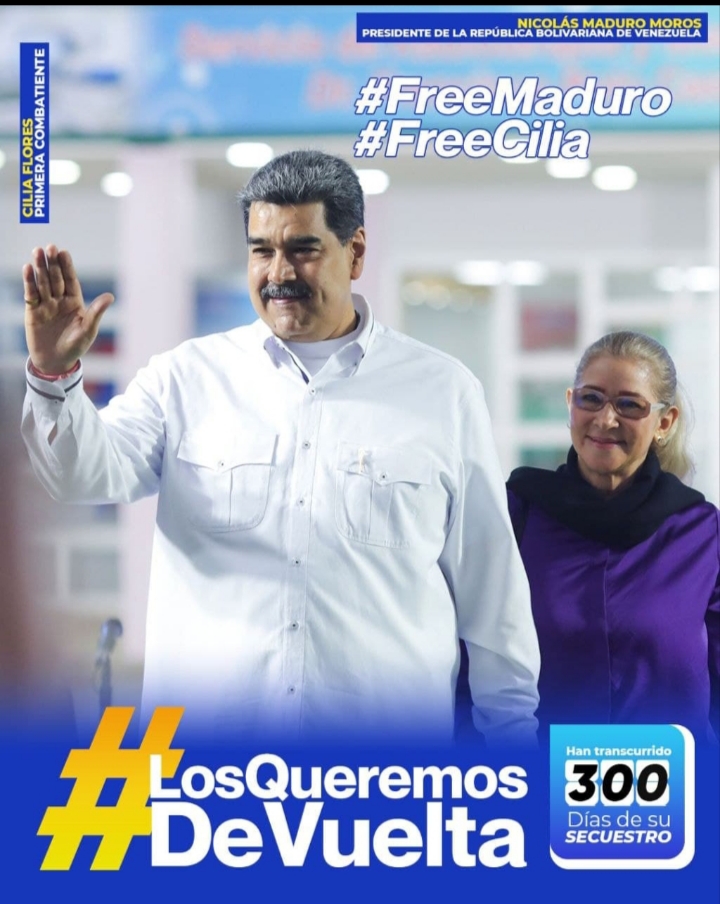
The Venezuela Solidarity Campaign in Nigeria (VSCN) has demanded the immediate and unconditional release of Venezuelan President Nicolás Maduro and his wife, Cilia Flores, whom it accused the United States government of detaining illegally.
The campaign, in a statement issued on Friday by its Coordinator, Dimeji Macaulay, said the continued detention of the Venezuelan leaders represented an assault on national sovereignty and international law.
It called on Washington to end what it described as political persecution of Venezuela, abandon its interference in the affairs of sovereign nations and respect the right of the Venezuelan people to determine their political future without external pressure.
The group also condemned the reported expansion of criminal charges against Maduro and Flores, alleging that the US administration was using its judicial system to exert political pressure on governments opposed to its interests.
“We reject the use of military power, economic coercion and politically motivated prosecutions as instruments for determining the political future of Venezuela,” the statement said.
The campaign further demanded an end to economic sanctions against Venezuela and the US economic blockade of Cuba, arguing that the measures imposed hardship on ordinary citizens, including workers, children and vulnerable communities.
It described the restrictions as collective punishment for the political and economic choices of the two countries, insisting that their populations should not suffer because of their governments’ preferred systems of social and economic organisation.
The VSCN expressed solidarity with Cuba, citing its achievements in education, healthcare, international solidarity and social development, and urged Washington to end what it called economic strangulation of the Caribbean nation.
Beyond Venezuela and Cuba, the campaign criticised the global capitalist system, arguing that the concentration of wealth in the hands of billionaires had worsened inequality while millions of people continued to face hunger, homelessness, inadequate healthcare and limited educational opportunities.
It cited the wealth accumulated by billionaires, including Elon Musk, as an example of what it described as an unequal economic order in which a small minority controlled resources generated through the collective labour of millions.
The group called on workers, peasants, students, trade unions, socialist organisations and progressive movements worldwide to unite in pursuit of what it described as a socialist system founded on equality, democracy, solidarity and collective ownership of productive resources.
On Western Sahara, the campaign reaffirmed its support for the Sahrawi people’s right to self-determination, rejecting any attempt to impose Morocco’s autonomy proposal as a substitute for a democratic decision on the territory’s political future.
It called for a free, fair and internationally supervised referendum that would allow the Sahrawi people to choose their future, including independence.
The group noted that Western Sahara remained on the United Nations list of Non-Self-Governing Territories and argued that its people should not be denied the right to determine their political status.
It maintained that self-determination should apply equally to the peoples of Palestine, Western Sahara and Venezuela, as well as other nations facing occupation, domination or foreign interference.
Venezuela Solidarity Campaign Demands Release of Maduro, Flores
Nigeria, Japan Move to Set Up Industrial Hub to Unlock Investment
…Abuja seeks Japanese capital, technology transfer as Tokyo promises faster visa processing
By: Michael Mike
Nigeria is seeking to establish a joint industrial and investment hub with Japan to attract foreign capital, accelerate technology transfer and position local businesses to tap into Japanese supply chains and the wider African market.
The proposal, put forward by the Minister of Foreign Affairs, Ambassador Bianca Odumegwu-Ojukwu, signals Nigeria’s push to turn 66 years of diplomatic relations with Japan into a stronger economic partnership driven by investment, industrialisation and job creation.
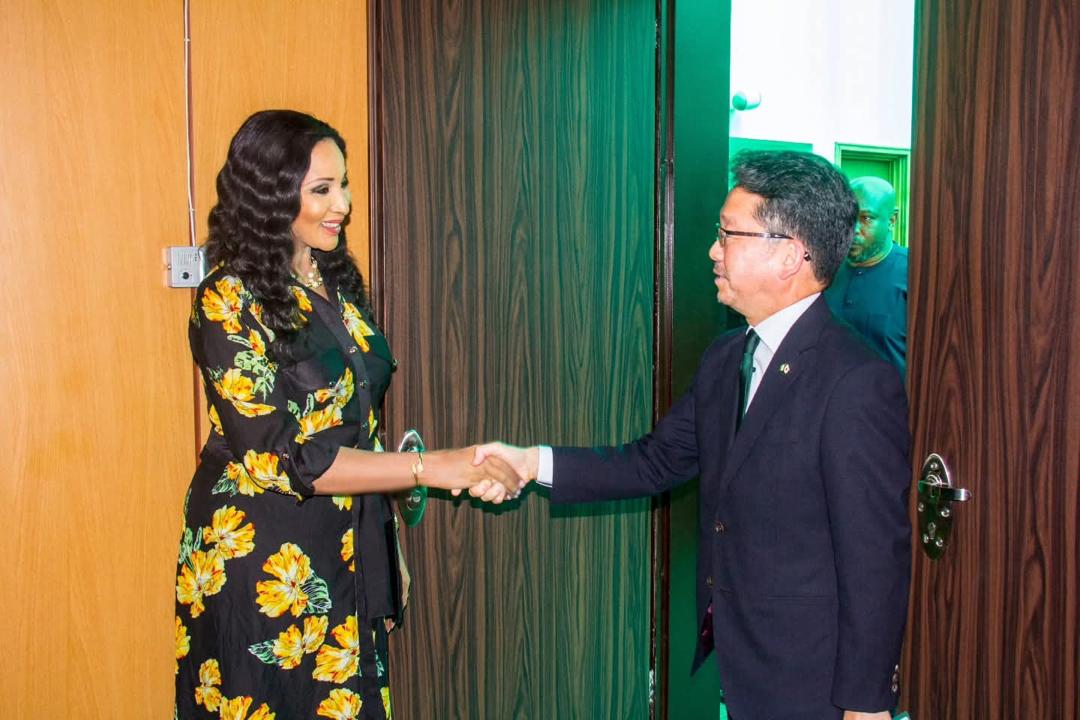
Odumegwu-Ojukwu made the proposal during a bilateral meeting with Japan’s Ambassador to Nigeria, Suzuki Hideo, urging Tokyo to work with Nigeria on a practical roadmap for the proposed Nigeria–Japan Industrial and Investment Hub.
The initiative is expected to facilitate joint ventures, connect investors with credible Nigerian businesses, promote skills development and encourage Japanese companies to establish stronger industrial links with Africa’s largest economy.
The minister stressed that existing bilateral agreements must translate into concrete investment commitments and measurable development outcomes, rather than remain diplomatic declarations.
“The outcomes of the Forum must be translated into concrete programmes, investment commitments and measurable development outcomes,” she said.
She urged both countries to implement the agreements reached at the 10th Nigeria–Japan Special Partnership Forum, held in Abuja on August 27, through practical programmes and regular consultations between their foreign ministries.
To strengthen private-sector participation, Odumegwu-Ojukwu called for more partnerships between Nigerian and Japanese companies through joint ventures, local content development, skills transfer and the integration of Nigerian businesses into Japanese supply chains.
She also sought greater engagement by the Japan External Trade Organization (JETRO) to link Japanese investors with Nigerian enterprises and public-sector partners.
Beyond manufacturing and trade, Nigeria is seeking Japanese investment in solid minerals, gas development, cleaner energy technologies and industrial decarbonisation, with the minister highlighting the strategic importance of resilient energy and critical-mineral supply chains.
The proposed investment push comes alongside Japan’s development cooperation in infrastructure, healthcare, agriculture, education and technical training through the Japan International Cooperation Agency (JICA).
Odumegwu-Ojukwu welcomed a $10 million JICA-supported initiative to strengthen Nigeria’s startup ecosystem through catalytic capital and institutional development, in partnership with the Nigeria Sovereign Investment Authority.
She also called for sustained Japanese support for peacebuilding, humanitarian assistance and stabilisation in Nigeria and West Africa, reaffirming Nigeria’s commitment to regional stability through the African Union and the Economic Community of West African States.
On mobility and business exchanges, the minister urged continued dialogue to resolve visa-related challenges affecting businesspeople, students, researchers, government officials and tourists.
Responding, Suzuki said Japan was desirous of deepening cooperation with Nigeria, which he described as a strategic African giant.
He also assured that visa-related issues would be handled expeditiously, an undertaking that could help facilitate business and people-to-people exchanges between the two countries.
Odumegwu-Ojukwu said the existing cordial relations between Nigeria and Japan offered an opportunity to build a more dynamic partnership anchored on investment, industrialisation, technology transfer and shared prosperity.
The renewed engagement comes as both countries seek to move beyond decades of diplomatic relations towards stronger commercial ties, with the proposed industrial hub emerging as a potential platform for converting bilateral goodwill into investments and economic opportunities.
Nigeria, Japan Move to Set Up Industrial Hub to Unlock Investment
Cuba Accuses US of Pressuring Nations Ahead of UN Vote on Blockade
By: Michael Mike
Cuba has accused the United States of mounting a campaign of diplomatic pressure against countries supporting calls for an end to its decades-long economic blockade, alleging that Washington is seeking to influence the outcome of an impending United Nations General Assembly vote.
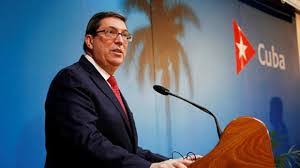
Cuba’s Permanent Representative to the United Nations, Ernesto Soberón Guzmán, made the allegation on Friday while condemning a US-organised event scheduled for October 19 at the UN headquarters in New York, which he described as an attempt to divert international attention from the debate on the blockade.
The Cuban diplomat alleged that the event, titled “Cuba Libre”, was part of a broader effort to weaken support for a Cuban-sponsored resolution calling for an end to the economic, commercial and financial restrictions imposed by Washington. The resolution is scheduled for consideration by the General Assembly on October 27 and 28.
Speaking to UN-accredited journalists, Soberón accused the US of using political and diplomatic pressure to influence the positions of member states ahead of the vote, including alleged direct appeals by Secretary of State Marco Rubio to heads of state and government.
He described the reported contacts as an attempt to interfere with the sovereign decisions of UN member states, insisting that countries should be allowed to determine their voting positions without intimidation.
The diplomat also questioned the format of the October 19 event, citing restrictions on press access, the non-disclosure of panellists’ identities and a prohibition on attendees expressing their views.
He argued that the arrangements suggested an attempt to control the narrative rather than facilitate an open exchange of perspectives on Cuba.
Soberón said the Cuban delegation had obtained copies of the invitation and concept note despite not being invited to the event.
He further questioned the use of UN premises for an activity he alleged was designed to advance Washington’s political objectives against another member state, citing administrative instruction ST/AI/2019/4 on the use of UN premises and the need for activities to comply with the principles of the UN Charter.
The Cuban representative also accused Washington of applying a double standard by organising the event while having outstanding contributions to the UN’s regular budget.
Beyond the diplomatic dispute, Soberón drew attention to the economic consequences of US sanctions, particularly measures affecting Cuba’s fuel supplies and international trade.
He recalled that US President Donald Trump signed an executive order on January 29, 2026, introducing measures targeting countries supplying oil to Cuba, which he blamed for a sharp decline in fuel shipments to the island.
According to figures he presented, Cuba had received only one oil tanker from Russia in the preceding 10 months, describing the shipment as humanitarian assistance.
He also claimed that approximately 7,000 containers destined for Cuba remained at international ports because shipping companies were reluctant to transport them over fears of possible US sanctions.
Soberón linked the difficulties to further measures announced by Washington on May 1, 2026, which he said expanded the threat of sanctions against companies and countries maintaining commercial relations with Cuba.
He criticised the US-organised event for failing to address the reported impact of the restrictions on the Cuban economy and the living conditions of its population.
The Cuban government has consistently opposed the US embargo, which has remained a major point of contention between the two countries and has repeatedly featured in General Assembly debates.
Soberón maintained that the October 19 event should not distract the international community from the substantive question before the General Assembly: whether the United States should end its economic, commercial and financial blockade of Cuba.
He urged UN member states to uphold the principles of the UN Charter, resist political coercion and exercise their voting rights independently.
The United States has historically defended its Cuba policy on grounds including concerns over the island’s political system and human rights record, while Havana argues that the sanctions violate its sovereignty and impose severe economic hardship on its people.
The forthcoming General Assembly debate is expected to renew international scrutiny of the longstanding dispute.
Reaffirming Havana’s position, Soberón said Cuba would not change its stance because of external pressure, adding: “Cuba is not a threat. The blockade is.”
Cuba Accuses US of Pressuring Nations Ahead of UN Vote on Blockade

2027: Opposition Politics Must Not Distort Nigeria’s Food Security Crisis

WYSN Demands Independent Probe into Attack on Sowore in Ekiti

Princess Simdiga Amna Dungus, Philip Ikodor Tie the Knot in Abuja

Roger Federer’s Shock as DNA Results Reveal Myla and Charlene Are Not His Biological Children

THE PLIGHT OF FARIDA

FAILED COUP IN BURKINA FASO: HOW TRAORÉ NARROWLY ESCAPED ASSASSINATION PLOT AMID FOREIGN INTERFERENCE CLAIMS
-
 News3 years ago
Roger Federer’s Shock as DNA Results Reveal Myla and Charlene Are Not His Biological Children
-
Opinions5 years ago
THE PLIGHT OF FARIDA
-
 News2 years ago
FAILED COUP IN BURKINA FASO: HOW TRAORÉ NARROWLY ESCAPED ASSASSINATION PLOT AMID FOREIGN INTERFERENCE CLAIMS
-
 Opinions5 years ago
POLICE CHARGE ROOMS, A MINTING PRESS
-

 News3 years ago
EYN: Rev. Billi, Distortion of History, and The Living Tamarind Tree
-

 ACADEMICS3 years ago
A History of Biu” (2015) and The Lingering Bura-Pabir Question (1)
-

 Columns3 years ago
Army University Biu: There is certain interest, but certainly not from Borno.
-

 Politics1 year ago
2027: Why Hon. Midala Balami Must Go, as Youths in Hawul and Asikira/Uba Federal Constituency Reject ₦500,000 as Sallah Gift
