
News
Chinese Businessman, 80-year old Grandma Arrested as NDLEA Seizes “Colos” in Moimoi Satchets

Chinese Businessman, 80-year old Grandma Arrested as NDLEA Seizes “Colos” in Moimoi Satchets
By: Michael Mike
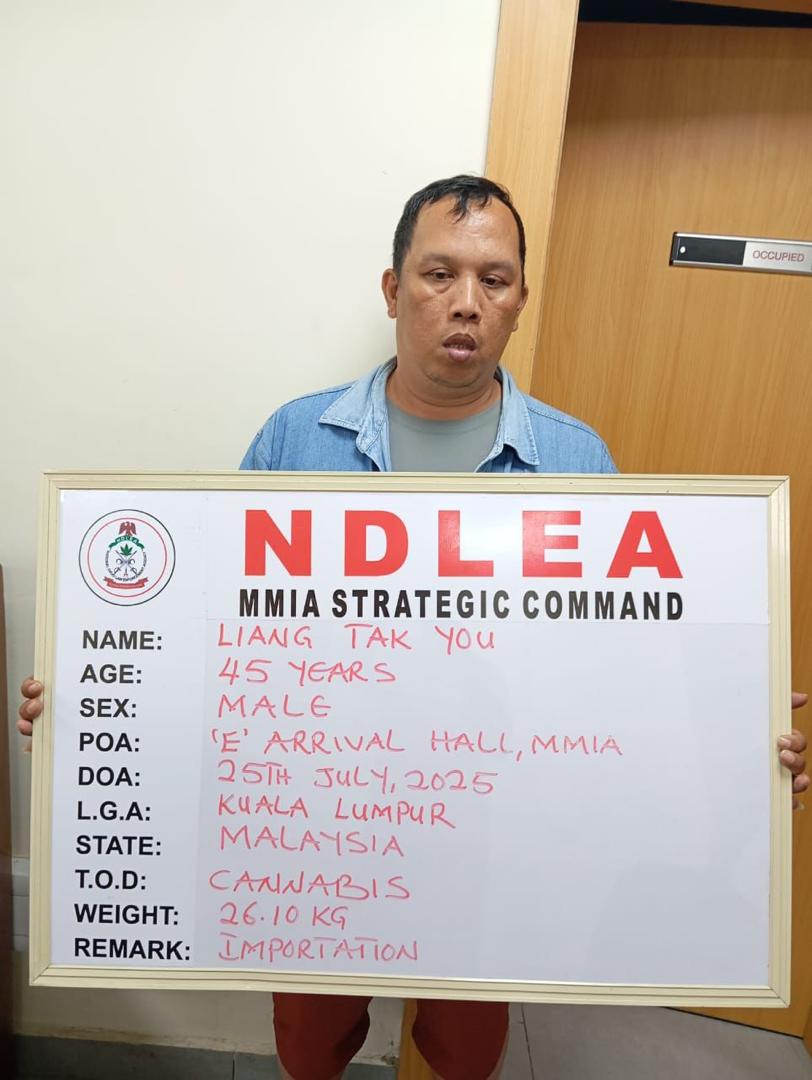
A Chinese businessman, Liang Tak You and an 80-year-old grandma, Mrs. Grace Ekpeme were among those arrested in the course of last week by operatives of the National Drug Law Enforcement Agency (NDLEA) in nationwide interdiction operations leading to the seizure of consignments of Colorado, a synthetic strain of cannabis hidden in bean pudding (moimoi) sachets and Canadian Loud, another strong strain of cannabis concealed in canned food items imported from Canada.
According to a statement on Sunday by the spokesman of the anti-narcotics agency, Femi Babafemi, Liang was arrested by NDLEA operatives at the arrival hall of the Murtala Muhammed International Airport, Lagos last Friday based on actionable intelligence.
He said the suspect, who arrived Nigeria from Bangkok via Dubai, UAE, on Emirates Airline flight, is a Chinese national, naturalised and based in Malaysia, but flew to Thailand where he picked two suitcases filled with 50 parcels of Loud weighing 26.1 kilogrammes before heading to Nigeria via UAE.
Babafemi said upon his arrival at the Lagos airport, NDLEA operatives who were tracking his movement from his port of departure allowed him to pass through necessary protocols before picking him up on his way out of the airport.
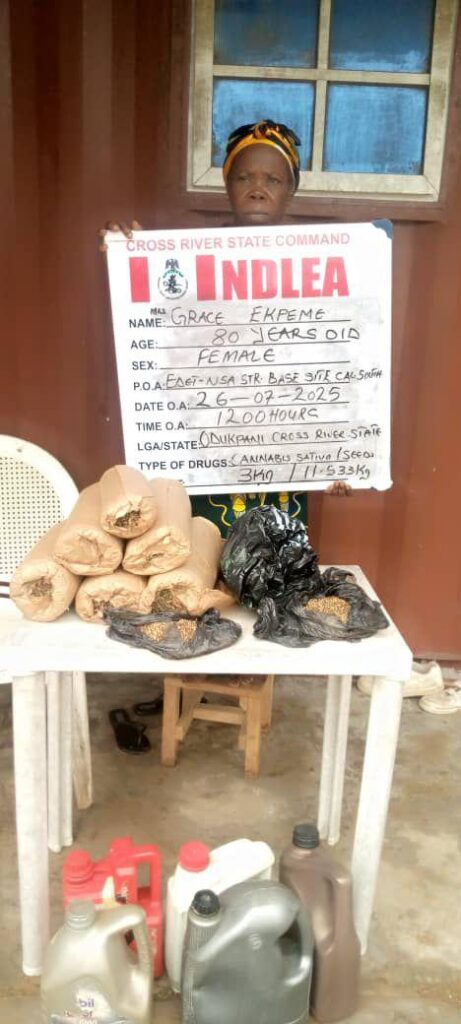
The octogenarian grandma, Mrs. Grace Ekpeme, according to Babafemi, was arrested at Edet-Nsa street, Base Site, Calabar South, Cross River state with over 3 kilogrammes skunk in the early hours of Saturday following intelligence on her drug dealing activities.
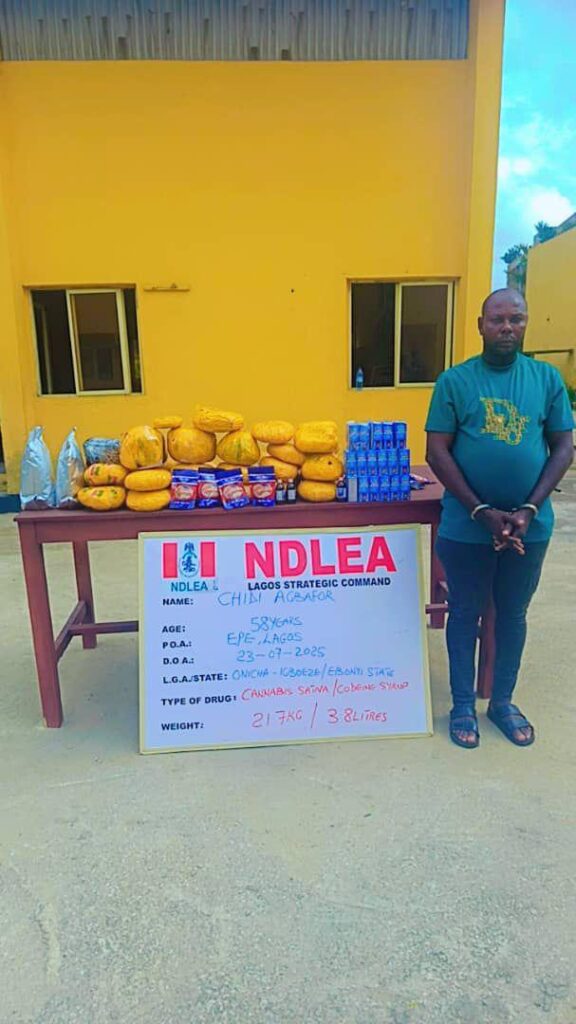
He said in Lagos, NDLEA operatives last Wednesday intercepted a suspect Chidi Agbafo along Epe – Ajah expressway while taking consignments of 21.7 kilogrammes Colorado, some of which were packaged in moimoi cooking sachets and 3.8 litres of codeine based syrup in a commercial bus to deliver in Warri and Oghara, Delta state.
The spokesman said at the Apapa seaport in Lagos, a total of 101 kilogrammes Canadian Loud factory packed in 202 tins of imported food item labelled ‘Bean Salad Mix’ and concealed in two Toyota Sienna buses in a container that came from Canada, were recovered, adding that the discovery was made during a joint examination of the container by NDLEA officers, men of Customs Service and other security agencies last Friday.
He said no fewer than 71,000 pills of tramadol, diazepam and exol-5 were recovered from Usman Musa by NDLEA operatives on patrol along Abuja- Kaduna highway last Wednesday when the suspect was travelling with the consignment of opioids in a commercial bus going to Kano.
In Borno, a 30-year-old lady Binta Usman was last Wednesday arrested by NDLEA officers who recovered 30.1 kilogrammes skunk from her house at Muna Moforo area of Maiduguri, with a follow up operation leading to the arrest of her accomplice Bala Abdullahi in the same area of the Borno state capital on Friday.
Babafemi said three brothers: Nanna Ozirinye, Chizom Ozirinye and Maxwell Ozirinye were on Saturday arrested when NDLEA operatives raided a cannabis plantation at bending corner forest, Idoani, Ose local council area of Ondo State where they destroyed 2,500 kilogrammes of skunk on an hectare of land and recovered already processed 121.4 kilogrammes of same psychoactive substance.
In Edo state, NDLEA officers last Wednesday raided the Asakpa community in Benin city, where they arrested a 26-year-old lady Bright Okon and recovered various quantities of Colorado, Loud, Arizona and skunk, all strains of cannabis as well as Methamphetamine from her.
He said while a total of 105.4 kilogrammes skunk was recovered by NDLEA operatives from an abandoned Honda car marked ABC 204 KM in Keffi, Nasarawa state, their counterparts in Niger state last Monday arrested a suspect Bashir Abdullahi with 6,400 pills of tramadol 225mg at Kasuwan Gwari area of Minna, even as a notorious drug dealer Jamiu Omolaja was taken into custody and 113 kilogrammes skunk retrieved from his enclave in Ifo, Ogun state last Thursday after a violent resistance and attack on NDLEA operatives by members of his gang.
Babafemi said a total of 10,910 capsules of tramadol were seized from a suspect Adamu Adamu (a.k.a Dankyado) by NDLEA officers on patrol along Gombe-Bajoga road, Gombe state on Saturday, while operatives in Kogi state last Thursday intercepted a consignment of skunk concealed inside garri, dried scent leaves, and other food items along Okene-Lokoja highway.
He disclosed that a follow-up operation in Abuja led to the arrest of 27-year-old Kindness Bala who was planning to travel to Katsina state with the cargo and later to Qatar.
Similarly, operatives in Kogi on Saturday recovered 23,600 pills of tramadol, 300 ampoules of pentazocine injection and 700 grammes of skunk from a truck at a motor park in Ayingba area of the state.
Babafemi said the War Against Drug Abuse (WADA) social advocacy activities by NDLEA Commands equally continued across the country in the past week.
Meanwhile, the Chairman/Chief Executive Officer of NDLEA, Brig. Gen. Buba Marwa (Rtd), while commending the officers and men of MMIA, Apapa, Lagos, Cross River, Edo, Ondo, Nasarawa, Borno, Niger, Ogun, Gombe, Kaduna and Kogi commands of the agency for the arrests and seizures of the past week, praised their counterparts in all the commands across the country for pursuing a fair balance between their drug supply reduction and drug demand reduction efforts.
Chinese Businessman, 80-year old Grandma Arrested as NDLEA Seizes “Colos” in Moimoi Satchets


Troops Rescue Farmer Shot by Suspected Armed Herders in Plateau, Recover Abandoned Cattle
By Zagazola Makama
Troops of Sector 3, Operation Enduring Peace (OPEP), have rescued a farmer who was shot by suspected armed herders during an attack in Bassa Local Government Area of Plateau State.
Sources told Zagazola Makama that the incident occurred at about 4:20 p.m. on June 29 around Jebbu Miango community, where the assailants attacked a farmer identified as Mr. Lambat.
The sources said troops swiftly responded to a distress call and engaged the attackers, forcing them to flee the area before they could inflict further harm.
During the intervention, the troops rescued the victim, who had sustained gunshot wounds, and evacuated him to ENOS Hospital in Miango for urgent medical treatment.
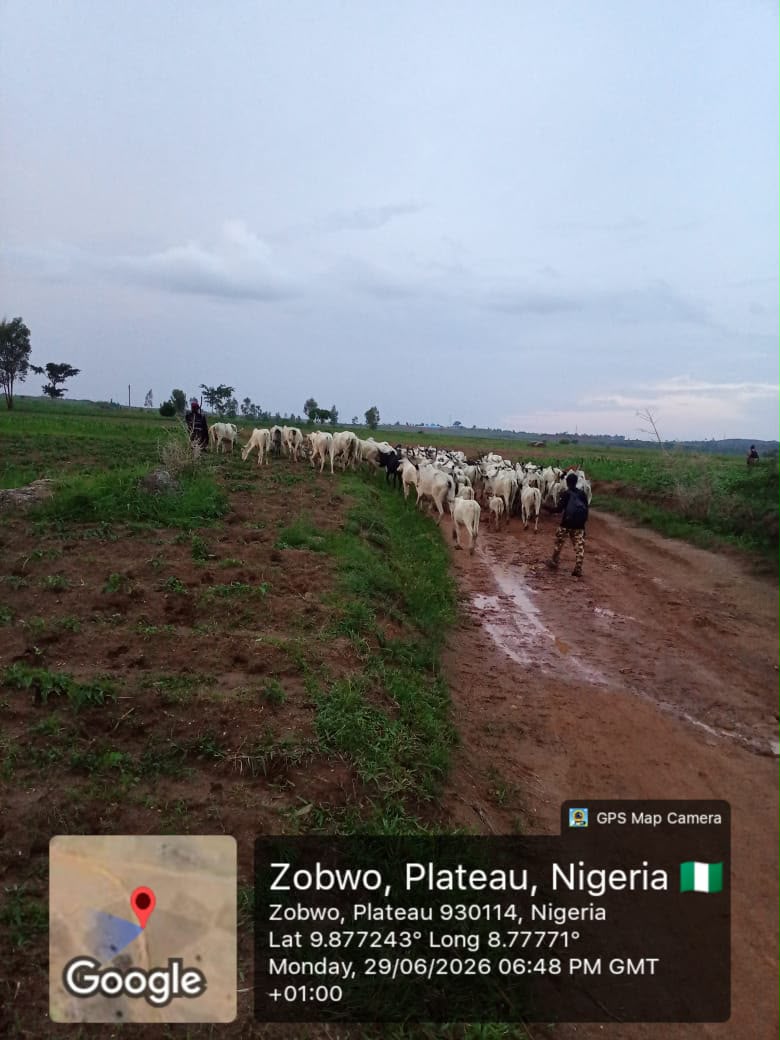
The troops also recovered a herd of cattle abandoned by the fleeing suspects. The animals were moved to a secure location pending identification of their rightful owners and further necessary action by the relevant authorities.
Security sources said efforts are ongoing to track down the fleeing suspects and prevent further attacks in the area.
Troops Rescue Farmer Shot by Suspected Armed Herders in Plateau, Recover Abandoned Cattle
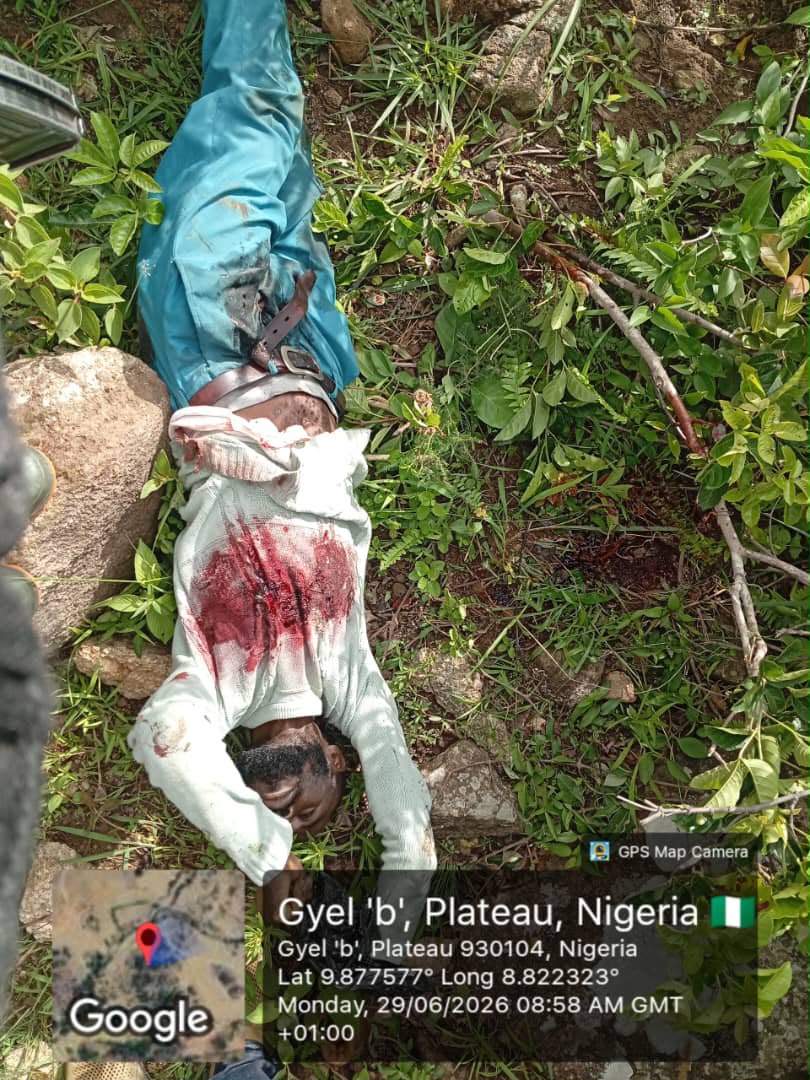
Missing Man Found Dead at Illegal Mining Site in Plateau
By Zagazola Makama
The corpse of a man earlier reported missing has been recovered at an illegal mining site in Jos South Local Government Area of Plateau State.
Intelligence sources told Zagazola Makama that troops of Sector 3, Operation Enduring Peace (OPEP), responded to a report at about 7:30 a.m. on June 29 that one Mr. Jerry had gone missing from the Rantya area.
The sources said the troops, in collaboration with members of the Vigilante Group of Nigeria (VGN), launched a search-and-rescue operation in the surrounding bushes.
During the operation, the search team discovered the victim’s corpse at a mining site. The body bore gunshot wounds as well as machete cuts.
Preliminary investigations indicated that the deceased had left home for illegal mining activities but failed to return, prompting concerns from relatives and the subsequent search operation.
Security sources said investigations are ongoing to determine the circumstances surrounding the killing and identify those responsible.
Missing Man Found Dead at Illegal Mining Site in Plateau

Military Delivers Decisive Air Strike on Bandit Enclave Along Niger–Kaduna–Zamfara Border
By: Zagazola Makama
The Nigerian military, in continuation of its sustained air campaign against armed bandits and other criminal elements threatening national security, has recorded another significant operational success with a precision air strike targeting a major gathering of bandits at Dogon Dawa, along the strategic Niger–Kaduna–Zamfara border.
Credible operational sources confirmed that the strike was executed after intelligence indicated that a large number of armed bandits had converged at the location to coordinate and plan a series of attacks against nearby communities.
The precision engagement effectively struck the gathering, resulting in the neutralisation of a substantial number of the terrorists. Intelligence obtained following the operation also indicated that more than hundreds of motorcycles, believed to have been assembled for the planned offensive and mobility of the criminal elements, were present at the target area at the time of the strike.
Battle Damage Assessment (BDA) and follow-up intelligence further revealed that several surviving terrorists, many of them wounded, fled in disarray towards the forests between Shadadi and Ma’undu through the Mangwaro axis, abandoning their coordinated plans as the devastating effects of the air strike disrupted their operations.
The successful mission illustrated the effectiveness in employing intelligence-driven precision air power to deny criminal groups freedom of movement, disrupt their command structures, and degrade their operational capabilities before attacks can be launched against innocent civilians.
This operation also reflects the seamless synergy between intelligence agencies and the Air Component in identifying, tracking, and engaging high-value terrorist and bandit targets with remarkable precision while sustaining pressure on criminal networks across the North-West and North-Central theatres.
Military Delivers Decisive Air Strike on Bandit Enclave Along Niger–Kaduna–Zamfara Border

Troops Rescue Farmer Shot by Suspected Armed Herders in Plateau, Recover Abandoned Cattle

Missing Man Found Dead at Illegal Mining Site in Plateau

Military Delivers Decisive Air Strike on Bandit Enclave Along Niger–Kaduna–Zamfara Border

Roger Federer’s Shock as DNA Results Reveal Myla and Charlene Are Not His Biological Children

THE PLIGHT OF FARIDA

FAILED COUP IN BURKINA FASO: HOW TRAORÉ NARROWLY ESCAPED ASSASSINATION PLOT AMID FOREIGN INTERFERENCE CLAIMS
-
 News2 years ago
Roger Federer’s Shock as DNA Results Reveal Myla and Charlene Are Not His Biological Children
-
Opinions4 years ago
THE PLIGHT OF FARIDA
-
 News1 year ago
FAILED COUP IN BURKINA FASO: HOW TRAORÉ NARROWLY ESCAPED ASSASSINATION PLOT AMID FOREIGN INTERFERENCE CLAIMS
-

 News2 years ago
EYN: Rev. Billi, Distortion of History, and The Living Tamarind Tree
-
 Opinions5 years ago
POLICE CHARGE ROOMS, A MINTING PRESS
-

 ACADEMICS2 years ago
A History of Biu” (2015) and The Lingering Bura-Pabir Question (1)
-

 Columns2 years ago
Army University Biu: There is certain interest, but certainly not from Borno.
-

 Politics1 year ago
2027: Why Hon. Midala Balami Must Go, as Youths in Hawul and Asikira/Uba Federal Constituency Reject ₦500,000 as Sallah Gift
