
News
Environment Minister: Climate Governance Has Be Strengthened in Nigeria

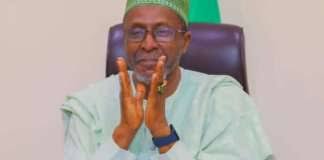
Environment Minister: Climate Governance Has Be Strengthened in Nigeria
By: Michael Mike
The Minister of Environment, Balarabe Lawal has commended the significant achievements recorded under the Nigeria Climate Change Response Programme (NCCRP), describing it as a landmark initiative that has strengthened the nation’s climate governance, improved awareness, and built resilience across various sectors.
Speaking at the Final Project Seminar of the NCCRP held in Abuja, and themed “Climate Change Governance: The Importance, Where We Are, and Way Forward,” Lawal welcomed stakeholders, partners, and participants to what he described as a celebration of Nigeria’s collective progress in the fight against climate change.
Lawal noted that since the launch of the Programme in 2020, the NCCRP has delivered notable outcomes that have positively impacted both national and subnational levels.
He said these include the establishment of a robust Measurement, Reporting and Verification (MRV) System and the development of a Climate Change Education Curriculum designed to advance solid waste management practices and enhance climate communication across the country.
The Minister explained that the project has built strong collaboration among Ministries, Departments, and Agencies (MDAs), improved technical capacity, and promoted community participation in environmental governance.
Lawal, while highlighting the achievements so far, said the Climate Change Education Curriculum for basic and secondary schools—now under review by the Federal Ministry of Education, represents a major step toward institutionalizing climate literacy. He also pointed out that the Programme trained media practitioners in climate reporting, which led to the creation of the Nigeria Journalists for Climate Action Network (NIJOCAN) and numerous sensitization programmes run in partnership with media houses.
According to him, the NCCRP also made significant progress in Greenhouse Gas (GHG) emission measurements in the waste sector, conducted waste assessments in Kano, Ogun, Abia, and Bauchi States, and carried out public awareness campaigns and trainings that further deepened citizens’ understanding of climate issues.
The Minister while acknowledging challenges encountered during the implementation, noted that through proactive planning, capacity-building, and collaboration, the project remained on track. He reaffirmed the Federal Government’s commitment to providing policy frameworks, technical guidance, and oversight to sustain the programme’s impact and expand its reach across regions.
He commended the Technical Assistance Team, staff of the Federal Ministry of Environment, particularly the Department of Climate Change and the National Council on Climate Change, for their dedication. He equally appreciated the European Union (EU) and other partners for their technical expertise and steadfast support for Nigeria’s environmental development agenda.
He however urged participants to leverage the lessons and experiences shared at the seminar to shape future strategies and strengthen partnerships toward achieving transformative environmental sustainability.
He said: “Together, we can build resilient communities and deliver sustainable benefits for all Nigerians,” while extending his best wishes for a fruitful and impactful seminar.
On his part, the European Union head of delegation to Nigeria and ECOWAS, Amb. Gautier Mignot reaffirmed the steadfast commitment of EU to supporting Nigeria’s climate action agenda, describing the Nigeria Climate Change Response Programme,NCCRP, as a landmark model of effective international partnership for sustainable development.
He commended Nigeria’s leadership in advancing climate governance and environmental sustainability.
The EU representative underscored the urgent and tangible realities of climate change, emphasizing that it is not a distant or abstract challenge but one that directly impacts the lives of millions.
“We see it in the farmer losing his crops to floods, in families enduring stifling heatwaves in our cities, and in communities facing droughts that threaten their food and water security,” he said.
“These are not just statistics,they are human stories shared by millions of Nigerians and Europeans alike, “he added.
He noted that as Africa’s largest economy and most populous nation, Nigeria’s leadership in climate action resonates far beyond its borders, serving as an inspiration for the continent and contributing meaningfully to the global climate response.
He described the NCCRP as a symbol of what strong partnerships can achieve, adding that the long-standing cooperation between the EU and Nigeria is built on trust, shared values, and a common vision for sustainable development.
This collaboration, he noted, spans critical sectors such as renewable energy, sustainable agriculture, and good governance, all of which are interconnected and essential to building a greener, more resilient Nigeria.
“The NCCRP stands as a flagship initiative of this partnership, demonstrating that real progress is not just possible—it is happening,” the representative said.
Highlighting the programme’s impact, the EU listed several accomplishments including strengthening of Monitoring, Reporting, and Verification (MRV) Systems, enhancing credibility and positioning Nigeria to attract international investors.
Environment Minister: Climate Governance Has Be Strengthened in Nigeria


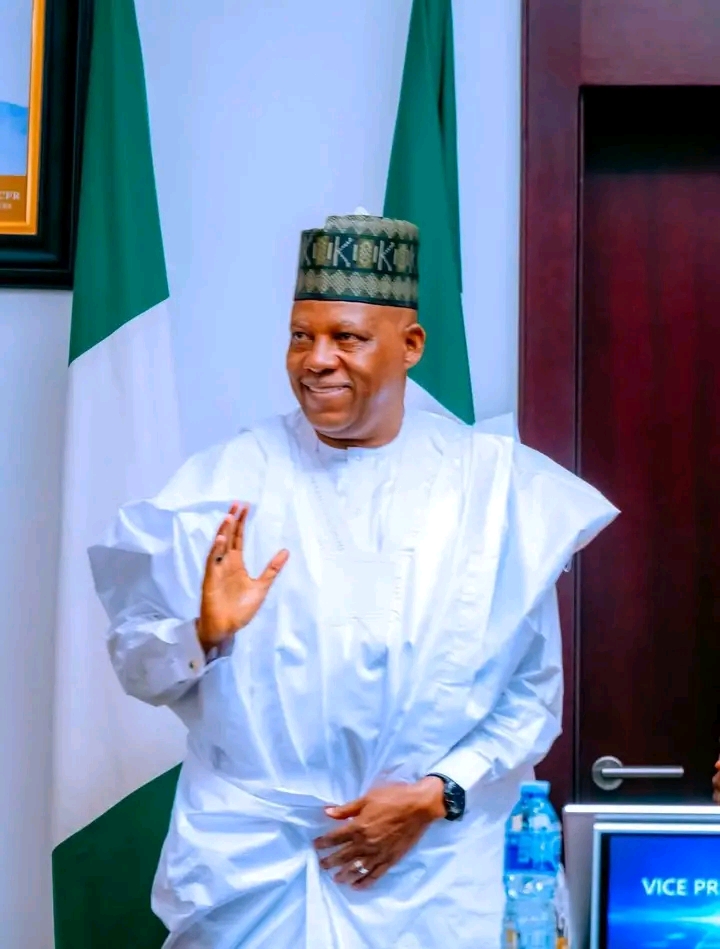
The late Emir of Ngazargamu is a pillar of peace and unity – VP Shettima.
By: Yahaya Wakili
The Vice President of the Federal Republic of Nigeria, Senator Kashim Shettima GCON, has said the late Emir of Ngazargamu, Alhaji Tijjani Ahmed Ibn-Saleh, “was a symbol of unity, peace and progress” even as he urged Nigerians to sustain the unity that exists among them for the progress of the nation.
The Vice President started this in Damaturu, the Yobe State capital, while attending the funeral of the late Emir of Ngazargamu, HRH Alhaji Tijjani Ahmed Ibn Saleh, who passed away in Cairo, Egypt, after a prolonged illness.
He noted that citizens, especially the youth, must embrace and continue to seek more education as he preached.
“He led a good life; he was an advocate of education as a tool for social enhancement. He lived well and died honourably. May Almighty Allah grant his soul eternal rest” and also prayed for divine consolation for the family of the deceased and the repose of his soul.
The vice president later extended the condolences of President Bola Ahmed Tinubu and the federal government to the immediate family of the deceased.
Senator Kashim had earlier attended the Juma’at congregational prayer at the Yobe Islamic Centre, Damaturu, where he was joined by other Muslims faithful to observe the funeral rites for the late emir.
Earlier in his sermon during the Juma’at prayer, the Imam of Yobe Islamic Centre, Ustaz Hudu Mohammed, enjoined Nigerians to always have the fear of God in them, added that since riches come from God, they must always rely on the Almighty for success in life, and also prayed for peace and progress in Nigeria, urging citizens to always pray for their leaders.
Dignitaries who attended the funeral included Governor Mai Mala Buni CON of Yobe State; former Senate President, Senator Ahmed Ibrahim Lawan GCON; former vice president, Babagana Kingibe; and Senator Danjuma Goje.
Others include Senator Kaka Shehu, the Shehu of Borno; HRH Abubakar Ibn Umar Garbai El-Kanemi; the Emir of Fika, Alhaji Muhammadu Abali Ibn Muhammadu Idrissa; and the Emir of Tikau, Alhaji Abubakar Muhammadu Ibn Grema II, among others.
The late Emir of Ngazargamu is a pillar of peace and unity – VP Shettima.
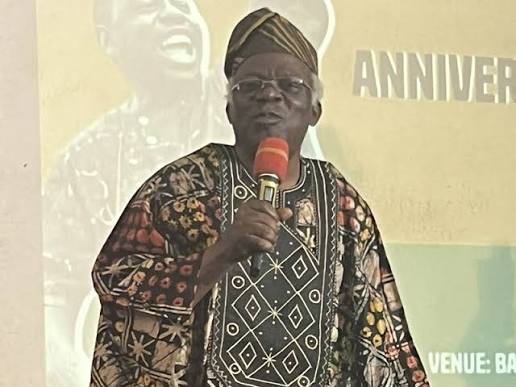
NIGERIA HAS CIVIL RULE, NOT DEMOCRACY’ — FALANA
By: Michael Mike
Rights activist rejects military nostalgia, says 27 years of civilian government have failed to deliver democratic dividends
Foremost human rights lawyer, Femi Falana, has delivered a scathing verdict on Nigeria’s democratic journey, declaring that despite 27 years of uninterrupted civilian administration, the country is yet to achieve genuine democratic governance.
Falana said what exists in Nigeria today is largely civil rule rather than democracy, arguing that elections alone do not constitute democratic governance when millions of citizens remain trapped in poverty, insecurity, injustice and institutional failure.
Speaking virtually at the Second Annual General Meeting of Amnesty International Nigeria in Abuja on Saturday, the Senior Advocate of Nigeria warned that public confidence in constitutional rule could continue to erode unless democratic institutions begin to deliver tangible benefits to ordinary Nigerians.
While dismissing growing calls in some quarters for a return to military rule, Falana insisted that military governments could never be a better alternative. However, he maintained that Nigerians must confront the uncomfortable reality that the democratic ideals many fought and died for remain largely unrealised.
“Military rule is not better than democracy regardless of the frustrations people may have. But we must also be honest enough to admit that what we currently have is largely civil rule and not the full expression of democracy that Nigerians fought and sacrificed for,” he said.
The outspoken activist argued that the true test of democracy is not the conduct of periodic elections but the capacity of government institutions to guarantee justice, accountability, human rights, security, quality education, healthcare and economic opportunities for citizens.
He lamented that constitutional promises have remained largely theoretical for millions of Nigerians, widening the gulf between democratic expectations and the realities of daily life.
Falana’s remarks come amid increasing public frustration over economic hardship, insecurity, governance challenges and declining trust in public institutions, despite more than two decades of uninterrupted civilian rule.
He warned that democracy risks losing legitimacy in the eyes of citizens if elected governments fail to translate constitutional guarantees into meaningful improvements in people’s lives.
According to him, unless leaders prioritise institutional reforms, accountability and people-centred governance, Nigeria may continue to operate a civilian system devoid of the substantive democratic values that define a truly democratic state.
Earlier in his remarks, the Board Chair, Amnesty International Nigeria, Auwal Musa Rafsanjani noted that the past year has been one of bold action and significant milestones.
He said: “Our investigation into the Tiger Base anti-kidnapping police unit in Owerri, Imo State, stands as one of our most impactful interventions.”
He noted that: “The report uncovered entrenched human rights violations, including prolonged arbitrary detention, torture, extortion and enforced disappearances.”
Rafsanjani said: “We documented at least 200 deaths and disappearances between 2021 and 2025.”
NIGERIA HAS CIVIL RULE, NOT DEMOCRACY’ — FALANA
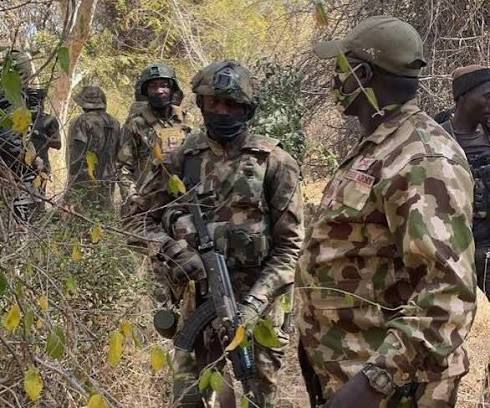
Troops Foil ISWAP/JAS Attack on Military Position in Borno, Recover UXOs
By: Zagazola Makama
Troops of 3 Battalion (Mechanised)/24 Task Force Brigade have successfully repelled an attack by suspected Islamic State West Africa Province (ISWAP) terrorists in Ngala Local Government Area of Borno State.
Security sources said the attack occurred at about 2:44 a.m. on June 12 when terrorists launched coordinated assaults on the troops’ location from Wurge, Manawaji and Kinuba.
According to the sources, the troops engaged the attackers with superior firepower, supported by reinforcements from battalion headquarters, as well as mortar and artillery fire support, forcing the insurgents to withdraw.
Following the encounter, the fleeing terrorists retreating and scampered into the bushes.
At about 5:45 a.m., troops and auxiliary forces conducted a follow-up exploitation along the withdrawal route towards Wurge, during which three RPG-7 high-explosive unexploded ordnances (UXOs) and two torchlights were recovered.
The sources further disclosed that a main battle tank developed technical faults during the aftermath of the engagement, while one soldier sustained injuries from fragments of an RPG blast.
The wounded personnel was evacuated to the 3 Battalion Regimental Aid Post (RAP) for medical treatment.
Military authorities said clearance and follow-up operations were ongoing in the area to consolidate gains and prevent further terrorist regrouping.
They reaffirmed commitment to sustaining aggressive counter-terrorism operations across the North-East theatre.
Troops Foil ISWAP/JAS Attack on Military Position in Borno, Recover UXOs

The late Emir of Ngazargamu is a pillar of peace and unity – VP Shettima.

NIGERIA HAS CIVIL RULE, NOT DEMOCRACY’ — FALANA

Africa and France: From Colonial Shadows to a Partnership of Equals

Roger Federer’s Shock as DNA Results Reveal Myla and Charlene Are Not His Biological Children

THE PLIGHT OF FARIDA

FAILED COUP IN BURKINA FASO: HOW TRAORÉ NARROWLY ESCAPED ASSASSINATION PLOT AMID FOREIGN INTERFERENCE CLAIMS
-
 News2 years ago
Roger Federer’s Shock as DNA Results Reveal Myla and Charlene Are Not His Biological Children
-
Opinions4 years ago
THE PLIGHT OF FARIDA
-
 News1 year ago
FAILED COUP IN BURKINA FASO: HOW TRAORÉ NARROWLY ESCAPED ASSASSINATION PLOT AMID FOREIGN INTERFERENCE CLAIMS
-

 News2 years ago
EYN: Rev. Billi, Distortion of History, and The Living Tamarind Tree
-
 Opinions4 years ago
POLICE CHARGE ROOMS, A MINTING PRESS
-

 ACADEMICS2 years ago
A History of Biu” (2015) and The Lingering Bura-Pabir Question (1)
-

 Columns2 years ago
Army University Biu: There is certain interest, but certainly not from Borno.
-

 Politics1 year ago
2027: Why Hon. Midala Balami Must Go, as Youths in Hawul and Asikira/Uba Federal Constituency Reject ₦500,000 as Sallah Gift
