
Uncategorized
UNIC, UNESCO Lead Charge Against Digital Misinformation and Hate Speech

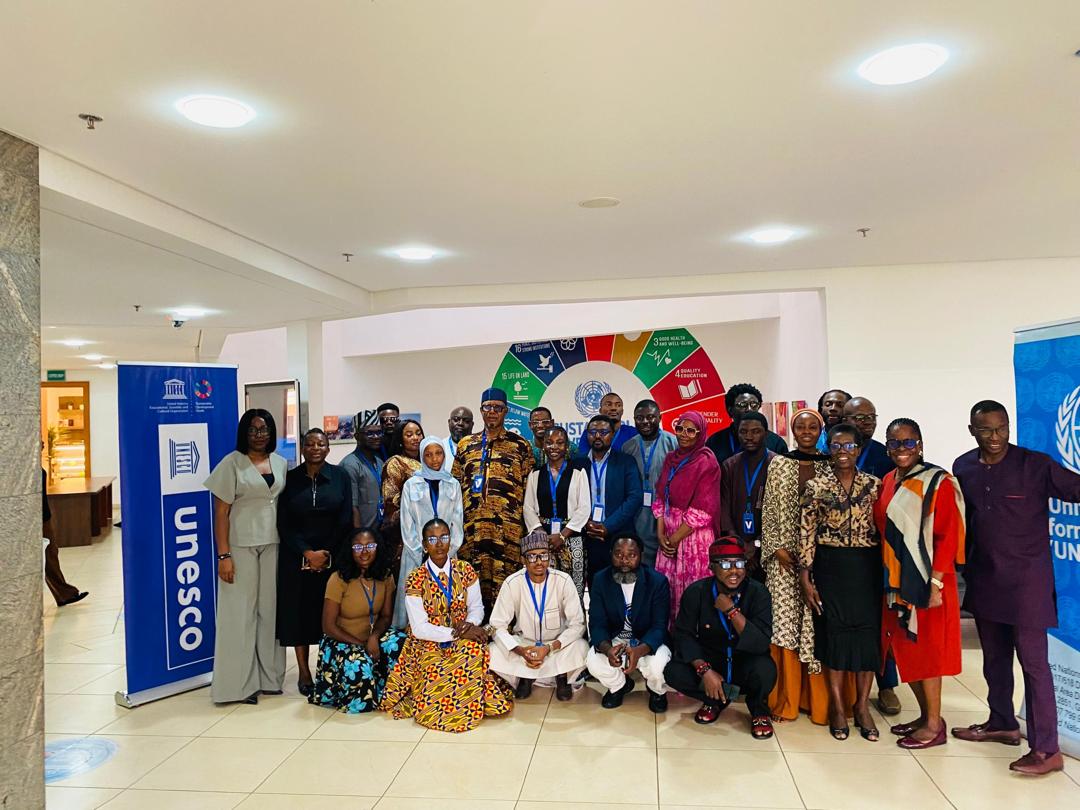
UNIC, UNESCO Lead Charge Against Digital Misinformation and Hate Speech
By: Michael Mike
The United Nations Information Centre (UNIC) and the United Nations Educational, Scientific and Cultural Organisation (UNESCO) have reached a collaboration to combat misinformation, disinformation, and hate speech in the digital space by training content creators on Media and Information Literacy (MIL).
At a capacity-building workshop for content creators on Media and Information Literacy held at the United Nations House in Abuja, the two agencies emphasized the urgent need to promote truth, integrity, and responsible digital engagement in an era dominated by fast-spreading falsehoods.
Speaking on behalf of UNESCO Head of Office Abuja, Jean-Paul Ngome Abiaga, Yachat Nuhu emphasized that advancements in digital technologies have transformed how people communicate, interact, and share information.
She noted that platforms like YouTube, Facebook, Twitter, WhatsApp, Instagram, and Telegram have created vast opportunities for communication and expression across borders.
She added that: “Today, advancement in digital technologies has widened the space we now engage in. We’re talking about YouTube, Facebook, Twitter, WhatsApp, Instagram, and Telegram. It has widened information and communication reach. The digital world has connected us in ways that were once unimaginable, giving every individual the power to create, share, and influence conversations on a global scale.”
While celebrating the expansion of digital communication, Yachat also cautioned about the dangers that come with it. She drew attention to the harmful effects of misinformation, hate speech, and online harassment, stressing that these issues have real consequences in society.
“It has also become a space where words and images can wound and misinformation can divide. We all have witnessed the rise of hate speech and gender-based harassment and misinformation spreading faster than truth. This online toxicity has spilled into our communities, fuelling conflict and mistrust. When left unchecked, it erodes social cohesion and weakens the very fabric of our collective humanity.”
Yachat pointed to the harmful role misinformation plays during election periods in Nigeria, particularly when it is used to exploit ethnic and religious differences. She warned that such disinformation undermines democracy, trust, and peace.
“In Nigeria, election-related misinformation has spread divisive messages along ethnic and religious lines, contributing to mistrust and in some cases, violence. When lies go unchecked, they polarise societies, deepen division, and undermine trust in democracy.”
According to Yachat, UNESCO’s commitment to media and information literacy (MIL) is about empowering citizens to think critically and engage ethically online. She stressed that MIL is not merely a set of technical skills but a value-driven approach to responsible communication.
“Media and information literacy is not about skills, it’s about values. It teaches us how to search, to assess, to evaluate information, and how to contribute responsibly in the digital space. It is a vital tool for countering hate speech, cyberbullying, and all forms of online and offline violence.”
Yachat made a powerful call for collective responsibility among governments, tech companies, civil society, and individuals to ensure that the digital world becomes a space of peace, truth, and respect.
She added that: “This intervention is more than a project, it is a movement. A movement to protect human dignity online, a movement to safeguard democracy, and to make the internet a true force for good. Together, government, tech companies, civil societies, and citizens, we can build a digital world that reflects our best values, not our worst fears. The competencies we acquire through this training will translate into concrete actions to strengthen our resolve to build a peaceful and just digital world.”
The Minister of Information and National Orientation, Mohammed Idris, who was represented by Henshaw Ogbubike, Director of Public Communication and National Orientation, underscored the immense influence of information in today’s digital society.
He noted that information now shapes people’s opinions, drives national conversations, and influences public behaviour. However, he cautioned that this power must be used with great responsibility and integrity to safeguard trust and national development.
He said: “In today’s fast-paced digital world, the power of information is immense. It shapes opinions, influences behaviours, and drives national conversations. But as we know, this power must be used responsibly with integrity.
“When information is manipulated or used carelessly, the consequences are far-reaching. The spread of misinformation and disinformation threatens not only public trust but also our national development and unity. That is why we must all work together to ensure that the information we create and share contributes to progress, not division.”
He stressed that the workshop aimed to empower content creators with essential skills such as critical thinking, ethical storytelling, and responsible engagement. He said these abilities are necessary for strengthening public discourse and fostering an informed, balanced, and resilient society in the digital era.
He said: “By helping content creators build skills in critical thinking, ethical storytelling, and responsible media engagement, we are investing in a more informed and resilient society. The kind of content we create today determines the kind of society we will live in tomorrow. Therefore, every creator must see themselves as a partner in national development one who uses their influence to enlighten, educate, and uplift rather than mislead.”
He acknowledged the strategic partnership between the Federal Ministry of Information and National Orientation and UNESCO, noting that this collaboration is aimed at promoting media literacy and empowering citizens especially young people to engage in the digital information space with responsibility and confidence.
He added that: “The Foundation for Information and National Orientation is happy to partner with UNESCO in promoting media literacy and ensuring that our citizens, especially the youth, can navigate the information space with confidence and integrity.
“This partnership reflects our shared commitment to building a society where information is used as a tool for empowerment, not manipulation, and where every Nigerian can participate meaningfully in shaping narratives that strengthen our democracy and development.”
He announced the creation of the UNESCO International Media and Information Literacy Institute (IMILI) in Abuja, hosted by the National Open University of Nigeria (NOUN). He explained that the Institute’s designation as a UNESCO Category 2 Centre would enable Nigeria to attract global expertise, promote international collaboration, and standardize training in media and information literacy.
He said: “The Federal Ministry of Information and National Orientation is pioneering the first UNESCO International Media and Information Literacy Institute in Abuja. Domiciled in the National Open University of Nigeria, a UNESCO Category 2 status is granted to us. This status will provide the needed international standardisation, recognition, and attraction of global expertise in MIL, strengthening IMILI as a global observatory of MIL policies and programmes. It will create opportunities for citizens, youth, journalists, and students to acquire the skills needed to safely and effectively navigate the ever-changing information ecosystem.”
He called on content creators to recognize their vital role in nation-building. He reminded them that their messages reach millions and have the power to inspire, unite, or divide. He urged them to use this influence to educate, promote truth, and foster national unity while committing to a media environment rooted in creativity and integrity.
“As content creators, you play a vital role in these efforts. Your words, images, and messages reach millions daily. You have the power to shape values, inspire action, and promote unity. I encourage you to use that power positively to inform, to educate, and to uplift.”
He further revealed that the ministry remains committed to building capacity and promoting resourceful media use.
He said: “The Ministry remains committed to supporting initiatives that build capacity, promote resourceful media use, and strengthen the public’s ability to access accurate information. It is our hope that the lessons learned here will help us build a media landscape that reflects truth, creativity, and national consciousness one that inspires trust and strengthens our democracy.”
Speaking on the theme “Media and Information Literacy and Information Integrity,” the National Information Officer of the United Nations Information Center (UNIC), Dr. Oluseyi Soremekun, explained the meaning and importance of Media and Information Literacy (MIL).
Soremekun said Media and Information Literacy (MIL) refers to the ability to access, critically analyse, and evaluate media and information; to create media content responsibly and ethically in various forms; and to contribute to public discourse in ethical and informed ways. He noted that MIL is about empowering individuals to think critically, engage constructively with content, and promote civic participation and informed decision-making in society.
He further explained that inclusive MIL emphasizes multilingual and culturally diverse content, representation of marginalized voices, and accessible formats for all learners. Inclusive MIL also involves encouraging critical engagement with power structures and bias in media, ensuring that everyone can participate meaningfully in the global information ecosystem.
He added that Information Integrity refers to safeguarding truth in the digital age by ensuring the accuracy, reliability, and trustworthiness of information and content. It requires transparency in sourcing and intent, ethical creation and sharing of media, and resilience against misinformation and manipulation.
He highlighted the UN Global Principles for Information Integrity, describing them as a framework for fostering a healthier information ecosystem. These principles emphasize societal trust and resilience; independent, free, and pluralistic media; transparency and research; public empowerment; and healthy incentives for combating misinformation while promoting human rights. The overarching aim is to counter the spread of false and harmful information that undermines public trust and social cohesion.
Soremekun stressed that media shape public opinion, identity, and civic behaviour. He observed that the rise of misinformation and disinformation poses serious threats to democracy and public trust. Inclusive MIL ensures that all learners can critically engage with media, while information integrity promotes truth, ethics, and accountability. Above all, respect for human rights must remain at the heart of content creation and dissemination.
He further called for collective action to promote inclusive education and media practices as key enablers of democracy and civic participation. He emphasized that Inclusive MIL, Information Integrity, and Human Rights are interconnected pillars for building equitable societies.
He urged continued advocacy for truth and freedom, stressing that policy support, education, community engagement, and collaboration are vital to combat misinformation and safeguard human rights for all.
UNIC, UNESCO Lead Charge Against Digital Misinformation and Hate Speech


Uncategorized
ACBF, Gates Foundation Urge African Governments to Invest in Leadership for Sustainable Reforms

ACBF, Gates Foundation Urge African Governments to Invest in Leadership for Sustainable Reforms
…Say technical expertise alone cannot transform public institutions
By: Michael Mike
The African Capacity Building Foundation (ACBF) and the Bill & Melinda Gates Foundation have called for increased investment in leadership development across Africa’s public sector, saying technical expertise, sound policies and institutional systems alone cannot deliver sustainable reforms.
They made the call on Thursday at a webinar organised by ACBF on “Leading Public Sector Transformation in Africa: Leadership Lessons from the LEAPS Programme,” where participants examined how leadership capacity could help governments overcome resistance, strengthen public financial management (PFM) and translate reforms into measurable institutional results.
Executive Secretary of ACBF, Mr. Mamadou Biteye, said public-sector reform was rarely constrained by a shortage of good ideas, but more often by the ability to lead change, build trust, bring stakeholders together, overcome resistance and sustain momentum.
He said African governments were undertaking ambitious PFM reforms aimed at mobilising domestic resources, improving public investment, strengthening budgeting and enhancing expenditure management.
However, he noted that progress remained uneven, with leadership, coordination and implementation continuing to rank among the continent’s major capacity challenges.
According to him, this was the rationale behind the establishment of the Leadership Excellence for Africa’s Public Sector (LEAPS) programme by ACBF, with support from the Gates Foundation.
Biteye said the programme was founded on the recognition that while technical expertise was essential, it was insufficient to deliver complex institutional reforms.
“Reform leaders must do more than understand systems; they must inspire people, build trust, navigate competing interests, manage resistance, and sustain momentum when reforms become difficult,” he said.
He explained that LEAPS moves beyond conventional training by combining structured leadership learning with self-assessment, personal development plans, individual and group coaching, peer learning, technical seminars and case-based application to real PFM challenges.
Senior Programme Officer, Development Policy and Finance at the Gates Foundation, Mr. Adil Ababou, said the experience of working with ACBF on LEAPS had reinforced three major lessons about public-sector reform.
He said the first was that institutions and systems do not reform themselves; people lead reforms.
Ababou said many of the most difficult challenges facing public finance officials were not purely technical, but involved building consensus around difficult reforms, managing resistance, working across institutional boundaries and sustaining momentum when political or economic circumstances changed.
He said this was particularly important for public finance because the decisions of ministries of finance, revenue authorities, treasuries and other public institutions ultimately determine governments’ ability to fund schools, healthcare, social protection and other services.
“In the context of abrupt aid cuts, government finance is now, more than ever, the backbone of sustained and nationally owned development,” he said.
Ababou identified ownership as the second major lesson from the LEAPS experience, explaining that the programme was deliberately designed not to impose predetermined reforms or solutions on participating countries.
Instead, he said, the approach begins by understanding the capacity needs of participating institutions, after which participants receive sustained coaching while retaining responsibility for defining the problems they want to address and the objectives they want to achieve.
He said this was increasingly important as African countries placed greater emphasis on sovereignty, policy ownership and defining their own development priorities.
His third lesson was that leadership could not remain an individual capability.
“Successful reform requires teams, institutions and networks of officials who are able to work across the administrative silos that often characterise government,” he said.
Ababou noted that individual reformers could have much greater impact when their institutions gave them the space to act, senior leaders supported them and they were able to build coalitions around change.
“That is when individual leadership can start generating institutional momentum,” he said.
The LEAPS programme, a six-month executive leadership development initiative delivered through ACBF’s Ubora Academy, has enrolled more than 295 participants across eight African countries since its launch in 2024.
The countries reached are Côte d’Ivoire, The Gambia, Ghana, Kenya, Nigeria, Senegal, Tanzania and Zimbabwe.
The programme combines self-paced online learning with live facilitated sessions, executive coaching, group mentoring, technical seminars and peer exchange.
Its five modules cover African leadership paradigms; self-awareness and emotional intelligence; leading high-performing and inclusive teams; driving strategic organisational change; and engaging stakeholders and driving systemic transformation.
Biteye said early evidence from the first cohort showed that participants were translating their leadership development into institutional improvements.
In Kenya, participants demonstrated how people-centred leadership could complement technical expertise in advancing digital PFM reforms and securing stakeholder alignment.
In Senegal, leadership development contributed to stronger delegation, participatory management and communication, including efforts to make budget information more accessible to citizens.
In Ghana, coaching strengthened accountability, goal-setting and collaboration between finance and audit institutions, while in Zimbabwe, reflective and empathetic leadership practices helped officials navigate complex reforms under difficult institutional and resource constraints.
“These are not simply training outcomes; they are examples of leadership changing how institutions work,” Biteye said.
Ababou similarly said experiences from the first cohort were showing consistent changes, including greater delegation, improved communication, more participatory management, stronger cross-institutional collaboration and more deliberate listening and empathy.
He disclosed that an external evaluation of the programme was currently ongoing.
The impact of the programme was also reflected in testimonials from alumni, including Dr. Oluwole Olutola, Deputy Director at the Budget Office of the Federation, Ministry of Finance, Nigeria.
Olutola said LEAPS had changed his understanding of leadership from one centred on position and title to one based on shared responsibility.
“My understanding of leadership is shared leadership, collaborative leadership. It is no longer about position. It is no longer about title. It is no longer about office. It is about collective decision and collective responsibility,” he said.
He added that he now held regular meetings with his teams and ensured that members contributed to decisions.
Ana Awotwe Bosumafi, Assistant Auditor General of the Ghana Audit Service, said the programme made her realise that she still had considerable room for leadership growth.
Priscilla Maina, Director of Audit at Kenya’s Office of the Auditor General, said LEAPS helped her overcome her tendency to do everything herself and learn to trust others.
Lou Drinan Sylvie Epse Dah of Côte d’Ivoire’s Public Treasury said the programme strengthened her ability to manage her emotions, remain calm and show respect and consideration for colleagues.
The webinar also marked the formal launch of the LEAPS Change Story, titled Advancing Leadership Excellence in Africa’s Public Sector: Insights from the LEAPS First Cohort.
The publication documents participants’ leadership journeys, institutional outcomes and lessons across three cohorts and eight African countries.
It seeks to move beyond activity reporting by documenting what changed for individual leaders, how their institutions responded and what evidence exists on leadership development as a driver of public-sector reform.
Biteye said the experiences demonstrated the importance of developing leaders who could strengthen PFM institutions and improve public-sector delivery.
The event further marked the launch of the LEAPS Executive Leadership Programme, an expanded version of the initiative designed to make the programme available to public-sector and regional-body professionals across Africa.
The programme will provide a structured leadership journey incorporating online modules, live facilitated sessions, group coaching and mentoring, technical seminars, learning materials and an ACBF certificate.
According to ACBF, the programme represents an effort to expand access to continent-designed executive leadership development and build a sustainable pipeline of African public-sector leaders.
The programme is grounded in African leadership paradigms and case studies and is delivered in English and French.
Biteye said the next challenge was to ensure that leadership development did not remain an isolated opportunity for selected individuals.
He identified three priorities for the future: institutionalising leadership development; moving from individual transformation to institutional transformation; and sustaining and scaling what works.
He said LEAPS graduates should become mentors, reform champions and catalysts for wider changes in institutional culture.
The ACBF chief stressed that the Foundation was committed through LEAPS and the Ubora Academy to building a pipeline of African public-sector leaders who were technically competent, ethically grounded, collaborative and capable of leading change in complex environments.
Ababou similarly urged stakeholders to ensure that the gains made by individual participants were embedded in teams and institutions.
Biteye said the issue ultimately came down to the central role of people in reform.
“Systems do not reform themselves; budgets do not implement themselves; digital platforms do not transform institutions by themselves; and policies do not deliver results by themselves. People do,” he said.
He added that when people were equipped, inspired and supported, institutions could change.
ACBF, a specialised agency of the African Union established in 1991, has worked for more than three decades across more than 50 African countries to strengthen human and institutional capacity in areas including governance, public financial management, economic policy and leadership.
Through LEAPS, the Foundation is seeking to move leadership development from an individual training intervention into a broader institutional and continental reform strategy.
ACBF, Gates Foundation Urge African Governments to Invest in Leadership for Sustainable Reforms
Uncategorized
NSCDC, TETFund Partner to Strengthen Security in Nigerian Tertiary InstitutionsMichael Olugbode in Abuja

NSCDC, TETFund Partner to Strengthen Security in Nigerian Tertiary Institutions
Michael Olugbode in Abuja
By: Michael Mike
The Nigeria Security and Civil Defence Corps (NSCDC) has partnered with the Tertiary Education Trust Fund (TETFund) and the International Academy for Gender and Peace (IAGP) to strengthen security management across tertiary institutions in the country.
The partnership was unveiled in Abuja on Tuesday as NSCDC Commandant General, Prof. Ahmed Audi, opened a four-day specialised workshop on Campus Security Management (CSM) for 600 Chief Security Officers (CSOs) drawn from tertiary institutions across the 36 states and the Federal Capital Territory (FCT).
Audi said the initiative had become necessary amid growing security threats confronting campuses, including cultism, violent extremism, kidnapping, gender-based violence, cybercrime, drug abuse and campus unrest.
He warned that the security challenges affecting the wider society were increasingly finding their way into academic environments, stressing that some individuals who later became involved in serious crimes such as banditry and kidnapping had begun their criminal activities while on campuses.
The NSCDC boss therefore charged the participating CSOs to adopt proactive approaches to campus security and continuously update their knowledge to meet emerging threats.
He urged them to remain vigilant and committed to protecting lives and property while respecting the fundamental human rights of students and staff.
The Course Director and President of IAGP, Prof. Frederick Tyoor, said the workshop was designed to re-tool campus security personnel with modern skills for identifying and addressing vulnerabilities before they develop into major security incidents.
Tyoor emphasised the importance of intelligence gathering and effective utilisation of security information, saying proactive intelligence could help neutralise threats before they materialise.
Representing TETFund Executive Secretary, Arc. Sunny Echono, Dr. Yusuf Gamawa reaffirmed the fund’s commitment to initiatives aimed at creating safe and conducive learning environments in tertiary institutions.
A goodwill message was also delivered by Prof. Bilyaminu Muhammed, Professor of Demography and Industrial Sociology at Nasarawa State University, Keffi.
The four-day workshop brings together experts from academia and security agencies to train participants on contemporary approaches to campus security management.
The initiative is expected to strengthen the capacity of Chief Security Officers to anticipate, prevent and respond effectively to security threats across Nigeria’s tertiary institutions.
NSCDC, TETFund Partner to Strengthen Security in Nigerian Tertiary Institutions
Michael Olugbode in Abuja
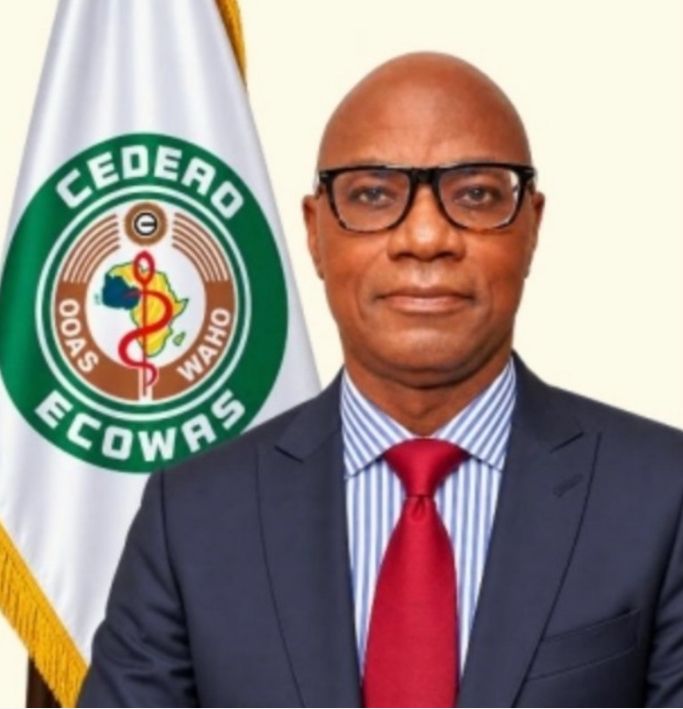
Togolese Public Health Expert Takes Charge of West Africa’s Health Agency
By: Michael Mike
The West African Health Organisation (WAHO), the specialised health institution of the Economic Community of West African States (ECOWAS), has entered a new leadership era with the assumption of office of Togolese public health expert, Professor Palokinam Pitché, as its Director-General.
Professor Pitché formally took over the leadership of the regional health body on Tuesday, September 1, 2026, with a mandate to strengthen health cooperation and support efforts to improve the wellbeing of populations across the ECOWAS region.
His emergence places a seasoned physician, public health specialist, academic and health-programme administrator at the helm of an institution responsible for promoting regional cooperation on health matters.
The ECOWAS Authority of Heads of State and Government had approved Pitché’s appointment for the 2026–2030 mandate at its 69th Ordinary Session in Lungi, Sierra Leone, in July. The final communiqué of the summit specifically listed Dr Palokinam Pitche of Togo as the new Director-General of WAHO.
Pitché comes to the regional position with more than 25 years of experience spanning public health administration, health-programme management, health-system strengthening and professional training.
Before his appointment, he served as National Coordinator of Togo’s National AIDS Control Programme between 2007 and 2012. In 2012, he became head of the Permanent Secretariat of Togo’s National Council for the Fight against AIDS and Sexually Transmitted Infections, a multisectoral structure attached to the Togolese Presidency.
His experience extends beyond Togo. Since 1996, he has undertaken consultancy assignments for major international health and development institutions, including the World Health Organisation (WHO), UNAIDS, USAID, WAHO, UNDP and UNFPA.
His assignments have included the development of health policies and strategic plans, resource mobilisation and efforts to harmonise HIV treatment protocols and postgraduate training curricula across ECOWAS countries.
The new WAHO chief is also a career academic.
A Professor of Dermatology and Venereology under CAMES since 2007, Pitché obtained his Doctor of Medicine degree from the University of Lomé and became an Associate Professor of Medicine in 2002.
His specialised training has covered dermatology and venereology, epidemiology, HIV, parasitology and tropical medicine, as well as immunology, vaccinology and biotechnology applied to infectious diseases. His training and professional development included institutions such as Université Paris-Sud, Johns Hopkins/CDC and the WHO in Geneva.
He has taught at the Faculty of Health Sciences of the University of Lomé since 1997 and has also served as head of the Dermatology and Venereology Department at CHU Sylvanus Olympio in Lomé since 2015.
His academic record is equally substantial. He is credited with more than 250 scientific publications and four books, particularly in the fields of dermatology, sexually transmitted infections, HIV/AIDS and sexual health.
Pitché assumes the WAHO leadership at a time when health security remains a major regional concern, with West African countries continuing to face infectious diseases, public-health emergencies and the need for stronger and more coordinated health systems.
His extensive experience working across governments, international organisations, development partners and community institutions could therefore prove significant as WAHO seeks to deepen regional health cooperation.
His appointment is also part of a broader renewal of ECOWAS institutions for the 2026–2030 cycle. Alongside Pitché’s appointment, the regional bloc approved new leadership for several key institutions, including the Inter-Governmental Action Group against Money Laundering in West Africa (GIABA).
For WAHO, however, the immediate challenge is translating Pitché’s extensive technical and managerial experience into stronger regional coordination and measurable improvements in health outcomes.
With a career that combines clinical medicine, public health administration, academia, international consultancy and scientific research, the Togolese professor takes charge of WAHO with a profile closely aligned with the complex demands of West Africa’s health landscape.
His four-year tenure is expected to place renewed emphasis on strengthening regional health systems and advancing cooperation among ECOWAS member states in pursuit of better health outcomes for their populations.
Togolese Public Health Expert Takes Charge of West Africa’s Health Agency

APC received 5000 decampees in Yobe

Borno APC candidate, Gubio attacked by ISWAP as security forces repel deadly ambush

NSCDC Rescues 15 Trafficked Children, Recovers Stolen Rifles, Busts Telecom Vandalism Syndicate

Roger Federer’s Shock as DNA Results Reveal Myla and Charlene Are Not His Biological Children

THE PLIGHT OF FARIDA

FAILED COUP IN BURKINA FASO: HOW TRAORÉ NARROWLY ESCAPED ASSASSINATION PLOT AMID FOREIGN INTERFERENCE CLAIMS
-
 News2 years ago
Roger Federer’s Shock as DNA Results Reveal Myla and Charlene Are Not His Biological Children
-
Opinions5 years ago
THE PLIGHT OF FARIDA
-
 News1 year ago
FAILED COUP IN BURKINA FASO: HOW TRAORÉ NARROWLY ESCAPED ASSASSINATION PLOT AMID FOREIGN INTERFERENCE CLAIMS
-

 News2 years ago
EYN: Rev. Billi, Distortion of History, and The Living Tamarind Tree
-
 Opinions5 years ago
POLICE CHARGE ROOMS, A MINTING PRESS
-

 ACADEMICS3 years ago
A History of Biu” (2015) and The Lingering Bura-Pabir Question (1)
-

 Columns3 years ago
Army University Biu: There is certain interest, but certainly not from Borno.
-

 Politics1 year ago
2027: Why Hon. Midala Balami Must Go, as Youths in Hawul and Asikira/Uba Federal Constituency Reject ₦500,000 as Sallah Gift
