
News
ActionAid Laments the Use of Social Media to Silence Women and Girls in Nigeria

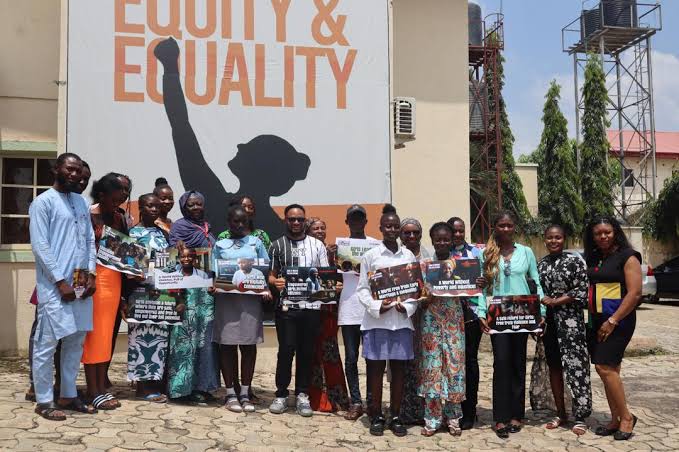
ActionAid Laments the Use of Social Media to Silence Women and Girls in Nigeria
By: Michael Mike
ActionAid Nigeria (AAN) has decried that social media and digital platforms intended to empower, are increasingly exploited to harass, stalk, and silence women and girls. In Nigeria.
AAN in a statement on Tuesday to commemorate the start of the 16 Days of Activism Against Gender-Based Violence with the theme, “UNiTE to End Digital Violence Against All Women and Girls.” signed by its Country Director, Dr. Andrew Mamedu lamented that digital threat compounds the physical dangers girls face in schools amid rising insecurity, creating a dual crisis that demands immediate and collective action.
Mamedu said: “ActionAid Nigeria has long championed safe spaces for women and girls through initiatives such as our Safe Cities project, Women’s Voice and Leadership Nigeria project, the Renewed Women’s Voice and Leadership project, Local Rights Programme and community-based GBV response programs across 21 states and the FCT. In a nation where one in four girls experience sexual violence before the age of 18, the combination of physical and online threats is a crisis that deprives our girls of safety, education, and their future.
“We UNiTE today to break this cycle, fortifying schools against physical violence and abduction, while safeguarding digital spaces from virtual predators.”
He lamented that Nigeria’s education system, intended to be a safe environment for learning, is increasingly under threat. The abduction of 25 students and the killing of a vice-principal at Government Girls Comprehensive Secondary School in Maga, Kebbi State, underscores the fear gripping many northern communities.
He further decried that across the country, schools in Kwara, Niger, Plateau, Bauchi, Kebbi, and 41 Unity schools have closed due to insecurity, forcing children out of classrooms. UNICEF reports that 60% of out-of-school children in northern Nigeria are girls, a figure likely to rise as insecurity persists. Survivors of abductions are often subjected to sexual and domestic slavery, while perpetrators extend their threats online, amplifying fear and intimidation.
He noted that Technology-Facilitated Gender-Based Violence in Nigeria takes many forms, including cyberstalking, non-consensual sharing of intimate images, deepfakes, doxxing, sextortion, and persistent online harassment, insisting that these abuses isolate and shame women and girls, disrupting their education, work, and social participation.
A 2024 UNFPA report indicates that between 16% and 58% of women and girls worldwide experience TFGBV, with Nigeria recording over 6,000 GBV cases in the first five months of 2024 alone.
He said Tech-enabled abuse has real and tangible impacts, particularly on women and girls already marginalised by factors such as ethnicity, disability, or geography. Reports from organisations including Hivos and the Development Research and Projects Centre (dRPC) show that TFGBV intensifies trauma, suppresses voices, and perpetuates cycles of poverty.
H noted that ActionAid Nigeria, alongside women’s rights organisations, survivors, and communities across the country, calls on the Federal Government, State Governments, the National Assembly, law enforcement agencies, regulatory bodies, and international partners to urgently take the following actions:
Domesticate and implement the African Commission Resolution 522 (2023) on protection from internet-based violence; Arrest and prosecute perpetrators of school abductions to reduce insecurity in educational institutions; Establish a National Task Force on Technology-Facilitated Gender-Based Violence to coordinate prevention and response efforts; Allocate specific budget lines for the digital safety of women and girls in the 2026 appropriation; Strengthen survivor-centred reporting and justice mechanisms for both physical and online gender-based violence.
ActionAid Nigeria called on all Nigerians to recognize that the safety of women and girls is the responsibility of every individual, community, and institution, stressing that together, we must act decisively to ensure every girl can learn, live, and thrive free from fear, both online and offline.
ActionAid Laments the Use of Social Media to Silence Women and Girls in Nigeria



DSS Trails, Nabs Man Impersonating Personnel in Abuja
By: Zagazola Makama
*Arrested in tactical uniform, with fake pistol, allegedly extorting motorists
The Department of State Services (DSS) late on Wednesday in Abuja arrested a man identified as Moferewa Maiye, discovered to be impersonating a personnel of the Service.
Maiye, who claimed to hail from Agbajojun Village, Mopamuro Local Government Area of Kogi State, was trailed and arrested by DSS officers in his hideout around the NITEL Junction, along Adetokunbo Ademola Way, Wuse II, Abuja.
At the time of his arrest, Maiye was in DSS tactical uniform and armed with a fake pistol.
According to a security source, the Secret police acted on credible intelligence that Maiye was using the uniform and the fake weapon to intimidate commuters and motorists, extorting money from them.
During interrogation, added the source, the suspect reportedly claimed that his brother was a DSS personnel who died years ago.
He identified the brother as Monday Maiye, stressing that the DSS kit in his possession was his late brother’s.
The suspect is currently being interrogated as security operatives, the source stated, adding that the Service was investigating how he came about the DSS uniform and kit.
“Investigators are also trying to establish how long the suspect has been involved in similar acts of impersonation and extortion.
“The arrest underscores growing concerns by the Service over the activities of individuals who impersonate security personnel to intimidate members of the public and commit criminality,” the source declared.
DSS Trails, Nabs Man Impersonating Personnel in Abuja

Yobe: Wali visits Emir of Damaturu
By: Yahaya Wakili
Yobe State All Progressives Congress (APC), 2027 gubernatorial candidate Alhaji Baba Malam Wali MNI, FCAN, has paid a courtesy visit to His Royal Highness, the Emir of Damaturu, Alhaji Shehu Hashimi II Ibn Umar Al-Amin El-Kanemi, at his palace in Damaturu.
During the visit, the APC governorship candidate, Alhaji Baba Malam Wali MNI, said they were at the emir’s palace to solicit the prayers and blessings of the emir.
According to Baba Wali, “We are in the race; therefore, the visit was very significant. We need the prayers of the royal fathers and leaders because they were very vital and important at this crucial time.
Responding, His Royal Highness, the emir of Damaturu, Alhaji Shehu Hashimi II Ibn Al-Amin El-Kanemi, thanked the governorship candidate for the visit and prayed Almighty Allah (SWT) would guide and protect him throughout his struggle in his life.
Those accompanying the incoming governor, Inshallah, in 2027 during the visit are his deputy, Barrister Saleh Samanja; APC State chairman, Alhaji Mohammed Gadaka; and Madakin Gudi.
Others are Alhaji Aji Yarima Bularafa, Hon. Commissioner of the Ministry of Wealth Creation, Empowerment, and Employment Generation; Hon. Nasiru Hassan Yusuf, candidate for the Federal House of Representatives, representing Damaturu, Gujba, Gulani, and Tarmuwa local government areas; and others.
The emir conferred the traditional title of Mukaddam of the Damaturu emirate council on Alhaji Baba Malam Wali, mni, and fcan, respectively.
Yobe: Wali visits Emir of Damaturu
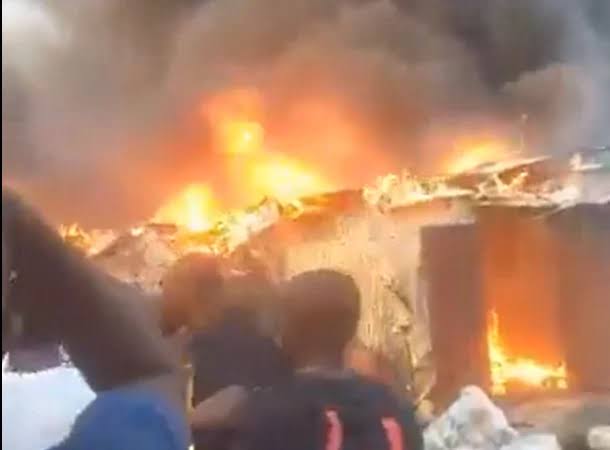
Fire Razes Building Material Shops in Satellite Town, Lagos
By Zagazola Makama
LAGOS — A fire outbreak has destroyed several building material shops along Fin-Niger, Satellite Town, Lagos State.
The incident occurred at about 6:10 a.m. on Aug. 18, when a distress call was received reporting a fire outbreak in the area.
Following the alert, a team of policemen and firefighters was swiftly mobilised to the scene.
The fire affected building material shops located at 58/196 Old Ojo Road, along Fin-Niger, Satellite Town.
The emergency responders successfully contained and extinguished the fire, preventing it from spreading further.
No casualty or loss of life was recorded in the incident.
The cause of the fire and the estimated value of property destroyed have not yet been established.
The police said investigation into the incident is ongoing to determine the circumstances surrounding the outbreak.
Fire Razes Building Material Shops in Satellite Town, Lagos

When Official Directives Become More Powerful Than the Law

DSS Trails, Nabs Man Impersonating Personnel in Abuja

Ogwashi-Uku Palace: Izediunor Faction Has Lost At Every Court Level, Including Supreme Court

Roger Federer’s Shock as DNA Results Reveal Myla and Charlene Are Not His Biological Children

THE PLIGHT OF FARIDA

FAILED COUP IN BURKINA FASO: HOW TRAORÉ NARROWLY ESCAPED ASSASSINATION PLOT AMID FOREIGN INTERFERENCE CLAIMS
-
 News2 years ago
Roger Federer’s Shock as DNA Results Reveal Myla and Charlene Are Not His Biological Children
-
Opinions5 years ago
THE PLIGHT OF FARIDA
-
 News1 year ago
FAILED COUP IN BURKINA FASO: HOW TRAORÉ NARROWLY ESCAPED ASSASSINATION PLOT AMID FOREIGN INTERFERENCE CLAIMS
-

 News2 years ago
EYN: Rev. Billi, Distortion of History, and The Living Tamarind Tree
-
 Opinions5 years ago
POLICE CHARGE ROOMS, A MINTING PRESS
-

 ACADEMICS2 years ago
A History of Biu” (2015) and The Lingering Bura-Pabir Question (1)
-

 Columns2 years ago
Army University Biu: There is certain interest, but certainly not from Borno.
-

 Politics1 year ago
2027: Why Hon. Midala Balami Must Go, as Youths in Hawul and Asikira/Uba Federal Constituency Reject ₦500,000 as Sallah Gift
