
News
ActionAid Laments the Use of Social Media to Silence Women and Girls in Nigeria


ActionAid Laments the Use of Social Media to Silence Women and Girls in Nigeria
By: Michael Mike
ActionAid Nigeria (AAN) has decried that social media and digital platforms intended to empower, are increasingly exploited to harass, stalk, and silence women and girls. In Nigeria.
AAN in a statement on Tuesday to commemorate the start of the 16 Days of Activism Against Gender-Based Violence with the theme, “UNiTE to End Digital Violence Against All Women and Girls.” signed by its Country Director, Dr. Andrew Mamedu lamented that digital threat compounds the physical dangers girls face in schools amid rising insecurity, creating a dual crisis that demands immediate and collective action.
Mamedu said: “ActionAid Nigeria has long championed safe spaces for women and girls through initiatives such as our Safe Cities project, Women’s Voice and Leadership Nigeria project, the Renewed Women’s Voice and Leadership project, Local Rights Programme and community-based GBV response programs across 21 states and the FCT. In a nation where one in four girls experience sexual violence before the age of 18, the combination of physical and online threats is a crisis that deprives our girls of safety, education, and their future.
“We UNiTE today to break this cycle, fortifying schools against physical violence and abduction, while safeguarding digital spaces from virtual predators.”
He lamented that Nigeria’s education system, intended to be a safe environment for learning, is increasingly under threat. The abduction of 25 students and the killing of a vice-principal at Government Girls Comprehensive Secondary School in Maga, Kebbi State, underscores the fear gripping many northern communities.
He further decried that across the country, schools in Kwara, Niger, Plateau, Bauchi, Kebbi, and 41 Unity schools have closed due to insecurity, forcing children out of classrooms. UNICEF reports that 60% of out-of-school children in northern Nigeria are girls, a figure likely to rise as insecurity persists. Survivors of abductions are often subjected to sexual and domestic slavery, while perpetrators extend their threats online, amplifying fear and intimidation.
He noted that Technology-Facilitated Gender-Based Violence in Nigeria takes many forms, including cyberstalking, non-consensual sharing of intimate images, deepfakes, doxxing, sextortion, and persistent online harassment, insisting that these abuses isolate and shame women and girls, disrupting their education, work, and social participation.
A 2024 UNFPA report indicates that between 16% and 58% of women and girls worldwide experience TFGBV, with Nigeria recording over 6,000 GBV cases in the first five months of 2024 alone.
He said Tech-enabled abuse has real and tangible impacts, particularly on women and girls already marginalised by factors such as ethnicity, disability, or geography. Reports from organisations including Hivos and the Development Research and Projects Centre (dRPC) show that TFGBV intensifies trauma, suppresses voices, and perpetuates cycles of poverty.
H noted that ActionAid Nigeria, alongside women’s rights organisations, survivors, and communities across the country, calls on the Federal Government, State Governments, the National Assembly, law enforcement agencies, regulatory bodies, and international partners to urgently take the following actions:
Domesticate and implement the African Commission Resolution 522 (2023) on protection from internet-based violence; Arrest and prosecute perpetrators of school abductions to reduce insecurity in educational institutions; Establish a National Task Force on Technology-Facilitated Gender-Based Violence to coordinate prevention and response efforts; Allocate specific budget lines for the digital safety of women and girls in the 2026 appropriation; Strengthen survivor-centred reporting and justice mechanisms for both physical and online gender-based violence.
ActionAid Nigeria called on all Nigerians to recognize that the safety of women and girls is the responsibility of every individual, community, and institution, stressing that together, we must act decisively to ensure every girl can learn, live, and thrive free from fear, both online and offline.
ActionAid Laments the Use of Social Media to Silence Women and Girls in Nigeria



Gombe assures corps members of safety, improved welfare
By Elizabeth Ogunjobi
The Gombe State Government has reaffirmed its commitment to the safety, welfare and wellbeing of corps members serving in the state.
Gov. Inuwa Yahaya gave the assurance on Friday while declaring open the 2026 Batch C Stream I Orientation Camp.
The orientation course is being held at the temporary camp in Amada community, Akko Local Government Area of Gombe State.
Yahaya, represented by the Commissioner for Youths and Sports, Mr Abdul Yusuf, said corps members’ welfare remained a priority.
“I assure you of the commitment of the state government to your safety, welfare and general wellbeing throughout your service year in Gombe State,” he said.
The governor described Gombe as peaceful and welcoming, urging the corps members to “feel at home” throughout their service year.
“Gombe State is a peaceful and welcoming state, and I am confident that your stay here will be pleasant and rewarding,” Yahaya said.
He also acknowledged the need for additional government support to complement existing arrangements for corps members’ welfare during the orientation exercise.
He assured the corps members that the government would examine the matter and provide necessary support to improve their comfort.
The governor urged the corps members to embrace the culture and diversity of their host communities during their primary assignments.
He advised them to respect community values and contribute meaningfully to the development of their host communities throughout their service year.
On the permanent orientation camp, Yahaya urged the corps members to exercise patience as finishing works continued at the facility.
“Let me assure you that all necessary measures will be put in place to expedite the remaining works,” he said.
He said the government wanted the permanent camp completed and ready for use as soon as possible.
“It is our desire that future orientation courses will be conducted at the permanent orientation camp with the facilities and comfort corps members deserve,” Yahaya said.
Mrs Chinwe Nwachuku, NYSC Coordinator in Gombe State, commended the government’s efforts toward providing a more befitting orientation camp.
Nwachuku urged the government to expedite work on the facilities to enable corps members benefit from improved accommodation and other amenities.
She also commended the government for supporting the feeding arrangements for corps members during the orientation course.
The NYSC coordinator urged corps members to give their best to Gombe State and leave meaningful footprints through community development initiatives.
She also charged them to be law-abiding citizens and contribute positively to the development of their host communities.
Nwachuku urged the corps members to approach the service year with open minds, discipline, enthusiasm and willingness to learn.
She further encouraged them to contribute meaningfully while complying with the rules and regulations governing the National Youth Service Corps.
The News Agency of Nigeria (NAN) reports that 1,502 corps members were sworn in during the orientation exercise.
The figure comprised 803 males and 699 females deployed to Gombe State for the mandatory national service.
Gombe assures corps members of safety, improved welfare

Military Pensions Board Begins Payment of New Pension Rates, Arrears to Veterans
By: Zagazola Mamama
The Military Pensions Board (MPB) has commenced the implementation of newly approved pension rates for military pensioners following adjustments arising from the new minimum wage.
The Board disclosed this in a statement issued on Friday by its Public Relations Officer, Squadron Leader Aliyu Mohammed.
According to the statement, the new pension rates have been implemented, while the applicable arrears have been processed for payment into the accounts of all military pensioners effective Oct. 2, 2026.
The Board expressed appreciation to military pensioners for their patience, understanding and cooperation throughout the implementation process.
It reaffirmed its commitment to ensuring timely pension payments and improving pension administration in recognition of the sacrifices and invaluable service rendered by Nigeria’s military veterans.
The development is expected to provide relief to retired military personnel whose pension entitlements are affected by the adjustment.
The Board urged continued cooperation as it works to strengthen pension administration and fulfil its obligations to military retirees.
Military Pensions Board Begins Payment of New Pension Rates, Arrears to Veterans
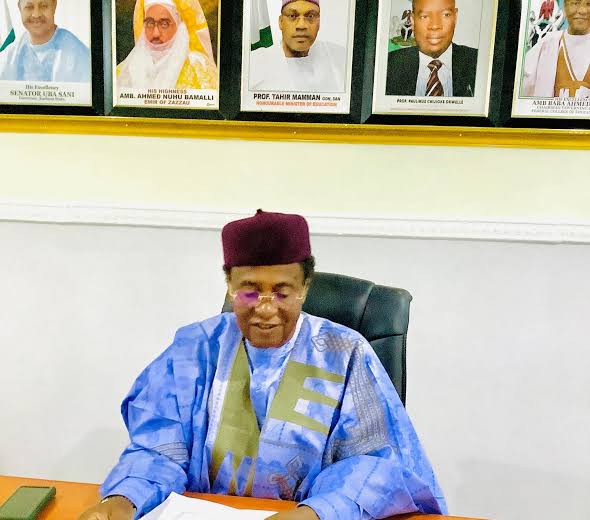
A LIFE OF SERVICE, AND DIPLOMACY: Tribute to Ambassador Baba Ahmed Jidda @75.
By Inuwa Bwala.
At 75, we are not just the age, but the substance, the grace and the towering legacy of Ambassador Baba Ahmed Jidda.
I state without any fear of contradiction, that, he remains one of the finest public servants Borno has ever produced. The story of his life is a textbook of dedicated public service and diplomatic excellence. From his early days as a brilliant Political Science graduate from my own almamater, the prestigious Ahmadu Bello University, ABU, Zaria, to his Master’s in Development Economics and Advanced Diploma in Development Administration from Manchester University, United Kingdom, Baba Ahmed Jidda, seems to have set out early to prepare himself for service.
We first felt his impact in the civil service, where he rose through sheer merit to become a Permanent Secretary, then Secretary to the Military Government, and later, Secretary to the State Government under successive administrations.
From the military era, to the administration of Senator Ali Modu Sheriff, to the first term of His Excellency, Vice President Kashim Shettima, he has been noted to be the virtual engine room of the government.
In all these roles, he remained the calm and calculative leader, even in stormy periods, serving as the institutional memory, and the man who understood the files, the people and the soul of Borno.
At the national level, Nigeria found in him a patriot of rare capacity. As a Director in the Federal Civil Service, as a Member of the National Political Reform Conference, as Senior Special Assistant to the President, BAJ brought the famous Borno discipline and intellect to national assignment.
On the diplomatic field he truly shone as a global citizen, in Burkina Faso, to the People’s Republic of China, Baba Jidda redefined economic diplomacy. Under his watch, Nigeria-China relations witnessed could be said to be her best in infrastructure cooperation, education exchange, trade and people-to-people ties. Even after leaving that post, he will be remembered for his fatherly role in protecting Nigerians during the COVID-19 pandemic in Wuhan, for facilitating the landmark Air Peace direct flight to Guangzhou, and for ensuring Nigerian interests were never compromised.
What makes Ambassador Jidda stand out at 75 is character.
He is loyal without being sycophantic, powerful without being oppressive and wise without being arrogant.
He remains one politician who never lost the civil servant in him, and a diplomat who never forgot his roots and Borno identity.
To all of us who had the previledge of serving with him in the Borno state executive council, he remains a mentor.
BAJ has also been the tutelage to countless young men and women who today are Commissioners, Permanent Secretaries, Directors and business leaders.
We regard him as a stabilizing force in Borno APC, a bridge between the old and new generations, and a trusted confidant to leaders at all levels.
At 75, he is not old; but a classic fine wine, which gets better with age.
May God grant him many more years in sound health, and continued service to Borno, Nigeria and humanity.
Happy 75th Birthday sir.
A LIFE OF SERVICE, AND DIPLOMACY: Tribute to Ambassador Baba Ahmed Jidda @75.

Gombe assures corps members of safety, improved welfare

2027: Should Atiku Withdraw from the Race and Find Peace, or Continue and Live with Regrets?

Military Pensions Board Begins Payment of New Pension Rates, Arrears to Veterans

Roger Federer’s Shock as DNA Results Reveal Myla and Charlene Are Not His Biological Children

THE PLIGHT OF FARIDA

FAILED COUP IN BURKINA FASO: HOW TRAORÉ NARROWLY ESCAPED ASSASSINATION PLOT AMID FOREIGN INTERFERENCE CLAIMS
-
 News3 years ago
Roger Federer’s Shock as DNA Results Reveal Myla and Charlene Are Not His Biological Children
-
Opinions5 years ago
THE PLIGHT OF FARIDA
-
 News1 year ago
FAILED COUP IN BURKINA FASO: HOW TRAORÉ NARROWLY ESCAPED ASSASSINATION PLOT AMID FOREIGN INTERFERENCE CLAIMS
-

 News3 years ago
EYN: Rev. Billi, Distortion of History, and The Living Tamarind Tree
-
 Opinions5 years ago
POLICE CHARGE ROOMS, A MINTING PRESS
-

 ACADEMICS3 years ago
A History of Biu” (2015) and The Lingering Bura-Pabir Question (1)
-

 Columns3 years ago
Army University Biu: There is certain interest, but certainly not from Borno.
-

 Politics1 year ago
2027: Why Hon. Midala Balami Must Go, as Youths in Hawul and Asikira/Uba Federal Constituency Reject ₦500,000 as Sallah Gift
