
News
Obaseki’s Claims on Orhionmwon Land Grabbing are Misleading and Self-Serving

Obaseki’s Claims on Orhionmwon Land Grabbing are Misleading and Self-Serving
By Augustine Osayande PhD
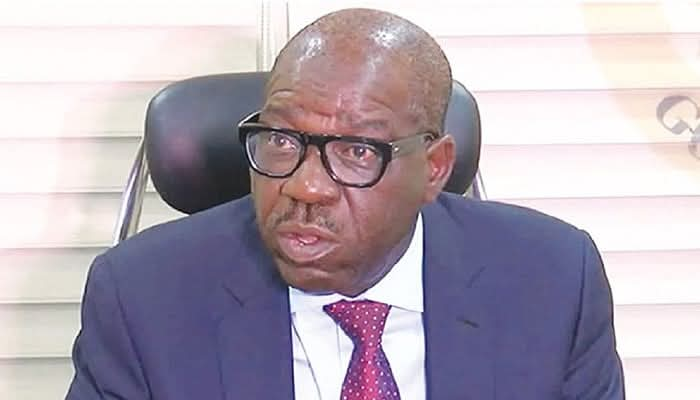
Former Governor Godwin Obaseki’s recent comments accusing Pastor Osagie Ize-Iyamu and Hon. Dennis Idahosa of “harassing investors” in Orhionmwon and Ovia are yet another attempt to distort facts and evade accountability. His claims of land grabbing are not only unsubstantiated—they follow a familiar pattern in which he manufactures political villains to divert attention from the controversies and community grievances that defined his administration.
For a political officeholder who openly claims Oredo Local Government as his home base, Obaseki’s decision to allocate more than 250,000 hectares of land in Orhionmwon Local Government Area to Saro Oil Palm Limited—without due regard for the ownership rights and interests of the host communities—is deeply troubling. The people of Orhionmwon are not tenants of the state government, and they cannot be pushed aside simply because a governor wishes to curry favour with select investors. This unilateral style of governance, where critical community interests are sacrificed at the altar of executive discretion, is precisely what Edo people rejected at the polls.
For me, one of the most troubling episodes of the Obaseki years remains the ordeal faced by the Ologbo-Nugu community in Orhionmwon Local Government Area—a story that never received the level of attention it deserved. While Obaseki was still governor, the people of this small rural community were forced to issue a desperate Save-Our-Soul (SOS) message over what they described as the forceful takeover of their ancestral land by an agricultural firm.
Let me be clear: the community never opposed investment or industrial development. In fact, like many rural communities in Edo State, they welcomed meaningful projects that could create jobs and improve livelihoods. But what they could not accept—and rightly so—was the manner in which Barnsley Nigeria Limited (BNL), operators of SARO Farms, went about asserting total control over their land. Instead of being partners in development, the community members felt bulldozed, ignored, and pushed aside.
I remember the images of their protest—their placards telling their story better than any official statement. “SARO, leave 250 hectares for us to farm or quit our land.” “Stop deceiving us.” “SARO, stop oppressing us. This is the only land we have.” These were not political slogans; they were cries for survival from people whose only source of livelihood was at stake.
The community wasn’t being unreasonable. They demanded something simple, fair, and already promised: that 250 hectares of their land be left for them to farm. That was the agreement. That was the governor’s directive. Yet, even this modest allocation was allegedly denied them, leaving them with no space to grow food crops, no way to sustain themselves, and no explanation.
The testimony that struck me the most came from the Odionwere of Ologbo-Nugu, Pa Aduwa Osaigbovo, a 96-year-old custodian of the community. Imagine a man of that age, who should be spending his days in peace, forced to lead a protest because his people were being displaced. In his gentle but pained voice, he described the actions of SARO Farms as “crude and barbaric”—not words he would use lightly.
He lamented that the company ignored the governor’s instruction to leave part of the land for the community. And he reminded the state, in a way that only someone with nearly a century of lived experience can that food scarcity is real, and that denying people farmland is condemning them to hardship.
What happened in Ologbo-Nugu is not just a community’s struggle—it is a stark reminder of what happens when development is done without humanity, without consultation, and without respect for the people whose lives are directly affected.
It is also part of why many Edo people remain skeptical when they hear politicians speak about “investor protection.” True development does not come at the cost of dispossessing ordinary people. True investment uplifts—it does not erase communities.
Ologbo-Nugu’s cry for help still echoes today, and until their grievances are addressed, it will remain a symbol of what went wrong under a government that often chose investors over the very people it was elected to serve.
Obaseki’s long-standing habit of personalising governance and portraying dissenting voices as enemies has never served the state well. Edo people do not desire leadership driven by threats, bitterness, and self-righteousness. They expect responsibility, transparency, engagement, and respect for lawful processes—values that were too often sidelined during his eight years in power.
Throughout his tenure, Obaseki routinely blamed others—political godfathers, party members, traditional rulers, labour unions, civil society, and virtually anyone who dared to question his opaque land deals or his confrontational style of administration. His latest attempt to accuse Ize-Iyamu and Idahosa of wrongdoing is simply an extension of this defensive posture. Communities in Orhionmwon, Ovia, and other affected areas have, for years, expressed dissatisfaction with land allocations issued without adequate consultation or compensation.
These legitimate grievances cannot be swept aside by pointing fingers at political opponents.
The allegations against Ize-Iyamu and Idahosa remain without evidence. Both men have consistently championed transparency, accountability, and genuine community involvement in land administration—principles that stand in stark contrast to the secrecy that characterised many of Obaseki’s investment agreements. If the former governor has credible proof that they engaged in land grabbing or investor harassment, he should present it publicly. Otherwise, his claims amount to nothing more than an attempt to shield his past decisions from the scrutiny they deserve.
Even more revealing is Obaseki’s suggestion that these political actors were “bitter because they couldn’t get access” to him during his tenure. This remark confirms what many Edo people suspected: that governance under Obaseki had become centralised, closed-off, and dependent on personal relationships rather than institutional processes. Public office is not a private estate, and no elected official is entitled to gatekeep the functions of the state.
If investors have genuine concerns, they should direct them through proper administrative channels, not hide behind the name of a former governor to generate unnecessary tension or manipulate public perception.
Obaseki’s threat that Governor Monday Okpebholo “will regret” ongoing inquiries into land matters is equally alarming. Edo people voted overwhelmingly for transparency, reform, and a full review of previous land allocations. No amount of political posturing, intimidation, or emotional blackmail will halt the push for clarity and accountability. The new administration is duty-bound to investigate all contentious land deals and ensure that community rights are upheld.
The truth is simple: investment thrives when communities are respected, agreements are clear, and government decisions are transparent. The real enemy of investor confidence is secrecy, not oversight. It is opaque decision-making—not due process—that discourages credible investors and fuels resentment among host communities.
Obaseki’s attempt to cast himself as the protector of investors does not align with the lived reality of the communities most affected by his policies. Edo State has now entered a new era—one committed to fairness, openness, community engagement, and shared prosperity.
In the end, Obaseki’s latest outburst deserves just one response: dismissal. Edo people have moved on, and no attempt to rewrite history or shift blame will change the record of his administration or obstruct the work of the current government.
Augustine Osayande, PhD contributed this piece from Abuja via austinelande@yahoo.com
Obaseki’s Claims on Orhionmwon Land Grabbing are Misleading and Self-Serving


Athena Graduates 13 Pioneer Fellows, Publishes Essays on Nigerian Unity
By: Michael Mike
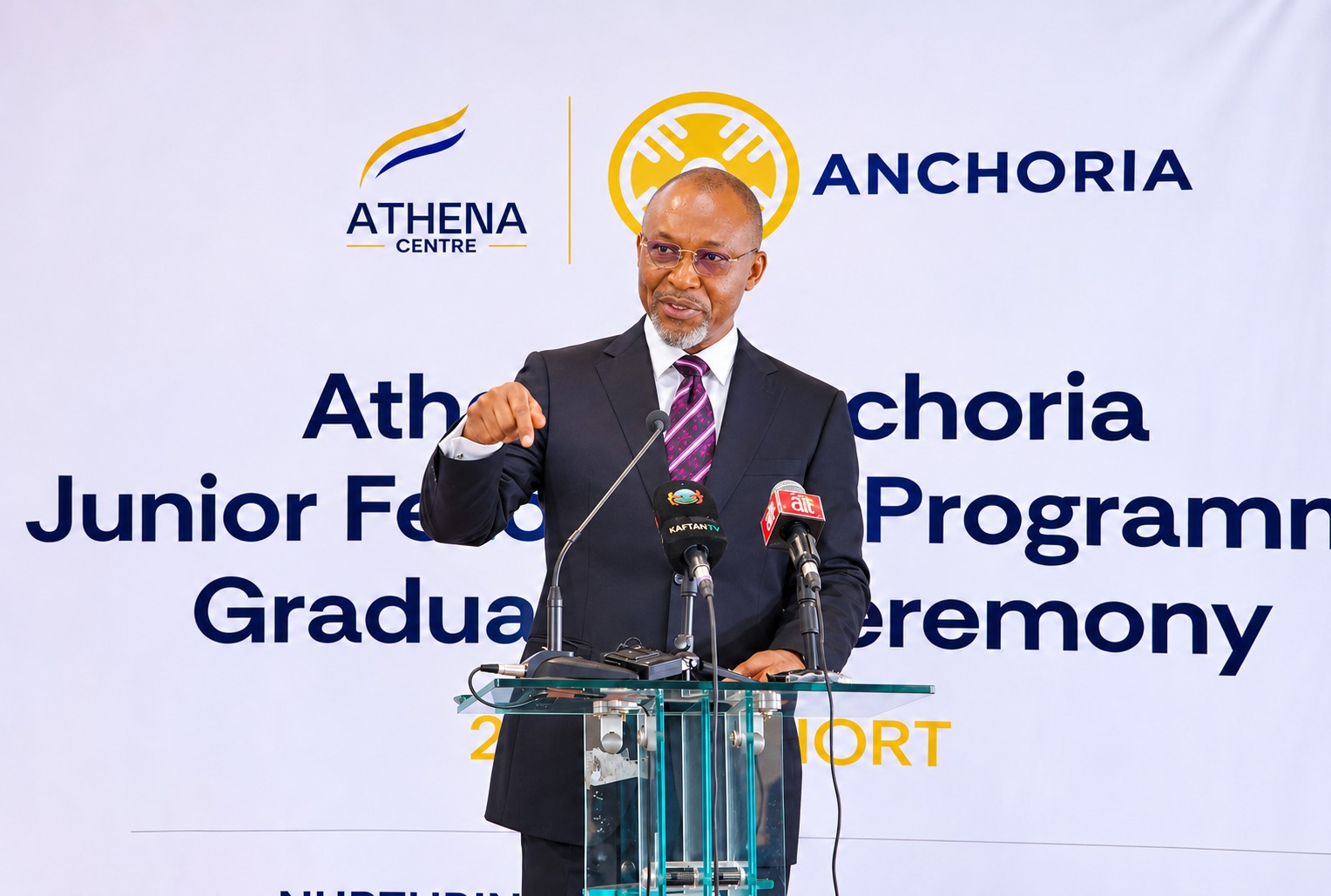
The Athena Centre for Policy and Leadership has graduated 13 pioneer fellows of its Junior Fellowship Programme, with a call on young Nigerians to take up leadership responsibilities and help build institutions capable of delivering good governance and national development.
The six-month programme, implemented in partnership with Anchoria Group, brought together young Nigerians from the six geopolitical zones, 11 states, 11 universities and 11 academic disciplines to deepen their understanding of public policy, governance, institutional development and leadership.
The graduation ceremony in Abuja also witnessed the unveiling of a collection of 13 civic essays written by the fellows, titled Though Tribe and Tongue May Differ: Young Nigerians on Belonging, Equal Citizenship and the Work of Nation-Building.
The publication, produced by Athena Press, is the first volume in an annual series, The Republic We Are Building, designed to encourage young Nigerians to examine the country’s founding ideals against the realities of governance and citizenship.
Speaking at the event, Founder and Chancellor of the Centre, Osita Chidoka, said the fellowship was established on the conviction that building strong institutions required deliberate investment in the people who would eventually lead them.
“We cannot continue to demand better institutions without deliberately investing in the people who will lead them. Institutions do not build themselves. People build them,” he said.
Chidoka said the programme deliberately brought together young Nigerians from different geographical, educational and professional backgrounds to foster mutual understanding and develop their capacity to work across the country’s differences.
“We brought together young Nigerians who might otherwise never have met, from different regions, universities, disciplines and experiences, and asked them to learn, argue and grow as one cohort.
“If we are serious about building the Republic we all dream of, learning to live, think and work across our differences has to become a habit,” he said.
He said the fellows were exposed to intensive learning, mentorship and practical engagements with experienced professionals, including BudgIT’s Seun Onigbinde, Dr Sam Amadi and Dr Dakuku Peterside.
The programme featured six months of virtual learning and mentorship, during which participants received monthly stipends, followed by a one-week residential session. Each graduate also received an HP laptop to support continued research and writing.
Anchoria Group part-funded the initiative, which combined public policy, governance, research and leadership training with financial literacy, investment and practical economic decision-making.
Chidoka said the fellows’ essays were inspired by the line in Nigeria’s National Anthem, “Though tribe and tongue may differ, in brotherhood we stand”, and explored questions of belonging, equal citizenship, identity and nation-building.
He described the National Anthem, the National Pledge and Chapter II of the Constitution as embodying what he called “the promise of the Republic”.
“They describe the Nigeria we say we want: a country founded on justice, equality, dignity, unity and opportunity.
“Every generation inherits that promise, and every generation must convert the promise into performance through the institutions it builds, the standards it enforces and the everyday experience of the citizen,” he said.
According to him, subsequent cohorts of the fellowship will use the annual publication to assess how effectively the country is translating these national ideals into tangible outcomes for its citizens.
The fellows also benefited from engagements with prominent figures in public policy and national development, including Patrick Okigbo, Founding Partner of Nextier, who discussed the promise of Nigeria and the experiences of young Nigerians within the country.
Representatives of Nextier attended the graduation and interacted with the fellows on career opportunities in policy and advisory services.
The fellows were also received by the Coordinating Minister of Health and Social Welfare, Prof. Muhammad Ali Pate, who shared his experiences of international training, returning to Nigeria and contributing to national development.
One of the fellows was subsequently invited to participate in the forthcoming Ministerial Conference on Antimicrobial Resistance.
In his valedictory address, the Overall Best Fellow, Ezekiel Adebisi, said the programme had equipped participants with the analytical skills, intellectual discipline and sense of responsibility required to contribute meaningfully to national development.
He said the fellows arrived as young professionals seeking answers but were leaving with a deeper appreciation of the complexity of governance and the responsibilities associated with knowledge.
Adebisi urged them to approach public institutions with courage, integrity and a commitment to evidence-based decision-making.
He cautioned against equating access to political power with the ability to drive meaningful institutional reforms.
“We came to learn how institutions shape nations. We leave committed to shaping institutions that serve nations,” he said.
The graduating fellows are Augustina Enuwa Abakpa, Rashida Bafashi Abubakar, Yahaya Abubakar, Ezekiel Adebisi, Afodun Muhammad Saheed, Adaobi Ayogu, Kosisochukwu Praise Bosah, Enegbuma Angelica Onagiekhuwemhe, Haruna Hassan Suleiman, Mohammed Baba Kale, Daniel Nnamani, Eunice Olasunkanmi and Shedrack Owen.
Chidoka urged the graduates to measure their success not merely by the knowledge acquired during the fellowship but by their contributions to the institutions and communities they would serve.
“The value of this Fellowship will be measured over years: in the institutions you serve, the decisions you influence and the people you, in turn, help to develop.
“Today, we celebrate what you have learnt. Tomorrow, Nigeria will judge what you do with it,” he said.
He announced that the Junior Fellows Programme would continue with new cohorts, sustaining the Centre’s effort to develop a new generation of Nigerians committed to responsible leadership and institution-building.
Athena Graduates 13 Pioneer Fellows, Publishes Essays on Nigerian Unity

Tijjani Muhammed’s promotion to Lithuania’s top division excites Mailantarki Care FC
The management and entire family of Mailantarki Care FC proudly extend heartfelt congratulations to our former star forward, Tijjani Muhammed, on helping FK Babrungas clinch the 2026 I Lyga title and secure a historic promotion to Lithuania’s elite top-tier division, the TOPLYGA.
Mr Adamu Usman Ahmed, the
General Secretary of
Mailantarki Care FC conveyed the management’s message in a press statement issued to newsmen on Saturday.
Tijjani Muhammed’s remarkable journey from sharpening his craft at Mailantarki Care FC to making a decisive, high-impact presence on the European stage is a testament to his exceptional talent, discipline, and relentless work ethic.
Playing a pivotal role in guiding FK Babrungas to the summit of Lithuanian football marks a monumental milestone in his professional career and stands as a shining example for young talents across Nigeria.
Commenting on the milestone, the club leadership led by its President Hon Khamisu Ahmed Mailantarki noted that Tijjani’s success reflects the core vision of Mailantarki Care FC of developing world-class players equipped to compete and excel at the highest levels of global football.
“We celebrate this well-deserved achievement with Tijjani. His hunger for success and dedication continue to make us immensely proud. We wish him even greater milestones, stellar performances, and countless goals as he prepares to take on the challenge of the TOPLYGA next season,” the statement read.
Tijjani Muhammed earned his pathway into European football following a scintillating, star-making performance with Mailantarki Care FC, the champions of the 2024 Dana Cup in Denmark, where he clinched both the highest goal scorer award and the tournament’s Most Valuable Player (MVP) honor.
Mailantarki Care FC remains steadfast in its mission to discover, nurture, and project homegrown talent onto the international stage, living up to its mantra.
Tijjani Muhammed’s promotion to Lithuania’s top division excites Mailantarki Care FC
Zulum Orders Suspension of Dikwa Council Secretary, Directors Found Absent on Duty
…Halts Work on Nurses’ Quarters
By: Our Reporter
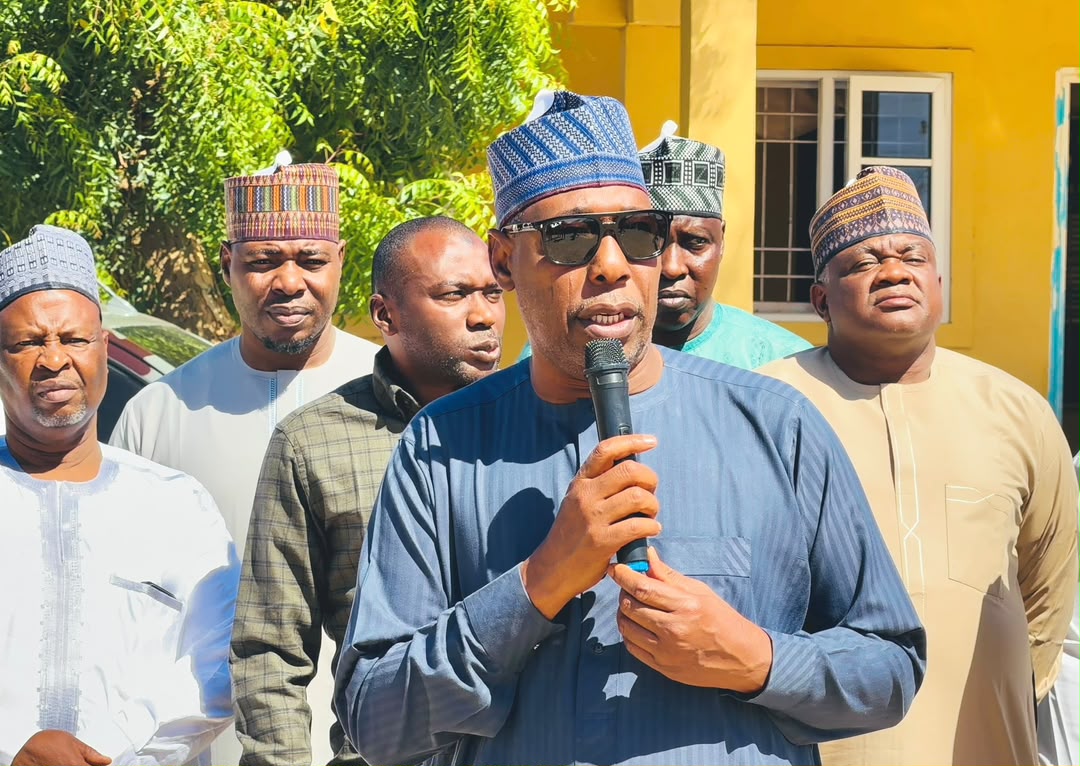
Borno State Governor, Professor Babagana Umara Zulum, has directed the immediate suspension of the secretary and some directors of Dikwa Local Government Council over alleged neglect of duty.
The Governor issued the directives on Friday during a working visit to Dikwa, where he found several senior council officials absent from their duty posts.
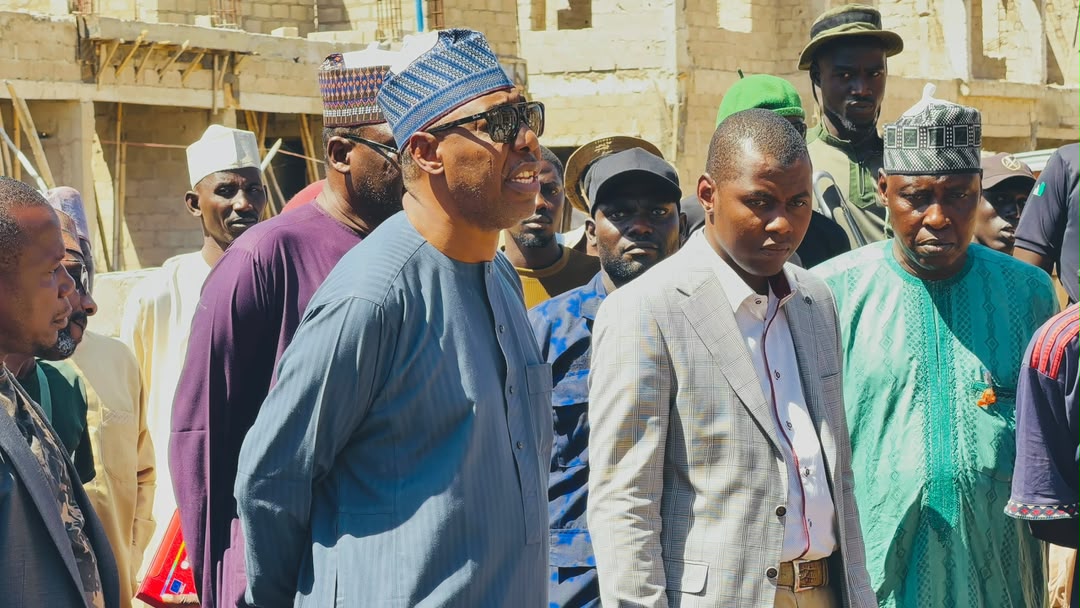
He directed the affected officials to hand over to their respective assistants immediately.
However, the Director of Primary Healthcare and the Education Secretary were exempted from suspension because both were on duty at the time of the visit.
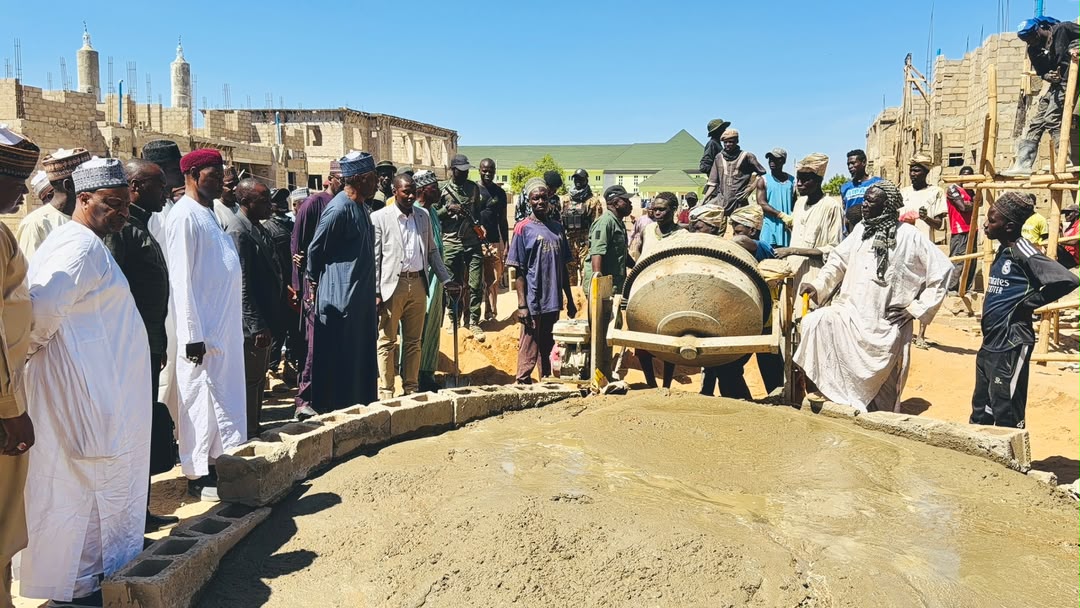
“Residents depend on the local government for essential services. Senior officials must report for duty and carry out their responsibilities.
Those who neglect their duties will face disciplinary action,” Zulum said.
The governor directed the Borno State Local Government Service Commission to compile a list of the affected officials and begin the administrative process of filling the posts to ensure that council services continue.

…Zulum halts work on nurses’ quarters
Governor Babagana Zulum also ordered the halting of construction at the nurses’ quarters after raising concerns about the quality of work.
During the visit, Zulum inspected ongoing projects at Dikwa General Hospital, the nurses’ quarters and a mega primary school.
Visibly dissatisfied with the standard of construction at the nurses’ quarters, he ordered work to stop immediately pending the engagement of another contractor.
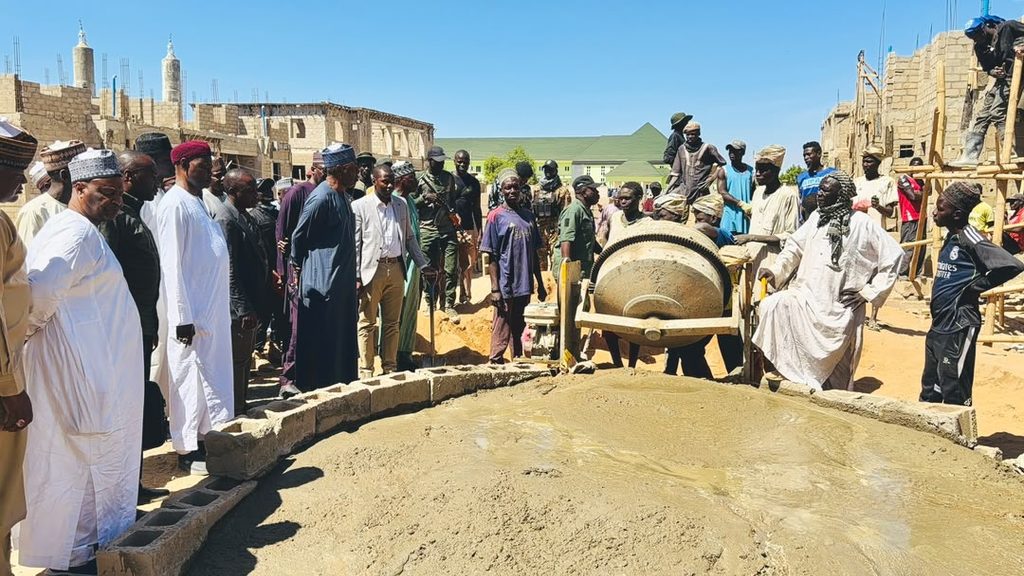
“Public funds must deliver buildings that are safe, durable and fit for use. Every contractor must meet the approved specifications. Those who fail to do so will be held accountable in accordance with the law,” Zulum stated.
Governor Zulum warned that contractors who fail to meet contractual specifications and approved standards would face immediate sanctions.
Zulum Orders Suspension of Dikwa Council Secretary, Directors Found Absent on Duty

Athena Graduates 13 Pioneer Fellows, Publishes Essays on Nigerian Unity

Tijjani Muhammed’s promotion to Lithuania’s top division excites Mailantarki Care FC

Prof. Faruk Buba is currently leading the affairs at UMTH

Roger Federer’s Shock as DNA Results Reveal Myla and Charlene Are Not His Biological Children

THE PLIGHT OF FARIDA

FAILED COUP IN BURKINA FASO: HOW TRAORÉ NARROWLY ESCAPED ASSASSINATION PLOT AMID FOREIGN INTERFERENCE CLAIMS
-
 News3 years ago
Roger Federer’s Shock as DNA Results Reveal Myla and Charlene Are Not His Biological Children
-
Opinions5 years ago
THE PLIGHT OF FARIDA
-
 News2 years ago
FAILED COUP IN BURKINA FASO: HOW TRAORÉ NARROWLY ESCAPED ASSASSINATION PLOT AMID FOREIGN INTERFERENCE CLAIMS
-
 Opinions5 years ago
POLICE CHARGE ROOMS, A MINTING PRESS
-

 News3 years ago
EYN: Rev. Billi, Distortion of History, and The Living Tamarind Tree
-

 ACADEMICS3 years ago
A History of Biu” (2015) and The Lingering Bura-Pabir Question (1)
-

 Columns3 years ago
Army University Biu: There is certain interest, but certainly not from Borno.
-

 Politics1 year ago
2027: Why Hon. Midala Balami Must Go, as Youths in Hawul and Asikira/Uba Federal Constituency Reject ₦500,000 as Sallah Gift
