
News
Obaseki’s Claims on Orhionmwon Land Grabbing are Misleading and Self-Serving

Obaseki’s Claims on Orhionmwon Land Grabbing are Misleading and Self-Serving
By Augustine Osayande PhD
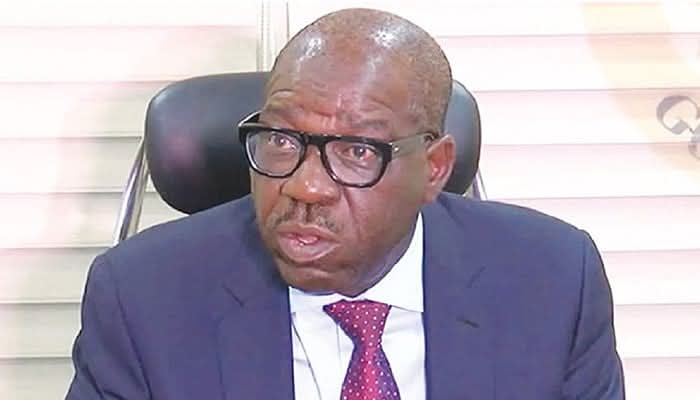
Former Governor Godwin Obaseki’s recent comments accusing Pastor Osagie Ize-Iyamu and Hon. Dennis Idahosa of “harassing investors” in Orhionmwon and Ovia are yet another attempt to distort facts and evade accountability. His claims of land grabbing are not only unsubstantiated—they follow a familiar pattern in which he manufactures political villains to divert attention from the controversies and community grievances that defined his administration.
For a political officeholder who openly claims Oredo Local Government as his home base, Obaseki’s decision to allocate more than 250,000 hectares of land in Orhionmwon Local Government Area to Saro Oil Palm Limited—without due regard for the ownership rights and interests of the host communities—is deeply troubling. The people of Orhionmwon are not tenants of the state government, and they cannot be pushed aside simply because a governor wishes to curry favour with select investors. This unilateral style of governance, where critical community interests are sacrificed at the altar of executive discretion, is precisely what Edo people rejected at the polls.
For me, one of the most troubling episodes of the Obaseki years remains the ordeal faced by the Ologbo-Nugu community in Orhionmwon Local Government Area—a story that never received the level of attention it deserved. While Obaseki was still governor, the people of this small rural community were forced to issue a desperate Save-Our-Soul (SOS) message over what they described as the forceful takeover of their ancestral land by an agricultural firm.
Let me be clear: the community never opposed investment or industrial development. In fact, like many rural communities in Edo State, they welcomed meaningful projects that could create jobs and improve livelihoods. But what they could not accept—and rightly so—was the manner in which Barnsley Nigeria Limited (BNL), operators of SARO Farms, went about asserting total control over their land. Instead of being partners in development, the community members felt bulldozed, ignored, and pushed aside.
I remember the images of their protest—their placards telling their story better than any official statement. “SARO, leave 250 hectares for us to farm or quit our land.” “Stop deceiving us.” “SARO, stop oppressing us. This is the only land we have.” These were not political slogans; they were cries for survival from people whose only source of livelihood was at stake.
The community wasn’t being unreasonable. They demanded something simple, fair, and already promised: that 250 hectares of their land be left for them to farm. That was the agreement. That was the governor’s directive. Yet, even this modest allocation was allegedly denied them, leaving them with no space to grow food crops, no way to sustain themselves, and no explanation.
The testimony that struck me the most came from the Odionwere of Ologbo-Nugu, Pa Aduwa Osaigbovo, a 96-year-old custodian of the community. Imagine a man of that age, who should be spending his days in peace, forced to lead a protest because his people were being displaced. In his gentle but pained voice, he described the actions of SARO Farms as “crude and barbaric”—not words he would use lightly.
He lamented that the company ignored the governor’s instruction to leave part of the land for the community. And he reminded the state, in a way that only someone with nearly a century of lived experience can that food scarcity is real, and that denying people farmland is condemning them to hardship.
What happened in Ologbo-Nugu is not just a community’s struggle—it is a stark reminder of what happens when development is done without humanity, without consultation, and without respect for the people whose lives are directly affected.
It is also part of why many Edo people remain skeptical when they hear politicians speak about “investor protection.” True development does not come at the cost of dispossessing ordinary people. True investment uplifts—it does not erase communities.
Ologbo-Nugu’s cry for help still echoes today, and until their grievances are addressed, it will remain a symbol of what went wrong under a government that often chose investors over the very people it was elected to serve.
Obaseki’s long-standing habit of personalising governance and portraying dissenting voices as enemies has never served the state well. Edo people do not desire leadership driven by threats, bitterness, and self-righteousness. They expect responsibility, transparency, engagement, and respect for lawful processes—values that were too often sidelined during his eight years in power.
Throughout his tenure, Obaseki routinely blamed others—political godfathers, party members, traditional rulers, labour unions, civil society, and virtually anyone who dared to question his opaque land deals or his confrontational style of administration. His latest attempt to accuse Ize-Iyamu and Idahosa of wrongdoing is simply an extension of this defensive posture. Communities in Orhionmwon, Ovia, and other affected areas have, for years, expressed dissatisfaction with land allocations issued without adequate consultation or compensation.
These legitimate grievances cannot be swept aside by pointing fingers at political opponents.
The allegations against Ize-Iyamu and Idahosa remain without evidence. Both men have consistently championed transparency, accountability, and genuine community involvement in land administration—principles that stand in stark contrast to the secrecy that characterised many of Obaseki’s investment agreements. If the former governor has credible proof that they engaged in land grabbing or investor harassment, he should present it publicly. Otherwise, his claims amount to nothing more than an attempt to shield his past decisions from the scrutiny they deserve.
Even more revealing is Obaseki’s suggestion that these political actors were “bitter because they couldn’t get access” to him during his tenure. This remark confirms what many Edo people suspected: that governance under Obaseki had become centralised, closed-off, and dependent on personal relationships rather than institutional processes. Public office is not a private estate, and no elected official is entitled to gatekeep the functions of the state.
If investors have genuine concerns, they should direct them through proper administrative channels, not hide behind the name of a former governor to generate unnecessary tension or manipulate public perception.
Obaseki’s threat that Governor Monday Okpebholo “will regret” ongoing inquiries into land matters is equally alarming. Edo people voted overwhelmingly for transparency, reform, and a full review of previous land allocations. No amount of political posturing, intimidation, or emotional blackmail will halt the push for clarity and accountability. The new administration is duty-bound to investigate all contentious land deals and ensure that community rights are upheld.
The truth is simple: investment thrives when communities are respected, agreements are clear, and government decisions are transparent. The real enemy of investor confidence is secrecy, not oversight. It is opaque decision-making—not due process—that discourages credible investors and fuels resentment among host communities.
Obaseki’s attempt to cast himself as the protector of investors does not align with the lived reality of the communities most affected by his policies. Edo State has now entered a new era—one committed to fairness, openness, community engagement, and shared prosperity.
In the end, Obaseki’s latest outburst deserves just one response: dismissal. Edo people have moved on, and no attempt to rewrite history or shift blame will change the record of his administration or obstruct the work of the current government.
Augustine Osayande, PhD contributed this piece from Abuja via austinelande@yahoo.com
Obaseki’s Claims on Orhionmwon Land Grabbing are Misleading and Self-Serving


That Curious Attack On Mustapha Gubio.
By: Inuwa Bwala.
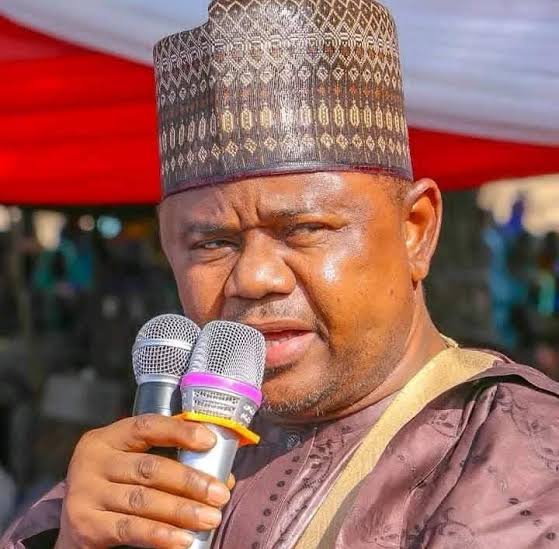
It was both chilling and curious, leaving many people still asking, the obvious question about what could be the motive behind last weeks attack on the convoy of Engineer Mustapha Gubio, governorship candidate of the All Progressives Congress, APC, for Borno state.
It is a truism that Boko Haram/ISWAP have been operating in Borno since 2009, especially in the Lake Chad axis, and the Gubio-Kareto-Damasak highway in northern Borno has been volatile.
It is a known fact that, the attackers often target soft spots and unguarded personnel.
But targetting Gubio and his entourage which was returning to Maiduguri after a thank-you tour to APC members in Damasak, headquarters of Mobbar Local Government Area, following his emergence as the party’s consensus candidate, is curious and worrisome.
It is not enough to say, that, the route has been plied by the state governor, Professor Babagana Umara Zulum, who has survived many such attacks.
Gubio’s convoy may not be less fortified, but against the background of our experiences and the fact that we have not experienced such in a long time, makes it more curious to ask, if Gubio is a particular target.
According to the Police, the convoy was targeted with Improvised Explosive Devices and Rocket Propelled Grenades, which again makes it obvious that the attack was premeditated.
A police armoured vehicle leading the convoy detonated a landmine and was badly damaged, which adds another angle to the possibility of a well planned ambush, that was not meant to give the candidate any chance of escape.
The attackers were said to have laid ambush with planted IEDs targeting the convoy and also fired several RPGs, implying a more organized act, different from the hitherto rag tag approach of Boko Haram or ISWAP.
Thanks to the combined team of soldiers, police, NSCDC, DSS, Civilian JTF and vigilante groups, who counter-engaged the attackers and forced them to retreat into the surrounding bush. A scan of the surrounding by Police tactical operatives who cleared the route to neutralise secondary explosive threats, points to the sophistication of Gubio’s security network.
AAlthough, no casualty was recorded among Gubio’s, government officials, or other political stakeholders in the entourage, it remains a terrifying moment, and one may be tempted to ask, who wants Gubio, dead?
One may say, that, the attack highlights the persistent security threat along the 156km Gubio-Kareto-Damasak corridor, a route long regarded as a flashpoint due to insurgent activity, but given our experiences with the targetting of political leaders in the past, a curious mind may not dismiss this as one of such cases of random incidents.
This is not the first time a high-profile Borno politician has been targeted. It may be recalled that, in the build up to the 2011 elections, the governorship candidate of the same ruling party, the APC, was ambushed and killed.
Several other politicians and businessmen had been targeted and killed in very curious circumstances.
As recent as 2020, the convoy of Governor Babagana Zulum was attacked near Baga, and the real circumstances surrounding the incident have remained cloudy.
To sweep this one under the carpet, as a mere Boko Haram ISWAP attack: to me may leave a window open for further mischief.
I have known Engineer Mustapha Gubio, as a consumate gentleman, who cannot hurt a fly.
His emergence as APC’s flagbearer has a lot of prospects, given his pledge to consolidate on Governor Zulum’s achievements in security, resettlement, education and agriculture.
I am aware that investigators may not have not named any individual or political actor behind the attack for now, but citizens are eager.
While accusing fingers point in the direction of Boko Haram/ISWAP terrorists, who may be seeking to destabilize the 2027 political process, a deeper linning could prop up another dangerous design.
As Borno counts its blessings that Gubio survived, the poser remains: Who wants Gubio dead? Until this is resolved and the terrorist, who may be mere canonfodders are fully uprooted, candidates, voters, and convoys will continue to move under the shadow of that question.
That Curious Attack On Mustapha Gubio.

Borno Christian Youth Leader Names Son After Zulum, Cites Governor’s Leadership
By: Michael Mike
A prominent Christian youth leader in Borno State, Mr Emmanuel Bulama, has named his newborn son Zulum in honour of Governor Babagana Zulum, citing the governor’s leadership, humanitarian interventions and commitment to rebuilding the state.
Bulama, who leads the Jere Christian Youth Forum, gave the name to his son during a naming ceremony held on Sunday, saying the decision was informed by what he described as the governor’s remarkable contributions to the development and welfare of the people of Borno.

The ceremony was officiated by Rev. Anthony Inuwa of the Church of Christ in Nations (COCIN), Old Maiduguri, who led the proceedings and offered prayers and blessings for the newborn and his family.
Explaining the significance of the name, Bulama said naming his son after the governor went beyond a personal tribute. According to him, it was also a prayer and an expression of hope that the child would grow into a man whose life would reflect the qualities he associates with Governor Zulum.
He specifically cited leadership, compassion, service to humanity and commitment to the people as qualities he hoped his son would emulate.
“This name is not just an honour to Governor Zulum; it is also a prayer for my son,” Bulama said, stressing that he desired the child to grow up with a strong sense of responsibility and dedication to the service of others.

The Christian youth leader said he hoped his son would become a responsible citizen who would make meaningful contributions to society and demonstrate concern for the welfare of others.
The gesture is particularly significant in a state where Governor Zulum’s administration has continued to place emphasis on rebuilding communities, strengthening social services and addressing the humanitarian consequences of years of insecurity.
The naming ceremony attracted prayers and goodwill messages for the newborn, his parents and the entire family, with prayers offered for the child to grow in wisdom, responsibility and service to humanity.
The event ended on a note of thanksgiving and celebration, with the family expressing gratitude for the safe arrival of the newborn and hope that the child would live up to the ideals symbolised by his name.
Borno Christian Youth Leader Names Son After Zulum, Cites Governor’s Leadership

OF DATTI BABA AHMED, COMPETENCE AND SHETTIMA’S CAP
By: Inuwa Bwala
I think Nigeria is tending towards a dangerous trend by making leaders become demigods, that should be hero worshipped.
How orherwise can one describe Datti Baba-Ahmed’s interview clip, about President Bola Ahmed Tinubu’s Aso-ebi signature “cap”, and the need for his Vice, Kashim Shettima, and indeed everybody in APC to wear it.
I used to count Dr. Datti, the 2023 Vice Presidential candidate of the Labour Party, as one of Nigeria’s finest intellectuals in politics, who should differ from others, but
Seeing trying to mock the VP, and talk about caps as a symbol of unity or lack of it, makes his credentials before me fall flat.
I expected him to speak on Kashim Shettima’s capacity, competence and suitability or lack of them.
Failing to do so, has however forced me: like many others to think otherwise of him.
As Vice President, Senator Kashim Shettima is the virtual face of the administration, who stands in for his principal effectively at national and international meets.
He chairs the National Economic Council and stirs governance on food security, MSMEs and getting Nigerians out of poverty.
If leadership is about caps, perhaps Tinubu would have gone for a tailor, but it is beyond such myopic assertions
The cap the VP wears is the Nigerian flag. The cap he bears is the responsibility of over 200 million Nigerians. That is heavier than any signature cap.
I think we should judge leaders by results on security, economy, and not dresscode.
Perhaps, Dr. Datti need to know that, , Vice President Kashim Shettima doesn’t wear a signature cap, because he wears that of a country, its burdens of insurgency and reconstruction on his head every day.
Like I said earlier, if the job was about matching caps, Nigeria would have hired a tailor, but the job is about matching competence with crisis. And in that, Nigerians will be the better judges.
Leadership is not fashion. While others are checking caps, VP Shettima is checking food prices, security briefings, and NEC decisions. Nigeria needs problem solvers, not fashion displays.
OF DATTI BABA AHMED, COMPETENCE AND SHETTIMA’S CAP

Kashim Shettima: Dirty Datti and his Tinubu cap theory

That Curious Attack On Mustapha Gubio.

Borno Christian Youth Leader Names Son After Zulum, Cites Governor’s Leadership

Roger Federer’s Shock as DNA Results Reveal Myla and Charlene Are Not His Biological Children

THE PLIGHT OF FARIDA

FAILED COUP IN BURKINA FASO: HOW TRAORÉ NARROWLY ESCAPED ASSASSINATION PLOT AMID FOREIGN INTERFERENCE CLAIMS
-
 News2 years ago
Roger Federer’s Shock as DNA Results Reveal Myla and Charlene Are Not His Biological Children
-
Opinions5 years ago
THE PLIGHT OF FARIDA
-
 News1 year ago
FAILED COUP IN BURKINA FASO: HOW TRAORÉ NARROWLY ESCAPED ASSASSINATION PLOT AMID FOREIGN INTERFERENCE CLAIMS
-

 News2 years ago
EYN: Rev. Billi, Distortion of History, and The Living Tamarind Tree
-
 Opinions5 years ago
POLICE CHARGE ROOMS, A MINTING PRESS
-

 ACADEMICS3 years ago
A History of Biu” (2015) and The Lingering Bura-Pabir Question (1)
-

 Columns3 years ago
Army University Biu: There is certain interest, but certainly not from Borno.
-

 Politics1 year ago
2027: Why Hon. Midala Balami Must Go, as Youths in Hawul and Asikira/Uba Federal Constituency Reject ₦500,000 as Sallah Gift
