
Northeast
Nigeria Woos Spanish Investors, Positions Economy as Gateway for Europe–Africa Trade

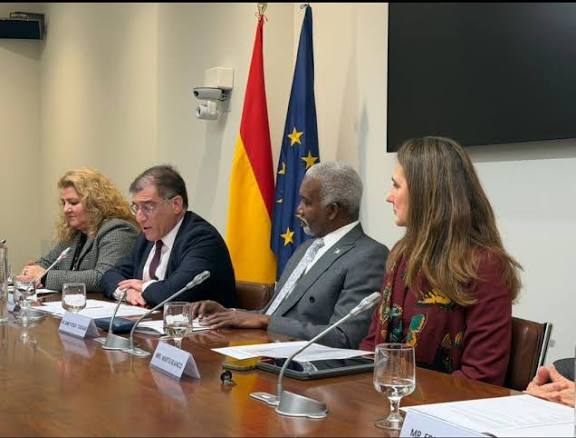
Nigeria Woos Spanish Investors, Positions Economy as Gateway for Europe–Africa Trade
By: Michael Mike
Nigeria has stepped up efforts to attract Spanish investment, presenting its economy as a strategic hub for expanding commercial ties between Europe and Africa.
This position was articulated during a high-level engagement with the Confederation of Spanish Business Organisations (CEOE), Spain’s leading private sector body, led by Nigeria’s Minister of Foreign Affairs, Ambassador Yusuf Maitama Tuggar. The meeting underscored Nigeria’s intention to deepen bilateral economic relations with Spain and encourage long-term private sector partnerships.
Addressing Spanish business leaders, Ambassador Tuggar described Spain as a strategic partner with strong capacity to serve as a bridge between African and European markets. He highlighted Nigeria’s ongoing economic reforms aimed at stabilising the economy, improving macroeconomic coordination and accelerating growth through diversification.
According to the minister, Nigeria’s growth trajectory is increasingly being driven by non-oil sectors, including agriculture, manufacturing, services, technology and global business services. He noted that the country’s large population—estimated at over 200 million, with more than 70 per cent under the age of 35—offers a vast market and a dynamic workforce capable of supporting large-scale investment.
Nigeria also emphasised its strategic relevance to Spanish companies as Africa’s largest economy and a natural gateway to West and Central Africa. Through the African Continental Free Trade Area (AfCFTA), investors operating from Nigeria can access a market of over 1.3 billion people across the continent. The government stressed its preference for productive, long-term investments that promote technology transfer, value-chain development and sustainable industrial growth.
Several priority sectors were highlighted as areas of opportunity for Spanish firms. In the energy and gas sector, Nigeria pointed to its extensive reserves and opportunities in liquefied natural gas, power generation, petrochemicals, fertiliser production and energy transition projects, including major regional gas pipeline initiatives. Agriculture and agro-processing were also identified as key areas, with opportunities in mechanisation, food processing, cold-chain logistics and export-oriented agribusiness.
Infrastructure development featured prominently in the discussions, particularly public–private partnerships in transport, logistics and industrial zones. Nigeria further presented itself as an emerging hub for Business Process Outsourcing (BPO), citing its young, English-speaking and digitally skilled workforce as a competitive advantage for European companies seeking cost-effective service delivery. Technology, fintech, digital infrastructure, creative industries and professional services were also listed as fast-growing sectors.
On migration, Nigeria reiterated its commitment to structured and legal labour mobility, stressing that it does not support irregular migration. The country commended Spain’s circular migration framework, noting that properly managed labour mobility can support business needs, reduce irregular migration and strengthen bilateral trust.
Nigerian officials also outlined ongoing policy reforms aimed at improving the ease of doing business, strengthening regulatory transparency and protecting investors. They assured potential investors of incentives, sector-specific support and expanding infrastructure, while emphasising the role of diaspora- and skills-based investment in linking global expertise with domestic opportunities.
Nigeria invited CEOE to play a catalytic role by encouraging Spanish companies to establish production and service operations in the country, support joint ventures and small and medium-sized enterprise partnerships, and help reshape Europe–Africa economic relations around mutual benefit.
The engagement concluded with Nigeria reaffirming its openness to deeper economic cooperation with Spain, inviting Spanish businesses to invest, build and grow in the country as a platform for sustainable growth, job creation and long-term value across both regions.
Nigeria Woos Spanish Investors, Positions Economy as Gateway for Europe–Africa Trade


Northeast
Diaspora Investment: NiDCOM, NDSI Move to Bridge Trust Deficit, Unlock Billions in Nigerian Capital
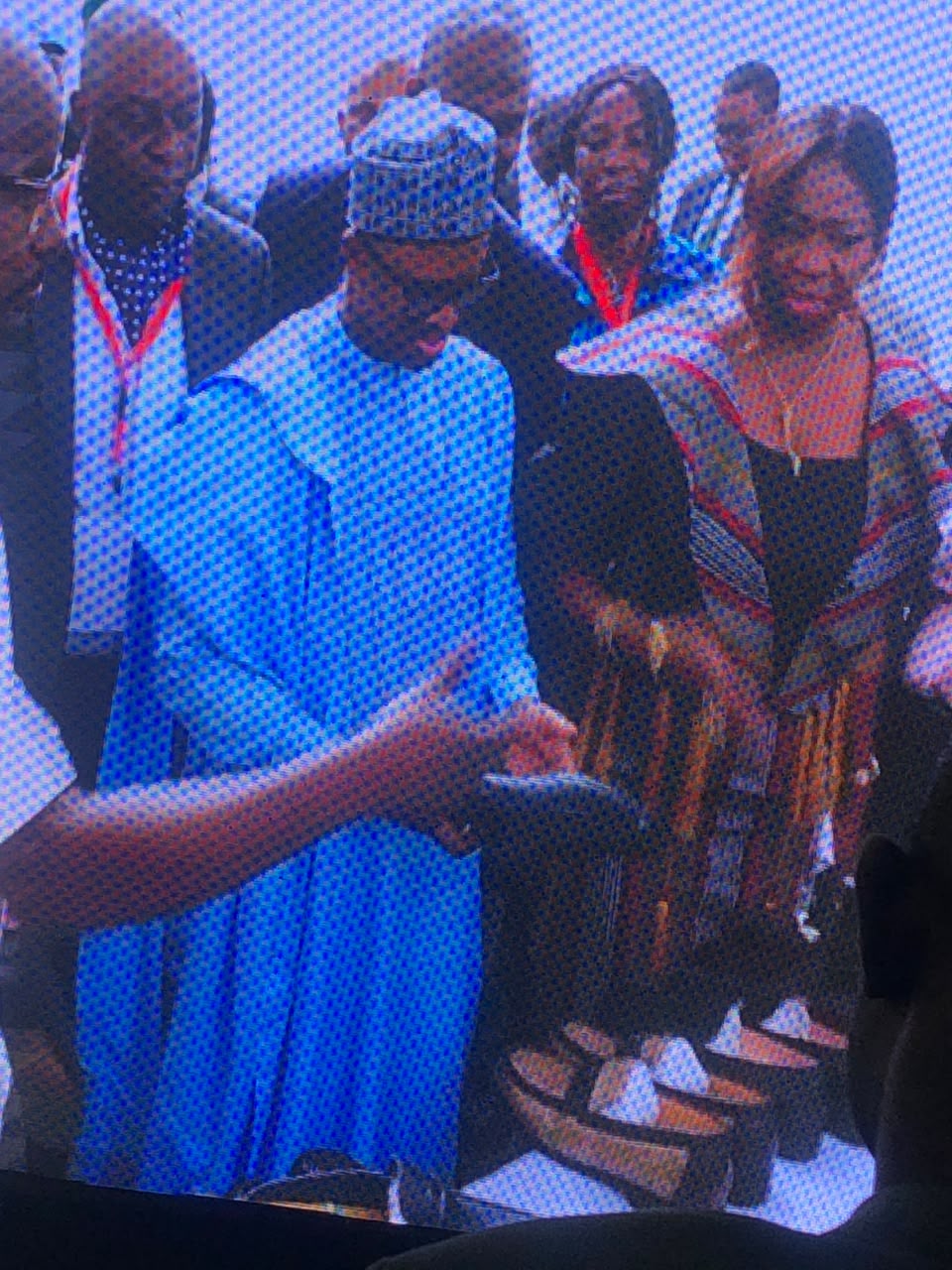
Diaspora Investment: NiDCOM, NDSI Move to Bridge Trust Deficit, Unlock Billions in Nigerian Capital
…Investors demand credible projects, transparency, stronger safeguards as regulators open direct engagement with Nigerians abroad
By: Michael Mike
Nigeria is seeking to unlock billions of dollars in potential diaspora investments by confronting the trust deficit, weak investment transparency and inadequate investor protection mechanisms that have discouraged many Nigerians abroad from committing capital to projects at home.
The Nigerians in Diaspora Commission (NiDCOM) and the Nigeria Diaspora Summit Initiative (NDSI) have identified the credibility of investment opportunities, regulatory transparency and accountability in project execution as critical to converting diaspora financial resources into productive investments capable of driving economic growth.
Chairman/Chief Executive Officer of NiDCOM, Hon. Abike Dabiri-Erewa, said Nigeria’s diaspora community possessed enormous financial, professional, entrepreneurial and intellectual resources that could support the country’s ambition to build a $1 trillion economy if credible investment channels and adequate institutional safeguards were put in place.
Dabiri-Erewa spoke on Tuesday at the opening of the ninth Nigeria Diaspora Investment Summit (NDIS) 2026, organised around the theme, “Bridging the Trust Gap: Connecting Diaspora Capital with Credible Home-Based Opportunities.”
She said the time had come to move diaspora engagement beyond remittances and informal investment arrangements to structured, transparent and commercially viable opportunities capable of generating sustainable economic returns.
According to her, although Nigerians in the diaspora contribute billions of dollars annually through remittances, their wider investment potential remains largely untapped because of concerns over transparency, unreliable project information, opaque transactions and fraudulent investment schemes.
She identified the knowledge gap and trust deficit as two major barriers that have continued to constrain the flow of diaspora capital into productive sectors of the Nigerian economy.
“Unlocking diaspora capital requires more than passion or patriotism; it demands institutional transparency, robust regulatory safeguards, verified service providers, and clear investor protection frameworks,” she said.
The NiDCOM chief executive said the Commission was committed to transforming diaspora engagement from general advocacy into structured, secure and profitable investment pathways.
She explained that the summit had been designed to give prospective investors direct access to institutions responsible for regulating Nigeria’s financial markets, facilitating infrastructure investments and improving the business environment.
The first day’s deliberations focus on capital market opportunities, with the Securities and Exchange Commission (SEC), Nigerian Exchange Group (NGX), Central Bank of Nigeria (CBN) and Ministry of Finance Incorporated (MOFI) expected to guide participants on regulated financial instruments, investment risks, entry requirements and dispute resolution mechanisms.
The second day is dedicated to infrastructure and regulatory frameworks, with the Infrastructure Concession Regulatory Commission (ICRC), Nigerian Sovereign Investment Authority (NSIA), MOFI and Corporate Affairs Commission (CAC) expected to provide information on infrastructure projects and investment opportunities under Public-Private Partnerships.
Other participating institutions, including the Presidential Enabling Business Environment Council (PEBEC) and Nigerian Export Promotion Council (NEPC), are expected to address business registration, regulatory compliance, anti-fraud safeguards, property documentation and reforms aimed at improving the business environment.
Dabiri-Erewa said the interactive sessions would enable diaspora investors to engage directly with regulators, scrutinise investment opportunities and obtain answers to questions relating to due diligence and the protection of their funds.
She urged Nigerians abroad to move away from informal and unverified investment channels and take advantage of the institutional mechanisms being presented at the summit.
“Under the Renewed Hope Agenda of President Bola Ahmed Tinubu, Nigeria is open, improving, and ready for your structured engagement,” she said.
She also challenged regulatory agencies, financial institutions and service providers participating in the summit to demonstrate transparency and strengthen the confidence of Nigerians abroad in the country’s investment environment.
In his welcome address, Chairman of the Summit Organising Committee and NDIS Coordinator, Mobolaji Lewis, said the central challenge confronting diaspora investment was not necessarily a lack of interest or financial capacity among Nigerians abroad, but persistent concerns about the credibility of investment opportunities and the protection of their funds.
He identified transparency, regulatory procedures, project execution, financial accountability and investor protection as critical factors influencing the willingness of Nigerians abroad to commit capital to the domestic economy.
Lewis said the summit had evolved into an important platform for connecting Nigerians in the diaspora with investment opportunities, institutions and stakeholders in Nigeria, while providing an avenue to convert their financial resources, professional expertise, entrepreneurial capabilities and global networks into productive investments.
He explained that the decision to scale down the physical summit in 2026, against the backdrop of the national election campaign season, informed the adoption of a two-day virtual engagement to sustain investment promotion and institutional collaboration.
According to him, the organisers deliberately moved beyond merely showcasing investment opportunities to helping prospective investors understand how to identify, verify, access and participate in credible projects in Nigeria.
“Building investor confidence requires a coordinated institutional response. No single organisation can independently address all the concerns of prospective investors,” Lewis said.
He urged participating regulators, financial institutions and government agencies to make their presentations practical, transparent and investor-focused, while encouraging Nigerians abroad to ask questions, seek clarification and engage directly with institutions responsible for facilitating and regulating investments.
Lewis said the success of the programme should not be measured merely by the number of participants or presentations, but by the quality of engagements established, the confidence generated and the investment partnerships that emerge.
He added that the 2026 engagement would lay the groundwork for the full Nigeria Diaspora Investment Summit in 2027, which would mark the 10th anniversary of the initiative.
The summit is being organised by NDSI in collaboration with NiDCOM, with support from corporate partners, including First Bank of Nigeria Plc, O3 Capital and AG Mortgage.
Nigeria’s renewed effort to attract diaspora investment comes against the backdrop of its longstanding dependence on remittances from citizens abroad as an important source of foreign exchange and household support.
However, converting a greater proportion of these financial flows into long-term productive investments remains a major policy challenge, particularly in an environment where prospective investors demand verifiable projects, transparent transactions, effective oversight and credible mechanisms for resolving disputes.
For the organisers, the challenge therefore goes beyond persuading Nigerians abroad to bring their money home. It is about rebuilding confidence in the country’s investment environment and ensuring that diaspora resources translate into viable businesses, infrastructure and sustainable economic opportunities.
Ultimately, the success of the initiative will depend not on how strongly Nigeria appeals to the patriotism of its citizens abroad, but on how convincingly it demonstrates that their investments are safe, their interests protected and the opportunities presented are capable of delivering sustainable returns.
That is the trust gap the ninth Nigeria Diaspora Investment Summit seeks to bridge, making confidence, rather than patriotism alone, the foundation for bringing diaspora capital into Nigeria’s economy.
Diaspora Investment: NiDCOM, NDSI Move to Bridge Trust Deficit, Unlock Billions in Nigerian Capital
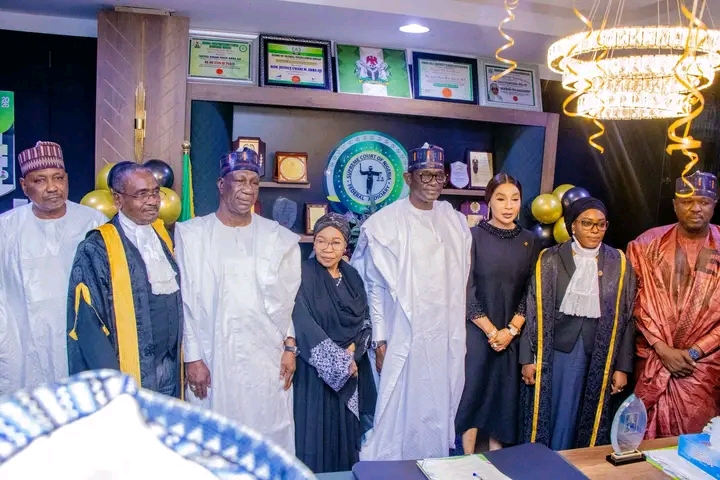
Governor Buni urges citizens to emulate Justice Uwani
By: Yahaya Wakili
Yobe State governor, Hon. Mai Mala Buni CON, COMN, has called on the people of the state to emulate the former supreme court judge, Justice Uwani Abba Aji CFR, as good ambassadors of the state.
Governor Buni stated this today while attending the valedictory session in honour of the retirement of supreme court judge and distinguished daughter of the state, Justice Uwani Abba Aji CFR.
The governor was accompanied by the Yobe state APC gubernatorial candidate, Alhaji Baba Malam Wali mni, his running mate, Barr. Saleh Samanja, and Senator Mohammed Ibrahim Bomai, Yobe South Senatorial District.
Others dignitaries accompanied the governor include the State Commissioner for Justice, Prof. Abubakar Kagu; the Chief of Staff to the Governor, Buni; Alhaji Abdullahi Gashu’a, Special Adviser on Religious Affairs; and some permanent secretaries.
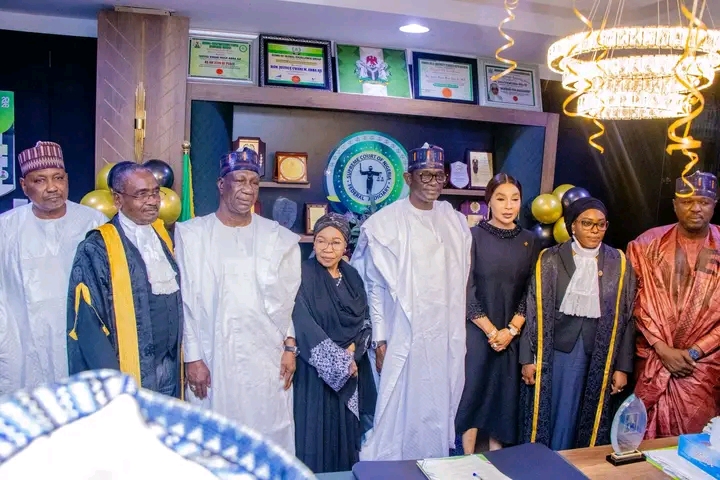
Similarly, Alhaji Saleh Abubakar DG Great Green Wall, Alhaji Muhammadu Wali Nguru, Barr. Bala Haladu, Engr. Ahmed Amshi and other prominent sons and daughters of the state were at the supreme court to celebrate the glorious exit of the legal luminary from the service.
The Chief Judge of Nigeria, Hon. Justice Kudirat Kekere-Ekun GCON, alongside His Excellency Governor Mai Mala Buni, the Minister of Justice, the Nigeria Bar Association and others, applauded Justice Uwani for her commitment and humility.
Governor Buni prayed to Almighty Allah to grant her a long life and a happy and peaceful life in retirement, Ameen.
Governor Buni urges citizens to emulate Justice Uwani
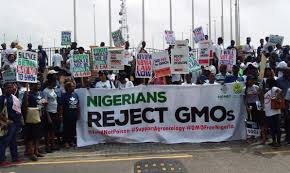
Coalition Urges Lagos Assembly to Ban GMOs, Cites Health, Environmental Risks
By: Michael Mike
A coalition of more than 70 organisations has called on the Lagos State House of Assembly to ban genetically modified organisms (GMOs), revoke existing approvals and investigate their long-term health and environmental implications.
The coalition, comprising scientists, farmers, food sovereignty advocates, environmentalists, nutritionists, women and youth groups, made the demand in a joint position paper submitted during an awareness rally in Lagos on Thursday.
The rally was organised by the Health of Mother Earth Foundation (HOMEF), Environmental Rights Action (FoEN/ERA), Corporate Accountability and Public Participation Africa (CAPPA), Kebetcache Women Development and Resource Centre, and the GMO-Free Nigeria Alliance.
The groups argued that the cultivation and use of GMOs could threaten Nigeria’s biodiversity, undermine farmers’ control over seeds and expose consumers and the environment to potential risks.
They expressed concern that cross-pollination from genetically engineered crops could contaminate indigenous plant varieties, while the transfer of toxins from crops such as Bt cowpea and Bt cotton could affect soil health and ecological balance.
The coalition also warned that patent restrictions on genetically modified seeds could force farmers to purchase seeds repeatedly, weakening the traditional practice of saving, reusing and sharing seeds and increasing dependence on multinational corporations.
HOMEF’s Director of Programmes, Joyce Brown, said opposition to GMOs was not peculiar to Nigeria, noting that several countries had adopted restrictions or bans on genetically modified crops.
She cited concerns about biodiversity as one of the reasons some countries had imposed restrictions, urging Nigerian authorities to examine the potential implications of GMOs for the country’s food system and environment.
Brown said the coalition wanted the Lagos Assembly to push for a ban, including the reversal of existing permits, and an extensive investigation into the long-term effects of GMOs.
She added that such a move would build on a 2024 motion by the House of Representatives seeking the suspension of GMOs and an investigation into approvals already granted.
According to her, action by Lagos could encourage other states to consider measures aimed at protecting local food systems, indigenous seeds and the environment.
Also speaking, molecular biologist and public health policy analyst, Dr Ifeanyi Casmir, urged Nigeria to adopt a precautionary, transparent and people-centred biotechnology policy.
Casmir cited what he described as potential allergenic, toxicological, reproductive and ecological risks, arguing that the country’s existing food system, biodiversity and public health challenges made it necessary to exercise caution.
He claimed that research had detected Cry toxins, used in genetically engineered crops to control insect pests, in the blood of pregnant women and umbilical cord blood, raising questions about possible fetal exposure.
An Associate Director at CAPPA, Olamide Martins, questioned the adequacy of Nigeria’s biosafety regulatory framework, saying more than 20 products had reportedly received approval since 2016 for purposes including commercial cultivation, food, animal feed and processing.
He argued that the absence of demonstrable long-term, independent risk assessments was a major concern, given the potential implications for public health, environmental safety and food sovereignty.
HOMEF Project Officer, Esele Ojeanelo, said the patent requirements associated with some genetically modified seeds could restrict farmers’ ability to retain and reuse seeds, undermining their independence and threatening indigenous crop varieties.
“A nation cannot secure its food future by surrendering control of its seeds, its biodiversity and its farming system to corporate control,” Ojeanelo said.
She called for policies that would protect farmers’ rights to preserve indigenous varieties and support locally rooted, sustainable agricultural practices.
Beyond the proposed GMO ban, the coalition urged the Lagos State Government to address insecurity that prevents farmers from accessing their farms and strengthen support for smallholder farmers through extension services, infrastructure and improved access to land and markets, particularly for women and young people.
The groups also called for increased investment in agroecology, which they said could strengthen local economies while promoting food security, biodiversity and farmers’ control over food production.
The position paper was endorsed by the GMO-Free Nigeria Alliance, which the organisers said comprises more than 70 organisations.
Coalition Urges Lagos Assembly to Ban GMOs, Cites Health, Environmental Risks
Coalition Urges Lagos Assembly to Ban GMOs, Cites Health, Environmental Risks

EU, Nigeria Expand Cooperation on Migration, Security with €112m Support

DSS Intercept Weapons Shipment from Niger Republic, Recover 21 AK-47 Rifles, Four PKT Machine Guns in Sokoto

INEC Proposes Democratic Freedoms Compact to Safeguard 2027 Elections

Roger Federer’s Shock as DNA Results Reveal Myla and Charlene Are Not His Biological Children

THE PLIGHT OF FARIDA

FAILED COUP IN BURKINA FASO: HOW TRAORÉ NARROWLY ESCAPED ASSASSINATION PLOT AMID FOREIGN INTERFERENCE CLAIMS
-
 News3 years ago
Roger Federer’s Shock as DNA Results Reveal Myla and Charlene Are Not His Biological Children
-
Opinions5 years ago
THE PLIGHT OF FARIDA
-
 News2 years ago
FAILED COUP IN BURKINA FASO: HOW TRAORÉ NARROWLY ESCAPED ASSASSINATION PLOT AMID FOREIGN INTERFERENCE CLAIMS
-
 Opinions5 years ago
POLICE CHARGE ROOMS, A MINTING PRESS
-

 News3 years ago
EYN: Rev. Billi, Distortion of History, and The Living Tamarind Tree
-

 ACADEMICS3 years ago
A History of Biu” (2015) and The Lingering Bura-Pabir Question (1)
-

 Columns3 years ago
Army University Biu: There is certain interest, but certainly not from Borno.
-

 Politics1 year ago
2027: Why Hon. Midala Balami Must Go, as Youths in Hawul and Asikira/Uba Federal Constituency Reject ₦500,000 as Sallah Gift
