
National News
El-Rufai Puts Ribadu on Trial

El-Rufai Puts Ribadu on Trial
By Frank Tietie
A man who is neither drunk nor high on drugs, but in his clear and sane mind, goes on a prime-time show on a continental television network like the Arise News Channel and proclaims that he got information from someone who tapped the phone line of the National Security Adviser (NSA) of the Federal Republic of Nigeria. How should the Nigerian government react?
It becomes a Catch-22 for the Nigerian government whether to respond to El-Rufai’s latest tirade. But to react hastily would fail to see the damning point Nasir El-Rufai is trying to make, which is to show the ineptitude of Nuhu Ribadu as NSA. The government should have seen through the former Kaduna State governor’s bravado.
Of course, El-Rufai knows the possibility that Ribadu would fall for the trick and might actually order his detention, either for statements made on live international television or for the bared waiting fangs of the EFCC. Sonit appears he had prepared for the worst, but probably not for death in the hands of his sworn enemies through poisoning. Hence, he immediately alerted the world to the Gestapo treatment that is usually given to some government enemies when they are in detention. So he quickly accuses the same Nuhu Ribadu of importing thallium sulphate, a lethal poison suitable for eliminating political enemies quietly. This he has done, in case he, himself or any other opposition politicians die in detention as 2027 approaches. What a way to shift the burden?
The choice of the government to charge El-Rufai for cybercrimes over the claims he made on live on Arise News Prime Time show about tapping the NSA’s phone is a tacit yet loud acknowledgement that any NSA whose phone can be tapped so easily is not only incompetent, but highly undisciplined and lackadaisical on national security matters. Tell me, which serious country, like the United States of America, the United Kingdom, France, Germany, Russia, or Saudi Arabia, would take the National Security Adviser of Nigeria seriously if they knew that an ordinary citizen could easily tap his phone?
What Malam Nasir El-Rufai has done is not to present technical evidence of interception. Rather, he has thrown a political gauntlet designed to provoke a reaction. The trap is simple: once the state moves against him, the conversation shifts from the accuracy of his claim to the conduct and capability of those charged with safeguarding national security.
A hurried resort to criminal prosecution risks missing the wider implication that public officers, particularly those occupying sensitive security positions, are expected to inspire confidence, not anxiety.
Therefore, if the state frames a prosecution around a claim that the NSA’s line could be tapped, the unintended consequence is that the allegation receives international circulation, renewed media life and diplomatic attention. In effect, the courtroom becomes a megaphone for the NSA’s failures.
Consequently, if the charge against El-Rufai is driven by reputational discomfort or the political embarrassment that he has caused Ribadu or the Tinubu government. It risks being counterproductive, especially in a democratic setting that has a high tolerance for speech directed at public officials.
Statements that are provocative, speculative or even reckless are often part of political contestation, especially as 2027 approaches. They should not be the basis for criminal charges. Such statements are best answered by clarification, transparency, and institutional reassurance, rather than the coercive weight of arrest, arraignment, and trial.
To prosecute El-Rufai in circumstances such as this may therefore produce the exact opposite of deterrence. It can elevate and transform him into a cause, especially among Northern Nigeria elements, and suggest that the government is more eager to punish criticism than to disprove it.
The other dimension is the possibility that such a trial would invite scrutiny, arguments, cross-examinations, and global reporting, further exposing Ribadu or the government. Meanwhile, silence would have buried it faster.
Instead of dismissing El-Rufai as someone probably chasing political clout, the choice to charge him would validate his point and expose Nuhu Ribadu as unfit to be NSA.
El-Rufai is no ordinary politician. He combines the arts of casuistry, statecraft, populism and activism for political relevance, and he is yet on another journey to reinvent himself politically to the detriment of his foes like Ribadu. But he also wants to come out alive. And even if he dies in the process, he seems not to care much, as long as such would deal the maximum blow to the political careers of his traducers.
If anyone thinks El-Rufai is being diminished by his latest travails, they should think again. In fact, it is he who is putting some persons on trial in the court of reason.
Frank Tietie
Lawyer and Public Affairs Commentator,
Writes from Abuja
El-Rufai Puts Ribadu on Trial


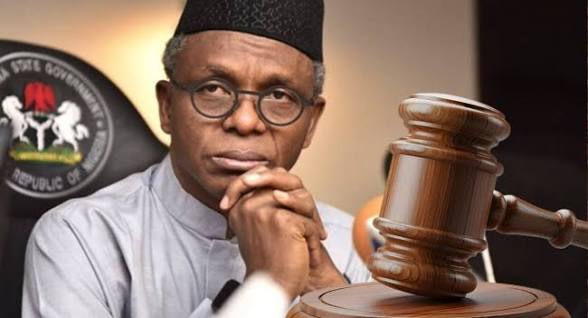
Court Dismisses El-Rufai’s N120m Rights Violation Suit Over Alleged Wiretapping
By: Zagazola Makama
A High Court of the Federal Capital Territory (FCT) on Monday dismissed a N120 million fundamental rights enforcement suit filed by former Kaduna State Governor, Mallam Nasir El-Rufai, against the Department of State Services (DSS), the Economic and Financial Crimes Commission (EFCC), the Independent Corrupt Practices and Other Related Offences Commission (ICPC) and the Attorney General of the Federation (AGF).
The court dismissed the suit for lacking merit and awarded N200,000 each in favour of the DSS, EFCC and ICPC.
Delivering judgment, Justice Sylvanus Orji held that the invitation letters issued to El-Rufai by the EFCC and ICPC complied with constitutional requirements and did not violate his fundamental rights.
On El-Rufai’s challenge to an attempted arrest by the DSS at the Nnamdi Azikiwe International Airport, Abuja, the judge held that the service possessed powers to carry out its statutory responsibilities pursuant to the relevant legal instruments governing its operations, including the National Security Agencies Act.
The court further held that the DSS had the mandate to maintain watchlists and take appropriate action, including arresting persons of interest within the scope of its lawful powers.
Justice Orji stressed that El-Rufai could not use the court to prevent security and law enforcement agencies from performing their legally assigned duties.
On the seizure of the former governor’s international passport by the DSS, the court held that it was satisfied that the action was lawful and within the agency’s powers.
The judge also ruled that the applicant had failed to establish that the seizure was continuous, permanent and unlawful in a manner that amounted to a violation of his fundamental rights.
The suit sought N120 million in damages over alleged violations of El-Rufai’s rights in connection with the actions of the security and anti-corruption agencies.
The ruling represents a setback for the former governor in his legal challenge to the actions taken by the agencies.
Court Dismisses El-Rufai’s N120m Rights Violation Suit Over Alleged Wiretapping

NHRC Raises Alarm Over Child Abuse, Custodial Torture, Civic Freedom Violations
By: Michael Mike
The National Human Rights Commission (NHRC) has called for stronger safeguards against violence and exploitation targeting women and children, tighter oversight of detention facilities and increased protection of civic freedoms ahead of Nigeria’s 2027 general elections.
The Executive Secretary of the Commission, Dr Tony Ojukwu, said persistent cases of sexual and gender-based violence, child abuse, discrimination and other forms of exploitation required more effective prevention mechanisms, thorough investigations and improved access to justice.
Ojukwu, who spoke in Abuja during the presentation of the Commission’s September 2026 Human Rights Situation Dashboard, urged government authorities to translate ongoing reforms into practical protection for vulnerable Nigerians, particularly children in underserved communities.
He welcomed the September stakeholders’ engagement on the review of the Child Rights Act, 2003, describing it as an opportunity to address gaps in the country’s child protection framework and strengthen institutional responses to violence and exploitation.
He, however, stressed that reviewing the law would not be sufficient without adequate funding, stronger institutions and effective implementation capable of delivering tangible protection to children.
The NHRC chief called on relevant authorities to ensure that the reform process produced practical measures to prevent abuse, protect vulnerable children and improve access to justice for victims.
On the treatment of detainees, Ojukwu emphasised the importance of independent monitoring of custodial facilities, warning that effective human rights protection required sustained oversight of institutions responsible for enforcing the law.
He disclosed that the Commission, through its National Preventive Mechanism, validated its 2025–2026 annual report on September 25, bringing together stakeholders to examine findings and recommendations on preventing torture and other forms of ill-treatment in places of detention.
According to him, the exercise was aimed at identifying systemic weaknesses that expose detainees to abuse and strengthening measures to prevent violations.
He said independent monitoring of detention facilities remained critical to accountability within the justice and law enforcement systems, particularly in ensuring that people deprived of their liberty continued to enjoy the protection of the law.
The Commission also stepped up efforts to monitor threats to civic freedoms as political activities gather momentum ahead of the 2027 general elections.
Ojukwu disclosed that the NHRC, in collaboration with the Nigeria Network of NGOs and with support from Heinrich Böll Stiftung Nigeria and the Office of the United Nations High Commissioner for Human Rights, organised a training workshop for the Commission’s state coordinators on Tuesday, October 13.
The workshop focused on operationalising the NHRC’s advisory opinion on promoting and protecting civic space and human rights, issued on May 18, 2026.
The initiative is expected to strengthen the capacity of state offices to identify, document and report violations affecting civic space, including restrictions on peaceful assemblies and regulatory practices affecting civil society organisations.
Ojukwu said integrating civic space monitoring into the Commission’s Human Rights Observatory and Dashboard would improve its ability to detect emerging threats and facilitate timely institutional responses.
He stressed that democratic governance must be measured not only by the conduct of elections but also by the extent to which citizens could freely express their views, associate with others, assemble peacefully and participate meaningfully in public affairs.
The Commission called on government institutions, security agencies, civil society organisations and development partners to intensify collaboration in addressing the underlying causes of human rights violations.
Ojukwu said the NHRC would continue to strengthen its monitoring and reporting systems, improve investigations and complaints resolution, and ensure that documented findings informed policy decisions and institutional reforms.
He maintained that the Commission’s responsibility extended beyond recording allegations to helping prevent violations, securing remedies for victims and ensuring accountability.
“The true measure of our progress is not simply the number of complaints documented, but the extent to which our collective efforts improve the lives of Nigerians,” he said.
He urged stakeholders to act on the findings and recommendations of the September dashboard, stressing that sustained collective action was necessary to prevent human rights violations, secure justice for victims and hold public institutions accountable.
The Commission’s renewed emphasis on child protection, custodial oversight and civic freedoms comes as Nigeria prepares for the 2027 general elections, placing the protection of fundamental rights and accountability for alleged abuses among the issues requiring sustained attention from public institutions.
NHRC Raises Alarm Over Child Abuse, Custodial Torture, Civic Freedom Violations
National News
KACRAN Challenges 19 Northern Governors to Adopt Buni’s Commercial Revolution Blueprint
KACRAN Challenges 19 Northern Governors to Adopt Buni’s Commercial Revolution Blueprint
..Calls on Tinubu to Provide Soft Loans to Traders, Says Markets, Factories Can Create Millions of Jobs
By: Michael Mike
The Kulen Allah Cattle Rearers Association of Nigeria (KACRAN) has challenged the 19 governors of Northern Nigeria to adopt Yobe State Governor Mai Mala Buni’s commercial development blueprint, describing it as a potential pathway to economic recovery, job creation and improved security across the region.
The association also urged President Bola Tinubu to provide accessible soft loans and special intervention funds for traders and entrepreneurs operating in newly developed markets, saying inadequate business capital remains a major constraint to unlocking the economic potential of Northern Nigeria.
KACRAN, in a statement issued on Tuesday by its National President, Hon. Khalil Mohammed Bello, said the region needed a deliberate economic revival strategy to address insecurity, industrial decline, youth unemployment and the disruption of agriculture and livestock production.
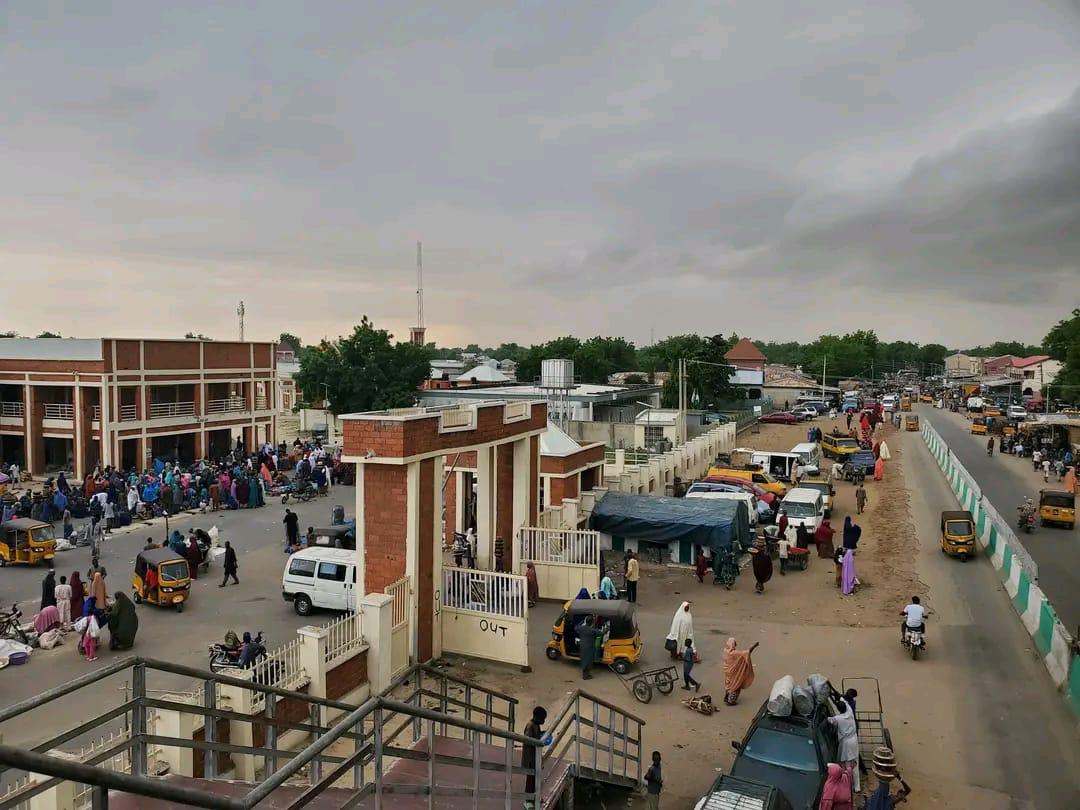
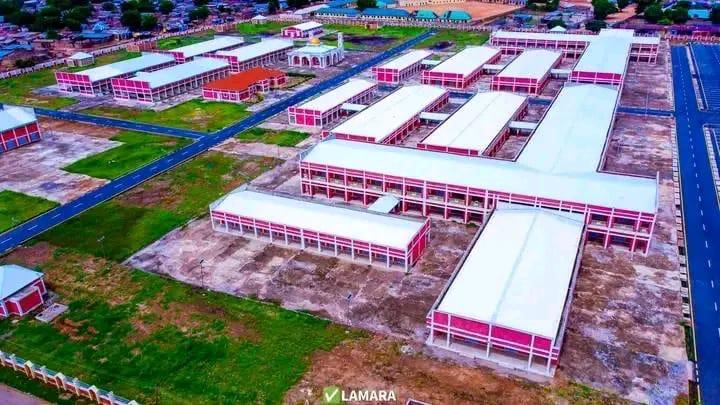
It identified Buni’s investment in modern markets, trailer parks and sesame seed processing facilities as a model that other Northern states could replicate to stimulate commercial activities and create employment opportunities.
According to the association, the Yobe State Government has invested billions of naira in the construction of modern markets across the state’s 17 local government areas, with projects completed in major commercial centres and others approaching completion.
It listed Potiskum, Damaturu, Gashua, Nguru and Gaidam among the towns where modern markets have been completed, adding that Gujba and Fune are among the local government areas expected to have two markets each.
The association said the completed and ongoing projects would bring the total number of modern markets to 19.
It also highlighted the construction of two trailer parks in Potiskum and Damaturu, noting that the Potiskum facility had been completed while work was ongoing in Damaturu.
According to KACRAN, the trailer parks are expected to strengthen transportation and facilitate the movement of goods, while four sesame seed cleaning and packaging factories established in Nguru, Machina, Damaturu and Potiskum would support agricultural value addition and industrial development.
The association argued that investments in commercial infrastructure and agro-processing could expand economic opportunities, improve market access for farmers and traders, and create jobs for young people.
It, however, stressed that infrastructure alone would not be sufficient to achieve the desired economic transformation without access to affordable financing for businesses.
KACRAN therefore called on Tinubu to introduce special credit facilities for traders and entrepreneurs who had secured space in the new markets, arguing that access to working capital would enable them to expand their businesses, employ more people and strengthen economic activities along the commercial value chain.
The association said the proposed intervention could also help reduce the vulnerability of unemployed youths to criminal recruitment by providing more sustainable livelihood opportunities.
In making its case for a regional economic revival, KACRAN recalled what it described as Northern Nigeria’s historical reputation for peaceful coexistence, hospitality, commercial enterprise and trust-based business relationships.
It lamented that insecurity, the collapse of industries, ethno-religious divisions and political mistrust had undermined these traditions, while insurgency had disrupted farming, cattle rearing and fishing in several communities.
The association said the region needed to rebuild its economic foundations by investing in productive infrastructure, supporting private enterprise and creating opportunities for its growing youth population.
It traced its call for a new commercial development strategy to the economic and social changes that had taken place since the era of the late Premier of Northern Nigeria, Sir Ahmadu Bello, arguing that restoring the region’s prosperity required practical policies rather than nostalgia.
KACRAN particularly commended Buni for what it described as his commitment to reviving Yobe’s commercial sector despite the challenges posed by years of insurgency.
It also praised the state’s Commissioner for Commerce, Industry, Tourism and Solid Minerals, Hon. Kaigama Umar, alongside the ministry’s permanent secretary, directors, the management of Yobe State Investment Company and other officials involved in supervising the projects.
The association said the officials’ contributions had helped advance the state’s commercial infrastructure programme.
It maintained that replicating the Yobe model across Northern Nigeria, supported by affordable credit and effective implementation, could strengthen regional trade, expand employment and contribute to national economic growth.
“This revolution is not just for Yobe, it is for the North and for Nigeria,” the association declared.
KACRAN Challenges 19 Northern Governors to Adopt Buni’s Commercial Revolution Blueprint

NCYP Seeks Probe of Viral Video Allegedly Threatening Christians in Jos, Enugu

ECOWAS: E-commerce Can Raise West African Trade to 35%, Boost Small Businesses

37 Miners Suffocated in NSCDC Custody, Panel Recommends N1.4bn Compensation

Roger Federer’s Shock as DNA Results Reveal Myla and Charlene Are Not His Biological Children

THE PLIGHT OF FARIDA

FAILED COUP IN BURKINA FASO: HOW TRAORÉ NARROWLY ESCAPED ASSASSINATION PLOT AMID FOREIGN INTERFERENCE CLAIMS
-
 News3 years ago
Roger Federer’s Shock as DNA Results Reveal Myla and Charlene Are Not His Biological Children
-
Opinions5 years ago
THE PLIGHT OF FARIDA
-
 News2 years ago
FAILED COUP IN BURKINA FASO: HOW TRAORÉ NARROWLY ESCAPED ASSASSINATION PLOT AMID FOREIGN INTERFERENCE CLAIMS
-
 Opinions5 years ago
POLICE CHARGE ROOMS, A MINTING PRESS
-

 News3 years ago
EYN: Rev. Billi, Distortion of History, and The Living Tamarind Tree
-

 ACADEMICS3 years ago
A History of Biu” (2015) and The Lingering Bura-Pabir Question (1)
-

 Columns3 years ago
Army University Biu: There is certain interest, but certainly not from Borno.
-

 Politics1 year ago
2027: Why Hon. Midala Balami Must Go, as Youths in Hawul and Asikira/Uba Federal Constituency Reject ₦500,000 as Sallah Gift
