
Crime
ZAGAZOLA RESPONSE: OLD BOKO HARAM VIDEO RESURRECTED AS ‘RECENT’ FOOTAGE IN FRESH ATTEMPT TO MANUFACTURE RELIGIOUS PROPAGANDA

ZAGAZOLA RESPONSE: OLD BOKO HARAM VIDEO RESURRECTED AS ‘RECENT’ FOOTAGE IN FRESH ATTEMPT TO MANUFACTURE RELIGIOUS PROPAGANDA
By: Zagazola Makama
There is a dangerous difference between exposing terrorism and exploiting it to manufacture a religious narrative.
Unfortunately, the commentary by Franc Utoo Esq., circulated under the banner of Equipping The Persecuted, appears to cross that line by presenting old footage as a recent event and using it to advance sweeping claims about religious persecution in Nigeria.
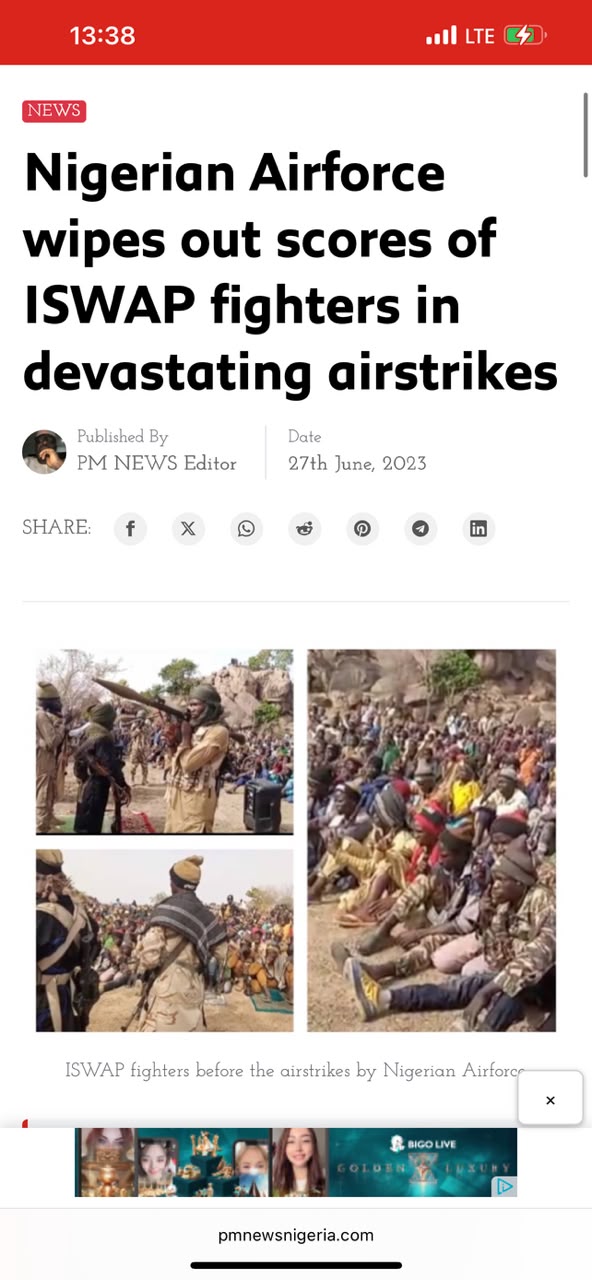
But why is footage first published by Zagazola in 2023 being presented as evidence of a recent Sallah gathering by Boko Haram? The video is not new. It was circulated by Zagazola in 2023 and showed fighters associated with Boko Haram factional leader Ali Ngulde participating in Eid prayers.
Zagazola also reported on and released footage of devastating military strikes that reportedly killed more than 200 Boko Haram fighters. In a series of leadership decapitation operations, the Air Component of Operation HADIN KAI destroyed more than seven insurgent enclaves in the Mandara Mountains. These operations and their outcomes were reported by local and international media organisations.
Now, Mr Utoo is recycling our old material to create the impression of a new development. If the author has evidence that the video was recorded during the most recent Sallah celebration, he should publish the date, location, verification method and supporting evidence.
Otherwise, the claim is misleading.
You cannot manufacture a new security incident by recycling an old video and attaching a fresh caption to it. Equally troubling is the attempt to associate the footage with a Christian-dominated area of Nigeria’s Middle Belt.
The footage was previously associated with Boko Haram activity around the Mandara Mountains, along the Borno–Cameroon border, a rugged area that has served as a hideout and operational environment for insurgent factions for years. It is not the Middle Belt.
The Mandara Mountains form part of the wider northeastern borderland, extending across parts of southern Borno State and into Cameroon. The cross-border security challenges in this region explain the deployment of Cameroonian forces as part of the Multinational Joint Task Force (MNJTF). This is a well-known operational theatre in the fight against Boko Haram. It cannot simply be relabelled as the Middle Belt to fit a preferred religious narrative.
The most glaring distortion in this commentary is its attempt to frame Boko Haram’s activities almost exclusively through the lens of anti-Christian violence.
Boko Haram has attacked churches and killed Christians. Those crimes are real, reprehensible and deserving of condemnation.
But it is equally undeniable that the insurgency has devastated Muslim communities across Borno and the wider Lake Chad Basin on an enormous scale.
For more than a decade, Muslim civilians have been massacred, abducted, displaced, extorted and forced from their homes. Muslim clerics who rejected the terrorists’ ideology have been targeted.
Traditional rulers, traders, farmers, fishermen and entire communities have suffered under an insurgency that claims to act in the name of Islam but has inflicted extraordinary suffering on Muslim populations.
Thousands of traditional rulers and community leaders have reportedly been displaced, while many have been killed or forced to abandon their domains.
Consider Gwoza, where Boko Haram ambushed and killed the Emir. The town’s population was subjected to mass displacement, and in 2014, the terrorists declared the area part of their so-called caliphate.
These realities expose the fundamental weakness of a narrative that presents Boko Haram’s insurgency primarily as a campaign against Christians while overlooking the extensive violence inflicted on Muslim populations.
The terrorist organisation’s victims cannot be divided into those whose suffering fits an international advocacy narrative and those whose deaths are conveniently ignored. Consider the communities of Kukawa, Monguno, Abadam, Marte and Guzamala in Borno State. These areas have experienced severe insurgent violence and have predominantly Muslim populations.
The author should also explain how his sweeping claims account for the security experiences of communities such as Chibok, Izge and Hawul, which have not experienced the same kind of sustained territorial takeover and mass displacement associated with Boko Haram’s occupation of Gwoza and other insurgent strongholds.
Although these communities have experienced security challenges, their circumstances cannot be reduced to the same narrative without examining the evidence. The Lake Chad region, where insurgents have maintained operational bases and hideouts, is also overwhelmingly Muslim.
The terrorists have not spared these communities because their inhabitants share the religion the insurgents claim to represent. In one notorious attack, the terrorists slaughtered about 140 farmers. There are numerous documented examples of attacks on Muslim farmers, fishermen and rural communities across the region. These are not isolated incidents. They form part of a long and devastating history of insurgent violence against civilians.
The author also needs to explain how his geographical and religious framing accounts for insurgent activity in northern Borno. The killing of Almuniki, also referred to as Abor Minok, in a US operation was not an incident in a Christian-dominated Middle Belt community. The area in northern Borno associated with the operation is part of a predominantly Muslim region.
This is important because the wider insurgency cannot be honestly explained by repeatedly suggesting that its principal operating environment is Christian-majority territory. Lets us use the most recent statistics of rescued populations in Borno, they are over 300,000 and 99 percent of them are muslims.
Therefore, Boko Haram and ISWAP have operated across communities with different local histories and demographic characteristics. Their violence has been driven by an extremist insurgent project, territorial ambitions, coercion, extortion and the targeting of people they consider enemies or obstacles to their authority.
The commentary invokes genocide and religious persecution while offering no fresh evidence establishing that the particular footage demonstrates a recent campaign against Christians.
On the same Eid occasion, ISWAP and Boko Haram reportedly held prayers at more than 10 designated prayer grounds, with footage subsequently circulated through channels associated with the groups, including Amaq.
The presence of armed fighters at a religious gathering is disturbing. But the footage alone does not establish the intended targets of the gathering or the existence of a new campaign against a particular religious community.
So, what is the purpose of presenting a three-year-old video as recent footage while placing it within a geographical and religious narrative that has not been substantiated?
Is it to inform the public about a verified security incident? Or is it to generate outrage, mobilise international sympathy and reinforce a predetermined account of the conflict?
Where advocacy organisations seek international attention and financial support, transparency about their evidence, funding and claims is essential.
Franc Utoo Esq. demands that the public look carefully at the footage. We agree.
Let the public look at it carefully, including its history. The video was published by Zagazola in 2023. Why is it being presented as footage of a recent Sallah celebration?
The footage does not, by itself, establish genocide against Christians. Where is the evidence connecting this particular gathering to the alleged campaign described in the commentary?
ZAGAZOLA RESPONSE: OLD BOKO HARAM VIDEO RESURRECTED AS ‘RECENT’ FOOTAGE IN FRESH ATTEMPT TO MANUFACTURE RELIGIOUS PROPAGANDA


Troops intercept two fleeing terrorists attempting to surrender in Borno
By: Zagazola Makama
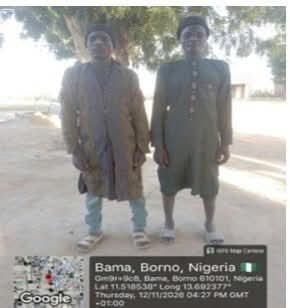
Troops of Operation HADIN KAI have intercepted two suspected terrorists on their way to surrender at Ngalimari in Konduga Local Government Area of Borno State.
Security sources said the suspects were intercepted at about 1:28 p.m. on November 12, 2026, by troops conducting a fighting patrol in the area.
Preliminary interrogation reportedly revealed that the two men fled their terrorist enclave around Geizuwa following internal clashes with Islamic State West Africa Province (ISWAP) fighters and worsening hardship within the group.
Items recovered from them included two mobile phones, one knife, one machete, an empty gallon, a blanket, a torchlight, a lighter, assorted drugs and the sum of N190,000.
The suspects and recovered items are currently in military custody for further investigation and necessary action.
The interception highlights the reported internal challenges facing terrorist elements, including factional clashes and hardship, which continue to undermine their operational cohesion in parts of the North-East.
Troops are expected to sustain intelligence-led patrols and screening operations to identify fleeing terrorist elements and prevent them from regrouping or returning to criminal activities.
Troops intercept two fleeing terrorists attempting to surrender in Borno
Troops rescue three kidnapped victims, recover 45 rustled livestock in Kebbi
By: Zagazola Makama
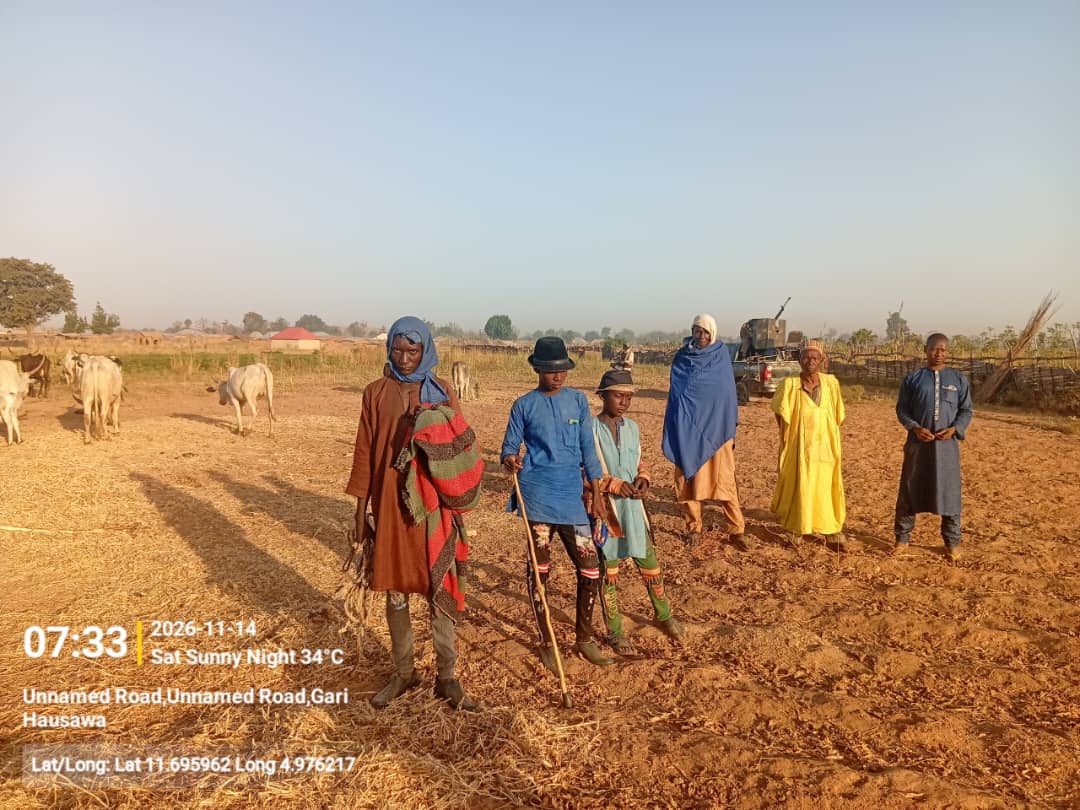
Troops of Sector 2, Operation FANSAN YAMMA, have rescued three kidnapped residents and recovered 45 rustled livestock following a swift response to a bandit attack in Danko-Wasagu Local Government Area of Kebbi State.
Security sources said the incident occurred in the early hours of Saturday, November 14, when armed bandits invaded Gida Fulani, a section of Garin Hausawa Village, rustling livestock and abducting some residents.
The sources said troops deployed in the area mobilised immediately after receiving a distress report and moved to the affected community, where they engaged the bandits with superior firepower.
Overwhelmed by the troops’ response, the attackers reportedly fled in disarray, abandoning the kidnapped victims and the rustled livestock.
The operation led to the rescue of three victims identified as Buba Sarkin Fulani, 29; Alhaji Chumo, 20; and Manu Sarkin Fulani, 15.
Troops also recovered 26 cattle and 19 sheep, bringing the total number of recovered livestock to 45.
The rescued victims and recovered animals were subsequently handed over to the Sarkin Garin Hausawa for onward reunion with their families and return to their rightful owners.
The operation underscores the sustained efforts of Operation FANSAN YAMMA to protect rural communities, rescue kidnapped persons and recover stolen livestock from armed criminal elements operating across the North-West
Troops rescue three kidnapped victims, recover 45 rustled livestock in Kebbi

A Child’s Vow, A Nation’s Wound: Nigeria’s Tragic Encounter with Banditry
By: Dr. James Bwala
At about seven o’clock in the evening, the quiet of a farm in Magami village, within the Gusau Local Government Area of Zamfara State, was shattered by gunfire. The sun was disappearing beyond the horizon, and families were preparing for the evening meal. In a region where farming is central to survival, the day’s work should have been ending peacefully. Instead, a child watched his father die.
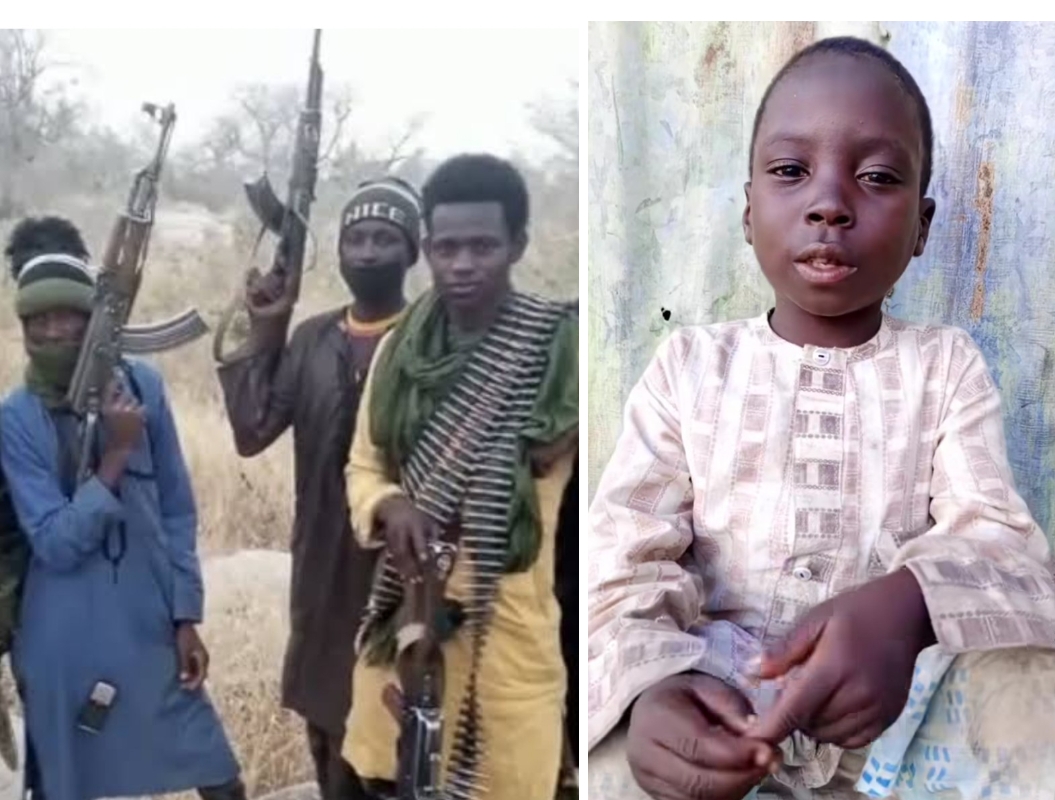
Umar Magami, an eleven-year-old boy from Magami village in northwestern Nigeria, remembers that evening with painful clarity. His father had gone to the farm to collect pepper for the family’s dinner. Earlier that day, he had harvested seven baskets of pepper, taken them to the market, sold them, and returned home with food items, including rice. After securing the family’s basic needs, he went back to the farm to bring pepper that would be used to prepare the evening meal.
According to Umar, bandits appeared at the farm and opened fire on his father. The bullets struck him before the boy’s eyes. In that terrible moment, Umar lost not only his father but also the sense of safety that every child should be allowed to enjoy. The farm, which had once represented food, work, and family survival, became the scene of a violent death.
READ ALSO: https://newsng.ng/2027-biu-elders-rally-behind-engr-mustapha-gubio-in-powerful-solidarity-visit/
Today, Umar is no longer living in Magami. He has fled the village and is taking refuge in Gusau, the capital of Zamfara State. Like thousands of other children affected by banditry in northwestern Nigeria, he has been uprooted from his home, separated from familiar surroundings, and forced to carry memories far too heavy for his age.
He has declared that when he grows up, he will join the Nigerian military and take revenge for the killing of his father. His words reveal the depth of his grief, but they also expose a disturbing danger. A child who should be thinking about school, friendship, games, and his future is instead thinking about weapons, military service, and revenge. His childhood has been shaped by violence, and his understanding of justice has become intertwined with retaliation.
Umar has reportedly prayed for the souls of the many people killed by bandits, including his father. He recognizes that death is part of human existence and says that he knows he will die one day. But, in his mind, that day must wait until he has avenged his father’s death. The statement is heartbreaking because it reflects both his love for his father and the psychological damage caused by exposure to violence.
READ ALSO: https://newsng.ng/2027-biu-elders-rally-behind-engr-mustapha-gubio-in-powerful-solidarity-visit/
Umar’s story is not an isolated one. Across Zamfara and other parts of northwestern Nigeria, countless children have witnessed killings, abductions, displacement, and the destruction of their communities. Some have lost parents. Others have been separated from siblings or forced to flee their homes. Many have stopped attending school because their villages are unsafe or because their families can no longer afford education after losing their livelihoods.
For these children, violence is not an abstract idea reported in newspapers. It is an everyday reality. It appears in the sound of gunshots, the sight of armed men, the absence of a parent, and the fear of travelling to a nearby market or farm. It is present in empty classrooms, abandoned villages, and refugee settlements where families wait for a return to normal life.
The conditions that produced Umar’s tragedy are complex. In many rural communities, farming is the main source of income and food. When bandits attack farmers, they destroy both economic stability and family security. People are prevented from cultivating their land, harvesting crops, or transporting produce to market. As a result, hunger and poverty deepen, while communities become increasingly dependent on emergency assistance.
READ ALSO: https://newsng.ng/2027-biu-elders-rally-behind-engr-mustapha-gubio-in-powerful-solidarity-visit/
The consequences extend beyond immediate physical suffering. Banditry damages trust between neighbors and weakens confidence in public institutions. When people believe that the government cannot protect them, they may be tempted to rely on self-defense groups, vigilantes, or other informal security arrangements. Although such groups may sometimes provide protection, they can also increase the cycle of violence and expose young people to further militarization.
Children are especially vulnerable in this environment. Their minds are still developing, and their understanding of violence is shaped by what they see around them. When a child watches a parent being killed, the experience can produce trauma, anger, guilt, fear, and a deep desire for revenge. Without counselling and support, these emotions may remain hidden or grow more intense over time.
A child like Umar may eventually become a soldier with a genuine desire to protect his country. Military service, when pursued through lawful and professional means, can be an honorable vocation. However, joining the military primarily to avenge a personal loss presents a serious concern. A professional soldier must be trained to defend citizens, obey the law, and exercise discipline. Revenge, by contrast, is driven by anger and a desire to punish. If grief is not addressed, the distinction between justice and retaliation may become difficult for a traumatized young person to understand.
READ ALSO: https://newsng.ng/2027-biu-elders-rally-behind-engr-mustapha-gubio-in-powerful-solidarity-visit/
This is why Umar’s story should not be viewed only as the account of one grieving child. It should be treated as a warning about Nigeria’s future. If thousands of children grow up believing that violence is the only language through which justice can be achieved, the country may face a new generation shaped by bitterness and conflict. The effects of today’s insecurity may therefore continue long after the current wave of banditry has ended.
The Nigerian government must respond to this crisis with urgency and compassion. Military operations remain necessary in areas controlled or threatened by armed groups, but force alone cannot heal the wounds left behind. Security measures must be combined with humanitarian assistance, education, trauma counselling, and economic recovery.
First, displaced children need access to safe and continuous education. Schools in affected areas should be protected, and temporary learning centers should be established in communities hosting displaced families. Education offers more than academic knowledge; it provides routine, hope, social connection, and an alternative to recruitment by criminal or extremist groups.
READ ALSO: https://newsng.ng/2027-biu-elders-rally-behind-engr-mustapha-gubio-in-powerful-solidarity-visit/
Second, children who have witnessed violence must receive professional psychological support. Counselors, social workers, religious leaders, teachers, and community elders can all play important roles in helping children process grief. Religious and cultural institutions, which command significant respect in many northern Nigerian communities, can support healing by promoting forgiveness, lawful justice, and reconciliation without denying the suffering of victims.
Third, displaced families need assistance to rebuild their livelihoods. Farmers must be able to return safely to their fields, and those who cannot return immediately should receive food, shelter, healthcare, and financial support. Economic recovery is essential because poverty and insecurity reinforce one another. A parent who cannot farm or trade is less able to educate and protect their children.
Fourth, the government must improve accountability. Communities lose faith in the state when attacks occur repeatedly without effective investigations or prosecutions. Security personnel must be adequately equipped, intelligence systems strengthened, and operations conducted with respect for civilian life. At the same time, abuses committed by any armed actor must be addressed through lawful processes. Justice must be visible, fair, and consistent.
READ ALSO: https://newsng.ng/2027-biu-elders-rally-behind-engr-mustapha-gubio-in-powerful-solidarity-visit/
Finally, young people affected by conflict must be included in national healing. Their experiences should not be ignored or reduced to statistics. The stories of children such as Umar should remind policymakers that insecurity is not only about territory or weapons; it is also about memory, identity, and the kind of citizens a country is producing.
Umar’s vow is a heartfelt plea from a wounded soul. It reflects the pain of a son who saw his father killed while trying to provide food for his family. It also reflects the danger of allowing violence to shape a child’s imagination. Umar should not have to plan revenge. He should be able to mourn, return to school, dream of a profession, and grow into adulthood without being imprisoned by the events of one evening.
The people of Magami and other affected communities deserve security, justice, and the opportunity to rebuild their lives. Nigeria’s children deserve even more: a future in which farms are places of work rather than killing fields, in which families can prepare meals without fear, and in which military service is chosen out of patriotism rather than personal vengeance.
READ ALSO: https://newsng.ng/2027-biu-elders-rally-behind-engr-mustapha-gubio-in-powerful-solidarity-visit/
Umar’s story should serve as a red alarm for Nigeria. His suffering is both personal and national. If the government fails to protect vulnerable communities and heal the emotional wounds of children exposed to conflict, the consequences may last for generations. But if effective action is taken now, grief can be transformed into resilience, and anger can be redirected toward rebuilding.
A child’s future should not be determined by the bullet that killed his father. It should be shaped by safety, education, justice, and hope.
- James Bwala, PhD, writes from Abuja
A Child’s Vow, A Nation’s Wound: Nigeria’s Tragic Encounter with Banditry

Troops intercept two fleeing terrorists attempting to surrender in Borno

Troops arrest two suspected terrorist logistics suppliers in Borno

Troops recover additional terrorist corpse, AK-47 rifle after ISWAP attack in Adamawa

Roger Federer’s Shock as DNA Results Reveal Myla and Charlene Are Not His Biological Children

THE PLIGHT OF FARIDA

FAILED COUP IN BURKINA FASO: HOW TRAORÉ NARROWLY ESCAPED ASSASSINATION PLOT AMID FOREIGN INTERFERENCE CLAIMS
-
 News3 years ago
Roger Federer’s Shock as DNA Results Reveal Myla and Charlene Are Not His Biological Children
-
Opinions5 years ago
THE PLIGHT OF FARIDA
-
 News2 years ago
FAILED COUP IN BURKINA FASO: HOW TRAORÉ NARROWLY ESCAPED ASSASSINATION PLOT AMID FOREIGN INTERFERENCE CLAIMS
-
 Opinions5 years ago
POLICE CHARGE ROOMS, A MINTING PRESS
-

 News3 years ago
EYN: Rev. Billi, Distortion of History, and The Living Tamarind Tree
-

 ACADEMICS3 years ago
A History of Biu” (2015) and The Lingering Bura-Pabir Question (1)
-

 Columns3 years ago
Army University Biu: There is certain interest, but certainly not from Borno.
-

 Politics1 year ago
2027: Why Hon. Midala Balami Must Go, as Youths in Hawul and Asikira/Uba Federal Constituency Reject ₦500,000 as Sallah Gift
