
News
NEMA Provides Relief to Banditry Victims in Kebbi as Communities Struggle to Recover

NEMA Provides Relief to Banditry Victims in Kebbi as Communities Struggle to Recover
By: Michael Mike
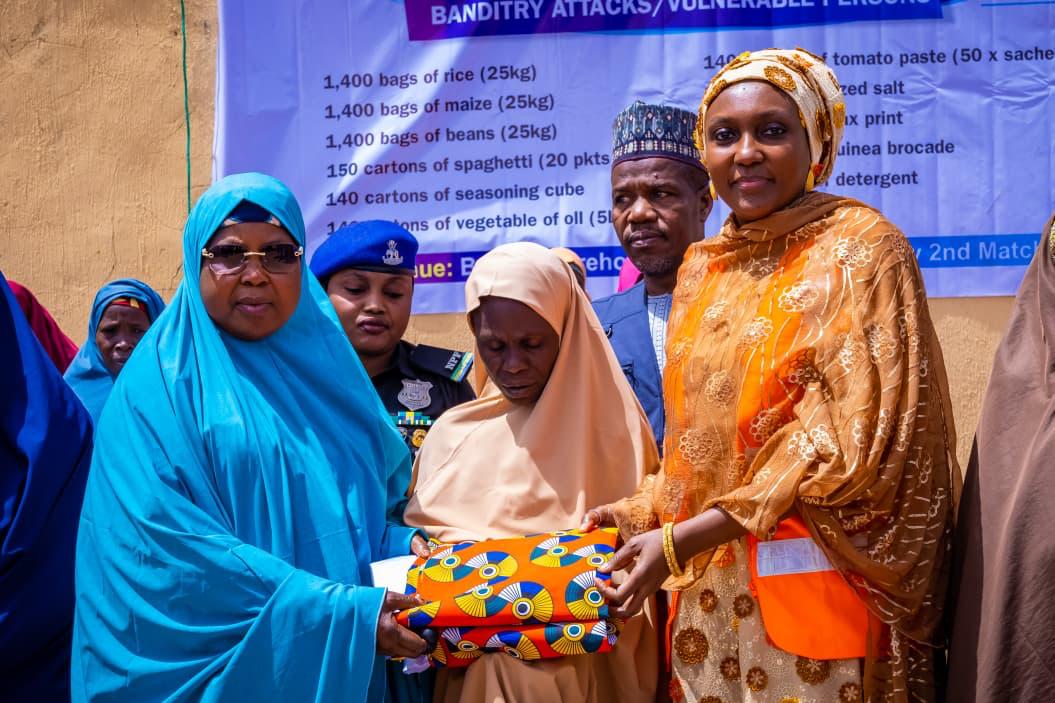
The National Emergency Management Agency (NEMA) has commenced the distribution of emergency relief materials to victims of recent banditry attacks in Kebbi State, offering support to families displaced by a wave of violence that has unsettled parts of the state.
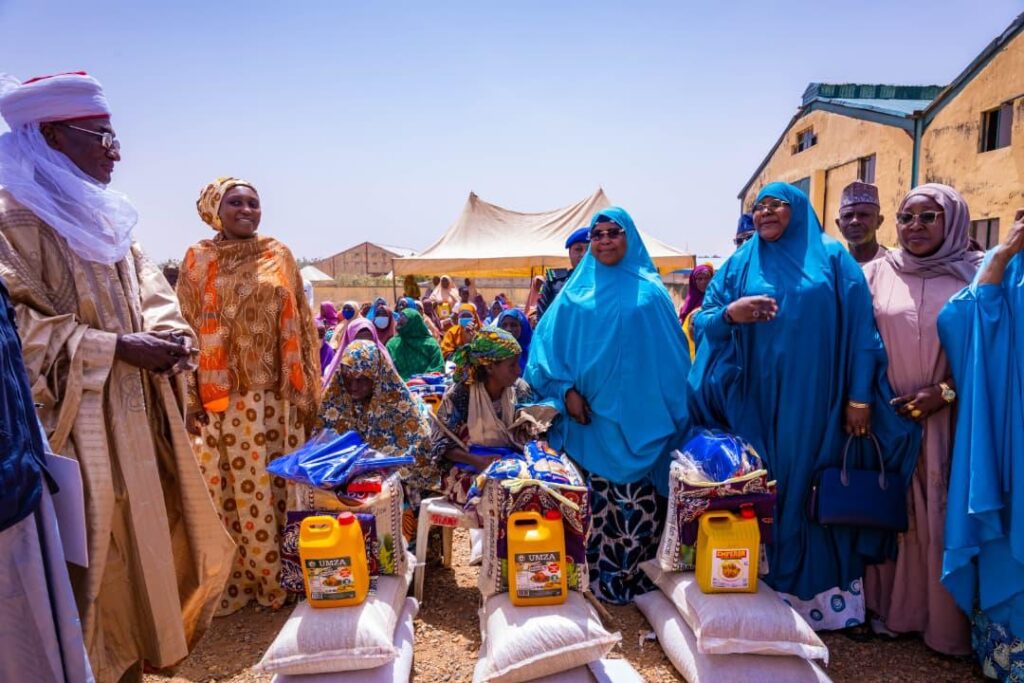
The Director-General of NEMA, Zubaida Umar, flagged off the exercise in Birnin Kebbi, targeting affected residents in Shanga, Yauri and Bunza Local Government Areas. She said the intervention followed a detailed assessment of the affected communities to identify their most pressing needs.
Over the past weeks, suspected bandits reportedly launched coordinated attacks on several villages across the three local government areas. Residents were forced to flee as homes were burnt, food stores destroyed and livelihoods disrupted. Local authorities confirmed casualties and displacement, with many families seeking refuge in neighbouring communities and temporary shelters.
The attacks form part of a broader security challenge confronting parts of northwestern Nigeria, where armed groups have carried out raids on rural settlements, targeting civilians and farmlands. In Kebbi, the violence has compounded existing socio-economic pressures, particularly for farming communities that depend on seasonal harvests for survival.
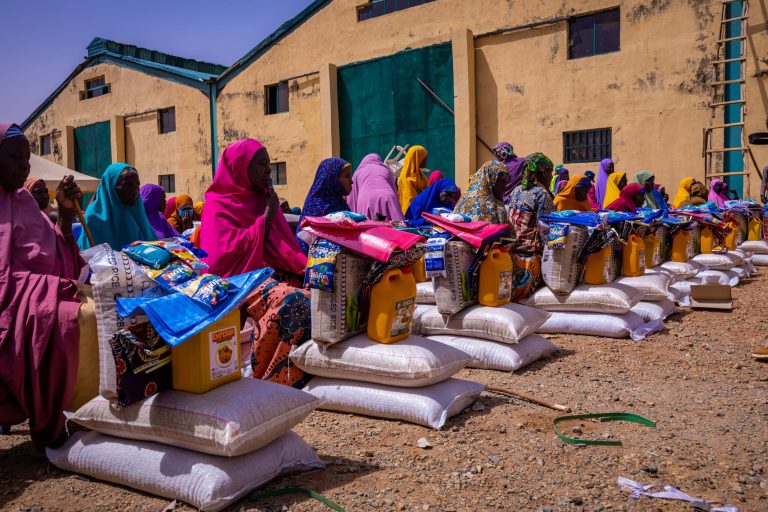
Speaking at the flag-off ceremony, Umar conveyed the Federal Government’s sympathy to the affected families and the Kebbi State Government. She noted that the relief materials—including food items, bedding and other essential supplies—were provided to cushion the immediate hardship faced by victims.
According to her, the response aligns with the Renewed Hope Agenda of President Bola Ahmed Tinubu, which prioritises prompt humanitarian assistance and citizen welfare. She reaffirmed the government’s commitment to supporting vulnerable populations impacted by insecurity and other disasters.
Representing the Emir of Gwandu, the Wazirin Gwandu, Alhaji Abubakar Umar, commended the Federal Government and NEMA for what he described as a timely and compassionate intervention. He urged beneficiaries to make judicious use of the items while praying for lasting peace in the affected communities.
Also speaking, the Wife of the Kebbi State Governor, Hajiya Zainab Nasare Nasir, said the support would help restore hope to displaced families and ease the burden on host communities.
The distribution exercise is part of ongoing efforts by NEMA to mitigate the humanitarian consequences of insecurity and strengthen support systems for crisis-affected populations across the country.
NEMA Provides Relief to Banditry Victims in Kebbi as Communities Struggle to Recover


Why the New IGP Must Protect the Integrity of Police Promotions as Nigerians Are Watching
…Some Officers Climb the Ladder, Others Take the Elevator….
By: Zagazola Makama
There are many roads to promotion in the Nigeria Police Force. Some are long, winding and filled with hardship. They pass through insurgency-ravaged communities in Borno, bandit-infested forests in Zamfara, kidnapping hotspots in Niger State and dangerous highways where officers routinely place their lives on the line.
Recent revelations published by TheCable have reopened an uncomfortable conversation within the Nigeria Police Force and among members of the public: Is promotion in the Force still governed primarily by merit and institutional procedures, or is proximity to political power becoming an increasingly valuable qualification?
The controversy stems from reports that Femi Gbajabiamila, Chief of Staff to President Bola Tinubu, wrote two separate letters to the Police Service Commission (PSC) requesting special promotion for eight police officers attached to political office holders, including officers attached to the President.
One of the letters, dated February 20, 2026, reportedly contained the names of three officers, while another listed five officers.
The recommendations sought the elevation of one officer from Assistant Commissioner of Police (ACP) to Deputy Commissioner of Police (DCP), while others were recommended for promotion from Chief Superintendent of Police (CSP) to Assistant Commissioner of Police (ACP).
According to the report, the officers were recommended on account of their “exemplary leadership qualities, gallantry, teamwork and general performance.” Nobody disputes that these are admirable qualities.
Indeed, they are precisely the qualities expected of every police officer. Yet that is where the debate begins.
Across police formations nationwide, many officers quietly wonder whether gallantry has suddenly become more visible when displayed within the corridors of power than when demonstrated on the frontlines.
For decades, Nigerian police officers have worked under difficult conditions. Many have fought insurgents in the North-East. Others have pursued armed bandits through forests and mountains. Some have lost colleagues in violent confrontations with criminals. Many have spent years separated from their families while serving in high-risk operational environments.
Yet promotion has traditionally followed a structured process involving service records, examinations, seniority, performance assessments and recommendations through established channels.
That is why the reported intervention by a political office holder has generated concern.
Not necessarily because the officers involved are unqualified. Rather, because many fear the precedent it may establish.
One senior officer, speaking anonymously, observed that if recommendation letters from political offices become an accepted route to accelerated promotion, many officers may begin to reassess what constitutes career excellence.
“The officer risking his life in a remote operational base may start wondering whether his greatest mistake was choosing a dangerous posting instead of a strategic attachment,” he said.
The remark was delivered with humour. Its implications are anything but amusing.
The controversy revolves largely around the provisions of the Police Service Commission Act. Section 6 of the Act clearly assigns responsibility for appointments and promotions of police officers, excluding the Inspector-General of Police to the Police Service Commission.
The same legislation states that the Commission shall not be subject to the direction, control or supervision of any authority or person in the exercise of those responsibilities.
It was argued that while the President may issue directives relating to broad policy matters affecting the Commission, the law was deliberately designed to shield personnel decisions from external influence. A professional police force therefore cannot thrive if promotions become susceptible to political pressure.
This is not merely a legal issue. It is a question of institutional credibility. Every disciplined organisation depends on the confidence of its members. An officer who spends years serving in difficult and dangerous environments must believe that hard work, competence and sacrifice remain the principal pathways to advancement.
Once that belief weakens, morale inevitably suffers. Many retired officers argue that the greatest threat to any institution is not always external. Sometimes it is the gradual erosion of confidence in the fairness of internal processes.
The controversy has also revived memories of a similar debate within the military.
It will be recalled that President Tinubu’s aide-de-camp, Nurudeen Yusuf, reportedly rose from Lieutenant Colonel to Colonel in January 2025 and was subsequently to be elevated to Brigadier-General through what was described as a special presidential promotion. The proposal reportedly generated significant disquiet within military circles before plans for the decoration were shelved.
The latest revelation however, revives questions that have refused to go away.
Are Nigeria’s security institutions drifting toward a culture in which proximity to political power increasingly influences career progression? Or are these isolated incidents being misunderstood? Whatever the answer, perception matters. And perception, rightly or wrongly, is often more powerful than official explanations. The average police officer does not read legal opinions. He observes outcomes.
He watches who gets promoted, how quickly it happens and what circumstances surround the process. If he concludes that some officers are operating on a faster track, resentment may follow. That is why many stakeholders believe the issue deserves careful handling by the new Inspector-General of Police.
At a time when the Force is striving to improve professionalism, discipline and public confidence, few issues are more sensitive than promotion. Every rank earned should command respect. Every promotion should inspire confidence. Every officer should believe that the rules apply equally to all.
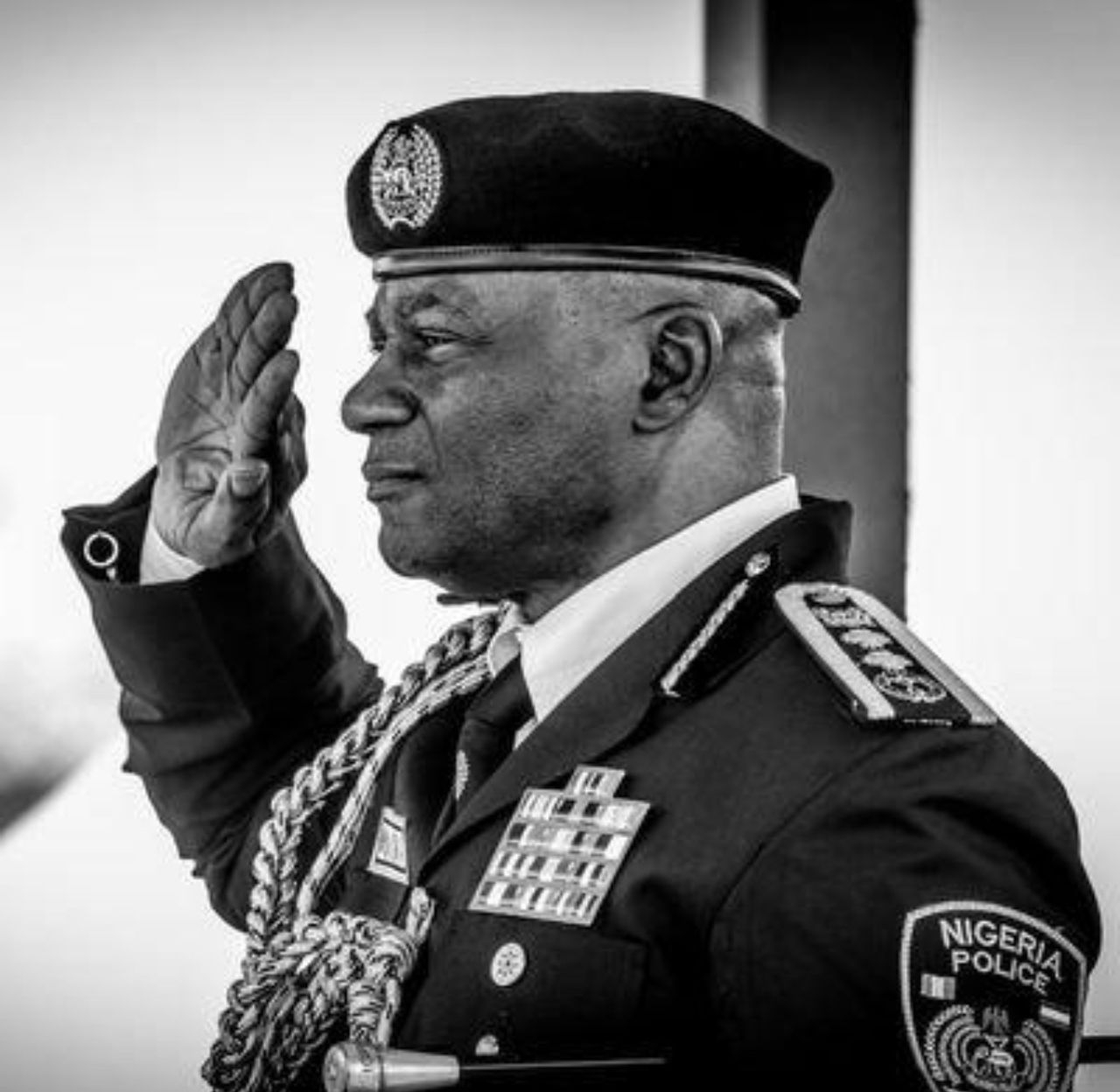
This is why many Nigerians believe the new IGP faces a challenge that goes beyond crime-fighting. He must protect the credibility of the promotion system.
He must convince officers that career progression is determined by professionalism, competence and sacrifice rather than access to corridors of power.
Otherwise, the message being sent across the Force may be difficult to ignore. Why spend years chasing criminals in forests when a posting close to political power appears capable of performing miracles for one’s career?
Why endure hardship postings when proximity may be more rewarding than performance?
Such questions may be uncomfortable, but they are increasingly being asked.
The truth is that institutions are weakened not only by corruption or insecurity. They are weakened when their members begin to suspect that rules apply differently depending on who is involved. The Nigeria Police Force cannot afford that perception.
Whether fair or unfair, that perception alone can damage an institution. The new IGP would therefore be wise to remember one important fact. Nigerians are watching. More importantly, police officers are watching.
And in an institution built on discipline and hierarchy, nothing attracts attention quite like a fast-moving elevator in a building where everyone else is climbing the stairs.
Why the New IGP Must Protect the Integrity of Police Promotions as Nigerians Are Watching
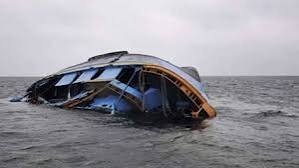
Three Cameroonian Nationals Involved in Boat Mishap in Taraba
By: Zagazola Makama
The Police in Taraba State have confirmed a boat mishap involving three Cameroonian nationals in Takum Local Government Area of the state.
A police source disclosed that information about the incident was received on June 17 by the Divisional Police Officer (DPO) of Takum Division from a good Samaritan.
According to the source, the boat capsized on June 16 while conveying the foreign nationals across a river in the area.
The source said that upon receiving the report, the DPO led a team to the scene to ascertain the situation.
“Preliminary findings revealed that three Cameroonian nationals were on board the boat when it capsized.
“Two of the occupants survived after reportedly holding onto sticks in the river until they were rescued by local residents, while one person remains missing,” the source said.
The sources further stated that representatives of the Cameroonian community had been mobilised to assist in establishing the identities of the victims involved in the incident.
According to the source, residents living along the riverbank are also assisting in efforts to locate the missing person, whose body is yet to be recovered.
The police said monitoring of the situation is ongoing as search efforts continue.
Three Cameroonian Nationals Involved in Boat Mishap in Taraba
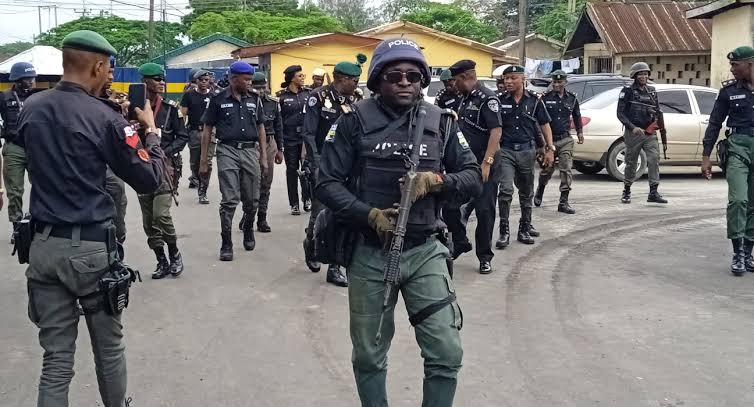
Police Arrest 25 Foreign Nationals Over Alleged Illegal Entry in Lagos
By: Zagazola Makama
The Police in Lagos State have arrested 25 foreign nationals suspected of entering Nigeria illegally following a report of alleged kidnapping in Ikorodu area of the state.
Source disclosed that the suspects, comprising 19 nationals of Chad and six Cameroonians, were apprehended on June 16 by operatives of the Tactical Creek Sweeper Squad based in Ijede, Ikorodu.
According to the source, the arrest followed a complaint lodged at about 9:00 a.m. by one Konga Delphine, a Cameroonian national, who reported a case of alleged kidnapping to the squad.
The source said that police operatives swiftly mobilised to the reported location, leading to the arrest of the suspects.
“Preliminary investigation revealed that the Chadian nationals were allegedly brought into the country illegally under the guise of attending an evangelical crusade purportedly organised under the aegis of Deeper Life Bible Church.
“The Cameroonian nationals, on the other hand, reportedly claimed they were in Nigeria for network marketing activities,” the source said.
The police further disclosed that the suspects were unable to provide valid travel or residency documents during profiling and screening.
According to the source, all the suspects are currently in police custody while investigations continue to ascertain the circumstances surrounding their entry into the country and their activities.
The police said further updates would be provided as investigations progress.
Police Arrest 25 Foreign Nationals Over Alleged Illegal Entry in Lagos

Why the New IGP Must Protect the Integrity of Police Promotions as Nigerians Are Watching

Three Cameroonian Nationals Involved in Boat Mishap in Taraba

Police Arrest 25 Foreign Nationals Over Alleged Illegal Entry in Lagos

Roger Federer’s Shock as DNA Results Reveal Myla and Charlene Are Not His Biological Children

THE PLIGHT OF FARIDA

FAILED COUP IN BURKINA FASO: HOW TRAORÉ NARROWLY ESCAPED ASSASSINATION PLOT AMID FOREIGN INTERFERENCE CLAIMS
-
 News2 years ago
Roger Federer’s Shock as DNA Results Reveal Myla and Charlene Are Not His Biological Children
-
Opinions4 years ago
THE PLIGHT OF FARIDA
-
 News1 year ago
FAILED COUP IN BURKINA FASO: HOW TRAORÉ NARROWLY ESCAPED ASSASSINATION PLOT AMID FOREIGN INTERFERENCE CLAIMS
-

 News2 years ago
EYN: Rev. Billi, Distortion of History, and The Living Tamarind Tree
-
 Opinions5 years ago
POLICE CHARGE ROOMS, A MINTING PRESS
-

 ACADEMICS2 years ago
A History of Biu” (2015) and The Lingering Bura-Pabir Question (1)
-

 Columns2 years ago
Army University Biu: There is certain interest, but certainly not from Borno.
-

 Politics1 year ago
2027: Why Hon. Midala Balami Must Go, as Youths in Hawul and Asikira/Uba Federal Constituency Reject ₦500,000 as Sallah Gift
