
News
Troops of Operation FANSAN YANMA neutralise two terrorists, recover weapons in Katsina

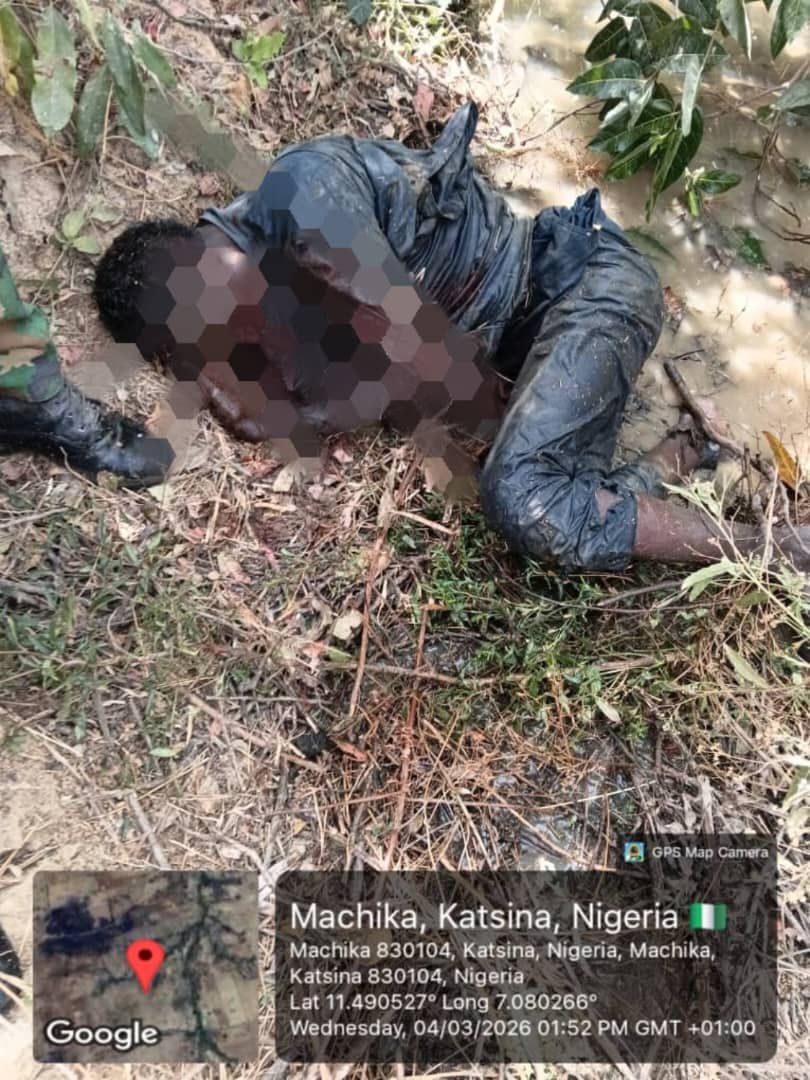
Troops of Operation FANSAN YANMA neutralise two terrorists, recover weapons in Katsina
By: Zagazola Makama
Troops of 17 Brigade, Operation FANSAN YANMA of the Nigerian Army, on March 4, 2026, successfully engaged terrorists during clearance operations at notorious hideouts in Barkishi Maiha Gumma, Sabuwa Local Government Area of Katsina State.
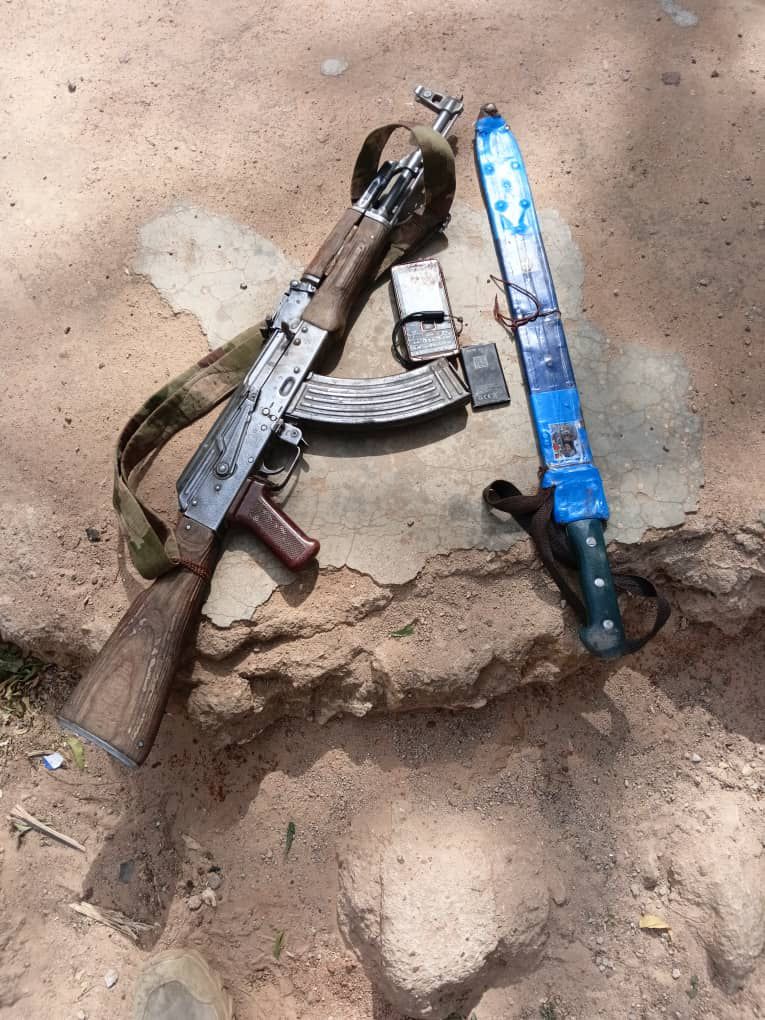
Sources told Zagazola Makama that In the ensuing gun battle, the troops overpowered the terrorists, neutralising two insurgents and recovering one AK-47 rifle, one magazine, four rounds of ammunition, a motorcycle, a matchete, a Tecno phone, and two extra phone batteries.
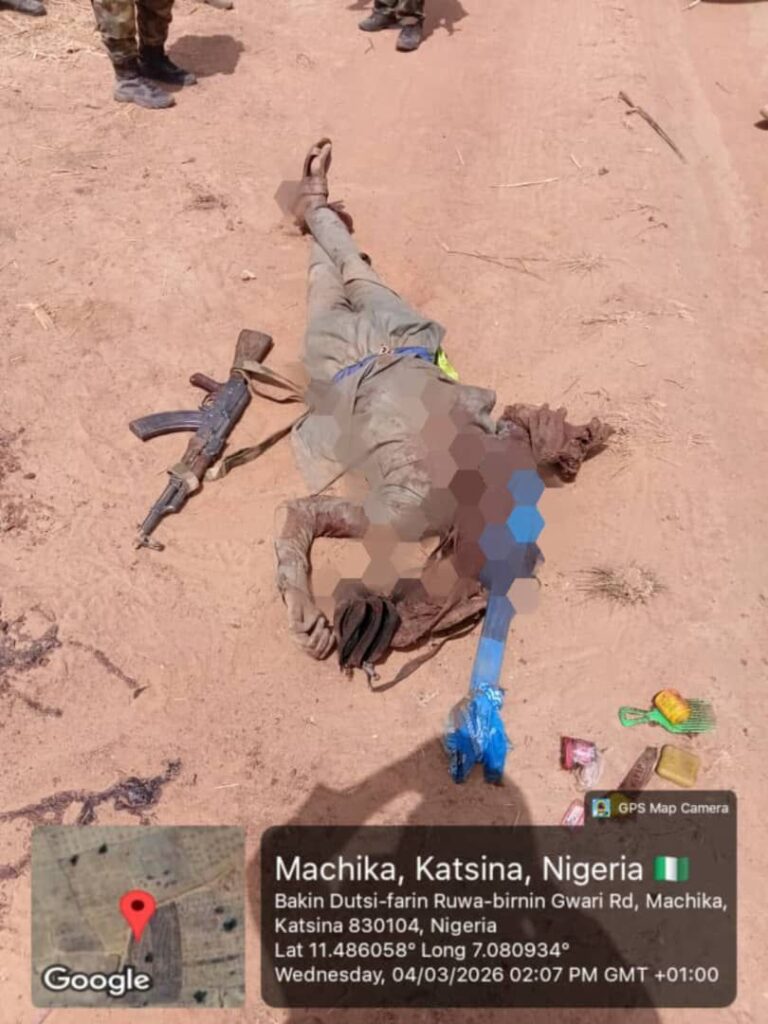
There were no casualties among the troops.
The sources said that the General Officer Commanding 8 Division and Commander, Sector 2 Joint Task Force (North West), Maj. Gen. Paul Koughna, commended the troops for their bravery and urged continued operations to completely eliminate terrorist threats in the region.
Troops of Operation FANSAN YANMA neutralise two terrorists, recover weapons in Katsina



Cuba advances home-grown cancer drug as 2C12 enters human trials
…Experimental immunotherapy modelled on PD-1 treatment to be tested in advanced melanoma patients
By: Michael Mike
Cuban scientists have reached a potentially significant milestone in the country’s long-running effort to develop home-grown cancer treatments, with an experimental drug known as 2C12 ready to enter clinical testing in patients suffering from advanced melanoma.
The candidate was developed by researchers at Cuba’s Center for Molecular Immunology (CIM) and is designed around an approach similar to that used by pembrolizumab, an established immune-checkpoint therapy used internationally against several cancers, including unresectable or metastatic melanoma.
The development is attracting attention because 2C12 is moving beyond laboratory research towards testing in human beings — the stage at which its safety, tolerability and potential therapeutic benefit must be established before any claim can be made about its effectiveness.
According to information released by the CIM and subsequently reported by Cuban and international media, the initial clinical study will target patients with advanced melanoma that cannot be removed surgically or has spread to other parts of the body. The study will involve specialist oncology centres in Havana and Villa Clara.
The participating institutions include Cuba’s National Institute of Oncology and Radiobiology and Hermanos Ameijeiras Clinical Surgical Hospital in Havana, as well as the Dr Celestino Hernández Robau Territorial University Oncology Hospital in Villa Clara.
The significance of the Cuban project extends beyond the development of another cancer medicine.
Cancer treatment has become an increasingly sophisticated but expensive field, with access to modern therapies varying sharply between countries. The World Health Organisation (WHO) said cancer caused nearly 10 million deaths worldwide in 2024, making it one of the leading causes of death globally. It also warns of major inequalities in access to cancer prevention, diagnosis and treatment between countries and income groups.
For Cuba, the challenge has an additional dimension. The country said difficulties obtaining some imported medicines, together with the high international cost of oncology products, have strengthened the case for developing domestic alternatives.
That backdrop has made biotechnology and pharmaceutical self-reliance a strategic priority for Cuban scientists.
The CIM has consequently positioned 2C12 as a potential locally produced alternative to expensive imported immunotherapy. But the scientific test is now much tougher: the molecule must demonstrate in clinical trials that it is safe and actually benefits patients.
Pembrolizumab, the drug to which 2C12 has been compared, belongs to a class of medicines known as PD-1 inhibitors.
PD-1 is a receptor involved in regulating the immune system. Tumours can exploit this pathway to suppress immune responses, effectively helping cancer cells evade attack. Blocking the PD-1 pathway can restore part of the immune system’s ability to recognise and fight malignant cells.
The US Food and Drug Administration currently lists pembrolizumab as a PD-1-blocking antibody indicated for patients with unresectable or metastatic melanoma, among other cancers.
That makes the Cuban approach scientifically significant, but the similarity does not mean 2C12 has already been shown to work as well as pembrolizumab.
The Cuban molecule remains an investigational candidate. Its performance will have to be established through properly conducted clinical research.
Melanoma develops from melanocytes, the cells responsible for producing the pigment melanin. Although melanoma accounts for only a small proportion of skin cancers, it can be particularly aggressive and can spread to distant organs when diagnosis and treatment are delayed.
The FDA described unresectable or metastatic melanoma as an aggressive disease that can be fatal and notes that modern treatment can include PD-1 immunotherapy and targeted treatment for patients whose tumours carry particular BRAF mutations.
The treatment landscape is also continuing to evolve. In August 2026, the FDA granted accelerated approval to another therapy, the genetically modified oncolytic virus vusolimogene oderparepvec, in combination with nivolumab for certain patients with advanced melanoma whose disease has progressed after PD-1-based treatment.
The developments underline the intensity of the global race to find more effective options for patients whose cancers stop responding to existing therapies.
For Cuban researchers, 2C12 could eventually represent an important achievement in pharmaceutical independence. For patients, however, the immediate significance should be viewed with measured optimism.
The drug has not been established as a cure for cancer, nor has it yet been demonstrated to be equivalent to pembrolizumab.
Researchers will need to determine how well patients tolerate the treatment, what adverse effects occur, whether the drug produces measurable tumour responses and how durable any responses may be. Larger and more rigorous studies would then be needed to establish its effectiveness and place in cancer treatment.
That distinction is crucial because promising laboratory candidates frequently fail to become successful medicines once tested in humans.
The Cuban development also carries a broader message for countries, including Nigeria, that continue to rely heavily on imported medicines and medical technologies.
Developing a cancer drug requires far more than discovering a molecule. It demands scientific expertise, biotechnology infrastructure, clinical research capacity, regulatory oversight, pharmaceutical manufacturing and sustained financing.
Nigeria has a large and growing cancer burden, while access to sophisticated oncology services remains uneven. The WHO has emphasised that major disparities persist globally in access to cancer care, particularly across countries with different levels of health-system resources.
Cuba’s 2C12 project therefore offers an example of how investment in domestic scientific capacity can potentially be translated into locally developed medical products.
For now, 2C12 is best understood as a Cuban cancer-treatment candidate entering an important clinical-testing phase — not a proven cure.
If the trials establish that it is safe, effective and capable of producing meaningful benefits for patients, the development could mark a major step in Cuba’s biotechnology programme and potentially add another weapon to the global fight against advanced cancer.
For millions of cancer patients watching the worldwide search for more affordable and effective treatments, that is a development worth following closely.
News
A Nigerian student walks through Xiaoying Lane and finds a different answer to a question his own country is still asking.
A Nigerian student walks through Xiaoying Lane and finds a different answer to a question his own country is still asking.
By Mohammad Toyeeb Abdulsalam
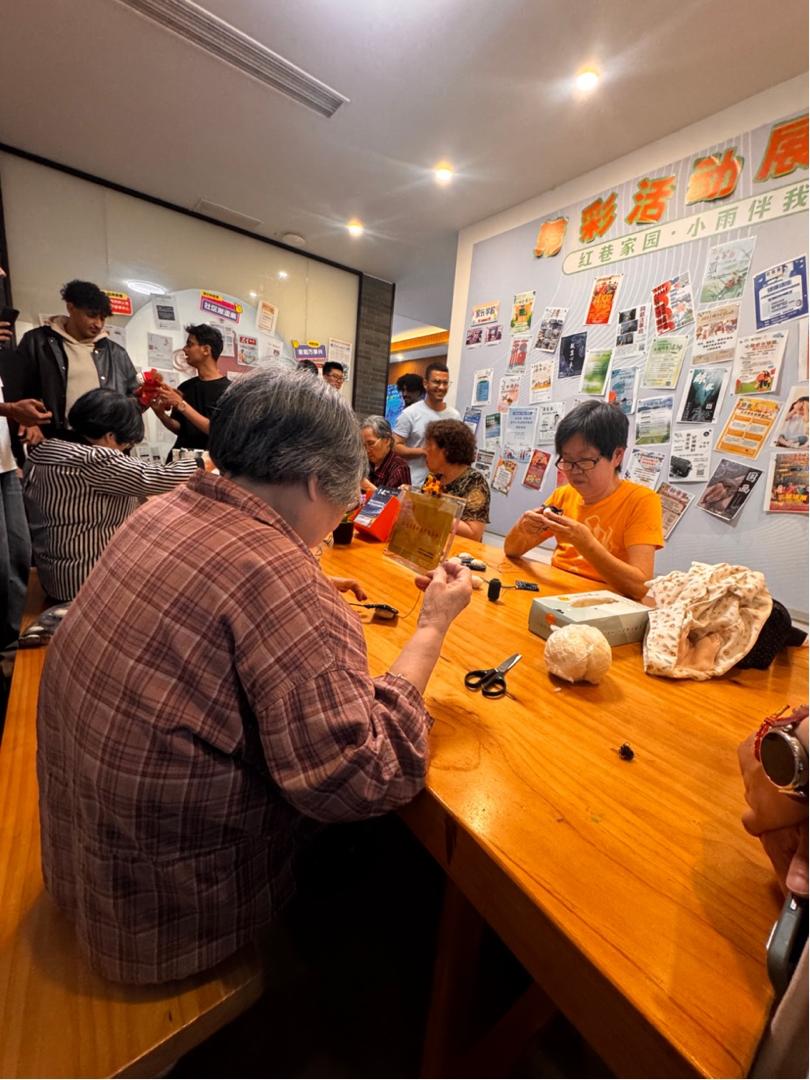
There were old women sitting around a wooden table when I walked in, not waiting, not idle, working, their hands moved through thread and shell with a quiet confidence that comes from years of doing something the same way, and they were laughing, not performing happiness for the visitors but actually laughing, in the middle of the afternoon, in a room that had been built specifically for them in a neighbourhood that had decided they mattered.
I had arrived at Xiaoying Lane in Hangzhou’s Shangcheng District expecting to take notes on governance but I left thinking about what it means for a place to actually care for its people, and what it costs a country when it doesn’t.
Photo 1
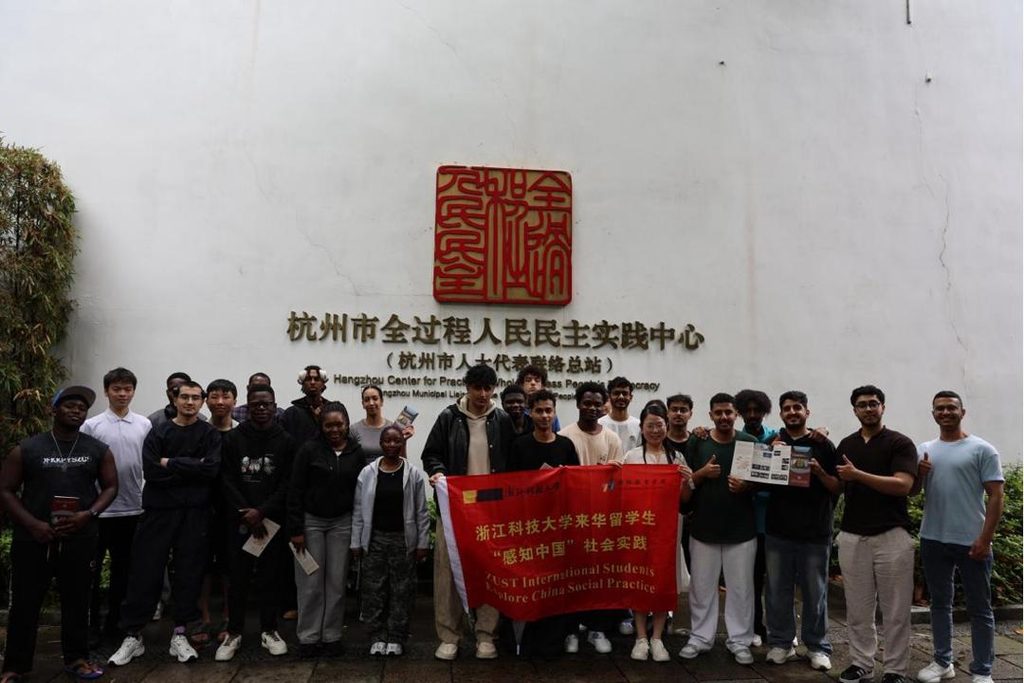
Xiaoying Lane is not a showpiece, it is a working neighbourhood — narrow, old, the kind of place that in most cities would have been quietly demolished to make way for something taller. What makes it unusual is that it wasn’t, the buildings were renovated rather than replaced, the history was housed rather than discarded, the people who had always lived there were given the infrastructure to stay, rather than being pushed to the edges of a city that grew around them and moved on.
The visit was part of a social practice programme for international students at Zhejiang University of Science and Technology, covering three sites within the lane: the Memorial Hall of the CPC Hangzhou Group, the Chairman Mao Inspection Memorial Hall, and the Xiaoying Lane Happiness Neighborhood Workshop. Together they told a story I was not expecting.
The Objects That Were Kept
The Memorial Hall of the CPC Hangzhou Group sits at No. 61 Xiaoying Lane and commemorates the founding of the first CPC local organisation in Zhejiang Province in September 1922. It was expanded in 2020 from 850 to 1,270 square metres and equipped with oil paintings, wax figures, 3D animations, and interactive exhibits.
None of that is what stayed with me, what stayed with me was a fountain pen.
Among the hall’s exhibits are personal objects donated by the descendants of the founding figures, a fountain pen, a hand grip, and a Zhongshan suit that belonged to Xu Meikun [徐梅坤] ; two personal seals belonging to Yu Shude [于树德]. These families kept these things for over a century and then gave them to the public, the hall displayed them carefully, where anyone could see them.
Photo 2
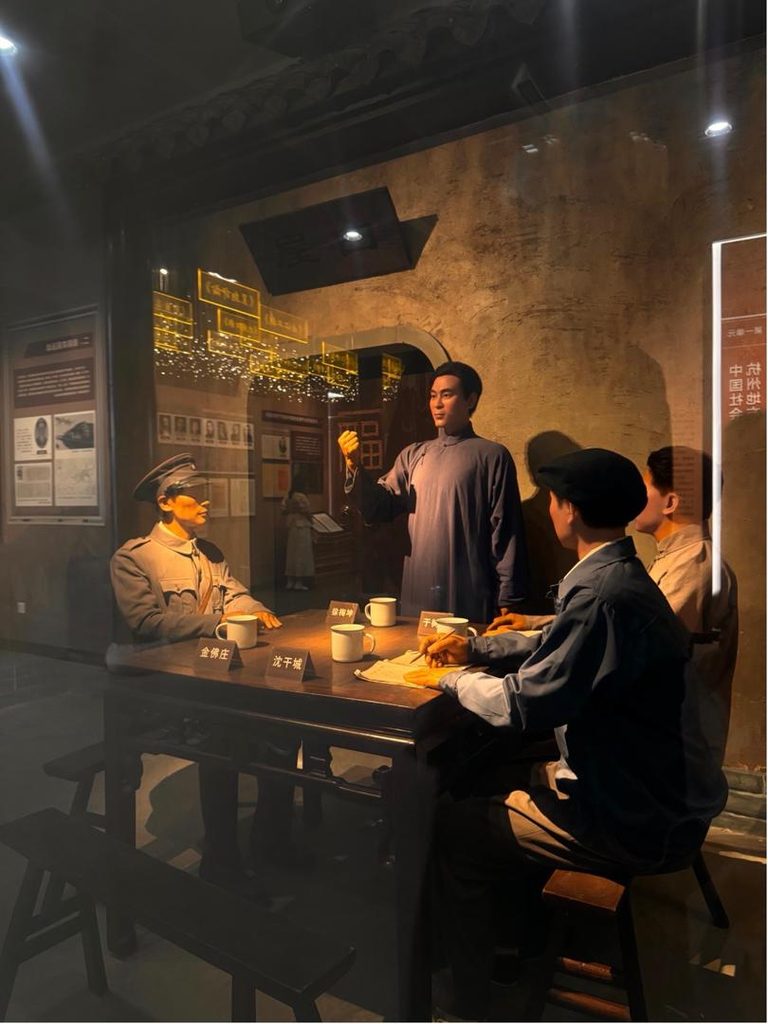
There is a version of history that is only dates and decisions, and then there is the version that keeps the pen of the person who actually wrote with, the second version is harder to forget because it insists that the people who made history were people with handwriting, with habits, with objects their families thought worth saving, that insistence is a form of respect, and it is a form of wealth that doesn’t show up in any economic report.
A community that knows where it came from, whose story is told vividly and honestly and free of charge, is richer than one that demolished that knowledge to put up a car park, Xiaoying Lane understands this, many cities do not.
When a Leader Actually Showed Up
The Chairman Mao Inspection Memorial Hall at No. 56 Xiaoying Lane marks something that happened on January 5, 1958: Mao Zedong [毛泽东] made an unannounced visit to the neighbourhood, walked into residents’ homes, looked at their living conditions, and praised the community’s approach to public health. The hall preserves photographs of the visit, the cane chair he sat on, and testimonies from people who were there.
What the hall is really about is proximity, the act being commemorated is not a policy or a speech, it is a leader choosing to physically show up where ordinary people lived and take what he found there seriously enough to say so publicly. Over 200,000 people have visited since the memorial opened — a number that suggests the act still means something to people, decades later, in a way that official announcements rarely do.
Governance that gets close enough to see how people actually live is different from governance that manages people from a distance. Xiaoying Lane holds both memories side by side — the revolutionary founding of 1922 and the afternoon visit of 1958 — as if to say the two things belong together: where you came from, and whether you still show up.
4,000 Surveys and a Canteen That Has Worked for Ten Years
The Xiaoying Lane Happiness Neighborhood Workshop at No. 86 Pishi Lane was built from the shell of a former community bathhouse, It now holds a canteen, a children’s space, a health station, a lecture hall, a reading room, and a neighbourhood council where residents raise problems using a five-step democratic consultation process.
Before any of it was built, the community conducted more than 4,000 surveys through door-to-door visits and community forums, the questions were direct: do you want this renovation? What should change? How should it work? Residents helped design and supervise the entire process from construction through operation.
Photo 3

The result is a space that doesn’t feel installed from above. It feels used, specific, and genuinely wanted, because it was shaped by the people who needed it. The canteen has been running for over ten years and offers preferential pricing for elderly residents living alone, that detail matters, it means someone asked the right question, not ‘what service can we provide?’ but ‘who is most at risk of going without?’
The women I saw laughing around the table that afternoon were not there because they had nowhere else to be, they were there because the neighbourhood built them a reason to come.
What It Looks Like When the Choice Goes the Other Way
I am from Nigeria, walking through Xiaoying Lane, I kept thinking about Lagos, Abuja, Kaduna and many others — cities I know, cities with deep histories and real community life, cities where old neighbourhoods are knocked down without record, where elderly people are cared for only if their families can manage it, where the relationship between government and the governed is often experienced as distance or extraction rather than service.
Nigeria is not poor in terms of what it has. It is, in many ways, a country that has not yet decided to preserve what it has — its histories, its communities, its oldest and most vulnerable people. What Xiaoying Lane showed me is that this is a choice, preservation is a choice, community infrastructure is a choice, democratic participation in the design of public services is a choice, none of these require a country to be wealthy, they require a country to have decided that ordinary people, living ordinary lives, deserve to be seen.
That conviction — if it took root in Nigerian governance — would change things in ways that GDP growth alone cannot, I say that not as a criticism but as a question I brought home with me: what would it cost us, really, to keep the things worth keeping?
Prosperity Is Not Only a Number
Xiaoying Lane is a small place, the alleys are narrow, the buildings are old, it doesn’t appear in lists of Hangzhou’s major tourist attractions, it is not trying to impress anyone,that is probably why it works. It is a neighbourhood that has been allowed to remain itself while being genuinely improved not replaced, not made unrecognisable, not sacrificed for development that benefits people who don’t live there. Its history is housed, its elderly are fed and engaged, its residents helped design the spaces they use, its story is told carefully and free of charge to anyone who wants to hear it.
This is what China calls common prosperity, at its most human it looks like a canteen that has run for ten years, it looks like a fountain pen in a glass case, donated by someone’s grandchild, it looks like old women laughing around a table on a Tuesday afternoon because the neighbourhood decided they were worth building a room for.
I went to Xiaoying Lane to take notes but I came back with a different idea of what prosperity is supposed to mean.
Mohammad Toyeeb Abdulsalam
A third-year Robotics Engineering student at Zhejiang University of Science and Technology (ZUST) in Hangzhou, China.
This article is adapted from a course report submitted for the Explore China social practice programme.
A Nigerian student walks through Xiaoying Lane and finds a different answer to a question his own country is still asking.

Drug Barons Must Lose Their Wealth to Be Truly Defeated, Marwa Tells Cambridge Symposium
By Zagazola Makama
The Chairman/Chief Executive Officer of the National Drug Law Enforcement Agency (NDLEA), Brig. Gen. Mohamed Buba Marwa (rtd), has declared that the war against drug trafficking cannot be won through arrests and convictions alone, stressing that drug barons must also be stripped of the financial resources sustaining their criminal enterprises.
Marwa made the declaration while delivering a presentation titled, “Criminal Property and the Criminal Process: How Can We Make It More Effective?” at the ongoing 43rd Cambridge International Symposium on Economic Crime, organised by the Centre for Geopolitics, University of Cambridge, United Kingdom.
The international symposium brought together judges, law enforcement chiefs, financial intelligence experts, academics and other specialists in the fight against economic and organised crime.
Marwa told the gathering that the effectiveness of the criminal justice system should not be measured solely by the number of convictions secured, but also by whether criminals are prevented from benefiting from the proceeds of their crimes.
According to him, a trafficker who loses his freedom but retains his wealth has not been completely defeated, as such resources could be deployed to finance new operations, support criminal associates and sustain the wider network.
“The ultimate objective must therefore be to deny criminals the proceeds of their crime, promptly, and lawfully while preserving the value of the property,” Marwa said.
He explained that the NDLEA had increasingly adopted financial investigations and asset recovery as a core component of its strategy against drug trafficking organisations.
The NDLEA boss likened arresting a trafficker without dismantling his financial base to “pruning a weed at the stem while leaving its roots undisturbed,” warning that illicit wealth could resurface through front companies, new identities or different jurisdictions.
Marwa outlined six practical strategies deployed by the agency to strengthen asset recovery, relying on provisions of the National Drug Law Enforcement Agency Act 2004, the Proceeds of Crime (Recovery and Management) Act 2022 and the Money Laundering (Prevention and Prohibition) Act 2022.
He cited the forfeiture of the Hook Hotel, a property allegedly linked to a fugitive drug suspect, as an example of the agency’s application of non-conviction-based forfeiture.
According to him, the property was recovered and subsequently sold for $4.2 million, with the proceeds paid into the Federal Government’s forfeited assets account domiciled with the Central Bank of Nigeria.
Marwa said the development demonstrated that fleeing the country or remaining at large would not necessarily allow a suspect to retain the benefits of alleged criminal activities.
He also disclosed that NDLEA investigators and prosecutors are now working together from the early stages of cases, a reform he said had helped reduce the time between arrests and the securing of asset restraint orders.
According to him, within the last month alone, the agency froze bank accounts containing more than $7 million and secured interim forfeiture orders covering multibillion-naira assets allegedly linked to a fugitive methamphetamine syndicate.
The assets, he said, included filling stations, multi-storey buildings and exotic vehicles.
Speaking on the case involving Nigerian businessman Amadi Simon, who was arrested in Switzerland through a joint operation involving the NDLEA, the United States Drug Enforcement Administration (DEA) and authorities in Switzerland, Greece and France, Marwa said three hotels linked to the suspect were placed under professional asset managers.
He explained that the decision was aimed at preserving the value of the businesses as going concerns rather than allowing the properties to deteriorate while legal proceedings continue.
The NDLEA chairman further highlighted the use of unexplained wealth and lifestyles beyond legitimate means as investigative triggers in identifying suspected proceeds of crime.
He also pointed to the use of interlocutory sales for perishable and depreciating assets to prevent the loss of value before final determination by the courts.
Marwa said the financial disruption strategy had now been incorporated into Nigeria’s National Drug Control Master Plan 2026–2030, making the dismantling of the financial architecture of drug trafficking a sustained national priority.
He distilled the agency’s approach into three guiding principles: speed over sequence, preservation of value and institutionalisation.
While acknowledging progress, Marwa identified delays in mutual legal assistance, limited forensic accounting capacity and the need to balance the rights of accused persons with the state’s responsibility to preserve assets pending trial as continuing challenges.
He called for faster international cooperation mechanisms and stronger cross-border recognition of non-conviction-based forfeiture orders.
Marwa reaffirmed the NDLEA’s commitment to strengthening partnerships with international jurisdictions and institutions in order to dismantle the financial structures that enable drug trafficking organisations to operate.
He thanked the Centre for Geopolitics, the organisers of the symposium and Judge Wendy Tien, who chaired the session, for providing a platform for the exchange of ideas on strengthening the global fight against economic and organised crime.
Drug Barons Must Lose Their Wealth to Be Truly Defeated, Marwa Tells Cambridge Symposium

Cuba advances home-grown cancer drug as 2C12 enters human trials

A Nigerian student walks through Xiaoying Lane and finds a different answer to a question his own country is still asking.

Troops Foil Armed Robbery Attack, Rescue Two Locals in Plateau

Roger Federer’s Shock as DNA Results Reveal Myla and Charlene Are Not His Biological Children

THE PLIGHT OF FARIDA

FAILED COUP IN BURKINA FASO: HOW TRAORÉ NARROWLY ESCAPED ASSASSINATION PLOT AMID FOREIGN INTERFERENCE CLAIMS
-
 News2 years ago
Roger Federer’s Shock as DNA Results Reveal Myla and Charlene Are Not His Biological Children
-
Opinions5 years ago
THE PLIGHT OF FARIDA
-
 News1 year ago
FAILED COUP IN BURKINA FASO: HOW TRAORÉ NARROWLY ESCAPED ASSASSINATION PLOT AMID FOREIGN INTERFERENCE CLAIMS
-

 News2 years ago
EYN: Rev. Billi, Distortion of History, and The Living Tamarind Tree
-
 Opinions5 years ago
POLICE CHARGE ROOMS, A MINTING PRESS
-

 ACADEMICS2 years ago
A History of Biu” (2015) and The Lingering Bura-Pabir Question (1)
-

 Columns2 years ago
Army University Biu: There is certain interest, but certainly not from Borno.
-

 Politics1 year ago
2027: Why Hon. Midala Balami Must Go, as Youths in Hawul and Asikira/Uba Federal Constituency Reject ₦500,000 as Sallah Gift
