
News
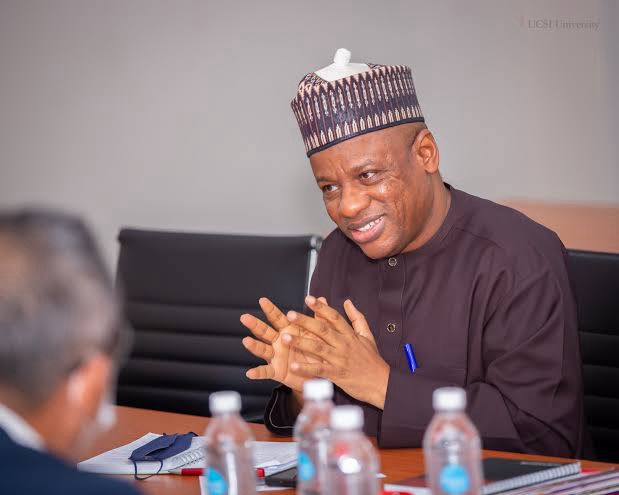
Lake Chad Basin Commission appoints Amb. Ibrahim Babani as Executive Secretary

Lake Chad Basin Commission appoints Amb. Ibrahim Babani as Executive Secretary
By: Zagazola Makama
The designation of Amb. Ibrahim Babani as the new Executive Secretary of the Lake Chad Basin Commission (LCBC) has sparked fresh expectations for stronger regional cooperation, environmental recovery and security stabilisation across the Lake Chad region.
Babani’s appointment was announced at the 71st Ordinary Session of the Council of Ministers of the LCBC, held on March 6, 2026, in N’Djamena, Chad, where ministers and commissioners from member states deliberated on strategies to address the region’s pressing challenges.
The meeting, chaired by Mr Passale Kanabe Marcelin, Chad’s Minister of Water and Energy Resources and current Chairman of the LCBC Council of Ministers, brought together representatives of the commission’s member states, including Nigeria, Niger, Cameroon, Chad and the Central African Republic.
Nigeria was represented by Prof. Joseph Terlumun Utsev, Minister of Water Resources and Sanitation and First Commissioner of Nigeria to the LCBC, alongside Mrs Bianca Ojukwu, Minister of State for Foreign Affairs and Second Commissioner.
The Lake Chad Basin Commission remains one of Africa’s most important regional bodies, responsible for coordinating water resource management, environmental restoration and socio-economic development among countries sharing the Lake Chad Basin.
The basin supports more than 40 million people across the five member states, whose livelihoods depend largely on fishing, farming and pastoral activities linked to the shrinking lake.
Over the past decades, however, the region has faced severe environmental degradation, climate change impacts and the devastating effects of the ISWAP/Boko Haram insurgency, which has displaced millions and disrupted economic activities. These complex challenges have made the role of the LCBC increasingly strategic in driving recovery, stabilisation and resilience across the basin.
Stakeholders believe Babani’s emergence as Executive Secretary comes at a critical time when the commission is intensifying efforts to implement several large-scale regional programmes.
These include the Regional Strategy for Stabilisation, Recovery and Resilience (RS-SRR) for areas affected by Boko Haram violence, as well as projects aimed at ecological restoration and socio-economic reintegration of vulnerable populations.
During the meeting, commissioners reviewed progress in implementing the strategy and emphasised the need to accelerate key initiatives, including the development of a regional transitional justice policy and improved coordination of stabilisation interventions.
They also recommended the organisation of the sixth edition of the Governors’ Forum in Niger, alongside meetings of traditional rulers and civil society organisations to strengthen community-based recovery efforts.
Prior to his appointment, the incoming Executive Secretary of the LCBC, Amb. Ibrahim Babani, served as Director of External Affairs (DEA) at the Office of the National Security Adviser (ONSA) and also doubles as Head of Mission (HoM) of the Multinational Joint Task Force (MNJTF), bringing extensive security and diplomatic experience to his new role.
Babani’s leadership will therefore be critical in coordinating these initiatives and ensuring that they translate into tangible benefits for affected communities. Another priority expected to dominate Babani’s tenure is the restoration of the Lake Chad ecosystem, which has shrunk drastically over the past half century due to climate change, drought and unsustainable water use.
At the session, commissioners reviewed progress on the Inter-Basin Water Transfer Project, a major initiative designed to replenish the lake by transferring water from other basins.
The Council of Ministers commended the LCBC Executive Secretariat for successfully mobilising funding from the African Development Bank for the project and urged faster implementation of technical support programmes aimed at restoring the lake’s ecological and economic functions. Environmental experts believe that restoring the lake is crucial for reducing poverty, preventing conflicts over natural resources and addressing some of the root causes of insecurity in the region.
The Ministers also reviewed progress on the Lake Chad Region Recovery and Development Project (PROLAC) and encouraged continued engagement with the World Bank to secure financing for a second phase of the initiative.
Similarly, they called for further advocacy with the African Development Bank to support the second phase of the Project to Support the Socio-Economic Reintegration of Vulnerable Groups in the Lake Chad Basin (PARSEBALT).
Both initiatives focus on rebuilding infrastructure, supporting livelihoods and reintegrating vulnerable groups affected by years of insurgency and displacement. These programmes complement military efforts against extremist groups by addressing the social and economic conditions that fuel instability.
Despite its strategic importance, the LCBC continues to face financial constraints that could hamper implementation of its programmes.
During the session, commissioners raised concerns about the accumulation of unpaid contributions by member states and urged governments to settle their arrears and ensure regular payment of statutory dues.
They also mandated the chairman of the Council of Ministers to escalate the issue to the highest political authorities within member states to guarantee sustainable funding for the commission’s activities.
The council approved the commission’s 2026 Annual Work Plan and Budget, estimated at 15.13 billion CFA francs, with over 12.63 billion CFA francs allocated to development programmes and 2.50 billion CFA francs for operational costs.
The meeting also adopted key annexes to the Lake Chad Basin Water Charter, including frameworks governing the management of water infrastructure and procedures for notification of planned measures affecting shared water resources.
Commissioners further endorsed a Five-Year Investment Plan and directed the Executive Secretariat to organise a donors’ roundtable to mobilise international support.
Babani’s leadership comes at a time when the Lake Chad region is at a crossroads. While military operations have significantly weakened insurgent groups in recent years, millions of people still face humanitarian challenges, environmental degradation and fragile livelihoods.
The effectiveness of the LCBC in coordinating development, environmental restoration and stabilisation initiatives could determine whether the region moves toward lasting peace and prosperity.
The Council of Ministers concluded the meeting by expressing appreciation to development partners for their continued support and announcing that the next budgetary session will be held in Bangui, Central African Republic.
For many stakeholders in the Lake Chad Basin, the appointment of Babani represents not only a change in leadership but also a renewed opportunity to accelerate recovery, strengthen regional cooperation and secure the future of one of Africa’s most vital ecosystems.
Zagazola is a Counter Insurgency Expert and Security Analyst in the Lake Chad regional
Lake Chad Basin Commission appoints Amb. Ibrahim Babani as Executive Secretary


News
KACRAN Offers Tinubu 45-Day Peace Plan, Says Farmer-Herder Conflicts Require Dialogue, Not Just Military Action

KACRAN Offers Tinubu 45-Day Peace Plan, Says Farmer-Herder Conflicts Require Dialogue, Not Just Military Action
By: Michael Mike
The Kulen Allah Cattle Rearers Association of Nigeria (KACRAN) has proposed a 45-day peace initiative to tackle insecurity in North-West and North-Central Nigeria, arguing that farmer-herder conflicts, poverty, unemployment and social injustice require urgent non-military interventions alongside security operations.
The association said its proposed roadmap could restore peace and mutual understanding in the two geopolitical zones within 45 days and help stabilise the country within six months, if adopted and implemented by the Federal Government.
The proposal comes as KACRAN commended President Bola Tinubu for unveiling a five-year strategic defence operation plan aimed at tackling insecurity, but expressed concern that Nigerians affected by killings, kidnappings, displacement and destruction of livelihoods could not afford to wait until 2031 for relief.
In a statement signed by its National President, Khalil Mohd Bello, KACRAN described the President’s defence initiative as evidence of his commitment to national security, noting the planned expansion of military and police manpower, intelligence-driven operations, deployment of modern technology and improved security coordination.
The association, however, argued that a significant proportion of Nigeria’s security challenges were rooted in social grievances, farmer-herder misunderstandings, poverty, illiteracy, unemployment and inadequate community engagement, which it said could be addressed more rapidly through dialogue, reconciliation and justice.
“80 per cent of insecurity in Nigeria is a social problem emanating from farmer-herder misunderstanding, injustice, abject poverty, joblessness, illiteracy and lack of proper community engagement,” the association said, insisting that such challenges were more amenable to social solutions than purely military action.
KACRAN warned that the human cost of prolonged insecurity was enormous, particularly in Northern Nigeria, where communities continued to suffer killings, restricted access to farmlands, livestock rustling, displacement and abductions.
It said extending the search for peace over five years could deepen the humanitarian crisis, weaken agricultural production and leave communities devastated for generations, particularly with Nigeria’s rapidly growing population.
While acknowledging the importance of strengthening the Armed Forces and other security agencies, the association cautioned that the success of the five-year defence plan could also be affected by political transitions and the country’s history of policy discontinuity.
KACRAN said its proposed 45-day blueprint was built around nationwide farmer-herder dialogue and reconciliation, speedy dispensation of justice for victims, integrated agricultural and economic development, education, job creation and greater youth participation in the livestock value chain.
It also advocated dialogue as the first option in resolving conflicts, with the use of force reserved for situations where it was absolutely necessary.
The association urged the Federal Government to make provisions in the 2027 budget for massive procurement and free distribution of fertilisers and other agricultural inputs to farmers, saying the intervention would boost food production, improve food security and stimulate economic growth.
It further called for increased funding for the North-West Development Commission and other regional development commissions to accelerate reconstruction, economic recovery and social development in communities ravaged by insecurity.
According to KACRAN, its proposed intervention would run from November 25, 2026, to January 10, 2027, during which it expects peace and mutual understanding to be restored in North-West and North-Central Nigeria, if the programme is adopted and effectively implemented.
The association said the billions or trillions of naira earmarked for the five-year security plan could subsequently be deployed more prudently towards modernising the Armed Forces and supporting widows, orphans, families of fallen security personnel and retired military and police officers.
KACRAN, which described itself as a nationwide association with millions of members, expressed readiness to partner with the Federal Government in implementing its proposed peace initiative.
It also cited Rwanda’s recovery from the 1994 genocide as an example of how a society devastated by violence could rebuild through deliberate efforts at reconciliation, governance and development.
The association appealed to Tinubu and the 11-member committee overseeing the five-year defence plan to consider its proposed roadmap, expressing optimism that a sustained commitment to dialogue, justice, economic empowerment and community engagement could deliver lasting peace in the affected regions.
KACRAN Offers Tinubu 45-Day Peace Plan, Says Farmer-Herder Conflicts Require Dialogue, Not Just Military Action

14 Killed as Truck Carrying Cattle, Passengers Crashes on Kontagora Road in Niger
By: Zagazola Makama
Fourteen people have been killed in a fatal road accident involving a DAF truck conveying 35 cattle and several passengers along Kontagora Road in Niger State.
The accident occurred at about 11 a.m. on November 17, 2026, around Ibeto, when the truck, with registration number Lagos AZL 267 XH, was travelling from Koko Local Government Area of Kebbi State towards Lagos.
Police sources said an unidentified vehicle travelling in the same direction reportedly attempted to overtake the truck but brushed against it, causing the driver to lose control before the vehicle fell.
The truck driver and 13 other occupants reportedly died at the scene.
Those identified among the deceased included Umar, 45, the driver, from Kaoje; Anas Suleiman, 25, and Sufiyanu Suleiman, 40, both from Koko; Salim Abu Dogo, 30; Abubakar Shehu, 45; Yahaya Abubakar, 30; and Manu, 35, all from Dankigari.
Others were Rufai Umar, 25, from Bagudo; Faruk Tudu Kaoje, 20, from Kaoje; Umar Abubakar, 30, from Saradosa; Salisu Idry, 35, from Bagodo; and Abubakar Alhaji, 25, from Kaoje.
Police said the bodies were identified by relatives, while those claimed by their families were released for burial in accordance with Islamic rites. Two unidentified bodies were deposited at the Kontagora General Hospital mortuary.
The vehicle allegedly involved in the overtaking manoeuvre was later traced to Kaboji in Magama Local Government Area and taken to the Area Command Office.
However, the driver of the vehicle reportedly fled and remains at large.
The Niger State Police Command said investigation was ongoing to establish the full circumstances of the accident and apprehend the fleeing driver.
14 Killed as Truck Carrying Cattle, Passengers Crashes on Kontagora Road in Niger
Troops Discover Seven Illegal Bunkering Camps, Recover 85,000 Litres of Crude Oil in Rivers
By: Zagazola Makama
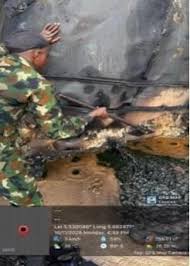
Troops of the 6 Division Garrison Task Force, comprising Companies 3, 4 and 5, have discovered seven illegal bunkering camps around Ndoni Local Government Area of Rivers State.
Security sources said the operation was conducted at about midnight on November 17, 2026, during an anti-illegal bunkering operation.
The troops discovered 67 drum pots, eight receivers and approximately 85,000 litres of suspected stolen crude oil at the camps.
The recovered items and crude oil were handled in accordance with extant regulations.
However, during the withdrawal from the operation area, one Armoured Personnel Carrier (APC) became bogged down, prompting efforts by the troops to recover the vehicle.
The operation forms part of ongoing military efforts to dismantle illegal crude oil bunkering facilities and curb economic sabotage in the Niger Delta.
Troops Discover Seven Illegal Bunkering Camps, Recover 85,000 Litres of Crude Oil in Rivers

SOJA Demands Release of Journalist Daniel Ojukwu, Seeks Review of Cybercrimes Act, Criminal Defamation Laws

KACRAN Offers Tinubu 45-Day Peace Plan, Says Farmer-Herder Conflicts Require Dialogue, Not Just Military Action

West African States Move to Harmonise Migration Policies, Strengthen Cross-Border Mobility

Roger Federer’s Shock as DNA Results Reveal Myla and Charlene Are Not His Biological Children

THE PLIGHT OF FARIDA

FAILED COUP IN BURKINA FASO: HOW TRAORÉ NARROWLY ESCAPED ASSASSINATION PLOT AMID FOREIGN INTERFERENCE CLAIMS
-
 News3 years ago
Roger Federer’s Shock as DNA Results Reveal Myla and Charlene Are Not His Biological Children
-
Opinions5 years ago
THE PLIGHT OF FARIDA
-
 News2 years ago
FAILED COUP IN BURKINA FASO: HOW TRAORÉ NARROWLY ESCAPED ASSASSINATION PLOT AMID FOREIGN INTERFERENCE CLAIMS
-
 Opinions5 years ago
POLICE CHARGE ROOMS, A MINTING PRESS
-

 News3 years ago
EYN: Rev. Billi, Distortion of History, and The Living Tamarind Tree
-

 ACADEMICS3 years ago
A History of Biu” (2015) and The Lingering Bura-Pabir Question (1)
-

 Columns3 years ago
Army University Biu: There is certain interest, but certainly not from Borno.
-

 Politics1 year ago
2027: Why Hon. Midala Balami Must Go, as Youths in Hawul and Asikira/Uba Federal Constituency Reject ₦500,000 as Sallah Gift
