
News
ECOWAS, AU Push Green Ports Agenda to Cut Maritime Emissions in Africa

ECOWAS, AU Push Green Ports Agenda to Cut Maritime Emissions in Africa
By: Michael Mike
The Economic Community of West African States (ECOWAS) and the African Union have stepped up efforts to drive Africa’s transition to sustainable maritime systems, convening a high-level continental workshop in Abuja to align strategies on green ports development and maritime decarbonization.
The two-day Continental Validation Workshop on Green Ports Guidelines and Maritime Greenhouse Gas Emissions Reduction brought together senior policymakers, maritime institutions and technical experts from across Africa at the ECOWAS headquarters to deliberate on the implementation of the Revised African Maritime Transport Charter and strengthen the continent’s response to climate challenges in the maritime sector.
Opening the session, ECOWAS Director of Transport Chris Appiah stressed the need for Africa’s maritime industry to adapt to global sustainability trends without compromising trade efficiency and development priorities.
“Efficiency, operational capacity and trade facilitation must remain at the core of Africa’s response, even as the continent advances towards greener maritime systems,” he said while speaking on behalf of the President of the ECOWAS Commission, Omar Alieu Touray.
Appiah reaffirmed ECOWAS’ commitment to strengthening maritime governance, upgrading port infrastructure and supporting member states in building resilient and competitive transport systems.
From the continental perspective, the Head of Maritime Transport at the African Union Commission, Raissa‑Julie Ada Allogo, called for stronger coordination among African countries to ensure the continent speaks with one voice in global maritime negotiations.
“This is the time for Africa to speak with one voice to ensure that the transition towards decarbonization remains inclusive, realistic and aligned with the capacities of our Member States,” she said.
Allogo highlighted the importance of the Revised African Maritime Transport Charter, describing it as a key instrument for modernising maritime governance and strengthening cooperation across African maritime institutions.
Regional maritime organisations also weighed in on the discussions. The Secretary-General of the Maritime Organisation of West and Central Africa (MOWCA), Paul Adalikwu, said green port development should be seen not only as an environmental necessity but also as a strategic investment that could enhance efficiency and competitiveness across African ports.
Similarly, the Secretary-General of the Maritime Organisation for Eastern, Southern and Northern Africa (MOESNA), Kassim Kaziba Mpaata, urged African countries to strengthen maritime capacity in order to reduce dependency on external systems and better withstand global disruptions.
Adding a regulatory perspective, the Secretary-General of the Abuja Memorandum of Understanding on Port State Control, Sunday M. Umoren, stressed that adherence to international maritime standards is critical to maintaining Africa’s role in global shipping networks and avoiding higher operational costs.
Development partners also reaffirmed support for the initiative. Speaking on behalf of the German Agency for International Cooperation (GIZ), Bekele Essete Abebe described ports as the backbone of global supply chains and emphasised that investments in sustainable and resilient port infrastructure are essential for Africa’s economic transformation.
“Ports remain the backbone of global supply chains, and investing in sustainable and resilient port infrastructure is central to Africa’s economic transformation and climate response,” she said.
Technical sessions during the workshop focused on validating a Handbook and Guidelines on Green Ports in Africa, developed through consultations across member states. The framework identifies priority actions including renewable energy integration, electrification of port operations, digitalisation, emissions monitoring, climate resilience and adoption of cleaner fuels.
Experts noted that the transition to green ports should be viewed not simply as an environmental initiative but as a broader economic and operational transformation that can improve efficiency, strengthen trade competitiveness and enhance resilience across African maritime systems.
The workshop continued with working sessions aimed at consolidating member states’ inputs and developing a coordinated roadmap for implementing the guidelines across the continent.
Officials said the outcome of the meeting is expected to strengthen Africa’s maritime governance framework, improve port performance and position the continent as a proactive actor in the global shift toward sustainable and decarbonised maritime transport.
ECOWAS, AU Push Green Ports Agenda to Cut Maritime Emissions in Africa


Farmer Injured in Machete Attack Allegedly by Herdsmen in Plateau
By Zagazola Makama
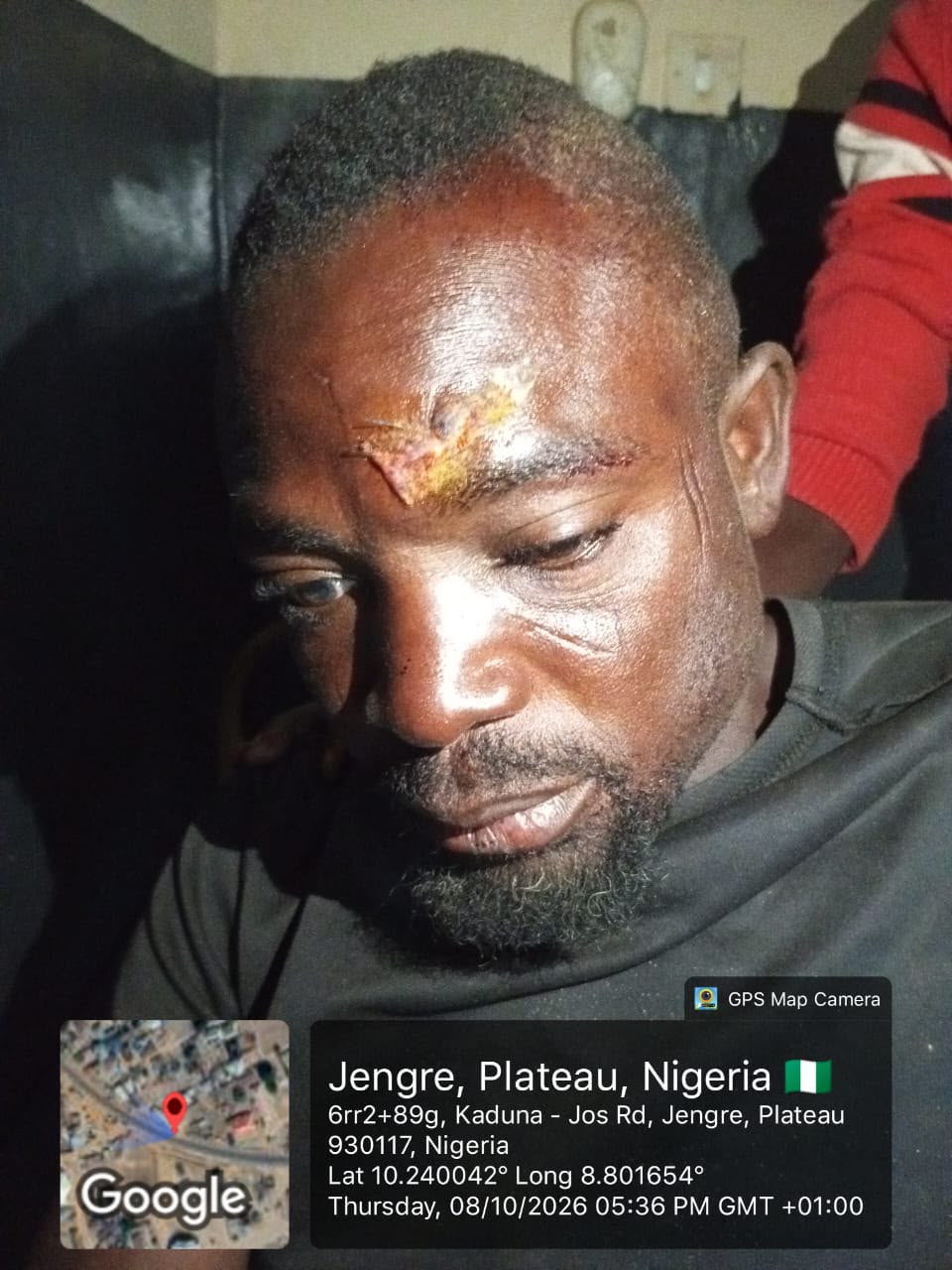
A farmer, identified as Babangida Atah, has been injured in a machete attack allegedly carried out by Fulani herders at Rafi Katako village in Bassa Local Government Area of Plateau State.
Security sources said the incident occurred at about 1 p.m. on Thursday, Oct. 8, when troops of Sector 1, Operation Enduring Peace (OPEP), deployed in Jengre, responded to a report of an assault on the farmer at his farm.
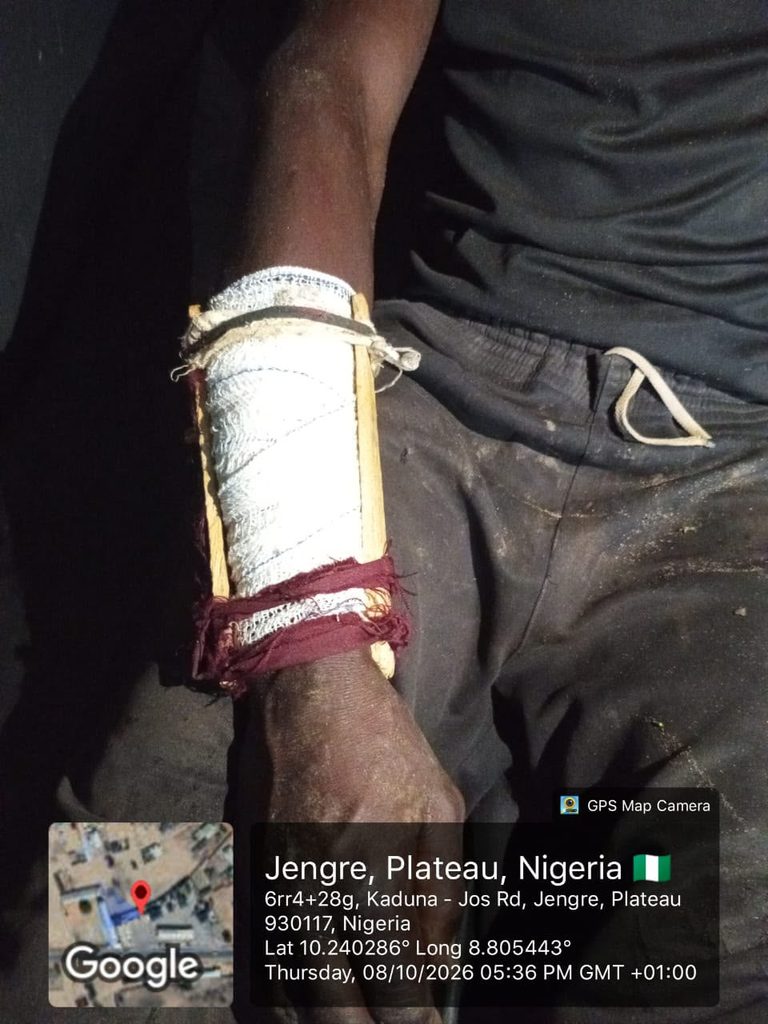
The sources said the troops, upon arrival at the scene, found Atah with machete wounds, while the suspected attackers had fled before their arrival.
The victim was evacuated to a nearby hospital for medical attention.
Security personnel have commenced efforts to track down and apprehend the fleeing suspects for further investigation and necessary legal action.
Further details are expected as efforts to identify and arrest those responsible continue.
Farmer Injured in Machete Attack Allegedly by Herdsmen in Plateau

Suspected Fulani bandits Kill Man, Block Road in Plateau Community
By Zagazola Makama
Suspected Fulani bandits members have reportedly killed a man identified as Zubairu Danirai after blocking the Manja–Mpili road in Mangu Local Government Area of Plateau State.
Security sources said the incident occurred at about 4:30 p.m. on Thursday, Oct. 8, when troops of Sector 8, Operation Enduring Peace (OPEP), deployed at Manja, responded to a report of the roadblock and killing of a native returning from the market.
The sources said the troops, upon arriving at the scene, made contact with the suspected assailants, who fled into the surrounding mountains following an exchange of fire.
The troops subsequently searched the area and discovered the victim’s body.
A manhunt has been launched to track down the fleeing suspects, while security personnel continue efforts to prevent further attacks and restore safety along the affected route.
The incident adds to security concerns in parts of Mangu Local Government Area, where attacks on residents and road users have heightened fears over the safety of local communities.
Further details are expected as investigations continue.
Suspected Fulani bandits Kill Man, Block Road in Plateau Community
NHRC seeks death penalty moratorium as 3,000 inmates languish on death row
…Commission urges governors to commute sentences, calls for review of mandatory capital punishment laws
By: Michael Mike
The National Human Rights Commission (NHRC) has called on the Federal Government to declare an official moratorium on executions and state governors to commute eligible death sentences to life imprisonment, amid concerns that more than 3,000 inmates remain on death row across Nigeria.
The commission said Nigeria was approaching 10 consecutive years without a state execution, a development it described as meeting the international standard for a de facto moratorium, despite the continued imposition of death sentences and the prolonged detention of condemned inmates.
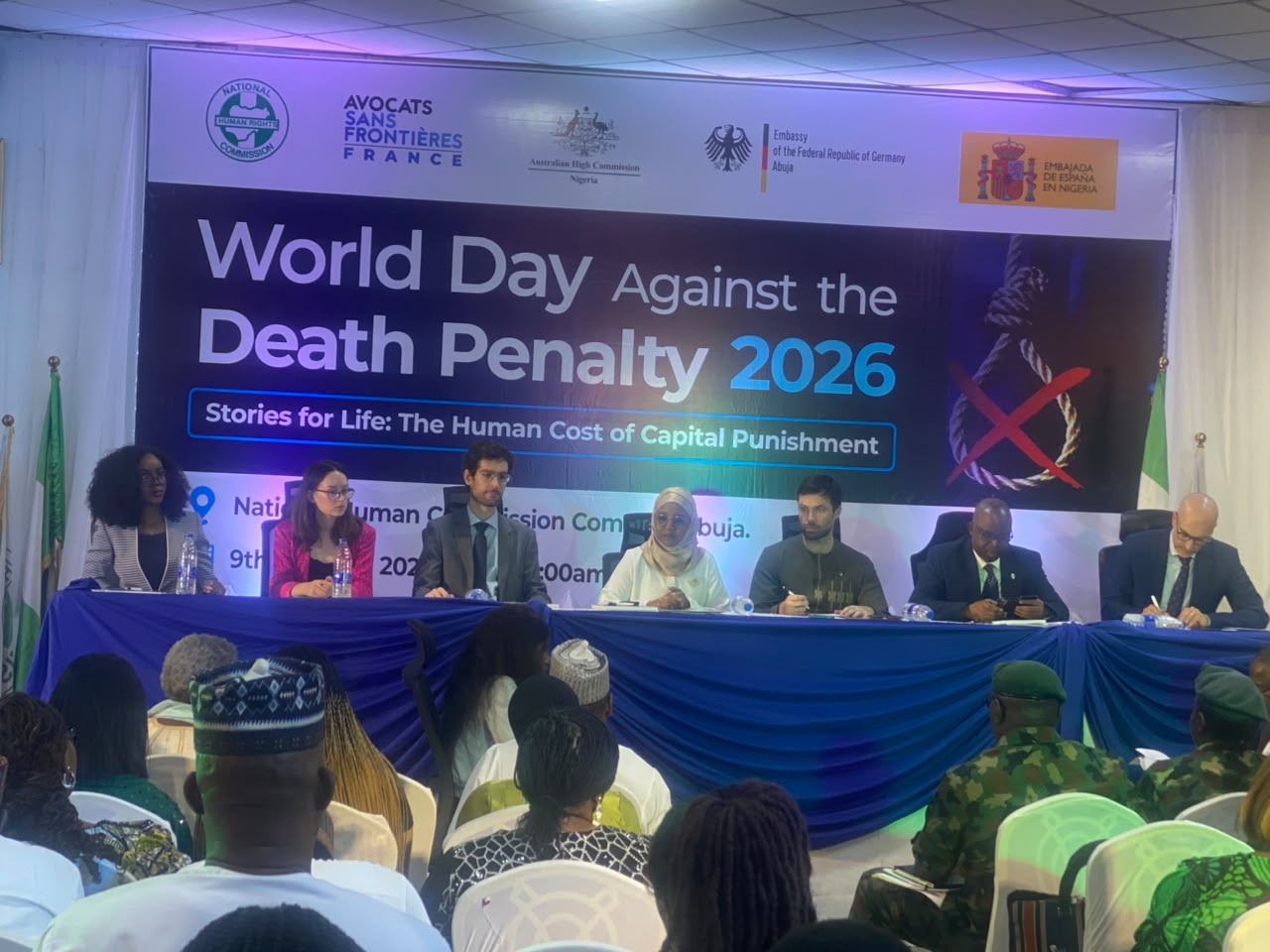
The Executive Secretary of the NHRC, Chief Tony Ojukwu, made the call on Friday in Abuja during the commemoration of the 2026 World Day Against the Death Penalty at the commission’s headquarters.
Ojukwu urged the Federal Government to formalise the suspension of executions, while calling on state governors to exercise their constitutional prerogative of mercy to commute death sentences, particularly in cases where inmates had exhausted their appeals but remained on death row.
He also advocated a review of laws prescribing mandatory death sentences, arguing that judges should have the discretion to consider mitigating circumstances and systemic vulnerabilities before determining appropriate punishment.
Although capital punishment remains constitutionally valid in Nigeria, the NHRC chief stressed that its administration must be consistent with the country’s human rights obligations and the fundamental principles of fair trial and due process.
He expressed concern that inadequate access to pro bono legal representation, forced confessions and delays in bringing suspects to trial continued to undermine procedural justice, raising questions about the fairness of proceedings in capital cases.
According to him, the protection of human rights requires more than the existence of legal provisions, insisting that the justice system must guarantee fair hearings and ensure that the death penalty is restricted to the most serious crimes in line with applicable international standards.
The commission outlined three immediate policy measures: an official moratorium on executions, the commutation of eligible death sentences to life imprisonment, and a comprehensive review of laws prescribing mandatory capital punishment.
Ojukwu’s appeal places renewed focus on the position of condemned inmates who have exhausted their legal options but remain in custody, as well as the wider implications of prolonged confinement on the administration of criminal justice.
A formal moratorium, the commission argued, would provide an immediate policy framework for suspending executions while the country considers broader reforms to its capital punishment regime.
The proposed review of mandatory death penalty provisions would also allow courts to take individual circumstances into account when sentencing offenders, rather than being compelled by law to impose the same punishment regardless of relevant mitigating factors.
The commemoration was organised by the NHRC in partnership with Avocats Sans Frontières (ASF) France, the Australian High Commission and the Embassy of Germany, with support from the Royal Norwegian Embassy.
Ojukwu expressed hope that deliberations at the event would produce a joint call-to-action communiqué to advance sustainable reforms in Nigeria’s justice sector.
The commission’s position comes amid continuing debates over capital punishment, the protection of the rights of accused persons and the need to strengthen safeguards against miscarriages of justice.
NHRC seeks death penalty moratorium as 3,000 inmates languish on death row

Farmer Injured in Machete Attack Allegedly by Herdsmen in Plateau

Suspected Fulani bandits Kill Man, Block Road in Plateau Community

NHRC seeks death penalty moratorium as 3,000 inmates languish on death row

Roger Federer’s Shock as DNA Results Reveal Myla and Charlene Are Not His Biological Children

THE PLIGHT OF FARIDA

FAILED COUP IN BURKINA FASO: HOW TRAORÉ NARROWLY ESCAPED ASSASSINATION PLOT AMID FOREIGN INTERFERENCE CLAIMS
-
 News3 years ago
Roger Federer’s Shock as DNA Results Reveal Myla and Charlene Are Not His Biological Children
-
Opinions5 years ago
THE PLIGHT OF FARIDA
-
 News1 year ago
FAILED COUP IN BURKINA FASO: HOW TRAORÉ NARROWLY ESCAPED ASSASSINATION PLOT AMID FOREIGN INTERFERENCE CLAIMS
-

 News3 years ago
EYN: Rev. Billi, Distortion of History, and The Living Tamarind Tree
-
 Opinions5 years ago
POLICE CHARGE ROOMS, A MINTING PRESS
-

 ACADEMICS3 years ago
A History of Biu” (2015) and The Lingering Bura-Pabir Question (1)
-

 Columns3 years ago
Army University Biu: There is certain interest, but certainly not from Borno.
-

 Politics1 year ago
2027: Why Hon. Midala Balami Must Go, as Youths in Hawul and Asikira/Uba Federal Constituency Reject ₦500,000 as Sallah Gift
