
News
NCTC-ONSA, Partners Intensify Push to Localise PCVE Strategy

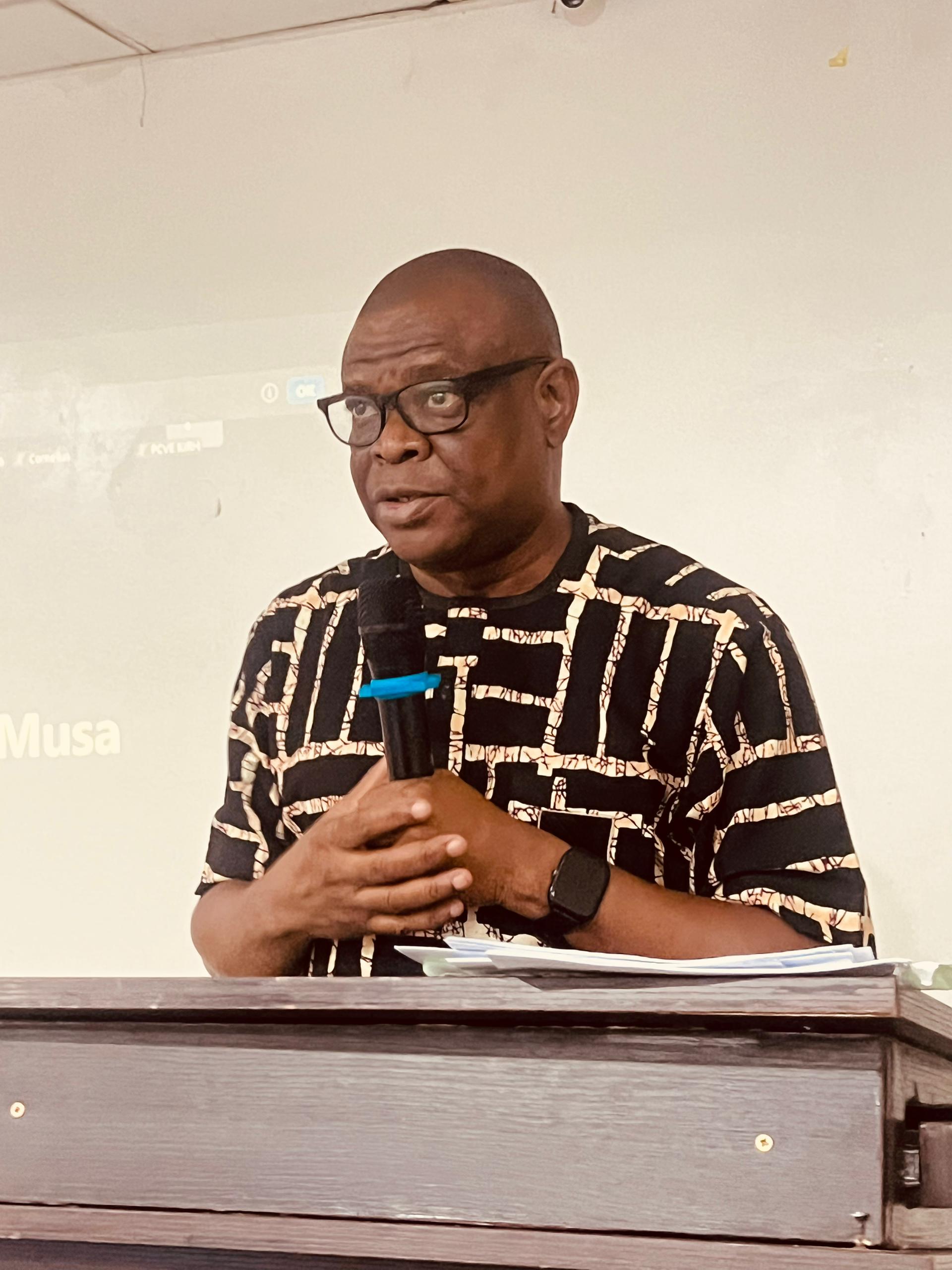
NCTC-ONSA, Partners Intensify Push to Localise PCVE Strategy
By: Michael Mike
Efforts to deepen Nigeria’s response to violent extremism have gained renewed momentum as state governments, civil society actors, and development partners intensify efforts to localise the country’s Policy Framework and National Action Plan on Preventing and Countering Violent Extremism (PF-NAP).
The push, driven by the Preventing and Countering Violent Extremism Knowledge, Innovation and Resource Hub (PCVE-KIRH) of PAVE Network and National Counter-Terrorism Centre of the Office of National Security Adviser (NCTC-ONSA) in collaboration with partners including Nextier, SPRING Programme, FCDO, Global Community Engagement and Resilience Fund (GCER), aims to translate national policy into practical, state-level action.
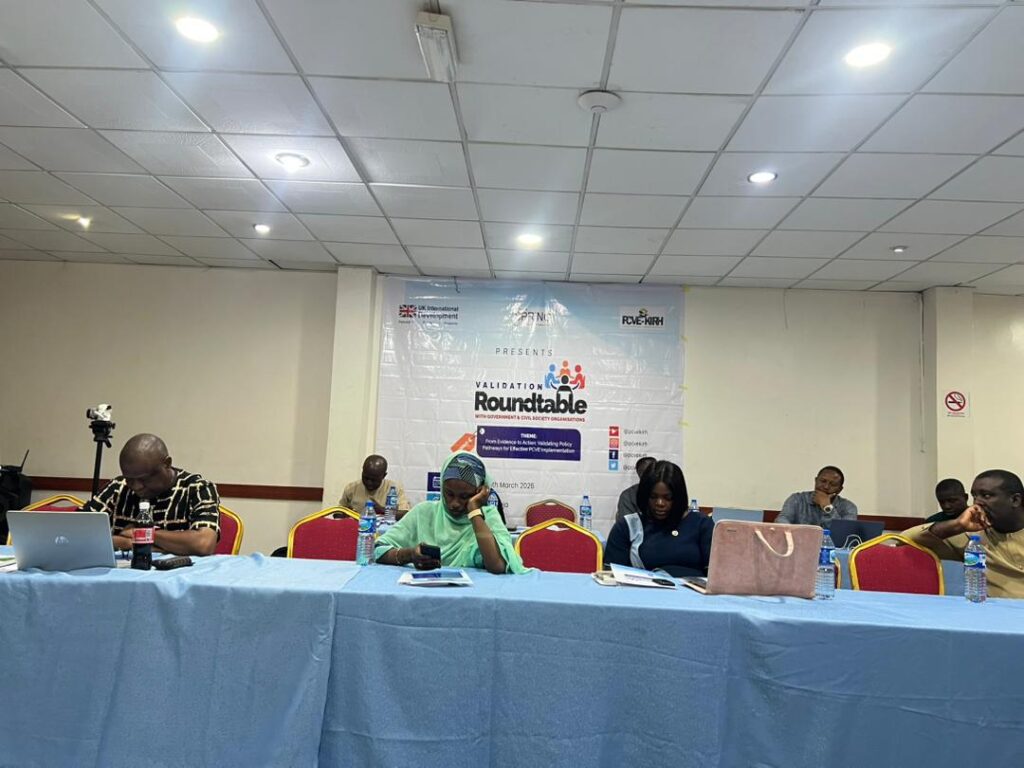
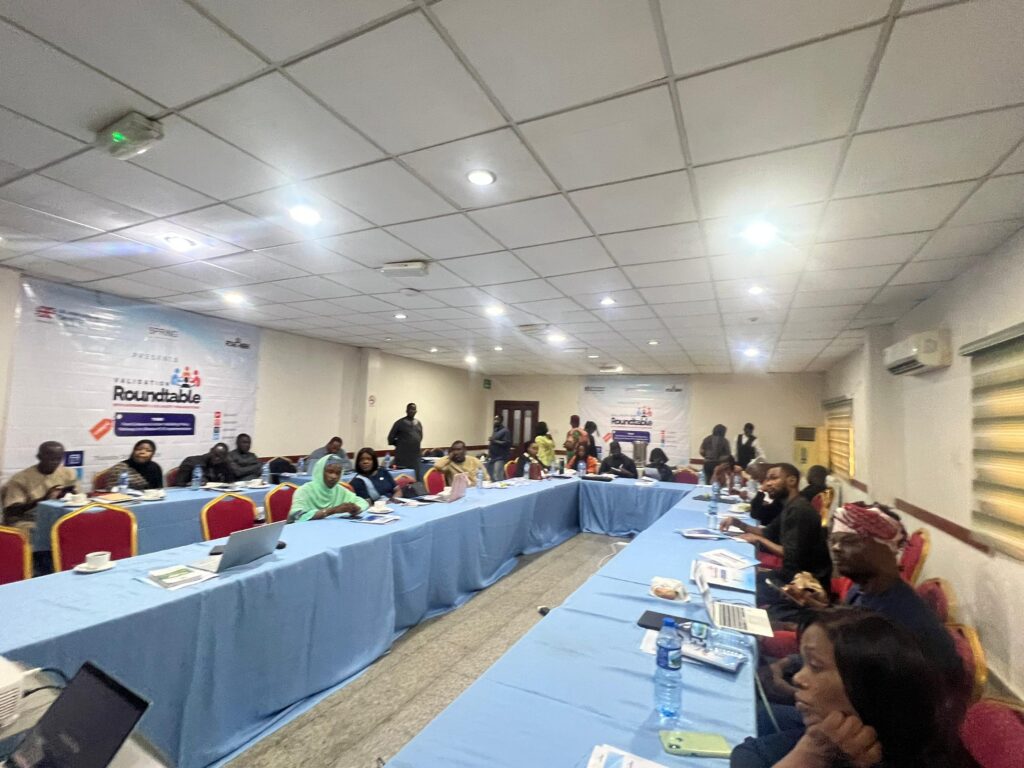
At a high-level virtual consultative forum held on Wednesday, over 60 participants drawn from federal and state institutions, civil society organisations, and technical working groups across the country deliberated on pathways to strengthen implementation.
Chair of the PAVE Network, Jaye Gaskia, said the meeting builds on over a year of pilot interventions focused on bridging the gap between national frameworks and subnational realities.
According to him, the emphasis is shifting from “domestication” to localisation, allowing states to adapt national policies to their peculiar security and socio-political contexts.
“We are deliberately focusing on localisation because this is a national policy that must be adapted to local realities. States must identify their priorities, develop their own action plans, and establish coordination mechanisms that work for them,” he said.
He noted that Technical Working Groups established in several states, particularly in the North-west, have emerged as critical vehicles for implementation, bringing together government actors, civil society, and community stakeholders.
Speaking, the Principal Staff Officer (PSO) of the PCVE Directorate at the NCTC-ONSA, Ms Iye Mangset, commended the expanding collaboration among stakeholders. Mangset recalled that the PF-NAP, first developed in 2017 and recently revised in 2025, has been strengthened to reflect emerging realities.
She said that the updated framework now includes six core pillars: institutionalisation and mainstreaming of PCVE; access to justice; capacity building for individuals and communities; strategic communication; research, documentation and learning; and gender mainstreaming.
Mangset emphasised that the priority now is effective implementation at the state level, urging stakeholders to sustain the momentum. “We desire to see all partners, especially those from the states, continue to support and sustain this effort so that the framework delivers real impact,” she said.
Also speaking, the National Coordinator of GCERF Nigeria, Ms Yetunde Adegoke, underscored the importance of continuity. She noted that progress made over the past year must be consolidated through sustained engagement and forward-looking strategies.
Similarly, a Partner at Nextier, Dr Ndubisi Nwokolo, stressed that tackling violent extremism requires a shift from reactive, force-based responses to proactive, non-coercive approaches.
“For this to succeed, we must address the root causes of radicalisation. Violent extremism is not just a security issue, it is deeply tied to governance, inequality and social exclusion,” he said.
Nwokolo added that changing realities in Nigeria demand a rethink of long-held assumptions about extremism, noting that the phenomenon is no longer distant but increasingly localised.
Discussions at the forum revealed that while progress has been recorded in developing state-level PCVE structures and action plans, significant gaps remain.
Participants cited some of the challenges as including: weak coordination across agencies, bureaucratic delays in implementation, limited funding and overreliance on donor support, and inconsistent political commitment.
Similarly, the state actors shared experiences of ongoing efforts, including stakeholder engagement, early warning systems, and community-based interventions, but stressed that these initiatives often operate in silos. “There is growing awareness, but implementation is still uneven. What is needed now is alignment and sustained political will,” one participant noted.
The key highlight of the forum was the recognition that fragmented responses have enabled extremist groups to exploit regional gaps. Participants stressed that without a coordinated national and subnational strategy, gains recorded in one area could easily be reversed as groups relocate.
To address this, stakeholders called for stronger alignment between federal and state efforts, the institutionalisation of Technical Working Groups as State Coordination Committees, the integration of PCVE into broader state security and development plans, and dedicated budgetary allocations by state governments.
The forum also underscored the critical role of strategic communication in countering extremist narratives and building public trust. A national strategic communication plan developed under the framework is expected to be launched alongside the revised PF-NAP.
Participants emphasised that community engagement, youth inclusion, and early warning mechanisms must be central to implementation efforts.
With increased state participation and stronger partner collaboration, stakeholders expressed optimism that localisation of the PF-NAP could significantly enhance Nigeria’s capacity to prevent and counter violent extremism. However, they cautioned that success will depend largely on political will, sustainable funding, and coordinated action across all levels of government.
The forum ended with participants renewing their commitment to deepen collaboration and move from policy frameworks to measurable impact at the community level.
NCTC-ONSA, Partners Intensify Push to Localise PCVE Strategy


Military
COAS commissions 6 Division RSM House, reaffirms frontline leadership role of regimental sergeant majors
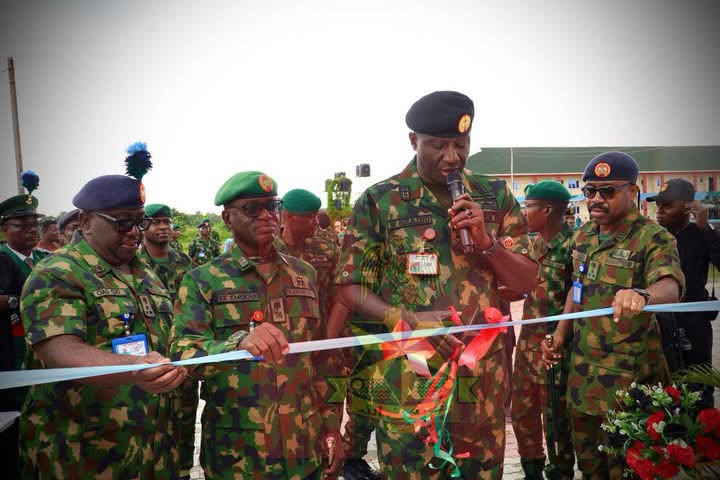
COAS commissions 6 Division RSM House, reaffirms frontline leadership role of regimental sergeant majors
By Zagazola Makama
The Chief of Army Staff (COAS), Lieutenant General Waidi Shaibu, has reaffirmed the critical role of Regimental Sergeant Majors (RSMs) in strengthening discipline, leadership and operational effectiveness across the Nigerian Army.
The COAS made the remarks on Friday during the commissioning of the newly constructed 6 Division Regimental Sergeant Major’s House in Port Harcourt as part of activities marking the 163rd Nigerian Army Day Celebration (NADCEL 2026).
Speaking at the event, Lt.-Gen. Shaibu described RSMs as the backbone of regimental administration and custodians of discipline, standards and morale within the Army.

He said the provision of dedicated accommodation for RSMs was not merely a welfare initiative but a strategic investment aimed at enhancing leadership at the unit level and improving operational efficiency.
According to the Army Chief, RSMs play a vital role in translating command directives into action, maintaining troop cohesion and ensuring effective implementation of operational orders across various theatres of operation.
He added that the senior non-commissioned officers also serve as the crucial link between officers and soldiers, fostering professionalism, mutual trust and esprit de corps within formations and units.

Shaibu noted that the influence of RSMs in mentoring soldiers, enforcing discipline and sustaining troop morale remains indispensable to the success of military operations.
He stressed that providing conducive accommodation for key regimental leaders would enhance their ability to discharge their responsibilities effectively and contribute to improved operational readiness.
The COAS reiterated that under his “Soldier First” philosophy, the welfare of personnel, particularly those occupying critical leadership positions, remains a top priority.
He maintained that sustained investment in welfare infrastructure and leadership development would continue to strengthen the Nigerian Army’s capacity to remain a resilient, professional and combat-ready force capable of addressing the country’s evolving security challenges.
COAS commissions 6 Division RSM House, reaffirms frontline leadership role of regimental sergeant majors

Troops intercept cattle grazing in restricted area in Plateau, herders flee
By: Zagazola Makama
Troops of Operation Enduring Peace (OPEP) have intercepted a herd of cattle found grazing in a restricted area in Barkin Ladi Local Government Area of Plateau State.
Intelligence sources told Zagazola Makama that the troops of Sector 4 OPEP responded to a report of illegal grazing at about 3:30 p.m. on Friday in Nyerwie village.
The sources said that upon arrival at the location, the troops found a herd of cattle grazing in the restricted area.
The herders reportedly fled into nearby bushes on sighting the troops, abandoning the livestock.
The intercepted cattle were subsequently moved to a secure location for necessary administrative action, while efforts are ongoing to identify and apprehend the fleeing herders, the sources said.
Troops intercept cattle grazing in restricted area in Plateau, herders flee
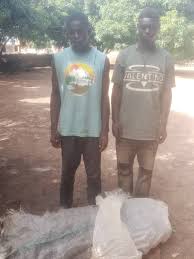
Troops Arrest Two Suspected Vandals, Recover Stolen Construction Materials in Jos
By: Zagazola Makama
Troops of Operation Enduring Peace (OPEP) have arrested two suspected vandals in Jos North Local Government Area of Plateau State for allegedly stealing construction materials from an ongoing road construction site.
Security sources said the suspects, identified as Arin Itse, 21, and Agwom Christopher, 19, were arrested at about 9:30 a.m. on Friday during a routine patrol by troops of Sector 1, Sub-Sector 12, along the Kwanga road in Jos North.
The sources said the suspects were intercepted while in possession of iron rods suspected to have been stolen from a road construction company handling an ongoing project in the area.
According to the sources, the suspects were taken into custody for further investigation, while the recovered iron rods were handed over to the construction company.
The sources added that investigations were ongoing to determine the circumstances surrounding the alleged theft and whether other persons were involved.
Troops Arrest Two Suspected Vandals, Recover Stolen Construction Materials in Jos

COAS commissions 6 Division RSM House, reaffirms frontline leadership role of regimental sergeant majors

Troops intercept cattle grazing in restricted area in Plateau, herders flee

Troops Arrest Two Suspected Vandals, Recover Stolen Construction Materials in Jos

Roger Federer’s Shock as DNA Results Reveal Myla and Charlene Are Not His Biological Children

THE PLIGHT OF FARIDA

FAILED COUP IN BURKINA FASO: HOW TRAORÉ NARROWLY ESCAPED ASSASSINATION PLOT AMID FOREIGN INTERFERENCE CLAIMS
-
 News2 years ago
Roger Federer’s Shock as DNA Results Reveal Myla and Charlene Are Not His Biological Children
-
Opinions4 years ago
THE PLIGHT OF FARIDA
-
 News1 year ago
FAILED COUP IN BURKINA FASO: HOW TRAORÉ NARROWLY ESCAPED ASSASSINATION PLOT AMID FOREIGN INTERFERENCE CLAIMS
-

 News2 years ago
EYN: Rev. Billi, Distortion of History, and The Living Tamarind Tree
-
 Opinions5 years ago
POLICE CHARGE ROOMS, A MINTING PRESS
-

 ACADEMICS2 years ago
A History of Biu” (2015) and The Lingering Bura-Pabir Question (1)
-

 Columns2 years ago
Army University Biu: There is certain interest, but certainly not from Borno.
-

 Politics1 year ago
2027: Why Hon. Midala Balami Must Go, as Youths in Hawul and Asikira/Uba Federal Constituency Reject ₦500,000 as Sallah Gift
