
News
NCTC-ONSA, Partners Intensify Push to Localise PCVE Strategy

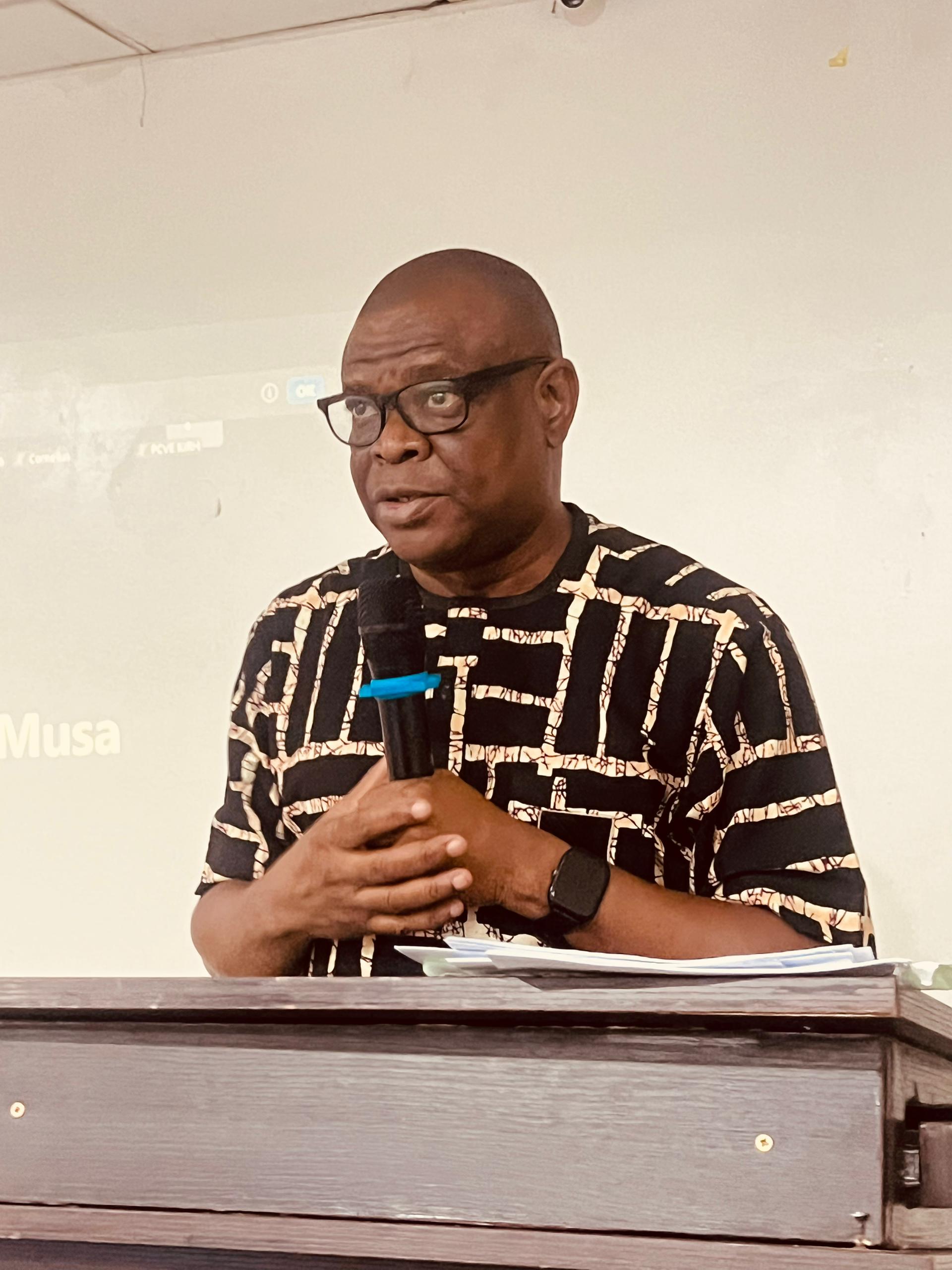
NCTC-ONSA, Partners Intensify Push to Localise PCVE Strategy
By: Michael Mike
Efforts to deepen Nigeria’s response to violent extremism have gained renewed momentum as state governments, civil society actors, and development partners intensify efforts to localise the country’s Policy Framework and National Action Plan on Preventing and Countering Violent Extremism (PF-NAP).
The push, driven by the Preventing and Countering Violent Extremism Knowledge, Innovation and Resource Hub (PCVE-KIRH) of PAVE Network and National Counter-Terrorism Centre of the Office of National Security Adviser (NCTC-ONSA) in collaboration with partners including Nextier, SPRING Programme, FCDO, Global Community Engagement and Resilience Fund (GCER), aims to translate national policy into practical, state-level action.
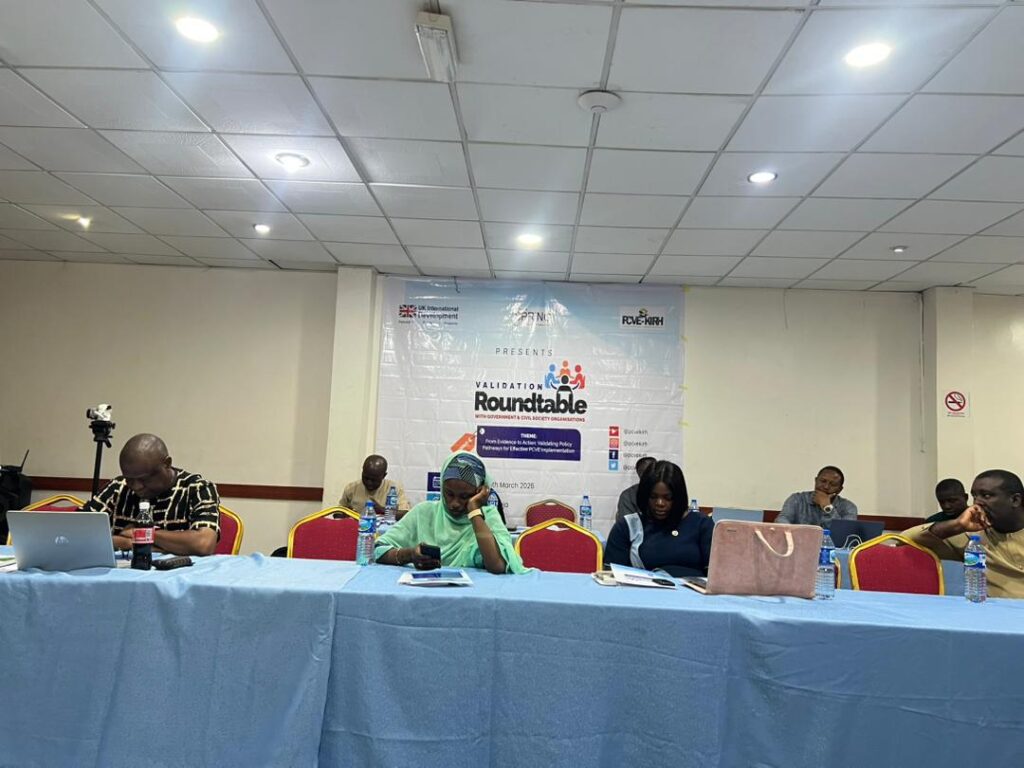
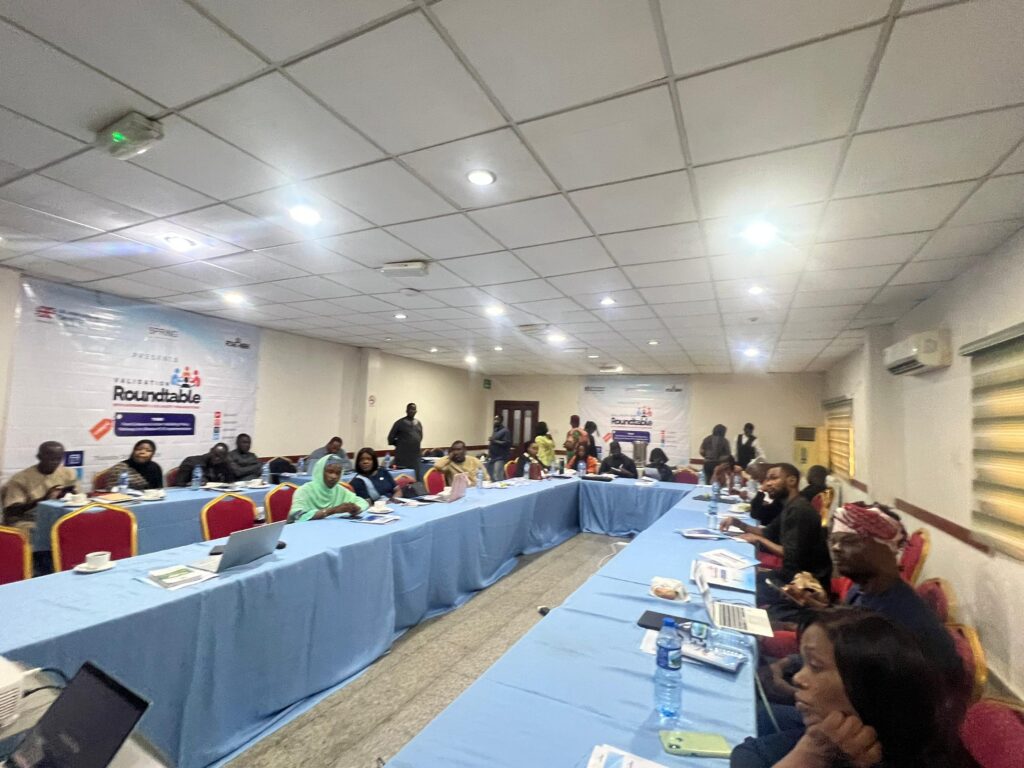
At a high-level virtual consultative forum held on Wednesday, over 60 participants drawn from federal and state institutions, civil society organisations, and technical working groups across the country deliberated on pathways to strengthen implementation.
Chair of the PAVE Network, Jaye Gaskia, said the meeting builds on over a year of pilot interventions focused on bridging the gap between national frameworks and subnational realities.
According to him, the emphasis is shifting from “domestication” to localisation, allowing states to adapt national policies to their peculiar security and socio-political contexts.
“We are deliberately focusing on localisation because this is a national policy that must be adapted to local realities. States must identify their priorities, develop their own action plans, and establish coordination mechanisms that work for them,” he said.
He noted that Technical Working Groups established in several states, particularly in the North-west, have emerged as critical vehicles for implementation, bringing together government actors, civil society, and community stakeholders.
Speaking, the Principal Staff Officer (PSO) of the PCVE Directorate at the NCTC-ONSA, Ms Iye Mangset, commended the expanding collaboration among stakeholders. Mangset recalled that the PF-NAP, first developed in 2017 and recently revised in 2025, has been strengthened to reflect emerging realities.
She said that the updated framework now includes six core pillars: institutionalisation and mainstreaming of PCVE; access to justice; capacity building for individuals and communities; strategic communication; research, documentation and learning; and gender mainstreaming.
Mangset emphasised that the priority now is effective implementation at the state level, urging stakeholders to sustain the momentum. “We desire to see all partners, especially those from the states, continue to support and sustain this effort so that the framework delivers real impact,” she said.
Also speaking, the National Coordinator of GCERF Nigeria, Ms Yetunde Adegoke, underscored the importance of continuity. She noted that progress made over the past year must be consolidated through sustained engagement and forward-looking strategies.
Similarly, a Partner at Nextier, Dr Ndubisi Nwokolo, stressed that tackling violent extremism requires a shift from reactive, force-based responses to proactive, non-coercive approaches.
“For this to succeed, we must address the root causes of radicalisation. Violent extremism is not just a security issue, it is deeply tied to governance, inequality and social exclusion,” he said.
Nwokolo added that changing realities in Nigeria demand a rethink of long-held assumptions about extremism, noting that the phenomenon is no longer distant but increasingly localised.
Discussions at the forum revealed that while progress has been recorded in developing state-level PCVE structures and action plans, significant gaps remain.
Participants cited some of the challenges as including: weak coordination across agencies, bureaucratic delays in implementation, limited funding and overreliance on donor support, and inconsistent political commitment.
Similarly, the state actors shared experiences of ongoing efforts, including stakeholder engagement, early warning systems, and community-based interventions, but stressed that these initiatives often operate in silos. “There is growing awareness, but implementation is still uneven. What is needed now is alignment and sustained political will,” one participant noted.
The key highlight of the forum was the recognition that fragmented responses have enabled extremist groups to exploit regional gaps. Participants stressed that without a coordinated national and subnational strategy, gains recorded in one area could easily be reversed as groups relocate.
To address this, stakeholders called for stronger alignment between federal and state efforts, the institutionalisation of Technical Working Groups as State Coordination Committees, the integration of PCVE into broader state security and development plans, and dedicated budgetary allocations by state governments.
The forum also underscored the critical role of strategic communication in countering extremist narratives and building public trust. A national strategic communication plan developed under the framework is expected to be launched alongside the revised PF-NAP.
Participants emphasised that community engagement, youth inclusion, and early warning mechanisms must be central to implementation efforts.
With increased state participation and stronger partner collaboration, stakeholders expressed optimism that localisation of the PF-NAP could significantly enhance Nigeria’s capacity to prevent and counter violent extremism. However, they cautioned that success will depend largely on political will, sustainable funding, and coordinated action across all levels of government.
The forum ended with participants renewing their commitment to deepen collaboration and move from policy frameworks to measurable impact at the community level.
NCTC-ONSA, Partners Intensify Push to Localise PCVE Strategy


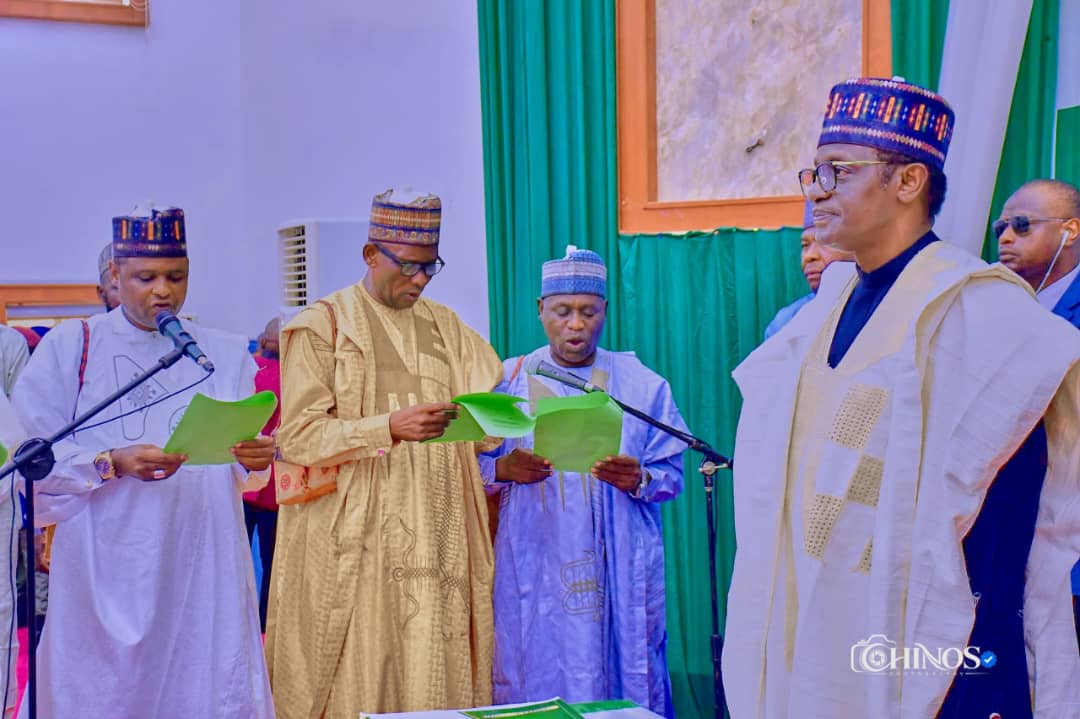
Gov. Buni swore in 2 commissioners and 7 local government chairmen in Yobe
By: Yahaya Wakili
Yobe state governor, Hon. Mai Mala Buni CON, COMN, has today sworn in two commissioners, the permanent secretary, and the 17 newly elected local government chairmen at the Banquet Hall, Government House, Damaturu.
Governor Buni said their appointment was based on merit, expertise, and individual commitment to serve and noted that, as the administration approaches its ends, there was still an opportunity for the new appointees to make a difference in their offices, assuring them of government support to discharge their duties efficiently and effectively.
According to Buni, the oath of office had provided the appointees with the legal framework to execute their duties fully, honestly, and diligently and filled the vacuum in the state executive council just as the election of council chairmen and councillors had delivered democracy to the grassroots.
He further said his administration had remained consistent in conducting local government elections to give grassroots people a sense of belonging and participation in governance through duly elected representatives.
“Yobe State was ranked second best performance” with a score of 64.3 percent, behind Oyo State’s 70 percent, in the latest assessment of the 36 states by the Kimpact Development Initiative.
Governor Mai Mala Buni tasked the chairmen of the local government to deliver their local government areas to the party in the forthcoming general elections.
“Those whose victory must be ensured to include President Bola Ahmed Tinubu GCFR for a second term in office, the state governorship candidate, Alhaji Baba Malam Wali mni, the three senatorial candidates, including Mai Mala Buni CON, six House of Representatives candidates, and the 24 state House of Assembly,” Buni listed.
Buni appealed to all political stakeholders and their supporters across all political parties to conduct their political activities peacefully and according to the rules of the game during and after the electioneering period.
“We remain a family, and Yobe State is a politically peaceful state; therefore, we must avoid and resist all activities capable of breaching peace in the state,” Governor Buni added.
Gov. Buni swore in 2 commissioners and 7 local government chairmen in Yobe

Kuje Prison Inmates Debate Education, Vocational Skills as Command Promises Jobs After Release
By: Michael Mike
The Nigerian Correctional Service (NCoS), Federal Capital Territory Command, has pledged to facilitate employment opportunities for inmates upon their release, as the Medium Security Custodial Centre, Kuje, held its maiden debate competition to promote rehabilitation and prepare inmates for reintegration into society.
The Controller of Corrections, FCT Command, Christopher Peter Jen, disclosed this on Thursday during the competition, which saw two teams of inmates argue the merits of formal education and vocational skills acquisition, with the vocational skills team emerging victorious.

Jen said the command was partnering with relevant stakeholders and support organisations to secure employment opportunities for discharged inmates, in a move aimed at improving their prospects of rebuilding their lives outside the custodial facility.
He expressed optimism that inmates could rise to positions of leadership and responsibility if given the necessary support, education and opportunities to reform.
“An inmate today can be a governor or any high-ranking individual in society tomorrow, if properly reformed,” he said.
The Controller also commended the Controller-General of Corrections, Sylvester Ndidi Nwakuche, for the opportunity to serve, saying it had strengthened his commitment to improving inmate rehabilitation and reformation across the FCT Command.
The Officer-in-Charge of the Kuje custodial centre, Assistant Controller of Corrections Adekunmi Sunday, said the debate was part of efforts to transform the facility into a centre for learning and reformation rather than one focused solely on confinement.
“Custody without training is punishment; custody with training is correction,” Sunday said.
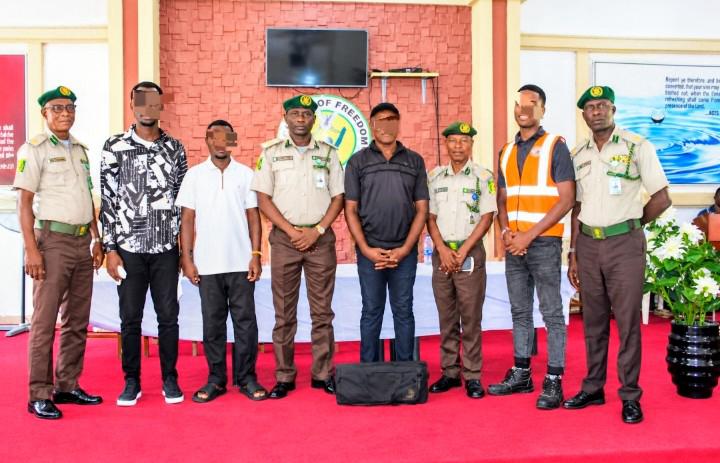
He stressed that education and vocational training were critical to preparing inmates for life after incarceration, adding that he expected every inmate under his supervision to acquire at least one of the two.
The maiden competition featured two teams of five speakers each. Team A argued in favour of education, while Team B defended vocational skills acquisition. Following the contest, the panel of judges declared Team B the winner.
The debate was organised to develop inmates’ intellectual abilities, improve their confidence and encourage constructive interaction, while providing a platform for them to express and defend their ideas.
Representatives of partner organisations and support groups also delivered goodwill messages, commending the service for its commitment to inmate education and rehabilitation.
In a vote of thanks delivered on behalf of the officer-in-charge by Superintendent of Corrections Yusuf Muye, the centre appreciated the FCT Controller, partners, staff and inmates for their contributions to the event’s success.
The centre said the debate would become a regular feature of its reformation calendar.
The employment pledge comes amid broader efforts by correctional institutions to equip inmates with practical skills and improve their chances of reintegration after serving their sentences. However, the command did not disclose the number of inmates expected to benefit from the proposed employment initiative or identify the organisations involved in the partnership.
Kuje Prison Inmates Debate Education, Vocational Skills as Command Promises Jobs After Release
Cuba Accuses US of Pressuring Nations Ahead of UN Vote on Blockade
By: Michael Mike
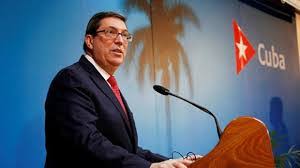
Cuba has accused the United States of mounting a campaign of diplomatic pressure against countries supporting calls for an end to its decades-long economic blockade, alleging that Washington is seeking to influence the outcome of an impending United Nations General Assembly vote.
Cuba’s Permanent Representative to the United Nations, Ernesto Soberón Guzmán, made the allegation on Friday while condemning a US-organised event scheduled for October 19 at the UN headquarters in New York, which he described as an attempt to divert international attention from the debate on the blockade.
The Cuban diplomat alleged that the event, titled “Cuba Libre”, was part of a broader effort to weaken support for a Cuban-sponsored resolution calling for an end to the economic, commercial and financial restrictions imposed by Washington. The resolution is scheduled for consideration by the General Assembly on October 27 and 28.
Speaking to UN-accredited journalists, Soberón accused the US of using political and diplomatic pressure to influence the positions of member states ahead of the vote, including alleged direct appeals by Secretary of State Marco Rubio to heads of state and government.
He described the reported contacts as an attempt to interfere with the sovereign decisions of UN member states, insisting that countries should be allowed to determine their voting positions without intimidation.
The diplomat also questioned the format of the October 19 event, citing restrictions on press access, the non-disclosure of panellists’ identities and a prohibition on attendees expressing their views.
He argued that the arrangements suggested an attempt to control the narrative rather than facilitate an open exchange of perspectives on Cuba.
Soberón said the Cuban delegation had obtained copies of the invitation and concept note despite not being invited to the event.
He further questioned the use of UN premises for an activity he alleged was designed to advance Washington’s political objectives against another member state, citing administrative instruction ST/AI/2019/4 on the use of UN premises and the need for activities to comply with the principles of the UN Charter.
The Cuban representative also accused Washington of applying a double standard by organising the event while having outstanding contributions to the UN’s regular budget.
Beyond the diplomatic dispute, Soberón drew attention to the economic consequences of US sanctions, particularly measures affecting Cuba’s fuel supplies and international trade.
He recalled that US President Donald Trump signed an executive order on January 29, 2026, introducing measures targeting countries supplying oil to Cuba, which he blamed for a sharp decline in fuel shipments to the island.
According to figures he presented, Cuba had received only one oil tanker from Russia in the preceding 10 months, describing the shipment as humanitarian assistance.
He also claimed that approximately 7,000 containers destined for Cuba remained at international ports because shipping companies were reluctant to transport them over fears of possible US sanctions.
Soberón linked the difficulties to further measures announced by Washington on May 1, 2026, which he said expanded the threat of sanctions against companies and countries maintaining commercial relations with Cuba.
He criticised the US-organised event for failing to address the reported impact of the restrictions on the Cuban economy and the living conditions of its population.
The Cuban government has consistently opposed the US embargo, which has remained a major point of contention between the two countries and has repeatedly featured in General Assembly debates.
Soberón maintained that the October 19 event should not distract the international community from the substantive question before the General Assembly: whether the United States should end its economic, commercial and financial blockade of Cuba.
He urged UN member states to uphold the principles of the UN Charter, resist political coercion and exercise their voting rights independently.
The United States has historically defended its Cuba policy on grounds including concerns over the island’s political system and human rights record, while Havana argues that the sanctions violate its sovereignty and impose severe economic hardship on its people.
The forthcoming General Assembly debate is expected to renew international scrutiny of the longstanding dispute.
Reaffirming Havana’s position, Soberón said Cuba would not change its stance because of external pressure, adding: “Cuba is not a threat. The blockade is.”
Cuba Accuses US of Pressuring Nations Ahead of UN Vote on Blockade

Gov. Buni swore in 2 commissioners and 7 local government chairmen in Yobe

SHOSA: Celebrating Excellence as Old Students Prepares to Rekindle Memories

Troops Rescue 27 Kidnap Victims, Including Six-Month-Old Baby, in Katsina

Roger Federer’s Shock as DNA Results Reveal Myla and Charlene Are Not His Biological Children

THE PLIGHT OF FARIDA

FAILED COUP IN BURKINA FASO: HOW TRAORÉ NARROWLY ESCAPED ASSASSINATION PLOT AMID FOREIGN INTERFERENCE CLAIMS
-
 News3 years ago
Roger Federer’s Shock as DNA Results Reveal Myla and Charlene Are Not His Biological Children
-
Opinions5 years ago
THE PLIGHT OF FARIDA
-
 News1 year ago
FAILED COUP IN BURKINA FASO: HOW TRAORÉ NARROWLY ESCAPED ASSASSINATION PLOT AMID FOREIGN INTERFERENCE CLAIMS
-
 Opinions5 years ago
POLICE CHARGE ROOMS, A MINTING PRESS
-

 News3 years ago
EYN: Rev. Billi, Distortion of History, and The Living Tamarind Tree
-

 ACADEMICS3 years ago
A History of Biu” (2015) and The Lingering Bura-Pabir Question (1)
-

 Columns3 years ago
Army University Biu: There is certain interest, but certainly not from Borno.
-

 Politics1 year ago
2027: Why Hon. Midala Balami Must Go, as Youths in Hawul and Asikira/Uba Federal Constituency Reject ₦500,000 as Sallah Gift
