
News
A Bulwark for Borno’s Resilience: A Few Of Zulum’s Security Feats

A Bulwark for Borno’s Resilience: A Few Of Zulum’s Security Feats
By Dauda Iliya
Weighed on the scale of the insecurity ravaging the entity he was entrusted with the responsibility of governing since May 29, 2019, the feats accomplished by Governor Babagana Umara Zulum of Borno State on the restoration of security as sine qua non for the recovery of the state from an appalling terror-orchestrated retrogression, and positioning it on the trajectory of prosperity have been exceptionally weighty.
With countless encomiums showered on the Professor of Agricultural Engineering-turned-governor from all nooks and crannies of the country and the globe over the last seven years of his governorship, even the most unapologetic critics of his administration would attest to this incontrovertible fact.
Prof. Zulum assumed the governorship of the state, smouldering with resilience, the passion to pilot the ship of the state to the shores of recovery and prosperity, and the unshakeable resolve to sustain the tempo of the search for lasting security for his dear, beleaguered state.
As the bulwark of Borno’s Resilience, Zulum has, for the past seven years, been unyielding in his strong commitment to the restoration of security and the recovery of the state. On countless instances, he mortgaged his safety and security as he trotted around the state, ministering to the numerous needs of the terror-traumatized population.
He was personally attacked several times when he was the Commissioner for Reconstruction, Rehabilitation, and Resettlement.

In 2020 alone, Governor Zulum was attacked four times in what seemed a coordinated scheme to frustrate his efforts at relocating over hundred of thousands of internally Displaced Persons (IDP) to their ancestral homes across the local government areas of the state,
most-notably during his visit to the fishing community of Baga in Kukawa LGA, where his convoy was ambushed in the year 2020. He survived the attack that could have frustrated the entire relocation and resettlement programme of the IDPs across the state.
On September 25 2020, the governor’s convoy was again attacked by suspected insurgents on its way to Baga, leaving several persons dead. Less than 48 hours later, on Sunday, September 27, another attack was launched on the governor’s motorcade in Monguno, on its way back to Maiduguri, the State capital, but no casualty was reported.
Governor Zulum was not only unruffled by such attacks but also unrelenting in his travels around the state to deliver services. The more the attacks on his convoy, the more he smouldered with the gusto and commitment to rebuild Borno from the rubble of insurgency and position it on the trajectory of prosperity in the class of its sister states of the federation.
In the face of such attacks, he stood face-to-face with the stark reality that daring all such frustrating challenges was the only way open to him to do his work. There was just no other way. He, therefore, resolved to dare all such challenges. He has, incontrovertibly, been daring the challenges most uncommonly.
Daredevil, absolutely incredibly, and prepared most particularly for sustainable recovery projects and programmes, he was fully aware that his administration had to contribute whatever was necessary, however many resources it could, to restore security.
Security is the duty and responsibility of the federal government, but its state and its people are the ones suffering and dying because of its lack. Therefore, while pleading passionately with the federal government and the military to please not allow the terrorists to retake his state from him, he promptly swung into action, contributing a huge quantum of resources that the security agencies need to fight terror.
He does this, while frontally tackling the massive humanitarian crisis ignited by the terror, simultaneously joining forces with the military to check or, at least, minimize the sudden terror resurgences before they reach an appalling state and rage that might take decades to subdue.
For Zulum and every stakeholder in the security of Nigeria, it would be most scary to witness any mass exodus of displaced communities, sacked once again by the resurgence, back to the already closed Maiduguri metropolis IDP camps, which were the most nauseating features of the 2014-2024 insurgency-precipitated humanitarian crisis.

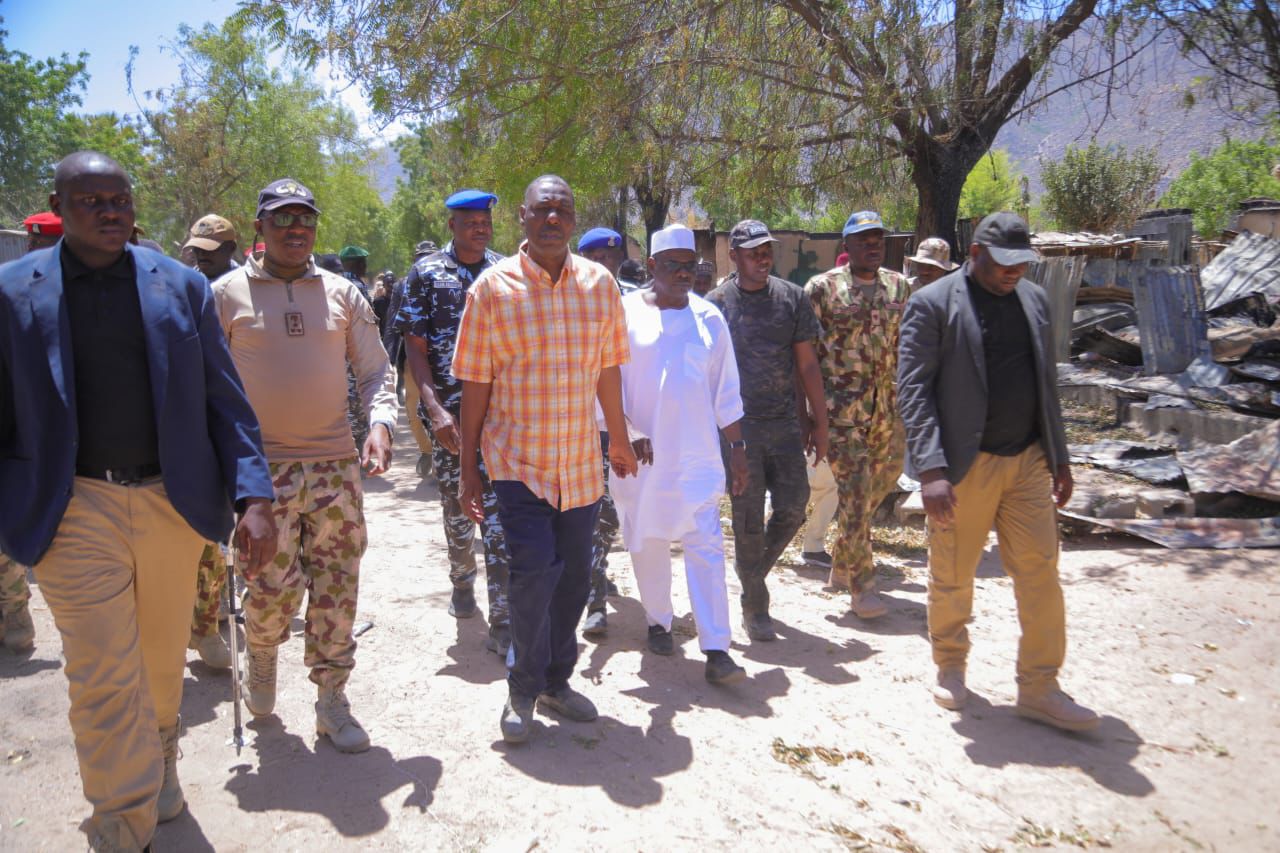
In response to the series of resurging attacks, most scarily between the end of April and the middle of May 2025, most especially around Marte, Damboa, Gajiram, Chibok and the Mandara Hills of Gwoza, Zulum, therefore, hastened to Marte Local Government Area to assess the situation and provide support to the affected communities while deepening his pleas to the federal government and the military to hasten to his rescue before the terrorists retake Marte.
Between 2024 and 2025, Boko Haram/ISWAP tried several pranks to clip Zulum’s wings as he soared higher in his search for security for his state. The terrorists have been marauding into the Borno terrain from their border enclaves, tormenting resettled communities, killing scores, to, apparently, scare Zulum from going ahead with his UN-praised Borno Model of societal recovery.
Zulum, leveraging the fascinating successes of the security agencies – The North-East Operation Hadin Kai Theater Command in Maiduguri and the Multi-National Joint Task Force headquartered in Ndjamena, Chad Republic, seems solidly determined to ensure that Borno recovers from the terror-inflicted humanitarian crisis and, as a competent representative of the Nigerian authorities, squeezes terror out of the shores of Nigeria.
Excitingly, undeterred by the persistent resurgence of terror across the Northern, Central, and parts of the Southern zones of the state, Governor Zulum, smouldering with an uncommon determination and daredevil stance on recovery, still trotted around, resettling communities and instilling resilience to withstand the resurgence of terror.
Support to Military/Security Agencies and Volunteers
Governor Zulum has demonstrated exemplary leadership in addressing the state’s pressing security concerns through deploying both kinetic and non-kinetic measures.
In the last one year, Zulum has procured and distributed 481 operational vehicles to the military, Police, Nigerian Security and Civil Defence Corps, other law enforcement agencies, the Civilian JTF, hunters, and vigilantes.
Additionally, in November 2025, Borno State Governor Babagana Umara Zulum distributed 63 operational vehicles to security agencies in Maiduguri to enhance surveillance and combat emerging threats.
The beneficiaries include 30 vehicles for 10 sectors of the Civilian JTF, 16 for Rapid Response and Anti-Social Vices units, 10 for paramilitary organisations, six for local hunters, and one for the National Agency for the Prohibition of Trafficking in Persons (NAPTIP).
Zulum said the initiative aligns with his administration’s sustained efforts to strengthen security logistics across the state. “We will continue to support the security apparatus to ensure Borno is completely free from insurgency,” he stated.
Earlier in 2025, Governor Babagana Umara Zulum distributed 110 brand-new operational vehicles, 500 motorcycles, and 280 houses to the Nigeria Police Force and other security agencies.
According to the distribution formula, 60 vehicles will be allocated to the Nigerian Police and 50 vehicles and 500 motorcycles to the Nigerian military.
Zulum also approved an upward review of the monthly allowances to volunteers under the Borno Youth Empowerment Scheme, popularly known as the Civilian Joint Task Force (CJTF), Vigilantes Hunters, and Neighbourhood Watch.
Zulum approved an upward review of the monthly allowance for each volunteer from ₦30,000.00 to ₦50,000.00, while leaders of the volunteer groups will now receive ₦150,000.00 each.
The reviewed allowance has already started hitting their accounts, resulting in a revised monthly expenditure of ₦232.4 million.
“The Civilian Joint Task Force (CJTF), Vigilantes, Hunters, and Neighbourhood Watch have consistently demonstrated gallantry, resilience, and unwavering commitment in the fight against Boko Haram insurgents,” Zulum stated.
In recognition of these sacrifices and in appreciation of their steadfast dedication to peace and security, Zulum also approved an upward review of allowances for the
leaders of the volunteer groups to ₦150,000.00 each.
Zulum’s Tour to Pulka/Ngoshe
Over the last seven years, Zulum has maintained his routine of visiting communities affected by attacks to commiserate with them, build their resilience, and console them with humanitarian aid. Most recently, he paid a confidence- and resilience-building visit to the displaced persons in Ngoshe, who are currently taking refuge in Pulka.
Ngoshe, a community in Gwoza local government, was attacked on 4th March, forcing residents to flee their homes.
This was the second time Governor Babagana Zulum has visited victims of Ngoshe, in expression of grave concern about the security situation not only in Gwoza, but also in the entire State.
Addressing the displaced persons at the Pulka Central Primary School, Zulum said the visit was aimed at reinforcing government support, boosting public confidence, and engaging stakeholders on improved security strategies.
“The major reason why we are here is first and foremost to once again sympathize with them and to convey our deepest sympathy, and to assure them that the Federal Government of Nigeria and the Borno State Government will do everything possible to strengthen the security of the entire Gwoza community,” Zulum said.
He reassured residents of Gwoza and surrounding communities of strengthened security measures and sustained humanitarian support following recent attacks, stressing that all those in captivity will be rescued.
Governor Zulum spent the entire Saturday night coordinating security activities in Pulka following the recent attacks in Ngoshe, Pulka, and other communities in Gwoza. That was the first time a sitting Governor has slept in Pulka, a community 22 kilometers from Gwoza.
He noted to them that leadership is all about commitment and sacrifice, a hallmark of his administration since he assumed office.
“Leadership is not about living in your comfort zone and then addressing people and addressing their concerns, but coming directly to the doorsteps of the less privileged. This has been my tradition, this has been my culture since I assumed duty as the governor of the state,” Zulum said.
“I cannot remember when I lived consecutively for 10 days in my office or even one week since I assumed duty. I’m always in the remote areas attending to people, and I believe this is what we should do from now on to the end of my own administration,” he noted.
Governor Zulum, on Sunday, visited Ngoshe to see for himself the level of damage, which is about 40 kilometers away from Gwoza. He disbursed cash and relief items to over 30,000 people affected by the recent incident.
Speaking to newsmen shortly after inspecting the affected community, the Governor described the level of destruction as shocking and heartbreaking.
He assured residents of Ngoshe in Gwoza Local Government Area that the government will rebuild homes and public infrastructure destroyed by recent attacks, while intensifying security efforts to restore lasting peace in the area.
…Vows Ngoshe Will Not Fall Again
Governor Zulum reaffirmed the commitment of the Federal and the Borno State governments to decisively address the lingering security challenges in the state, assuring residents of Ngoshe that the town would not be allowed to fall back into the control of insurgents insha Allah.
Addressing troops of the 82 Division Task Force Battalion Ngoshe, Zulum said efforts are ongoing to strengthen the military’s capacity.
“I want to assure you that the Federal Government of Nigeria, and indeed the Government of Borno State, under the leadership of the Armed Forces, will do everything possible to contain the lingering security situation,” he said.
The governor emphasized the strategic importance of Ngoshe, warning that its fall could have wider security implications for surrounding communities.” Ngoshe is very important. The fall of Ngoshe would send a very bad signal to Pulka, Kirawa, Gwoza, and even Bama. We shall not allow this town to be taken over again by insurgents,” he assured.
These efforts at restoring security to Borno, exceptionally commendable as they may seem, constitute just a modicum of the vast array of accomplishments Governor Zulum has registered in this most critical requirement for the very existence and prosperity of every entity.
As the Agricultural Engineering-turned-governor winds up his two-tenure governorship stint, it is most-crucially imperative for Borno, its stakeholders and entire people to comb, with a fine tooth comb, the state’s political cum public servants class to sieve out a personality possessing the character, credibility and capacity of Zulum to sustain the tempo of search for lasting security and consolidate on Zulum’s accomplishments, but add value to those accomplishments.
Zulum’s successor should be a genius or, at least, exceptionally talented and committed to doing something strikingly new.
“Towering genius distains a beaten path; it seeks regions hitherto unexplored,” Abraham Lincoln would say.
Dauda Iliya is the Special Adviser on Media/Spokesperson to the Borno State Governor
A Bulwark for Borno’s Resilience: A Few Of Zulum’s Security Feats


Hunters Arrest Two Traders in Benue, Release Hausa Man but Allegedly Kill Fulani Trader
Zagazola Makama
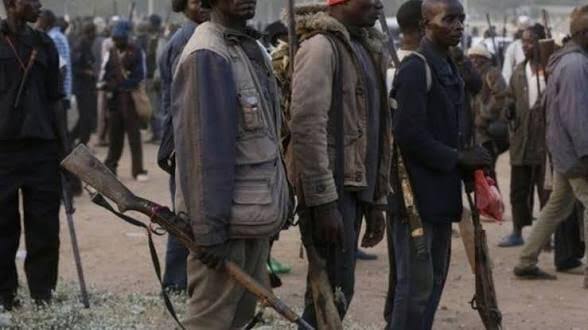
Operatives of the Forest Security Service, popularly known as hunters in Benue have killed a 30-year-old Fulani trader, Dahiru Audu Yaro, after arresting him alongside another trader at Abako Market in Katsina-Ala Local Government Area of Taraba state.
The incident, which points to a potentially disturbing case of ethnic profiling and targeted killing in the area , reportedly occurred on Oct. 16, 2026, when the two men travelled from Bantaje in Wukari Local Government Area of Taraba State to sell second-hand clothes.
Sources who disclosed this to Zagazola Makama identified the traders as Muhammadu Sani, 35, and Dahiru Audu Yaro, 30.
The two men were reportedly arrested by the hunters along with their merchandise and motorcycle while conducting their business at the market.
However, in a development that demands serious scrutiny, Sani, who was identified as Hausa, was reportedly released, while Yaro, identified as Fulani, was allegedly killed.
The whereabouts of Yaro’s body, motorcycle and goods remained unknown as of the latest report.
Zagazola learnt that on Oct. 17, police operatives in Abako reportedly identified and arrested those allegedly responsible for the incident.
Efforts were still ongoing to recover Yaro’s body, motorcycle and goods, but the search had yet to produce any results, according to the security report.
The police are expected to establish the precise circumstances of the killing, determine whether ethnic discrimination or any other motive was involved, and ensure that all those found culpable are brought to justice.
The Benue State Government and relevant security authorities must also ensure that the Forest Security Service operates within the law and that allegations of extrajudicial killings are investigated transparently.
Hunters Arrest Two Traders in Benue, Release Hausa Man but Allegedly Kill Fulani Trader
ECOWAS, AES MOVE TO RESET TIES, SET UP JOINT TEAMS FOR COOPERATION DEAL
Three Sahel states broke away from regional bloc in January 2025
By: Michael Mike
The Economic Community of West African States (ECOWAS) and the Confederation of Sahel States (AES) have agreed to establish joint working groups to negotiate a cooperation framework, marking a fresh diplomatic push to bridge divisions between the regional bloc and the three Sahelian countries that withdrew from it.
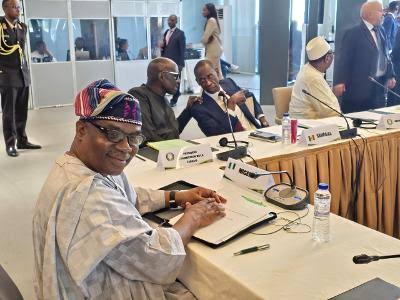
The agreement was reached in Dakar, Senegal, on Saturday at the first ministerial meeting of the ECOWAS-AES Dialogue on Cooperation, where the two sides committed to structured technical discussions aimed at defining the terms of their future relationship.
The move comes against the backdrop of a major rupture in West African regional integration following the withdrawal of Burkina Faso, Mali and Niger from ECOWAS in January 2025, after years of disagreements over military rule, sanctions and the regional bloc’s approach to political transitions.
Under the arrangement reached in Dakar, the joint working groups will examine areas of common interest and work towards an agreement that both sides say must be balanced, realistic and protective of the interests of their respective populations.
The outcome of the technical discussions will be submitted to the ministers for consideration before their next session, according to a joint communiqué issued at the end of the meeting.
Although the communiqué did not announce a comprehensive agreement or specify when negotiations would be concluded, the decision to establish joint technical teams provides a formal mechanism for continued engagement between the two organisations after their political differences.
The meeting was co-chaired by Senegal’s Minister of African Integration, Foreign Affairs and Senegalese Abroad, Cheikh Niang, who is President of the ECOWAS Council of Ministers, and Burkina Faso’s Foreign Affairs Minister, Karamoko Jean-Marie Traoré, who chairs the AES Ministerial Steering Committee.
The discussions followed consultations held in Bamako, Mali, on May 22, 2025, which the parties said provided the basis for further exchanges on their relationship.
The communiqué said both delegations welcomed the atmosphere of “fraternity, mutual respect and openness” during the meeting and reaffirmed the historical, socio-cultural and economic ties linking the peoples of West Africa.
They also agreed that their future relations should be guided by good-neighbourliness, respect for sovereignty, dignity and the welfare of West African populations.
The next ministerial meeting will be scheduled through diplomatic consultations.
THE CRISIS BEHIND THE TALKS
The Dakar meeting represents a significant diplomatic development in a region whose integration project has been strained by political upheavals, military takeovers and competing approaches to security and governance.
Burkina Faso, Mali and Niger, all governed by military-led administrations following coups, announced their withdrawal from ECOWAS in January 2024, accusing the organisation of imposing what they described as inhumane sanctions and failing to provide sufficient support in their fight against insecurity.
Their withdrawal took effect on January 29, 2025, after the one-year notice period stipulated by the ECOWAS treaty.
The three countries subsequently consolidated their separate regional arrangement through the Alliance of Sahel States, which evolved into the Confederation of Sahel States in July 2024.
The confederation has sought closer cooperation among its members, particularly in defence, security and economic affairs, while pursuing a political direction distinct from that of ECOWAS.
Their departure raised concerns about the future of regional cooperation on counter-terrorism, trade, free movement of people and goods, as well as the movement of citizens across borders that have historically linked communities throughout West Africa.
The countries share extensive commercial and social ties with other ECOWAS member states, making the management of their separation a critical issue for governments, businesses and millions of citizens who depend on cross-border exchanges.
Against this background, the establishment of joint working groups could provide an avenue for addressing practical concerns even as differences over political governance and regional authority persist.
However, the communiqué did not disclose the specific issues to be prioritised by the working groups, nor did it set out proposed arrangements for trade, border management, security cooperation or the status of citizens moving between the two blocs.
It also did not indicate whether the talks would lead to a reversal of the three countries’ withdrawal or a restoration of their membership in ECOWAS.
For now, the immediate objective is to negotiate a cooperation framework that allows both sides to identify common interests while maintaining their respective positions on sovereignty and regional relations.
The parties expressed gratitude to Senegalese President Bassirou Faye, the government and people of Senegal for hosting the meeting and supporting West African integration.
ECOWAS, AES MOVE TO RESET TIES, SET UP JOINT TEAMS FOR COOPERATION DEAL
Zulum Calls for Coordinated Military Offensive in the Lake Chad
…Zulum’s Support Instrumental to Military Success – COAS
By: Our Reporter
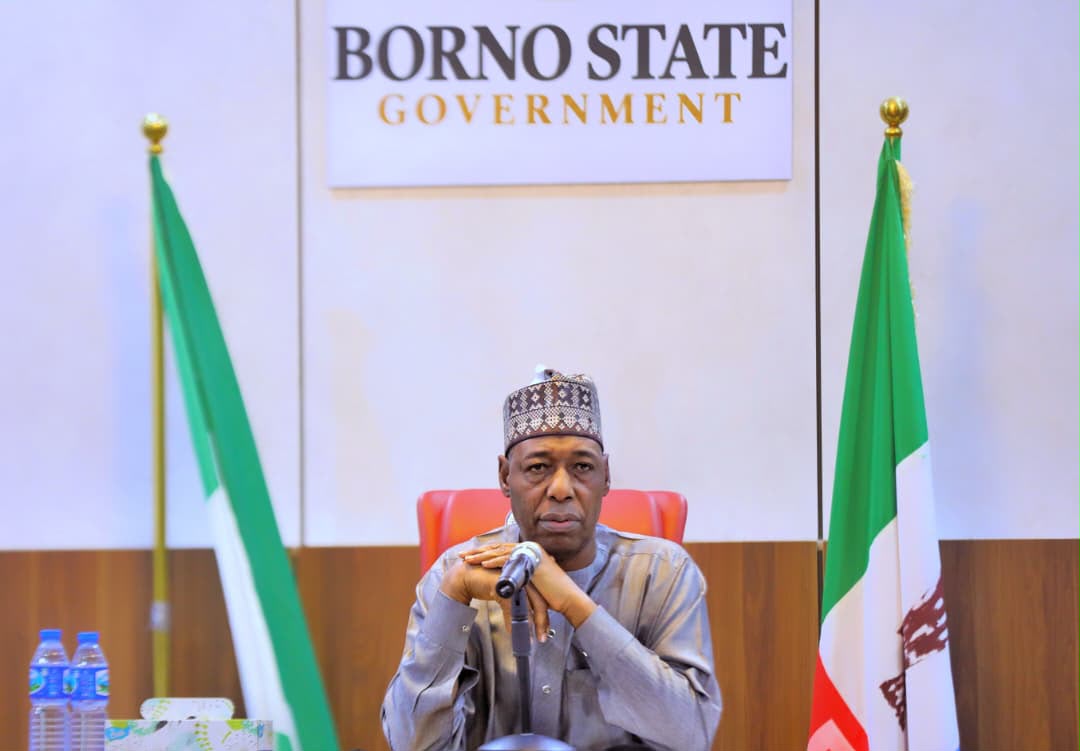
Borno State Governor, Professor Babagana Umara Zulum, has called on the military to immediately commence a coordinated offensive operation, Operation Lake Sanity, to dislodge insurgents from the shores and islands of Lake Chad.
Governor Zulum made the call on Saturday when he received the Chief of Army Staff, Lieutenant General Waidi Shuaibu, on a courtesy visit at the new Council Chamber, Government House, Maiduguri.

The Governor commended the Nigerian Army for improvements in the security situation in the state and also requested stronger military deployments in strategic locations, including Kareto, Baga, and the Sabon Gari–Wajiroko axis, to protect communities, secure waterways, and support the reopening of the Damboa–Biu road.
“The recent attacks on some communities in northern Borno are a result of the presence of insurgents along the shores of Lake Chad. We cannot achieve complete peace without undertaking major military operations in that area,” Zulum said.
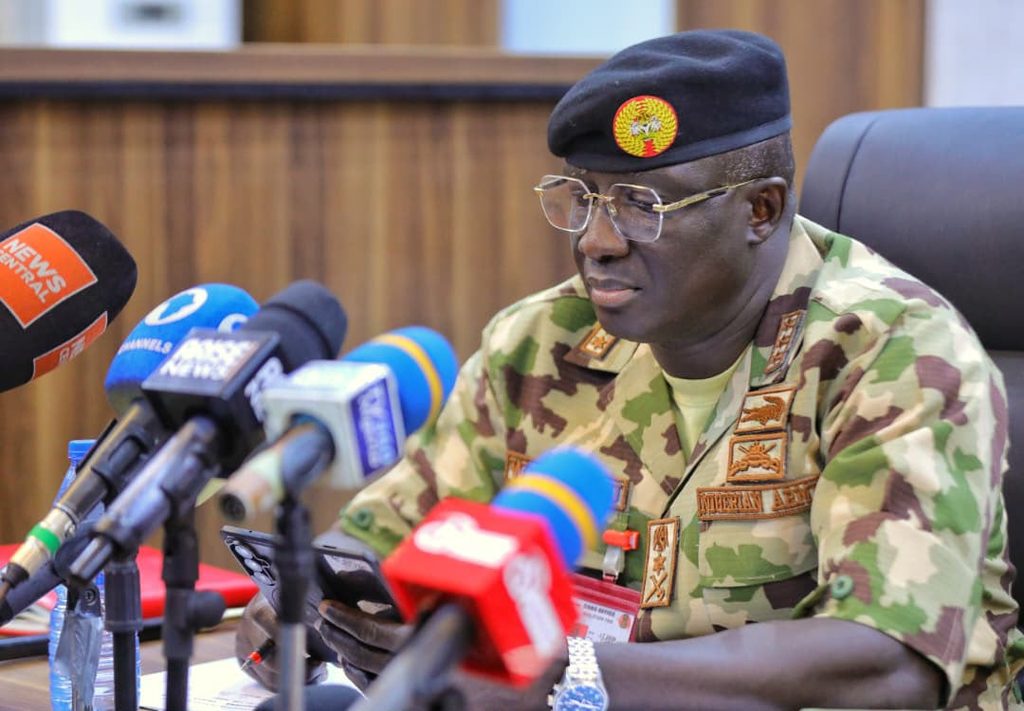
The Governor acknowledged President Bola Ahmed Tinubu’s support for the proposed operation and the coordination among the service chiefs; however, he urged the military authorities to accelerate preparations.
“I understand that the President and Commander-in-Chief of the Armed Forces, President Bola Ahmed Tinubu, has provided the necessary support for the operation. I urge you to hasten the process so that the insurgents threatening northern Borno can be dislodged,” he stated.
He called for strengthening the amphibious command in Baga to clear waterways, stressing that holding those positions would be essential to sustaining the operation’s gains.
On the Gubio–Damasak corridor, Zulum appealed for the speedy establishment of a military formation in Kareto, and around Sabon Gari and Wajiroko in Damboa Local Government Area to support the restoration of vehicular movement between Damboa and Biu.
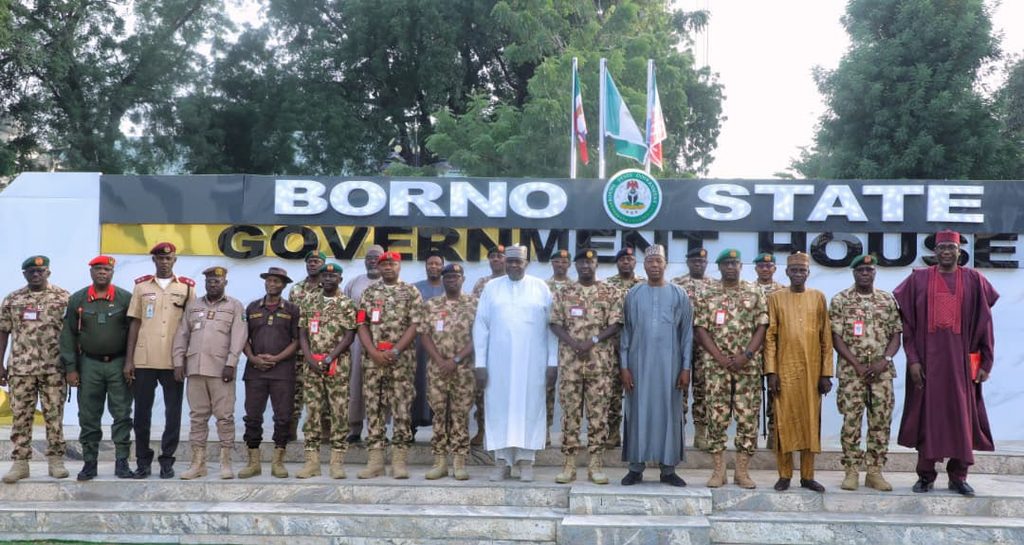
Governor Babagana Zulum thanked the Chief of Army Staff for training about 1,000 forest guards, who he said had completed their training and were deployed to the State.
Zulum emphasised the need to consolidate military successes through reconstruction, rehabilitation and resettlement, commending the Army’s support for re-establishing the Mairari community and preparing for military formations and community resettlement in Maiwa, Koshobe and Ala.
“Military operations must be followed by stabilisation measures, including reconstruction, rehabilitation and resettlement. Borno State Government will provide the support required by the Nigerian Army to fortify these locations,” he pledged.
He also expressed appreciation for additional battalions deployed across the two sectors, noting that the reinforcements were helping to strengthen security and stabilise affected areas.
“Notwithstanding the recent attacks in some parts of Borno State, there has been tremendous improvement in our security situation. I commend the officers and men of Operation Hadin Kai and urge them to sustain this momentum,” Zulum announced.
The Chief of Army Staff, Lieutenant General Waidi Shuaibu, commended Governor Babagana Umara Zulum for his sustained support to the Nigerian Army, describing it as instrumental to the successes recorded against insurgency.
“I must put on record that the support of the Executive Governor of Borno State has been phenomenal in the successes we have recorded here in Borno State. For that, we say a very big thank you, sir,” the COAS said.
The Army Chief explained that his visit to troops of Operation Hadin Kai was part of a routine assessment of their operations, to encourage commanders, and to appreciate the resilience of personnel confronting insurgency in the North-East.
He reaffirmed their mandate to restore normalcy and create an enabling environment for socio-economic activities, assuring that challenges presented by commanders would receive prompt attention.
The courtesy visit was attended by the Senate Chief Whip, Senator Mohammed Tahir Monguno, member representing Marte, Monguno, Nganzai federal constituency, Hon. Bukar Talba, Secretary to the State Government, Commissioners, Special Advisers and other senior military and heads of security establishment in the state.
Zulum Calls for Coordinated Military Offensive in the Lake Chad

Troops Rescue Two Abductees Near Gwoza, Borno

ISWAP Fighter, Wife and Son Surrender to Troops in Borno

Hunters Arrest Two Traders in Benue, Release Hausa Man but Allegedly Kill Fulani Trader

Roger Federer’s Shock as DNA Results Reveal Myla and Charlene Are Not His Biological Children

THE PLIGHT OF FARIDA

FAILED COUP IN BURKINA FASO: HOW TRAORÉ NARROWLY ESCAPED ASSASSINATION PLOT AMID FOREIGN INTERFERENCE CLAIMS
-
 News3 years ago
Roger Federer’s Shock as DNA Results Reveal Myla and Charlene Are Not His Biological Children
-
Opinions5 years ago
THE PLIGHT OF FARIDA
-
 News1 year ago
FAILED COUP IN BURKINA FASO: HOW TRAORÉ NARROWLY ESCAPED ASSASSINATION PLOT AMID FOREIGN INTERFERENCE CLAIMS
-
 Opinions5 years ago
POLICE CHARGE ROOMS, A MINTING PRESS
-

 News3 years ago
EYN: Rev. Billi, Distortion of History, and The Living Tamarind Tree
-

 ACADEMICS3 years ago
A History of Biu” (2015) and The Lingering Bura-Pabir Question (1)
-

 Columns3 years ago
Army University Biu: There is certain interest, but certainly not from Borno.
-

 Politics1 year ago
2027: Why Hon. Midala Balami Must Go, as Youths in Hawul and Asikira/Uba Federal Constituency Reject ₦500,000 as Sallah Gift
