
News
FG Unveils Unified System to End Fragmented Aid, Accelerate Poverty Exit


FG Unveils Unified System to End Fragmented Aid, Accelerate Poverty Exit
By: Michael Mike
The Federal Government has unveiled a sweeping reform of Nigeria’s humanitarian and poverty reduction architecture, adopting a new unified framework aimed at ending years of fragmented interventions and placing vulnerable citizens on a clear path from survival to self-reliance.
At the close of a four-day National Technical Workshop in Abuja, the Minister of Humanitarian Affairs and Poverty Reduction, Dr. Bernard Doro, announced the adoption of the One Humanitarian – One Poverty Response System (OHOPRS) as the country’s new national coordination framework for humanitarian action, social protection and poverty reduction.
Speaking during a press conference at the United Nations House in Abuja, the minister said the initiative represents a decisive shift in Nigeria’s approach to addressing poverty and humanitarian challenges.
“Today marks a defining moment in our journey towards reforming humanitarian interventions and reducing poverty at scale,” Doro told journalists and development partners.
He explained that the workshop, convened by the ministry in collaboration with international and local partners, was designed to tackle what he described as a fundamental weakness in Nigeria’s humanitarian ecosystem — the fragmentation of programmes and lack of coordination among institutions.
The minister illustrated the urgency for reform with a story shared by a field team working in Nigeria’s conflict-affected North-East.
According to him, the team encountered a mother of four who had spent three years receiving intermittent humanitarian support but remained trapped in poverty.
“She received enough food to survive the week, but never enough tools to change her life,” he said.
Quoting the woman’s words, he added: “We are always helped… but we are never moving forward.”
Doro said the story reflects a broader systemic failure in the country’s poverty response mechanisms.
“It is not that support is not reaching people,” he said. “It is that our systems are not designed to move people from survival to self-reliance.”
The minister warned that failure to reform the system would continue to waste scarce resources and leave vulnerable communities trapped in cycles of dependence.
“If a patient arrives at a hospital and ten different doctors each treat one symptom — with no shared notes, no shared diagnosis — that patient may survive the day but will never truly recover,” he said.
“Nigeria’s poor have had many doctors. What they have not had is a consultant who sees the whole person.”
To address these gaps, the government adopted the One Humanitarian – One Poverty Response System (OHOPRS), which the minister described as a national operating system rather than another standalone programme.
“OHOPRS is not another programme,” he stressed. “It is intended as a national operating system.”
The framework is designed to unify humanitarian interventions, social protection programmes and poverty reduction initiatives under a single coordination platform.
According to Doro, the new system will drive five major structural changes in how assistance is delivered across the country.
These include the transition from multiple coordination mechanisms to a single national system, the integration of several beneficiary databases into one national registry architecture, and the shift from project-based funding to a pooled financing structure with stronger accountability mechanisms.
He added that the new framework would also focus on measurable poverty exit outcomes rather than mere intervention delivery, while introducing real-time monitoring systems to strengthen transparency.
Central to the reform is what the minister described as a “Ladder of Progress”, a structured pathway designed to track the journey of every beneficiary from identification to economic resilience.
Under the system, vulnerable citizens will first be identified through the National Social Register. Their interventions will then be tracked using a Unified Beneficiary Register.
Beneficiaries will subsequently move through a Poverty Exit Pathway designed to guide them towards economic independence, after which they will be monitored through a Growth Register to ensure they remain resilient and do not relapse into poverty.
Doro emphasised that the success of the initiative will depend on the alignment of institutions across all levels of government and development partners.
He called on ministries, departments and agencies, state and local governments, development partners, the private sector, civil society organisations and non-governmental organisations to integrate their interventions into the unified national system.
“This reform requires collective commitment,” he said.
The minister also framed poverty reduction as a strategic national priority under the administration of President Bola Ahmed Tinubu, noting that addressing vulnerability is central to national stability.
“Poverty reduction is not an act of charity; it is a pillar of national security,” he said.
“We are no longer content with managing poverty. Our goal is to end it.”
He added that the government’s new approach aims to move beyond temporary relief and focus instead on long-term economic empowerment.
“We are moving from helping Nigerians survive to enabling them to thrive,” he declared.
The workshop brought together government officials, development partners, humanitarian organisations and policy experts to deliberate on the structure, financing and operationalisation of the new system.
With the adoption of the framework, the Federal Government said the next phase will focus on implementation, integration of existing programmes and nationwide alignment of humanitarian and poverty reduction interventions under the OHOPRS platform.
FG Unveils Unified System to End Fragmented Aid, Accelerate Poverty Exit


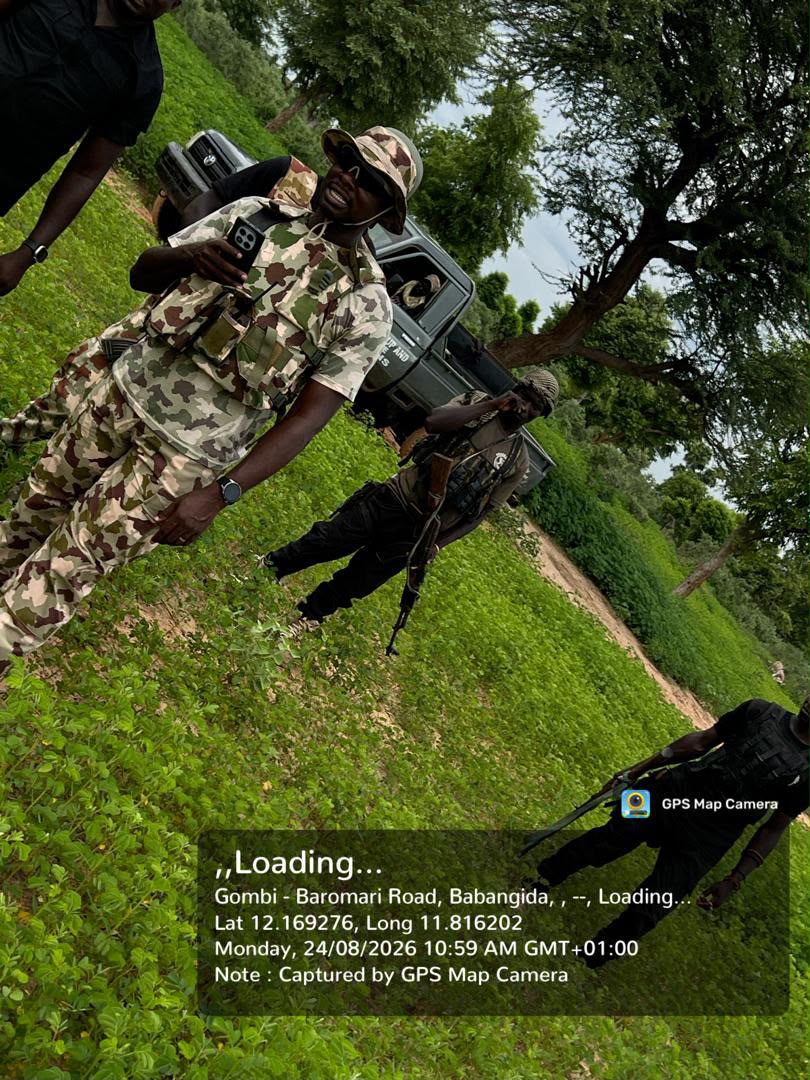
Troops conduct wet-season clearance patrols across communities in Yobe
By: Zagazola Makama
Troops of Operation Hadin Kai have intensified wet-season clearance operations across several communities in Yobe State, engaging residents and conducting patrols to gather information on the activities of suspected terrorists.
The operations were conducted on Monday, Aug. 24, 2026, by troops of the 233 Tank Battalion deployed at Forward Operating Base (FOB) Babangida, in conjunction with members of the Civilian Joint Task Force (CJTF).
According to sources, the first patrol comprised 23 soldiers and CJTF personnel mounted on three gun trucks.
The troops conducted clearance operations around Jallingo, Mongono and Dushi villages, where they interacted with local residents, community leaders, farmers and herders.
The engagements were aimed at obtaining information on suspected terrorist activities and movements within the communities.
The troops, however, made no contact with terrorists during the operation and returned to base at about 3:01 p.m.
In a separate operation, the battalion’s Quick Reaction Force (QRF), comprising 24 soldiers mounted on two gun trucks, conducted another patrol from about 9 a.m.
The patrol covered Kalalawa, Jolowa, Ngarbiya and Sindiri villages, as well as sections of the Damaturu–Sasawa road axis.
The troops dominated the general area through a combination of mounted and dismounted patrols, maintaining security presence along the communities and road corridors.
No contact with terrorists was recorded during the second operation, with the troops returning to base at about 3:30 p.m.
The sustained patrols are part of Operation Hadin Kai’s wet-season clearance operations aimed at denying terrorist elements freedom of movement, protecting communities and maintaining security along key routes in the North-East.
The military said troops also continued to leverage interactions with farmers, herders and community leaders to strengthen intelligence gathering and early warning mechanisms.
Troops conduct wet-season clearance patrols across communities in Yobe
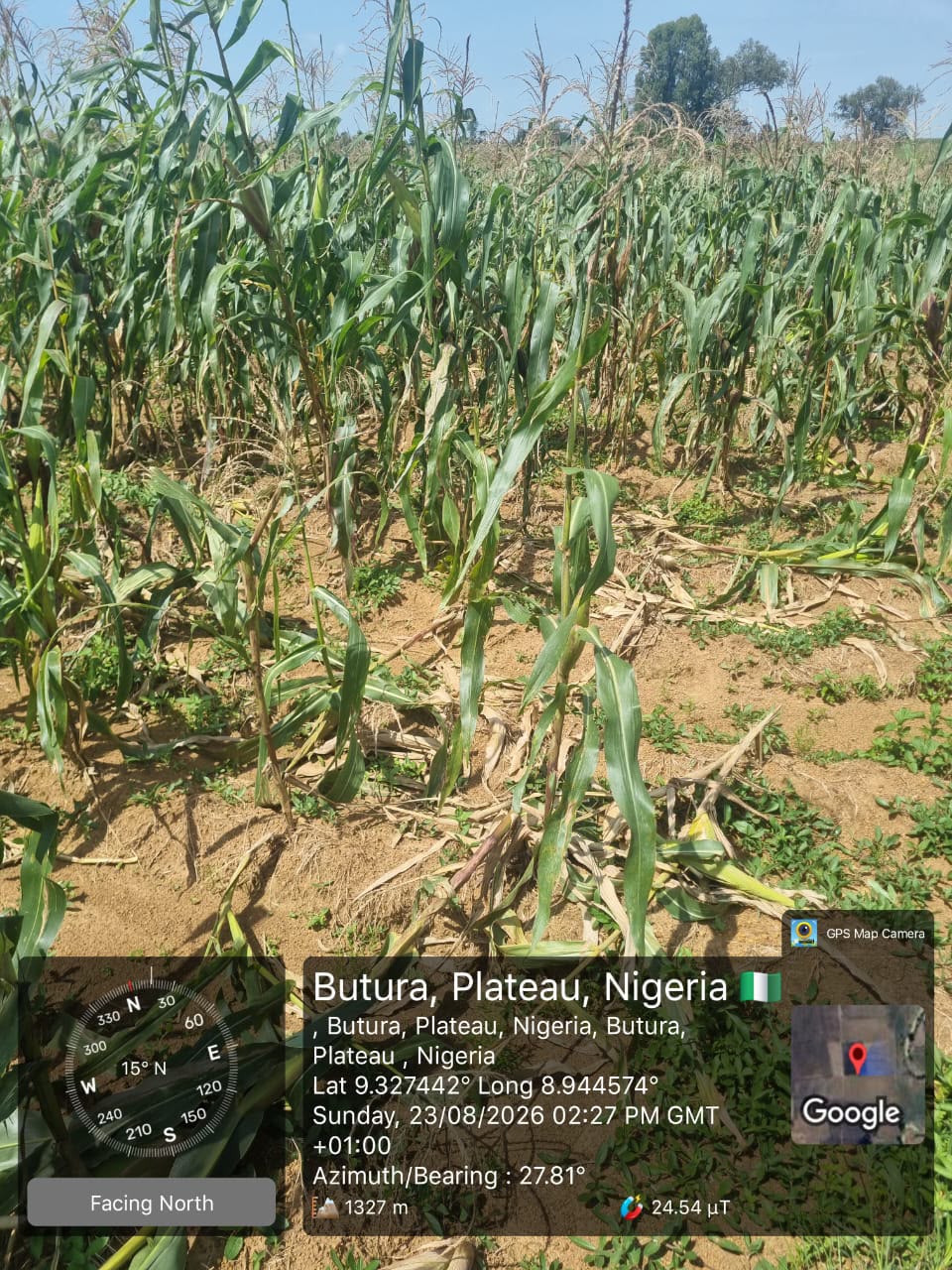
Troops intervene as cattle graze on farmlands in Plateau
By: Zagazola Makama
Troops of Sector 5, Operation Enduring Peace (OPEP), Bokkos, have intervened following a report of alleged farm destruction in Butura Gida, Kunet and Mabel villages in Butura District of Bokkos Local Government Area of Plateau State.
According sources, the troops responded to the incident at about 6:30 a.m. on Monday, Aug. 24, 2026, following a report of suspected farm destruction in the affected communities.
Upon arrival at the locations, the troops intercepted a herd of cattle grazing on farmlands in the area.
The livestock were subsequently moved to a safe location, while the affected farmers and herders were invited by the security personnel for an amicable resolution of the dispute.
The intervention was aimed at preventing the situation from escalating and maintaining peace between the farming and herding communities.
Troops intervene as cattle graze on farmlands in Plateau

Two fulani herders arrested after attack on farmers in Plateau
By: Zagazola Makama
Troops of Sector 8, Operation Enduring Peace (OPEP), deployed at Sabon Layi under Operation Hard Knock, have arrested two suspected herders following an alleged attack on residents harvesting crops in Sabon Layi village, Mangu Local Government Area of Plateau State.
According to sources, the incident occurred at about 1:30 p.m. on Monday, Aug. 24, 2026, when the troops responded to a distress call over an attack allegedly carried out by Fulani herders.
The sources said that upon arrival at the location, the troops found an elderly woman with injuries sustained during the incident.
The troops arrested two suspected herders, while other members of the group reportedly fled the area.
The injured woman was evacuated to the Missionary Hospital in Sabon Layi for medical attention.
The suspects were subsequently handed over to the Keystone Mangu Divisional Police Command for further investigation and necessary legal action.
Security forces are continuing efforts to maintain peace and prevent further escalation in the area.
Two fulani herders arrested after attack on farmers in Plateau

Troops arrest suspected ISWAP member, recover image of armed men in Borno

Troops conduct wet-season clearance patrols across communities in Yobe

Troops intervene as cattle graze on farmlands in Plateau

Roger Federer’s Shock as DNA Results Reveal Myla and Charlene Are Not His Biological Children

THE PLIGHT OF FARIDA

FAILED COUP IN BURKINA FASO: HOW TRAORÉ NARROWLY ESCAPED ASSASSINATION PLOT AMID FOREIGN INTERFERENCE CLAIMS
-
 News2 years ago
Roger Federer’s Shock as DNA Results Reveal Myla and Charlene Are Not His Biological Children
-
Opinions5 years ago
THE PLIGHT OF FARIDA
-
 News1 year ago
FAILED COUP IN BURKINA FASO: HOW TRAORÉ NARROWLY ESCAPED ASSASSINATION PLOT AMID FOREIGN INTERFERENCE CLAIMS
-

 News2 years ago
EYN: Rev. Billi, Distortion of History, and The Living Tamarind Tree
-
 Opinions5 years ago
POLICE CHARGE ROOMS, A MINTING PRESS
-

 ACADEMICS2 years ago
A History of Biu” (2015) and The Lingering Bura-Pabir Question (1)
-

 Columns2 years ago
Army University Biu: There is certain interest, but certainly not from Borno.
-

 Politics1 year ago
2027: Why Hon. Midala Balami Must Go, as Youths in Hawul and Asikira/Uba Federal Constituency Reject ₦500,000 as Sallah Gift
