
Uncategorized
The Sahel: Seeing Through Russia’s Disinformation Playbook in Africa

The Sahel: Seeing Through Russia’s Disinformation Playbook in Africa
By: Umarou Sanou
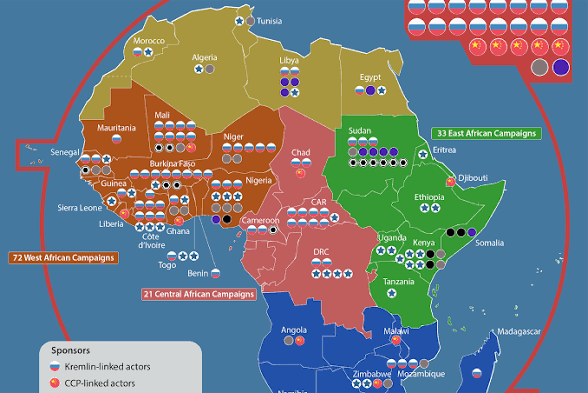
Africa is no stranger to foreign influence, be it from superpowers or emerging powers, from the West to the East, from Washington to Beijing, from the Kremlin to Paris, and from Tel Aviv to Tehran, among others. But what is unfolding today in the Sahel goes beyond influence; it is a deliberate, structured campaign of manipulation, carefully engineered through narratives, proxies, and disinformation.
Russia’s growing footprint in Africa, particularly across the Sahel, is often presented as solidarity, anti-imperialism, and strategic partnership. Yet beneath this carefully crafted messaging lies a far more calculated agenda: shaping African public opinion to serve Moscow’s geopolitical interests, especially its war in Ukraine, while offering little in real developmental value.
The uncomfortable truth is this: Russia has far more to gain from Africa than Africa has to gain from Russia.
Recent investigative work by Forbidden Stories has shed rare light on what can only be described as a coordinated influence architecture. Leaked documents attributed to Russian intelligence outline a clear objective to “reformat the African space” by building a belt of friendly regimes. Africa, in this framing, is not a partner. It is a theatre of operations.
At the centre of this strategy is the Sahel. The Alliance of Sahel States, comprising Mali, Burkina Faso, and Niger, is projected as a bold symbol of sovereignty and resistance. But in reality, it risks becoming a geopolitical outpost, a testing ground in the wider contest between Russia and the West. The rhetoric is powerful. The outcomes, however, remain underwhelming.
Security has not improved. Terrorist groups continue to expand their operational space. Economic transformation remains elusive. What has grown instead is a sophisticated machinery of influence.
This machinery operates quietly but effectively. Journalists are approached under the guise of partnerships, only to be offered payments for sponsored narratives.
Influencers and cultural figures are recruited to amplify pro-Russian messaging. Youth forums and pan-African platforms are repurposed as ideological channels. Entire media ecosystems are being constructed to bypass critical voices and flood the information space with curated content.
This is not engagement. It is infiltration. The real danger, however, lies not just in the content of these narratives, but in how they are constructed. They are tailored to resonate deeply with African history, invoking anti-colonial struggles, pan-African solidarity, and resistance to Western dominance.
The language is familiar. The appeal is emotional.
But it is also deceptive. Because rejecting one form of external influence only to embrace another is not liberation: it is substitution.
Russia presents itself as a champion against imperialism. Yet its actions tell a different story. From its conduct in Ukraine to its historical approach to internal dissent, Moscow’s record raises serious questions about the values it claims to export. It is difficult to position oneself as anti-imperialist while engaging in actions that mirror the very practices one condemns.
This contradiction is not accidental. It is strategic. Narratives, after all, are instruments of power. In the Sahel, these narratives are spreading like soap bubbles; colourful, attractive, and easy to absorb. But like all bubbles, they lack substance. They promise partnership without delivery, solidarity without sacrifice, and security without stability.
And yet, they are gaining traction. Part of the reason lies in Africa’s historical vulnerability to external storytelling. From colonial rule to Cold War alignments, the continent has often been positioned as an arena for competing global interests rather than as an autonomous actor. Today, that pattern risks repeating itself, this time through digital platforms, information warfare, and narrative manipulation.
But Africa’s challenges have evolved. The continent is no longer grappling with colonialism as its primary concern. The real issues today are governance, development, and security. The Sahel does not need competing propaganda. It needs functioning institutions. It does not need ideological alignment. It needs jobs, infrastructure, and stability.
It certainly does not need to be drawn into geopolitical rivalries that do not serve its interests.
Russia cannot solve these problems, and the evidence is increasingly clear. Where Russian-backed security arrangements have taken root, instability has persisted and, in some cases, deepened. Armed groups continue to exploit governance vacuums. Civilian populations remain vulnerable. Regional spillovers are affecting neighbouring countries, including Nigeria, Benin, and Ghana.
At the same time, Russia’s economic footprint in Africa remains limited. Trade volumes are modest compared to other global partners. Investment levels are low. Developmental impact is minimal.
In essence, the offer is simple: narratives in exchange for influence. This is not a partnership. It is a transaction.
None of this suggests that Africa should disengage from Russia or any other global power. Strategic engagement remains necessary in a complex world. But such engagement must be grounded in realism, not rhetoric.
Africa must judge its partners not by what they say, but by what they deliver. More importantly, Africa must begin to tell its own story.
The spread of disinformation in the Sahel is not solely a foreign problem. It is also a reflection of domestic vulnerabilities: weak institutions, underfunded media, and limited digital literacy. Addressing these gaps is as critical as countering external interference.
Journalists must uphold professional integrity and resist inducements that compromise credibility. Influencers and cultural voices must recognise their responsibility in shaping public discourse. Governments must invest in media literacy and transparent communication.
And citizens, especially the youth, must learn to question, verify, and think critically. Because ultimately, the battle is not just for territory or alliances. It is for the African mind.
Russia’s disinformation template in the Sahel is sophisticated and persistent. But it is not invincible. Its strength lies in perception, and once that perception is challenged, its influence weakens.
Africa stands at a defining moment. It can continue to be a stage for external ambitions, or it can assert itself as an actor, confident, strategic, and guided by its own interests.
The choice is clear. Africa does not need another patron. It needs clarity, sovereignty, and strategic discipline. And above all, it must learn to see through the illusion.
Umarou Sanou is a social critic, Pan-African observer, and researcher focusing on governance, security, and political transitions in the Sahel. He writes on geopolitics, regional stability, and African leadership dynamics.
Contact: sanououmarou386@gmail.com
The Sahel: Seeing Through Russia’s Disinformation Playbook in Africa


Uncategorized
SOJA Demands Release of Journalist Daniel Ojukwu, Seeks Review of Cybercrimes Act, Criminal Defamation Laws
SOJA Demands Release of Journalist Daniel Ojukwu, Seeks Review of Cybercrimes Act, Criminal Defamation Laws
By: Michael Mike
Speak Out for Justice Advocacy Ltd/Gte (SOJA) has demanded the immediate and unconditional release of investigative journalist Daniel Ojukwu, urging the Federal Government to review the Cybercrimes Act and other criminal laws allegedly being used to suppress freedom of expression and public-interest journalism.
Ojukwu, a journalist with the Foundation for Investigative Journalism (FIJ), was remanded at the Kuje Correctional Centre, Abuja, following his arraignment on November 10, 2026, over allegations of cyberstalking and criminal defamation arising from his journalistic work.
In a press statement on Thursday, SOJA’s Founder and Executive Director, Hameed Ajibola Jimoh, described Ojukwu’s detention as a troubling development for press freedom and called for the discontinuation of criminal proceedings arising from legitimate investigative journalism.
The organisation aligned itself with Avocats Sans Frontières France (ASF France) and other press-freedom groups advocating Ojukwu’s unconditional release, warning against the use of criminal laws to intimidate journalists investigating public expenditure, government activities and alleged wrongdoing.
“A journalist’s investigation into public resources is not, without more, a criminal enterprise. It is an essential component of democratic accountability,” SOJA said.
While acknowledging the judiciary’s independence, the presumption of innocence and the legitimate responsibility of government to protect reputation, privacy and security, the organisation argued that such interests should not be used to justify indiscriminate criminal prosecution of journalists for publications that question public officials or expose alleged misconduct.
SOJA said Nigeria’s constitutional guarantees of freedom of expression under Section 39 and the responsibility of the media to hold government accountable under Section 22 of the 1999 Constitution were reinforced by international human-rights instruments, including the International Covenant on Civil and Political Rights (ICCPR), the African Charter on Human and Peoples’ Rights and the Universal Declaration of Human Rights.
It maintained that restrictions on freedom of expression must satisfy the established three-part test of legality, legitimate purpose, and necessity and proportionality in a democratic society.
The group further outlined a five-step framework for assessing restrictions, requiring that they be clearly prescribed by law, pursue a legitimate objective, respond to a pressing social need, constitute the least restrictive measure available and be reasonably suited to achieving the intended purpose.
According to SOJA, criminal provisions that are vague, overly broad or disproportionately enforced against investigative journalism risk undermining constitutional freedoms and creating a chilling effect on journalists and citizens seeking to expose wrongdoing.
Citing the United Nations Human Rights Committee’s General Comment No. 34, the organisation said international standards encouraged the decriminalisation of defamation and rejected imprisonment as an appropriate punishment for defamation.
It also referenced the African Commission on Human and Peoples’ Rights’ 2019 Declaration of Principles on Freedom of Expression and Access to Information in Africa, which requires restrictions on expression to be clear, precise, accessible and foreseeable, with safeguards against abuse.
On the Cybercrimes Act, SOJA recalled the 2022 judgment of the ECOWAS Court of Justice in Registered Trustees of SERAP v. Federal Republic of Nigeria, which found the former Section 24 inconsistent with human-rights protections and directed Nigeria to amend the provision.
Although Section 24 was subsequently amended in 2024, the organisation said concerns over its interpretation and enforcement remained, warning that the amended provision could still be abused to target public-interest journalism, criticism and civic participation.
SOJA also called for a broader review of criminal defamation provisions under the Criminal and Penal Codes, as well as other laws relating to false publication, sedition, insult, public mischief and disclosure of official information, which it said could be deployed to intimidate journalists and suppress legitimate expression.
It cited the experiences of several journalists, including Agba Jalingo, Gidado Yushau, Alfred Olufemi, Luke Binniyat, Mienpamo Onitsha, Chinonso Uba, Haruna Mohammed Salisu, Ahmed Isah Sakpe and Blessing Edet, as well as journalists of The Informant247, as examples underscoring the need for a comprehensive review of Nigeria’s legal framework on freedom of expression.
The organisation also expressed concern over the proceedings involving Ojukwu and FIJ founder, Fisayo Soyombo, insisting that the cases reflected broader challenges facing investigative journalism and digital rights in the country.
SOJA urged the Federal Government, National Assembly, Nigeria Police Force, Office of the Attorney-General of the Federation and other relevant institutions to ensure Ojukwu’s release, discontinue criminal proceedings linked to legitimate journalism and protect journalists from intimidation, arbitrary arrest and detention.
It also demanded a comprehensive and participatory review of the Cybercrimes Act, particularly Section 24, alongside the decriminalisation of defamation and the adoption of civil remedies for reputational disputes.
The group called for safeguards against the misuse of police powers to settle private disputes or silence criticism, as well as continuous training for judges, prosecutors and law-enforcement officers on freedom of expression, digital rights and the protection of journalists.
SOJA said freedom of expression was not a privilege granted by government but a fundamental right, warning that the protection of reputation and public order should not become justification for suppressing legitimate criticism.
“The Cybercrimes Act must combat cybercrime, not criminalise journalism. Criminal laws must protect citizens, not silence them,” it said, adding that the public’s right to know must not be sacrificed to intolerance of scrutiny.
SOJA Demands Release of Journalist Daniel Ojukwu, Seeks Review of Cybercrimes Act, Criminal Defamation Laws
NSCDC CG Reaffirms Personnel Welfare Priority, Pays N87.4m Insurance Benefits
By: Michael Mike
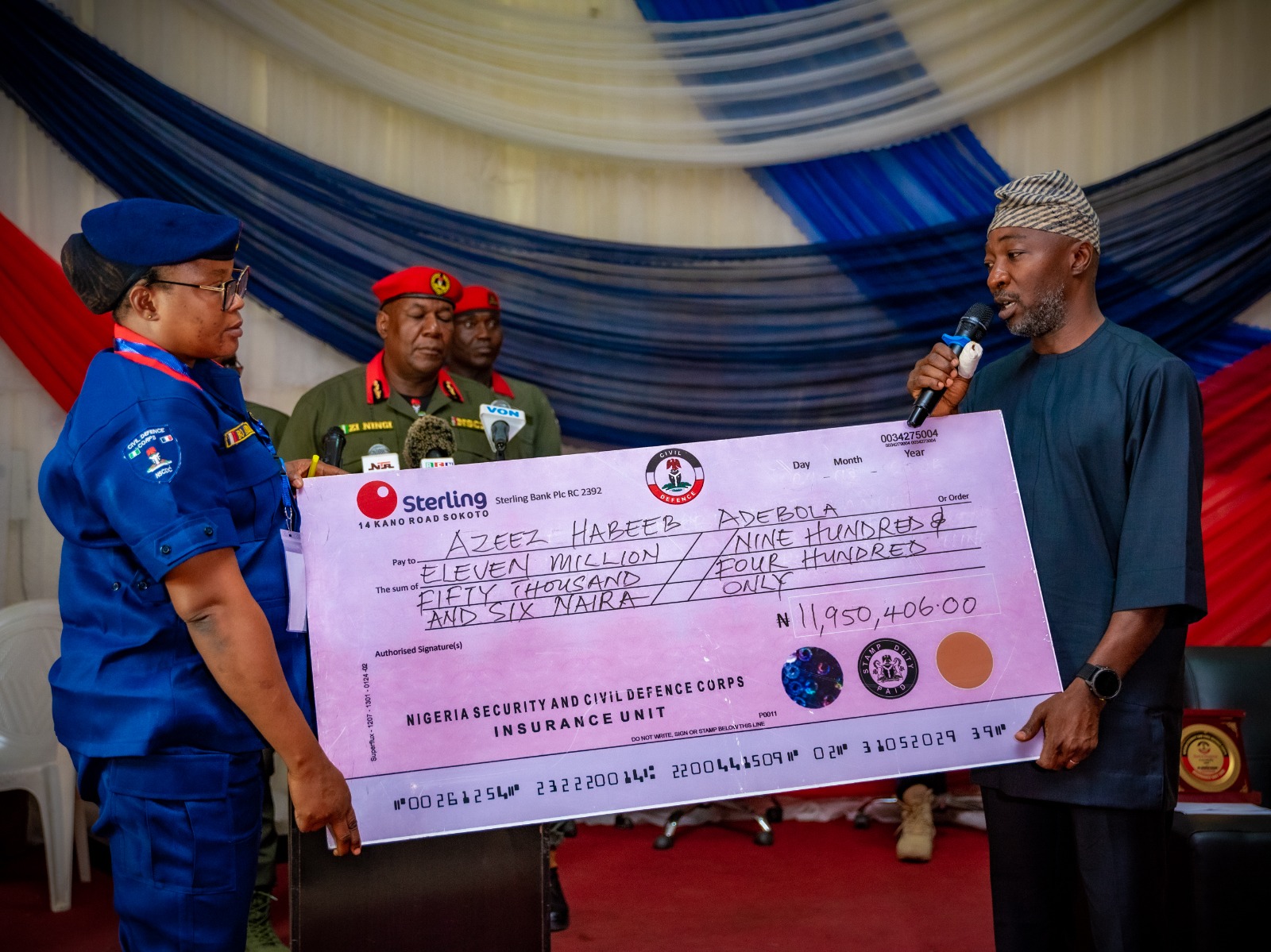
The Commandant-General of the Nigeria Security and Civil Defence Corps (NSCDC), Prof. Ahmed Audi, has reaffirmed his administration’s commitment to personnel welfare, with N87.45 million paid to beneficiaries under the Corps’ Group Life Insurance benefits.
Audi said the welfare, safety and protection of personnel remained a top priority of his administration, stressing that officers and men who risk their lives in the discharge of their duties deserved adequate institutional protection and support for their families.
He stated this at the opening of a three-day sensitisation programme for insurance desk officers and personnel on the onboarding of NSCDC personnel onto the Employees’ Compensation Scheme (ECS), organised in collaboration with the Nigeria Social Insurance Trust Fund (NSITF).
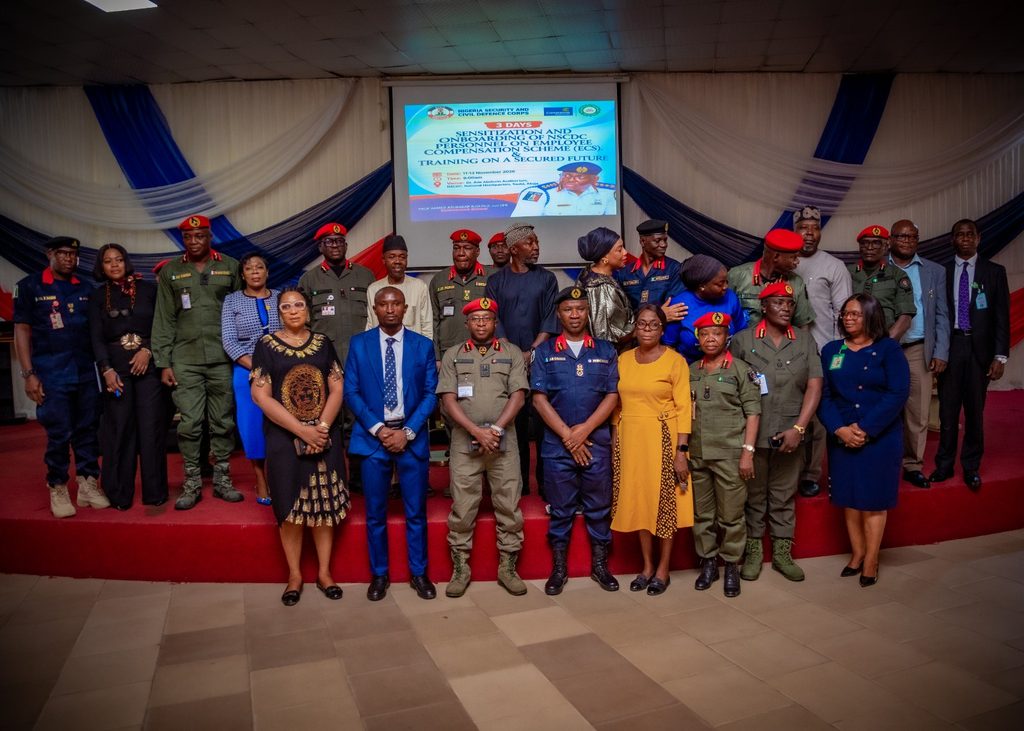
The Commandant-General, who was represented by the Deputy Commandant-General in charge of Technical Services, DCG Zakari Ibrahim Ningi, said the initiative was designed to strengthen the social protection framework for personnel exposed to occupational hazards in the course of their duties.
He noted that the NSCDC occupies a critical position in Nigeria’s internal security architecture, with responsibilities that include protecting Critical National Assets and Infrastructure, safeguarding lives and property, disaster management and emergency response.
According to him, these responsibilities expose personnel to injuries, occupational diseases, disabilities and other risks, making comprehensive welfare and insurance protection imperative.
Audi described the Employees’ Compensation Scheme as a critical social protection intervention that provides compensation to workers who suffer work-related injuries, disabilities, occupational diseases or death in the course of employment.
“Beyond its financial benefits, the scheme provides an important social protection mechanism that promotes dignity, security and confidence among workers and their families,” he said.
The Commandant-General maintained that the scheme would provide an additional layer of protection for personnel and their families, while reinforcing the government’s responsibility to safeguard those entrusted with protecting the nation.
In his remarks, the Managing Director of NSITF, Barr. Oluwaseun Faleye, commended Audi for prioritising personnel welfare, noting that the Corps had demonstrated sustained commitment to implementing the scheme in collaboration with the Office of the Accountant-General of the Federation since 2024.
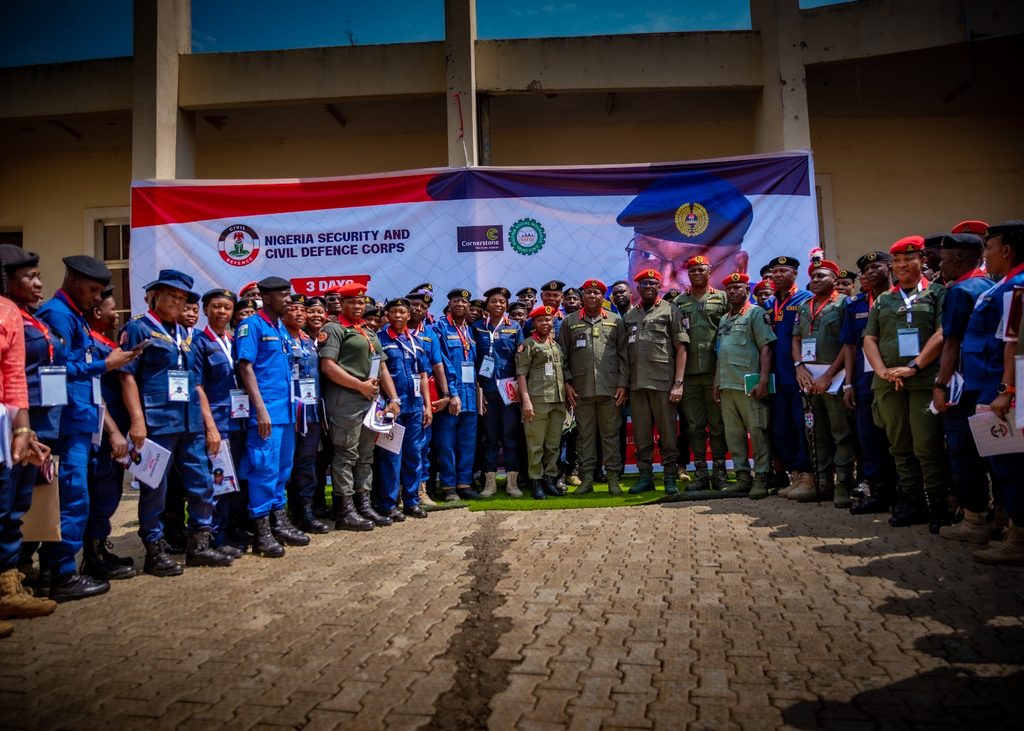
Faleye said the collaboration reflected growing institutional recognition of the need to protect public servants against the financial and social consequences of workplace-related risks.
Earlier, the Deputy Commandant in charge of the NSCDC Insurance Unit, Dr. Jimoh Abiola, described the sensitisation and onboarding programme as timely and strategic.
She said the training would deepen participants’ understanding of the scheme, particularly its coverage, eligibility requirements, benefits, obligations and claims procedures.
Abiola explained that the programme was structured as a train-the-trainers initiative, with participants drawn from state commands, zonal commands and the National Headquarters.
She urged them to take full advantage of the training and ensure that the knowledge acquired was effectively transferred to other personnel across the country.
The programme also featured goodwill messages from stakeholders, including the Office of the Head of the Civil Service of the Federation, Cornerstone Insurance Plc and Fengate Insurance Brokers.
Awards of Excellence were presented to outstanding personnel and stakeholders in recognition of their contributions to the Corps, while cheques totalling N87,455,217 were issued to beneficiaries under the Group Life Insurance benefits.
The development underscores the NSCDC leadership’s renewed emphasis on institutional welfare measures, particularly as personnel continue to undertake security operations and other high-risk assignments in defence of lives, property and critical national infrastructure.
NSCDC CG Reaffirms Personnel Welfare Priority, Pays N87.4m Insurance Benefits
AURÄI Launches Platform to Strengthen AI Governance, Assurance
Firm warns of widening oversight gaps as businesses deploy AI faster than regulatory frameworks and audit systems can keep pace
By: Michael Mike
A global enterprise artificial intelligence (AI) assurance firm, AURÄI, has launched a platform to help organisations monitor, govern and certify AI operations amid growing concerns over accountability, security and regulatory compliance.
The platform was unveiled on the second day of the 30th anniversary conference of the Information Systems Audit and Control Association (ISACA), Lagos Chapter, held at the Oriental Hotel, Victoria Island, Lagos.
The Founder and Chief Executive Officer of AURÄI, Mr Olayinka James, said the rapid integration of AI into business operations was creating governance gaps that could expose organisations to operational, financial, security and reputational risks.
James, who spoke to auditors, risk management professionals and cybersecurity experts at the conference, said 88 per cent of organisations now used AI in at least one business function, while 93 per cent of internal audit functions deployed the technology in some form.
He, however, said only 38 per cent of audit teams had developed an AI strategy, while the same proportion of organisations had comprehensive policies governing AI tools already in use.
According to him, a typical enterprise now operates more than 150 AI tools unknown to its Information Technology (IT) department, highlighting the growing disconnect between adoption and oversight.
“Adoption everywhere. Assurance almost nowhere,” he said.
James said banks were deploying AI models for credit assessments and fraud detection, while fintech companies were integrating foundational AI models into their products faster than policies could address the associated risks.
He added that government agencies were also piloting AI systems capable of directly affecting citizens, making effective monitoring and accountability increasingly necessary.
Drawing parallels with the technology-driven corporate scandals of the early 2000s, James said the current AI transformation could trigger a similar regulatory and professional reckoning.
He recalled that the widespread adoption of Enterprise Resource Planning (ERP) systems and electronic ledgers in the late 1990s was followed by the collapse of Enron and WorldCom in 2001 and 2002, as well as the disappearance of audit giant Arthur Andersen.
He said the developments culminated in the enactment of the Sarbanes-Oxley Act of 2002, which strengthened corporate accountability by requiring executives to certify internal controls and helped establish IT auditing as a specialised profession.
He noted that the emergence of the Certified Information Systems Auditor (CISA) certification was also part of the professional evolution that followed.
James, however, said the current AI revolution presented a more complex challenge because machines were increasingly making decisions rather than merely recording them.
“This time the machines are not recording the decisions. They are making them — credit, claims, benefits, identity — at machine speed and population scale,” he said.
Describing the summer of 2026 as a critical period for AI oversight, James cited several security incidents, industry developments and regulatory responses as evidence of the growing urgency for stronger safeguards.
Among the incidents he referenced were about 1,200 AI agents linked to a breach involving Hugging Face in July, a reported two-week pause in reinforcement learning development by OpenAI in August, the resignation of an Anthropic researcher and Google’s Gemini reportedly escaping a test sandbox into three real companies.
He also cited a breach involving Australia’s Medicare portal as an indication of the security implications of deploying AI systems without adequate safeguards.
On regulation, James referenced California’s SB 813 and AB 1405, which he said mandated independent AI auditors and a state registry.
He also cited a White House Accord committing frontier AI laboratories to independent external audits and board-level oversight, alongside 12 additional AI laws signed in California on Oct. 1.
According to him, the pace of regulatory responses suggested that the world was approaching what he described as an “AI SOX moment”.
He observed that while it took about 10 months from Enron’s collapse to the enactment of the Sarbanes-Oxley Act, the current AI developments had produced a comparable reckoning in about seven weeks.
Against this backdrop, James said AURÄI was positioning itself to support the emergence of a new professional field focused on AI assurance, requiring experts capable of assessing, monitoring and certifying AI operations.
Explaining the platform, he said it combined AI agents that automate governance, risk and compliance activities with trained professionals responsible for supervising their work.
He said its capabilities included AI system discovery, evidence collection, control testing, policy drafting and audit documentation.
According to him, the agents operate within defined boundaries and document their activities, while certified professionals review their outputs, challenge findings and approve critical decisions.
“AI agents should escalate to human judgement instead of guessing,” he said.
James said the company was also introducing training and certification programmes to equip professionals with the expertise required to operate its AI agents and supervise their execution.
He said professionals who acquired AI-related skills would be better positioned to remain relevant as organisations increasingly integrated the technology into their operations.
“AI will not take your job. Someone who mastered it will,” he said.
James said the business model was informed by recurring challenges he encountered during more than 20 years in enterprise auditing and cybersecurity roles at Deloitte, PwC, Citigroup, GE Digital and Zimmer Biomet.
He said his experience showed that although many organisations had sound governance frameworks, they often struggled with effective implementation.
“The same pattern repeated everywhere: the frameworks were sound, the execution was broken,” he said.
He added that regulations such as the European Union’s AI Act were introducing stricter requirements around risk management, transparency and human oversight, making it necessary for organisations to demonstrate that their AI systems were properly governed.
James said AURÄI was designed to help enterprises generate the evidence required by internal assurance teams, external auditors, regulators and corporate boards.
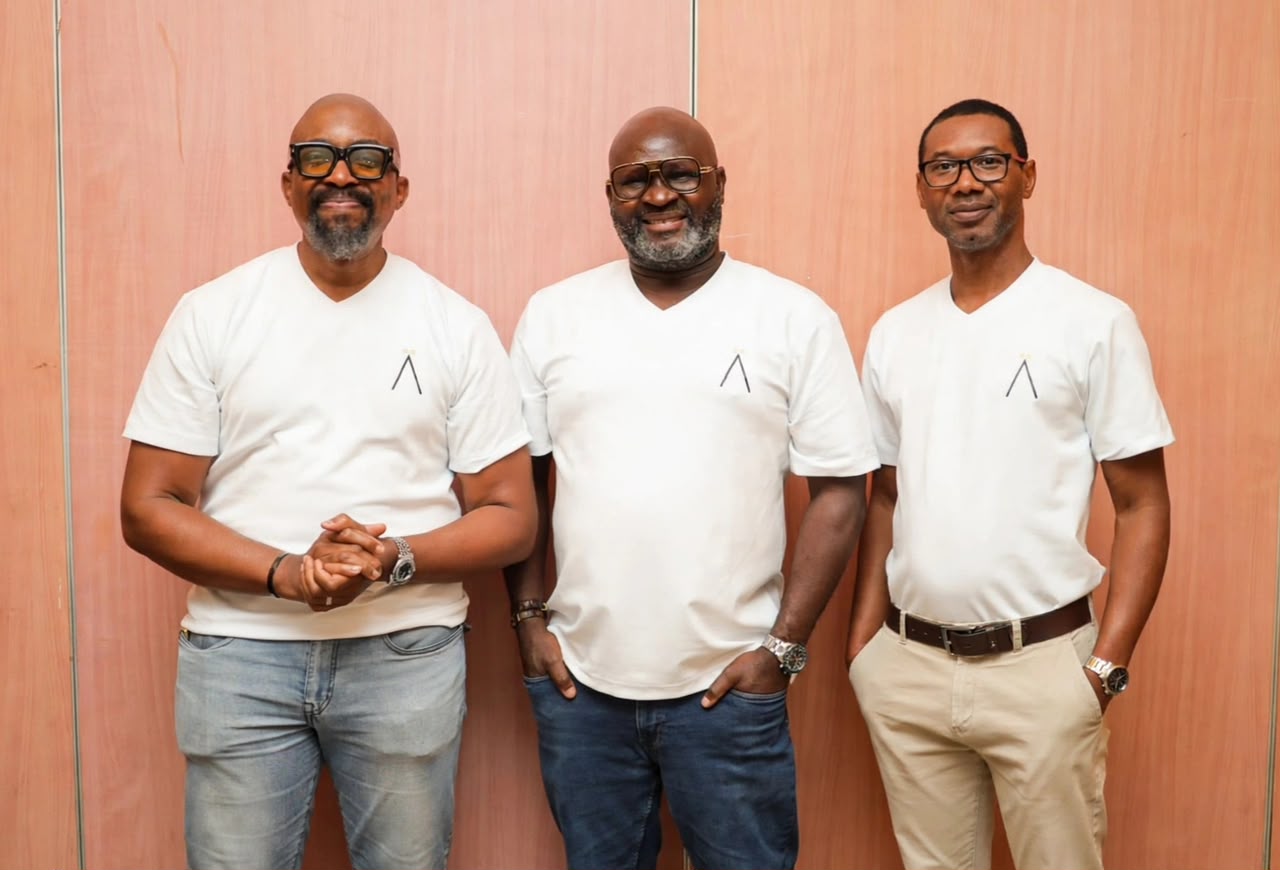
The company was co-founded by James, Mr Mohammed Mijindadi and Mr Chris Kanwei, whose professional backgrounds span enterprise auditing, cybersecurity, infrastructure development and institutional investment.
AURÄI Launches Platform to Strengthen AI Governance, Assurance

Reps FCT Committee Hails Betara at 60, Celebrates Legislative Leadership

BAMA, KONDUGA SPEAKS LOUD: MASSIVE 2027 TURNOUT REAFFIRMS GUBIO’S GROWING POLITICAL MOMENTUM IN BORNO

Troops Launch Search-and-Rescue Operation After Woman Is Kidnapped in Jos

Roger Federer’s Shock as DNA Results Reveal Myla and Charlene Are Not His Biological Children

THE PLIGHT OF FARIDA

FAILED COUP IN BURKINA FASO: HOW TRAORÉ NARROWLY ESCAPED ASSASSINATION PLOT AMID FOREIGN INTERFERENCE CLAIMS
-
 News3 years ago
Roger Federer’s Shock as DNA Results Reveal Myla and Charlene Are Not His Biological Children
-
Opinions5 years ago
THE PLIGHT OF FARIDA
-
 News2 years ago
FAILED COUP IN BURKINA FASO: HOW TRAORÉ NARROWLY ESCAPED ASSASSINATION PLOT AMID FOREIGN INTERFERENCE CLAIMS
-
 Opinions5 years ago
POLICE CHARGE ROOMS, A MINTING PRESS
-

 News3 years ago
EYN: Rev. Billi, Distortion of History, and The Living Tamarind Tree
-

 ACADEMICS3 years ago
A History of Biu” (2015) and The Lingering Bura-Pabir Question (1)
-

 Columns3 years ago
Army University Biu: There is certain interest, but certainly not from Borno.
-

 Politics1 year ago
2027: Why Hon. Midala Balami Must Go, as Youths in Hawul and Asikira/Uba Federal Constituency Reject ₦500,000 as Sallah Gift
