
News
Outrage in Kogi as ‘Unarmed’ Student Killed by School Guards, Raising Fresh Questions on Extrajudicial Violence

Outrage in Kogi as ‘Unarmed’ Student Killed by School Guards, Raising Fresh Questions on Extrajudicial Violence
By: Michael Mike
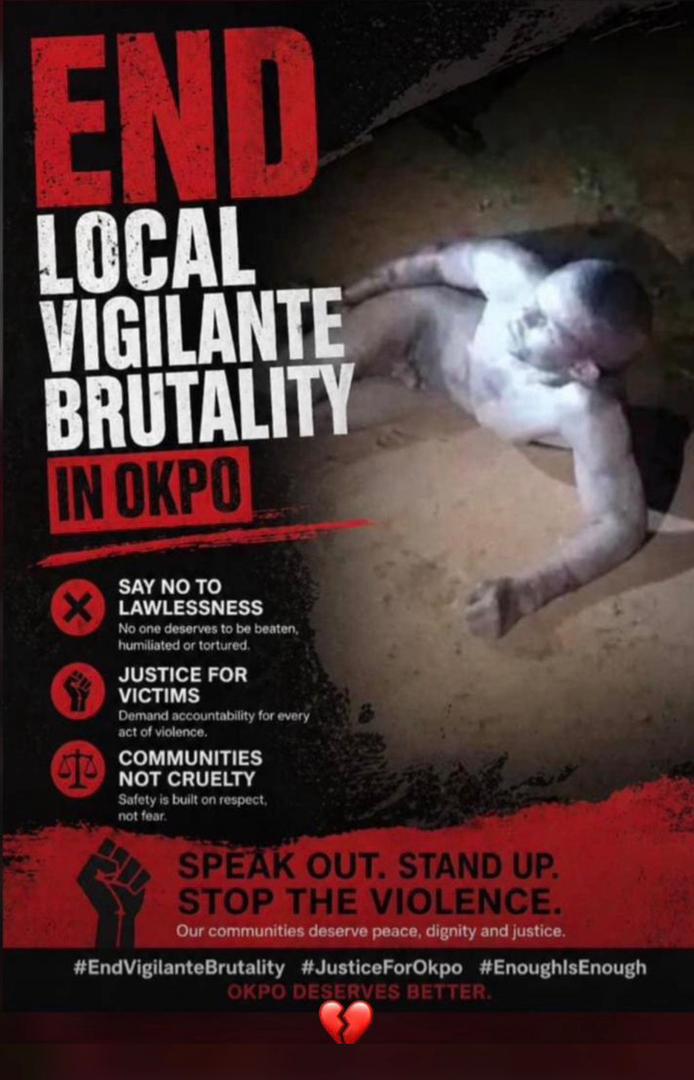
The killing of a final-year student, Andrew Amehson Aziko, allegedly by security guards at Nana College of Health in Okpo, Olamaboro Local Government Area of Kogi State, is drawing mounting scrutiny, with legal experts and rights advocates warning that the circumstances point to a possible extrajudicial execution and a broader failure of accountability.
The incident, captured in widely circulated video footage, has triggered calls for an independent investigation by the National Human Rights Commission (NHRC), amid growing concern over what residents describe as a troubling pattern of unlawful killings by local security actors in the area.
In the footage, the victim—reportedly unarmed and visibly distressed—is seen being beaten repeatedly with batons before he is shot at close range. He is heard pleading in Igala, asking the guards to “touch his hand,” while calling some of them by name, suggesting they were familiar with him. Community sources say Andrew had been undergoing treatment for mental health challenges and had wandered into the school premises after leaving a rehabilitation facility.

Under Nigerian law, the right to life is protected by Section 33 of the Constitution of the Federal Republic of Nigeria 1999, which permits the use of lethal force only in strictly defined circumstances, such as self-defence or the prevention of escape from lawful detention. Legal analysts say the conditions visible in the footage do not appear to meet that threshold.
“Even where there is suspicion of wrongdoing, force must be necessary and proportionate,” Abuja-based human rights lawyer Sadiq Bello said. “From what is publicly available, this raises serious questions of unlawful killing.”
Although the individuals involved are reportedly private security guards, rather than police officers, legal responsibility may still arise under the Criminal Code Act, which criminalises homicide, assault and excessive use of force. Experts note that private guards are not empowered to administer punishment and are expected, at most, to restrain suspects and hand them over to law enforcement authorities.
The case has also amplified concerns about the regulation and oversight of private security personnel operating in schools and other institutions, particularly in rural communities where formal law enforcement presence may be limited.
Rights advocates are now urging the National Human Rights Commission to step in, arguing that an independent, federal-level probe is necessary to ensure credibility and public trust. Under its statutory mandate, the Commission can investigate human rights violations, summon witnesses, conduct public inquiries and recommend prosecution or compensation.
A senior official familiar with NHRC processes said the Commission’s intervention could help ensure that evidence is preserved and that accountability mechanisms are not compromised at the local level. “This is precisely the kind of case that demands independent oversight,” the official said.
The killing is the second reported incident of its kind in Olamaboro within two months. In the earlier case, a young man reportedly died after being beaten by members of a vigilante group following a domestic dispute. That incident sparked protests and led to the arrest of several youths after clashes with security personnel, with some detainees said to remain in custody.
Residents say the recurrence of such incidents is deepening fear and eroding confidence in local security structures. “There is a pattern emerging—people taking the law into their own hands and facing no consequences,” a community member said.
Beyond the immediate act, questions are also being raised about the apparent absence of standard policing procedure in the handling of the situation. Established protocols require that suspects be apprehended using minimal force, that injured individuals receive immediate medical attention, and that incidents involving violence be promptly reported to the police, with scenes preserved for forensic investigation. None of these steps appear evident from available accounts.
The victim’s mental health condition has further intensified concern, with advocates stressing that individuals in distress require de-escalation and medical support, not force. “This reflects both a legal and humanitarian failure,” a Lokoja-based mental health advocate said. “A vulnerable person was treated as a threat rather than someone in need of help.”
Amid reports of planned protests, the Chairman of Olamaboro Local Government Area, Hon. Williams Ameh, has called for restraint, urging residents not to take the law into their own hands and to allow due process to run its course. However, skepticism remains high among residents who point to previous incidents where, they say, justice was neither transparent nor swift.
As of press time, the Kogi State Police Command had yet to issue an official statement or confirm whether any arrests had been made, a silence that has only intensified public concern.
Stakeholders are now calling for immediate steps, including the suspension of the implicated guards, the securing of the crime scene, and a transparent investigation involving independent oversight. For many in Okpo, the case has become more than an isolated tragedy—it is a test of whether the rule of law can still prevail.
“If this goes unpunished,” one resident said, “it tells everyone that a life can be taken without consequence.”
Outrage in Kogi as ‘Unarmed’ Student Killed by School Guards, Raising Fresh Questions on Extrajudicial Violence


Troops Recover 318 Rustled Livestock During Offensive Against Bandits in Katsina
By: Zagazola Makama
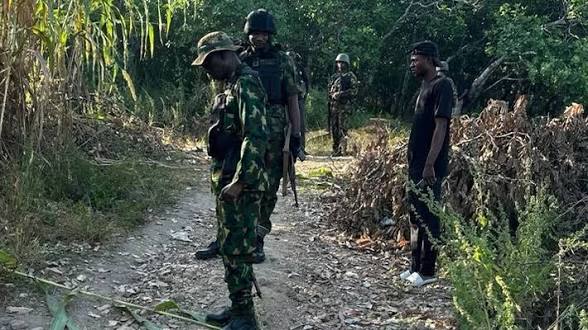
Troops of the 17 Brigade have recovered 318 rustled livestock during a major offensive operation targeting suspected bandit enclaves in Matazu Local Government Area of Katsina State.
Military sources said the operation, conducted on June 17, was launched on two fronts to clear criminal elements operating around Tuga and adjoining communities.
The sources disclosed that Intelligence, Surveillance and Reconnaissance (ISR) missions were carried out ahead of the ground assault, while air assets conducted precision strikes on three suspected terrorist locations to degrade the criminals’ capabilities before the advance of ground troops.
According to the sources, one column of troops advanced through Karaduwa, Farin Tafki, Saura and Radawa towards Tuga, while a second column moved through Sayaya, Gangule and Radawa to the objective area.
During the operation, troops successfully cleared several communities, including Karaduwa, Farin Tafki, Saura and Radawa, and intercepted 318 rustled livestock believed to have been stolen by bandits.
The recovered animals were subsequently moved to a military base for documentation and further action.
The troops also responded to attacks launched by suspected bandits on Tuga and Kuka Maidamisa villages. The attacks were reportedly carried out in retaliation against residents accused by the criminals of providing information that led to the rescue of kidnapped victims, including one Mrs Amina Abubakar.
Military sources said troops conducted further exploitation of the surrounding areas after securing the affected communities but did not encounter any additional significant threats.
The operation is expected to continue as security forces sustain pressure on criminal elements operating within the area.
Troops Recover 318 Rustled Livestock During Offensive Against Bandits in Katsina

FG deploys 1000 forest guards to strengthen counter terrorism operations in Sokoto
By: Zagazola Makama
No fewer than 50 Forest Guards have been deployed to the Forward Operating Base (FOB) in Gatawa, Sabon Birni Local Government Area of Sokoto State, as part of ongoing efforts to enhance security operations in the area.
Military sources disclosed that the personnel reported to the FOB on June 17 and were formally documented before being integrated into ongoing security activities within the area of responsibility.
The Forest Guards arrived with 25 AK-56 rifles, 50 magazines, 4,500 rounds of 7.62 x 35mm special ammunition, 25 face masks, 10 whistles, one Global Positioning System (GPS) device and a first-aid kit.
According to the sources, the newly deployed personnel were subsequently taken through orientation, familiarisation and cadre activities designed to acquaint them with the operational environment and security procedures in the area.
The deployment is expected to bolster ongoing efforts by security agencies to enhance surveillance, intelligence gathering and response capabilities in communities affected by security challenges within the Sabon Birni axis.
Security authorities expressed optimism that the integration of the Forest Guards would further strengthen collaboration among security stakeholders and contribute to sustaining peace and stability in the area.
FG deploys 1000 forest guards to strengthen counter terrorism operations in Sokoto

Nigeria Explains Ethiopia Prisoner Transfer Deal, Denies Viral Inmate List
By: Michael Mike
The Federal Government has defended its recent agreement with Ethiopia on the transfer of sentenced persons, saying the deal is aimed at allowing Nigerian inmates serving jail terms in the East African country to complete their sentences at home under more humane conditions.
Minister of Foreign Affairs, Bianca Odumegwu-Ojukwu, said the agreement aligns with President Bola Tinubu’s citizen diplomacy policy, which places the welfare of Nigerians abroad at the centre of the administration’s foreign policy.
The minister also dismissed as false a list circulating on social media claiming that 136 Nigerians were imprisoned in Ethiopia, describing both the figures and the crimes attributed to the inmates as fabricated.
According to her, only 98 Nigerian prisoners in Ethiopia’s maximum-security prisons are covered by the transfer arrangement.
Odumegwu-Ojukwu explained that negotiations for the agreement had spanned several years due to difficulties in establishing the actual number of Nigerian inmates held in Ethiopia’s prison facilities, particularly the maximum-security prisons at Kaliti and Aba Samuel.
She said many of the prisoners had repeatedly appealed to the Nigerian government to facilitate their return home because of harsh living conditions, inadequate healthcare, poor feeding, limited access to legal services, language barriers and the absence of family visitation rights.
The minister disclosed that four Nigerian inmates died while the two countries were finalising the agreement, underscoring the urgency of the intervention.
She described many of the prisoners as young and vulnerable Nigerians who had fallen victim to criminal syndicates and made regrettable choices, insisting that they still deserved humane treatment despite their offences.
Addressing concerns that the transferred inmates could be released upon their return to Nigeria, the minister clarified that the memorandum of understanding expressly prohibits the granting of pardon or amnesty without the consent of Ethiopia, the sentencing state.
She also rejected attempts to portray the inmates as belonging predominantly to one ethnic group, stressing that criminality should not be ethnicised.
“A lot of them are from the South-East. There are also those from the South-West and South-South. At the end of the day, crime has no ethnicity. All these people are Nigerian citizens in a foreign jail,” she said.
The minister added that the government remains committed to pursuing similar interventions for Nigerians facing legal and humanitarian challenges in other parts of the world, reaffirming that the protection of citizens abroad remains a major pillar of Nigeria’s foreign policy under the Renewed Hope administration.
Nigeria Explains Ethiopia Prisoner Transfer Deal, Denies Viral Inmate List

Troops Recover 318 Rustled Livestock During Offensive Against Bandits in Katsina

Joint Security Forces Arrests 10 Suspects in Anambra Raid

Troops Engage Suspected Pipeline Vandals in Rivers, Launch Manhunt

Roger Federer’s Shock as DNA Results Reveal Myla and Charlene Are Not His Biological Children

THE PLIGHT OF FARIDA

FAILED COUP IN BURKINA FASO: HOW TRAORÉ NARROWLY ESCAPED ASSASSINATION PLOT AMID FOREIGN INTERFERENCE CLAIMS
-
 News2 years ago
Roger Federer’s Shock as DNA Results Reveal Myla and Charlene Are Not His Biological Children
-
Opinions4 years ago
THE PLIGHT OF FARIDA
-
 News1 year ago
FAILED COUP IN BURKINA FASO: HOW TRAORÉ NARROWLY ESCAPED ASSASSINATION PLOT AMID FOREIGN INTERFERENCE CLAIMS
-

 News2 years ago
EYN: Rev. Billi, Distortion of History, and The Living Tamarind Tree
-
 Opinions5 years ago
POLICE CHARGE ROOMS, A MINTING PRESS
-

 ACADEMICS2 years ago
A History of Biu” (2015) and The Lingering Bura-Pabir Question (1)
-

 Columns2 years ago
Army University Biu: There is certain interest, but certainly not from Borno.
-

 Politics1 year ago
2027: Why Hon. Midala Balami Must Go, as Youths in Hawul and Asikira/Uba Federal Constituency Reject ₦500,000 as Sallah Gift
