
News
2027: Don’t Pull Down the Roof

2027: Don’t Pull Down the Roof
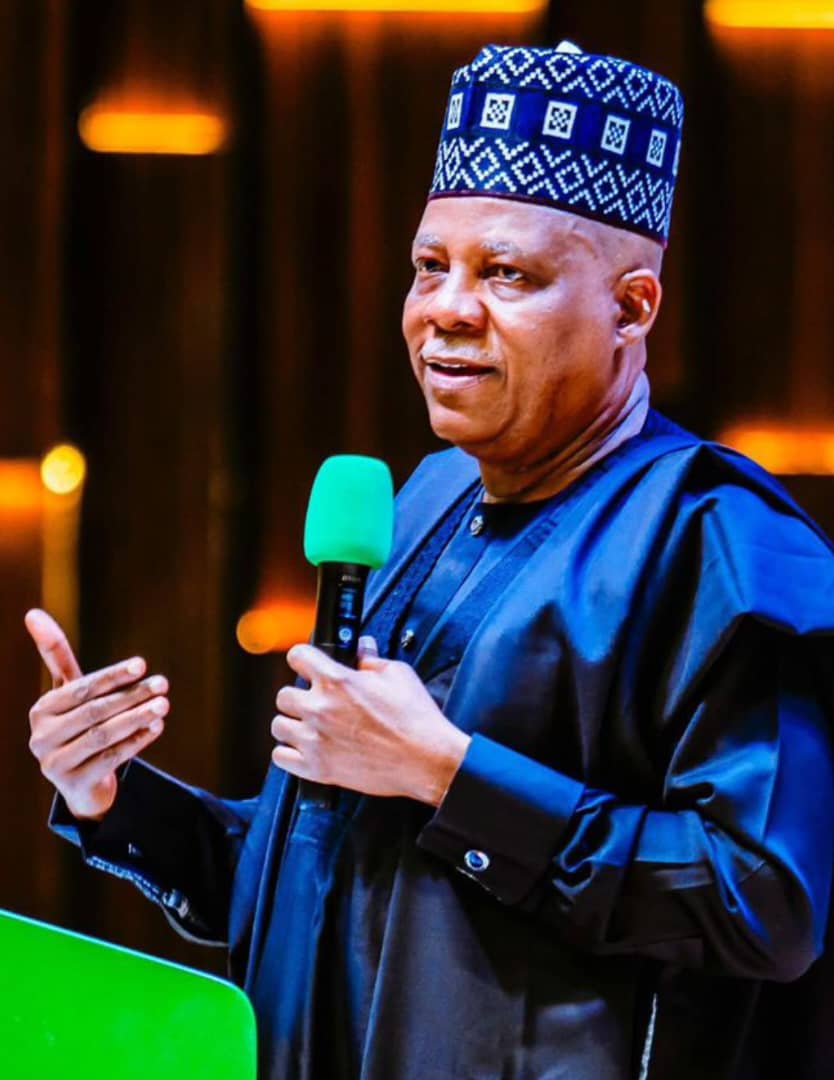
By Senator Kashim Shettima, GCON
The political season is upon us again, and with it comes the familiar fever of democracy. Across our wards and local governments, across party offices and private homes, consultations have begun. Aspirants are making calls, elders are receiving visits, supporters are counting delegates, and the marketplace of ambition is alive once more.
This is proof that our democracy still breathes. It is evidence that power in our republic is still something to be negotiated, contested, persuaded, and earned. But every season of politics also comes with its temptations. It comes with the temptation to mistake disagreement for betrayal, competition for enmity, preference for exclusion, and media interpretation for truth.
This is why, at this delicate hour, we must speak to ourselves with candour, but also with restraint. We must remind ourselves that a political party is not a battlefield. It is a family. And even in the most spirited family, the roof must never be pulled down because one room appears warmer than another.
We are members of one political household. We may have different aspirations, different loyalists, different zones of influence, different calculations, and different preferred outcomes. That is normal. Democracy was never designed to abolish ambition. It was designed to civilise it. It was designed to teach us that we can compete without destroying one another, disagree without demonising one another, and lose without setting fire to the very platform that gave us a voice.
We must therefore refuse the temptation to be manipulated by the media, by mischief-makers, by vested interests, or by those who profit from division. There will always be those who whisper that one leader has been slighted, that one bloc has been excluded, or that one interest has been buried. These are familiar tricks in the theatre of politics. They are meant to provoke suspicion, inflame supporters, and turn comrades into adversaries before the real contest even begins.
But leadership demands that we rise above provocation. Leadership demands that we ask: who benefits when brothers fight? Who gains when a party weakens itself before facing the opposition? Who profits when those who should be building bridges begin to dig trenches?
The truth is simple. The real challenge before us does not end with the primaries. In fact, it begins after the primaries. The primaries will produce candidates, but the general election will test the strength of our unity. A fractured party may produce a candidate, but only a united party can produce victory. A ticket may be won in a hall, but an election is won in the streets, in the villages, in the markets, in the polling units, and in the hearts of the people.
This is why every party chieftain, every aspirant, every stakeholder, every delegate, and every supporter matters. Each of us is a raindrop, and each raindrop matters in the making of a flood. No raindrop is too small to be ignored. No stakeholder is too insignificant to be respected. No supporter is too ordinary to be heard. The strength of a party is not only in its most visible leaders; it is in the quiet loyalty of the people who stand by it when the applause has faded.
For this reason, moderation must be our watchword. Moderation is not weakness. It is wisdom in public conduct. It is the discipline to speak without poisoning the well. It is the maturity to pursue an interest without injuring the family. It is the grace to understand that today’s disappointment may become tomorrow’s opportunity, and that the bridge we burn in anger may be the road we need in another season.
We cannot all win at the same time. This is the first hard lesson of politics. For every ticket, only one candidate will emerge. Many will consult. Many will spend. Many will hope. Many will be encouraged by supporters, friends, and elders. But at the end of the process, only one name will be submitted. That outcome, however painful to others, is not always an injustice. It is often the unavoidable arithmetic of democracy.
The true test of a politician is not how loudly he campaigns when the wind is behind him. The true test is how he behaves when the wind turns against him. Anyone can celebrate victory. It takes character to manage disappointment. It takes statesmanship to congratulate a rival. It takes patriotism to remain loyal to the house even when the room assigned to you is not the one you desired.
We must also be honest with ourselves. Endorsements are not strange to politics. Preferences are not crimes. Leaders, elders, and stakeholders will naturally have opinions about those they believe can consolidate achievements, protect party interests, and advance the public good. But preference must never become provocation. Influence must never become intimidation. Persuasion must never become exclusion. The credibility of our process is the foundation of our legitimacy.
Party leaders must therefore act with fairness. Aspirants must be treated with dignity. Delegates must be allowed to act without fear. Processes must be transparent enough to command respect, even from those who lose. Where there are grievances, they must be addressed with patience and justice. Where there are rumours, they must be answered with clarity. Where there are wounds, they must be healed before they become infections.
But aspirants and their supporters also owe the party a duty of restraint. No ambition is worth the destruction of the platform that nurtured it. No grievance is worth the collapse of the house we all helped to build. No ticket is worth turning comrades into enemies. No loss is final enough to justify permanent bitterness.
Politics is a long road. Those who understand this do not burn their vehicles because of one rough turn. They do not abandon the journey because one gate did not open. Our history is filled with men and women who lost today and won tomorrow, who were overlooked in one season and became indispensable in another, who endured the pain of temporary defeat and later found the door of destiny opened wider than they imagined.
That is the beauty of patience. That is the wisdom of loyalty. That is the reward of staying useful.
We must also remember that the people are watching us. Nigerians are not merely listening to our speeches; they are studying our temperament. They are watching how we manage disagreement. They are watching whether we place service above ego. They are watching whether we can subordinate personal ambition to collective survival. A leader who cannot manage disappointment cannot be trusted to manage power. A politician who destroys his party because he lost a ticket may destroy a state because he lost an argument.
Our great party must not become a victim of its own strength. We are a large family, and large families must learn the art of accommodation. We are a party of many tendencies, many histories, many interests, and many sacrifices. That diversity is not a curse. It is our capital. But it must be managed with humility, fairness, and discipline.
We must not allow outsiders to narrate us into conflict. We must not allow headlines to dictate our emotions. We must not allow commentators, who will not stand with us in the rain, to push us into quarrels that will weaken us in the sun. The media has its place, and public scrutiny is part of democracy. But we must have the wisdom to separate honest analysis from engineered mischief.
At this moment, what our party needs is not noise but steadiness. Not suspicion but conversation. Not bitterness but maturity. Not factional triumphalism but collective responsibility. Every leader must lower the temperature. Every aspirant must discipline his camp. Every supporter must remember that today’s opponent in a primary may be tomorrow’s ally in a general election.
We have a larger duty to our nation. Politics is not an end in itself. It is a vehicle for service. It is the means through which we deliver security, education, jobs, infrastructure, prosperity, justice, and dignity to our people. If we reduce politics to personal entitlement, we betray the people whose mandate we seek. If we turn primaries into wars of ego, we abandon the very citizens who expect governance from us.
His Excellency, President Bola Ahmed Tinubu, GCFR, has shown, through a long political journey, that democracy thrives on accommodation, persuasion, resilience, and coalition-building. That example must guide us. The strength of a party is not in the absence of disagreements, but in its capacity to resolve them without losing its soul.
So, I appeal to our leaders: let us be fair. I appeal to our aspirants: let us be patient. I appeal to our supporters: let us be disciplined. I appeal to our party faithful: let us be united. The roof over this house shelters all of us. If we pull it down in anger, nobody will be spared by the storm.
Contest, but do not destroy. Disagree, but do not defame. Aspire, but do not divide. Lose, if it happens, with dignity. Win, if it happens, with humility. And after the primaries, let us close ranks, because the real battle will not be among ourselves. The real task will be to go before Nigerians with one voice, one purpose, and one renewed covenant of service.
Each of us is a raindrop. Alone, we may appear small. Together, we can become the flood that carries our party to victory and our country towards greater hope.
Let us therefore protect the house. Let us preserve the family. Let us choose moderation over mischief, unity over suspicion, and service over ego.
We will all have our season, but only if the house still stands.
By Senator Kashim Shettima, GCON.
Vice President, Federal Republic of Nigeria.
2027: Don’t Pull Down the Roof


Troops Arrest Suspected Military Impostor in Katsina
By Zagazola Makama
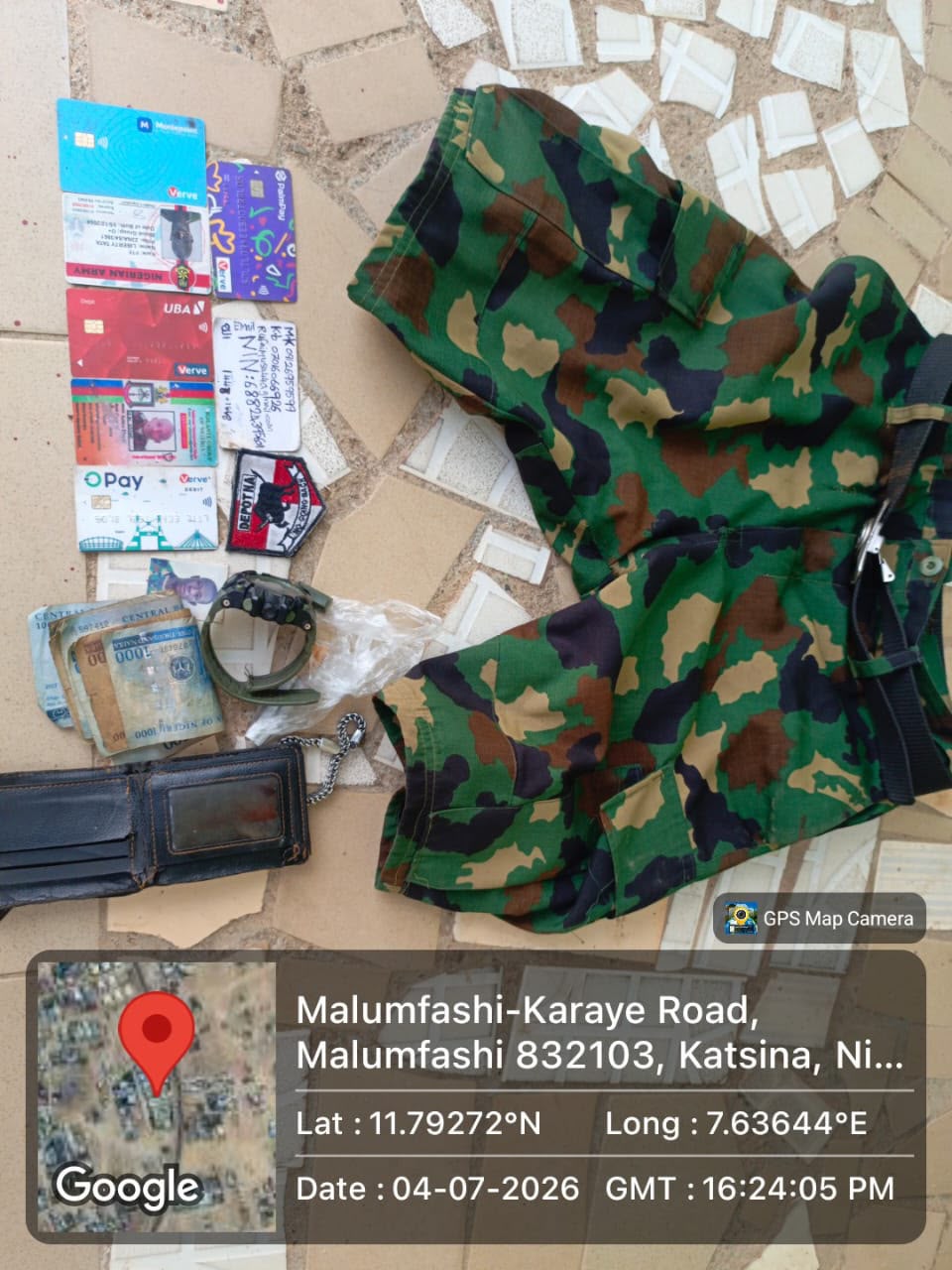
Troops of 17 Brigade have arrested a suspected military impostor during a fighting patrol in Malumfashi Local Government Area.
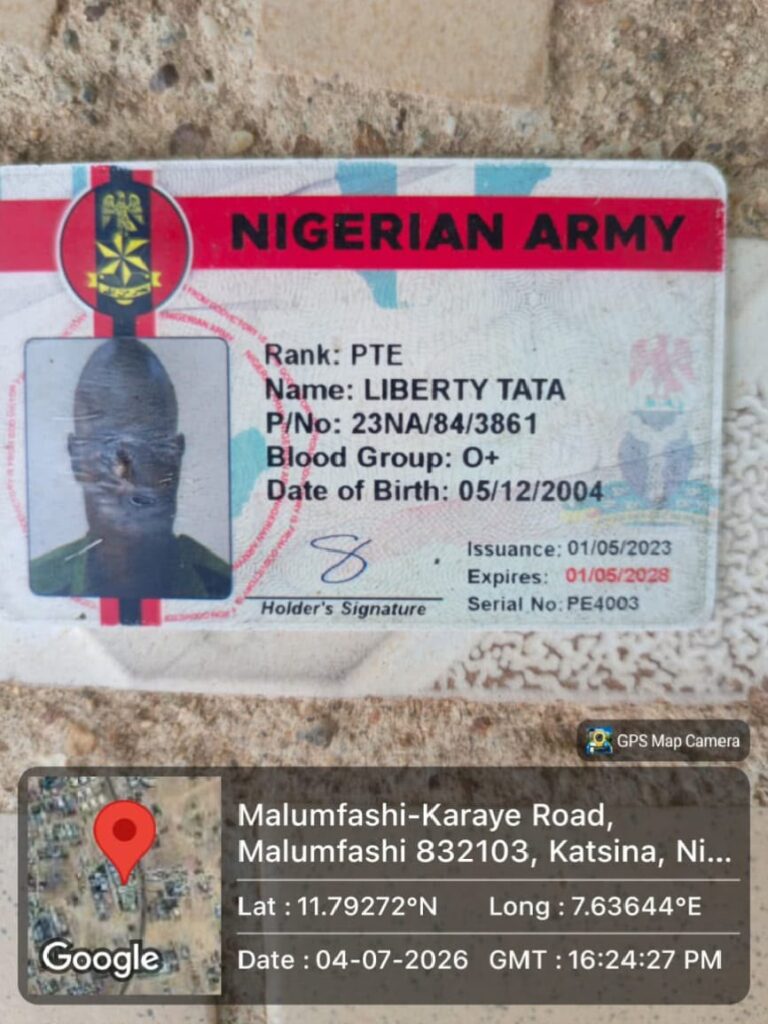
Security sources told Zagazola Makama that the suspect was apprehended at about 1:30 p.m. on July 4 by troops deployed at the Forward Operating Base (FOB) Malumfashi while conducting routine patrols within Malumfashi town.

According to the sources, the suspect was intercepted while wearing a woodland camouflage three-quarter short, raising suspicion among the troops.
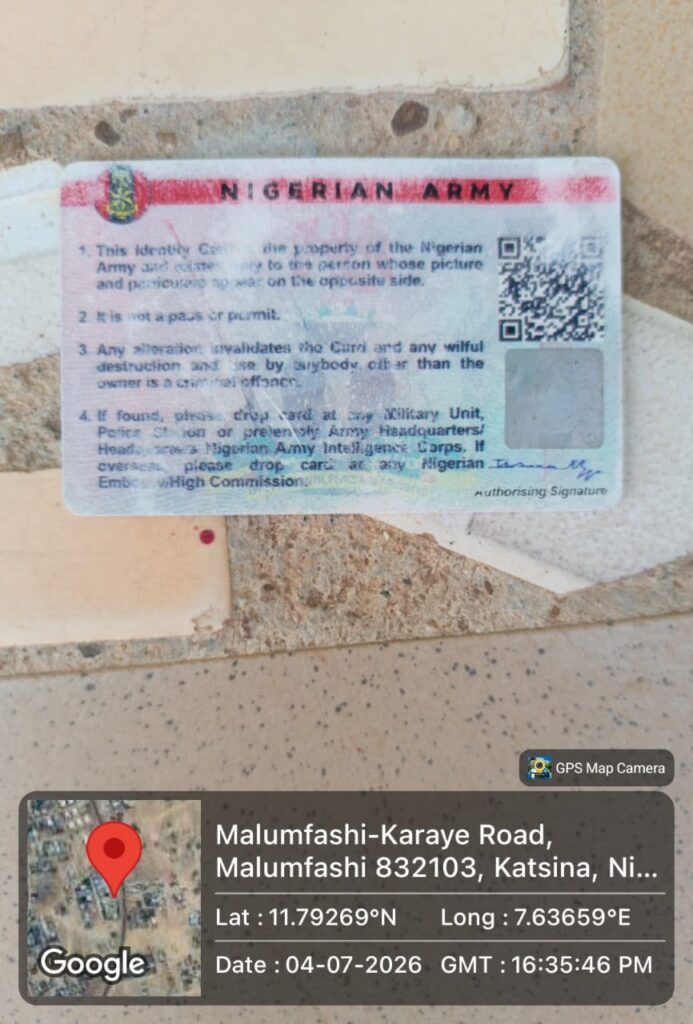
A search conducted on the suspect led to the recovery of a fake Nigerian Army identity card, four Automated Teller Machine (ATM) cards, one woodland camouflage three-quarter short, a wristwatch and the sum of ₦17,000.
The suspect and the recovered exhibits are currently in military custody pending further investigation.
Military sources said the arrest forms part of ongoing efforts to curb impersonation of security personnel and other criminal activities within the area.
Troops Arrest Suspected Military Impostor in Katsina
Troops Recover 50 Rustled Cattle, Repel Suspected Rustlers in Kaduna
By Zagazola Makama
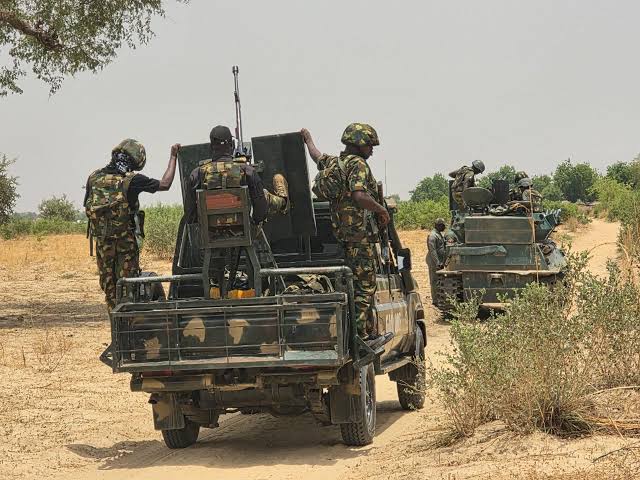
Troops deployed at the Forward Operating Base (FOB) Kankomi have recovered 50 rustled cattle after repelling suspected cattle rustlers during an ambush operation in Chikun Local Government Area.
Security sources told Zagazola Makama that the troops responded to a distress call at about 9:55 a.m. on July 4 over the activities of suspected rustlers at Ungwan Gontu community.
According to the sources, the troops swiftly laid an ambush and made contact with the fleeing suspects, forcing them to abandon the stolen livestock and escape into the surrounding area.
During the operation, the troops recovered 50 rustled cattle, which were subsequently identified and handed over to their rightful owner.
Military sources said efforts are ongoing to track down the fleeing suspects as security operations continue to combat cattle rustling and other criminal activities across Kaduna State.
Troops Recover 50 Rustled Cattle, Repel Suspected Rustlers in Kaduna
Troops Arrest Suspected Terrorist in Kogi, Suspect Confesses to Group Membership
By Zagazola Makama
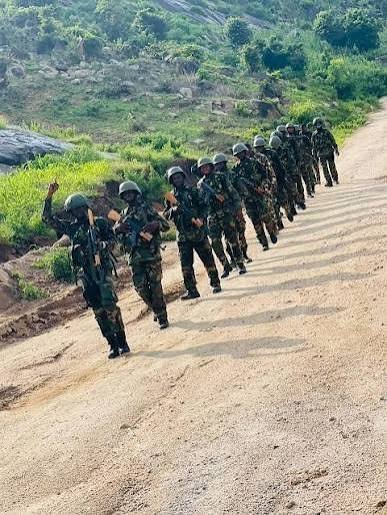
Troops of 12 Brigade, in collaboration with Office of the National Security Adviser (ONSA) Hybrid Forces, have arrested a suspected terrorist during an operation in Lokoja Local Government Area.
Security sources told Zagazola Makama that the troops responded at about 1:00 p.m. on July 4 to reports of a confrontation between local residents and a suspected terrorist at a Ruga settlement behind Obajana community.
According to the sources, the troops swiftly intervened and arrested one suspect at the scene.
During preliminary interrogation, the suspect reportedly confessed to being a member of a terrorist group led by an individual identified as Haruna, which allegedly operates within the Okene general area.
The suspect is currently in military custody and is undergoing further investigation to establish the extent of his involvement and identify other members of the group.
Military sources said the arrest forms part of ongoing security operations aimed at dismantling terrorist and criminal networks across Kogi State.
Troops Arrest Suspected Terrorist in Kogi, Suspect Confesses to Group Membership

Troops Arrest Suspected Military Impostor in Katsina

Troops Recover 50 Rustled Cattle, Repel Suspected Rustlers in Kaduna

Troops Arrest Suspected Terrorist in Kogi, Suspect Confesses to Group Membership

Roger Federer’s Shock as DNA Results Reveal Myla and Charlene Are Not His Biological Children

THE PLIGHT OF FARIDA

FAILED COUP IN BURKINA FASO: HOW TRAORÉ NARROWLY ESCAPED ASSASSINATION PLOT AMID FOREIGN INTERFERENCE CLAIMS
-
 News2 years ago
Roger Federer’s Shock as DNA Results Reveal Myla and Charlene Are Not His Biological Children
-
Opinions4 years ago
THE PLIGHT OF FARIDA
-
 News1 year ago
FAILED COUP IN BURKINA FASO: HOW TRAORÉ NARROWLY ESCAPED ASSASSINATION PLOT AMID FOREIGN INTERFERENCE CLAIMS
-

 News2 years ago
EYN: Rev. Billi, Distortion of History, and The Living Tamarind Tree
-
 Opinions5 years ago
POLICE CHARGE ROOMS, A MINTING PRESS
-

 ACADEMICS2 years ago
A History of Biu” (2015) and The Lingering Bura-Pabir Question (1)
-

 Columns2 years ago
Army University Biu: There is certain interest, but certainly not from Borno.
-

 Politics1 year ago
2027: Why Hon. Midala Balami Must Go, as Youths in Hawul and Asikira/Uba Federal Constituency Reject ₦500,000 as Sallah Gift
