
News
Unlocking the Benefits of Zero-Tariff Measures to Elevate the China–Africa Community with a Shared Future to a New Level


Unlocking the Benefits of Zero-Tariff Measures to Elevate the China–Africa Community with a Shared Future to a New Level
By Yu Dunhai,
On May 1 this year, China will fully implement zero-tariff measures for 53 African countries that have diplomatic relations with China. This represents a concrete step by China to expand high-level opening up and deepen China–Africa cooperation. As the policy enters its implementation phase, China–Nigeria cooperation is also reaching a critical juncture, transitioning from an “opportunity window” to the delivery of tangible outcomes.
This measure is characterized by comprehensive coverage. Previously, China had already granted zero-tariff treatment on 100 percent of tariff lines to 33 least developed African countries. Starting May 1, China will further extend zero-tariff arrangements, through preferential tariff rates, to 20 non-least developed African countries, including Nigeria, thereby achieving full coverage of all African countries with diplomatic relations with China. As a result, China has become the first major economy in the world to unilaterally implement comprehensive zero-tariff treatment for all such countries, demonstrating through concrete actions its commitment to providing market opportunities to African partners.
Zero tariffs measures directly reduce the cost of Nigerian products entering the Chinese market. From sesame, ginger, and cashews to cocoa and other specialty agricultural products, as long as they meet rules of origin as well as inspection and quarantine requirements, they can access the Chinese market more smoothly. This “channel effect” helps translate potential demand into stable orders and convert market opportunities into tangible benefits.
Beyond enabling products to be “sold,” this measure will also help them be “sold better.” The removal of tariffs will both encourage and incentivize enterprises to improve quality standards, optimize product structures, and strengthen brand development, thereby supporting sustainable growth in China’s high-standard market. As export volumes expand and quality improves, the international reputation of “Made in Nigeria” will be further enhanced.
From a broader perspective, the measure will promote localized value addition, inject new momentum into Nigeria’s industrialization and agricultural modernization, create employment opportunities, and improve livelihoods. Clear and stable expectations for exports to China will attract increased domestic and foreign investment into sectors such as agriculture, food processing, mineral processing, and manufacturing. Value addition through local processing prior to export will help extend industrial chains and stimulate the development of supporting industries, including R&D, quality inspection, packaging, warehousing, and logistics. In this way, Nigeria will be better positioned to transition from primary commodity exports to more diversified, higher value-added exports, enhancing the resilience and dynamism of its economy.
Whether the benefits of zero-tariff measures can be fully realized ultimately depends on effective implementation. African producers and exporters, including those in Nigeria, are encouraged to proactively align with Chinese market requirements in terms of product quality, supply reliability, and brand promotion. China will work closely with Nigeria and other African countries to create an even more enabling environment for expanding exports to China. This includes providing technical support through capacity-building programs, enhancing trade facilitation through “green channels” for agricultural products, and welcoming Nigerian enterprises to actively participate in major platforms such as the China International Import Expo, the Canton Fair, and the China–Africa Economic and Trade Expo to connect with buyers and promote their products. We also look forward to close coordination with relevant Nigerian authorities to ensure that products meet applicable origin rules, inspection and quarantine standards, and other regulatory requirements.
The zero-tariff arrangement is an innovative, phased, and pioneering measure in the ongoing negotiations on the Agreement on Economic Partnership for Shared Development between China and African countries. This agreement will more comprehensively reduce both tariff and non-tariff barriers, enhance trade and investment facilitation, and deepen cooperation across a range of development areas, thereby providing long-term, stable, and predictable institutional support for mutually beneficial cooperation between China and Nigeria.
Against the backdrop of persistent geopolitical tensions, global economic headwinds, and rising unilateralism and protectionism, China’s commitment to expanding opening up, while focusing on Africa’s development priorities and sharing the opportunities of its vast market and modernization, demonstrates both responsibility and strategic foresight. China stands ready to work with Nigeria to ensure that zero-tariff measures take root and deliver real results, advancing Africa’s modernization and elevating the China–Africa community with a shared future to a new level.
Yu Dunhai, is Chinese Ambassador to Nigeria
Unlocking the Benefits of Zero-Tariff Measures to Elevate the China–Africa Community with a Shared Future to a New Level


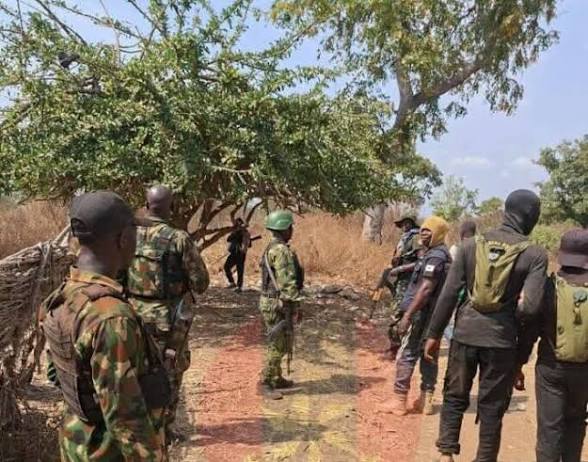
Troops Arrest Suspected Terrorist Collaborator in Borno
By: Zagazola Makama
Troops of the 130 Battalion, Sector 3, in collaboration with members of the Civilian Joint Task Force (CJTF), have arrested a suspected terrorist collaborator at Doron Baga in Kukawa Local Government Area of Borno State.
Security sources told Zagazola Makama that the suspect, identified as Halidu Mamuda, was apprehended at about 4:50 p.m. on Nov. 13, 2026.
The arrest followed allegations by previously arrested suspects, who reportedly identified Mamuda as the person who sent them to convey contraband items allegedly intended for terrorists.
The suspect is currently in military custody for further interrogation to establish the circumstances surrounding the alleged involvement and identify other possible accomplices.
The arrest forms part of ongoing efforts by troops to dismantle terrorist logistics and supply networks in the North-East.
Troops Arrest Suspected Terrorist Collaborator in Borno

Abducted at 15, Forced Into Terrorist Group, 32-Year-Old Man Surrenders in Borno
By: Zagazola Makama
A 32-year-old man identified as Ali Mustapha, who claimed he was abducted as a teenager and forced to join a terrorist group, has surrendered to troops of the Nigerian Army in Borno State.
Security sources told Zagazola Makama that Mustapha, a native of Geri Mallam in Gwoza Local Government Area, surrendered at about 6:20 p.m. on Nov. 13, 2026, to troops of the 196 Amphibious Battalion, Sector 3, at Charlie Company, Kwatan Alkama.
During preliminary interrogation, the suspect claimed that he was abducted at the age of 15 and forced to join the group by a terrorist identified as Abu Mujahid.
Items recovered from him included one AK-47 rifle with registration number 28570, two magazines, 61 rounds of 7.62mm x 39mm ammunition, one mobile phone and N4,000.
The surrendered suspect and recovered items are currently in military custody for profiling and further necessary action.
His account of being abducted and forcibly recruited will be subject to further investigation by the military
Abducted at 15, Forced Into Terrorist Group, 32-Year-Old Man Surrenders in Borno
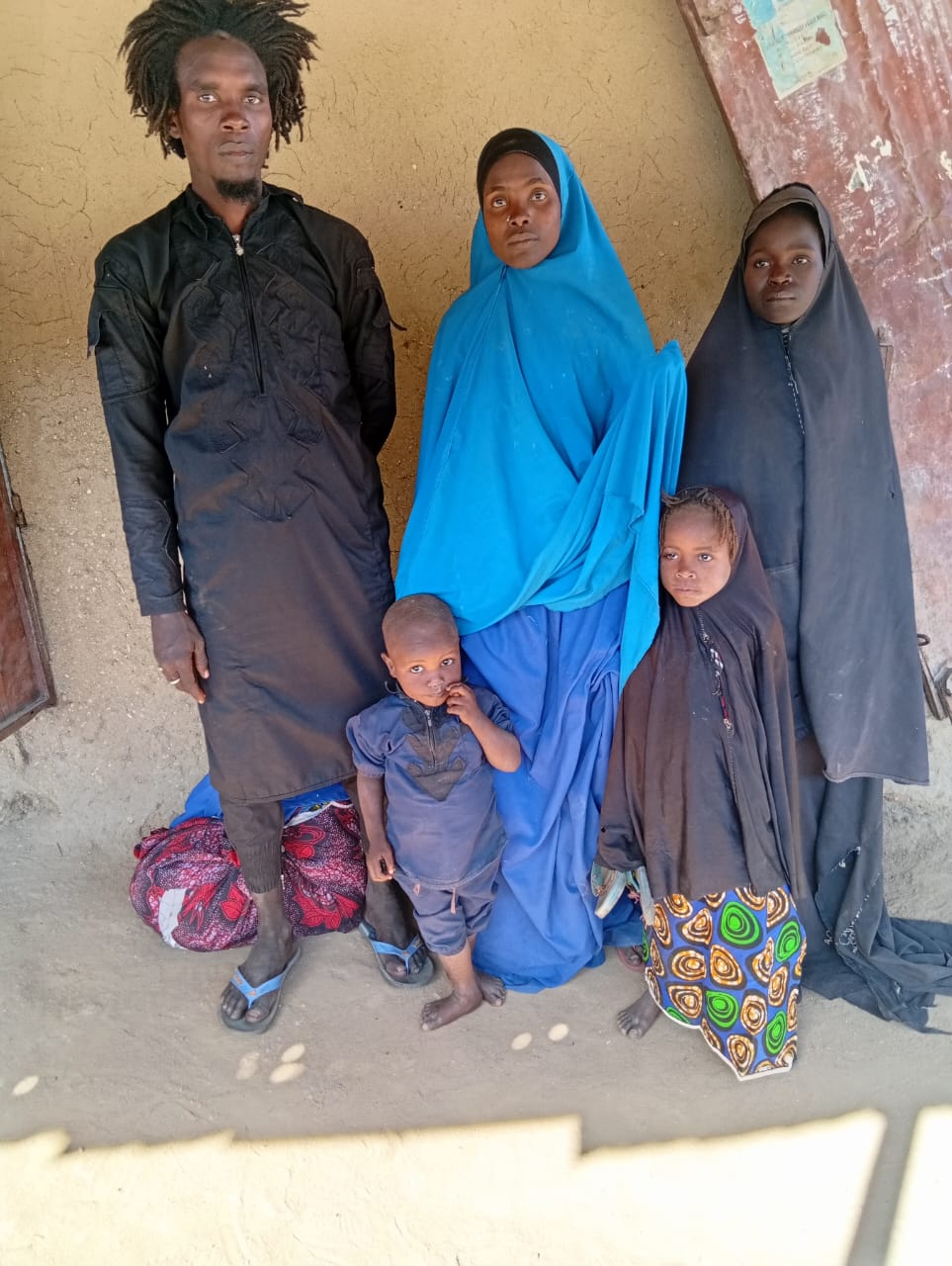
Boko Haram Fighter, Wife and Three Children Surrender to Troops in Gwoza
By: Zagazola Makama
A suspected Boko Haram fighter, his wife and their three children have surrendered to troops of the Nigerian Army in Gwoza Local Government Area of Borno State.
Security sources told Zagazola Makama that the family of five surrendered at about 8:19 a.m. on Nov. 14, 2026, to troops of the 26 Task Force Brigade Garrison deployed at E Company, 1 Platoon, along the Gwoza-Pulka Road.
The suspected fighter was identified as 35-year-old Mallam Sani, while his wife was identified as Fatimat Sani Banki, 25.
The three children were identified as Fatima Ramadan, 15; Umma Sani Banki, five; and Sani Banki Muhammed, three.
Preliminary investigation revealed that the family escaped from the Tugule area of a terrorist enclave in Guduf, along the Mandara Mountains.
Items recovered from them included one AK-47 rifle with registration number B/B 7340, five AK-47 magazines, 34 rounds of 7.62mm special ammunition, two 36-hand grenades and one mobile phone.
The family members and recovered items are currently in military custody for further investigation and necessary action.
The surrender comes amid sustained military operations and continued pressure on terrorist enclaves around the Mandara Mountains.
Boko Haram Fighter, Wife and Three Children Surrender to Troops in Gwoza

Troops Arrest Suspected Terrorist Collaborator in Borno

Abducted at 15, Forced Into Terrorist Group, 32-Year-Old Man Surrenders in Borno

Boko Haram Fighter, Wife and Three Children Surrender to Troops in Gwoza

Roger Federer’s Shock as DNA Results Reveal Myla and Charlene Are Not His Biological Children

THE PLIGHT OF FARIDA

FAILED COUP IN BURKINA FASO: HOW TRAORÉ NARROWLY ESCAPED ASSASSINATION PLOT AMID FOREIGN INTERFERENCE CLAIMS
-
 News3 years ago
Roger Federer’s Shock as DNA Results Reveal Myla and Charlene Are Not His Biological Children
-
Opinions5 years ago
THE PLIGHT OF FARIDA
-
 News2 years ago
FAILED COUP IN BURKINA FASO: HOW TRAORÉ NARROWLY ESCAPED ASSASSINATION PLOT AMID FOREIGN INTERFERENCE CLAIMS
-
 Opinions5 years ago
POLICE CHARGE ROOMS, A MINTING PRESS
-

 News3 years ago
EYN: Rev. Billi, Distortion of History, and The Living Tamarind Tree
-

 ACADEMICS3 years ago
A History of Biu” (2015) and The Lingering Bura-Pabir Question (1)
-

 Columns3 years ago
Army University Biu: There is certain interest, but certainly not from Borno.
-

 Politics1 year ago
2027: Why Hon. Midala Balami Must Go, as Youths in Hawul and Asikira/Uba Federal Constituency Reject ₦500,000 as Sallah Gift
