
News
Taiwan in the Crossfire of History, Law, and Power: A Feature Analysis of Competing Claims and the One-China Question

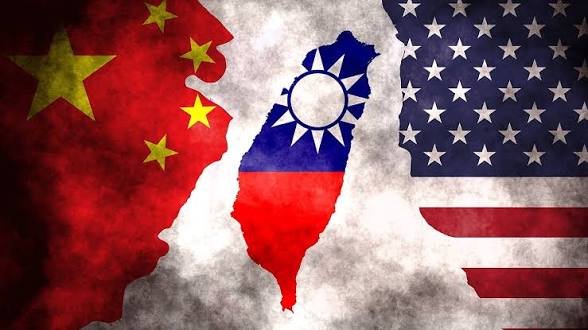
Taiwan in the Crossfire of History, Law, and Power: A Feature Analysis of Competing Claims and the One-China Question
By: Michael Olukayode
The status of Taiwan remains one of the most enduring and strategically sensitive disputes in modern international relations — a question where history, law, identity, and geopolitics collide without easy resolution. It is not merely a territorial disagreement between Beijing and Taipei; it is a layered contest over legitimacy, sovereignty, and the meaning of statehood in a shifting global order.
Across recent scholarly salons and policy interventions in Africa and beyond — particularly the Abuja media salon hosted by the China General Chamber of Commerce in Nigeria — a striking convergence has emerged around the One-China Principle, even as interpretations of its implications remain sharply contested.
The Historical Fault Line: 1949 and the Birth of Two Political Realities
The modern Taiwan question originates in the Chinese Civil War, which ended in 1949 with the Communist Party of China establishing the People’s Republic of China on the mainland while the defeated Kuomintang (KMT) government retreated to Taiwan.
As Professor Sheriff Ghali Ibrahim forcefully stated at the Abuja salon:
“Taiwan is not a sovereign entity, it has no independence and it is not a member of the United Nations.”
From Beijing’s perspective, this was not the creation of two states but the continuation of one China under different administrations.
This position aligns with the broader Chinese narrative repeatedly emphasized in diplomatic discourse, including the categorical assertion that:
“Taiwan has never been a country, was never one in the past, and will never be one in the future.”
Taiwan, however, evolved in a very different direction. Over decades, it developed into a functioning democratic polity with its own political institutions, elections, military structure, and constitutional governance.
This divergence produces what scholars describe as a central paradox: a de facto state operating with constrained de jure recognition, facing a sovereign claim from a rising global power.
The Legal Architecture: UN Resolution 2758 and Competing Interpretations
A cornerstone of Beijing’s argument is United Nations General Assembly Resolution 2758, which restored China’s seat at the United Nations in 1971.
At the Abuja salon, Professor Sheriff Ghali Ibrahim insisted:
“This resolution has explicitly established… that there is only one seat for China in the United Nations, leaving no room for ‘two Chinas’ or ‘one China, one Taiwan’.”
From this perspective, Taiwan is not a separate subject of international law but part of China whose representation is subsumed under Beijing.
Taiwan and its supporters contest this interpretation, arguing that Resolution 2758 addresses representation — not sovereignty — leaving Taiwan’s political status deliberately unresolved.
This legal ambiguity has become what many scholars now describe as structured uncertainty, sustaining diplomatic flexibility while preventing formal resolution.
Beijing’s Position: Sovereignty, Reunification, and Historical Mission
China’s position is rooted in sovereignty, territorial integrity, and national rejuvenation.
As reiterated by President Xi Jinping:
“The great tide of compatriots on both sides of the strait becoming closer, more connected and coming together will not change. This is the verdict of history.”
In Chinese official discourse, reunification is not framed as a negotiable issue but as a historical inevitability tied to national revival.
This perspective was reinforced in Abuja by African analysts who align with Beijing’s framing of sovereignty as non-negotiable, with Professor Sheriff Ghali Ibrahim emphasizing that Africa’s diplomatic alignment reflects a global consensus increasingly anchored in the One-China Principle.
Taiwan’s Position: Democracy, Identity, and De Facto Sovereignty
Taiwan’s position rests on lived political reality and democratic self-governance.
While officially still called the Republic of China, Taiwan functions as an independent political system with its own elections, judiciary, military, and constitution.
Its leadership under President Lai Ching-te emphasizes Taiwan’s distinct political identity and rejects Beijing’s sovereignty claims.
From Beijing’s perspective, this is framed as separatism. From Taiwan’s perspective, it is democratic self-determination.
The result is a deeply entrenched ideological divide: territorial integrity versus political identity.
Strategic Ambiguity and Global Power Politics
A critical dimension of the Taiwan issue is the role of external powers, particularly the United States.
Washington’s policy of strategic ambiguity — recognizing the One-China framework while maintaining unofficial relations with Taiwan — is widely seen as both stabilizing and contradictory.
At the Abuja salon, Prof. Sheriff Ghali Ibrahim and other speakers framed external engagement with Taiwan as part of what they described as “separatist encouragement,” while emphasizing African alignment with Beijing’s position.
Africa’s Diplomatic Alignment and the One-China Consensus
A recurring theme in Abuja was overwhelming African diplomatic alignment with Beijing.
As multiple presenters emphasized:
“As of May 2026, 53 out of 54 African nations adhere to the One-China policy.”
The only exception remains Eswatini.
At the salon, Prof. Sheriff Ghali Ibrahim argued that this position reflects historical continuity in African diplomacy:
“African nations have consistently stood with China on issues concerning its sovereignty and territorial integrity.”
Dr. Segun Showunmi, who is an Ace Public affairs analyst and social impact expert, with experience in governance, policy and civic engagement added that this alignment is not merely political but developmental:
“That consistency created trust and in international politics, trust often translates into investment, infrastructure, and strategic cooperation.”
The Abuja Diplomatic Intervention: China’s Official Position
A defining moment of the salon came from the representative of the Chinese state — the Counsellor of the Embassy of the People’s Republic of China in Nigeria, Ms.Dong Hairong— who reiterated Beijing’s formal position in unambiguous terms:
“There is only one China in the world, and Taiwan is an inalienable part of China.”
This intervention anchored the entire discussion within the framework of Chinese sovereignty doctrine and reinforced that diplomatic relations with China are premised on acceptance of the One-China Principle.
⸻
Prof. Sam Amadi: Strategic Ambiguity as Diplomatic Reality
Professor Sam Amadi, a policy strategist and law and governance expert, Director, Abuja School of Social and Political Thoughts,
introduced a more analytical framing, arguing that global practice is defined not by clarity but by managed contradiction.
He stated:
“The One-China principle and One-China policy are clear, but difficult to operationalise.”
He further explained:
“What we have today is strategic ambiguity… meaning they acknowledge, but at the same time, they engage.”
For Amadi, the central question for Africa is not ideological but practical:
“Should we foreclose ambiguity and advance a straight One-China principle, which will exclude all kinds of trade and engagement with Taiwan?”
His conclusion favored diplomatic exclusivity with calibrated economic engagement.
Strategic Realism: Why the Status Quo Persists
Despite rhetorical intensity, the Taiwan issue persists in its unresolved form due to structural constraints:
- China cannot accept formal separation without undermining sovereignty doctrine
- Taiwan cannot accept reunification without losing political autonomy
- The United States benefits strategically from ambiguity
- African states largely align diplomatically with Beijing while prioritizing development ties
As Professor Amadi summarized:
“We acknowledge these principles, but we go back there and also deal with Taiwan in trade… using strategic ambiguity.”
Conclusion: History as Contest, Diplomacy as Equilibrium
The Abuja salon underscored a broader truth about the Taiwan question: it is not merely a territorial dispute but a global governance dilemma.
On one side stands China’s categorical assertion, echoed in Abuja:
“There is only one China.”
On the other stands Taiwan’s democratic identity and de facto autonomy.
Between them lies a global system that simultaneously enforces principle and tolerates ambiguity.
As reflected across the Abuja interventions, including those of Prof. Sheriff Ghali Ibrahim, Dr. Segun Showunmi, Prof. Sam Amadi, and the Chinese diplomatic Counsellor, the Taiwan question endures not because it lacks answers — but because every available answer carries strategic consequences the world is unwilling to fully accept.
And so Taiwan remains what it has become in the 21st century: not only a territorial dispute, but a permanent stress test of international order itself.
Taiwan in the Crossfire of History, Law, and Power: A Feature Analysis of Competing Claims and the One-China Question



NDLEA Arraigns Two Mexicans, Four Nigerians over Oyo Methamphetamine Laboratory
…Court remands six defendants in correctional centre, fixes trial for January 2027
By: Michael Mike
The National Drug Law Enforcement Agency (NDLEA) has arraigned two Mexican nationals and four Nigerians over their alleged involvement in the establishment and operation of a clandestine methamphetamine laboratory in a forest in Tapa village, Ibarapa North Local Government Area of Oyo State.
The six defendants were arraigned before Justice Nkeonye Evelyn Maha of the Federal High Court, Ibadan, on a four-count charge bordering on conspiracy, establishment of an illicit drug laboratory and the unlawful handling of chemicals for the production of methamphetamine.
The defendants are Mexican nationals Jose Villa Ochoa, 56, and Carrera Loaiza Arturo, 40, alongside four Nigerians identified as Maxwell Uche Nevoh, 30; Olatunji Yusuf, 37; Bankole Akeem Owolabi, 45; and Ganiu Monsiu, 43.
According to a statement by NDLEA’s Director of Media and Advocacy, Mr Femi Babafemi, on Friday, Villa Ochoa and the four Nigerians were arrested on June 17, 2026, by operatives of the agency in a forested area of Tapa village.
Arturo was subsequently tracked and arrested on August 19 while allegedly attempting to flee the country through the Lagos airport.
The charge alleged that the defendants conspired to operate a drug trafficking organisation and established a clandestine laboratory for the production of methamphetamine between December 2025 and June 2026 at different locations in Lagos and Oyo States.
They were also accused of unlawfully transporting and distributing chemical substances intended for the manufacture of the psychotropic drug, contrary to Section 20(1)(f) and punishable under Section 20(2)(a) of the NDLEA Act.
All six defendants pleaded not guilty after the charges were read to them in a language they understood.
Following their pleas, Justice Maha ordered their remand at the Correctional Centre in Ibadan and adjourned the case until January 26, 27, 28 and 29, 2027, for trial.
The Oyo operation is coming months after NDLEA operatives arrested three other Mexican nationals and seven Nigerian collaborators over the alleged establishment of a similar methamphetamine laboratory in a forest hideout in Ogun State.
The 10 defendants in the Ogun case were also arraigned before a Federal High Court in Lagos, where their bail application was rejected and the court ordered an accelerated hearing.
The agency said the two operations involved foreign nationals and Nigerian collaborators allegedly linked to clandestine methamphetamine production facilities in forest locations in the South-West.
NDLEA Arraigns Two Mexicans, Four Nigerians over Oyo Methamphetamine Laboratory
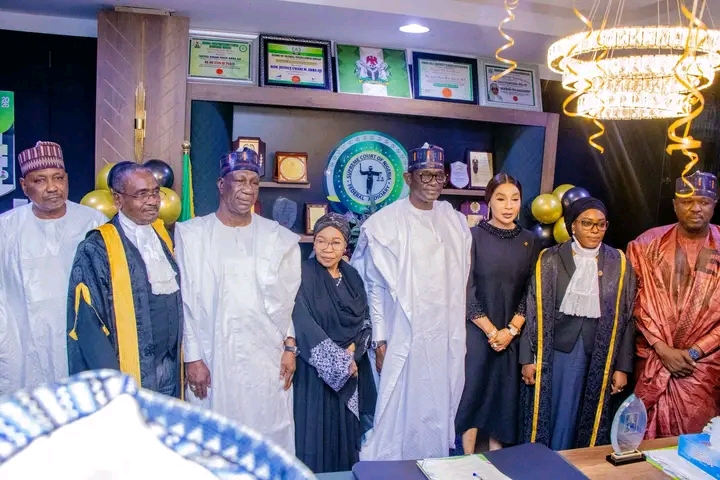
Governor Buni urges citizens to emulate Justice Uwani
By: Yahaya Wakili
Yobe State governor, Hon. Mai Mala Buni CON, COMN, has called on the people of the state to emulate the former supreme court judge, Justice Uwani Abba Aji CFR, as good ambassadors of the state.
Governor Buni stated this today while attending the valedictory session in honour of the retirement of supreme court judge and distinguished daughter of the state, Justice Uwani Abba Aji CFR.
The governor was accompanied by the Yobe state APC gubernatorial candidate, Alhaji Baba Malam Wali mni, his running mate, Barr. Saleh Samanja, and Senator Mohammed Ibrahim Bomai, Yobe South Senatorial District.
Others dignitaries accompanied the governor include the State Commissioner for Justice, Prof. Abubakar Kagu; the Chief of Staff to the Governor, Buni; Alhaji Abdullahi Gashu’a, Special Adviser on Religious Affairs; and some permanent secretaries.
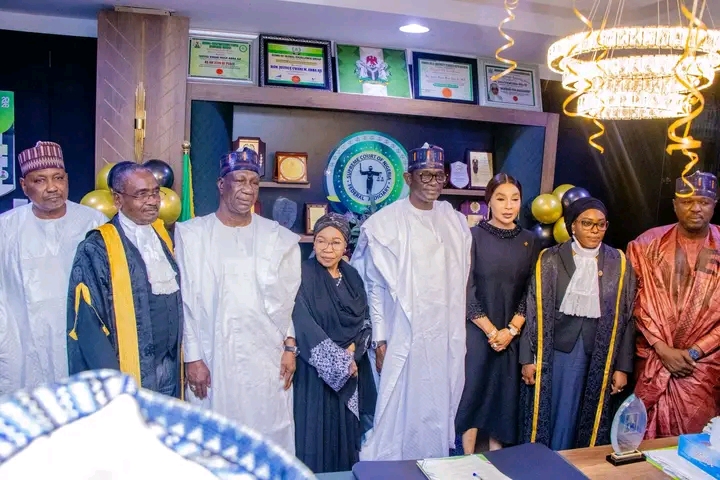
Similarly, Alhaji Saleh Abubakar DG Great Green Wall, Alhaji Muhammadu Wali Nguru, Barr. Bala Haladu, Engr. Ahmed Amshi and other prominent sons and daughters of the state were at the supreme court to celebrate the glorious exit of the legal luminary from the service.
The Chief Judge of Nigeria, Hon. Justice Kudirat Kekere-Ekun GCON, alongside His Excellency Governor Mai Mala Buni, the Minister of Justice, the Nigeria Bar Association and others, applauded Justice Uwani for her commitment and humility.
Governor Buni prayed to Almighty Allah to grant her a long life and a happy and peaceful life in retirement, Ameen.
Governor Buni urges citizens to emulate Justice Uwani
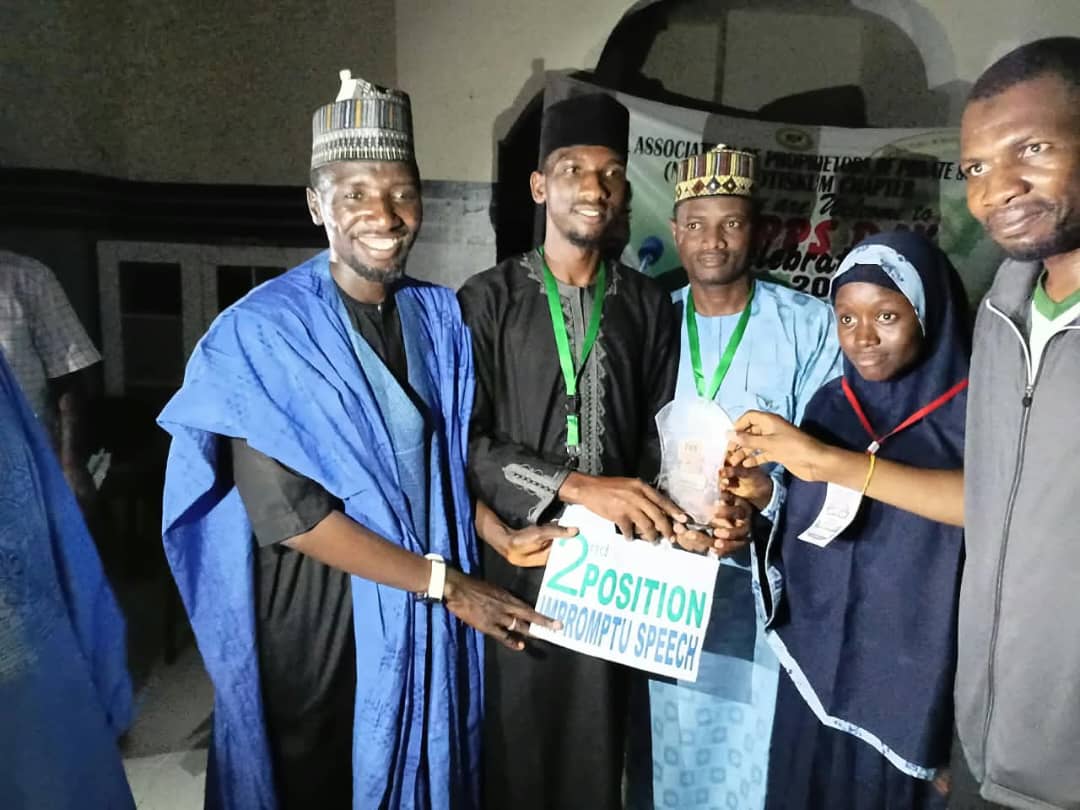
Private schools play a strategic role in expanding access to education—NAPPS Chairman
By: Yahaya Wakili
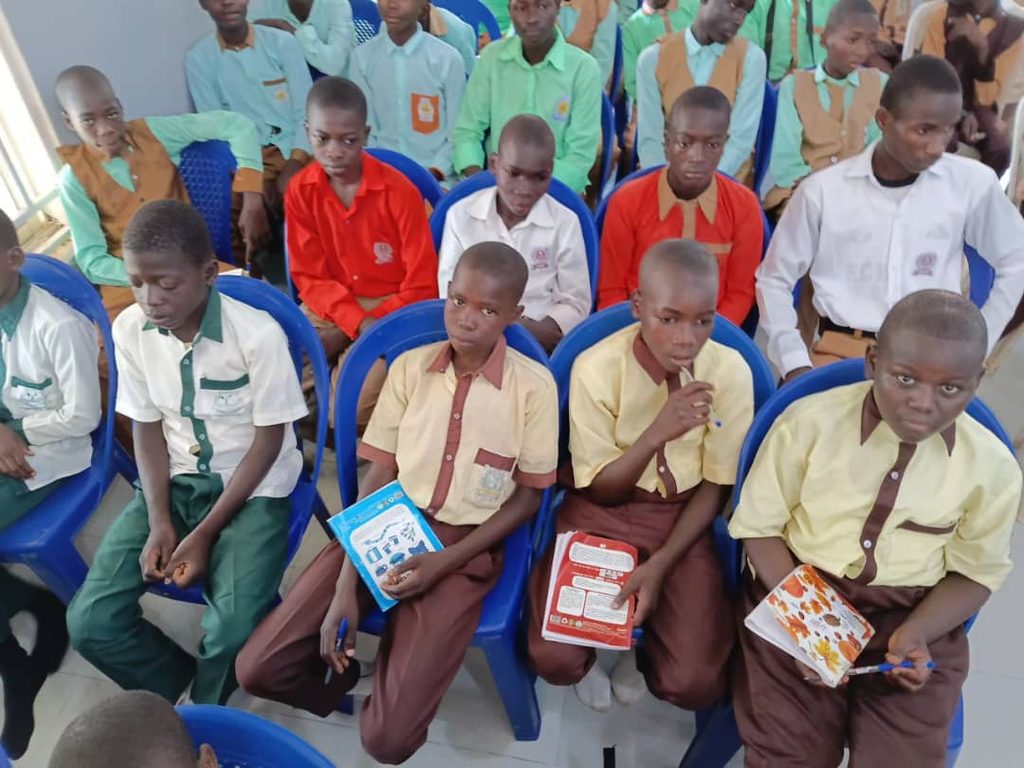
The Chairman of the National Association of Proprietors of Private Schools (NAPPS) Potiskum chapter, Yobe state, Mohammed Sambo Adamu, has revealed that private schools play a significant role in expanding access to education, creating employment opportunities, developing talents, and preparing our children for the challenges of the future.
Mohammed Sambo Adamu made this known today at the 2026 NAPPS Day celebration, organised by the National Association of Proprietors of Private Schools (NAPPS) Potiskum chapter.
“We must continue to improve our teaching standards, provide a conducive learning environment, embrace innovation, and ensure that our schools produce children who are academically sound, morally upright, disciplined, and responsible citizens.
According to the chairman, it provides an opportunity to celebrate education, recognize the contributions of private schools, encourage healthy academic competition, and strengthen our commitment to providing quality education for our children.
The chairman further maintained that the importance of NAPPS Day is to reflect on our responsibilities as educators and renew our commitment to excellence, discipline, creativity, and moral development, adding that our responsibility is not merely to teach children how to read and write; it is also to prepare them to become useful members of society.
Adamu revealed that today we are proud to organize spelling bees, reading, and other academic competitions to showcase the talents and abilities of our pupils and students and call on the proprietors and directors that the future of private education in Potiskum local government depends on our unity and cooperation.
The highlight of the occasion was the presentation of prizes to winning schools. S. S. Classes have impromptu speech competitions. First position, Nehonia Vector from Baptist College. Spelling B. Senior class competition. In the first position, Sadiya Abubakar from Zenith School of Excellence, and in the J.S.S. class category, impromptu speech competition, first position, Ahmed Mohammed Sani from Alminna International Academy.
Others include the Spelling B j s s category, first position, and Khadija M. Muhammad from Almadina Academy. Reading passages, primary category, first position, Aisha Abdulhafiz from Universal Brain College, and spelling, B, primary category, first position, Abubakar Yusuf from Potiskum Care Excellence.
Private schools play a strategic role in expanding access to education—NAPPS Chairman

NDLEA Arraigns Two Mexicans, Four Nigerians over Oyo Methamphetamine Laboratory

Governor Buni urges citizens to emulate Justice Uwani

Private schools play a strategic role in expanding access to education—NAPPS Chairman

Roger Federer’s Shock as DNA Results Reveal Myla and Charlene Are Not His Biological Children

THE PLIGHT OF FARIDA

FAILED COUP IN BURKINA FASO: HOW TRAORÉ NARROWLY ESCAPED ASSASSINATION PLOT AMID FOREIGN INTERFERENCE CLAIMS
-
 News3 years ago
Roger Federer’s Shock as DNA Results Reveal Myla and Charlene Are Not His Biological Children
-
Opinions5 years ago
THE PLIGHT OF FARIDA
-
 News2 years ago
FAILED COUP IN BURKINA FASO: HOW TRAORÉ NARROWLY ESCAPED ASSASSINATION PLOT AMID FOREIGN INTERFERENCE CLAIMS
-
 Opinions5 years ago
POLICE CHARGE ROOMS, A MINTING PRESS
-

 News3 years ago
EYN: Rev. Billi, Distortion of History, and The Living Tamarind Tree
-

 ACADEMICS3 years ago
A History of Biu” (2015) and The Lingering Bura-Pabir Question (1)
-

 Columns3 years ago
Army University Biu: There is certain interest, but certainly not from Borno.
-

 Politics1 year ago
2027: Why Hon. Midala Balami Must Go, as Youths in Hawul and Asikira/Uba Federal Constituency Reject ₦500,000 as Sallah Gift
