
News
Gunmen Kill Teen Herder, Rustle Hundreds of Cattle in Fresh Benue Attack

Gunmen Kill Teen Herder, Rustle Hundreds of Cattle in Fresh Benue Attack
By Zagazola Makama
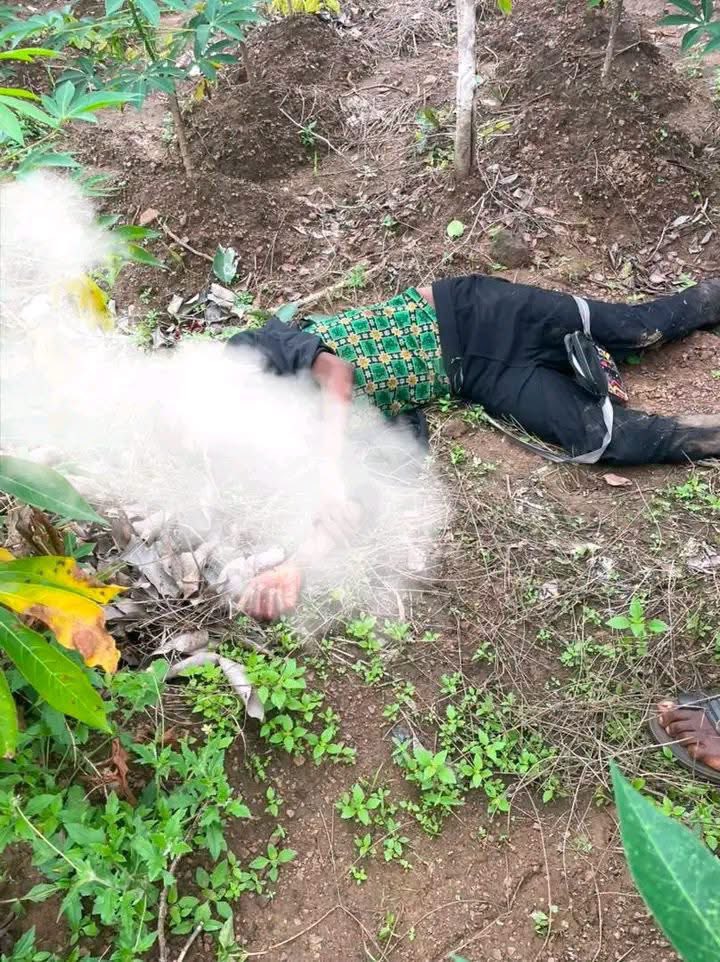
Gunmen have reportedly killed a 15-year-old herder and rustled hundreds of cattle during an attack on a grazing herd at Olahimu Village in the Ogoli Oboju area of Otukpo Local Government Area of Benue State.
Sources told Zagazola Makama that the attack occurred at about 7:00 a.m. on Monday, July 21, when armed assailants stormed the herd belonging to the family of the late Ardo Risku Muhammad, who was himself killed in the area a few weeks ago.
During the attack, the deceased’s younger brother, Muhammad Isiyaku, 15, was shot dead on the spot.
The attackers reportedly made away with about 500 cattle, although many of the animals were later recovered during search efforts around the Okudu axis. Some cattle were also killed during the attack, while others remain unaccounted for.
Four persons were initially declared missing following the incident. However, three of them—identified as Muhammed Ismaiel, 17, Muhammed Hamza, 13, and Abu Ali, a family labourer—later escaped from the attackers and reunited with their family.
One labourer, Saidu Musa, remains missing as search efforts continue.
The incident was reported to the Ogoli Ugboju Divisional Police Headquarters, and police personnel reportedly visited the scene as part of preliminary investigations.
The family appealed to the Benue State Government and security agencies, including the Nigeria Police Force and the Department of State Services (DSS), to intensify efforts to rescue the missing labourer, recover the remaining stolen cattle, and apprehend those responsible for the attack.
They also called for increased security deployment to Olahimu, Ogoli Oboju, and other border communities in Otukpo LGA to prevent further attacks and protect residents from recurring violence.
Gunmen Kill Teen Herder, Rustle Hundreds of Cattle in Fresh Benue Attack


News
NIMC Seals Strategic Partnerships with Women Affairs Ministry, BOI to Deepen Digital Identity, Financial Inclusion

NIMC Seals Strategic Partnerships with Women Affairs Ministry, BOI to Deepen Digital Identity, Financial Inclusion
By: Michael Mike
The National Identity Management Commission (NIMC) has stepped up efforts to strengthen Nigeria’s identity management system through strategic partnerships with
key government institutions, as part of measures to expand digital identity coverage, promote financial inclusion and drive socio-economic development.
The initiative, championed by the Director-General and Chief Executive Officer of NIMC, Engr. Abisoye Coker-Odusote, is anchored on the newly enacted NIMC Act 2026, which the Commission says provides a stronger legal framework for inclusive identity management and inter-agency collaboration.
As part of the engagement, Coker-Odusote led a NIMC delegation on a working visit to the Federal Ministry of Women Affairs, where the team held discussions with the Minister, Hajiya Imaan Sulaiman-Ibrahim, on expanding access to legal identity for women, girls and other vulnerable groups.
The discussions centred on leveraging the provisions of the NIMC Act 2026 to improve identity registration and support evidence-based policies aimed at empowering women and strengthening social interventions.
The Minister commended the Commission’s efforts in advancing Nigeria’s digital identity ecosystem and pledged the ministry’s support, noting that a secure and inclusive identity system is essential for improving access to financial services, healthcare, education, social protection and other family-centred programmes.
In a separate engagement, the NIMC leadership visited the Bank of Industry (BOI), where Managing Director and Chief Executive Officer, Dr. Olasupo Olusi, described the NIMC Act 2026 as a landmark legislation with far-reaching implications for Nigeria’s financial sector.
According to Olusi, the law would significantly enhance identity verification, facilitate access to credit, strengthen risk management and improve the security of digital financial transactions.
He remarked that the legislation appeared “almost as if it was enacted specifically for the finance industry,” underscoring its potential to transform financial service delivery.
The Bank of Industry also reaffirmed its commitment to working with NIMC in deploying robust digital identity infrastructure to support inclusive economic growth and broaden access to financial opportunities.
The two engagements underscored a shared commitment by the institutions to expand access to secure digital identities—particularly for women and vulnerable populations—while strengthening financial inclusion, improving public service delivery and enhancing collaboration among government agencies.
NIMC said it would continue engagements with Ministries, Departments and Agencies on the implementation of the NIMC Act 2026 as part of efforts to build an integrated national identity ecosystem capable of supporting Nigeria’s development agenda.
NIMC Seals Strategic Partnerships with Women Affairs Ministry, BOI to Deepen Digital Identity, Financial Inclusion
News
Inside Katsina’s Forgotten School: Over 1,000 Students Learn on Bare Ground as Billion-Naira Education Budgets Fail Maidabino
Inside Katsina’s Forgotten School: Over 1,000 Students Learn on Bare Ground as Billion-Naira Education Budgets Fail Maidabino
By Zagazola Makama
In a nation where governments at all levels routinely announce multi-billion-naira education budgets and celebrate the commissioning of new projects, there exists a secondary school in Katsina State that tells a completely different story, one that exposes the painful gulf between official promises and the everyday reality of ordinary Nigerians.
At Government Day Secondary School (GDSS) Maidabino in Dan Musa Local Government Area of Katsina State, the promise of education has been reduced to a daily struggle for survival. The school is not merely a neglected school. It is a monument to state failure.
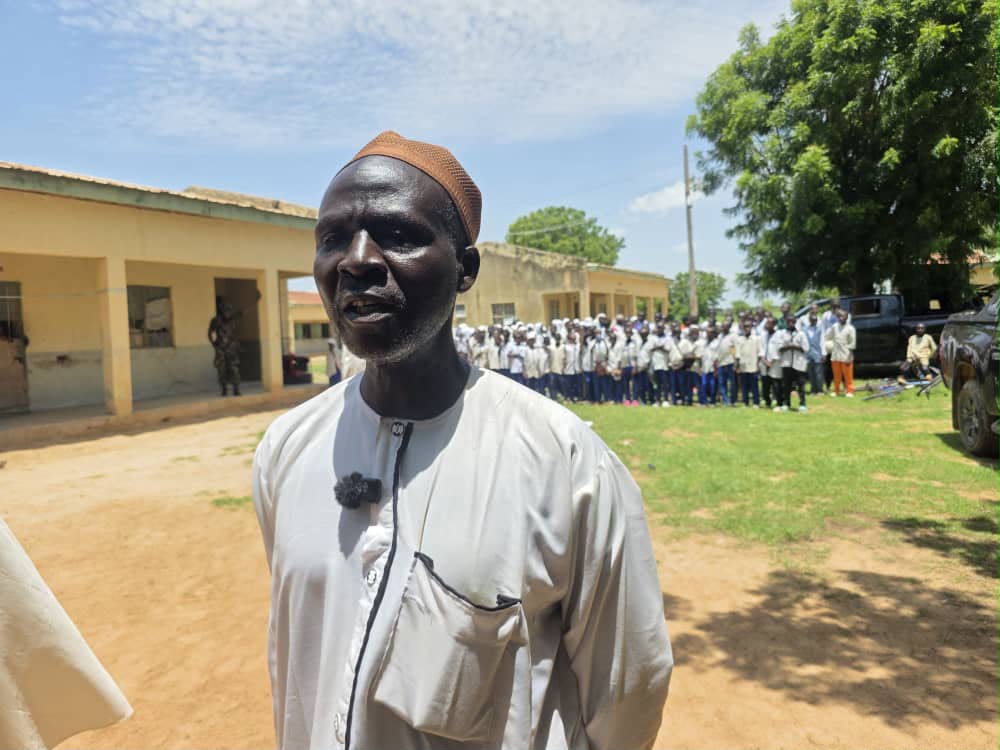
A visit by a team of Defence Correspondents to the school revealed conditions so appalling that one struggles to understand how an institution bearing the name “Government Day Secondary School” has been allowed to deteriorate to such an inhumane state.Nothing prepares a visitor for the sight.
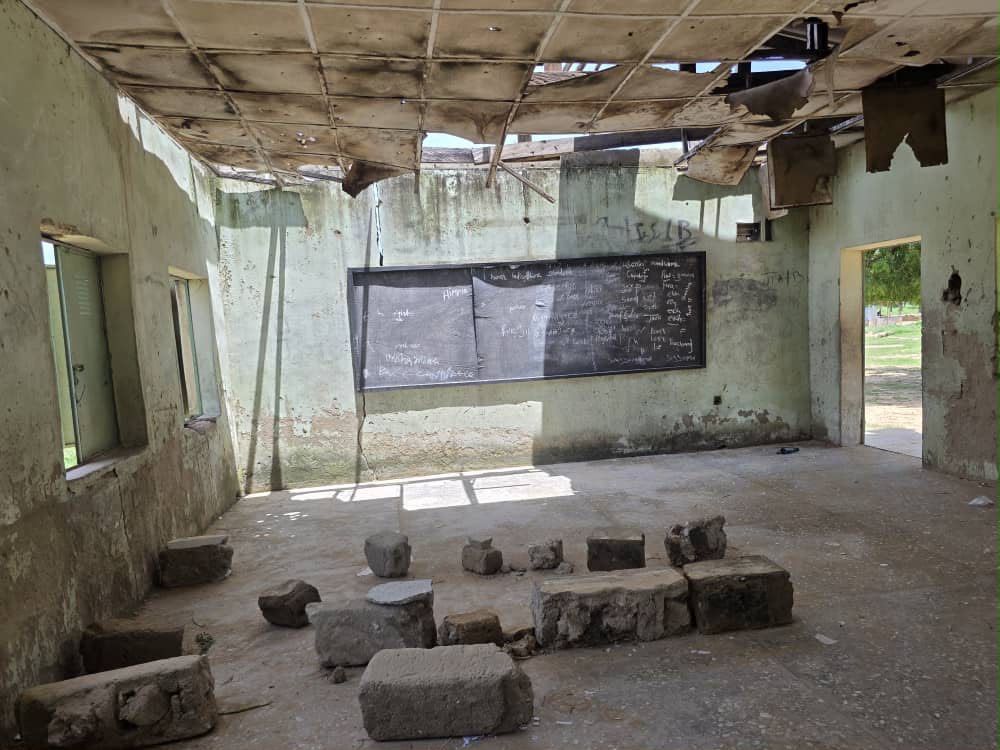
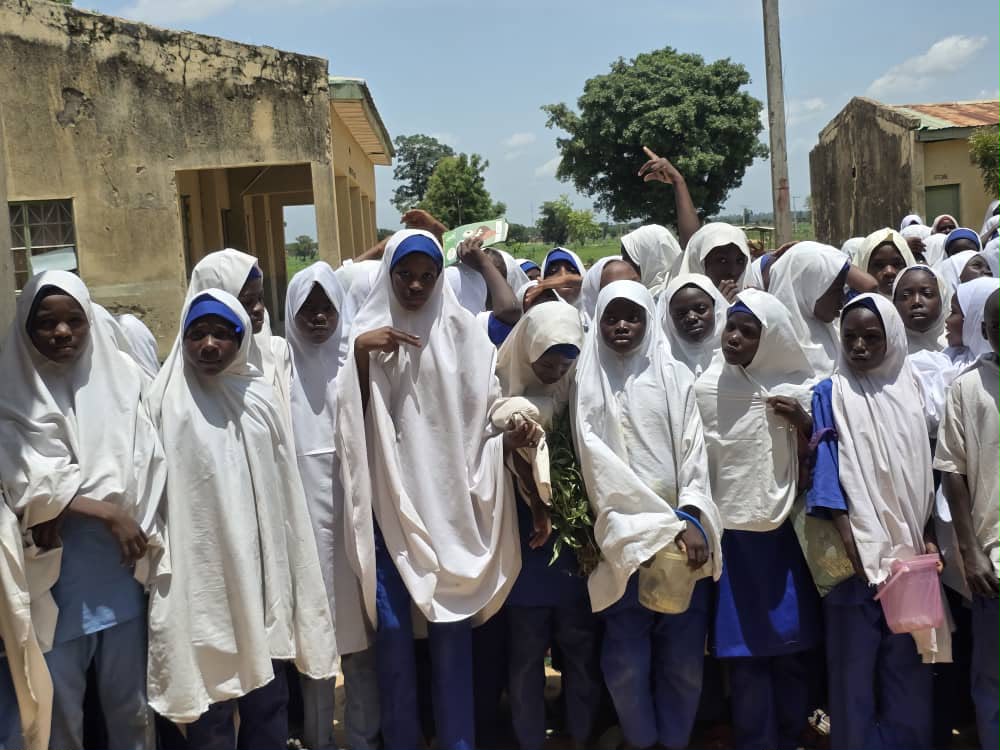
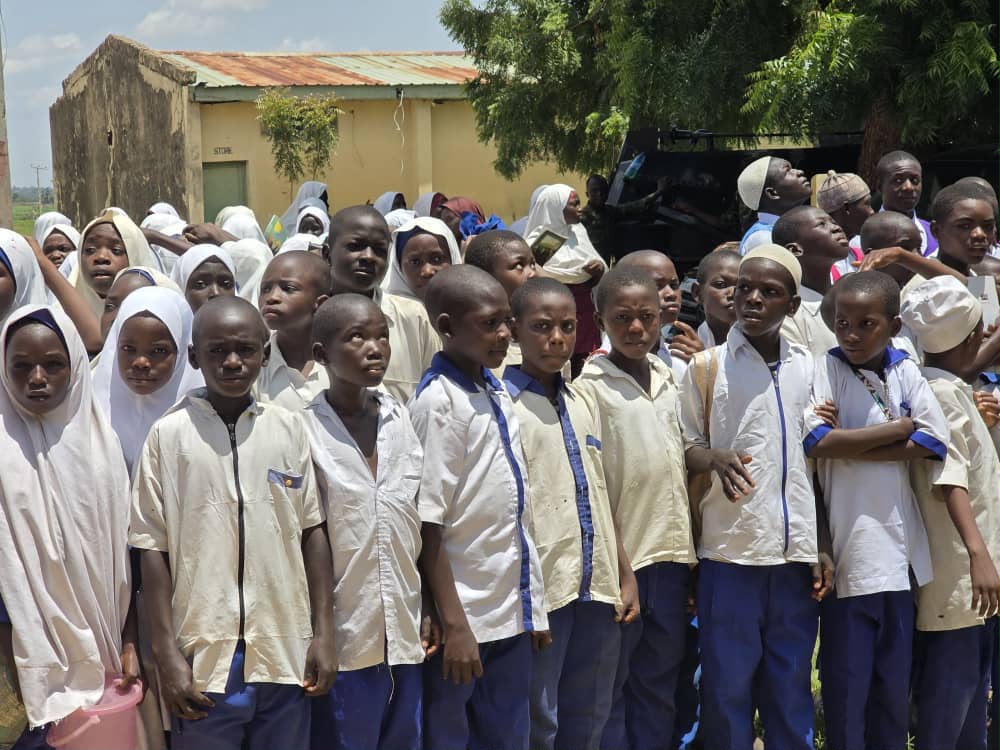
Children, dressed in their uniforms and clutching exercise books, sit on stones, broken blocks and the bare earth because there are no desks or chairs. The few classrooms that remain standing have no roofs. When the afternoon sun becomes unbearable, there is nowhere to hide.
When the rains begin, learning simply ends.
The students are told to go home. Not because school has closed. But because the government has failed to provide something as basic as a roof. It is difficult to reconcile this reality with the repeated declarations by successive governments about prioritising education.
Year after year, billions of naira are budgeted for the education sector. What makes the situation in Maidabino even more troubling is that it exists despite the enormous sums allocated to education by the Katsina State Government.
Governor Dikko Umaru Radda’s administration has consistently announced education as one of its top priorities. In the 2025 fiscal year, the Katsina State Government allocated ₦95.9 billion to the education sector representing about 14 per cent of the state’s ₦682.2 billion budget.
At the time, the Commissioner for Budget and Economic Planning, Bello Kagara, described the allocation as part of the government’s commitment to “reinvigorate the education sector” under a budget themed “Building Your Future II.” The following year, the government increased the allocation even further.
In the 2026 budget, education received ₦97.5 billion, again accounting for roughly 14 per cent of the state budget. Out of this amount, ₦76.74 billion was specifically earmarked for basic education, a figure intended to improve access to quality education and rehabilitate schools across the state. On paper, these allocations appear impressive. In reality, however, schools like GDSS Maidabino expose the painful disconnect between budget announcements and conditions on the ground.
The figures raise uncomfortable but necessary questions. How can a government allocate nearly ₦200 billion to education in two consecutive years, yet allow the only government secondary school in an entire community to remain roofless?
Public officials speak passionately about improving literacy, empowering the next generation and securing the future of Nigeria through education. Yet in Maidabino, those lofty speeches have produced nothing but abandoned buildings, broken walls and shattered dreams.
The school is a heartbreaking illustration of what happens when public expenditure fails to translate into public service. Of the several classroom blocks originally constructed, only four remain standing. Even these four cannot properly be described as classrooms.
Their roofs are gone, windows are missing, the walls are cracked, there are no doors, no ceilings, no furniture and no learning materials.
The classrooms have become open structures exposed to rain, dust, wind and the scorching heat of northern Nigeria. Students occupy every available corner of the compound, balancing exercise books on their laps while trying to concentrate under conditions no child should ever endure.
Even more disturbing is the complete absence of teachers. During the visit, more than one thousand students from Junior Secondary School One (JSS1) to Senior Secondary School Three (SS3) were found under the supervision of just one teacher.
One teacher. For an entire secondary school.
Yet even that lone teacher is not employed by the Katsina State Government. His name is Malam Ibrahim Salisu Maidabino. He is not on the government payroll.He is not receiving any salary. He is not under any official teaching appointment. He is a farmer.
Moved by the suffering of children in his community, he volunteered his time to teach them because, in his words, he could not watch an entire generation grow up without education.
“I am only doing this because these children deserve a future,” he said quietly. If I stay on my farm every day, who will teach them?”
His voice carried neither anger nor bitterness.
Only exhaustion. Every morning, he attempts what should ordinarily require dozens of qualified teachers. He teaches students across six different classes and multiple subjects.
He moves from one group to another, trying to ensure everyone receives at least some form of instruction before the school day ends.
It is an impossible assignment. No teacher, no matter how committed, can effectively educate over one thousand students alone. Yet that is exactly what the education system has forced him to do. His sacrifice is heroic. But it is also an indictment of the authorities responsible for providing public education.
Perhaps the greatest irony lies in the role played by the Nigerian Army. Years ago, escalating insecurity forced military authorities to establish a Forward Operating Base (FOB) in Maidabino.
The school itself became the Battalion Headquarters of the Nigerian Army’s FOB Dan Musa as troops moved into the community to protect residents from relentless bandit attacks.
The deployment followed growing fears that the school could become another target for mass abductions, similar to those witnessed across several states in northwestern Nigeria. The soldiers came to defend lives. But what they encountered was a school abandoned by the very institutions responsible for educating its children.
According to Malam Ibrahim, the soldiers soon found themselves doing far more than providing security. “In many cases, the soldiers assist us in teaching because there are no teachers,” he said. They encourage the students and sometimes help maintain order. It is difficult to imagine a clearer illustration of institutional failure.
Soldiers trained for combat have had to step into classrooms because the education system has collapsed. The military has protected the children from kidnappers. It cannot protect them from neglect. Parents now send their children to school largely because the presence of troops provides a sense of safety. Without the military, many would likely keep their children at home.
Yet security alone cannot produce education.
The students may be protected from armed criminals, but they remain victims of another, quieter tragedy official neglect. The school has no functional source of water. There are no proper sanitation facilities. Basic hygiene is virtually non-existent. There are no laboratories for science students. No library to encourage reading. No computer room. No electricity. No staff quarters. No staff room. No instructional materials worthy of mention.
When rain clouds appear, panic spreads across the school. There is no where to stop, Children gather their books and begin walking home because there is nowhere to continue learning.
“We normally ask the students to go home whenever it rains,” Malam Ibrahim explained.
“There is no shelter.” This means that during the rainy season, hundreds of learning hours are lost not because teachers are unavailable, but because there is simply no roof over the classrooms. The consequences extend far beyond poor academic performance.
Children studying under these conditions are competing for admission into the same higher institutions as students educated in modern classrooms equipped with computers, laboratories, libraries and qualified teachers.
The inequality is staggering. One group is prepared for the future. The other is merely trying to survive the school day. The tragedy becomes even more painful considering the enormous public resources allocated annually to education.
Citizens are entitled to ask difficult but necessary questions. How did a government-owned secondary school deteriorate to this level? Who is responsible for monitoring public schools? How many budgets have been passed while GDSS Maidabino remained without roofs, furniture or teachers?
How many officials have visited this school?
How many reports have been written and ignored? How many children have abandoned education because they simply lost hope?
Development cannot be measured only by projects commissioned in state capitals.
It must also be measured by the condition of schools in forgotten rural communities like Maidabino.
Governor Radda Must know that Education is not a privilege reserved for urban centres. It is a constitutional right. Every child in Nigeria deserves access to safe classrooms, qualified teachers, clean water and a learning environment that preserves dignity.
For the children of Maidabino, those rights remain promises on paper.
As the Journalist concluded their visit, the image that lingered was not that of ruined buildings. It was the determination on the faces of students who continue to attend school despite every obstacle placed before them.
They have not given up. Neither has Malam Ibrahim. Neither have the soldiers who continue to encourage them.
The question is whether those entrusted with managing public education have also refused to give up or whether they have simply forgotten Maidabino. These are not extraordinary demands. They are the minimum obligations of any government that claims education is a priority.
Until those obligations are fulfilled, Government Day Secondary School Maidabino will remain a painful reminder that while insecurity threatens lives, neglect quietly destroys futures and history will judge not only those who failed to build classrooms, but also those who allowed an entire generation of children to believe that sitting under the open sky was the price of getting an education.
Inside Katsina’s Forgotten School: Over 1,000 Students Learn on Bare Ground as Billion-Naira Education Budgets Fail Maidabino
Breaking: DSS Rescues Four Remaining Kidnapped Polytechnic Students
By: Our Reporter
Days after the rescuing a professor of the Nasarawa State University, Keffi, operatives of the Department of State Services (DSS) in Zamfara State, successfully rescued all four remaining kidnapped students of the Federal Polytechnic, Kaura Namoda.
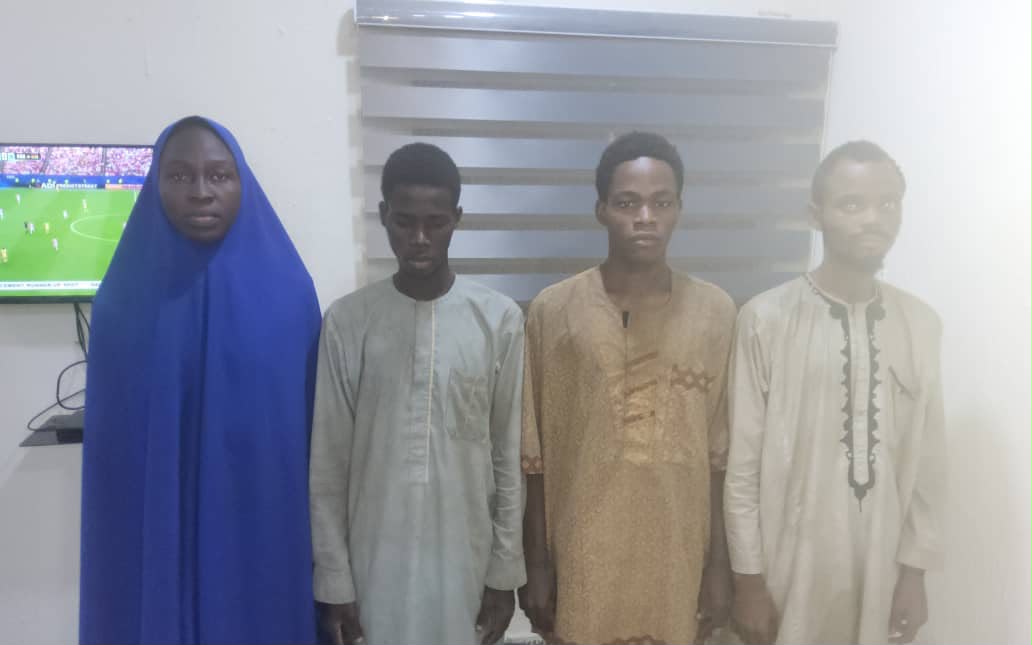
DSS operatives, relying on intelligence, rescued the students, comprising four males and a female late Wednesday without any ransom paid. One of the kidnappers was arrested during the operation. The others didn’t survive.
The students were kidnapped on June 3 at their off-campus hostel in the Low-cost area of Kaura Namoda town after armed bandits stormed the building and seized six of them.
Following an earlier release of two of the six students, security forces intensified an intelligence-led operation, and surgically secured the safe return of the remaining students to the relief of all.
Breaking: DSS Rescues Four Remaining Kidnapped Polytechnic Students

NIMC Seals Strategic Partnerships with Women Affairs Ministry, BOI to Deepen Digital Identity, Financial Inclusion

Inside Katsina’s Forgotten School: Over 1,000 Students Learn on Bare Ground as Billion-Naira Education Budgets Fail Maidabino

Breaking: DSS Rescues Four Remaining Kidnapped Polytechnic Students

Roger Federer’s Shock as DNA Results Reveal Myla and Charlene Are Not His Biological Children

THE PLIGHT OF FARIDA

FAILED COUP IN BURKINA FASO: HOW TRAORÉ NARROWLY ESCAPED ASSASSINATION PLOT AMID FOREIGN INTERFERENCE CLAIMS
-
 News2 years ago
Roger Federer’s Shock as DNA Results Reveal Myla and Charlene Are Not His Biological Children
-
Opinions4 years ago
THE PLIGHT OF FARIDA
-
 News1 year ago
FAILED COUP IN BURKINA FASO: HOW TRAORÉ NARROWLY ESCAPED ASSASSINATION PLOT AMID FOREIGN INTERFERENCE CLAIMS
-

 News2 years ago
EYN: Rev. Billi, Distortion of History, and The Living Tamarind Tree
-
 Opinions5 years ago
POLICE CHARGE ROOMS, A MINTING PRESS
-

 ACADEMICS2 years ago
A History of Biu” (2015) and The Lingering Bura-Pabir Question (1)
-

 Columns2 years ago
Army University Biu: There is certain interest, but certainly not from Borno.
-

 Politics1 year ago
2027: Why Hon. Midala Balami Must Go, as Youths in Hawul and Asikira/Uba Federal Constituency Reject ₦500,000 as Sallah Gift
