
News
Opportunity or Entrapment? What Nigeria’s Youth Must Ask Before Flying to Russia

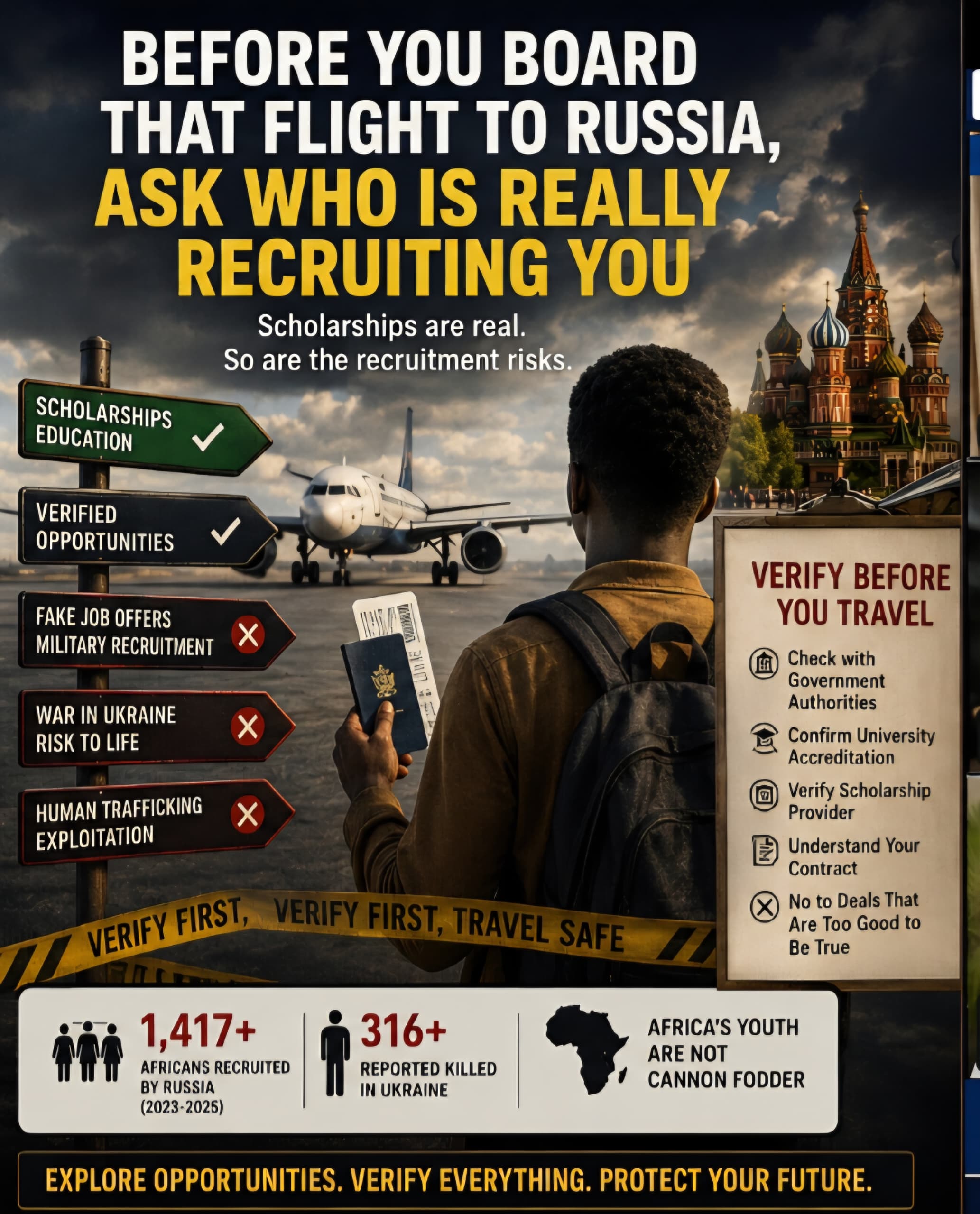
Opportunity or Entrapment? What Nigeria’s Youth Must Ask Before Flying to Russia
By Oumarou Sanou
There is nothing wrong with urging Nigerian youth to look past Britain, America and Canada, or with Russia offering scholarships to African students. Young Nigerians deserve every legitimate route to education the world can offer. But there is everything wrong with dismissing documented security concerns as “propaganda” simply because the offer arrives wrapped in the language of mentorship.
A recent online discussion by the Arewa Youth Mentorship Program did exactly that, urging Northern Nigerian youth toward Russia while waving away fears about the Ukraine war as fear-mongering. The pitch was seductive: no IELTS, no international passport at first instance, no punishing recommendation letters, just a strong “portfolio” and the confidence to apply. It is a comforting story. On the evidence, it is also a dangerous one, and the danger lies not in Russia offering scholarships but in telling young people they need not verify them.
We need a reminder about the scholarship that became a factory floor. Nigerians and Africans have not forgotten Alabuga. Online adverts promising paid education and vocational training at the Alabuga Special Economic Zone lured young Africans, many of them women, into facilities later tied to the assembly of Shahed attack drones used against Ukraine, a scheme slick enough to compromise the website of Nigeria’s own Ministry of Education. The lesson is not that Russian opportunities should be avoided outright, but that the label “opportunity” is not evidence of safety. A polished portal is not verification. It is, at best, unproven, and at worst, bait.
More importantly, the numbers are no longer a rumour. An INPACT investigation, cited in Global Sentinel reporting, found that at least 1,417 Africans, Nigerians, Ghanaians, Kenyans, Ugandans and South Africans among them, joined Russian military formations between 2023 and 2025, with no fewer than 316 killed in Ukraine. Ukrainian intelligence separately counts over 200 Nigerians who signed contracts with Russia’s defence ministry, dozens already dead or missing. These figures deserve scrutiny, but they are too serious to dismiss, particularly against Moscow’s denials, including a Russian diplomat’s assurance in Accra that African students were “safe,” and the Nigerian ambassador’s own insistence in Abuja that no such recruitment exists. Casualties do not lie the way denials do.
This is how the trick works, and the pattern, documented across multiple investigations, is depressingly consistent. A job or study offer arrives via WhatsApp, Telegram, or Facebook, not from an embassy or accredited institution. Travel is arranged quickly, often through a third country, to dodge scrutiny. On arrival, passports are collected “for processing” and never returned. Within days the promised job evaporates, and the recruit faces a choice: sign a military contract in a language he cannot read, face deportation with debt, or worse. Nigerian mechanic Bankole Manchi told Global Sentinel he travelled to Russia expecting employment and, instead, found himself in a military-style camp, later deployed to the front. This is not misfortune. It is a supply chain, built on young Africans not asking questions first.
Investigators have also flagged the so-called Russian Houses, cultural centres that legitimately teach language and offer scholarships but, unlike the British Council or the Goethe-Institut, operate through an opaque franchise model that lets private, sometimes militarily linked, actors act in Moscow’s name. At the same time, the state keeps its hands clean. In Ghana, university partnerships have been linked to the enlistment of hundreds, dozens now dead. This does not mean every Russian cultural centre is a recruitment centre. It means governments should demand transparency wherever public trust and vulnerable youth are involved.
The key issue here when dealing with Russia and other emerging powers from a pan-African perspective is sovereignty, not substitution. There is a wider context Nigerians cannot ignore. Russia has marketed itself across the Sahel as the anti-imperial alternative to a West weighed down by colonial guilt and failed interventions, and the message has won real disciples. But a power that fills its trenches with African bodies while denying it does so is practising the oldest imperialism of all. Anti-Western is not the same as pro-African.
Nor should young Nigerians accept a false choice between “Western propaganda” and “Russian truth.” Every external power,-Russia, China, France, Britain, the United States- pursues its own interests in Africa and can deploy disinformation when it suits them. The question worth asking of any offer, wherever it originates, is simple: what is the strategic interest behind this opportunity, and who benefits if I do not check? Asking that of Moscow is not anti-Russian. It is pro-African and pro-sovereignty, andNigeria’s youth are entitled to exercise it. Strategic autonomy means diversifying partnerships from a position of informed national interest, not swapping one uncritical dependency for another.
Going forward, the approach should be to verify first, and trust second. Therefore, the Arewa panellists are right that Nigerian youth should be intentional and strategic. But intentionality means verification, not enthusiasm. Check the university and its accreditation against the Federal Ministry of Education, the Federal Scholarship Board and the Ministry of Foreign Affairs. Confirm the offer with the institution and the embassy before booking a flight, not after. Establish who is paying for travel and tuition, and read every document before signing. No genuine opportunity requires surrendering a passport indefinitely, concealing the purpose of travel, or signing contracts you cannot understand. A recruiter who pushes for haste or discourages official checks has already told you what you need to know.
This obligation extends to those doing the recommending. Academics, mentors, religious and traditional leaders and youth organisations carry real influence, and their endorsement can confer legitimacy an applicant would never independently investigate. That influence demands a duty to vet before endorsing.
Against this backdrop, what the government owes its citizens is protection through a verifiable database on foreign scholarships. Nigeria’s Ministry of Foreign Affairs has issued warnings before. One young man from Ondo State signed his contract with Russia’s military barely a week after such a warning was published, and died near Kharkiv weeks later. He may never have seen it. The state cannot keep issuing statements into the void. It needs a living, public database of verified foreign scholarships, rapid alerts when a scheme is flagged, and closer scrutiny of recruitment channels operating through cultural and educational fronts.
There is no contradiction between encouraging Nigerian youth to pursue Russian education and warning them about fraudulent recruitment. Nigeria should encourage its youth to explore the world, not fear it, but exploration without verification can quietly become exploitation. Africa’s youth must not become cannon fodder in other people’s wars or raw material for competing geopolitical projects, under whichever flag those projects fly. The real test of mentorship is not how many young people are persuaded to travel abroad, but how many can tell opportunity from entrapment, and partnership from dependency.
Explore widely. Dream boldly. But verify everything. When the price of an opportunity is your judgement, it was never an opportunity at all.
Oumarou Sanou is a social critic, Pan-African observer and researcher focusing on governance, security, and political transitions in the Sahel. He writes on geopolitics, regional stability, and African leadership dynamics. Contact: sanououmarou386@gmail.com
Opportunity or Entrapment? What Nigeria’s Youth Must Ask Before Flying to Russia


News
Two Notorious Terrorist Leaders Haruna Balatoni and Black Neutralised in Plateau Military Offensive Another Fatally Wounded as Six AK-47 Rifles Returned
Two Notorious Terrorist Leaders Haruna Balatoni and Black Neutralised in Plateau Military Offensive Another Fatally Wounded as Six AK-47 Rifles Returned
By: Zagazola Makama
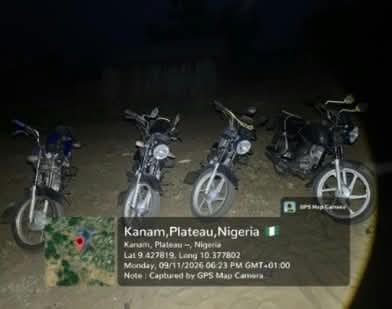
Troops of the Nigerian Army have recorded major breakthroughs in ongoing offensive operations against armed criminal networks in Plateau State, neutralising two notorious terrorist leaders, critically wounding another and recovering six AK-47 rifles previously seized from security forces.
The latest developments followed sustained military offensives at Dajin Madam in Wase Local Government Area of Plateau State on November 8, 2026.
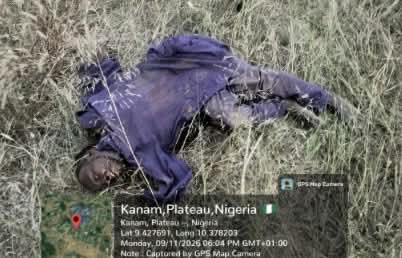
Security sources disclosed that HUMINT reports received at about 8:53 a.m. on November 9 indicated that the intensity of the military operation had resulted in the neutralisation of two suspected terrorist leaders identified as Haruna Balatoni and Black.
Another notorious figure, identified as Dogo Mai Kunkuru, was reportedly shot in the chest and left in a critical condition, with sources indicating that his chances of survival were slim.
In a significant development on November 10, the sustained military pressure reportedly compelled the terrorist network, through an intermediary identified as Ali-Kwara, to return six AK-47 rifles previously seized from security forces.
The recovered weapons are currently in military custody.
In a related operation, troops of 173 Battalion deployed at Mansur rescued a kidnapped mother and her daughter and recovered 39 cattle.
The developments represent a significant disruption of the criminal network’s leadership, weapons stockpile and capacity to sustain operations in the Wase axis.
The recovery of the six rifles is particularly important as it restores weapons previously lost to the criminal network and provides an opportunity for further intelligence exploitation.
The latest successes underscore the impact of sustained offensive pressure, intelligence-driven operations and military presence in dismantling armed groups operating across Plateau State.
The reported deaths of the terrorist leaders and the condition of Dogo Mai Kunkuru are based on preliminary HUMINT assessments and remain subject to independent military confirmation
Two Notorious Terrorist Leaders Haruna Balatoni and Black Neutralised in Plateau Military Offensive Another Fatally Wounded as Six AK-47 Rifles Returned
Troops Dislodge Terrorists from Hideouts in Taraba, Recover Five Motorcycles
By: Zagazola Makama
Troops of the Nigerian Army’s 114 Battalion (Reinforcement) have dislodged suspected terrorists from their hideouts during a fighting patrol in Karim Lamido Local Government Area of Taraba State.
The operation, conducted under Operation WHIRL STROKE (OPWS), commenced at about 7:30 a.m. on November 8, 2026, with troops advancing towards Komodoro village, where they made contact with suspected terrorists.
Security sources said the criminals fled upon sighting the advancing troops, prompting the patrol team to extend its operation to Mashigin Kirya village within the same local government area.
At Mashigin Kirya, the troops encountered suspected terrorists believed to have been hibernating in the general area and engaged them, forcing the armed elements to retreat.
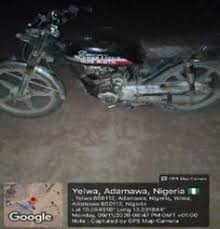
The troops subsequently recovered five motorcycles suspected to have been used by the criminal group for mobility and logistics.
To further disrupt the fleeing terrorists, the troops conducted a fire mission using an 81mm mortar along their withdrawal route.
The operation was ongoing as troops sustained pressure on suspected criminal hideouts and movement corridors in the area.
The development point to the military’s determination to deny armed groups safe havens and restrict their freedom of movement across Taraba State.
Troops Dislodge Terrorists from Hideouts in Taraba, Recover Five Motorcycles
News
Two Fulani Herdsmen, 16 Cows Killed in Attack on Enugu Community as Joint Troops Launch Investigation
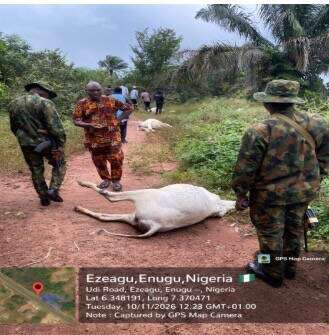
Two Fulani Herdsmen, 16 Cows Killed in Attack on Enugu Community as Joint Troops Launch Investigation
By: Zagazola Makama
Troops of the Nigerian Army, in collaboration with the Nigeria Police and Department of State Services (DSS), have launched an investigation into an attack on Fulani herdsmen in Obelagu Umuamba community, Ezeagu Local Government Area of Enugu State, which left two herders and 16 cattle dead.
The incident came to light at about 11:00 a.m. on November 10, 2026, when a joint patrol team comprising troops of the 82 Division Garrison and 103 Battalion (Reinforcement), alongside police and DSS operatives, visited the community to assess the cause and extent of damage from the recent attack by suspected hoodlums.
On arrival, the security team discovered that two Fulani herdsmen and 16 cows had been killed, while two other persons sustained injuries.
Following the discovery, the troops convened a joint peace and security meeting involving community leaders, representatives of the Fulani herders, neighbourhood watch groups and other key stakeholders.
During the meeting, security officials cautioned all parties against taking the law into their hands, warning that reprisals could escalate tensions and further threaten peaceful coexistence.
The troops subsequently recovered the corpses and handed them over to the police for further investigation.
Meanwhile, security agencies have commenced efforts to identify and apprehend those responsible for the attack, including suspected local collaborators.
The intervention is aimed at preventing retaliatory violence, restoring confidence among residents and ensuring that those responsible are brought to justice.
Authorities have urged both farming and herding communities to remain calm, cooperate with security agencies and pursue grievances through lawful channels.
Two Fulani Herdsmen, 16 Cows Killed in Attack on Enugu Community as Joint Troops Launch Investigation

Troops Intercept Abandoned Toyota Camry Loaded with 315 Sachets of Suspected Indian Hemp in Kaduna

NSCDC CG Reaffirms Personnel Welfare Priority, Pays N87.4m Insurance Benefits

How we arrested 4 suspected IPOB members who kidnapped, killed our operative –DSS witness

Roger Federer’s Shock as DNA Results Reveal Myla and Charlene Are Not His Biological Children

THE PLIGHT OF FARIDA

FAILED COUP IN BURKINA FASO: HOW TRAORÉ NARROWLY ESCAPED ASSASSINATION PLOT AMID FOREIGN INTERFERENCE CLAIMS
-
 News3 years ago
Roger Federer’s Shock as DNA Results Reveal Myla and Charlene Are Not His Biological Children
-
Opinions5 years ago
THE PLIGHT OF FARIDA
-
 News2 years ago
FAILED COUP IN BURKINA FASO: HOW TRAORÉ NARROWLY ESCAPED ASSASSINATION PLOT AMID FOREIGN INTERFERENCE CLAIMS
-
 Opinions5 years ago
POLICE CHARGE ROOMS, A MINTING PRESS
-

 News3 years ago
EYN: Rev. Billi, Distortion of History, and The Living Tamarind Tree
-

 ACADEMICS3 years ago
A History of Biu” (2015) and The Lingering Bura-Pabir Question (1)
-

 Columns3 years ago
Army University Biu: There is certain interest, but certainly not from Borno.
-

 Politics1 year ago
2027: Why Hon. Midala Balami Must Go, as Youths in Hawul and Asikira/Uba Federal Constituency Reject ₦500,000 as Sallah Gift
