
News
Opportunity or Entrapment? What Nigeria’s Youth Must Ask Before Flying to Russia

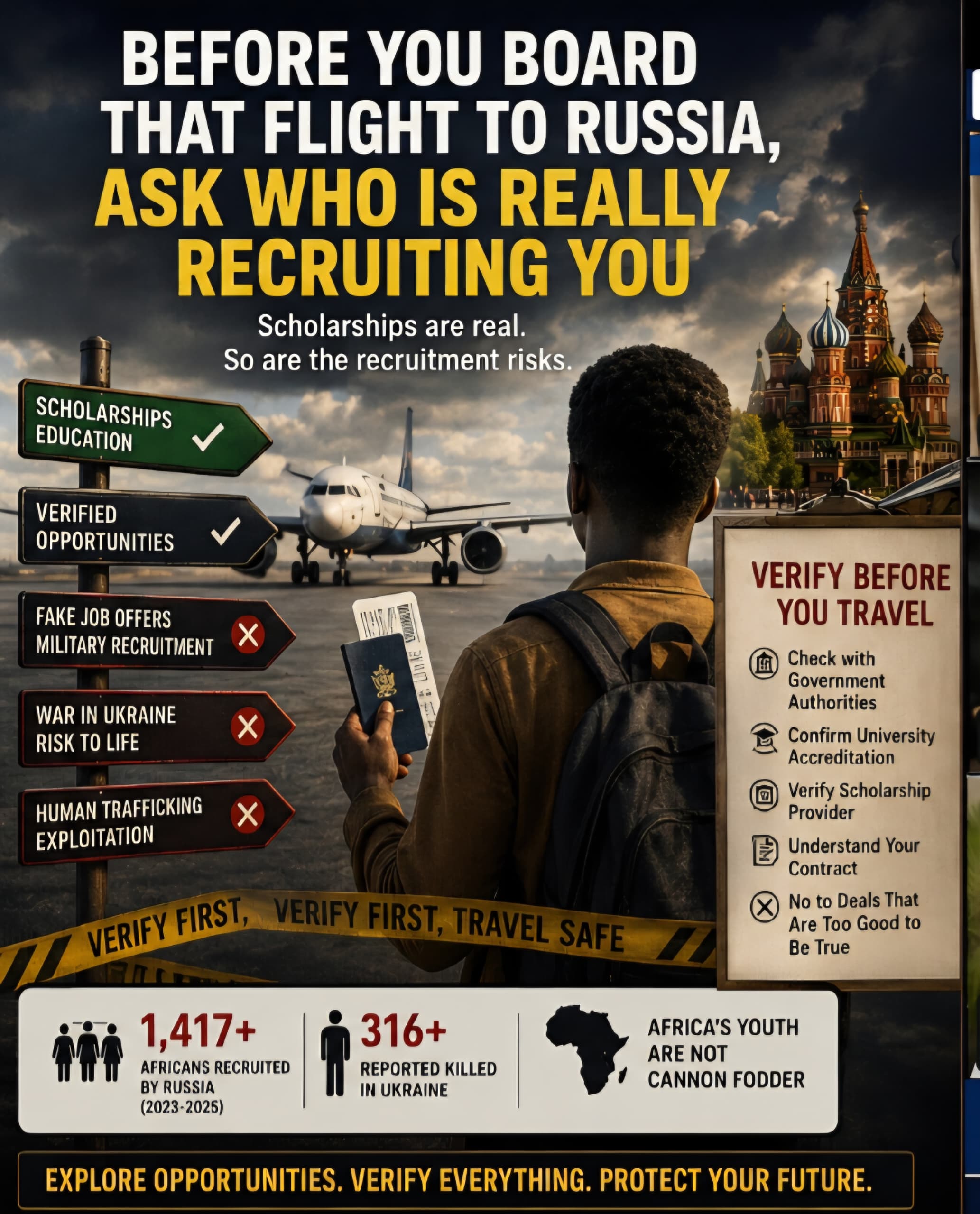
Opportunity or Entrapment? What Nigeria’s Youth Must Ask Before Flying to Russia
By Oumarou Sanou
There is nothing wrong with urging Nigerian youth to look past Britain, America and Canada, or with Russia offering scholarships to African students. Young Nigerians deserve every legitimate route to education the world can offer. But there is everything wrong with dismissing documented security concerns as “propaganda” simply because the offer arrives wrapped in the language of mentorship.
A recent online discussion by the Arewa Youth Mentorship Program did exactly that, urging Northern Nigerian youth toward Russia while waving away fears about the Ukraine war as fear-mongering. The pitch was seductive: no IELTS, no international passport at first instance, no punishing recommendation letters, just a strong “portfolio” and the confidence to apply. It is a comforting story. On the evidence, it is also a dangerous one, and the danger lies not in Russia offering scholarships but in telling young people they need not verify them.
We need a reminder about the scholarship that became a factory floor. Nigerians and Africans have not forgotten Alabuga. Online adverts promising paid education and vocational training at the Alabuga Special Economic Zone lured young Africans, many of them women, into facilities later tied to the assembly of Shahed attack drones used against Ukraine, a scheme slick enough to compromise the website of Nigeria’s own Ministry of Education. The lesson is not that Russian opportunities should be avoided outright, but that the label “opportunity” is not evidence of safety. A polished portal is not verification. It is, at best, unproven, and at worst, bait.
More importantly, the numbers are no longer a rumour. An INPACT investigation, cited in Global Sentinel reporting, found that at least 1,417 Africans, Nigerians, Ghanaians, Kenyans, Ugandans and South Africans among them, joined Russian military formations between 2023 and 2025, with no fewer than 316 killed in Ukraine. Ukrainian intelligence separately counts over 200 Nigerians who signed contracts with Russia’s defence ministry, dozens already dead or missing. These figures deserve scrutiny, but they are too serious to dismiss, particularly against Moscow’s denials, including a Russian diplomat’s assurance in Accra that African students were “safe,” and the Nigerian ambassador’s own insistence in Abuja that no such recruitment exists. Casualties do not lie the way denials do.
This is how the trick works, and the pattern, documented across multiple investigations, is depressingly consistent. A job or study offer arrives via WhatsApp, Telegram, or Facebook, not from an embassy or accredited institution. Travel is arranged quickly, often through a third country, to dodge scrutiny. On arrival, passports are collected “for processing” and never returned. Within days the promised job evaporates, and the recruit faces a choice: sign a military contract in a language he cannot read, face deportation with debt, or worse. Nigerian mechanic Bankole Manchi told Global Sentinel he travelled to Russia expecting employment and, instead, found himself in a military-style camp, later deployed to the front. This is not misfortune. It is a supply chain, built on young Africans not asking questions first.
Investigators have also flagged the so-called Russian Houses, cultural centres that legitimately teach language and offer scholarships but, unlike the British Council or the Goethe-Institut, operate through an opaque franchise model that lets private, sometimes militarily linked, actors act in Moscow’s name. At the same time, the state keeps its hands clean. In Ghana, university partnerships have been linked to the enlistment of hundreds, dozens now dead. This does not mean every Russian cultural centre is a recruitment centre. It means governments should demand transparency wherever public trust and vulnerable youth are involved.
The key issue here when dealing with Russia and other emerging powers from a pan-African perspective is sovereignty, not substitution. There is a wider context Nigerians cannot ignore. Russia has marketed itself across the Sahel as the anti-imperial alternative to a West weighed down by colonial guilt and failed interventions, and the message has won real disciples. But a power that fills its trenches with African bodies while denying it does so is practising the oldest imperialism of all. Anti-Western is not the same as pro-African.
Nor should young Nigerians accept a false choice between “Western propaganda” and “Russian truth.” Every external power,-Russia, China, France, Britain, the United States- pursues its own interests in Africa and can deploy disinformation when it suits them. The question worth asking of any offer, wherever it originates, is simple: what is the strategic interest behind this opportunity, and who benefits if I do not check? Asking that of Moscow is not anti-Russian. It is pro-African and pro-sovereignty, andNigeria’s youth are entitled to exercise it. Strategic autonomy means diversifying partnerships from a position of informed national interest, not swapping one uncritical dependency for another.
Going forward, the approach should be to verify first, and trust second. Therefore, the Arewa panellists are right that Nigerian youth should be intentional and strategic. But intentionality means verification, not enthusiasm. Check the university and its accreditation against the Federal Ministry of Education, the Federal Scholarship Board and the Ministry of Foreign Affairs. Confirm the offer with the institution and the embassy before booking a flight, not after. Establish who is paying for travel and tuition, and read every document before signing. No genuine opportunity requires surrendering a passport indefinitely, concealing the purpose of travel, or signing contracts you cannot understand. A recruiter who pushes for haste or discourages official checks has already told you what you need to know.
This obligation extends to those doing the recommending. Academics, mentors, religious and traditional leaders and youth organisations carry real influence, and their endorsement can confer legitimacy an applicant would never independently investigate. That influence demands a duty to vet before endorsing.
Against this backdrop, what the government owes its citizens is protection through a verifiable database on foreign scholarships. Nigeria’s Ministry of Foreign Affairs has issued warnings before. One young man from Ondo State signed his contract with Russia’s military barely a week after such a warning was published, and died near Kharkiv weeks later. He may never have seen it. The state cannot keep issuing statements into the void. It needs a living, public database of verified foreign scholarships, rapid alerts when a scheme is flagged, and closer scrutiny of recruitment channels operating through cultural and educational fronts.
There is no contradiction between encouraging Nigerian youth to pursue Russian education and warning them about fraudulent recruitment. Nigeria should encourage its youth to explore the world, not fear it, but exploration without verification can quietly become exploitation. Africa’s youth must not become cannon fodder in other people’s wars or raw material for competing geopolitical projects, under whichever flag those projects fly. The real test of mentorship is not how many young people are persuaded to travel abroad, but how many can tell opportunity from entrapment, and partnership from dependency.
Explore widely. Dream boldly. But verify everything. When the price of an opportunity is your judgement, it was never an opportunity at all.
Oumarou Sanou is a social critic, Pan-African observer and researcher focusing on governance, security, and political transitions in the Sahel. He writes on geopolitics, regional stability, and African leadership dynamics. Contact: sanououmarou386@gmail.com
Opportunity or Entrapment? What Nigeria’s Youth Must Ask Before Flying to Russia


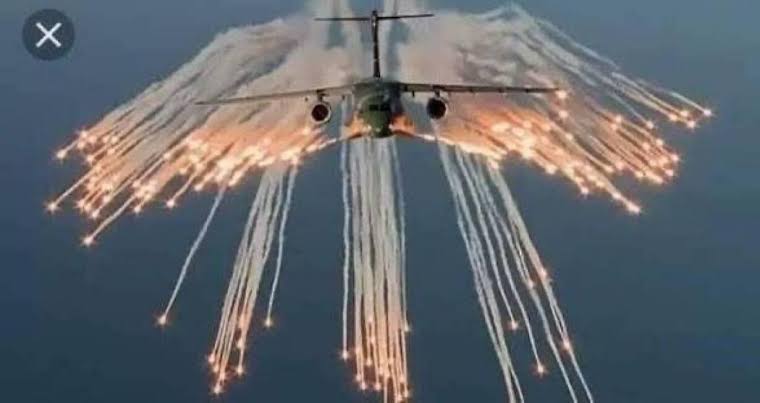
Nigerian military precision strikes neutralise 19 terrorists in Ngala, Borno
By: Zagazola Makama
The Nigerian military has neutralised at least 15 suspected terrorists in a series of precision airstrikes targeting insurgent positions around Bulabulutube in Ngala Local Government Area of Borno State.
Security sources said the strikes were conducted at about 7:56 p.m. on Nov. 8, following aerial surveillance that identified approximately 30 terrorist fighters gathered under a tree in the area.
The military aircraft subsequently carried out a precision strike on the identified target.
Battle Damage Assessment (BDA) indicated that about 15 terrorists were neutralised, while parts of a nearby building were destroyed.
The aircraft subsequently tracked another group of five fleeing terrorists who had taken cover under a tree and conducted a second precision strike.
The assessment revealed that about four additional terrorists were neutralised, while a secondary explosion was observed, suggesting the possible destruction of explosive materials or other military supplies.
In a related operation, the aircraft proceeded towards the Lake Chad area following intelligence on a suspected terrorist logistics structure located at a crossing point.
A further precision strike was conducted on the structure, which was assessed to have been completely destroyed, with no subsequent movement observed around the location.
The successive strikes represent another significant blow to terrorist formations and logistics networks operating within the Lake Chad axis.
The military continues to sustain intelligence-led aerial surveillance and precision operations aimed at degrading terrorist capabilities, disrupting their supply networks and denying insurgents safe havens across the North-East.
Nigerian military precision strikes neutralise 19 terrorists in Ngala, Borno
News
Nigeria, India Sign Landmark Human Rights Pact, Fagbemi Backs Stronger Institutional Independence
Nigeria, India Sign Landmark Human Rights Pact, Fagbemi Backs Stronger Institutional Independence
…AGF pledges justice ministry’s support for implementation, demands practical safeguards for citizens in AI era
By: Michael Mike
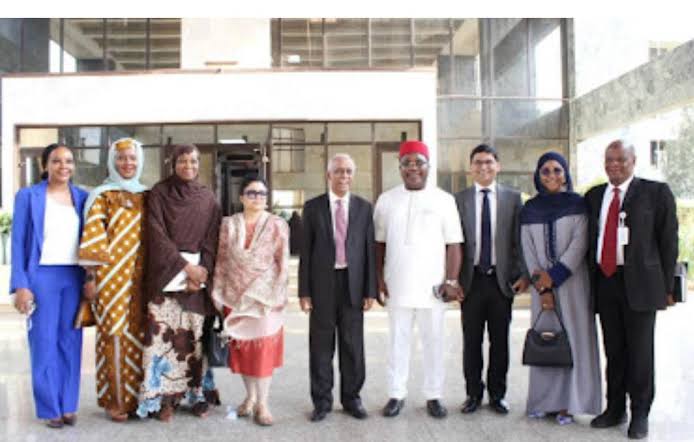
Nigeria and India have signed a bilateral agreement to strengthen human rights protection, institutional capacity and access to justice, with the Attorney-General of the Federation and Minister of Justice, Prince Lateef Fagbemi, SAN, pledging the Federal Government’s support for its implementation.
Fagbemi, who described the agreement as a strategic partnership between the two countries, said its success would ultimately be measured by its impact on ordinary citizens, particularly vulnerable and marginalised groups seeking justice.
The agreement, executed between the National Human Rights Commission (NHRC) of Nigeria and its Indian counterpart, is designed to deepen institutional cooperation, facilitate knowledge transfer, promote technical exchanges and strengthen operational capacity in addressing human rights violations.
The Attorney-General gave the government’s position on Tuesday in Abuja when he received a joint delegation of the two commissions at the Federal Ministry of Justice, describing the partnership as timely, particularly in an increasingly interconnected world where effective human rights protection requires stronger legal frameworks, institutional collaboration and respect for the rule of law.
The development followed a high-level engagement between the two commissions and the Chief Justice of Nigeria (CJN), at the Supreme Court Complex, Abuja, on Monday, as part of a two-day working visit by the Indian delegation.
The Nigerian delegation was led by the Executive Secretary of NHRC, Chief Tony Ojukwu, SAN, OFR, while the Indian delegation was headed by the Chairperson of India’s NHRC, Justice V. Ramasubramanian, accompanied by the Commission’s Joint Secretary, Mr. Samir Kumar.
Fagbemi said the partnership brought together two major democracies with shared common-law traditions, diverse populations and dynamic constitutional frameworks, expressing satisfaction with the thematic areas identified for cooperation under the agreement.
He specifically highlighted access to justice and the protection of digital rights as critical areas requiring urgent attention, particularly as emerging technologies, including Artificial Intelligence, continue to reshape society and create new human rights concerns.
According to him, both countries must develop legal safeguards to protect data privacy, prevent algorithmic bias and safeguard civic space, while ensuring that technological advancement does not undermine fundamental freedoms.
He said the Ministry of Justice expected the two commissions to produce actionable research and policy recommendations capable of addressing these emerging challenges.
Beyond emerging technologies, the Attorney-General stressed that Nigeria’s commitment to human rights must be reflected in the practical implementation of constitutional guarantees and international obligations, rather than merely in the existence of legal provisions.
He cited the African Charter on Human and Peoples’ Rights, which Nigeria domesticated through the African Charter on Human and Peoples’ Rights (Ratification and Enforcement) Act, Cap. A9, Laws of the Federation of Nigeria 2004, as a major instrument underpinning the country’s human rights jurisprudence.
The Charter provides important protections relating to non-discrimination, human dignity, fair trial and personal liberty, reinforcing the fundamental rights guaranteed under Nigeria’s Constitution.
Fagbemi maintained that the true measure of a country’s commitment to human rights was its ability to translate constitutional provisions into accessible institutions, accountable public authorities and an independent judiciary.
He assured the Indian delegation that the Federal Ministry of Justice fully supported the bilateral initiative and was prepared to facilitate technical engagements, joint legal reviews and policy consultations aimed at improving the efficiency of the justice sector.
The Attorney-General also used the engagement to reaffirm the institutional independence of Nigeria’s National Human Rights Commission, stressing that its autonomy was essential to its credibility and effectiveness.
He specifically drew attention to Section 6(3) of the National Human Rights Commission (Amendment) Act, 2010, which provides that the Commission, in exercising its statutory functions, shall not be subject to the direction or control of any other authority or person.
According to him, the administration has continued to respect and protect the Commission’s statutory independence, describing it as fundamental to institutional integrity.
He further noted that the relationship between the NHRC and the Federal Ministry of Justice had been characterised by constructive institutional synergy, mutual respect and a shared commitment to advancing human rights.
The Attorney-General commended Ojukwu and the Nigerian commission for spearheading the bilateral initiative, while expressing appreciation to the Indian delegation for bringing its expertise and institutional experience to the partnership.
Earlier, during Monday’s engagement with the Chief Justice of Nigeria, the Executive Secretary of NHRC Nigeria had emphasised the complementary responsibilities of the judiciary and national human rights institutions in protecting fundamental freedoms, upholding the rule of law and ensuring access to justice.
Ojukwu identified complaint management, Alternative Dispute Resolution, security sector accountability, comparative legal research, digital rights, Artificial Intelligence ethics and environmental justice as priority areas for cooperation between both countries.
The Chief Justice reaffirmed the commitment of the Nigerian Judiciary to human rights protection and encouraged both commissions to exchange experiences and adopt best practices, particularly in strengthening safeguards for vulnerable groups, including women, children and persons with disabilities.
The Indian delegation described the engagement as significant to relations between the two countries, noting that the MoU represented a first-of-its-kind institutional partnership for India’s National Human Rights Commission.
The agreement is expected to promote sustained institutional exchanges, strengthen complaint-handling mechanisms, improve professional capacity and encourage comparative research into legal and policy approaches to human rights protection.
The partnership also comes at a time when national human rights institutions face increasing demands to address abuses linked to security operations, discrimination, environmental degradation, digital surveillance and the misuse of emerging technologies.
For Nigeria, the collaboration offers an opportunity to strengthen its human rights enforcement architecture through international knowledge-sharing while reinforcing the independence and operational effectiveness of its national commission.
Fagbemi, however, cautioned that the ultimate benchmark of the agreement must go beyond official engagements and institutional exchanges to deliver tangible improvements in the lives of citizens, especially those most vulnerable to violations and denied access to justice.
He wished the Indian delegation a productive stay in Nigeria and expressed confidence that the partnership would advance the shared commitment of both countries to human dignity, justice and the protection of fundamental rights.
Nigeria, India Sign Landmark Human Rights Pact, Fagbemi Backs Stronger Institutional Independence
NSCDC Strengthens Gender Policy Implementation, Trains Officers on SGBV, Digital Safety
By: Michael Mike
Corps partners SPRING, FCDO, TechHer to promote women’s participation in peacebuilding, tackle technology-facilitated violence
The Nigeria Security and Civil Defence Corps (NSCDC) has intensified efforts to combat sexual and gender-based violence (SGBV), strengthen women’s participation in security decision-making and promote digital safety among young people through the implementation of its Gender Policy II.
The Commandant-General of the Corps, Prof. Ahmed Audi, stated this at a two-day Gender, Women, Peace and Security capacity-building training organised at the NSCDC College and Support Staff Service, Udege, Nasarawa State.
The training was organised in collaboration with Strengthening Peace and Resilience in Nigeria (SPRING), with support from the United Kingdom’s Foreign, Commonwealth and Development Office (FCDO).
Audi, who delivered his keynote address through a representative, said the policy provided a framework for mainstreaming gender considerations into the Corps’ operations, personnel management, leadership structure and community engagement.
He stressed the need for effective prevention and response to sexual and gender-based violence, including conflict-related abuses and technology-facilitated violence.
The Commandant-General also called for increased participation of women in peacebuilding and security decision-making, equal opportunities within the Corps and stronger partnerships with traditional institutions, government agencies, civil society organisations and development partners.
He urged commands and personnel, particularly Gender Desk Officers, to ensure effective coordination, timely reporting, appropriate referrals, monitoring and accountability in handling gender-related cases.
Audi described the implementation of the policy as a collective responsibility requiring sustained commitment across all levels of the Corps.
In a goodwill message, the Osu Ajiri of Edege Chiefdom, Alhaji Suleiman Ahmed Eko IV, commended the NSCDC for its presence in the community, saying its operations had strengthened the sense of security among residents, particularly farmers.
The traditional ruler pledged the support of his council in addressing gender-based violence, describing the protection of the community as a priority.
Earlier, the Commander of the College, ACG Jamilu Indabawa, said collaboration among relevant stakeholders was critical to achieving effective implementation of the gender policy.
The Gender Equality, Diversity and Social Inclusion Lead of SPRING, Mrs Amina Akano-Bello, said the training was designed to promote peaceful and resilient communities through early identification and response to gender-based violence, as well as the inclusion of women and young people in leadership.
Also, the NSCDC National Headquarters Gender Unit Adviser, DCC Ajet Kemi, provided participants with insights into the different forms of sexual and gender-based violence, their societal implications and preventive measures.
A retired Assistant Commandant-General, Ahmed Abodurin, who facilitated a session on institutional ethics in gender policy implementation, emphasised professionalism, accountability, gender sensitivity and adherence to institutional standards.
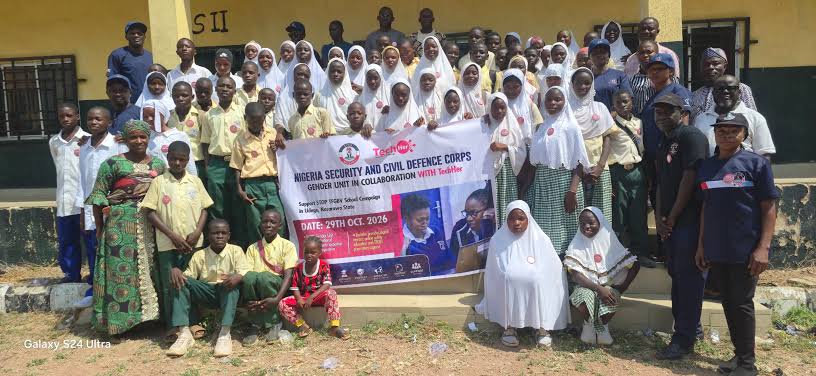
Beyond the capacity-building exercise, the Corps partnered TechHer, an organisation promoting women’s advancement through technology, to extend digital safety awareness to schools in Udege.
The outreach, themed “Stop Technology-Facilitated Gender-Based Violence”, educated students on the dangers of digital abuse, responsible online behaviour and measures for staying safe in digital spaces.
Representatives of the Federal Ministry of Interior, Nasarawa State Ministry of Women Affairs and Social Development, Nasarawa State Ministry of Justice and Gammuo International also delivered goodwill messages, reaffirming the importance of collective action in advancing gender equality, peace and security.
NSCDC Strengthens Gender Policy Implementation, Trains Officers on SGBV, Digital Safety

Nigerian military precision strikes neutralise 19 terrorists in Ngala, Borno

Troops, hunters neutralise ISWAP terrorist in ambush operation in Yobe

LET PLATEAU BREATHE AGAIN

Roger Federer’s Shock as DNA Results Reveal Myla and Charlene Are Not His Biological Children

THE PLIGHT OF FARIDA

FAILED COUP IN BURKINA FASO: HOW TRAORÉ NARROWLY ESCAPED ASSASSINATION PLOT AMID FOREIGN INTERFERENCE CLAIMS
-
 News3 years ago
Roger Federer’s Shock as DNA Results Reveal Myla and Charlene Are Not His Biological Children
-
Opinions5 years ago
THE PLIGHT OF FARIDA
-
 News2 years ago
FAILED COUP IN BURKINA FASO: HOW TRAORÉ NARROWLY ESCAPED ASSASSINATION PLOT AMID FOREIGN INTERFERENCE CLAIMS
-
 Opinions5 years ago
POLICE CHARGE ROOMS, A MINTING PRESS
-

 News3 years ago
EYN: Rev. Billi, Distortion of History, and The Living Tamarind Tree
-

 ACADEMICS3 years ago
A History of Biu” (2015) and The Lingering Bura-Pabir Question (1)
-

 Columns3 years ago
Army University Biu: There is certain interest, but certainly not from Borno.
-

 Politics1 year ago
2027: Why Hon. Midala Balami Must Go, as Youths in Hawul and Asikira/Uba Federal Constituency Reject ₦500,000 as Sallah Gift
