
News
Olugbode Olugbode: IJAP Raises Alarm over Abuse of Ex-Parte Orders, Seeks Tougher Sanctions for Judges


Olugbode Olugbode: IJAP Raises Alarm over Abuse of Ex-Parte Orders, Seeks Tougher Sanctions for Judges
…ActionAid backs judicial accountability drive, says misuse of interim relief threatens access to justice and public confidence
By: Michael Mike
The Independent Judicial Accountability Panel (IJAP) has called for stronger disciplinary measures against judicial officers who abuse ex-parte orders, warning that their improper use threatens fair hearing, public confidence in the judiciary and the integrity of Nigeria’s justice system.
The panel urged the National Judicial Council (NJC) to take a more proactive approach to disciplining judges who improperly issue such orders and recommended that judicial officers known to misuse ex-parte orders, or with pending disciplinary complaints, should not be appointed to election petition tribunals.
Meanwhile, ActionAid Nigeria has backed the reform initiative, stressing that a credible, accessible and accountable justice system is essential to protecting citizens’ rights, particularly those of poor and marginalised communities.
The positions were highlighted in discussions surrounding a specialised seminar on judicial officers’ application of the rules of court, organised by the Federal Ministry of Justice under the theme, “Strengthening Procedural Practice and Effective Interim Relief”.
In a goodwill message delivered at the seminar, ActionAid Nigeria’s Governance Specialist, Mrs Vivian Efem Bassey, said justice must be treated as a right available to every citizen rather than a privilege reserved for a few.
She said the organisation’s engagement with communities, particularly women, young people and people living in poverty and exclusion, had reinforced the importance of a justice system that protects human dignity, equality and sustainable development.
“Where courts are fair, transparent, and accountable, citizens are protected; where they are not, the burden falls most heavily on the poor and the marginalised,” Bassey said.
She described the seminar as an important opportunity for judicial officers, legal practitioners and other justice sector stakeholders to strengthen procedural practice and promote public confidence in the administration of justice.
Bassey said ActionAid Nigeria was proud to support the work of the Federal Judicial Sector Reform Coordinating Committee (FJSRCC) and IJAP, noting that the two bodies, despite their distinct mandates, shared a commitment to advancing justice and accountability in Nigeria.
While the FJSRCC coordinates reform efforts across the justice sector, IJAP comprises retired Court of Appeal justices, academics, media executives, civil society representatives and legal practitioners who review judicial pronouncements, public-interest litigation and legal frameworks to develop recommendations for improving judicial processes.
According to her, their work reflects a common objective of building a justice system that is transparent, credible and responsive to the needs of Nigerians.
The specialised seminar follows growing concerns about the request, processing and grant of ex-parte orders and interim reliefs in Nigeria’s judicial system.
The issue featured prominently at the 2025 National Network Conference of Justice Sector Actors and in IJAP’s deliberations on judicial accountability.
The panel’s recommendations included a call for the NJC to strengthen disciplinary action against judges who misuse ex-parte orders, particularly given the potential consequences for parties who may be affected by court decisions made without first being heard.
However, Bassey cautioned against treating the engagement as an exercise in fault-finding, saying the problem was not necessarily the absence of applicable rules but the difficulty of applying them consistently under considerable time and procedural pressure.
She also stressed that responsibility for the proper use of ex-parte orders did not rest solely on judges.
“It is also a shared responsibility, one that rests not only upon those who grant such orders, but equally upon those who request, advise on, and process them,” she said.
Ex-parte orders are generally granted without first hearing the opposing party and may be necessary where urgent intervention is required to prevent imminent harm or preserve the subject matter of a dispute.
However, their use raises concerns when procedural safeguards are ignored, reliefs are granted without sufficient justification or affected parties are denied a timely opportunity to respond.
Interim reliefs can also be necessary to protect rights pending the final determination of a case. Their proper application requires courts to balance urgency against the constitutional guarantees of fair hearing and due process.
Bassey said the seminar would provide an opportunity to deepen participants’ understanding of the legal basis, scope and limitations of such orders, examine the circumstances in which they were appropriate and identify safeguards against abuse.
She added that the discussions should promote consistency in applying court rules, strengthen oversight mechanisms and address the implications of improper orders for access to justice and public confidence in the judiciary.
“Central to our discussions is the constitutional principle that the urgency of interim relief must at all times be balanced against the guarantees of fair hearing and due process,” she said.
The seminar is expected to culminate in a communiqué setting out key observations, recommendations and proposed actions arising from the deliberations.
The document is intended to support sustained engagement with judicial institutions, including the NJC, on improving procedural safeguards, promoting consistency in judicial practice and strengthening accountability.
Bassey commended the Federal Ministry of Justice for convening the engagement as part of its ongoing court rules reform process and acknowledged the contributions of the FJSRCC, IJAP and other partners.
She urged participants to engage candidly and constructively, stressing that meaningful reform required collective commitment from judicial officers, lawyers and other actors involved in the administration of justice.
ActionAid Nigeria, she said, remained committed to supporting the process.
Beyond ex-parte applications, IJAP has advanced a broader set of recommendations aimed at strengthening judicial accountability, improving electoral dispute resolution and promoting transparency in Nigeria’s justice and governance systems.
The panel proposed restructuring the office of the Chief Justice of Nigeria to reduce the concentration of powers, introducing greater transparency in judicial appointments and allowing citizens to scrutinise proposed appointees.
It also recommended improved recruitment and continuous training for judicial staff, an upward review of judges’ remuneration and retirement benefits, and an online platform through which citizens could report judicial misconduct.
Other proposals include electronic recording or live coverage of court proceedings, exchange programmes for judicial officers, stronger public communication by the judiciary and more expeditious determination of cases involving constitutional interpretation and other matters of national importance.
The panel further called for more effective accountability mechanisms, including extending the application of the Code of Conduct Bureau Act to post-tenure accountability for judges.
A substantial part of IJAP’s recommendations concerns electoral disputes, which have repeatedly tested Nigeria’s judicial institutions and shaped public perceptions of the electoral process.
The panel called for pre-election cases to be determined before elections wherever practicable, arguing that timely decisions would promote fairness, reduce multiple lawsuits and improve election administration.
It proposed reducing the period for determining election petitions from 180 days to a maximum of 120 days.
IJAP also recommended reviewing the appellate structure for election disputes. Under its proposal, appeals concerning House of Representatives, Senate and governorship elections would generally end at the Court of Appeal, while presidential pre-election matters would begin at the Court of Appeal and terminate at the Supreme Court.
The panel further called for courts to prioritise substantial justice over technicalities in pre-election matters, citing the Supreme Court decision in Ahmed v. Machina (2023).
Following its review of provisions of the Electoral Act 2026, IJAP identified what it described as ambiguities concerning electronic transmission of election results.
It raised concerns about the wording of Section 60(3), particularly the phrase “shall at all times”, arguing that it could generate differing interpretations regarding the relationship between electronic transmission and the use of polling-unit result forms.
The panel proposed amending the provision to require election officials to electronically transmit results to a public portal immediately after the prescribed forms have been signed and stamped by officials and countersigned by candidates or polling agents, where available. It recommended that transmitted results should be used to verify and confirm other results before collation.
IJAP also called for greater clarity in Sections 60 and 62 on the method and destination of results transmission, as well as the correction of an apparent cross-referencing error.
Other proposed electoral reforms include restricting certain former INEC political appointees and directorate-level staff from engaging in partisan politics for at least five years after leaving the commission, introducing independent candidacy under the Constitution and providing a constitutional basis for public-interest litigation by citizens challenging breaches of the Electoral Act and the Constitution.
The panel’s recommendations also address human rights protection and government compliance with judicial decisions.
It expressed concern over Nigeria’s reported failure to comply with the July 2024 judgment of the ECOWAS Court of Justice in Obianuju Catherine Udeh and two others v. Federal Republic of Nigeria, a case arising from the October 2020 #EndSARS protests and the Lekki shooting.
According to IJAP, failure to implement the judgment, which awarded monetary compensation to the applicants, risks damaging Nigeria’s international reputation and reinforcing perceptions that the country does not respect judicial decisions.
The panel urged Nigerian courts to adopt liberal interpretations of constitutional and human rights provisions, drawing on the African Charter on Human and Peoples’ Rights, to encourage the resolution of rights disputes within the domestic legal system.
It also called on the government to discourage the use of the military and other armed personnel to disperse protests and urged the Attorney-General of the Federation to ensure credible investigations into allegations of human rights violations by federal government agents, alongside appropriate punishment and reparations where violations are established.
On constitutional governance, IJAP said the National Assembly should use an ascertainable record of votes, rather than voice votes, on constitutional matters requiring a specified majority.
The panel said implementation of its recommendations would require commitment from the Attorney-General of the Federation and cooperation among judicial institutions, policymakers, electoral bodies, civil society organisations, development partners, the media and citizens.
It maintained that strengthening judicial accountability, ensuring credible electoral dispute resolution and safeguarding the rule of law were essential to restoring public confidence and consolidating Nigeria’s constitutional democracy.
[10/13, 5:06 PM] Olugbode Olugbode: IJAP Raises Alarm over Abuse of Ex-Parte Orders, Seeks Tougher Sanctions for Judges
…ActionAid backs judicial accountability drive, says misuse of interim relief threatens access to justice and public confidence
(Refreshed)
The Independent Judicial Accountability Panel (IJAP) has called for stronger disciplinary measures against judicial officers who abuse ex-parte orders, warning that their improper use threatens fair hearing, public confidence in the judiciary and the integrity of Nigeria’s justice system.
The panel urged the National Judicial Council (NJC) to take a more proactive approach to disciplining judges who improperly issue such orders and recommended that judicial officers known to misuse ex-parte orders, or with pending disciplinary complaints, should not be appointed to election petition tribunals.
Meanwhile, ActionAid Nigeria has backed the reform initiative, stressing that a credible, accessible and accountable justice system is essential to protecting citizens’ rights, particularly those of poor and marginalised communities.
The positions were highlighted in discussions surrounding a specialised seminar on judicial officers’ application of the rules of court, organised by the Federal Ministry of Justice under the theme, “Strengthening Procedural Practice and Effective Interim Relief”.
In a goodwill message delivered at the seminar, ActionAid Nigeria’s Governance Specialist, Mrs Vivian Efem Bassey, said justice must be treated as a right available to every citizen rather than a privilege reserved for a few.
She said the organisation’s engagement with communities, particularly women, young people and people living in poverty and exclusion, had reinforced the importance of a justice system that protects human dignity, equality and sustainable development.
“Where courts are fair, transparent, and accountable, citizens are protected; where they are not, the burden falls most heavily on the poor and the marginalised,” Bassey said.
She described the seminar as an important opportunity for judicial officers, legal practitioners and other justice sector stakeholders to strengthen procedural practice and promote public confidence in the administration of justice.
Bassey said ActionAid Nigeria was proud to support the work of the Federal Judicial Sector Reform Coordinating Committee (FJSRCC) and IJAP, noting that the two bodies, despite their distinct mandates, shared a commitment to advancing justice and accountability in Nigeria.
While the FJSRCC coordinates reform efforts across the justice sector, IJAP comprises retired Court of Appeal justices, academics, media executives, civil society representatives and legal practitioners who review judicial pronouncements, public-interest litigation and legal frameworks to develop recommendations for improving judicial processes.
According to her, their work reflects a common objective of building a justice system that is transparent, credible and responsive to the needs of Nigerians.
The specialised seminar follows growing concerns about the request, processing and grant of ex-parte orders and interim reliefs in Nigeria’s judicial system.
The issue featured prominently at the 2025 National Network Conference of Justice Sector Actors and in IJAP’s deliberations on judicial accountability.
The panel’s recommendations included a call for the NJC to strengthen disciplinary action against judges who misuse ex-parte orders, particularly given the potential consequences for parties who may be affected by court decisions made without first being heard.
However, Bassey cautioned against treating the engagement as an exercise in fault-finding, saying the problem was not necessarily the absence of applicable rules but the difficulty of applying them consistently under considerable time and procedural pressure.
She also stressed that responsibility for the proper use of ex-parte orders did not rest solely on judges.
“It is also a shared responsibility, one that rests not only upon those who grant such orders, but equally upon those who request, advise on, and process them,” she said.
Ex-parte orders are generally granted without first hearing the opposing party and may be necessary where urgent intervention is required to prevent imminent harm or preserve the subject matter of a dispute.
However, their use raises concerns when procedural safeguards are ignored, reliefs are granted without sufficient justification or affected parties are denied a timely opportunity to respond.
Interim reliefs can also be necessary to protect rights pending the final determination of a case. Their proper application requires courts to balance urgency against the constitutional guarantees of fair hearing and due process.
Bassey said the seminar would provide an opportunity to deepen participants’ understanding of the legal basis, scope and limitations of such orders, examine the circumstances in which they were appropriate and identify safeguards against abuse.
She added that the discussions should promote consistency in applying court rules, strengthen oversight mechanisms and address the implications of improper orders for access to justice and public confidence in the judiciary.
“Central to our discussions is the constitutional principle that the urgency of interim relief must at all times be balanced against the guarantees of fair hearing and due process,” she said.
The seminar is expected to culminate in a communiqué setting out key observations, recommendations and proposed actions arising from the deliberations.
The document is intended to support sustained engagement with judicial institutions, including the NJC, on improving procedural safeguards, promoting consistency in judicial practice and strengthening accountability.
Bassey commended the Federal Ministry of Justice for convening the engagement as part of its ongoing court rules reform process and acknowledged the contributions of the FJSRCC, IJAP and other partners.
She urged participants to engage candidly and constructively, stressing that meaningful reform required collective commitment from judicial officers, lawyers and other actors involved in the administration of justice.
ActionAid Nigeria, she said, remained committed to supporting the process.
Beyond ex-parte applications, IJAP has advanced a broader set of recommendations aimed at strengthening judicial accountability, improving electoral dispute resolution and promoting transparency in Nigeria’s justice and governance systems.
The panel proposed restructuring the office of the Chief Justice of Nigeria to reduce the concentration of powers, introducing greater transparency in judicial appointments and allowing citizens to scrutinise proposed appointees.
It also recommended improved recruitment and continuous training for judicial staff, an upward review of judges’ remuneration and retirement benefits, and an online platform through which citizens could report judicial misconduct.
Other proposals include electronic recording or live coverage of court proceedings, exchange programmes for judicial officers, stronger public communication by the judiciary and more expeditious determination of cases involving constitutional interpretation and other matters of national importance.
The panel further called for more effective accountability mechanisms, including extending the application of the Code of Conduct Bureau Act to post-tenure accountability for judges.
A substantial part of IJAP’s recommendations concerns electoral disputes, which have repeatedly tested Nigeria’s judicial institutions and shaped public perceptions of the electoral process.
The panel called for pre-election cases to be determined before elections wherever practicable, arguing that timely decisions would promote fairness, reduce multiple lawsuits and improve election administration.
It proposed reducing the period for determining election petitions from 180 days to a maximum of 120 days.
IJAP, whose position was presented by Professor Jummai Audi, also recommended reviewing the appellate structure for election disputes. Under its proposal, appeals concerning House of Representatives, Senate and governorship elections would generally end at the Court of Appeal, while presidential pre-election matters would begin at the Court of Appeal and terminate at the Supreme Court.
The panel further called for courts to prioritise substantial justice over technicalities in pre-election matters, citing the Supreme Court decision in Ahmed v. Machina (2023).
Following its review of provisions of the Electoral Act 2026, IJAP identified what it described as ambiguities concerning electronic transmission of election results.
It raised concerns about the wording of Section 60(3), particularly the phrase “shall at all times”, arguing that it could generate differing interpretations regarding the relationship between electronic transmission and the use of polling-unit result forms.
The panel proposed amending the provision to require election officials to electronically transmit results to a public portal immediately after the prescribed forms have been signed and stamped by officials and countersigned by candidates or polling agents, where available. It recommended that transmitted results should be used to verify and confirm other results before collation.
IJAP also called for greater clarity in Sections 60 and 62 on the method and destination of results transmission, as well as the correction of an apparent cross-referencing error.
Other proposed electoral reforms include restricting certain former INEC political appointees and directorate-level staff from engaging in partisan politics for at least five years after leaving the commission, introducing independent candidacy under the Constitution and providing a constitutional basis for public-interest litigation by citizens challenging breaches of the Electoral Act and the Constitution.
The panel’s recommendations also address human rights protection and government compliance with judicial decisions.
It expressed concern over Nigeria’s reported failure to comply with the July 2024 judgment of the ECOWAS Court of Justice in Obianuju Catherine Udeh and two others v. Federal Republic of Nigeria, a case arising from the October 2020 #EndSARS protests and the Lekki shooting.
According to IJAP, failure to implement the judgment, which awarded monetary compensation to the applicants, risks damaging Nigeria’s international reputation and reinforcing perceptions that the country does not respect judicial decisions.
The panel urged Nigerian courts to adopt liberal interpretations of constitutional and human rights provisions, drawing on the African Charter on Human and Peoples’ Rights, to encourage the resolution of rights disputes within the domestic legal system.
It also called on the government to discourage the use of the military and other armed personnel to disperse protests and urged the Attorney-General of the Federation to ensure credible investigations into allegations of human rights violations by federal government agents, alongside appropriate punishment and reparations where violations are established.
On constitutional governance, IJAP said the National Assembly should use an ascertainable record of votes, rather than voice votes, on constitutional matters requiring a specified majority.
The panel said implementation of its recommendations would require commitment from the Attorney-General of the Federation and cooperation among judicial institutions, policymakers, electoral bodies, civil society organisations, development partners, the media and citizens.
It maintained that strengthening judicial accountability, ensuring credible electoral dispute resolution and safeguarding the rule of law were essential to restoring public confidence and consolidating Nigeria’s constitutional democracy.
Olugbode Olugbode: IJAP Raises Alarm over Abuse of Ex-Parte Orders, Seeks Tougher Sanctions for Judges



Northern Forum lauds success of table tennis championship in Maiduguri
The Chairman of the Northern States Table Tennis Club Forum, Dr. Mustapha Ibrahim Garga, has expressed his excitement over the successful conclusion of the 2nd Peace and Unity Table Tennis Championship held in Maiduguri, Borno State.
The three-day, action-packed championship reached its thrilling climax at the famous indoor sports hall of the University of Maiduguri.
Mr Adamu Usman Ahmed, the
Media Office,
Northern States Table Tennis Club Forum who stated this in a press statement issued to journalists said the event was organized in collaboration with the North East Development Commission (NEDC).
Ahmed said that the tournament brought together exceptional talents, showcasing intense, competitive, and high-level table tennis from athletes across the region.
Speaking on the success of the event, Dr. Garga expressed profound satisfaction with the high standard of play, the exceptional sportsmanship displayed by the participating players, and the peace and unity fostered throughout the duration of the tournament.
He lauded the NEDC for its steadfast sponsorship and unwavering commitment to youth empowerment and regional development through sports.
In a special note of appreciation, Dr. Mustapha who is also the Kano State Chairman of the Table Tennis club showered immense commendation on the leadership of the Nigeria Table Tennis Federation (NTTF), spearheaded by its President, Dr. Adesoji Tayo, alongside the Vice President, Honorable Khamisu Ahmed Mailantarki.
Dr. Garga praised their continuous encouragement, dynamic leadership, and relentless backing of various competitive tournaments across the Northern States and beyond. He noted that their visionary drive has been instrumental in promoting grassroots development and creating reliable avenues for discovering raw, exceptional talents.
Recounting similar impactful tournaments previously held across Northern states, such as the Kaduna and Kano tourneys with the active backing of the NTTF, Dr. Garga emphasized that these initiatives align perfectly with the current national federation’s vision. He reiterated that such grassroots championships are critical pipelines for unearthing top-tier talents for advanced development, positioning Nigerian table tennis for greater glory nationally and internationally.
Dr. Garga concluded by reaffirming the Forum’s dedication to partnering with relevant stakeholders, corporate bodies, and sports administrators to ensure that table tennis continues to thrive as a veritable tool for youth engagement, peace, and national unity.
Northern Forum lauds success of table tennis championship in Maiduguri
News
Bassey: COP31 Failed World, Sidelined Climate Justice, Says Fossil Fuel Lobbyists Hijacked Talks
Bassey: COP31 Failed World, Sidelined Climate Justice, Says Fossil Fuel Lobbyists Hijacked Talks
By: Michael Mike
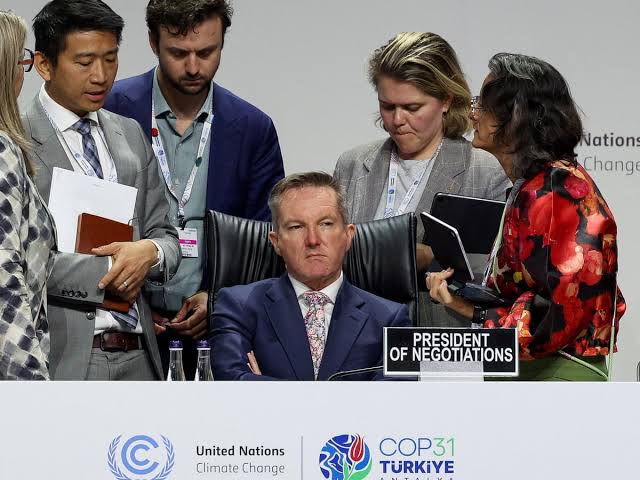
Environmental activist and Executive Director of the Health of Mother Earth Foundation (HOMEF), Nnimmo Bassey, has condemned the outcome of the 31st United Nations Climate Change Conference (COP31), declaring that the global summit failed to deliver meaningful climate action and surrendered critical negotiations to fossil fuel interests.
Bassey accused major oil-producing countries, including Saudi Arabia and Russia, of obstructing efforts to address the root causes of climate change by resisting any explicit reference to fossil fuels in the conference’s draft decision document.
In a strongly worded assessment of the summit in Antalya, Türkiye, Bassey said the exclusion of fossil fuels from the draft outcome represented a major setback, particularly after previous climate conferences had made commitments, however inadequate, towards reducing dependence on coal, oil and gas.
He recalled that COP26 in Glasgow agreed to phase down coal, COP28 in Dubai adopted a commitment to transition away from fossil fuels, while COP30 in Belém produced road maps for moving away from fossil fuel dependence.
He described the failure to sustain that momentum at COP31 as a troubling indication of the influence of fossil fuel-producing nations and corporations over international climate negotiations.
Bassey said the conference had become a gathering dominated by polluters rather than a platform for delivering climate justice and protecting vulnerable populations from the worsening effects of global warming.
The activist said he had anticipated the failure of the negotiations but was particularly disappointed that the summit ended without consensus on an overarching political agreement, despite the urgency of the climate crisis.
He cited the warning by United Nations Secretary-General António Guterres following the collapse of the negotiations, particularly his declaration that the absence of consensus among governments did not diminish the scientific evidence of accelerating global warming.
Guterres had warned that temperatures continued to break records, climate extremes were intensifying and global emissions remained dangerously high, adding that the world was on course to exceed the 1.5 degrees Celsius warming threshold set under the Paris Agreement.
Bassey said the Secretary-General’s warning reinforced the need to confront the political and economic interests sustaining fossil fuel dependence.
“Those who profit from the destruction of our planet must never dictate the terms of the fight to save it,” Guterres had declared.
COP31 ended on November 22 without agreement on its overarching political outcome after prolonged negotiations over fossil fuels, climate finance and other contentious issues. The failure marked the first time since COP15 in Copenhagen in 2009 that a UN climate summit ended without consensus on its principal political agreement. United Nations in Türkiye +2
Bassey traced what he described as the erosion of climate justice to the Copenhagen negotiations, arguing that the voluntary emissions-reduction framework introduced through the Copenhagen Accord and subsequently consolidated under the Paris Agreement had weakened the principle of Common But Differentiated Responsibilities and Respective Capabilities (CBDR-RC).
The principle recognises that countries have different historical contributions to climate change and varying capacities to address its consequences, requiring wealthier industrialised nations to shoulder greater responsibility for reducing emissions and supporting developing countries.
He argued that the voluntary framework had enabled historically high-emitting countries to evade adequate responsibility for their contribution to global warming while placing an unfair burden on poorer nations.
The activist also recalled the controversy surrounding the Cancun climate negotiations, where Bolivia’s objections to the voluntary emissions-reduction framework were, according to him, disregarded in the drive to secure an agreement.
On climate finance, Bassey accused wealthy industrialised nations of failing to translate repeated financial pledges into meaningful support for vulnerable countries facing devastating climate impacts.
He expressed particular concern over the Loss and Damage Fund established at COP27 in Sharm El-Sheikh, Egypt, saying the resources mobilised remained grossly inadequate compared with the needs of developing countries.
Citing figures from the Fund’s report to COP31, he said pledges amounted to only about $822.71 million, while requests for support had reached approximately $2.8 billion, illustrating what he described as a huge disconnect between international commitments and actual assistance.
Bassey rejected the argument that inadequate climate finance was simply a consequence of limited resources, accusing wealthy countries of displaying neocolonial attitudes and refusing to accept responsibility for the consequences of their industrialisation and pollution.
He contrasted the inadequate climate funding with what he described as the enormous resources spent annually by rich countries on military operations and armaments, arguing that a fraction of such expenditure could significantly support vulnerable nations confronting climate disasters.
The environmental campaigner further criticised what he described as the disproportionate emphasis on emissions mitigation at the expense of adaptation funding, insisting that African countries and other climate-vulnerable communities urgently needed resources to protect lives, livelihoods, infrastructure and ecosystems.
He also warned that the proposed COP31 draft decision document promoted potentially dangerous technological interventions, particularly carbon dioxide removal technologies and approaches, which he said could open the door to geoengineering experiments involving the manipulation of oceans, land and the atmosphere.
According to him, such interventions risked legitimising unproven technological solutions while diverting attention from the urgent need to cut fossil fuel emissions at source.
He equally faulted the growing emphasis on carbon removal and so-called nature-based solutions, warning against treating wildlife and natural ecosystems merely as instruments for carbon-offsetting schemes.
Bassey described the conference as a gathering dominated by fossil fuel interests, arguing that the influence of lobbyists and promoters of alternative carbon-removal technologies had undermined the prospects of meaningful climate action.
He maintained that the climate crisis could not be resolved through technological shortcuts or market-driven interventions that failed to address the structural causes of environmental destruction.
With Ethiopia expected to host COP32 in Addis Ababa, Bassey urged governments, environmental movements and civil society organisations to rethink the direction of international climate negotiations.
He called for the establishment of a people’s climate conference anchored on the principles of the 2010 Cochabamba People’s Summit on Climate Change and the Rights of Mother Earth, which advocated a people-centred approach to climate protection and environmental justice.
He said the international community must move beyond conventional climate negotiations and build a movement capable of compelling governments and corporations to take concrete action.
According to him, meaningful climate solutions must be rooted in equity, historical responsibility, respect for the rights of vulnerable communities and a fundamental change in the economic systems driving environmental destruction.
Bassey said the time had come for a Conference of the Peoples, or a People’s COP, where communities most affected by climate change would have a decisive voice in shaping global environmental policies.
The COP31 draft agreement was not adopted, meaning its proposals did not become an agreed conference decision. The unresolved issues, particularly the transition away from fossil fuels and climate finance, will remain central to negotiations ahead of COP32 in Ethiopia. United Nations in Türkiye +2
Editorial note: I have retained Bassey’s central arguments while strengthening the news angle and adding the verified context of COP31’s collapse. The $822.71 million and $2.8 billion figures should be checked against the original Loss and Damage Fund report before publication.
Bassey: COP31 Failed World, Sidelined Climate Justice, Says Fossil Fuel Lobbyists Hijacked Talks
News
Fani-Kayode Raises Alarm Over Nigerians’ Treatment in South Africa, Calls for Stronger Bilateral Ties
Fani-Kayode Raises Alarm Over Nigerians’ Treatment in South Africa, Calls for Stronger Bilateral Ties
By: Michael Mike
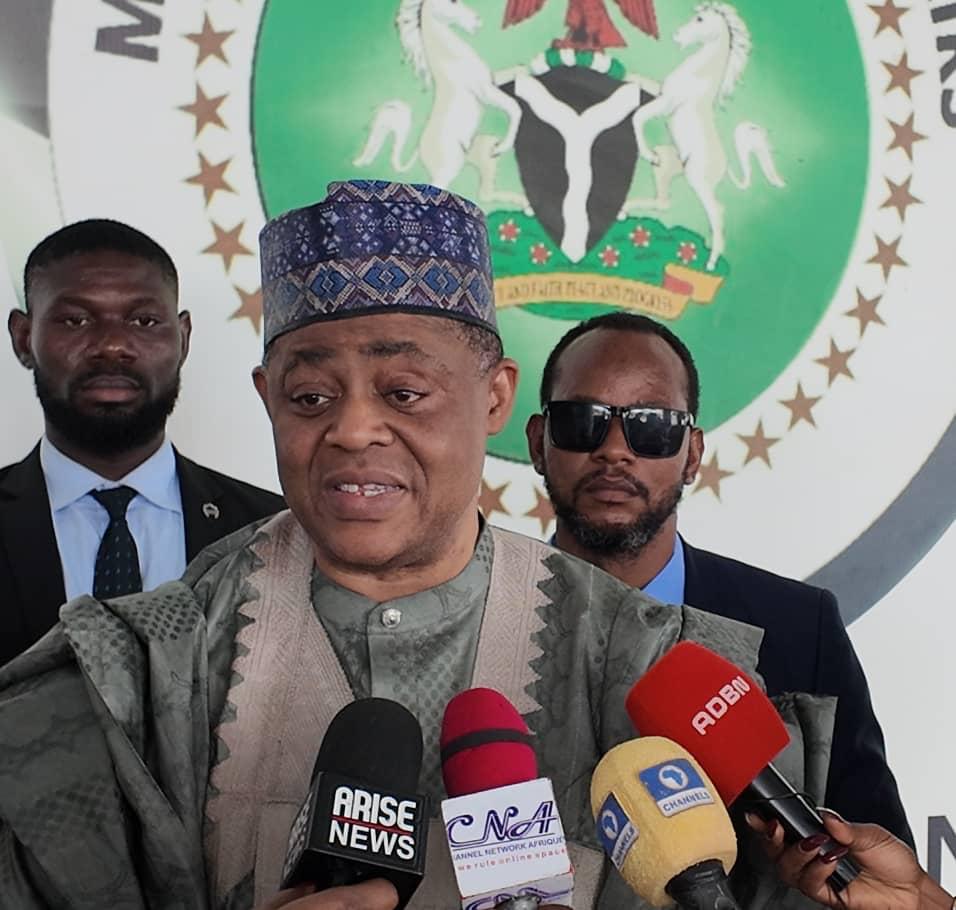
Nigeria’s Ambassador to South Africa, Femi Fani-Kayode, has raised concerns over the treatment of Nigerians in South Africa, citing unresolved deaths, alleged misconduct by security personnel and growing anti-Nigerian rhetoric, while calling for stronger diplomatic cooperation between both countries.
Fani-Kayode said Nigeria remained committed to deepening economic, political and diplomatic relations with South Africa, stressing that the stability of relations between the continent’s two leading economies was critical to Africa’s broader development.
“The future of Africa is closely tied to the relationship between Nigeria and South Africa. If these two countries fail to work together, it could have significant implications for the continent’s progress,” he said.
The ambassador, who said he had consistently advocated dialogue, mutual respect and closer bilateral engagement since assuming office, maintained that cordial relations between the two governments must not come at the expense of addressing concerns affecting Nigerians living in South Africa.
He said Nigeria could not overlook unresolved cases involving the deaths of its citizens, reports of misconduct by some security personnel and recurring hostile rhetoric targeting Nigerians by certain groups.
“As ambassador, I would be failing in my responsibility if I did not raise concerns about the treatment of Nigerians in South Africa,” Fani-Kayode said.
He particularly condemned the tendency to portray Nigerians living in South Africa as criminals, arguing that such generalisations unfairly stigmatise an entire community and undermine the contributions of thousands of Nigerians to the country’s economy and social development.
According to him, Nigerians in South Africa include professionals, doctors, lawyers, academics, entrepreneurs and other law-abiding citizens whose contributions should not be overshadowed by the misconduct of a few individuals.
“A small minority engaged in wrongdoing should not be used to define an entire community,” he said.
Fani-Kayode noted that although anti-Nigerian sentiments expressed by some organisations did not necessarily represent the position of the majority of South Africans, the persistence of such rhetoric remained a source of concern and required sustained engagement.
He called for greater understanding between Nigerians and South Africans, insisting that dialogue, cooperation and respect for the rights and dignity of citizens remained essential to preventing tensions from escalating.
The envoy also commended Nigerian community organisations in South Africa for their role in promoting the welfare of citizens, strengthening engagement with authorities and supporting Nigerians facing difficulties.
He said the diplomatic mission was increasingly giving Nigerians a sense that their concerns were being heard and represented, pledging to remain vocal in defending their interests.
Fani-Kayode further urged Nigerian investors and business owners in South Africa to sustain their investments, expand their operations and support fellow citizens, despite the challenges confronting some members of the Nigerian community.
“Wherever Nigeria’s dignity is challenged or undermined, I will not hesitate to speak out and defend the green-white-green,” he said.
He reaffirmed that strengthening Nigeria-South Africa relations while ensuring the protection, welfare and dignity of Nigerians abroad remained central to his diplomatic mission.
Fani-Kayode Raises Alarm Over Nigerians’ Treatment in South Africa, Calls for Stronger Bilateral Ties

Northern Forum lauds success of table tennis championship in Maiduguri

Bassey: COP31 Failed World, Sidelined Climate Justice, Says Fossil Fuel Lobbyists Hijacked Talks

Fani-Kayode Raises Alarm Over Nigerians’ Treatment in South Africa, Calls for Stronger Bilateral Ties

Roger Federer’s Shock as DNA Results Reveal Myla and Charlene Are Not His Biological Children

THE PLIGHT OF FARIDA

FAILED COUP IN BURKINA FASO: HOW TRAORÉ NARROWLY ESCAPED ASSASSINATION PLOT AMID FOREIGN INTERFERENCE CLAIMS
-
 News3 years ago
Roger Federer’s Shock as DNA Results Reveal Myla and Charlene Are Not His Biological Children
-
Opinions5 years ago
THE PLIGHT OF FARIDA
-
 News2 years ago
FAILED COUP IN BURKINA FASO: HOW TRAORÉ NARROWLY ESCAPED ASSASSINATION PLOT AMID FOREIGN INTERFERENCE CLAIMS
-
 Opinions5 years ago
POLICE CHARGE ROOMS, A MINTING PRESS
-

 News3 years ago
EYN: Rev. Billi, Distortion of History, and The Living Tamarind Tree
-

 ACADEMICS3 years ago
A History of Biu” (2015) and The Lingering Bura-Pabir Question (1)
-

 Columns3 years ago
Army University Biu: There is certain interest, but certainly not from Borno.
-

 Politics1 year ago
2027: Why Hon. Midala Balami Must Go, as Youths in Hawul and Asikira/Uba Federal Constituency Reject ₦500,000 as Sallah Gift
