
News
Olugbode Olugbode: IJAP Raises Alarm over Abuse of Ex-Parte Orders, Seeks Tougher Sanctions for Judges


Olugbode Olugbode: IJAP Raises Alarm over Abuse of Ex-Parte Orders, Seeks Tougher Sanctions for Judges
…ActionAid backs judicial accountability drive, says misuse of interim relief threatens access to justice and public confidence
By: Michael Mike
The Independent Judicial Accountability Panel (IJAP) has called for stronger disciplinary measures against judicial officers who abuse ex-parte orders, warning that their improper use threatens fair hearing, public confidence in the judiciary and the integrity of Nigeria’s justice system.
The panel urged the National Judicial Council (NJC) to take a more proactive approach to disciplining judges who improperly issue such orders and recommended that judicial officers known to misuse ex-parte orders, or with pending disciplinary complaints, should not be appointed to election petition tribunals.
Meanwhile, ActionAid Nigeria has backed the reform initiative, stressing that a credible, accessible and accountable justice system is essential to protecting citizens’ rights, particularly those of poor and marginalised communities.
The positions were highlighted in discussions surrounding a specialised seminar on judicial officers’ application of the rules of court, organised by the Federal Ministry of Justice under the theme, “Strengthening Procedural Practice and Effective Interim Relief”.
In a goodwill message delivered at the seminar, ActionAid Nigeria’s Governance Specialist, Mrs Vivian Efem Bassey, said justice must be treated as a right available to every citizen rather than a privilege reserved for a few.
She said the organisation’s engagement with communities, particularly women, young people and people living in poverty and exclusion, had reinforced the importance of a justice system that protects human dignity, equality and sustainable development.
“Where courts are fair, transparent, and accountable, citizens are protected; where they are not, the burden falls most heavily on the poor and the marginalised,” Bassey said.
She described the seminar as an important opportunity for judicial officers, legal practitioners and other justice sector stakeholders to strengthen procedural practice and promote public confidence in the administration of justice.
Bassey said ActionAid Nigeria was proud to support the work of the Federal Judicial Sector Reform Coordinating Committee (FJSRCC) and IJAP, noting that the two bodies, despite their distinct mandates, shared a commitment to advancing justice and accountability in Nigeria.
While the FJSRCC coordinates reform efforts across the justice sector, IJAP comprises retired Court of Appeal justices, academics, media executives, civil society representatives and legal practitioners who review judicial pronouncements, public-interest litigation and legal frameworks to develop recommendations for improving judicial processes.
According to her, their work reflects a common objective of building a justice system that is transparent, credible and responsive to the needs of Nigerians.
The specialised seminar follows growing concerns about the request, processing and grant of ex-parte orders and interim reliefs in Nigeria’s judicial system.
The issue featured prominently at the 2025 National Network Conference of Justice Sector Actors and in IJAP’s deliberations on judicial accountability.
The panel’s recommendations included a call for the NJC to strengthen disciplinary action against judges who misuse ex-parte orders, particularly given the potential consequences for parties who may be affected by court decisions made without first being heard.
However, Bassey cautioned against treating the engagement as an exercise in fault-finding, saying the problem was not necessarily the absence of applicable rules but the difficulty of applying them consistently under considerable time and procedural pressure.
She also stressed that responsibility for the proper use of ex-parte orders did not rest solely on judges.
“It is also a shared responsibility, one that rests not only upon those who grant such orders, but equally upon those who request, advise on, and process them,” she said.
Ex-parte orders are generally granted without first hearing the opposing party and may be necessary where urgent intervention is required to prevent imminent harm or preserve the subject matter of a dispute.
However, their use raises concerns when procedural safeguards are ignored, reliefs are granted without sufficient justification or affected parties are denied a timely opportunity to respond.
Interim reliefs can also be necessary to protect rights pending the final determination of a case. Their proper application requires courts to balance urgency against the constitutional guarantees of fair hearing and due process.
Bassey said the seminar would provide an opportunity to deepen participants’ understanding of the legal basis, scope and limitations of such orders, examine the circumstances in which they were appropriate and identify safeguards against abuse.
She added that the discussions should promote consistency in applying court rules, strengthen oversight mechanisms and address the implications of improper orders for access to justice and public confidence in the judiciary.
“Central to our discussions is the constitutional principle that the urgency of interim relief must at all times be balanced against the guarantees of fair hearing and due process,” she said.
The seminar is expected to culminate in a communiqué setting out key observations, recommendations and proposed actions arising from the deliberations.
The document is intended to support sustained engagement with judicial institutions, including the NJC, on improving procedural safeguards, promoting consistency in judicial practice and strengthening accountability.
Bassey commended the Federal Ministry of Justice for convening the engagement as part of its ongoing court rules reform process and acknowledged the contributions of the FJSRCC, IJAP and other partners.
She urged participants to engage candidly and constructively, stressing that meaningful reform required collective commitment from judicial officers, lawyers and other actors involved in the administration of justice.
ActionAid Nigeria, she said, remained committed to supporting the process.
Beyond ex-parte applications, IJAP has advanced a broader set of recommendations aimed at strengthening judicial accountability, improving electoral dispute resolution and promoting transparency in Nigeria’s justice and governance systems.
The panel proposed restructuring the office of the Chief Justice of Nigeria to reduce the concentration of powers, introducing greater transparency in judicial appointments and allowing citizens to scrutinise proposed appointees.
It also recommended improved recruitment and continuous training for judicial staff, an upward review of judges’ remuneration and retirement benefits, and an online platform through which citizens could report judicial misconduct.
Other proposals include electronic recording or live coverage of court proceedings, exchange programmes for judicial officers, stronger public communication by the judiciary and more expeditious determination of cases involving constitutional interpretation and other matters of national importance.
The panel further called for more effective accountability mechanisms, including extending the application of the Code of Conduct Bureau Act to post-tenure accountability for judges.
A substantial part of IJAP’s recommendations concerns electoral disputes, which have repeatedly tested Nigeria’s judicial institutions and shaped public perceptions of the electoral process.
The panel called for pre-election cases to be determined before elections wherever practicable, arguing that timely decisions would promote fairness, reduce multiple lawsuits and improve election administration.
It proposed reducing the period for determining election petitions from 180 days to a maximum of 120 days.
IJAP also recommended reviewing the appellate structure for election disputes. Under its proposal, appeals concerning House of Representatives, Senate and governorship elections would generally end at the Court of Appeal, while presidential pre-election matters would begin at the Court of Appeal and terminate at the Supreme Court.
The panel further called for courts to prioritise substantial justice over technicalities in pre-election matters, citing the Supreme Court decision in Ahmed v. Machina (2023).
Following its review of provisions of the Electoral Act 2026, IJAP identified what it described as ambiguities concerning electronic transmission of election results.
It raised concerns about the wording of Section 60(3), particularly the phrase “shall at all times”, arguing that it could generate differing interpretations regarding the relationship between electronic transmission and the use of polling-unit result forms.
The panel proposed amending the provision to require election officials to electronically transmit results to a public portal immediately after the prescribed forms have been signed and stamped by officials and countersigned by candidates or polling agents, where available. It recommended that transmitted results should be used to verify and confirm other results before collation.
IJAP also called for greater clarity in Sections 60 and 62 on the method and destination of results transmission, as well as the correction of an apparent cross-referencing error.
Other proposed electoral reforms include restricting certain former INEC political appointees and directorate-level staff from engaging in partisan politics for at least five years after leaving the commission, introducing independent candidacy under the Constitution and providing a constitutional basis for public-interest litigation by citizens challenging breaches of the Electoral Act and the Constitution.
The panel’s recommendations also address human rights protection and government compliance with judicial decisions.
It expressed concern over Nigeria’s reported failure to comply with the July 2024 judgment of the ECOWAS Court of Justice in Obianuju Catherine Udeh and two others v. Federal Republic of Nigeria, a case arising from the October 2020 #EndSARS protests and the Lekki shooting.
According to IJAP, failure to implement the judgment, which awarded monetary compensation to the applicants, risks damaging Nigeria’s international reputation and reinforcing perceptions that the country does not respect judicial decisions.
The panel urged Nigerian courts to adopt liberal interpretations of constitutional and human rights provisions, drawing on the African Charter on Human and Peoples’ Rights, to encourage the resolution of rights disputes within the domestic legal system.
It also called on the government to discourage the use of the military and other armed personnel to disperse protests and urged the Attorney-General of the Federation to ensure credible investigations into allegations of human rights violations by federal government agents, alongside appropriate punishment and reparations where violations are established.
On constitutional governance, IJAP said the National Assembly should use an ascertainable record of votes, rather than voice votes, on constitutional matters requiring a specified majority.
The panel said implementation of its recommendations would require commitment from the Attorney-General of the Federation and cooperation among judicial institutions, policymakers, electoral bodies, civil society organisations, development partners, the media and citizens.
It maintained that strengthening judicial accountability, ensuring credible electoral dispute resolution and safeguarding the rule of law were essential to restoring public confidence and consolidating Nigeria’s constitutional democracy.
[10/13, 5:06 PM] Olugbode Olugbode: IJAP Raises Alarm over Abuse of Ex-Parte Orders, Seeks Tougher Sanctions for Judges
…ActionAid backs judicial accountability drive, says misuse of interim relief threatens access to justice and public confidence
(Refreshed)
The Independent Judicial Accountability Panel (IJAP) has called for stronger disciplinary measures against judicial officers who abuse ex-parte orders, warning that their improper use threatens fair hearing, public confidence in the judiciary and the integrity of Nigeria’s justice system.
The panel urged the National Judicial Council (NJC) to take a more proactive approach to disciplining judges who improperly issue such orders and recommended that judicial officers known to misuse ex-parte orders, or with pending disciplinary complaints, should not be appointed to election petition tribunals.
Meanwhile, ActionAid Nigeria has backed the reform initiative, stressing that a credible, accessible and accountable justice system is essential to protecting citizens’ rights, particularly those of poor and marginalised communities.
The positions were highlighted in discussions surrounding a specialised seminar on judicial officers’ application of the rules of court, organised by the Federal Ministry of Justice under the theme, “Strengthening Procedural Practice and Effective Interim Relief”.
In a goodwill message delivered at the seminar, ActionAid Nigeria’s Governance Specialist, Mrs Vivian Efem Bassey, said justice must be treated as a right available to every citizen rather than a privilege reserved for a few.
She said the organisation’s engagement with communities, particularly women, young people and people living in poverty and exclusion, had reinforced the importance of a justice system that protects human dignity, equality and sustainable development.
“Where courts are fair, transparent, and accountable, citizens are protected; where they are not, the burden falls most heavily on the poor and the marginalised,” Bassey said.
She described the seminar as an important opportunity for judicial officers, legal practitioners and other justice sector stakeholders to strengthen procedural practice and promote public confidence in the administration of justice.
Bassey said ActionAid Nigeria was proud to support the work of the Federal Judicial Sector Reform Coordinating Committee (FJSRCC) and IJAP, noting that the two bodies, despite their distinct mandates, shared a commitment to advancing justice and accountability in Nigeria.
While the FJSRCC coordinates reform efforts across the justice sector, IJAP comprises retired Court of Appeal justices, academics, media executives, civil society representatives and legal practitioners who review judicial pronouncements, public-interest litigation and legal frameworks to develop recommendations for improving judicial processes.
According to her, their work reflects a common objective of building a justice system that is transparent, credible and responsive to the needs of Nigerians.
The specialised seminar follows growing concerns about the request, processing and grant of ex-parte orders and interim reliefs in Nigeria’s judicial system.
The issue featured prominently at the 2025 National Network Conference of Justice Sector Actors and in IJAP’s deliberations on judicial accountability.
The panel’s recommendations included a call for the NJC to strengthen disciplinary action against judges who misuse ex-parte orders, particularly given the potential consequences for parties who may be affected by court decisions made without first being heard.
However, Bassey cautioned against treating the engagement as an exercise in fault-finding, saying the problem was not necessarily the absence of applicable rules but the difficulty of applying them consistently under considerable time and procedural pressure.
She also stressed that responsibility for the proper use of ex-parte orders did not rest solely on judges.
“It is also a shared responsibility, one that rests not only upon those who grant such orders, but equally upon those who request, advise on, and process them,” she said.
Ex-parte orders are generally granted without first hearing the opposing party and may be necessary where urgent intervention is required to prevent imminent harm or preserve the subject matter of a dispute.
However, their use raises concerns when procedural safeguards are ignored, reliefs are granted without sufficient justification or affected parties are denied a timely opportunity to respond.
Interim reliefs can also be necessary to protect rights pending the final determination of a case. Their proper application requires courts to balance urgency against the constitutional guarantees of fair hearing and due process.
Bassey said the seminar would provide an opportunity to deepen participants’ understanding of the legal basis, scope and limitations of such orders, examine the circumstances in which they were appropriate and identify safeguards against abuse.
She added that the discussions should promote consistency in applying court rules, strengthen oversight mechanisms and address the implications of improper orders for access to justice and public confidence in the judiciary.
“Central to our discussions is the constitutional principle that the urgency of interim relief must at all times be balanced against the guarantees of fair hearing and due process,” she said.
The seminar is expected to culminate in a communiqué setting out key observations, recommendations and proposed actions arising from the deliberations.
The document is intended to support sustained engagement with judicial institutions, including the NJC, on improving procedural safeguards, promoting consistency in judicial practice and strengthening accountability.
Bassey commended the Federal Ministry of Justice for convening the engagement as part of its ongoing court rules reform process and acknowledged the contributions of the FJSRCC, IJAP and other partners.
She urged participants to engage candidly and constructively, stressing that meaningful reform required collective commitment from judicial officers, lawyers and other actors involved in the administration of justice.
ActionAid Nigeria, she said, remained committed to supporting the process.
Beyond ex-parte applications, IJAP has advanced a broader set of recommendations aimed at strengthening judicial accountability, improving electoral dispute resolution and promoting transparency in Nigeria’s justice and governance systems.
The panel proposed restructuring the office of the Chief Justice of Nigeria to reduce the concentration of powers, introducing greater transparency in judicial appointments and allowing citizens to scrutinise proposed appointees.
It also recommended improved recruitment and continuous training for judicial staff, an upward review of judges’ remuneration and retirement benefits, and an online platform through which citizens could report judicial misconduct.
Other proposals include electronic recording or live coverage of court proceedings, exchange programmes for judicial officers, stronger public communication by the judiciary and more expeditious determination of cases involving constitutional interpretation and other matters of national importance.
The panel further called for more effective accountability mechanisms, including extending the application of the Code of Conduct Bureau Act to post-tenure accountability for judges.
A substantial part of IJAP’s recommendations concerns electoral disputes, which have repeatedly tested Nigeria’s judicial institutions and shaped public perceptions of the electoral process.
The panel called for pre-election cases to be determined before elections wherever practicable, arguing that timely decisions would promote fairness, reduce multiple lawsuits and improve election administration.
It proposed reducing the period for determining election petitions from 180 days to a maximum of 120 days.
IJAP, whose position was presented by Professor Jummai Audi, also recommended reviewing the appellate structure for election disputes. Under its proposal, appeals concerning House of Representatives, Senate and governorship elections would generally end at the Court of Appeal, while presidential pre-election matters would begin at the Court of Appeal and terminate at the Supreme Court.
The panel further called for courts to prioritise substantial justice over technicalities in pre-election matters, citing the Supreme Court decision in Ahmed v. Machina (2023).
Following its review of provisions of the Electoral Act 2026, IJAP identified what it described as ambiguities concerning electronic transmission of election results.
It raised concerns about the wording of Section 60(3), particularly the phrase “shall at all times”, arguing that it could generate differing interpretations regarding the relationship between electronic transmission and the use of polling-unit result forms.
The panel proposed amending the provision to require election officials to electronically transmit results to a public portal immediately after the prescribed forms have been signed and stamped by officials and countersigned by candidates or polling agents, where available. It recommended that transmitted results should be used to verify and confirm other results before collation.
IJAP also called for greater clarity in Sections 60 and 62 on the method and destination of results transmission, as well as the correction of an apparent cross-referencing error.
Other proposed electoral reforms include restricting certain former INEC political appointees and directorate-level staff from engaging in partisan politics for at least five years after leaving the commission, introducing independent candidacy under the Constitution and providing a constitutional basis for public-interest litigation by citizens challenging breaches of the Electoral Act and the Constitution.
The panel’s recommendations also address human rights protection and government compliance with judicial decisions.
It expressed concern over Nigeria’s reported failure to comply with the July 2024 judgment of the ECOWAS Court of Justice in Obianuju Catherine Udeh and two others v. Federal Republic of Nigeria, a case arising from the October 2020 #EndSARS protests and the Lekki shooting.
According to IJAP, failure to implement the judgment, which awarded monetary compensation to the applicants, risks damaging Nigeria’s international reputation and reinforcing perceptions that the country does not respect judicial decisions.
The panel urged Nigerian courts to adopt liberal interpretations of constitutional and human rights provisions, drawing on the African Charter on Human and Peoples’ Rights, to encourage the resolution of rights disputes within the domestic legal system.
It also called on the government to discourage the use of the military and other armed personnel to disperse protests and urged the Attorney-General of the Federation to ensure credible investigations into allegations of human rights violations by federal government agents, alongside appropriate punishment and reparations where violations are established.
On constitutional governance, IJAP said the National Assembly should use an ascertainable record of votes, rather than voice votes, on constitutional matters requiring a specified majority.
The panel said implementation of its recommendations would require commitment from the Attorney-General of the Federation and cooperation among judicial institutions, policymakers, electoral bodies, civil society organisations, development partners, the media and citizens.
It maintained that strengthening judicial accountability, ensuring credible electoral dispute resolution and safeguarding the rule of law were essential to restoring public confidence and consolidating Nigeria’s constitutional democracy.
Olugbode Olugbode: IJAP Raises Alarm over Abuse of Ex-Parte Orders, Seeks Tougher Sanctions for Judges


News
Nigeria, India Sign Landmark Human Rights Pact, Fagbemi Backs Stronger Institutional Independence
Nigeria, India Sign Landmark Human Rights Pact, Fagbemi Backs Stronger Institutional Independence
…AGF pledges justice ministry’s support for implementation, demands practical safeguards for citizens in AI era
By: Michael Mike
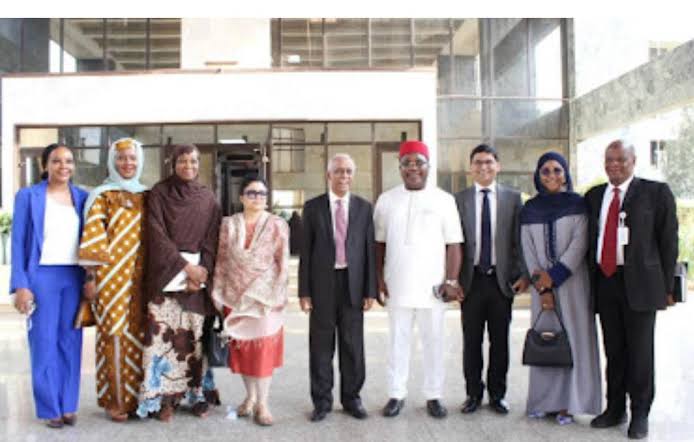
Nigeria and India have signed a bilateral agreement to strengthen human rights protection, institutional capacity and access to justice, with the Attorney-General of the Federation and Minister of Justice, Prince Lateef Fagbemi, SAN, pledging the Federal Government’s support for its implementation.
Fagbemi, who described the agreement as a strategic partnership between the two countries, said its success would ultimately be measured by its impact on ordinary citizens, particularly vulnerable and marginalised groups seeking justice.
The agreement, executed between the National Human Rights Commission (NHRC) of Nigeria and its Indian counterpart, is designed to deepen institutional cooperation, facilitate knowledge transfer, promote technical exchanges and strengthen operational capacity in addressing human rights violations.
The Attorney-General gave the government’s position on Tuesday in Abuja when he received a joint delegation of the two commissions at the Federal Ministry of Justice, describing the partnership as timely, particularly in an increasingly interconnected world where effective human rights protection requires stronger legal frameworks, institutional collaboration and respect for the rule of law.
The development followed a high-level engagement between the two commissions and the Chief Justice of Nigeria (CJN), at the Supreme Court Complex, Abuja, on Monday, as part of a two-day working visit by the Indian delegation.
The Nigerian delegation was led by the Executive Secretary of NHRC, Chief Tony Ojukwu, SAN, OFR, while the Indian delegation was headed by the Chairperson of India’s NHRC, Justice V. Ramasubramanian, accompanied by the Commission’s Joint Secretary, Mr. Samir Kumar.
Fagbemi said the partnership brought together two major democracies with shared common-law traditions, diverse populations and dynamic constitutional frameworks, expressing satisfaction with the thematic areas identified for cooperation under the agreement.
He specifically highlighted access to justice and the protection of digital rights as critical areas requiring urgent attention, particularly as emerging technologies, including Artificial Intelligence, continue to reshape society and create new human rights concerns.
According to him, both countries must develop legal safeguards to protect data privacy, prevent algorithmic bias and safeguard civic space, while ensuring that technological advancement does not undermine fundamental freedoms.
He said the Ministry of Justice expected the two commissions to produce actionable research and policy recommendations capable of addressing these emerging challenges.
Beyond emerging technologies, the Attorney-General stressed that Nigeria’s commitment to human rights must be reflected in the practical implementation of constitutional guarantees and international obligations, rather than merely in the existence of legal provisions.
He cited the African Charter on Human and Peoples’ Rights, which Nigeria domesticated through the African Charter on Human and Peoples’ Rights (Ratification and Enforcement) Act, Cap. A9, Laws of the Federation of Nigeria 2004, as a major instrument underpinning the country’s human rights jurisprudence.
The Charter provides important protections relating to non-discrimination, human dignity, fair trial and personal liberty, reinforcing the fundamental rights guaranteed under Nigeria’s Constitution.
Fagbemi maintained that the true measure of a country’s commitment to human rights was its ability to translate constitutional provisions into accessible institutions, accountable public authorities and an independent judiciary.
He assured the Indian delegation that the Federal Ministry of Justice fully supported the bilateral initiative and was prepared to facilitate technical engagements, joint legal reviews and policy consultations aimed at improving the efficiency of the justice sector.
The Attorney-General also used the engagement to reaffirm the institutional independence of Nigeria’s National Human Rights Commission, stressing that its autonomy was essential to its credibility and effectiveness.
He specifically drew attention to Section 6(3) of the National Human Rights Commission (Amendment) Act, 2010, which provides that the Commission, in exercising its statutory functions, shall not be subject to the direction or control of any other authority or person.
According to him, the administration has continued to respect and protect the Commission’s statutory independence, describing it as fundamental to institutional integrity.
He further noted that the relationship between the NHRC and the Federal Ministry of Justice had been characterised by constructive institutional synergy, mutual respect and a shared commitment to advancing human rights.
The Attorney-General commended Ojukwu and the Nigerian commission for spearheading the bilateral initiative, while expressing appreciation to the Indian delegation for bringing its expertise and institutional experience to the partnership.
Earlier, during Monday’s engagement with the Chief Justice of Nigeria, the Executive Secretary of NHRC Nigeria had emphasised the complementary responsibilities of the judiciary and national human rights institutions in protecting fundamental freedoms, upholding the rule of law and ensuring access to justice.
Ojukwu identified complaint management, Alternative Dispute Resolution, security sector accountability, comparative legal research, digital rights, Artificial Intelligence ethics and environmental justice as priority areas for cooperation between both countries.
The Chief Justice reaffirmed the commitment of the Nigerian Judiciary to human rights protection and encouraged both commissions to exchange experiences and adopt best practices, particularly in strengthening safeguards for vulnerable groups, including women, children and persons with disabilities.
The Indian delegation described the engagement as significant to relations between the two countries, noting that the MoU represented a first-of-its-kind institutional partnership for India’s National Human Rights Commission.
The agreement is expected to promote sustained institutional exchanges, strengthen complaint-handling mechanisms, improve professional capacity and encourage comparative research into legal and policy approaches to human rights protection.
The partnership also comes at a time when national human rights institutions face increasing demands to address abuses linked to security operations, discrimination, environmental degradation, digital surveillance and the misuse of emerging technologies.
For Nigeria, the collaboration offers an opportunity to strengthen its human rights enforcement architecture through international knowledge-sharing while reinforcing the independence and operational effectiveness of its national commission.
Fagbemi, however, cautioned that the ultimate benchmark of the agreement must go beyond official engagements and institutional exchanges to deliver tangible improvements in the lives of citizens, especially those most vulnerable to violations and denied access to justice.
He wished the Indian delegation a productive stay in Nigeria and expressed confidence that the partnership would advance the shared commitment of both countries to human dignity, justice and the protection of fundamental rights.
Nigeria, India Sign Landmark Human Rights Pact, Fagbemi Backs Stronger Institutional Independence

NSCDC Strengthens Gender Policy Implementation, Trains Officers on SGBV, Digital Safety
By: Michael Mike
Corps partners SPRING, FCDO, TechHer to promote women’s participation in peacebuilding, tackle technology-facilitated violence
The Nigeria Security and Civil Defence Corps (NSCDC) has intensified efforts to combat sexual and gender-based violence (SGBV), strengthen women’s participation in security decision-making and promote digital safety among young people through the implementation of its Gender Policy II.
The Commandant-General of the Corps, Prof. Ahmed Audi, stated this at a two-day Gender, Women, Peace and Security capacity-building training organised at the NSCDC College and Support Staff Service, Udege, Nasarawa State.
The training was organised in collaboration with Strengthening Peace and Resilience in Nigeria (SPRING), with support from the United Kingdom’s Foreign, Commonwealth and Development Office (FCDO).
Audi, who delivered his keynote address through a representative, said the policy provided a framework for mainstreaming gender considerations into the Corps’ operations, personnel management, leadership structure and community engagement.
He stressed the need for effective prevention and response to sexual and gender-based violence, including conflict-related abuses and technology-facilitated violence.
The Commandant-General also called for increased participation of women in peacebuilding and security decision-making, equal opportunities within the Corps and stronger partnerships with traditional institutions, government agencies, civil society organisations and development partners.
He urged commands and personnel, particularly Gender Desk Officers, to ensure effective coordination, timely reporting, appropriate referrals, monitoring and accountability in handling gender-related cases.
Audi described the implementation of the policy as a collective responsibility requiring sustained commitment across all levels of the Corps.
In a goodwill message, the Osu Ajiri of Edege Chiefdom, Alhaji Suleiman Ahmed Eko IV, commended the NSCDC for its presence in the community, saying its operations had strengthened the sense of security among residents, particularly farmers.
The traditional ruler pledged the support of his council in addressing gender-based violence, describing the protection of the community as a priority.
Earlier, the Commander of the College, ACG Jamilu Indabawa, said collaboration among relevant stakeholders was critical to achieving effective implementation of the gender policy.
The Gender Equality, Diversity and Social Inclusion Lead of SPRING, Mrs Amina Akano-Bello, said the training was designed to promote peaceful and resilient communities through early identification and response to gender-based violence, as well as the inclusion of women and young people in leadership.
Also, the NSCDC National Headquarters Gender Unit Adviser, DCC Ajet Kemi, provided participants with insights into the different forms of sexual and gender-based violence, their societal implications and preventive measures.
A retired Assistant Commandant-General, Ahmed Abodurin, who facilitated a session on institutional ethics in gender policy implementation, emphasised professionalism, accountability, gender sensitivity and adherence to institutional standards.
Beyond the capacity-building exercise, the Corps partnered TechHer, an organisation promoting women’s advancement through technology, to extend digital safety awareness to schools in Udege.
The outreach, themed “Stop Technology-Facilitated Gender-Based Violence”, educated students on the dangers of digital abuse, responsible online behaviour and measures for staying safe in digital spaces.
Representatives of the Federal Ministry of Interior, Nasarawa State Ministry of Women Affairs and Social Development, Nasarawa State Ministry of Justice and Gammuo International also delivered goodwill messages, reaffirming the importance of collective action in advancing gender equality, peace and security.
NSCDC Strengthens Gender Policy Implementation, Trains Officers on SGBV, Digital Safety

Bank customer alleges N2.59m theft from two GTBank accounts
By: Michael Mike
A customer of Guaranty Trust Bank, Stella Adepegba, has accused the bank of negligence after fraudsters allegedly stole N2.59m from two accounts belonging to her and her daughter within 24 days.
Adepegba said the incidents occurred on October 8 and November 1, 2026, with the perpetrators allegedly transferring funds without authorisation or security notifications.
She accused the bank of failing to refund the money despite repeated complaints and assurances that the matter would be resolved.
According to her, the first incident involved her daughter, Victoria Adepegba, whose Child Saver’s Account was allegedly compromised on October 8 at about 8pm.
She explained that N2.507m was transferred through the Nigeria Inter-Bank Settlement System Instant Payment channel in four transactions, leaving less than N2,000 in the account.
Adepegba said N399,000, N398,000 and N220,000 were transferred to a Moniepoint account bearing the name Abdulmalik Idris, while another N1.49m went to a GoMoney account bearing the name Zainab Ibrahim.
She alleged that no debit alerts were received, adding that a GTBank employee informed her of the transactions and offered to block the account after the money had already been withdrawn.
The complainant said she reported the incident at the bank’s Kubwa branch in Abuja on October 9 and was instructed to document the unauthorised transactions.
However, she alleged that the bank subsequently sent an email attributing the transactions to compromised login credentials, an explanation she rejected.
Adepegba said another N80,000 was fraudulently transferred from her personal GTBank account on November 1 to a FairMoney account bearing the name Jamilu Ahmad, bringing the cumulative loss to N2.587m.
“GTB could not explain how the hackers successfully stole my money despite changing my account’s log-in details after the attack on my daughter’s account. The bank must refund the stolen funds and go after those who masterminded the fraud,” she said.
She insisted that her mobile phone, SIM card and ATM card were in her possession during both incidents, adding that she neither disclosed her banking credentials nor received OTP requests.
“The implication of these targeted attacks on my bank accounts is that no customer’s funds are safe with GTB, and if anything happens, the bank will not accept responsibility or offer any succour whatsoever,” she lamented.
She stated that a compliance officer, Innocent Ukatu, and the bank’s media consultant, Cornelius Onuoha, initially assured her that the complaint would be resolved.
Reacting to the incident, the Chief Communications Officer of Guaranty Trust Holding Company Plc, Mrs Oyinade Adegite, said the incidents had been investigated and feedback provided to the customer.
She attributed the compromise to customer-side security vulnerabilities, explaining that fraudsters increasingly deploy sophisticated phishing techniques to obtain banking credentials.
“Immediately this came up, it was escalated and investigated, and feedback has been given,” she said.
Adegite explained that customers could unknowingly compromise their accounts by clicking malicious links that install malware that can capture sensitive information.
“Now it’s a phishing link you might click on that sometimes would actually install malware on your phone,” she said.
She maintained that the bank had implemented the necessary security safeguards, including two-factor authentication, and insisted the compromise originated on the customer’s end.
“All the measures the bank has to put in place for us, 2FA, everything was done. So, the compromise came clearly from the customer,” she stated.
However, she expressed sympathy for the losses and said she would follow up on the second incident to explore possible intervention.
The allegations come amid regulatory scrutiny of Nigerian banks over consumer protection and compliance failures.
An earlier analysis of audited financial statements showed that Guaranty Trust Holding Company, GTBank’s parent company, incurred N383.65m in regulatory penalties in Nigeria in 2024.
The sanctions included N56m for consumer protection violations, N160.4m following a Central Bank of Nigeria mystery shopping exercise, N149.25m for compliance-related issues and bank email returns, and N18m following a foreign exchange examination.
Bank customer alleges N2.59m theft from two GTBank accounts

FROM A SILVER SPOON TO A GREATER BORNO: THE GUBIO RISE

Beyond Politics: The Betara Leadership Question – An Independent Assessment of Hon. Muktari Betara Aliyu

Diaspora Investment: NiDCOM, NDSI Move to Bridge Trust Deficit, Unlock Billions in Nigerian Capital

Roger Federer’s Shock as DNA Results Reveal Myla and Charlene Are Not His Biological Children

THE PLIGHT OF FARIDA

FAILED COUP IN BURKINA FASO: HOW TRAORÉ NARROWLY ESCAPED ASSASSINATION PLOT AMID FOREIGN INTERFERENCE CLAIMS
-
 News3 years ago
Roger Federer’s Shock as DNA Results Reveal Myla and Charlene Are Not His Biological Children
-
Opinions5 years ago
THE PLIGHT OF FARIDA
-
 News2 years ago
FAILED COUP IN BURKINA FASO: HOW TRAORÉ NARROWLY ESCAPED ASSASSINATION PLOT AMID FOREIGN INTERFERENCE CLAIMS
-
 Opinions5 years ago
POLICE CHARGE ROOMS, A MINTING PRESS
-

 News3 years ago
EYN: Rev. Billi, Distortion of History, and The Living Tamarind Tree
-

 ACADEMICS3 years ago
A History of Biu” (2015) and The Lingering Bura-Pabir Question (1)
-

 Columns3 years ago
Army University Biu: There is certain interest, but certainly not from Borno.
-

 Politics1 year ago
2027: Why Hon. Midala Balami Must Go, as Youths in Hawul and Asikira/Uba Federal Constituency Reject ₦500,000 as Sallah Gift
